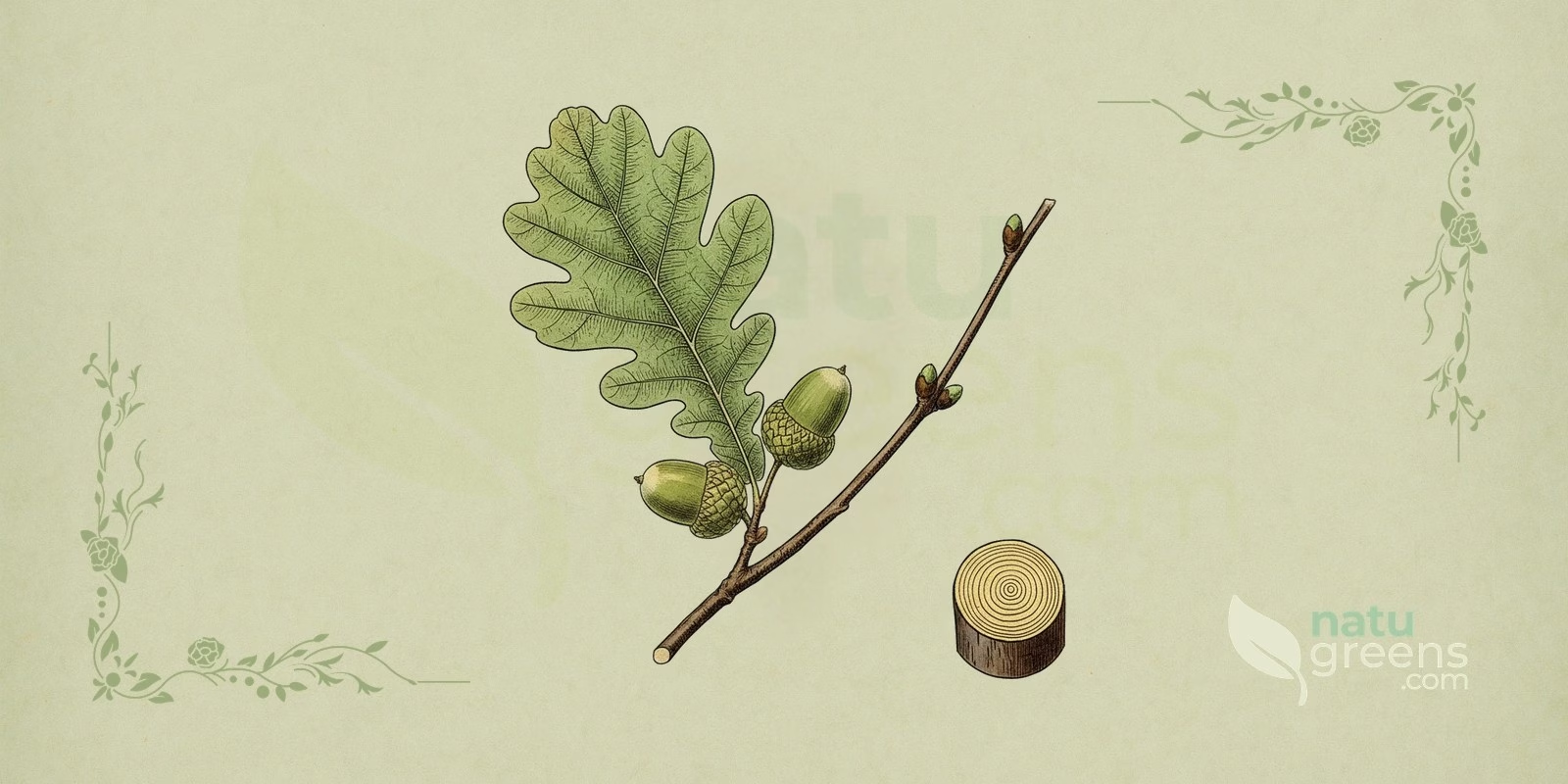
English oak (Quercus robur L.), also called pedunculate oak in botanical works and common oak in much of Britain, is a large tree of the Fagaceae family described by Carl Linnaeus in 1753. Native to most of Europe and Western Asia, the species is also grown in other temperate regions, and its longevity and symbolism have kept it present in European culture and traditional medicine since antiquity. The tannin-rich bark is the part most widely used for medicinal purposes and is usually harvested from young branches in spring.
In European herbal tradition, oak bark is valued for the astringent, anti-inflammatory and antiseptic action attributed to it, and its historical applications include diarrhea, bleeding and inflammation of the skin and mucous membranes. Modern research, much of it carried out in the laboratory, has looked into these uses and credits tannins and other phenolic compounds with much of the observed activity, although clinical studies are still scarce. Given this long history, English oak remains a point of reference in European herbal medicine as well as one of the mainstays of temperate forest ecosystems.
Popular and International Names of English Oak
- English: common oak, English oak, European oak, pedunculate oak.
- Spanish: roble común, roble europeo, roble fresnal, roble pedunculado.
- Portuguese: carvalho-alvarinho (Portugal), carvalho-europeu (Brazil), carvalho-roble (Portugal).
- French: chêne commun, chêne pédonculé.
- Italian: farnia, quercia comune.
- German: Deutsche Eiche, Sommereiche, Stieleiche.
Botanical Synonyms of Quercus robur
Quercus pedunculata Hoffm. is one of the most common historical synonyms of Quercus robur, and the list recorded for the species also includes names such as Quercus accessiva Gand., Quercus accomodata Gand. and Quercus acutiloba. The taxonomy of the genus Quercus is complex and has gone through successive revisions over the centuries, which is why the same oak often turns up under different names in older works.
Some forms cited in the past alongside these synonyms, such as Quercus robur subsp. brutia, Quercus robur subsp. imeretina and Quercus robur subsp. pedunculiflora, are now mostly regarded as subspecies or regional variants. The name given by Linnaeus, Quercus robur, remains the botanically accepted and universally recognized one.
Botanical Family: Fagaceae
The Fagaceae family brings together deciduous and evergreen trees and shrubs, including species of great ecological and economic importance such as oaks (Quercus), chestnuts (Castanea) and beeches (Fagus). With around 1,000 species distributed mainly across the Northern Hemisphere, the family is a dominant component of many temperate forests. Its members have simple, alternate leaves and unisexual flowers that are usually wind-pollinated, while the fruit is a nut, known as an acorn in oaks, partly or wholly enclosed in a woody cup.
Parts of English Oak Used
- Acorns (fruits)
- Bark (mainly from young branches)
- Leaves
The bark accounts for most of the traditional medicinal use, while the leaves appear in infusions and the acorns, once their tannins have been leached out in water, have been used as food in the form of flour.
Ethnobotanical and Traditional Uses
The uses listed below belong to the European traditional record and are not equivalent to proven clinical indications.
- Diarrhea and dysentery (short-term internal use in the herbal tradition)
- Fever (old folk use, without clinical evidence)
- General tonic (folk use as a restorative)
- Hemorrhoids (traditional sitz baths)
- Inflammation of the mouth and throat (gargles)
- Minor bleeding (internal and external application recorded in the tradition; persistent bleeding requires medical care)
- Minor wounds, mild burns and eczema (washes and compresses)
Therapeutic Properties of English Oak
- Anti-inflammatory (traditional topical use; activity investigated in laboratory studies)
- Antidiarrheal (traditional record in mild acute diarrhea, for a few days only)
- Antipyretic (old folk use for fever, without clinical evidence)
- Antiseptic (antimicrobial activity observed in laboratory studies)
- Astringent (tightens tissues and reduces secretions, an action attributed to the tannins)
- Hemostatic (traditional use for minor surface bleeding)
- Tonic (folk record as a general restorative)
Detailed Phytochemical Profile of English Oak
- Flavonoids (quercetin, quercitrin)
- Phenolic acids (ellagic acid, gallic acid)
- Rhamnose
- Tannins (mainly ellagitannins and gallotannins, such as castalagin and vescalagin)
- Triterpene saponins
- Triterpenes (in the heartwood)
Tannins are concentrated mainly in the bark and account for the astringent action attributed to the plant, and recent studies show that the accumulation of phenolic compounds in the bark varies with the tree’s genotype, the time of harvest and the extraction method used.
Preparation and Administration Forms of English Oak
- Baths and washes
- Decoction (bark)
- Fluid extract
- Gargles
- Infusion (leaves)
- Powder (bark)
- Tincture
External use, in baths, washes and gargles, covers most of the traditional applications, while internal use is limited to short periods, as detailed in the contraindications section.
Synergy with Other Medicinal Plants
Traditional Combinations for the Skin
For minor skin lesions such as eczema and superficial wounds, herbal tradition pairs oak bark with calendula (Calendula officinalis) and German chamomile (Matricaria chamomilla) in washes and compresses. The combination brings together the tannins of oak, the triterpenes of calendula and the alpha-bisabolol of chamomile, compounds studied for their soothing and anti-inflammatory local action, but no synergy between them has been confirmed in clinical studies and the preparation should not be used on deep wounds or extensive burns.
Traditional Combinations for the Gut
During episodes of diarrhea, oak bark is traditionally used together with agrimony (Agrimonia eupatoria) or tormentil (Potentilla erecta), plants that are also high in tannins. Tradition holds that combining these tannins gives a stronger astringent action in the gut, without clinical evidence, and the combination is subject to the same restrictions as the internal use of oak, including the limit of a few days and the ban during pregnancy and breastfeeding.
Recipes and Usage Protocols of English Oak
Bark Decoction for Internal Use
A preparation traditionally used in European herbal medicine for episodes of mild acute diarrhea in adults, for a few days only and always under professional guidance.
Ingredients: a small amount of dried, ground oak bark and water.
Method: simmer the bark in the water over low heat for 10 to 15 minutes, strain and let it cool. The amount of bark, the number of cups per day and the length of use should be set on an individual basis, so consult a health professional before use. In the tradition, the drink is taken between meals for no more than 3 to 4 days, and diarrhea with blood, high fever or diarrhea in children calls for medical assessment.
Gargle for Mouth and Throat Inflammation
A preparation traditionally used as a gargle and mouth rinse in cases of sore throat, gingivitis and stomatitis.
Ingredients: 2 tablespoons of oak bark and 500 ml of water.
Method: make a decoction by boiling the bark in the water for 15 minutes, then strain and let it cool until lukewarm. In the tradition, the liquid is used to gargle several times a day, without swallowing, and a sore throat that lasts for several days deserves professional assessment.
Sitz Bath for Hemorrhoids
A preparation traditionally used to ease the swelling and discomfort of hemorrhoids.
Ingredients: 50 g of oak bark and 1 liter of water.
Method: make a concentrated decoction by boiling the bark in the water for 20 minutes, strain and add the liquid to the sitz bath water, then sit in it for 15 to 20 minutes. Tradition credits the astringent effect of the tannins with reducing the swelling, and persistent bleeding or severe pain requires medical assessment before any home preparation is tried.
The preparations above follow traditional records and do not replace professional guidance. Before any internal use, check the contraindications and interactions described in this article.
Associated Therapies
Clinical Phytotherapy
In European herbal medicine, standardized oak bark extracts appear in traditional-use pharmaceutical preparations for nonspecific acute diarrhea and in topical products for mild skin inflammation. Standardization by tannin content aims to make the product’s composition predictable, but it does not replace the guidance of a health professional or the restrictions described in the contraindications.
Homeopathy
In homeopathy, the Quercus robur remedy is prepared from a mother tincture of the acorns and appears in the materia medica in connection with complaints linked to alcoholism, such as the craving for drink and depressive states, as well as vertigo, gout and use as a general tonic for the spleen and lymphatic system. These records belong to the homeopathic tradition and have no clinical evidence behind them, and both alcoholism and depression require medical and psychological follow-up that no preparation can replace.
Contraindications and Side Effects of English Oak
Oak bark contains tannins that are astringent and irritating to the digestive tract, so internal use is not recommended for prolonged periods, beyond 3 to 4 days in the case of diarrhea, without medical supervision. Prolonged internal use or high doses can cause gastrointestinal irritation and, in rare cases, liver and kidney damage, and excessive doses can also cause nausea and vomiting.
The preparation is contraindicated in severe kidney failure, and the rule for pregnant and breastfeeding women is simple: do not use during pregnancy or breastfeeding. In children, the bark should only be used under professional guidance, and for external use, applications to large areas of damaged skin, such as extensive open wounds and acute eczema, should be avoided. For deep wounds or extensive burns, seek medical care before applying the extract.
Tannins can reduce the absorption of certain medicines and nutrients, so the preparation should be taken at least one hour apart from them. Anyone on long-term medication should tell their doctor before starting any preparation of the plant.
Historical Notes and Interesting Facts
English oak is a symbol of strength, longevity and endurance in many European cultures. In Celtic mythology it was a sacred tree associated with the druids, who held their rituals in oak groves, while the Romans dedicated the oak to Jupiter, god of the sky and thunder. Its extremely hard and durable timber was essential to shipbuilding and served as the backbone of the fleets that made European maritime expansion possible.
Acorns also have a place in the history of food, because after being soaked in water changed several times to lose the bitterness of their tannins, they have been made into flour for bread and used as a coffee substitute.
Frequently Asked Questions about English Oak
Can Oak Bark Tea Be Taken Every Day?
No. Because of its high tannin content, continuous internal use is not recommended, as it can irritate the stomach and interfere with the absorption of nutrients. In the tradition, use is occasional, reserved for conditions such as acute diarrhea and for no more than 3 to 4 days, and prolonged internal use or high doses can, in rare cases, cause liver and kidney damage.
What Are Oak Bark Baths and Washes Used For?
In European herbal tradition, baths and washes made with the bark decoction are used for eczema, minor wounds and the discomfort of hemorrhoids and of inflammation in the anal and genital areas. Tradition attributes to the astringent and antiseptic action of the tannins the ability to dry out lesions, an effect that does not replace medical assessment when there are signs of infection or the condition gets worse.
Are Oak Acorns Edible?
The acorns of Quercus robur are rich in starch, but they also contain large amounts of tannins, which make them bitter and hard to digest when eaten raw. After leaching to remove the tannins, a process in which they are soaked in water changed several times, they can be dried, ground and turned into a nutritious flour for bread or used as a coffee substitute.
Who Should Not Use Oak Bark?
Oak bark is contraindicated in severe kidney failure, and the advice is not to use it during pregnancy or breastfeeding. Children should only be given it under professional guidance, and people with a history of liver or kidney problems need to take extra care, because prolonged internal use or high doses can, in rare cases, cause damage to these organs.
Does Oak Bark Interact with Medications?
It can, because tannins are able to reduce the absorption of certain medicines and nutrients taken at the same time. For this reason, the advice is to leave at least one hour between the bark preparation and these products and to tell your doctor that you are using the plant, especially during long-term treatment.
Can I Use Oak Bark on Wounds and Burns?
In the tradition, washes and compresses made with the bark decoction are used on minor wounds and mild burns, but application to large areas of damaged skin should be avoided. For deep wounds or extensive burns, seek medical care before applying the extract.
Notice: this content is for informational purposes and does not replace professional medical advice. Consult a physician or herbal practitioner before using medicinal plants, especially during pregnancy, breastfeeding, or alongside medication.
References and Scientific Studies
- PMC2004 Andrensek S, et al. Antimicrobial and antioxidative enrichment of oak (Quercus robur) bark by rotation planar extraction using ExtraChrom. Int J Food Microbiol. 2004.
- PMC2023 Sirgedaitė-Šėžienė V, et al. Phenolic and Antioxidant Compound Accumulation of Quercus robur Bark Diverges Based on Tree Genotype, Phenology and Extraction Method. Life (Basel). 2023.
- PMC2022 Šukele R, et al. Antibacterial effects of oak bark (Quercus robur) and heather herb (Calluna vulgaris L.) extracts against the causative bacteria of bovine mastitis. Vet World. 2022.
- PMC2020 Taib M, et al. Medicinal Uses, Phytochemistry, and Pharmacological Activities of Quercus Species. Evid Based Complement Alternat Med. 2020.