Quick summary
Nelumbo nucifera Gaertn. / Lotus, popularly known as lotus flower, Indian lotus and sacred lotus, is a perennial aquatic plant of the Nelumbonaceae family. Native to Asia, it thrives in slow-moving rivers and delta areas, where it takes root in the mud. Its large rounded leaves and its many-petaled pink or white…
Main caution: Lotus is widely eaten as food and used in traditional medicine, and most people tolerate the rhizome and seeds well in dietary amounts. Some conditions, however, call for caution or for stopping medicinal preparations…
Nelumbo nucifera Gaertn. / Lotus, popularly known as lotus flower, Indian lotus and sacred lotus, is a perennial aquatic plant of the Nelumbonaceae family. Native to Asia, it thrives in slow-moving rivers and delta areas, where it takes root in the mud. Its large rounded leaves and its many-petaled pink or white flowers are its most visible features. The seeds are remarkable for their longevity, since they can germinate after centuries, a trait that gave the plant a symbolism of long life in Chinese culture.
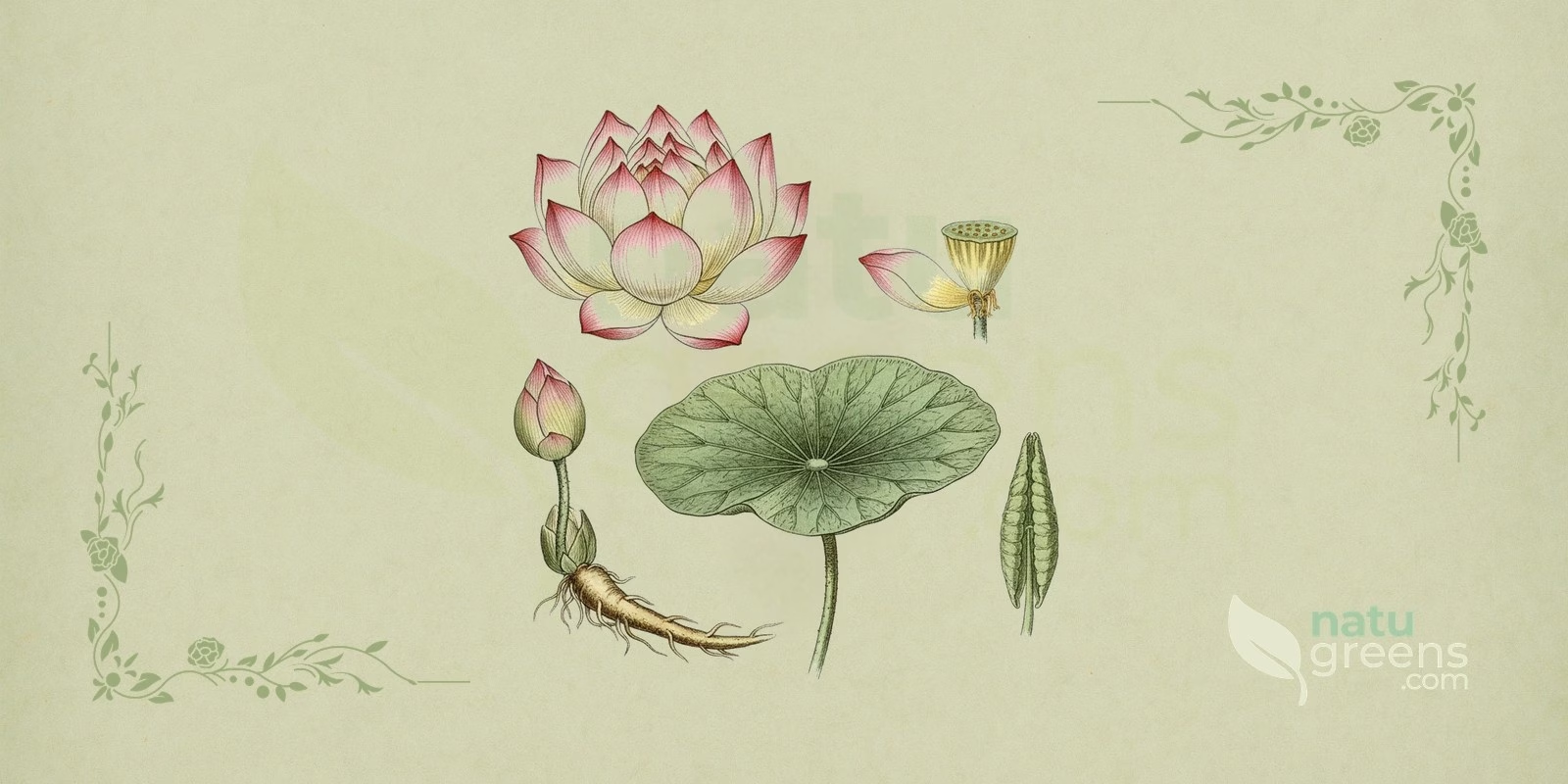
Grown both as an ornamental in water gardens and for culinary and medicinal purposes, the lotus is edible in almost all of its parts, and the rhizomes and seeds are the ones most often eaten as food. Beyond its nutritional value, Nelumbo nucifera carries deep cultural and religious significance in Asian traditions such as Hinduism and Buddhism, where it symbolizes purity, enlightenment and divine beauty. The plant also contains bioactive compounds, among them flavonoids and alkaloids, that pharmacologists have been investigating.
Popular and International Names of Lotus
- English: East Indian lotus, Indian lotus, lotus, lotus root, pink lotus, sacred lotus.
- French: fève d'Égypte, lotus indien, lotus sacré.
- German: Indische Lotosblume.
- Portuguese: flor-de-lótus, loto-índico, lótus, lótus-indiano, lótus-índico, lótus-sagrado.
- Spanish: flor de loto, loto indio, loto sagrado, rosa del Nilo.
In Brazil, the name lótus used without a qualifier refers to Nelumbo nucifera, which should not be confused with the blue lotus (Nymphaea caerulea) or the Egyptian lotus (Nymphaea lotus). Both are water lilies from another genus and another family, the Nymphaeaceae, with different compounds and a safety profile of their own, so data on one plant do not carry over to the other.
Botanical Synonyms of Nelumbo nucifera
- Nelumbium speciosum Willd.
- Nelumbo komarovii Grossh.
- Nymphaea nelumbo L.
The name Nymphaea nelumbo reflects a time when the lotus was classified alongside the water lilies, a grouping that older systems such as Bentham and Hooker's still kept and that is now considered obsolete. Modern taxonomy recognizes Nelumbo nucifera as a species of the genus Nelumbo, in the family Nelumbonaceae. This historical synonym does not turn the lotus into a Nymphaea, and, likewise, neither the blue lotus (Nymphaea caerulea) nor the Egyptian lotus (Nymphaea lotus) is a synonym of Nelumbo nucifera, since they are distinct species belonging to another botanical family.
Botanical Family: Nelumbonaceae
The Nelumbonaceae family comprises perennial aquatic plants in a single genus, Nelumbo, with two living species, of which Nelumbo nucifera is the best known. The family is distinguished by its unique floral structure and by the ability of its flowers to regulate their own temperature. Although it is often confused with the Nymphaeaceae, the family of water lilies, genetic comparisons have placed the Nelumbonaceae in the order Proteales, the same order as the proteas. Its plants stand out for their adaptation to flooded environments and for producing seeds that remain viable for a very long time.
Parts of Lotus Used
- Flowers
- Green seed embryo (lian zi xin)
- Leaves (young ones as food, the others in traditional medicinal use)
- Rhizomes
- Seeds
- Stolons
The rhizome and seeds are common foods in Asia and are safe when eaten in normal dietary amounts. The leaves and the green seed embryo, known as lian zi xin, on the other hand, are the parts used in traditional medicine and hold most of the plant's alkaloids. Nuciferine is found in the leaves, while liensinine, isoliensinine and neferine are concentrated in the embryo.
Ethnobotanical and Traditional Uses
- Asian folk medicine (leaves, rhizomes and seeds)
- Ayurvedic medicine
- Food (flowers, rhizomes, seeds and young leaves)
- Food wrapping (broad leaves)
- Ornamental plant (water gardens)
- Symbol of longevity (Chinese culture)
- Symbol of spiritual purity and rebirth (Buddhism, Hinduism, Ismailism and Jainism)
- Traditional Chinese Medicine (leaves, seeds and the seed embryo, lian zi xin)
Therapeutic Properties of Lotus
- Anti-HIV (activity of benzylisoquinoline alkaloids and flavonoids from the leaves observed only in a laboratory assay, with no clinical use)
- Anti-inflammatory (activity described in preclinical studies)
- Anti-obesity (leaf extract under study; the weight-loss claim has not been validated in humans)
- Antioxidant (capacity to neutralize free radicals measured in the laboratory)
- Antiproliferative (activity observed in laboratory studies, with no clinical evidence)
- Cardioprotective (effects on the cardiovascular system investigated in preclinical studies)
- Diuretic (traditional record of increased fluid elimination)
- Fever reducer (traditional record)
- Hepatic stellate cell activation inhibitor (effect of neferine observed in cell culture)
- Hypoglycemic (glucose reduction recorded in studies with leaf and embryo extracts, without clinical validation)
- Hypotensive (effect on blood pressure recorded in studies with leaf and embryo extracts)
- Sedative (traditional record of a calming effect)
Detailed Phytochemical Profile of Lotus
- Aporphine alkaloids (nuciferine, concentrated in the leaves)
- Benzylisoquinoline alkaloids (coclaurine, norcoclaurine)
- Bisbenzylisoquinoline alkaloids (isoliensinine, liensinine, neferine, concentrated in the seed embryo)
- Flavonoids (miquelianin)
- Proteins (seeds)
- Starch (rhizomes)
The alkaloids are unevenly distributed throughout the plant, with nuciferine predominating in the leaves and liensinine, isoliensinine and neferine accumulating in the green seed embryo, which is why these two parts draw most of the interest of pharmacological research. The starch-rich rhizome and the protein-rich seeds have an essentially nutritional profile, which explains their everyday use as food in many Asian countries.
Preparation and Administration Forms of Lotus
Rhizome Decoction
To extract the compounds from the rhizomes, cut them into thin slices and boil them in water for about 20 to 30 minutes, until you obtain a liquid that can be drunk as a nourishing beverage. Tradition attributes a diuretic and general tonic action to this decoction, while its effect on blood glucose has only been examined in preliminary studies. Cooked rhizomes can also be added to soups and stews.
Seed Extract
Lotus seeds are the basis for extracts that concentrate their phytochemicals and reach the market as powders or capsules, sold as food supplements whose standardization makes it easier to control the amount of compounds ingested. These extracts are being examined in preliminary studies on the cardiovascular system and blood glucose, with no established clinical indication. Because they are concentrated, they should be avoided during pregnancy and breastfeeding, and the dose should be set only by a healthcare professional.
Leaf and Flower Infusion
An infusion of leaves and flowers is a common way of taking lotus in traditional medicine, prepared with a small amount of dried leaves or petals in a cup of hot water and left to steep for 5 to 10 minutes before straining. Tradition uses it to promote relaxation and digestion, and the drink can be taken hot or cold. Because the leaves concentrate alkaloids whose hypotensive and hypoglycemic effects have been recorded in studies, frequent use calls for guidance from a healthcare professional.
Synergy with Other Medicinal Plants
Lotus and Ginger in Digestive Tradition
Combining lotus with ginger (Zingiber officinale) is a feature of home preparations traditionally used for digestive comfort. Ginger has a record of carminative and antiemetic action, which adds to the traditional use of lotus for gastrointestinal discomfort. The pair is mentioned above all after heavy meals, as a traditional way to ease bloating, gas and nausea, although no clinical study has evaluated the blend.
Lotus with Chamomile or Valerian for Relaxation
Pairing lotus with chamomile (Matricaria chamomilla) or valerian (Valeriana officinalis) is a traditional way to calm the nervous system, ease stress and support sleep in people with insomnia, anxiety or nervousness. The plants are usually prepared together in infusions taken before bedtime. Since all three plants have a record of calming effects, the combination may intensify drowsiness, so the blend should not be taken alongside sedative medications without professional guidance.
Recipes and Usage Protocols of Lotus
Lotus Petal Tea
Ingredients: 1 teaspoon of dried lotus petals and 200 ml of hot water.
Preparation: Place the petals in a cup, cover them with the hot water and let them steep for 5 to 7 minutes before straining. This tea is traditionally used in moments of tension or before bed, in search of a sense of calm and well-being, and can be sweetened with honey if you like. For frequent use or alongside medications, talk to a healthcare professional first.
Lotus Rhizome and Vegetable Soup
Ingredients: 200 g of sliced lotus rhizome, 1 liter of vegetable broth, assorted vegetables (carrots and mushrooms), salt and pepper to taste.
Preparation: Sauté the rhizome and vegetables in a drizzle of olive oil, add the broth and cook until the rhizome slices are tender, seasoning with salt and pepper at the end. The soup is comforting, makes the most of the nutritional value of the fiber-rich rhizome and works well as a light, healthy meal.
Lotus Shoot Salad
Ingredients: fresh lotus shoots, vinaigrette and toasted sesame seeds.
Preparation: Wash the shoots thoroughly, blanch them briefly in boiling water and cut them into thin slices, since aquatic plants eaten raw can transmit parasites. Toss with the vinaigrette and sprinkle the toasted sesame on top for a crisp, refreshing salad that goes well with Asian dishes or serves as a light starter, and always choose shoots from a known source.
The preparations above follow traditional records and do not replace professional guidance. Before any internal use, check the contraindications and interactions described in this article.
Associated Therapies
Aromatherapy
The essential oil extracted from lotus flowers is used in aromatherapy for its relaxing and uplifting qualities. Its soft fragrance often accompanies meditation, stress relief and the creation of calm surroundings, whether diffused into the air or applied to the skin, diluted in a vegetable carrier oil, during relaxing massages. In the aromatherapy tradition, the scent of lotus is believed to help balance emotions and foster mental clarity, a belief not yet confirmed by controlled studies.
Herbal Medicine
In herbal medicine, lotus is valued for its versatility and appears in infusions, decoctions and extracts. Each part of the plant is used traditionally for digestive and inflammatory complaints and has been investigated in studies on the cardiovascular system and blood glucose. This practice rests on centuries of traditional use and is being complemented by research on the plant's bioactive compounds, whose results are still largely limited to laboratory and animal studies.
Traditional Chinese Medicine (TCM)
In Traditional Chinese Medicine, lotus (lian) is widely used, especially its seeds (lian zi), the green seed embryo (lian zi xin), the leaves and the rhizomes. The seed is described as a tonic for the spleen and heart, able to calm the mind (Shen) and nourish Yin. Tradition uses it for insomnia, palpitations, diarrhea and digestive disorders, within complex formulas aimed at harmonizing body and mind and restoring energetic balance.
Contraindications and Side Effects of Lotus
Lotus is widely eaten as food and used in traditional medicine, and most people tolerate the rhizome and seeds well in dietary amounts. Some conditions, however, call for caution or for stopping medicinal preparations, especially leaf and embryo extracts. The safety data gathered here apply only to Nelumbo nucifera and do not apply to the blue lotus (Nymphaea caerulea) or the Egyptian lotus (Nymphaea lotus), plants that belong to the Nymphaeaceae family and have their own compounds and safety profile.
Contraindications
- Antihypertensive, Antidiabetic or Antiarrhythmic Medications: Leaf and embryo extracts at medicinal doses have a recorded hypotensive and hypoglycemic effect in studies, which calls for caution and professional guidance for anyone taking antihypertensive, antidiabetic or antiarrhythmic drugs, since neferine acts on cardiac ion channels in preclinical research.
- Diabetes: The hypoglycemic effect recorded in studies means that medicinal use by people with diabetes should be supervised by a healthcare professional, to avoid interactions with medications and loss of blood glucose control.
- Hypotension: Because of its potential hypotensive effect, people with low blood pressure should use lotus with caution and monitor their blood pressure.
- Pregnancy and Breastfeeding: Due to a lack of data, concentrated extracts should be avoided during pregnancy and breastfeeding, and the same caution applies to medicinal leaf and embryo teas, whereas the rhizome and seeds eaten as ordinary food are allowed.
- Sedatives: Given its traditional record of a calming effect, lotus, especially when combined with chamomile or valerian, may add to the drowsiness caused by sedative medications, and this combination should only be used with professional guidance.
- Surgery and Anticoagulants: Because of a possible anticoagulant effect that remains poorly studied, it is recommended to stop medicinal lotus preparations at least two weeks before any surgical procedure and to combine them with anticoagulants only under medical guidance.
Lotus leaf extract sold for weight loss carries a claim that has not been validated in humans. The anti-obesity effect is still under study and does not justify using it on your own, especially at concentrated doses. The seed embryo, rich in alkaloids, should not be used at medicinal doses without the supervision of a healthcare professional either.
Side Effects
- Allergic Reactions: In rare cases, sensitive people may develop allergic reactions such as skin rashes or itching.
- Drowsiness: Because of the sedative properties attributed to the plant, consuming large amounts may cause drowsiness.
- Gastrointestinal Disorders: Excessive consumption, especially of raw or undercooked rhizomes, can cause gastrointestinal discomfort such as bloating or diarrhea and exposes people to parasites found in aquatic plants, a risk that proper cooking reduces.
Before using lotus for medicinal purposes, especially if you have a pre-existing condition or take other medications, seek advice from a healthcare professional. Self-medicating with concentrated extracts can be dangerous, and professional follow-up makes use safer.
Historical Notes and Interesting Facts
Steeped in history and symbolism, the lotus is the national flower of India and, unofficially, of Vietnam as well, which shows its deep cultural importance in these regions. One of its most fascinating features is the longevity of its seeds, which can remain viable for more than a thousand years. In 1994, a seed from China roughly 1,300 years old was successfully germinated, a remarkable proof of this resilience.
Lotus also has a rare capacity for thermoregulation, keeping its flowers at 30 to 35 °C even when the surroundings are cooler, a mechanism believed to help attract pollinators. In art and literature, the flower is a recurring motif and symbolizes purity, beauty and rebirth because it emerges spotless from the mud. Its constant presence in temples and religious texts confirms its standing as a plant of priceless spiritual and historical value.
Frequently Asked Questions about Lotus
Does Lotus Tea Help You Sleep?
Tradition uses lotus tea to encourage relaxation and sleep. Alkaloids such as neferine, which act on the central nervous system in preclinical studies, are being investigated as a possible explanation for this calming effect. There are, however, no clinical studies confirming a benefit for people with insomnia. Anyone taking sedative medications should talk to a healthcare professional before adding the tea to their routine.
What Benefits Are Attributed to Lotus?
Thanks to its rich content of flavonoids and alkaloids, lotus has been investigated in laboratory studies for antioxidant, anti-inflammatory and cardioprotective actions, and it also has a traditional record as a digestive aid, fever reducer and diuretic. Preliminary studies are also evaluating hypoglycemic and anti-obesity effects. Tradition further values its relaxing properties in times of stress and anxiety, although none of these uses has definitive clinical proof.
Does Lotus Tea Have Side Effects?
Lotus tea is generally well tolerated, but excessive consumption can cause drowsiness and, in sensitive people, allergic reactions. People with low blood pressure should be cautious, because leaf and embryo preparations have a recorded hypotensive effect in studies. Pregnant and breastfeeding women should avoid concentrated extracts, and anyone taking antihypertensive, antidiabetic or antiarrhythmic drugs needs professional guidance before regular use.
Are Lotus and Blue Lotus the Same Plant?
No, because lotus without a qualifier, as the plant is called in Brazil, is Nelumbo nucifera, of the Nelumbonaceae family, whereas the blue lotus (Nymphaea caerulea) and the Egyptian lotus (Nymphaea lotus) are water lilies of the Nymphaeaceae family. Nymphaea species have other compounds and their own safety profile, so information about the use, dosage or risks of one plant should never be transferred to the other.
Does Lotus Leaf Extract Help with Weight Loss?
Lotus leaf extract sold for weight loss rests on a claim that has not been validated in humans. The anti-obesity effect is still under study, mainly in laboratory research on alkaloids such as nuciferine. Because these extracts also have a recorded hypotensive and hypoglycemic effect in studies, using them on your own is not recommended, especially for people taking medications for blood pressure, diabetes or arrhythmia.
Where Can I Find Lotus for Tea?
Dried lotus leaves, petals and seeds are usually sold in health food stores, Asian markets and online shops specializing in botanical products. When buying, choose reliable suppliers, preferably with organic products whose origin and certifications are stated. Also check the label for the scientific name Nelumbo nucifera so you do not take home another plant that is also called lotus.
Notice: this content is for informational purposes and does not replace professional medical advice. Consult a physician or herbal practitioner before using medicinal plants, especially during pregnancy, breastfeeding, or alongside medication.
How to cite this article
NATUGREENS. Lotus (Nelumbo nucifera): Properties and Benefits. Natugreens, 3 Nov. 2026. Disponível em: https://natugreens.com/lotus-nelumbo-nucifera/. Accessed: Nov. 5, 2026.
Natugreens. (2026). Lotus (Nelumbo nucifera): Properties and Benefits. Natugreens. https://natugreens.com/lotus-nelumbo-nucifera/
References and Scientific Studies
- PMC2005 Kashiwada Y, et al. Anti-HIV benzylisoquinoline alkaloids and flavonoids from the leaves of Nelumbo nucifera, and structure-activity correlations with related alkaloids. Bioorganic & Medicinal Chemistry. 2005.
- PMC2014 Ma C, et al. Purification and characterization of aporphine alkaloids from leaves of Nelumbo nucifera Gaertn and their effects on glucose consumption in 3T3-L1 adipocytes. International Journal of Molecular Sciences. 2014.
- PMC2009 Mukherjee PK, et al. The sacred lotus (Nelumbo nucifera): phytochemical and therapeutic profile. Journal of Pharmacy and Pharmacology. 2009.
- Pregnancy
- Breastfeeding
- Drug interactions
- Low blood pressure
- Diabetes
- Surgery
- Allergy
- Bleeding / coagulation disorders
- Heart disease
Not an exhaustive list. Read the full contraindications section before considering use.
Read full section