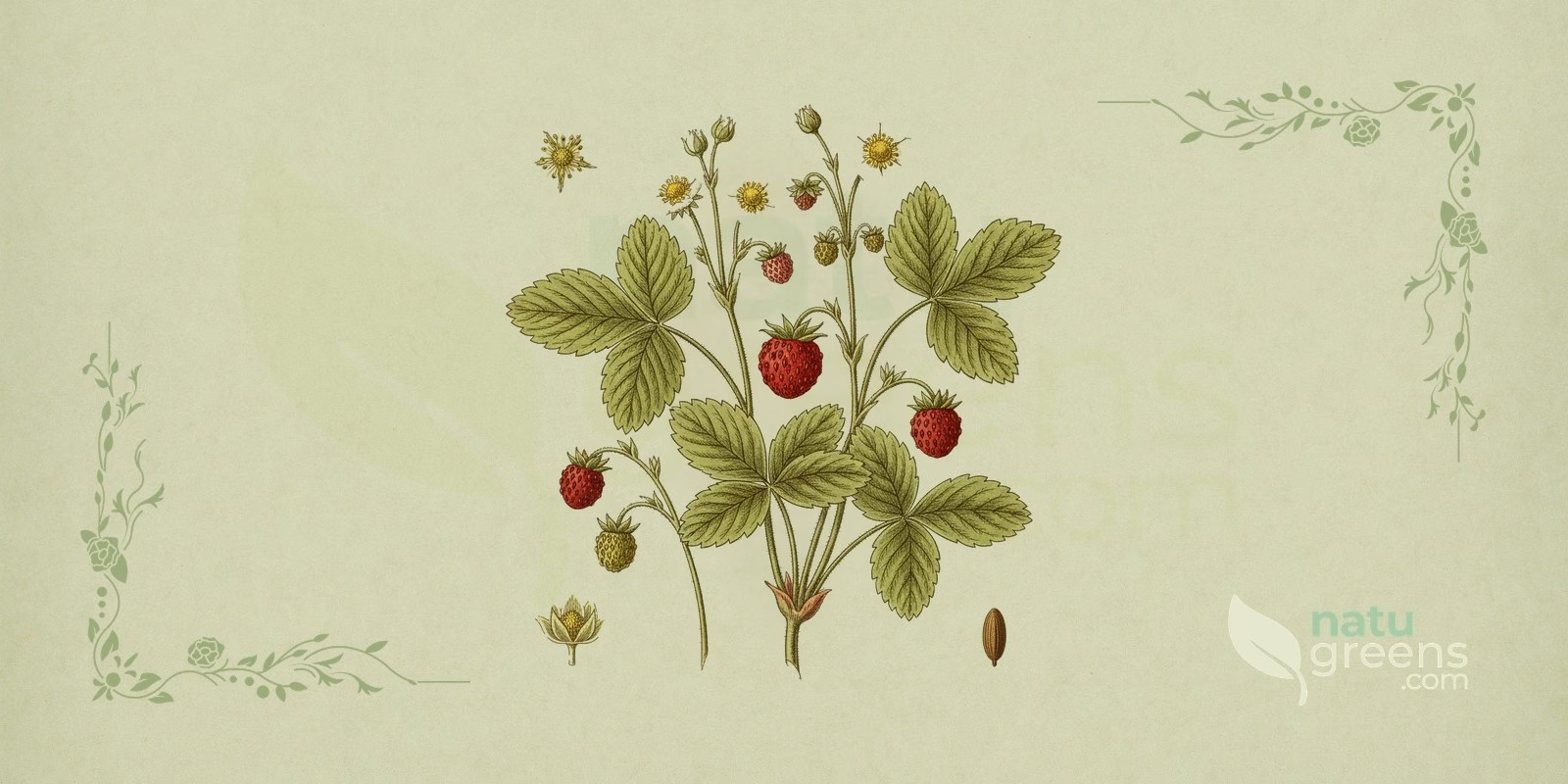
Fragaria vesca L. / Wild Strawberry, commonly known as wild strawberry, woodland strawberry or Alpine strawberry, is a perennial herbaceous plant of the Rosaceae family. Native to much of the Northern Hemisphere, where it grows naturally, it is prized for its small, aromatic and edible fruits. Part of the human diet since the Stone Age, wild strawberry also holds a long-standing place in traditional medicine, which mainly uses the leaves in astringent teas, while the fruits remain valued for their flavor and nutritional content.
Popular and International Names of Wild Strawberry
- English: Alpine strawberry, Carpathian strawberry, European strawberry, wild strawberry, woodland strawberry.
- French: fraise des bois, fraisier sauvage.
- German: Buscherdbeere, Walderdbeere.
- Italian: fragola di bosco, fragolina di bosco.
- Portuguese: morango-alpino, morango-do-bosque, morango-do-mato (BR), morango silvestre, morangueiro-silvestre (PT).
- Spanish: fresa silvestre, fresilla, frutilla silvestre.
Botanical Synonyms of Fragaria vesca
The name Fragaria vesca L., whose abbreviation credits Linnaeus as its author, is the accepted name for the species, and no synonym in current use replaces it in contemporary scientific literature, so it remains the preferred name. Some sources, however, may refer to specific subspecies, such as americana, bracteata and californica, native to North America, as well as the typical subspecies vesca, which has a Eurasian distribution. For this reason, it is worth checking the full name of the taxon when consulting studies on the plant.
Botanical Family: Rosaceae
Rosaceae is a vast and diverse family of flowering plants, comprising more than 4,800 species distributed across 91 genera. Its economic importance is considerable, as it supplies many edible fruits, such as apples, peaches, pears, plums and strawberries. Its plants usually bear showy flowers with five petals and numerous stamens, and varied fruits that may be drupes, pomes or clusters of achenes. In the strawberry, the small achenes sit on a fleshy receptacle.
Wild strawberry shares morphological traits typical of the family, such as its white flowers and trifoliate leaves. It also contains bioactive compounds such as flavonoids and tannins, common in many Rosaceae species and associated with their medicinal and nutritional properties. Because of this chemical richness, the family is fertile ground for phytochemical and pharmacological research, which continues to investigate the potential of many of its plants.
Parts of Wild Strawberry Used
- Fruits
- Leaves
- Roots
Ethnobotanical and Traditional Uses
- Digestive discomfort (traditional record)
- Diuretic in folk use, from the leaves
- General tonic (folk use)
- Jaundice (traditional record, without clinical confirmation)
- Liver problems (traditional record, without clinical confirmation)
- Mild diarrhea relief, especially with the leaf tea
Therapeutic Properties of Wild Strawberry
- Anti-inflammatory (effect observed in laboratory studies with leaf extracts)
- Antimicrobial (activity reported in laboratory assays, without clinical proof)
- Antioxidant (neutralizes free radicals in laboratory assays)
- Antiseptic (traditional record of topical use on mild skin irritations)
- Astringent (tightens tissues, an action attributed to the tannins in the leaves)
- Depurative (traditional record)
- Diuretic (traditional use of the leaves to increase urine output)
- Emollient (traditional record of topical use of the mashed fruits)
- Tonic (traditional record as a general invigorant)
Detailed Phytochemical Profile of Wild Strawberry
- Agrimoniin (ellagitannin)
- Anthocyanins
- Carbohydrates (sucrose)
- Esters
- Flavonoids
- Minerals (copper, iodine, iron, manganese, potassium)
- Monoterpenes (limonene, α-pinene, β-pinene)
- Phenolic acids
- Polyunsaturated fatty acids (linoleic, linolenic)
- Soluble dietary fiber
- Tannins
- Vitamins (A, B, C, E)
Preparation and Administration Forms of Wild Strawberry
- Compotes
- Fresh fruits
- Jams
- Juice
- Poultice
- Purée
- Tea (leaf infusion)
- Tonic wine
Synergy with Other Medicinal Plants
Companion Planting
In gardening tradition, wild strawberry benefits from the company of plants such as leeks, lettuce and onions, which, according to growers, help keep pests away and encourage healthier, more vigorous growth of the strawberry plant. Winter savory (Satureja montana) also appears in these recommendations as a good bed companion, contributing to the plant’s vitality. This is, however, a cultivation practice and not a combination for medicinal use.
Traditional Combinations
In some traditional formulas, wild strawberry is combined with stinging nettle (Urtica dioica), a pairing to which tradition attributes a mutual reinforcement of the depurative and tonic effects of both plants. The combination also appears in traditional preparations intended to support the liver. There are, however, no clinical studies demonstrating this potentiation, so the synergy should be understood as a traditional record. Anyone with liver disease needs medical supervision before turning to any herbal preparation.
Recipes and Usage Protocols of Wild Strawberry
Fruit Poultice for Mild Skin Irritations
This preparation is traditionally used to soothe mild irritations and minor inflammation of intact skin, drawing on the emollient and antiseptic action that folk medicine attributes to the fresh fruits, without clinical proof for topical use.
Ingredients: fresh wild strawberry fruits, well washed.
Preparation: Mash the fresh fruits into a paste and apply it directly to the area of mildly irritated skin, leaving it on for 15 to 20 minutes before rinsing with running water. Do not apply it to open wounds, and do a patch test on a small area first, since people allergic to strawberries may also react to skin contact with the fruit.
Leaf Infusion for Mild Diarrhea
This infusion is traditionally used to increase urine output and relieve mild diarrhea, a use that rests on the astringent tannin content of the leaves and on the record of folk medicine.
Ingredients: dried wild strawberry leaves and boiling water, in a small, moderate proportion set with the guidance of a health professional.
Preparation: Add the dried leaves to the boiling water, cover and let steep for 5 to 10 minutes before straining and drinking. As extensive safety studies on prolonged use are lacking, consumption should be moderate and short-term, without fixed doses, and it is essential to consult a health professional, especially if the diarrhea persists, comes with fever or blood, or affects young children, older adults or pregnant women.
The preparations above follow traditional records and do not replace professional guidance. Before any internal use, check the contraindications and interactions described in this article.
Associated Therapies
Herbal Medicine
In herbal medicine, the leaves of Fragaria vesca are valued for their astringent, diuretic and tonic properties. They often appear in traditional preparations for digestive support and mild diarrhea and, in folk records, as an adjunct in liver conditions. Leaf extracts have shown antioxidant and anti-inflammatory activity in laboratory studies and cell models, as well as cardiovascular effects observed in vitro. These findings help explain the traditional use, but they have not yet been confirmed in clinical trials in humans.
Nutrition and Diet
Wild strawberry fruits are recognized for their good nutritional value and are sometimes described as a superfood, as they combine vitamins (A, B, C, E), minerals (iron, manganese, potassium) and antioxidants such as anthocyanins and flavonoids. Eaten fresh or in preparations such as jams and juices, they can be part of a varied diet and provide essential nutrients and bioactive compounds, whose possible contribution to cardiovascular health and general well-being is still being investigated.
Contraindications and Side Effects of Wild Strawberry
Allergies
The main contraindication of wild strawberry is allergy, since the fruit can cause an allergic reaction in sensitive people (hives, especially in young children). Individuals with a known sensitivity to strawberries or to other plants of the Rosaceae family should avoid eating it. Reactions can range from mild, such as hives and swelling, to severe, such as anaphylaxis. For this reason, any sign of an adverse reaction after eating it deserves attention, and shortness of breath or swelling of the face and lips requires immediate medical care.
Pregnancy and Breastfeeding
Although eating wild strawberries in food amounts is generally considered safe during pregnancy and breastfeeding, there is not enough information on the safety of medicinal doses, leaf tea or concentrated extracts during these stages. For this reason, pregnant and breastfeeding women are advised to consult a health professional before using wild strawberry for medicinal purposes.
Drug Interactions
There are no widely documented drug interactions for Fragaria vesca at medicinal doses, but because of its diuretic and astringent properties, caution is advisable in patients taking diuretics or other medications for kidney or gastrointestinal conditions. Before combining medicinal plants with prescription drugs, always consult a doctor or pharmacist.
Internal Use of the Leaves
The leaf tea, taken internally, should be used in moderation due to the lack of extensive safety studies on prolonged use. The recommendation is to favor short periods, with professional supervision, and to give it to children only under pediatric guidance. As for eating the fruit as food, there is no relevant restriction at the usual dietary doses of the fruit for people without a known allergy. Signs such as jaundice or suspected liver disease, on the other hand, require medical evaluation and should not be managed with teas alone.
Historical Notes and Interesting Facts
Difference between Wild Strawberry and Cultivated Strawberry
Although it is among the genetic ancestors of cultivated varieties, wild strawberry stands out for its smaller size, more concentrated flavor and more intense aroma. The modern cultivated strawberry, Fragaria × ananassa, is a hybrid resulting from complex crosses, developed to produce larger and sturdier fruits, but often with a less complex flavor profile than the wild one.
Origin and Ancient History
The history of wild strawberry goes back to the Stone Age, and archaeological evidence suggests that humans have eaten it since prehistoric times. In Europe, it was a highly prized wild fruit before modern cultivated varieties were developed. Its delicacy and intense flavor made it a favorite in medieval and Renaissance gardens.
Use as a Model Plant
Because it has a small genome and a short reproductive cycle, Fragaria vesca is widely used as a model plant in the genetics of the cultivated strawberry and of the Rosaceae family in general. The sequencing of its genome, released at the end of 2010 and refined in later versions, provided valuable information on fruit genetics and plant biology.
Frequently Asked Questions about Wild Strawberry
What Is the Relationship between Wild Strawberry and Heart Health?
Wild strawberry fruits are rich in anthocyanins, antioxidant flavonoids studied for a possible role in protecting cells against oxidative damage and in vascular health. An in vitro study with an aqueous leaf extract also observed cardiovascular effects. These laboratory findings, however, are not equivalent to clinical proof, and wild strawberry is no substitute for the treatment of heart disease.
Does Wild Strawberry Help with Digestion?
Wild strawberry leaves are traditionally used to aid digestion, as they have astringent properties attributed to tannins and appear in folk records as a way to relieve mild diarrhea and other gastrointestinal discomforts. Leaf infusion is the most common form of this use, which should be moderate and brief, and persistent symptoms call for medical evaluation.
Is Wild Strawberry Safe for Daily Consumption?
For people without a known allergy, wild strawberry is generally safe for daily consumption in food amounts, since there is no relevant restriction at the usual dietary doses of the fruit, while people allergic to strawberries should avoid it. The leaf tea, taken internally, should be used in moderation due to the lack of extensive safety studies on prolonged use, and anyone planning to drink it regularly should consult a health professional.
Which Parts of Wild Strawberry Can Be Used?
Both the fruits and the leaves of wild strawberry are used: the fruits are eaten fresh or in culinary preparations, while the leaves are usually used in teas and infusions because of the medicinal properties attributed to them. The roots also appear in some traditional preparations, although they are used much less often.
Are There Differences between Wild Strawberry and Alpine Strawberry?
The term “Alpine strawberry” usually refers to cultivated varieties of Fragaria vesca that produce larger fruits and have a long flowering period, often without sending out runners. Although they are botanically the same species, the distinction is made in the context of cultivation and the specific characteristics of each variety.
Can Wild Strawberry Cause Allergies in Children?
Yes, the fruit can cause an allergic reaction in sensitive people, with hives especially in young children. For this reason, it should be introduced into children’s diets gradually, watching for red patches, itching or swelling. If more intense signs appear, such as shortness of breath or swelling of the face and lips, seek immediate medical care. Leaf tea, in turn, should only be given to children under pediatric guidance.
Notice: this content is for informational purposes and does not replace professional medical advice. Consult a physician or herbal practitioner before using medicinal plants, especially during pregnancy, breastfeeding, or alongside medication.
References and Scientific Studies
- PMC2022 Cyboran-Mikołajczyk S, et al. Protection of Erythrocytes and Microvascular Endothelial Cells against Oxidative Damage by Fragaria vesca L. and Rubus idaeus L. Leaves Extracts: The Mechanism of Action. Molecules. 2022.
- PMC2018 D’Urso G, et al. Combination of LC-MS based metabolomics and antioxidant activity for evaluation of bioactive compounds in Fragaria vesca leaves from Italy. J Pharm Biomed Anal. 2018.
- PMC2016 Dias MI, et al. Wild Fragaria vesca L. fruits: a rich source of bioactive phytochemicals. Food Funct. 2016.
- PMC2014 Liberal J, et al. Bioactivity of Fragaria vesca leaves through inflammation, proteasome and autophagy modulation. J Ethnopharmacol. 2014.
- PMC2009 Mudnic I, et al. Cardiovascular effects in vitro of aqueous extract of wild strawberry (Fragaria vesca, L.) leaves. Phytomedicine. 2009.
- PMC2011 Shulaev V, et al. The genome of woodland strawberry (Fragaria vesca). Nat Genet. 2011.