Quick summary
Purple loosestrife (Lythrum salicaria L.) is a perennial herbaceous plant of the Lythraceae family, also known in English as spiked loosestrife and purple lythrum. Native to Europe and western Asia, it has spread to several continents thanks to its remarkable ability to adapt to riverbanks, marshes and waterlogged…
Main caution: There are no clinical studies establishing safe doses of purple loosestrife, so internal use should always be guided by a health professional. The plant contains tannins and flavonoids that may interact with certain…
Purple loosestrife (Lythrum salicaria L.) is a perennial herbaceous plant of the Lythraceae family, also known in English as spiked loosestrife and purple lythrum. Native to Europe and western Asia, it has spread to several continents thanks to its remarkable ability to adapt to riverbanks, marshes and waterlogged soils, and it has featured for centuries in European traditional medicine, with mentions in a number of historical texts. Its flowers, an intense purple and gathered in dense spikes, are harvested at the height of flowering to prepare infusions, extracts and other herbal products.
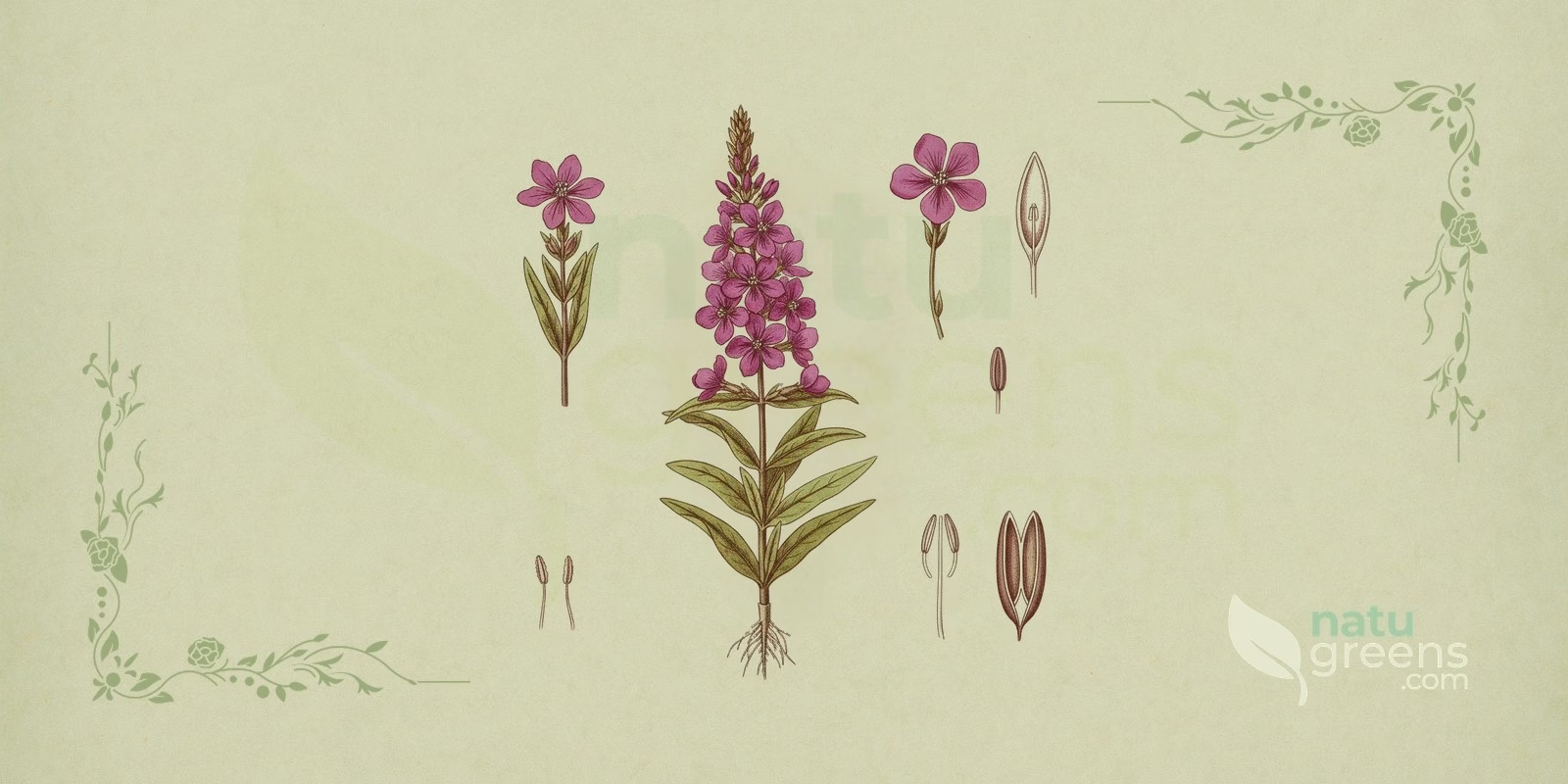
In the European herbal tradition, purple loosestrife stands out as an astringent and anti-inflammatory plant, with applications ranging from gastrointestinal complaints such as diarrhea and dysentery to the relief of skin inflammation. This reputation is linked to a phytochemical makeup rich in tannins and flavonoids, and laboratory and animal studies have been looking into several of these traditional uses, although clinical trials in humans are scarce and do not support any promise of effect.
Popular and International Names of Purple Loosestrife
- English: long purples, purple loosestrife, purple lythrum, red sally, spiked loosestrife.
- French: salicaire, salicaire commune, salicaire pourpre.
- German: Blut-Weiderich, Gewöhnlicher Blutweiderich.
- Italian: salicaria, salicaria comune.
- Portuguese: erva-carapau, lisimáquia-roxa, salgueirinha, salgueirinha-roxa, salgueiro-roxo, salicária (names in common use in Portugal, with no formal record in Brazil).
- Spanish: arroyuela, frailecillo, lisimaquia morada, salicaria.
Botanical Synonyms of Lythrum salicaria
Lythrum intermedium Ledeb. ex Colla appears in the literature as a botanical synonym of the species and, in some works, was even treated as a separate species. Today, Lythrum salicaria L. is the name accepted by most botanical authorities and also the one most widely used in scientific and pharmacological publications, which makes it easier to find studies on the plant in specialized databases.
Botanical Family: Lythraceae
The Lythraceae family comprises about 30 genera and 600 species, distributed mainly across tropical and subtropical regions, and is characterized by showy flowers and fruits that are generally capsules. Many of its species have ornamental, food or medicinal value, such as crape myrtle (Lagerstroemia indica), widely planted along streets and in squares in Brazil, henna (Lawsonia inermis) and pomegranate (Punica granatum). Purple loosestrife shares morphological traits typical of the group, such as six-petaled flowers and a tubular calyx, and the chemical diversity of the family has been the subject of research that has already revealed bioactive compounds of pharmacological interest.
Parts of Purple Loosestrife Used
- Aerial parts (flowers, leaves and stems)
- Root
European tradition favors the flowering aerial parts, harvested at the height of flowering, which form the basis of the infusions, tinctures and compresses described below; the root is also listed among the parts used, although the preparations presented in this article use only the aerial parts.
Ethnobotanical and Traditional Uses
- Anxiety and nervousness
- Chronic intestinal catarrh
- Diarrhea and dysentery
- Eczema and skin inflammation
- Eye problems
- Fungal infections (topical use)
- Hemorrhoids
- Relief of intestinal cramps and flatulence
- Sore throat and respiratory complaints
- Typhus (historical record)
- Varicose veins
- Wounds, ulcers and sores (topical use)
These uses reflect records from European folk medicine and are not equivalent to proven indications, so conditions such as persistent diarrhea, dysentery, typhus, eye problems and extensive wounds always require medical assessment before turning to any plant.
Therapeutic Properties of Purple Loosestrife
- Antibacterial (inhibition of bacteria observed in the laboratory)
- Antifungal (inhibition of fungi observed in the laboratory)
- Anti-inflammatory (reduction of inflammation observed in preliminary studies)
- Antioxidant (neutralization of free radicals in laboratory tests)
- Astringent (tightens tissues; traditionally recorded for stopping bleeding)
- Gastroprotective (protection of the gastrointestinal tract suggested by preliminary studies)
- Hepatoprotective (liver protection suggested by preliminary studies)
- Hypoglycemic (lowering of blood glucose observed in animal studies, without clinical confirmation)
- Immunomodulatory (modulation of the immune system suggested by preliminary studies)
Most of these properties come from laboratory and animal studies, not from clinical trials in people. A review published in 2015 in the Journal of Ethnopharmacology brought together the plant’s uses in European traditional medicine and the pharmacological data available at the time, while a 2020 study showed that ellagitannins isolated from purple loosestrife inhibited the growth and adhesion of enteropathogenic Escherichia coli and stimulated monolayer formation in cultured intestinal cells, a finding consistent with its traditional antidiarrheal use. In 2025, an ethanolic extract was evaluated in rats with experimentally induced diabetes, and wound-healing activity in burns had already been investigated in an experimental study from 2016, preliminary results that do not replace medical assessment.
Detailed Phytochemical Profile of Purple Loosestrife
- Anthocyanins
- Coumarins
- Essential oils (in smaller amounts)
- Flavonoids (apigenin, isoorientin, isovitexin, luteolin, orientin, vitexin)
- Phenolic acids (caffeic acid, ellagic acid, ferulic acid, gallic acid, p-coumaric acid)
- Steroids
- Tannins (ellagitannins such as castalagin, salicarinins A, B and C, and vescalagin)
- Triterpenes
The ellagitannins, among them vescalagin, castalagin and the salicarinins, are considered the plant’s main compounds and account for much of the astringent action that tradition attributes to it. A 2025 study of extracts from wild populations in Transylvania, Romania, analyzed the phenolic profile, antioxidant activity and animal toxicity of these extracts, a type of assessment that helps characterize the raw material and underlines the importance of using plant material of known origin.
Preparation and Administration Forms of Purple Loosestrife
- Compresses
- Infusion (tea)
- Massage oil (with essential oil)
- Poultice
- Tincture
Infusion and tincture are the most frequently cited forms for internal use, while poultices, compresses and massage oil are limited to intact skin or superficial lesions. In every case, the amount and duration of use should be agreed with a health professional, because prolonged use of tannins can cause constipation and reduce the absorption of iron from food.
Synergy with Other Medicinal Plants
Traditional Combination with Usnea
In folk herbal practice, purple loosestrife appears alongside usnea (Usnea), a lichen with a long history in herbalism, in external preparations traditionally used for fungal skin infections such as athlete’s foot. The idea behind the blend is to pair the astringent action of purple loosestrife tannins with the antimicrobial properties attributed to usnea, but this synergy remains a matter of traditional record, with no confirmation from clinical studies, and fungal infections that do not clear up call for medical assessment.
Traditional Combination for the Airways
For winter respiratory complaints, traditional records pair purple loosestrife with elder (Sambucus nigra), mullein (Verbascum thapsus), plantain (Plantago major), sumac (Rhus coriaria) and yarrow (Achillea millefolium), mainly in homemade syrups. These blends are traditionally used to soothe coughs, ease airway inflammation and support expectoration during flu and other cold-season respiratory infections, although no studies confirm their combined effect, and high fever, shortness of breath or a persistent cough require medical assessment.
Recipes and Usage Protocols of Purple Loosestrife
Compress for Skin Inflammation
This compress is traditionally used to soothe skin inflammation, eczema and superficial wounds, drawing on the astringent and anti-inflammatory action attributed to the plant. Make a strong infusion with 2 tablespoons of the dried aerial parts in 200 ml of boiling water, let it cool and strain it, then soak a piece of gauze or a clean cloth in the liquid and apply it to the affected area 2 to 3 times a day.
Always use clean materials and a preparation made the same day, do not apply it to deep, infected or weeping wounds, which need medical assessment, and stop using it if redness, itching or burning appears in the area.
Traditional Infusion for Diarrhea
This infusion is traditionally used for mild diarrhea and intestinal catarrh, an association that tradition credits to the plant’s high tannin content and its astringent action on the gastrointestinal tract. It is prepared like an ordinary tea, with the dried aerial parts placed in boiling water and the container kept covered for a few minutes, after which the liquid is strained and drunk warm.
Because safety data for prolonged internal use are lacking, the amount of herb, the number of cups per day and the length of use should not be decided on your own, so consult a health professional. Persistent diarrhea, diarrhea with blood or fever, and any case in children, pregnant women or older adults call for medical assessment because of the risk of dehydration, and continuous use should be avoided, since tannins can cause constipation and reduce iron absorption.
The preparations above follow traditional records and do not replace professional guidance. Before any internal use, check the contraindications and interactions described in this article.
Associated Therapies
Western Herbal Medicine
In Western herbal medicine, purple loosestrife is a folk remedy for a wide range of complaints, including digestive problems, inflammation and nervous disorders, and it usually comes in the form of infusions, tinctures and standardized extracts. The plant is valued above all for its astringent and anti-inflammatory properties, but, contrary to what some popular sources claim, its safety and efficacy are not well documented in clinical trials, which calls for caution in self-care and for use only as a complement, under professional supervision.
Integrative Approaches
In an integrative approach, purple loosestrife serves as a complement and never as a substitute for medical diagnosis or treatment, especially in persistent diarrhea, infections and extensive wounds. Traditional records associate it with skin care through compresses and poultices and with combinations of other herbs in winter syrups, practices that should be guided by a qualified professional who pays attention to the interactions described in the contraindications section.
Contraindications and Side Effects of Purple Loosestrife
General Considerations
There are no clinical studies establishing safe doses of purple loosestrife, so internal use should always be guided by a health professional. The plant contains tannins and flavonoids that may interact with certain medications, and this precaution applies especially to people with chronic conditions or who take medication on an ongoing basis, since interactions and adverse effects are easier to avoid than to correct.
Tannins, Iron and Constipation
Purple loosestrife is rich in tannins, which can reduce the absorption of iron from other foods, calling for caution in people with iron-deficiency anemia, and which can cause constipation with prolonged use. Anyone taking iron supplements or prone to constipation should talk to a doctor before using the plant and avoid taking it with iron-rich meals.
Pregnancy, Breastfeeding and Children
Because there are no safety data for medicinal use during pregnancy and breastfeeding, purple loosestrife should be avoided by pregnant and breastfeeding women, including in the form of teas and tinctures. There are also no studies in children, and internal use in this age group should not take place without a pediatrician’s guidance, not least because diarrhea in children requires medical assessment due to the risk of dehydration.
Drug Interactions
Since studies in rats observed lower blood glucose with extracts of the plant, people taking oral hypoglycemic drugs or insulin should avoid the combination without medical supervision, given the theoretical risk of an excessive drop in blood sugar. Tannins can also bind to medicines and supplements taken by mouth, such as iron products, and reduce their absorption, and people taking anticoagulants, antidepressants or sedatives, or who are considering the plant for anxiety, should tell their doctor before combining them, since there are no interaction studies with these drug classes.
Allergies
People with a known allergy to plants of the Lythraceae family should avoid purple loosestrife, as reactions can range from mild to severe and include skin rashes, itching or difficulty breathing. Anyone with a previous sensitivity to plants would be wise to see an allergist before use, and any sign of shortness of breath requires immediate medical care.
Risk of Confusion When Harvesting
The magenta spikes of purple loosestrife resemble those of Chamaenerion and Epilobium (willowherbs), plants from different genera and from another family, Onagraceae, whose flowers have four petals, while purple loosestrife flowers usually have six. Anyone gathering the plant in the wild should confirm its botanical identity before any use, preferably with the help of a specialist.
Historical Notes and Interesting Facts
Etymology of the Name
The genus name, Lythrum, comes from the Greek lythron, meaning blood, a reference to the purple-red color of the flowers of some species in the group, and the association may also be linked to the plant’s traditional use in stopping bleeding. The epithet salicaria alludes to the narrow leaves, similar to those of the willow (Salix), a resemblance that also explains the Portuguese common name salgueirinha, meaning little willow, and shows how closely early botanists observed the plant’s visual features.
Three Flower Forms and Darwin’s Interest
Purple loosestrife is a tristylous species, meaning that its populations have three flower types that differ in the length of their styles and stamens, an arrangement that favors cross-pollination. Charles Darwin studied this phenomenon in detail in the plant, which still serves as a model in research on the evolution of plant reproductive systems.
Phytoremediation
Purple loosestrife is studied in phytoremediation projects for its ability to remove PCBs (polychlorinated biphenyls) and excess phosphorus and nitrogen from contaminated water and soil. This capacity to absorb and accumulate pollutants makes the plant a tool of interest in environmental restoration, an ecological approach to cleaning up ecosystems affected by human activity.
Importance for Pollinators
The species attracts bees and other beneficial insects, and its late flowering, at the end of the warm season, provides nectar and pollen at a time when pollinators are preparing for winter. In the United States, this abundance led many beekeepers to regard it as a native plant, and in the regions where it truly is native, purple loosestrife contributes to biodiversity and to the balance of local ecosystems.
Invasive Species in North America
Outside its native range, especially in North America, purple loosestrife is classified as an invasive species, able to form dense stands in wetlands and along roadsides, which fuels controversy over its cultivation and even over harvesting it for medicinal use in those regions.
Purple Loosestrife, Willowherbs and True Loosestrifes
Besides its visual resemblance to willowherb, purple loosestrife can be confused by name with the true loosestrifes, of the genus Lysimachia and the Primulaceae family, because its English name echoes yellow loosestrife (Lysimachia vulgaris) and in Portugal it is called lisimáquia-roxa. They are plants from distinct families, and the distinction matters for anyone looking for information on the uses and safety of each one.
Frequently Asked Questions about Purple Loosestrife
Is Purple Loosestrife Safe to Consume?
There are no clinical studies establishing safe doses of purple loosestrife, so internal use should be guided by a health professional. This guidance matters even more for pregnant and breastfeeding women, children, people with iron-deficiency anemia and anyone on long-term medication, such as hypoglycemic drugs. With prolonged use, the plant’s tannins can also cause constipation.
What Are the Main Traditional Uses of Purple Loosestrife?
European tradition uses purple loosestrife mainly as an astringent, for diarrhea, dysentery and intestinal catarrh, and in compresses for inflammation and superficial skin wounds. Laboratory and animal studies are investigating anti-inflammatory, antioxidant and antimicrobial actions, but these results have not yet been confirmed in clinical trials that would support any indications for use.
How Do You Make Purple Loosestrife Tea?
The tea is a simple infusion of the dried aerial parts in boiling water, kept covered for a few minutes and then strained. The amount of herb, the number of cups per day and the length of use should be decided with a health professional, because safety data for prolonged internal use are lacking. A little honey or lemon can soften the drink’s astringent taste.
Does Purple Loosestrife Interfere with Iron Absorption?
Yes, the plant is rich in tannins, which can reduce the absorption of iron from other foods. For this reason, people with iron-deficiency anemia or who take iron supplements should be cautious and talk to their doctor before using purple loosestrife, avoiding taking it with meals.
Can Pregnant and Breastfeeding Women Use Purple Loosestrife?
Its use is not recommended, because purple loosestrife still lacks safety data for medicinal use during pregnancy and breastfeeding, so it should be avoided during these periods, even as a tea. Any medicinal plant during pregnancy or breastfeeding should only be considered with medical guidance.
How Can You Tell Purple Loosestrife from Willowherbs and True Loosestrifes?
The magenta spikes of purple loosestrife resemble those of Chamaenerion and Epilobium (willowherbs), but these plants belong to the Onagraceae family and have four-petaled flowers, whereas purple loosestrife flowers usually have six. The true loosestrifes, of the genus Lysimachia, belong to yet another family and resemble purple loosestrife only in their common name, so botanical identification should be confirmed before any use.
Notice: this content is for informational purposes and does not replace professional medical advice. Consult a physician or herbal practitioner before using medicinal plants, especially during pregnancy, breastfeeding, or alongside medication.
How to cite this article
NATUGREENS. Purple Loosestrife (Lythrum salicaria): Properties and Benefits. Natugreens, 3 Nov. 2026. Disponível em: https://natugreens.com/lythrum-salicaria-purple-loosestrife/. Accessed: Nov. 4, 2026.
Natugreens. (2026). Purple Loosestrife (Lythrum salicaria): Properties and Benefits. Natugreens. https://natugreens.com/lythrum-salicaria-purple-loosestrife/
References and Scientific Studies
- PMC2015 Piwowarski JP, et al. Lythrum salicaria L.-Underestimated medicinal plant from European traditional medicine. A review. J Ethnopharmacol. 2015.
- PMC2016 Vafi F, et al. Burn wound healing activity of Lythrum salicaria L. and Hypericum scabrum L.. Wounds. 2016.
- PMC2020 Granica S, et al. Lythrum salicaria Ellagitannins Stimulate IPEC-J2 Cells Monolayer Formation and Inhibit Enteropathogenic Escherichia coli Growth and Adhesion. J Nat Prod. 2020.
- PMC2025 Usatiuc LO, et al. Therapeutic Potential of Lythrum salicaria L. Ethanol Extract in Experimental Rat Models of Streptozotocin-Induced Diabetes Mellitus and Letrozole-Induced Polycystic Ovary Syndrome. Antioxidants (Basel). 2025.
- PMC2025 Virchea LI, et al. Assessment of Purple Loosestrife (Lythrum salicaria L.) Extracts from Wild Flora of Transylvania: Phenolic Profile, Antioxidant Activity, In Vivo Toxicity, and Gene Expression Variegation Studies. Pharmaceutics. 2025.