Monarda didyma L. / Bee Balm, popularly known as bee balm, Oswego tea, or scarlet beebalm, is an aromatic perennial herbaceous plant of the Lamiaceae family. Native to North America, especially the eastern regions, this species is valued both for its ornamental qualities and for its medicinal and culinary uses. Historically, Monarda didyma has been employed by several North American indigenous communities to treat a variety of ailments, consolidating its role in traditional medicine.
The plant is recognized for its vibrant flowers and fragrant leaves, which give off an aroma similar to that of bergamot. This aromatic characteristic, combined with its antiseptic and carminative properties, made it a valuable resource. Modern research has explored the bioactive compounds present in Monarda didyma, validating many of its traditional uses and expanding knowledge about its therapeutic potential. The plant is a notable example of the rich biodiversity of North American flora and its ethnobotanical legacy.
Popular and International Names of Bee Balm
- English: bergamot, crimson beebalm, Eau-de-Cologne plant, Oswego tea, scarlet beebalm, scarlet monarda.
- French: monarde écarlate, thé d’Oswego.
- German: Goldmelisse, Scharlach-Goldmelisse, Scharlach-Indianernessel.
- Italian: monarda scarlatta, tè di Oswego.
- Portuguese: bálsamo-de-abelha, bergamota-escarlate, chá-de-Oswego, monarda.
- Spanish: bálsamo de abeja, bergamota escarlata, té de Oswego.
Botanical Synonyms of Bee Balm
Monarda didyma L. has some botanical synonyms that reflect the complexity of plant taxonomy. Although Monarda didyma is the most widely accepted name, other designations have been used throughout the history of botany. It is important to recognize these synonyms for a complete understanding of the scientific and historical literature related to the plant.
Among the most notable synonyms are Monarda coccinea Michx., Monarda didyma var. coccinea (Michx.) Gray, and Monarda kalmiana Pursh. These taxonomic variations, however, are less common in contemporary literature, which favors Linnaeus’s original designation. Consulting botanical databases, such as World Flora Online, confirms the prevalence of Monarda didyma as the standard name.
Botanical Family: Lamiaceae

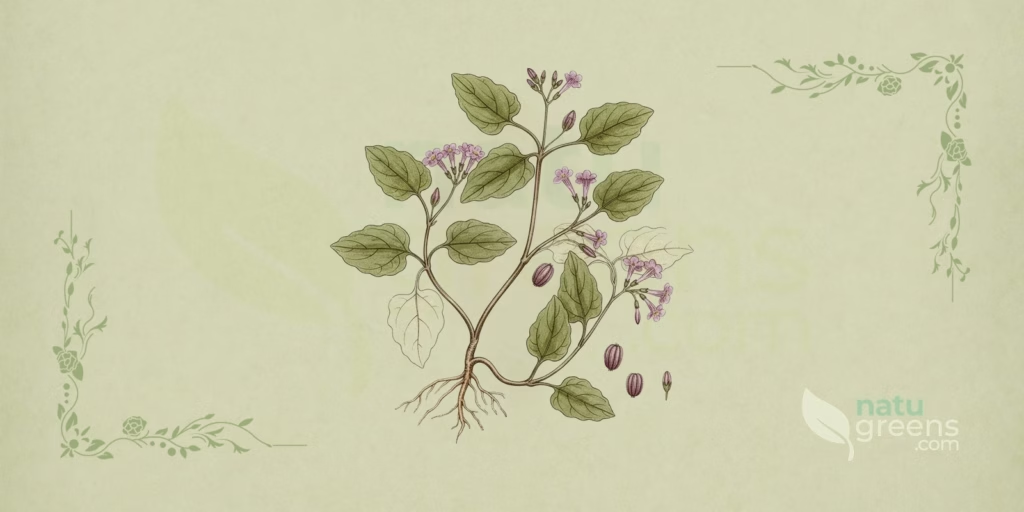
Botanical illustration of Monarda didyma L. (bee balm, Oswego tea), an aromatic perennial herb of the Lamiaceae family described by Carl Linnaeus, native to North America, showing a detail of its vibrant scarlet tubular flowers, arranged in dense terminal clusters, with reddish bracts and dark green leaves, in 19th-century botanical encyclopedia style on a herbarium paper background.
Monarda didyma belongs to the Lamiaceae family, also known as the mint family. This is one of the largest and most important families of flowering plants, characterized by square stems, opposite leaves, and two-lipped flowers. The Lamiaceae family is widely recognized for its aromatic species, which are rich in essential oils and bioactive compounds with diverse medicinal and culinary applications.
Many plants of this family, such as mint, rosemary, and thyme, are valued for their therapeutic properties, including anti-inflammatory, antiseptic, and digestive actions. Monarda didyma shares these characteristics, being a notable representative of the Lamiaceae family. The presence of compounds such as thymol and other terpenoids in bee balm reinforces its phytochemical connection with other species of the family.
Parts of Bee Balm Used
- Flowers
- Leaves
- Stems
Ethnobotanical and Traditional Uses of Bee Balm
- Antiseptic for wounds and skin infections
- Carminative for excessive flatulence
- General stimulant
- Relief of throat and mouth pain
- Treatment of colds and flu
- Treatment of upper respiratory problems
Therapeutic Properties of Bee Balm
- Analgesic (relieves pain)
- Antimicrobial (fights microorganisms); traditional use, without established clinical efficacy
- Antiseptic (prevents infections); traditional use, without established clinical efficacy
- Antispasmodic (relieves spasms)
- Anti-inflammatory (reduces inflammation)
- Carminative (reduces intestinal gas)
- Diaphoretic (promotes perspiration)
- Expectorant (helps expel mucus)
- Febrifuge (reduces fever)
Detailed Phytochemical Profile of Bee Balm
- Carvacrol
- Geraniol
- Linalool
- Terpenes
- Thymol
Preparation and Administration Forms of Bee Balm
- Elixir
- Essential oil (external and aromatic use only, always diluted in a carrier oil at 1% or 2%, never ingested, as it is rich in thymol and carvacrol, phenols that irritate the skin and mucous membranes)
- Infused honey
- Infusion (tea)
- Oxymel
- Poultice
- Steam inhalation
Synergy with Other Medicinal Plants
Digestive Support
For digestive disorders, bee balm can be paired with plants such as chamomile (Matricaria chamomilla) and ginger (Zingiber officinale). The carminative action of bee balm complements the anti-inflammatory and antispasmodic properties of chamomile, while ginger aids digestion and relieves nausea. This combination is particularly useful for reducing flatulence, cramps, and gastrointestinal discomfort.
Respiratory Relief
Monarda didyma, thanks to its expectorant and antimicrobial properties, can be combined with eucalyptus (Eucalyptus globulus) and peppermint (Mentha × piperita) to enhance the relief of symptoms of colds, flu, and other respiratory infections. The thymol of bee balm acts synergistically with the eucalyptol of eucalyptus and the menthol of peppermint, promoting the clearing of the airways and the reduction of inflammation.
Skin Care
In topical applications, Monarda didyma, with its antiseptic qualities, can be used in synergy with calendula (Calendula officinalis) and lavender (Lavandula angustifolia). Calendula promotes healing and reduces inflammation, while lavender offers additional antiseptic properties and a calming effect. This combination is beneficial for the treatment of small wounds, skin irritations, and insect bites.
Recipes and Usage Protocols of Bee Balm
Poultice for Minor Wounds
Mash fresh Monarda didyma leaves into a paste. Apply directly to small wounds, insect bites, or skin irritations. Cover with a clean cloth and leave on for 20 to 30 minutes. Repeat as needed to promote healing and prevent infections.
Steam Inhalation for Nasal Congestion
Add 2 tablespoons of dried Monarda didyma leaves and flowers to a large bowl of boiling water. Cover your head with a towel and inhale the steam for 5 to 10 minutes, keeping a safe distance from the hot water. Do not carry out steam inhalation on small children or on people with asthma or obstructive bronchitis, because of the risk of scalding and of bronchospasm. This method helps decongest the nasal passages and relieve sinus pressure.
Associated Therapies
Aromatherapy
The essential oil of Monarda didyma, although less common than that of other monarda species, can be used in aromatherapy for its stimulating, purifying properties. Inhaling its aroma can help clear the mind and promote a sense of well-being. It can be diffused in the environment or inhaled directly from a handkerchief.
North American Phytotherapy
In North American phytotherapy, Monarda didyma is valued for its antiseptic and diaphoretic properties. It is frequently used in preparations for fevers, colds, and digestive problems. The plant is an important component of many traditional indigenous remedies, reflecting its long history of use in the region.
Contraindications and Side Effects of Bee Balm
Contraindications
- Allergy: Individuals with known sensitivity to plants of the Lamiaceae family should use Monarda didyma with caution.
- Pregnancy and Breastfeeding: Due to the lack of conclusive studies on safety in pregnant and breastfeeding women, use should be avoided or done under medical guidance.
- Drug Interactions: There is not enough information on significant drug interactions. However, it is always advisable to consult a healthcare professional before use, especially if you are taking other medications.
Side Effects
- Skin Irritation: In some people, topical application of bee balm preparations can cause skin irritation. A sensitivity test on a small area is recommended before widespread use.
- Gastrointestinal Disturbances: Excessive consumption of very concentrated infusions can occasionally cause mild gastrointestinal discomfort.
Interesting Facts about Bee Balm
Attractive to Pollinators
Monarda didyma is widely known for attracting pollinators such as hummingbirds, bees, and butterflies to gardens. Its vibrant, nectar-rich flowers make it an essential plant for biodiversity and for the maintenance of healthy ecosystems, contributing to the pollination of other plant species.
Etymology
The genus name, Monarda, honors Nicolás Monardes, a 16th-century Spanish physician and botanist who wrote about the plants of the New World. The specific epithet, didyma, derives from the Greek and means “twin” or “double”, possibly referring to the way the flowers appear in pairs or groups.
Oswego Tea
One of the popular names of Monarda didyma, “Oswego tea”, goes back to the Native Americans of the Oswego area of New York, who used the plant’s leaves to make a tea. This tea was valued both for its medicinal properties and for its pleasant flavor, becoming a popular beverage among European settlers.
Frequently Asked Questions about Bee Balm Tea
What Is Bee Balm Tea?
Bee balm tea is an infusion made from the leaves and flowers of the Monarda didyma plant. It is traditionally used for its medicinal properties, including the relief of symptoms of colds, flu, and digestive problems, and it is also appreciated for its flavor and aroma.
What Are the Benefits of Bee Balm Tea?
Bee balm tea is known for its antimicrobial, anti-inflammatory, expectorant, and carminative properties. It can help relieve sore throats, nasal congestion, fever, flatulence, and cramps. It is also used as a topical antiseptic for minor wounds and skin irritations.
How Do I Prepare Bee Balm Tea?
To prepare the tea, add 1 teaspoon of dried Monarda didyma leaves and flowers to 250 ml of boiling water. Let steep for 10 minutes, strain, and drink. It can be consumed hot or cold, and sweetened with honey if desired.
Are There Contraindications for Bee Balm Tea?
Yes, bee balm tea should be avoided by people with a known allergy to plants of the Lamiaceae family. Pregnant or breastfeeding women should consult a healthcare professional before use. No relevant drug interactions have been described, which reflects the scarcity of studies rather than a guarantee of safety, so it is prudent to seek medical guidance.
Is Monarda didyma the Same as Bergamot?
Monarda didyma is frequently called bergamot due to its aroma, which is similar to that of the citrus fruit. However, it is important to note that they are distinct plants. The citrus bergamot (Citrus bergamia) is a fruit, while Monarda didyma is an herb. The popular name is a reference to the scent, not to the botanical origin.
Notice: this content is for informational purposes and does not replace professional medical advice. Consult a physician or herbal practitioner before using medicinal plants, especially during pregnancy, breastfeeding, or alongside medication.
References and Scientific Studies
- 2021 Missouri Botanical Garden. (2021). Monarda didyma.
- USDA. Monarda didyma. PLANTS Database.
- Tilford, G. L. Edible and Medicinal Plants of the West. Mountain Press Publishing.