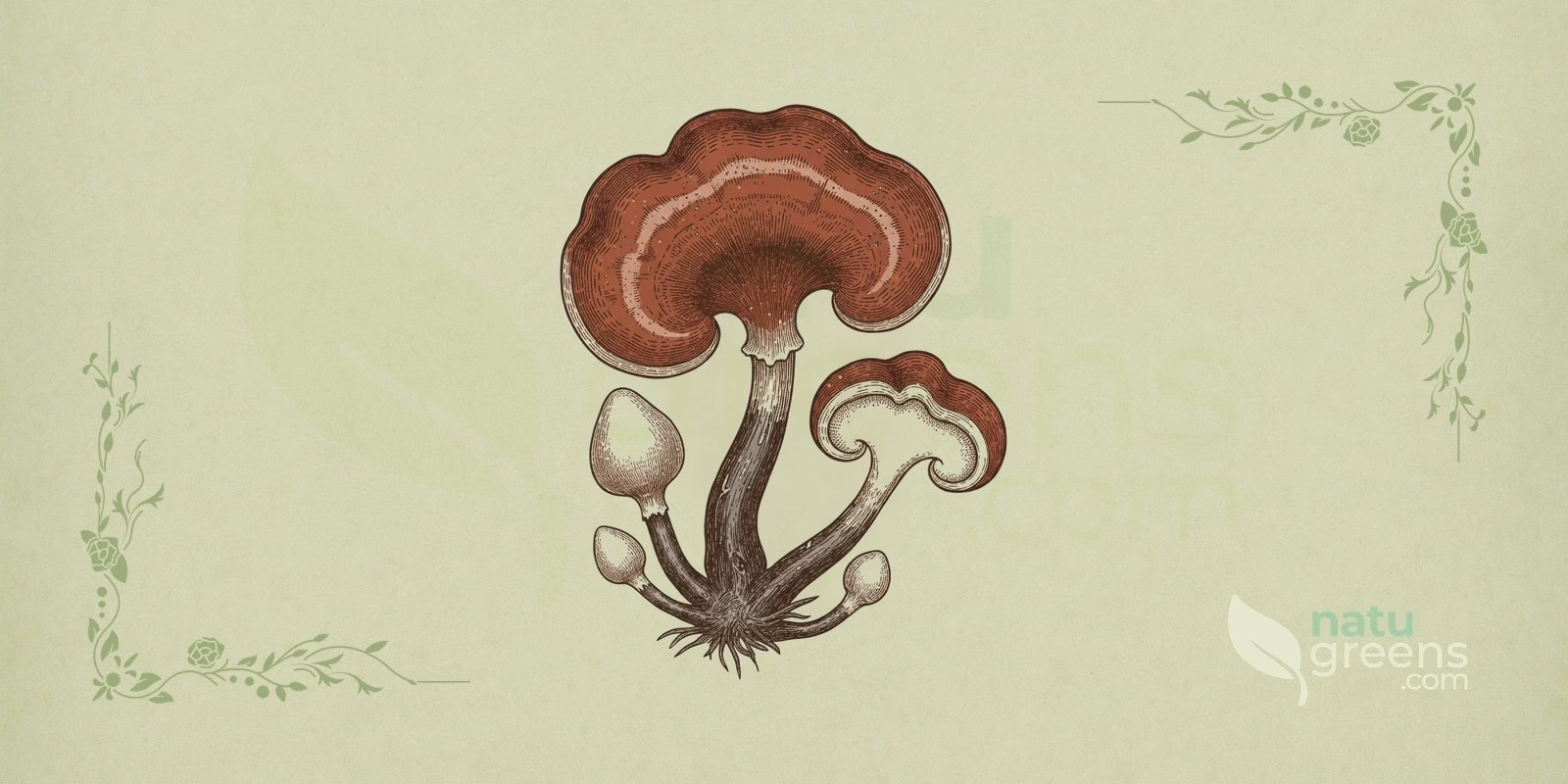
Ganoderma lucidum / Reishi, popularly known as reishi or lingzhi, is a basidiomycete fungus of the family Ganodermataceae, with a long history of use in traditional Asian medicine. Native to warm, humid regions of Asia, this mushroom has been valued for its health-promoting and longevity properties. Reishi is characterized by its kidney-shaped fruiting body, with a glossy surface and coloration ranging from reddish to brown.
In traditional Chinese and Japanese medicine, reishi is considered an adaptogen, helping the body cope with stress and restore balance. Its applications range from immune support to traditional support in various health conditions. Modern scientific research has explored its bioactive compounds, such as polysaccharides and triterpenoids, which are responsible for its potential effects observed in studies.
Popular and International Names of Reishi
- English: lacquered bracket, lingzhi, reishi, varnished conk.
- Spanish: lingzhi, pipa, reishi.
- Portuguese: lingzhi, reishi.
- French: ganoderme luisant, lingzhi, reishi.
- Italian: ganoderma lucidum, lingzhi, reishi.
- German: Glänzender Lackporling, Reishi.
Botanical Synonyms of Ganoderma lucidum
The botanical synonyms of Ganoderma lucidum include Boletus laccatus Timm, Boletus lucidus Curtis, Grifola lucida (Curtis) Gray, and Polyporus lucidus (Curtis) Fr. These historical names reflect the taxonomic complexity of the genus Ganoderma and the evolution of its classification over time, and although Ganoderma lucidum is the most widely accepted name, the presence of multiple synonyms highlights the rich botanical history of this medicinal fungus.
Botanical Family: Ganodermataceae
The family Ganodermataceae is a group of polyporoid basidiomycete fungi, characterized by the presence of double-walled basidiospores, and comprises about 80 species, many of which are found in tropical regions. The genus Ganoderma, to which reishi belongs, is the best known and most studied within this family, being globally recognized for its medicinal properties.
Parts of Reishi Used
- Fruiting body
- Mycelium
- Spores
Ethnobotanical and Traditional Uses
- Promotion of health and longevity.
- Traditional support for arthritis and hypertension management.
- Traditional use as complementary support in cancer (especially breast and prostate), always combined with conventional medical treatment.
- Traditional use as complementary support in various health conditions.
- Traditional use for boosting immunity and strengthening bones (in children).
- Traditional use for managing anxiety and insomnia.
- Traditional use for relieving allergies and supporting liver health.
Therapeutic Properties of Reishi
- Antibacterial (inhibitory effect studied on bacterial growth)
- Anti-inflammatory (studied effect in reducing inflammation)
- Antioxidant (studied protective effect on cells against damage and oxidative stress)
- Antiproliferative (activity observed in laboratory studies, without clinical evidence)
- Antiviral (in vitro activity studied against viruses such as HSV-1, HSV-2, VSV, HIV-1, and HBV)
- Cardioprotective (studied effect on blood sugar, triglycerides, and increased HDL cholesterol)
- Fatigue and Depression Reducer (traditional use for relieving fatigue and depressive symptoms)
- Gastroprotective (studied effect on the healing of gastric ulcers)
- Hepatoprotective (studied protective effect on the liver against damage)
- Hypoglycemic (studied effect in reducing blood glucose levels)
- Immunomodulatory (studied effect on regulating immune system function)
- Neuroprotective (studied protective effect on the nervous system)
Detailed Phytochemical Profile of Reishi
- Beta-glucans
- Enzymes (metalloprotease, α-glucosidase inhibitor SKG-3)
- Ergosterol (provitamin D2)
- Ganoderic acids (ganoderol B, ganoderic acid Me, lucidenic acid)
- Lectins
- Long-chain fatty acids
- Nucleosides and nucleotides (adenosine and guanosine)
- Oligosaccharides
- Polysaccharide-peptides (GL-PS, PBP, GLPG)
- Triterpenoids
Preparation and Administration Forms of Reishi
- Capsules
- Creams
- Extracts (aqueous, ethanolic)
- Syrups
- Tea/Infusion
Synergy with Other Medicinal Plants
Prostate Cancer
Reishi is one of eight components in the herbal blend known as “prostate cancer-hope” (PC-SEPS), traditionally used as complementary support for prostate cancer, always combined with conventional medical treatment. This combination aims to enhance the effects observed in studies and offer comprehensive support in disease management, and the synergy among the components may optimize the immune response and the antiproliferative activity observed in the laboratory.
Viral Infections
A marked synergy was observed between reishi polysaccharides and anti-herpetic agents such as acyclovir, vidarabine, and IFN-α in tissue culture systems, a combination studied for its effect on viral infections, such as those caused by the herpes simplex virus, with a possible reduction in viral replication and symptom severity.
Leukemia
The combination of reishi with extracts from the genus Duschesnea has been shown, in laboratory settings, to increase the translocation of cytochrome c and Bax, triggering caspase-3 apoptosis in HL-60 leukemia cells, which suggests promising research potential for the treatment of certain types of leukemia, by inducing programmed cell death in preclinical studies.
Recipes and Usage Protocols of Reishi
Reishi Tea
Ingredients: 1.5 to 9 grams of dried reishi extract or 50 grams of fresh mushroom, 500 ml of water.
Preparation: Boil the water and add the reishi (either the dried extract or the sliced mushroom), letting it steep for 10 to 15 minutes. Strain and drink, one to three times a day; this infusion is traditionally used to strengthen the immune system and promote overall well-being.
Concentrated Aqueous Extract
Ingredients: 100 grams of sliced reishi, 1 liter of water.
Preparation: Combine the reishi and water in a pot, bring to a boil, then reduce the heat and simmer for 2 hours. Strain and reserve the liquid: this concentrated extract can be stored in the refrigerator and consumed in small daily doses (30-50 ml) for more intensive immune support.
Reishi Tincture
Ingredients: 50 grams of powdered reishi, 250 ml of 70% grain alcohol.
Preparation: Place the powdered reishi in a dark glass jar and add the alcohol, sealing tightly and letting it macerate for 4 to 6 weeks, shaking daily. Strain and store the tincture in a dropper bottle. The usual dosage is 10 to 20 drops, two to three times a day, diluted in water, to promote relaxation and overall health support.
The preparations above follow traditional records and do not replace professional guidance. Before any internal use, check the contraindications and interactions described in this article.
Associated Therapies
Traditional Chinese Medicine (TCM)
In TCM, reishi is revered as a superior tonic, used to nourish the Shen (spirit), strengthen Qi (vital energy), and harmonize the body. It is frequently prescribed to improve vitality, promote longevity, and traditionally support the management of conditions such as insomnia, anxiety, chronic fatigue, and respiratory disorders. Its adaptogenic action is central to TCM philosophy, helping the body adapt to different types of stress.
Japanese Medicine
Known as reishi in Japan, this mushroom is widely used in Japanese herbal medicine to promote health and prevent disease, valued for its immunomodulatory properties and for the antiproliferative activity studied in the laboratory, and frequently incorporated into health regimens to strengthen body and mind. Its popularity in Japan reflects a deep appreciation for its traditional qualities and its role in maintaining well-being.
Contraindications and Side Effects of Reishi
Reishi is generally considered safe, but some contraindications and side effects may occur, and it is crucial to be aware of this information before starting use. The safety of reishi has been questioned in some studies, and its interaction with certain medications and health conditions calls for caution.
Common Side Effects
Some individuals may experience nausea, stomach upset, diarrhea, and indigestion, effects that are generally mild and transient and can be minimized by adjusting the dosage or form of administration. If symptoms persist, it is advisable to discontinue use and seek medical guidance.
Liver Problems
Cases of significant liver problems have been reported in some situations, although a direct causal relationship with reishi is complex to determine due to the presence of other factors. However, people with pre-existing liver conditions should avoid using reishi or use it only under strict medical supervision.
Drug Interactions
Reishi may interact with certain medications, enhancing or altering their effects. People taking anticoagulants, such as warfarin, should avoid reishi due to the increased risk of bleeding, and likewise, individuals undergoing treatment with immunosuppressants should exercise caution, since reishi may modulate the immune system. It is essential to consult a healthcare professional before combining reishi with any medication.
Risk Groups
Pregnant or breastfeeding women, children, and individuals with pre-existing liver or kidney conditions should avoid using reishi, since the lack of conclusive studies on safety in these groups makes its use inadvisable without specialized medical guidance. Caution is essential to ensure safety and avoid potential health risks.
Historical Notes and Interesting Facts
Reishi, known as lingzhi in China and reishi in Japan, has a millennia-old history of use in Eastern medicine, often called the “mushroom of immortality” or “herb of spiritual potency” due to its reputation for promoting longevity and well-being. Its rarity in nature, growing on only two or three out of every 10,000 hardwood trees, has contributed to its legendary status and high value.
The taxonomic complexity of the genus Ganoderma is a notable curiosity, since many products marketed as Ganoderma lucidum may actually contain other Ganoderma species, such as G. sichuanense, due to the difficulty of precise identification. This issue highlights the importance of botanical authentication and quality control for reishi-based products available on the market.
Frequently Asked Questions about Reishi
What Is Reishi?
Reishi, or Ganoderma lucidum, is an Eastern medicinal mushroom with a long history of use in traditional Asian medicine, valued for its adaptogenic properties and its potential health benefits, including immune support and the promotion of longevity.
What Are the Main Benefits of Reishi?
The main benefits of reishi include strengthening the immune system, possible antiproliferative activity observed in laboratory studies, antioxidant, antiviral, and antibacterial properties, and it may also help reduce fatigue and depression, in addition to offering support for cardiovascular and liver health.
Are There Side Effects to Using Reishi?
Yes, some common side effects may include nausea, stomach upset, diarrhea, and indigestion, and although rare, cases of liver problems have been reported. It is important to monitor your body’s response and consult a healthcare professional if concerns arise.
Who Should Avoid Using Reishi?
Pregnant or breastfeeding women, children, individuals with pre-existing liver or kidney conditions, and people taking anticoagulant or immunosuppressant medications should avoid using reishi. Consulting a healthcare professional is always recommended before starting any supplementation.
How Is Reishi Usually Prepared?
Reishi can be prepared as a tea or infusion from the dried extract or the mushroom’s fruiting body, and it is also available in various commercial forms, such as capsules, liquid extracts, and tinctures, offering flexibility in administration.
Can Reishi Interact with Other Medications?
Yes, reishi can interact with anticoagulant and immunosuppressant medications, altering their effects. It is essential to inform your doctor or pharmacist about reishi use, especially if you are regularly taking other medications, to avoid adverse interactions.
Notice: this content is for informational purposes and does not replace professional medical advice. Consult a physician or herbal practitioner before using medicinal plants, especially during pregnancy, breastfeeding, or alongside medication.
References and Scientific Studies
Peer-Reviewed Scientific Studies (1)
- PMC2018 Sohretoglu D, et al. Ganoderma lucidum Polysaccharides as An Anti-cancer Agent. Anti-cancer agents in medicinal chemistry. 2018.
Institutional Sources (1)
- GOV2011 Wachtel-Galor, S., Yuen, J., Buswell, J. A., & Benzie, I. F. F. (2011). Ganoderma lucidum (Lingzhi or Reishi). In Herbal Medicine: Biomolecular and Clinical Aspects. 2nd edition. CRC Press/Taylor & Francis. Recuperado de NCBI Bookshelf
Supplementary Readings (1)
- 2023 Ekiz, E., & Ekiz, H. I. (2023). Exploring the Potential Medicinal Benefits of Ganoderma lucidum. Molecules, 28(7), 1512. Recuperado de MDPI