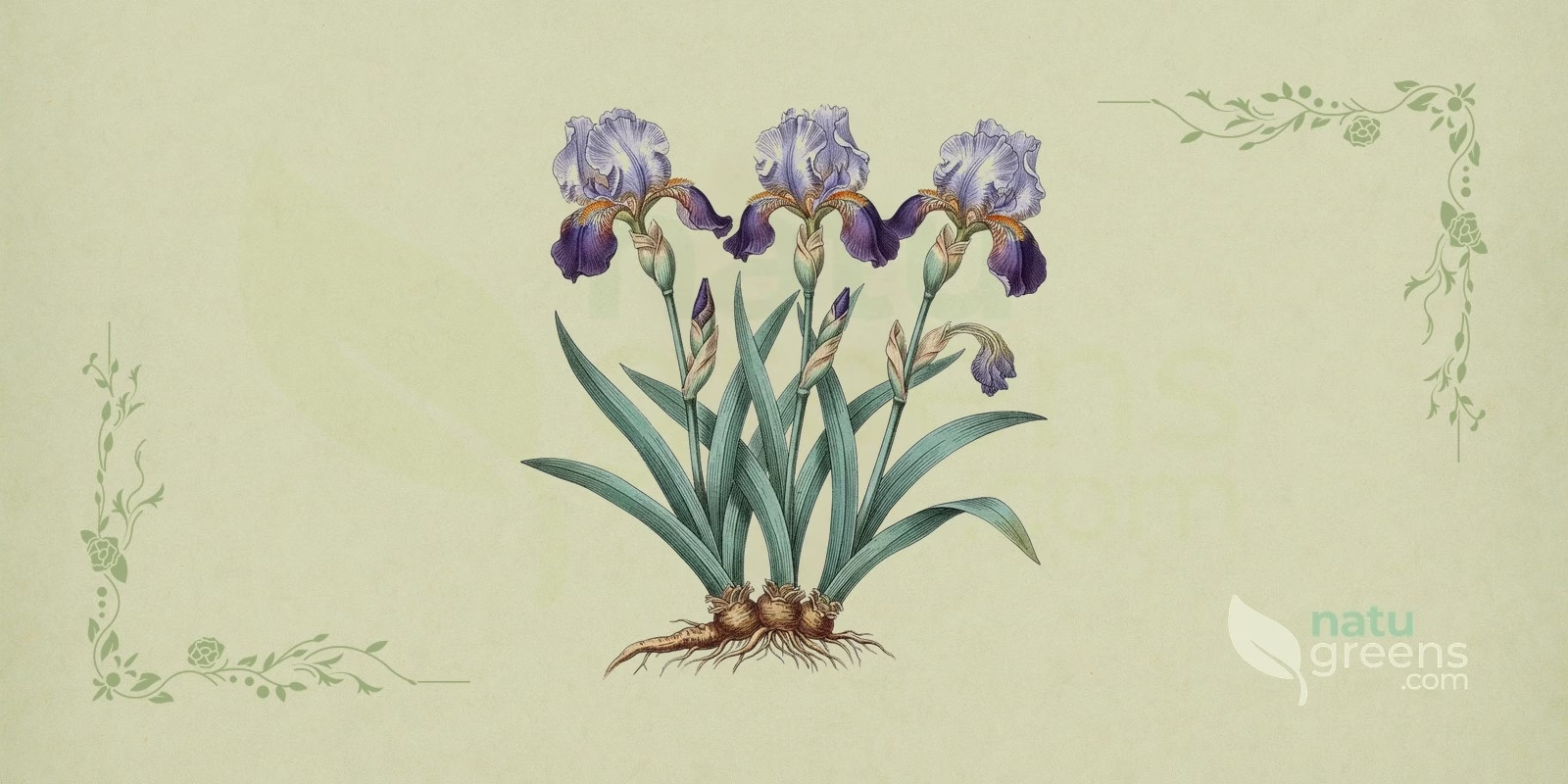
Iris germanica L. / German Iris, also commonly known as bearded iris or purple flag, is a herbaceous, rhizomatous perennial in the Iridaceae family, described by Carl Linnaeus. Native to Central and Southern Europe and the Middle East, the species has spread around the world thanks to the ornamental beauty of its flowers and the aromatic value of its rhizome, which, once dried and cured, becomes the orris root used in perfumery. For centuries German iris has featured in the traditional medicine of many cultures, prized both for its showy flowers and for its rhizomes.
In herbal tradition, German iris is credited with diuretic, anti-inflammatory and antioxidant actions, and its rhizomes contain compounds that account for much of the pharmacological interest in the plant. Folk records mention it for complaints such as muscle pain, arthritis and liver disorders, but modern research is so far limited to laboratory and animal studies, with no clinical trials confirming these uses in people. Because it contains irisin and irritant resins, the rhizome calls for extra caution, and any internal use should be guided by a healthcare professional.
Popular and International Names of German Iris
- English: bearded iris, German iris, purple flag, tall bearded German iris.
- French: flambé, iris barbu, iris d’Allemagne.
- German: Bart-Iris, Deutsche Schwertlilie.
- Italian: giaggiolo germanico, iris barbuta.
- Portuguese: flor-de-lis, íris-barbada, íris-germânica, lírio-azul.
- Spanish: flor de lis, iris alemán, lirio barbado.
In the perfume trade, the dried and cured rhizome is called orris root, a term matched by the Portuguese raiz-de-íris, the German Veilchenwurzel and the Italian radice di iris, all of which refer to the herbal drug rather than the living plant. Because the name flor-de-lis is also applied in Brazil to other ornamental plants, it is always wise to check the scientific name before buying plants or rhizomes.
Botanical Synonyms of Iris germanica
Iris × florentina L. is a botanical synonym often associated with Iris germanica, although some sources treat it as a distinct species, as a hybrid or as the variety Iris × germanica var. florentina Dykes, the form that appears in recent studies on the rhizome. The taxonomy of the genus Iris is complex because of natural hybridization and centuries of intensive cultivation, and several taxonomic databases spell the species name itself as Iris × germanica, pointing to its probable hybrid origin. Other synonyms may turn up in different botanical and historical contexts, a reflection of the long history of study and cultivation of this plant.
Botanical Family: Iridaceae
The Iridaceae family is a diverse group of monocots, with about 66 genera and more than 2,000 species distributed across nearly the whole planet. It is known for its showy flowers and for its rhizomes or corms, which are underground storage structures, and it includes popular ornamentals such as crocuses, freesias and gladioli, as well as species of medicinal and economic importance.
Iris germanica shares the morphological features typical of the family, such as long, flat leaves and terminal inflorescences. The Iridaceae are also known for producing secondary metabolites, including flavonoids and isoflavonoids, which give many of their species biological activity, and this chemical diversity has been the subject of pharmacological research for several decades.
Parts of German Iris Used
- Leaves (mentioned in folk records, not recommended for consumption)
- Rhizomes (only dried and cured, since the fresh rhizome is toxic)
- Roots (in folk usage, the term usually refers to the rhizome itself)
In practice, the part of greatest interest is the rhizome, which undergoes prolonged drying and curing before any use, while the leaves appear only in folk records and should not be eaten because of the irritant substances they contain.
Ethnobotanical and Traditional Uses
- Antioxidant protection (investigated in laboratory studies)
- Arthritis and joint pain (traditional record)
- Dropsy (fluid retention, traditional diuretic use)
- Immune system (modulation investigated in preliminary studies)
- Infections (antimicrobial activity observed only in the laboratory)
- Inflammation in general (folk use, with anti-inflammatory action seen in preliminary studies)
- Liver and spleen disorders (traditional record)
- Lowering cholesterol and triglycerides (investigated in animal studies)
- Muscle pain relief (traditional record)
- Scent fixative in perfumery, potpourri and cosmetics
- Skin problems (folk use)
None of these uses has been confirmed in clinical trials. Some popular sources go as far as listing the plant for cancer, but there is no clinical basis for this indication, and the little data available comes from laboratory tests on cells, which do not justify any use for this purpose.
Therapeutic Properties of German Iris
- Analgesic (traditional record of pain relief)
- Anti-inflammatory (effect observed in laboratory and animal studies)
- Antimicrobial (activity against microorganisms observed in the laboratory)
- Antioxidant (neutralization of free radicals in laboratory assays)
- Antiproliferative (activity observed in laboratory studies, without clinical evidence)
- Antipyretic (traditional record of fever reduction)
- Diuretic (traditional record of increased urine output)
- Emetic (induces vomiting, an unwanted effect of high doses)
- Emmenagogue (stimulates menstrual flow, a reason to avoid it during pregnancy)
- Expectorant (traditional record of helping to clear mucus)
- Hypocholesterolemic (cholesterol reduction observed in animal studies)
- Immunomodulatory (modulation of the immune system investigated in preliminary studies)
- Piscicidal (toxic to fish)
- Purgative (strong laxative effect, unwanted at high doses)
These activities describe what tradition records or what has been observed in experimental studies, and several of them, such as the emetic and purgative effects, are precisely the unwanted reactions that appear with excessive doses of the rhizome.
Detailed Phytochemical Profile of German Iris
- Ascorbic acid
- Benzoquinones (derivatives)
- Flavonoids
- Irigenin S
- Iriside A
- Irones (responsible for the violet scent of the cured rhizome)
- Isoflavonoids
- Triterpenes
- Vitamins
Among these constituents, the irones stand out because they form slowly as the rhizome dries and cures, and they are responsible for the violet scent that made orris root so prized. Flavonoids and isoflavonoids are the focus of most research on antioxidant and anti-inflammatory activity, while irisin, an irritant resinous substance, accounts for the gastrointestinal effects associated with internal use.
Preparation and Administration Forms of German Iris
- Decoction (of the dried and cured rhizome, with restricted internal use)
- Essential oil or orris butter (from the cured rhizome, for aromatic and cosmetic use)
- Ethanolic extract (used in research and in formulations under professional guidance)
- Methanolic extract (restricted to laboratory use)
- Powder (of the dried and cured rhizome, used mainly in perfumery)
Juice from the fresh rhizome, mentioned in older sources, has been left off this list because the fresh rhizome is toxic and must never be used. The ethanolic and methanolic extracts are used mainly in research, and any preparation intended for internal use, including the decoction, requires the amount and frequency to be set by a healthcare professional.
Synergy with Other Medicinal Plants
For Inflammation and Joint Pain
In herbal tradition, Iris germanica appears alongside plants such as Harpagophytum procumbens (devil’s claw) and Salix alba (white willow), traditionally used for muscle and joint pain. The rationale for this combination lies in the different classes of compounds involved, with the flavonoids of iris, the iridoids of devil’s claw and the salicylates of willow acting on distinct inflammatory pathways, but no study has evaluated the blend, and anyone taking anticoagulants or anti-inflammatory drugs should avoid white willow without professional guidance.
For Liver and Biliary Support
Combining German iris with Taraxacum officinale (dandelion) or Cynara scolymus (artichoke) is a traditional way of supporting liver and gallbladder function. Dandelion and artichoke are known for their choleretic and cholagogue actions, which stimulate the production and flow of bile and aid the digestion of fats, while interest in iris in this context comes from animal studies on cholesterol, triglycerides and liver protection. Because the rhizome has restricted internal use, this combination should only be considered under the supervision of a healthcare professional.
Recipes and Usage Protocols of German Iris
Traditional Decoction of the Dried and Cured Rhizome
A preparation traditionally used for digestive and liver complaints, recorded in folk sources and reserved for people under the supervision of a healthcare professional.
Ingredients: dried and cured rhizome of Iris germanica, chopped, in an amount set by a healthcare professional; water.
Preparation: Place the rhizome and the water in a pan, bring to the boil and boil for 10 to 15 minutes, then strain and let it cool until lukewarm. The volume and frequency of intake should not be decided on your own, because the irisin in the rhizome causes gastrointestinal irritation, nausea and vomiting at excessive doses, so consult a healthcare professional before use. Never use the fresh rhizome in this preparation.
Rhizome Powder for Home Perfumery
A traditional, external use aimed at home perfumery, in which powder from the cured rhizome works as a scent fixative.
Ingredients: Dried rhizomes of Iris germanica.
Preparation: Dry the rhizomes for 2 to 3 years in a dark, well-ventilated place, the time needed for the violet scent to develop fully, then grind them into a fine powder. This powder can be used as a fixative in potpourri and scented sachets or as an ingredient in natural cosmetics such as creams and soaps, and it should be stored in an airtight container. Avoid inhaling the powder while grinding and do a skin patch test before using it in cosmetics, because the plant can cause contact dermatitis in sensitive people.
The preparations above follow traditional records and do not replace professional guidance. Before any internal use, check the contraindications and interactions described in this article.
Associated Therapies
Aromatherapy
The essential oil extracted from the rhizomes of Iris germanica, rare and costly, is valued in aromatherapy for its characteristic violet scent and can be used in diffusers to create a relaxing, refined atmosphere, or diluted in vegetable oils for massage. The scent of iris is believed to have a calming effect and to help promote emotional well-being, which explains its presence in meditation and relaxation practices, although these impressions come from aromatic tradition rather than from clinical studies. The oil should not be swallowed or applied undiluted to the skin.
Herbal Medicine and Scientific Research
In herbal medicine, Iris germanica has no established clinical use, and standardized extracts appear mainly in experimental studies. One of them assessed the protective effects of a standardized extract on the pancreas and liver of rats with induced diabetes, another investigated a methanolic extract in an experimental model of acute pancreatitis, and research on the rhizome of the variety florentina examined how its phytochemicals act on melanin production. The bioactive compounds studied, mainly flavonoids and isoflavonoids, show pharmacological activity in the laboratory, but any prescription of German iris preparations needs to be individualized and made by a professional, taking into account the person’s condition, the appropriate dose and possible interactions with medicines.
Contraindications and Side Effects of German Iris
General Contraindications
The dried rhizome of German iris is the orris root used in perfumery and, in folk practice, in herbal medicine, and its internal use is traditionally restricted because it contains irisin and resin, which are irritant at high doses. The fresh rhizome is toxic and must never be used (only the dried and cured rhizome, aged for at least 1-2 years, is traditionally used), and excessive oral doses cause gastrointestinal irritation, nausea and vomiting. Do not use during pregnancy and breastfeeding, do not use in children, and avoid prolonged internal use without professional guidance.
The plant is also contraindicated for people with known hypersensitivity to any of its components, and the emmenagogue action attributed to it reinforces the restriction during pregnancy, since conclusive studies on its safety at this stage and during breastfeeding are lacking. People with pre-existing gastrointestinal conditions, such as gastritis or ulcers, should avoid internal use, because the plant can cause stomach irritation.
Common Side Effects
Eating parts of the plant, especially the fresh rhizomes, can cause severe gastrointestinal upset, such as diarrhea, nausea and vomiting, due to the presence of irisin, an irritant resinous substance. In some people, simple contact with the plant causes skin irritation and allergic reactions such as contact dermatitis, so it is best to handle rhizomes and leaves with gloves and avoid direct contact with the sap.
Drug Interactions
Because of the diuretic and hypocholesterolemic activities attributed to it, Iris germanica may add to the effect of diuretic and lipid-lowering medicines. As studies in diabetic rats suggest an effect on the pancreas and metabolism, people taking blood sugar-lowering drugs or insulin should also avoid internal use without supervision, and patients on anticoagulants need to be cautious, since there are no safety data on how the plant interacts with blood clotting. Consult a doctor or pharmacist before starting to use German iris, especially if you are taking other medicines.
Historical Notes and Interesting Facts
Origin of the Name and Symbolism
The name Iris comes from the Greek word for “rainbow”, a choice that alludes to the wide range of flower colors in the genus. In Greek mythology, Iris was the messenger of the gods and personified the rainbow, the bridge linking heaven and earth, and Iris germanica came to symbolize courage, hope and faith, which explains its frequent presence in floral arrangements. The fleur-de-lis, a symbol associated with royalty, is traditionally interpreted as a stylized representation of the iris.
Ancient Use and Perfumery
German iris has a long history of use and was already cultivated by the ancient Romans for its medicinal applications. The dried root is used in perfumery because it develops a characteristic violet scent after years of drying, which made it a popular fixative for potpourri and a common ingredient in cosmetics. The essential oil, rare and costly, is highly prized in the fine fragrance industry, partly because of the long curing time the rhizome requires before extraction.
Frequently Asked Questions about German Iris
Is German Iris Edible?
Some popular sources mention the flowers of Iris germanica in culinary uses, but there are not enough safety data to recommend eating them, and the genus Iris is considered toxic, especially the rhizomes and leaves. These parts contain irisin, an irritant substance that can cause severe stomach upset, so they should not be eaten. When in doubt, treat the plant as an ornamental and keep it off the table.
How Do You Grow German Iris?
Iris germanica prefers full sun and well-drained soil, flowers in spring and summer and can reach up to one meter in height. It is propagated by dividing clumps or from seed, and once established the plant needs little care beyond enough water during the growing season, which makes it a very hardy ornamental.
What Are the Main Traditional Uses of German Iris?
Tradition attributes analgesic, anti-inflammatory and antioxidant actions to German iris and uses it for muscle pain, arthritis and skin problems, but these uses have not yet been confirmed by clinical studies. Its delicate scent, valued in aromatherapy, is associated with a calming effect and emotional well-being, while internal use of the rhizome should always be guided by a healthcare professional.
Can the Fresh Rhizome of German Iris Be Used?
No, because the fresh rhizome is toxic and must never be used, and only the dried and cured rhizome, aged for at least 1-2 years, is traditionally used. Even the cured rhizome has restricted internal use, since excessive oral doses cause gastrointestinal irritation, nausea and vomiting.
Can German Iris Be Used in Pregnancy or by Children?
No, the guidance is not to use the plant during pregnancy and breastfeeding or in children, because safety studies are lacking and the emmenagogue action attributed to it poses a risk during pregnancy. Adults should also avoid prolonged internal use without professional guidance.
What Is the Orris Root Used in Perfumery?
Orris root is the name given to the dried and cured rhizome of Iris germanica and closely related species, which develops a characteristic violet scent after years of drying. As a powder, it serves as a fixative in cosmetics, potpourri and sachets, and it yields a rare and costly essential oil that is highly valued in fine fragrances.
Notice: this content is for informational purposes and does not replace professional medical advice. Consult a physician or herbal practitioner before using medicinal plants, especially during pregnancy, breastfeeding, or alongside medication.
References and Scientific Studies
- PMC2021 Amin HIM, et al. Phytochemistry and Biological Activities of Iris Species Growing in Iraqi Kurdistan and Phenolic Constituents of the Traditional Plant Iris postii. Molecules. 2021.
- PMC2026 Bakhoda M, et al. Ameliorating the toxicity induced by L-arginine through iris germanica methanolic extract in an experimental model of acute pancreatitis. Arch Physiol Biochem. 2026.
- PMC2021 Mahdinezhad MR, et al. Protective effects of a standardized extract of Iris germanica on pancreas and liver in streptozotocin-induced diabetic rats. Res Pharm Sci. 2021.
- PMC2020 Mykhailenko O, et al. Qualitative and Quantitative Analysis of Ukrainian Iris Species: A Fresh Look on Their Antioxidant Content and Biological Activities. Molecules. 2020.
- PMC2025 Yim S, et al. Dual Modulatory Effects of Phytochemicals from Iris ×germanica L. var. florentina Dykes Rhizome Extract on Melanogenesis. Molecules. 2025.