Gentiana lutea L. / Yellow Gentian is a perennial herbaceous plant of the Gentianaceae family, described by Carl Linnaeus, that grows in alpine meadows and damp pastures across the mountain regions of central and southern Europe, such as the Alps, the Carpathians, the Pyrenees and the Apennines. Valued for millennia by traditional European medicine for its intense bitterness and the medicinal uses it has gathered over time, yellow gentian is prized above all for its roots, which are harvested in autumn and set aside for infusions, extracts and liqueurs. Modern research has been looking into several of these ancestral uses, especially the action of the bitter compounds on digestion, although a large share of the evidence still comes from laboratory and animal studies.
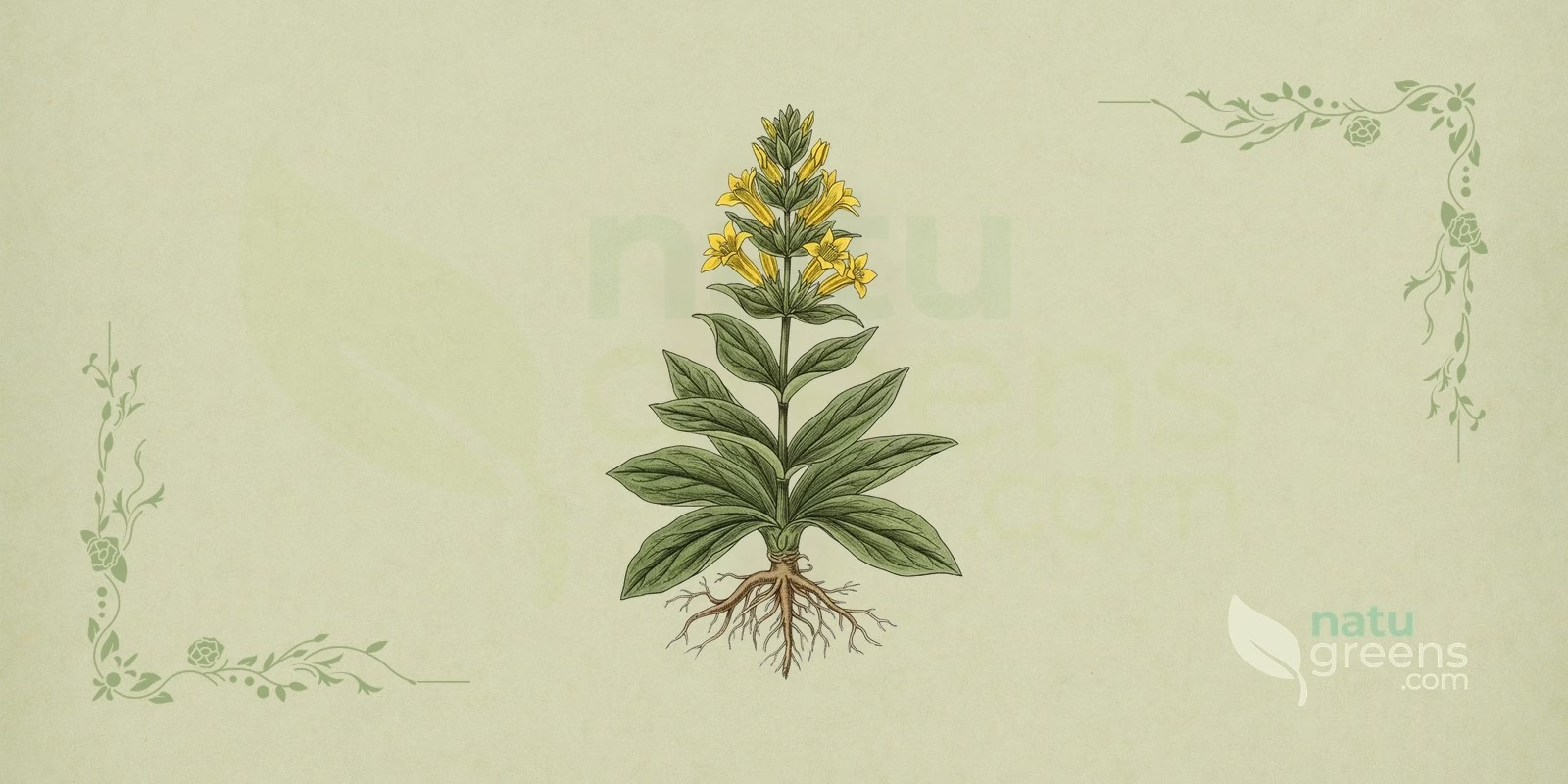
In herbal tradition, yellow gentian holds a prominent place as a bitter digestive tonic and appetite stimulant, with folk applications that range from gastrointestinal complaints to inflammatory conditions. Its phytochemical makeup is rich above all in secoiridoid glycosides, such as amarogentin and gentiopicrin, compounds associated with the anti-inflammatory, antioxidant and hepatoprotective activities described for the plant in preclinical studies. This combination of traits places the species among the most studied bitter plants in European herbal medicine, even though clinical trials in humans remain scarce.
Popular and International Names of Yellow Gentian
The plant’s names in different languages tend to refer to the yellow color of its flowers or the bitterness of its root, as the English, French, German and Italian forms gathered below show.
- English: bitter root, bitterwort, centiyane, felwoort, great yellow gentian, yellow gentian.
- French: gentiane jaune, grande gentiane.
- German: Echter Enzian, Gelber Enzian.
- Italian: genziana gialla, genziana maggiore.
- Portuguese: genciana amarela, genciana-lútea.
- Spanish: genciana, genciana amarilla, genciana mayor, junciana.
Botanical Synonyms of Gentiana lutea
Throughout the history of plant taxonomy, Gentiana lutea L. has received several names that are now treated as synonyms, among them Asterias hybrida G. Don, Asterias lutea (L.) Borkh., Coilantha biloba Bercht. & J. Presl, Gentiana major Bubani, Gentianella lutea (L.) H.Karst. and Swertia lutea (L.) Kuntze. These variations reflect successive taxonomic classifications and reclassifications, but Gentiana lutea L. remains the name accepted by most contemporary botanical authorities.
Botanical Family: Gentianaceae
The Gentianaceae family is a diverse group of flowering plants comprising about 100 genera and 1,700 species distributed around the world, from tropical regions to alpine zones. It is known for the presence of bitter compounds, especially iridoid and secoiridoid glycosides, which give many of its species medicinal interest, and several of them are also appreciated for their ornamental flowers and ethnobotanical uses. Gentiana lutea is a prominent example of the family, remembered both for its medicinal use and for the characteristic bitter taste of its root.
Parts of Yellow Gentian Used
- Root (rhizome and main root)
The root of yellow gentian, made up of the rhizome and the main root, concentrates the bitter compounds behind the plant’s reputation and, once harvested in autumn, is dried and used to prepare infusions, macerations, tinctures, extracts and bitter liqueurs.
Ethnobotanical and Traditional Uses
Records of European folk medicine link yellow gentian to a broad range of uses, which are listed below as tradition and not as indications of proven efficacy.
- Antidote to animal venoms and insect stings (historical record with no scientific support; poisoning and stings require immediate medical care)
- Appetite stimulation
- Digestive disorders (dyspepsia, bloating and abdominal fullness)
- Infected wounds and inflammation (external application in traditional records; infected wounds require medical evaluation)
- Liver and biliary disorders
- Menstrual disorders, such as heavy bleeding
- Relief of intestinal colic and flatulence
- Relief of rheumatism and neuralgia (external use)
- Stimulation of stomach, liver and gallbladder function
- Urinary retention
Therapeutic Properties of Yellow Gentian
The activities below combine traditional use with results from studies that are mostly preclinical, carried out in cells and in animals, and for that reason they should not be read as proven treatment indications in humans.
- Anti-inflammatory (activity observed in laboratory and animal studies)
- Antimicrobial (action against microorganisms observed in laboratory assays)
- Anti-obesity (potential investigated in preclinical studies on obesity and associated diseases)
- Antioxidant (neutralization of free radicals in laboratory assays)
- Antiparasitic (traditional use against intestinal worms, without clinical confirmation)
- Cardioprotective (vascular effects investigated in preclinical studies)
- Digestive (stimulation of digestive secretions attributed to the bitter taste)
- Hepatoprotective (liver protection observed in experimental models)
- Hypoglycemic (effect on blood glucose in preliminary studies; not a substitute for medication)
- Immunomodulatory (modulation of the immune response described in laboratory studies)
- Stomachic (traditional record of stimulating appetite and gastric secretion)
Detailed Phytochemical Profile of Yellow Gentian
- Alkaloids
- Amarogentin
- Flavonoids
- Gentiopicrin
- Iridoids
- Monoterpenes
- Polyphenols
- Secoiridoid glycosides
- Xanthones
Among these groups, the secoiridoid glycosides, represented mainly by gentiopicrin and amarogentin, account for the intense bitterness of the root and for the reflex response that tradition associates with digestion, while xanthones, flavonoids and other polyphenols round out a chemical profile that is still being studied.
Preparation and Administration Forms of Yellow Gentian
- Bitter liqueurs
- Extracts
- Macerations (in water or alcohol)
- Tea (infusion or decoction)
- Tinctures
For tea, tradition favors a cold maceration of the dried, chopped root, which draws out the bitter compounds without degrading other components, and the drink is usually taken 15 to 30 minutes before the main meals. Tinctures and bitter liqueurs use alcohol as a solvent, which makes them unsuitable for children, pregnant or breastfeeding women and anyone who needs to avoid alcoholic beverages.
Synergy with Other Medicinal Plants
Digestive Stimulation
In herbal tradition, yellow gentian is combined with other bitter or carminative herbs, such as ginger (Zingiber officinale) and cardamom (Elettaria cardamomum), in formulas traditionally used to stimulate digestion and relieve flatulence, to which tradition also attributes an increase in digestive secretions. These pairings are often recalled by people with sluggish digestion or a poor appetite, since the bitters and aromatic spices are thought to act in complementary ways on the digestive tract, although this combined effect has not been measured in clinical studies.
Liver Support
As broader support for the liver, yellow gentian appears in traditional formulas alongside milk thistle (Silybum marianum), whose protective effects on the liver are being studied, and dandelion (Taraxacum officinale), traditionally used to stimulate the production and flow of bile. This kind of combination is recorded for mild liver complaints, but any liver disease calls for medical diagnosis and follow-up, and an herbal blend is no substitute for that care.
Combination with Anti-Inflammatory Plants
In formulas traditionally used for inflammatory discomfort, yellow gentian may be paired with turmeric (Curcuma longa), rich in curcumin, and boswellia (Boswellia serrata), a source of boswellic acids, compounds studied for their action on different inflammatory pathways. The combination is mentioned in the context of complaints such as arthritis and other chronic inflammation, with no evidence of an effect greater than that of each plant on its own, and since each of them has its own contraindications, guidance from a health professional is essential.
Recipes and Usage Protocols of Yellow Gentian
Yellow Gentian Cold Maceration
A preparation traditionally used in Europe as a bitter aperitif, taken before meals by people with a poor appetite or sluggish digestion, which should be avoided by pregnant or breastfeeding women, young children and people with an ulcer, active gastritis or uncontrolled hypertension.
Ingredients:
- 1/2 teaspoon of dried, chopped yellow gentian root (Gentiana lutea)
- 200 ml of cold water
Preparation:
- Place the gentian root in the cold water.
- Leave it to macerate for 2 to 4 hours (or overnight) to extract the bitter compounds.
- If you prefer, warm the maceration slightly before drinking it.
- Strain and drink 15 to 30 minutes before the main meals.
Dosage: In tradition, one cup is taken 2 to 3 times a day before meals, a practice that tradition links to stimulating appetite and digestion. Do not exceed this amount, and consult a health professional before starting, especially if you take medication for blood pressure or diabetes.
Traditional Yellow Gentian Tincture
An alcoholic tincture traditionally used as a digestive bitter before meals which, because it contains alcohol, is not suitable for children, pregnant or breastfeeding women or anyone who needs to avoid alcoholic beverages.
Ingredients:
- 50 grams of dried, chopped yellow gentian root (Gentiana lutea)
- 250 ml of 70% grain alcohol (or good-quality vodka)
Preparation:
- Place the gentian root in a sterilized glass jar.
- Pour the alcohol over the root so that it is completely submerged.
- Close the jar tightly and keep it in a cool, dark place for 4 to 6 weeks.
- Shake the jar every day to help extract the compounds.
- Once the maceration period is over, strain the tincture through a fine cloth or a coffee filter.
- Store the tincture in a dark glass bottle, away from light and heat.
Dosage: In tradition, 10 to 20 drops of the tincture are taken, diluted in a little water, 15 minutes before meals, 2 to 3 times a day. The amount should be adjusted to individual sensitivity and always with guidance from a health professional.
The preparations above follow traditional records and do not replace professional guidance. Before any internal use, check the contraindications and interactions described in this article.
Associated Therapies
Aromatherapy
Yellow gentian is not usually used in aromatherapy, because its root does not contain volatile essential oils in significant amounts, but the plant’s bitter profile is sometimes linked, indirectly, to practices focused on digestive well-being. In some holistic approaches, the notion of bitterness is explored as a path to rebalancing digestion and general well-being, and gentian, as one of the most intense bitters, may take a symbolic part in self-care rituals tied to body awareness, without any use of its compounds by inhalation.
Herbal Medicine
In Western herbal medicine, yellow gentian is one of the most important plants used as a bitter tonic, employed in infusions, tinctures and extracts for digestive complaints such as dyspepsia, poor appetite and flatulence. Its action is attributed mainly to secoiridoids such as gentiopicrin and amarogentin, which stimulate the bitter taste receptors on the tongue and trigger a reflex increase in saliva, gastric juice and bile, a mechanism that, according to herbal tradition, prepares the digestive system to receive food.
Homeopathy
In homeopathy, the remedy Gentiana lutea is prepared from the fresh root of the plant and described in the homeopathic materia medica for digestive complaints such as indigestion, heartburn and loss of appetite, especially when they come with a feeling of heaviness or emptiness in the stomach, as well as for headaches and rheumatic pain. Prescription follows the principle of similars, according to which the symptoms the plant causes at high doses would be addressed with infinitesimal doses in people who show a similar picture, an approach whose efficacy has not been demonstrated in controlled clinical studies.
Contraindications and Side Effects of Yellow Gentian
Yellow gentian is a traditional digestive bitter that carries few risks at the usual doses, but it calls for important caveats, and consumption above the recommended amounts raises the chance of unwanted effects.
Contraindications
- Gastric or Duodenal Ulcer and Active Gastritis: yellow gentian is contraindicated in gastric or duodenal ulcer and in active gastritis, because of its stimulating effect on gastric secretion, which can worsen these conditions.
- Pregnancy and Breastfeeding: do not use during pregnancy and breastfeeding without medical guidance, since safety data are lacking and traditional sources mention a possible stimulation of uterine contractions, which makes it prudent to avoid use during these periods.
- Uncontrolled Hypertension: yellow gentian is contraindicated in uncontrolled hypertension, because of traditional reports of raised blood pressure at high doses.
- Young Children: young children should not use yellow gentian in any form of preparation, bearing in mind that tinctures and liqueurs also contain alcohol.
Drug Interactions
- Antihypertensives: the plant may interact with blood pressure medication, so anyone on this treatment should only use it under the supervision of a health professional.
- Hypoglycemic Drugs: since preliminary studies are investigating an effect of yellow gentian on blood glucose, people who take diabetes medication should talk to their doctor before combining the plant with it.
Side Effects
- Allergic Reactions: although rare, they can occur in sensitive people.
- High Doses: excessive consumption can cause nausea and vomiting.
Historical Notes and Interesting Facts
- Etymology: the name Gentiana honors Gentius, the last king of Illyria, who reigned from 181 to 168 BC and whom Pliny the Elder credited with discovering the medicinal properties of the plant.
- Extreme Bitterness: amarogentin, one of the main compounds in the root, ranks among the bitterest natural substances known and remains detectable even at extreme dilutions.
- Numismatic Tribute: the plant appears on the Albanian 2,000 lek banknote issued in 2008, which honors King Gentius.
- Protection and Cultivation: because of overharvesting, Gentiana lutea is protected in many parts of Europe, and its cultivation has been encouraged in regions such as Auvergne, in France, to secure a sustainable supply.
- Use in Liqueurs: gentian root is a key ingredient in many bitter liqueurs and aperitifs, such as Suze and Salers in France, and in a number of Italian fernets and amari.
Frequently Asked Questions about Yellow Gentian
What Is Yellow Gentian Used For?
Yellow gentian is traditionally used as a bitter tonic to stimulate appetite and digestion, with folk use in relieving symptoms such as dyspepsia, bloating and flatulence. Tradition also associates it with stimulating bile secretion and with liver and gallbladder function, but many of these effects have been observed only in laboratory and animal studies.
How Is Yellow Gentian Tea Made?
The tea is made with the dried, chopped root, and cold maceration is the preferred method because it draws out the bitter compounds without degrading other components. Simply place half a teaspoon of the root in a cup of cold water, leave it to macerate for a few hours, then strain it and drink it 15 to 30 minutes before meals, always with guidance from a health professional.
Who Should Not Use Yellow Gentian?
Yellow gentian is contraindicated in gastric or duodenal ulcer and in active gastritis, because of its stimulating effect on gastric secretion, and also in uncontrolled hypertension, because of traditional reports of raised blood pressure at high doses. The plant should not be used during pregnancy and breastfeeding without medical guidance, and young children should not use it.
Does Yellow Gentian Have Side Effects?
At the usual doses, yellow gentian poses few risks, but excessive consumption can cause nausea and vomiting. Allergic reactions are rare, although they can occur in sensitive people, and any unusual symptom is a reason to stop using it and seek professional advice.
Can Yellow Gentian Be Used with Blood Pressure or Diabetes Medication?
The plant may interact with blood pressure medication, so people on this kind of treatment should only use it under the supervision of a health professional. Because preliminary studies are investigating an effect on blood glucose, people who take hypoglycemic drugs also need to talk to their doctor before combining yellow gentian with their medication.
Why Is Yellow Gentian So Bitter?
The bitterness comes from the secoiridoid glycosides in the root, mainly gentiopicrin and amarogentin, and the latter ranks among the bitterest natural substances known, detectable even at extreme dilutions. That taste is what makes the root a classic ingredient in European bitter liqueurs and aperitifs such as Suze and Salers.
Notice: this content is for informational purposes and does not replace professional medical advice. Consult a physician or herbal practitioner before using medicinal plants, especially during pregnancy, breastfeeding, or alongside medication.
References and Scientific Studies
- PMC2019 Joksić G, et al. Potential of Gentiana lutea for the Treatment of Obesity-associated Diseases. Current Pharmaceutical Design. 2019.
- PMC2021 Joksic G, et al. Effects of Gentiana lutea Root on Vascular Diseases. Current Vascular Pharmacology. 2021.
- PMC2017 Mirzaee F, et al. Medicinal, biological and phytochemical properties of Gentiana species. Journal of Traditional and Complementary Medicine. 2017.
- PMC2023 Ponticelli M, et al. The healing bitterness of Gentiana lutea L., phytochemistry and biological activities: A systematic review. Phytochemistry. 2023.