Cupressus sempervirens L. / Cypress, popularly known as common cypress, Italian cypress or Mediterranean cypress, is an evergreen coniferous tree of the Cupressaceae family, described by Carl Linnaeus in 1753. Native to the eastern Mediterranean and Iran, the species has adapted to a wide range of environmental conditions, thriving in both acidic and alkaline soils and showing remarkable drought tolerance, and its longevity is striking, with some specimens exceeding 1,000 years of age.
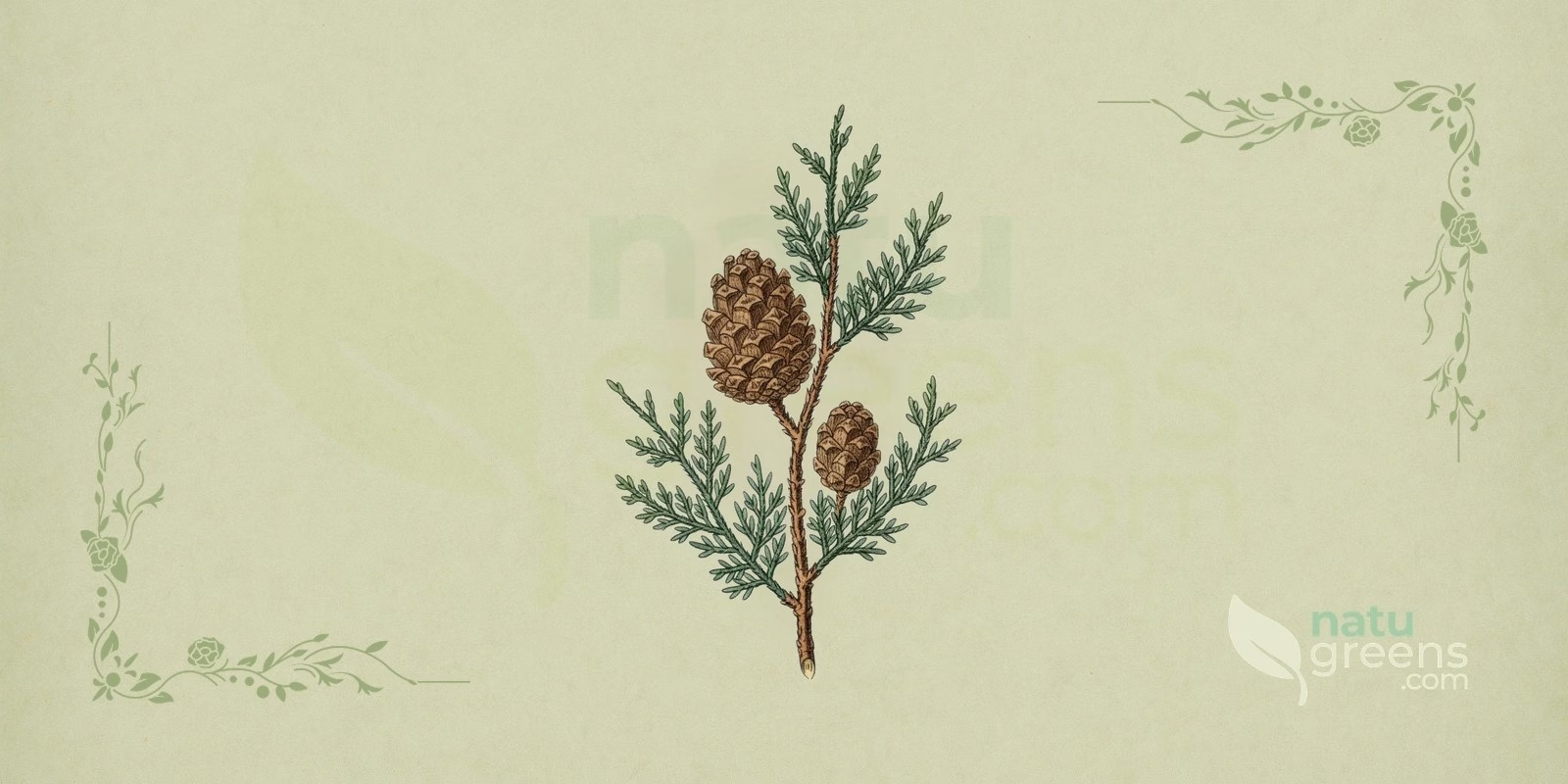
In herbal tradition, cypress has been valued since antiquity by many different cultures, and its leaves and cones (the small, cone-shaped fruits known as galbuli) are the parts most widely used in traditional medicine, also serving as raw material for extracting the essential oil and other active substances. Laboratory and animal studies have investigated some of these uses and describe anti-inflammatory, antimicrobial and astringent activity, but clinical trials in humans are still scarce, so what follows is for general information only and does not replace the guidance of a healthcare professional.
Popular and International Names of Cypress
- English: common cypress, evergreen cypress, funeral cypress, Italian cypress, Mediterranean cypress, pencil pine, pyramidal cypress, Tuscan cypress.
- Spanish: ciprés común, ciprés italiano.
- Portuguese: cipreste, cipreste-comum, cipreste-do-mediterrâneo, cipreste-italiano.
- French: cyprès commun, cyprès d’Italie, cyprès toujours vert.
- Italian: cipresso comune, cipresso mediterraneo.
- German: Echte Zypresse, Italienische Zypresse, Trauerzypresse.
- Arabic: saro, saro al-bahr al-abiadh, shajarat el-saro.
- Chinese: di zhong hai bai mu.
- Swedish: kretacypress.
Botanical Synonyms of Cupressus sempervirens
Besides Cupressus sempervirens L., the accepted name for the species, the scientific literature records other botanical synonyms, which reflect morphological variations of the tree and the different stages of its taxonomic classification over time:
- Cupressus horizontalis Mill.
- Cupressus pyramidalis Targ. Tozz.
- Cupressus sempervirens var. stricta Aiton
Botanical Family: Cupressaceae
The Cupressaceae family, to which Cupressus sempervirens belongs, is a diverse group of conifers that brings together trees and shrubs known for their resilience and their ability to adapt to a variety of climates and soils. Its species are valued for their timber, for ornamental planting and for the medicinal properties attributed to the bioactive compounds they produce, such as the terpenes found in their essential oils, and the family also includes the thujas (arborvitae), which are often mistaken for cypress.
Parts of Cypress Used
Traditional preparations rely mainly on the parts listed below, and the essential oil, obtained from the leaves and cones, is reserved for inhalation and external use, always diluted.
- Cones (small woody cones known as galbuli, popularly called berries or cypress nuts)
- Essential oil (extracted from the leaves and cones, never to be ingested)
- Leaves
Ethnobotanical and Traditional Uses
The list below brings together uses recorded in the folk medicine of different cultures and does not amount to proven indications. Hemorrhages, bleeding outside the menstrual period, urinary or prostate problems, asthma attacks and pleurisy are conditions that require medical evaluation before any use of plants.
- Acne
- Anxiety and stress
- Bleeding outside the menstrual period
- Bronchitis or asthma
- Colitis
- Cramps
- Diarrhea
- Fever
- Flu and colds
- Heavy legs
- Hemorrhages
- Hemorrhoids
- Insomnia
- Laryngitis
- Low blood pressure
- Menopause
- Menstrual cramps
- Muscle pain
- Persistent cough
- Pleurisy (inflammation of the membrane that lines the lungs)
- Premenstrual syndrome (PMS)
- Prostate problems
- Swollen legs
- Urinary incontinence (daytime or nighttime)
- Varicose ulcers
- Varicose veins
- Warts
- Wounds or skin infections
Therapeutic Properties of Cypress
The properties below come from traditional records and from laboratory or animal studies, and they still lack consistent clinical confirmation in humans.
- Anti-inflammatory (effect observed in experimental studies)
- Antibacterial (activity against bacteria observed in laboratory studies)
- Anticoagulant (activity observed in laboratory studies, relevant for people who take anticoagulant medication)
- Antifungal (activity against fungi observed in laboratory studies)
- Antimicrobial (activity against microorganisms observed in laboratory studies)
- Antioxidant (ability to neutralize free radicals in laboratory tests)
- Antiparasitic (activity observed in experimental studies)
- Antiperspirant (traditional use to reduce perspiration)
- Antiproliferative (activity observed in laboratory studies, with no clinical evidence)
- Antispasmodic (traditionally recorded for colic and cramps)
- Antiviral (activity observed in laboratory studies)
- Aromatic (fresh, woody scent used in aromatherapy)
- Astringent (causes tissues to contract, an effect associated with tannins)
- Balsamic (soothing to the airways, according to tradition)
- Calming (traditionally recorded as relaxing, especially when the oil is inhaled)
- Diuretic (traditionally recorded as increasing urine output)
- Estrogenic (estrogen-like action, described in tradition and in experimental studies)
- Expectorant (traditional record, especially in inhalations)
- Insecticidal (repellent and toxic action on insects observed with the essential oil)
- Wound-healing (traditional use on minor wounds)
Detailed Phytochemical Profile of Cypress
The compounds below have been identified in extracts of the leaves and cones and in cypress essential oil, and the stated percentages vary according to the origin of the plant, the part analyzed and the extraction method.
- Alkaloids (0.7%)
- Alpha-pinene (34.5 to 60.5% in the essential oil)
- Anthraquinones
- Bioflavonoids
- Cardiac glycosides
- Catechic tannins
- Cedrol (8.3% in the essential oil)
- Coumarins
- Delta-3-carene (22.1% in the essential oil)
- Essential oils
- Flavonoid glycosides
- Flavonoids (0.22%)
- Free quinones
- Gallic tannins
- Glyceric and glycolic acids
- Leucoanthocyanins
- Limonene (4.6% in the essential oil)
- Monoterpenes
- Phenols (0.067%)
- Saponins (1.9%)
- Saponosides
- Sesquiterpenes
- Steroids
- Tannins (0.31%)
- Terpenoids
- Triterpenes
Preparation and Administration Forms of Cypress
Cypress is prepared in different ways depending on the route of use, and the most important rule is that the essential oil is intended only for inhalation and for application to the skin, always diluted, and never for ingestion.
- Compresses
- Essential oil (topical use, always diluted)
- Inhalation (with essential oil)
- Moisturizer (with diluted essential oil)
- Tea (infusion or decoction)
- Tinctures and extracts
Synergy with Other Medicinal Plants
Stress and Anxiety Relief
In aromatherapy, cypress essential oil is traditionally combined with lavender (Lavandula angustifolia) and chamomile (Matricaria chamomilla) oils in blends used in diffusers or, always diluted, applied to the skin, with the aim of creating an atmosphere of calm and well-being. This traditional record links the combination to relaxation and the easing of nervous tension, without replacing professional care in cases of persistent anxiety, and the blend should not be used by pregnant women or on young children.
Respiratory Comfort in Steam Inhalations
For the airways, tradition combines cypress essential oil with eucalyptus (Eucalyptus globulus) and tea tree oil, also known as melaleuca (Melaleuca alternifolia), in inhalations used to ease nasal congestion, coughs and other symptoms of flu and colds. This use rests on the expectorant and antimicrobial properties attributed to these oils in traditional records and in laboratory studies, and the inhalation should not be done by pregnant women or near young children.
Recipes and Usage Protocols of Cypress
Cypress Cone Decoction
Traditionally used for varicose veins, hemorrhoids and circulation complaints in the legs, this decoction is made with a small amount of green or dried cones, crushed beforehand, boiled in water for about 10 minutes, strained and left to cool until lukewarm before drinking.
Because safety data on internal use are lacking, the amount of cones, the number of cups per day and the length of use must be decided case by case, and the traditional record always speaks of short periods, with the tea taken before meals. Consult a healthcare professional before using this preparation, which is not intended for pregnant or breastfeeding women or for children and should not be confused with the essential oil, which must never be swallowed.
Cypress Essential Oil Inhalation
Traditionally used to ease the nasal congestion and coughing that come with flu and colds, this inhalation consists of adding 3 to 5 drops of cypress essential oil to a bowl of very hot water, covering the head with a towel and breathing in the steam for 5 to 10 minutes.
Keep your eyes closed throughout the procedure to avoid irritation and stop the inhalation at the first sign of burning in the mucous membranes, bearing in mind that this method is not intended for pregnant women or young children.
Diluted Massage Oil for Tired Legs
Traditionally used for muscle aches, cramps, swelling and a feeling of heaviness in the legs, this massage oil contains 1 to 3 drops of cypress essential oil diluted in 1 or 2 tablespoons of a carrier oil, such as sweet almond or coconut oil.
First do a patch test on a small area of skin and, if there are no signs of a reaction, apply the mixture with gentle strokes to the desired area. Tradition links this use to the astringent, anti-inflammatory and vasoconstrictive properties attributed to cypress, not to any proven action on varicose veins, which should be monitored by a doctor.
The preparations above follow traditional records and do not replace professional guidance. Before any internal use, check the contraindications and interactions described in this article.
Associated Therapies
Aromatherapy
Cypress essential oil holds a prominent place in aromatherapy, where it is prized for its fresh, woody scent and used traditionally to support emotional well-being during periods of stress, anxiety and mental fatigue. Practitioners associate inhaling it with a brighter mood and mental clarity, and aromatherapy tradition also connects it with self-confidence, willpower and perseverance, using it in diffusers or applying it, always diluted, to the pulse points. These associations belong to aromatherapy practice and are not effects demonstrated in clinical studies.
Herbal Medicine
In herbal medicine, cypress appears in teas, tinctures and extracts traditionally used for circulatory, respiratory and skin complaints, a use based on the astringent, anti-inflammatory and antimicrobial actions attributed to the plant and investigated in laboratory studies. Preparations for internal use require guidance from a healthcare professional, above all because of the lack of safety data in humans and the contraindications described further below.
Homeopathy
Less common than in the other approaches, cypress may also appear in homeopathic preparations, in which the plant is used in extreme dilutions and chosen, according to the principles of homeopathy, on the basis of the person’s overall symptom picture and how closely it matches the profile of the plant. These preparations are not backed by clinical studies demonstrating efficacy for specific conditions.
Contraindications and Side Effects of Cypress
Using cypress calls for caution, and the essential oil is the form that carries the main risks. Cypress (Cupressus sempervirens) essential oil is toxic if ingested and irritating to the skin and mucous membranes when applied undiluted. The plant is traditionally used as an emmenagogue (it stimulates menstrual flow), and for this reason internal use is contraindicated during pregnancy because of the risk of uterine contractions, although this does not mean the effect has been proven. In practice, the following rules apply:
- Do not ingest the essential oil in any amount.
- Do not use during pregnancy, in any form of preparation.
- People with hormone-dependent cancer should avoid use without medical guidance, since the plant has a described estrogenic action.
- Young children should not be given the oil, either by inhalation or on the skin.
Breastfeeding women, children in general and people with blood clotting disorders, high blood pressure or a history of epilepsy or seizures should also avoid cypress. Because laboratory studies describe anticoagulant activity, anyone taking anticoagulants should talk to their doctor before using any preparation for internal use, and the same applies to people taking hormonal medications, given the estrogenic action attributed to the plant.
Allergic reactions may occur in people sensitive to plants of the Cupressaceae family, and contact dermatitis caused by cypress resin has been reported. On the skin, the oil should always be diluted in a carrier oil, with a prior allergy test on a small area, and the side effects described include skin irritation, kidney irritation and, with use of the tea, mastitis. Cypress does not replace medical treatment of varicose veins, hemorrhoids, bleeding or respiratory diseases, and persistent symptoms call for professional evaluation.
Historical Notes and Interesting Facts
A Symbol of Longevity and Mourning
Cypress is widely recognized as a symbol of longevity and immortality, thanks to the remarkable hardiness and long life of the species. At the same time, since classical antiquity and in many present-day cultures, especially around the Mediterranean and in the Muslim world, the tree has been associated with mourning and death and is often planted in cemeteries, a duality that reflects its strong presence both in life and in the memory of those who have passed away.
Cultural and Religious Presence
In Persian culture, the cypress is called the “graceful cypress” (sarv-e nāz) and appears frequently in poetry and art as an image of the elegant figure of the beloved. In Jewish tradition, some interpretations identify cypress as the wood used to build Noah’s Ark and Solomon’s Temple, which shows the religious and cultural weight the tree has carried throughout history.
Frequently Asked Questions about Cypress
Can Cypress Tea Be Used for Weight Loss?
There is no robust scientific evidence that cypress tea helps with weight loss. The plant has a diuretic action described in tradition, which may increase the elimination of fluids, but the tea should not be seen as a way to lose weight, a goal that depends on a balanced diet and regular physical activity.
Are Cypress and Thuja the Same Plant?
No. Although cypress (Cupressus sempervirens) and thuja (usually Thuja occidentalis or other Thuja species) are both conifers of the Cupressaceae family, they belong to different genera. Despite similarities such as their scale-like foliage, the two differ in growth habit, size and some properties, and the common cypress tends to grow tall with a columnar crown, whereas thujas come in more varied shapes and are widely used for hedges.
Can Cypress Essential Oil Be Applied Undiluted to the Skin?
No, because cypress essential oil, like most essential oils, irritates the skin and mucous membranes when applied undiluted and can cause sensitization or allergic reactions. Before application it should be diluted in a carrier oil such as almond, jojoba or coconut oil, and it is advisable to do an allergy test on a small patch of skin before using it on larger areas.
Can Cypress Essential Oil Be Ingested?
No, because cypress essential oil is toxic if ingested, so its use should be limited to inhalation and application to the skin, always diluted. Young children should not be given the oil by any route, and anyone considering an internal preparation of the plant needs to speak with a healthcare professional first.
Can Pregnant Women Use Cypress?
No. The plant is traditionally used as an emmenagogue, that is, to stimulate menstrual flow, and for this reason internal use is contraindicated during pregnancy because of the risk of uterine contractions. Pregnant women should not use the essential oil either, and the advice to avoid cypress also extends to breastfeeding women.
Can People with Hormone-Dependent Cancer Use Cypress?
People with hormone-dependent cancer should avoid using cypress without medical guidance. The plant has an estrogenic action described in tradition and in experimental studies, meaning it behaves in a way similar to estrogen, so any form of use needs to be assessed by the doctor in charge of the treatment.
Notice: this content is for informational purposes and does not replace professional medical advice. Consult a physician or herbal practitioner before using medicinal plants, especially during pregnancy, breastfeeding, or alongside medication.
References and Scientific Studies
Peer-Reviewed Scientific Studies (6)
- PMC2023 Al-Rajhi AMH, et al. Antimicrobial, Antidiabetic, Antioxidant, and Anticoagulant Activities of Cupressus sempervirens In Vitro and In Silico. Molecules. 2023.
- PMC2023 Batiha GE, et al. Bioactive compounds, pharmacological actions and pharmacokinetics of Cupressus sempervirens. Naunyn Schmiedebergs Arch Pharmacol. 2023.
- PMC2023 Galovičová L, et al. Biological Activity of Cupressus sempervirens Essential Oil. Plants (Basel). 2023.
- PMC2024 Rguez S, et al. Bioguided fractionation of procyanidin B2 as potent anti coxsackie virus B and Herpes simplex from cypress (Cupressus sempervirens L.). Int J Environ Health Res. 2024.
- PMC2020 Samaran Q, et al. Allergic contact dermatitis to Cupressus sempervirens resin and cross-reaction with colophonium. Contact Dermatitis. 2020.
- PMC2024 Sriti J, et al. Antioxidant, antibacterial and insecticidal activities of cypress (Cupressus sempervirens L.) essential oil. Int J Environ Health Res. 2024.
Supplementary Readings (1)
- 2022 Degaïchia H, et al. Cribado fitoquímico y efecto antibacteriano de extractos fenólicos de dos Cupressus mediterráneos. Revista Mexicana de Ciencias Agrícolas. 2022.