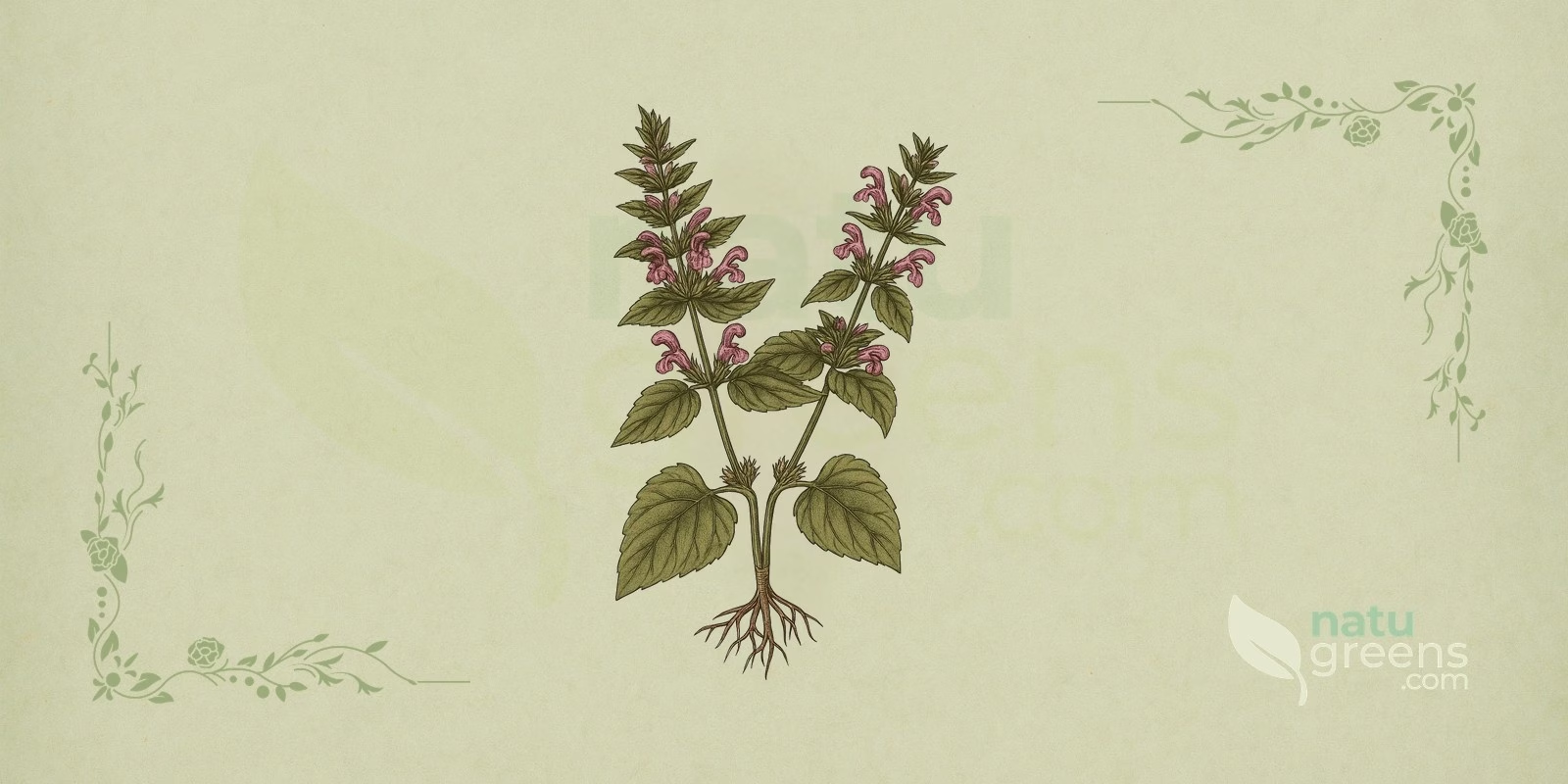
Ballota nigra L. / Black Horehound, commonly known as black horehound, stinking horehound or black archangel, is a perennial herbaceous plant of the Lamiaceae family described by Carl Linnaeus, native to Europe and the Mediterranean region, with a range that stretches as far as Central Asia. Thanks to its adaptability, the species has spread to other regions, and for centuries European traditional medicine has valued it above all for nervous and digestive complaints. Its leaves and flowers, which give off a characteristic odor when crushed, are harvested to prepare infusions, extracts and other herbal medicinal products.
In herbal tradition, black horehound holds a prominent place as a calming and regulating plant, with applications that range from gastrointestinal disorders to states of anxiety and nervousness. Its phytochemical makeup includes labdane diterpenes, flavonoids and phenylpropanoids, compounds that laboratory studies associate with neurosedative, anti-inflammatory and antioxidant activities. Modern research has looked into some of these traditional uses, but the available results come mainly from in vitro and animal studies, with no robust clinical trials in humans, which keeps the plant an object of growing, though still preliminary, interest in contemporary phytotherapy.
Popular and International Names of Black Horehound
The names of black horehound vary from country to country and usually allude either to the strong smell of the leaves or to the plant’s resemblance to white horehound, with which it shares a hairy appearance and flowers arranged in whorls.
- English: black archangel, black horehound, stinking horehound.
- Spanish: balota negra, hierba del sapo, marrubio negro.
- Portuguese: balota-negra, marroio-bastardo, marroio-fétido, marroio-negro.
- French: ballote fétide, ballote noire, marrube noir.
- Italian: ballota fetida, marrobio nero.
- German: Schwarzer Andorn, Stink-Andorn.
Botanical Synonyms of Ballota nigra
Although Ballota nigra L. is the accepted botanical name, the plant has accumulated a few historical and regional synonyms over the course of its taxonomic history. The one most often found in the literature is Marrubium nigrum (L.) Garsault, which reflects the species’ resemblance to the genus Marrubium, while Stachys ballota (L.) Kuntze points to its taxonomic closeness to the genus Stachys.
- Marrubium nigrum (L.) Garsault
- Stachys ballota (L.) Kuntze
Botanical Family: Lamiaceae
The Lamiaceae (Labiatae) family comprises more than 7,000 species of flowering plants and is characterized by square stems, opposite leaves and two-lipped flowers. It is known for its wealth of aromatic and medicinal plants, such as mint, rosemary and thyme, many of which have a place in the cooking and herbal traditions of different peoples.
Black horehound shares the typical features of the family, which stands out for its production of essential oils, diterpenes and flavonoids. These compounds are the subject of ongoing pharmacological research, and laboratory studies associate them with anti-inflammatory, antioxidant and neurosedative activities that still lack clinical confirmation.
Parts of Black Horehound Used
- Aerial parts (flowers, leaves and stems)
- Flowers
- Leaves
In herbal practice, the aerial parts are harvested during flowering, which runs from summer into autumn in the Northern Hemisphere, a period when tradition holds that the concentration of active compounds is at its highest. Once cut above ground level, they are dried in a shaded, well-ventilated place to preserve their constituents and then stored in airtight containers that protect them from moisture and degradation.
Ethnobotanical and Traditional Uses
The uses listed below come from European folk medicine and historical herbals and record how the plant has been employed over time, without amounting to a proven clinical indication.
- Anxiety and nervousness
- Coughs and respiratory complaints
- Digestive disorders (dyspepsia, nausea, vomiting)
- Epilepsy and seizures (historical record, with no clinical support and never a substitute for medical treatment)
- Menopause (symptoms such as irritability and hot flashes)
- Menstrual irregularities (emmenagogue effect, traditional record)
- Sleep disorders (insomnia)
- Vertigo and dizziness
Therapeutic Properties of Black Horehound
The properties below combine records from herbal tradition with activities observed in laboratory studies, and none of them has been confirmed by clinical trials in humans.
- Antibacterial (activity observed in laboratory studies)
- Antiemetic (traditional record for nausea and vomiting)
- Antifungal (activity observed in laboratory studies)
- Anti-inflammatory (effect described in preliminary studies and in traditional use)
- Antimanic (recorded in old herbals for states of intense agitation, with no clinical evidence and never a substitute for psychiatric treatment)
- Antineurotic (traditional record for nervous disorders)
- Antioxidant (activity observed in laboratory studies with the plant’s phenylpropanoids)
- Antiprotozoal (activity observed in laboratory studies)
- Calming (traditional record as an aid to relaxation)
- Depurative (a folk medicine concept, with no defined clinical equivalent)
- Detersive (traditional record of use for cleansing the skin locally)
- Diaphoretic (traditional record of promoting perspiration)
- Diuretic (traditional record of increasing urine output)
- Emmenagogue (traditional record of stimulating menstrual flow, which is why it is contraindicated in pregnancy)
- Neurosedative (activity observed in laboratory studies with the plant’s phenylpropanoids)
- Relaxant (traditional record for muscular and nervous tension)
- Resolvent (traditional record for local swelling and inflammation)
- Stomachic (traditional record as an aid to digestion)
Detailed Phytochemical Profile of Black Horehound
Phytochemical studies of black horehound have identified mainly labdane-type diterpenes and glycosylated phenylpropanoid esters, the group to which verbascoside and forsythoside B belong, along with flavonoids and a volatile fraction found in the essential oil of the aerial parts and the roots.
- Ballotanone
- Coumarins
- Essential oils
- Flavonoids (e.g., apigenin, luteolin, quercetin)
- Iridoid glycosides
- Labdane diterpenes (e.g., ballotenol, ballotinone, marrubiin)
- Phenylpropanoids (e.g., forsythoside B, verbascoside, also called acteoside)
- Tannins
Preparation and Administration Forms of Black Horehound
- Capsules
- Compresses
- Decoction
- Dry extract
- Fluid extract
- Infusion
- Poultice
- Tincture
The infusion is the most traditional form and is usually prepared with about 1 teaspoon (2 to 3 g) of dried leaves and flowers per 200 ml of boiling water, left to steep for 5 to 10 minutes. The classic tincture follows a ratio of 1 part dried herb to 5 parts 70% alcohol, while the concentration of the dry extract varies according to the standardization adopted by each manufacturer.
Because there are no conclusive safety studies for the species, the daily amount, frequency and duration of use of any of these forms should be set by a healthcare professional, who will also assess possible interactions with any medications being taken. Young children should avoid the plant, and above the age of 6 any use depends on medical supervision, while compresses and poultices are reserved for external use on intact skin.
Synergy with Other Medicinal Plants
The combinations described below are records from herbal tradition. Since several of these plants also have a sedative action, combining them can add up their effects and intensify drowsiness, which calls for professional guidance, especially for anyone already taking sedative medications.
Anxiety and Insomnia
Herbal tradition pairs black horehound with plants such as valerian (Valeriana officinalis), passionflower (Passiflora incarnata) and lemon balm, also known as melissa (Melissa officinalis), in blends traditionally used for nervousness and difficulty falling asleep. The traditional rationale is that the labdane diterpenes in black horehound would add to the compounds of these other plants, although this interaction has not been tested in clinical studies and combining sedative herbs demands extra attention to excessive drowsiness.
Digestive Disorders
For nausea, vomiting and dyspepsia, tradition combines black horehound with peppermint (Mentha × piperita) and lemon balm (Melissa officinalis). In this traditional record, the antiemetic and antispasmodic action attributed to black horehound would complement the carminative and digestive properties of the other two plants, and the blend is traditionally used to settle the stomach and ease the feeling of queasiness, without replacing a medical assessment when vomiting persists.
Stress and Agitation
In times of stress and agitation, herbal tradition uses black horehound together with lavender (Lavandula angustifolia) and hops (Humulus lupulus), attributing a neurosedative effect to the former and a calming, relaxing action to the other two plants. This combination is traditionally used by people with nervous tension who find it hard to relax, always with the caveat that hops, lavender and black horehound taken together may heighten drowsiness.
Recipes and Usage Protocols of Black Horehound
Traditional Infusion for Mild Anxiety and Insomnia
Ingredients: 1 teaspoon (2 to 3 g) of dried black horehound leaves and flowers and 200 ml of boiling water.
Preparation: Place the leaves and flowers in a cup, pour the boiling water over them, cover and let steep for 5 to 10 minutes before straining. This infusion is traditionally used to relax and encourage sleep, and tradition usually reserves it for the evening, but the daily amount and duration of use should be decided with a healthcare professional, since no safe dose has been established for the plant. Do not use during pregnancy or breastfeeding, or in young children.
Traditional Tincture for Agitation and Irritability
Ingredients: 50 g of dried black horehound aerial parts and 250 ml of 70% grain alcohol.
Preparation: Place the aerial parts in a dark glass jar, cover them with the alcohol, seal tightly and leave to macerate for 2 to 4 weeks in a cool, dark place, shaking daily, then strain and store the tincture in a dark bottle. In herbal tradition, this concentrated form is used for persistent states of agitation and irritability, always diluted in a little water, but the number of drops and how often they are taken depend on the advice of a healthcare professional. Because it contains alcohol, the tincture is not suitable for children, pregnant or breastfeeding women, or people who must avoid alcoholic beverages.
Traditional Poultice for Bruises and Muscle Aches
Ingredients: fresh black horehound leaves and hot water for a water bath.
Preparation: Crush the fresh leaves into a paste, warm it gently in a water bath without letting it boil, and apply it to the intact skin over the bruised, swollen or aching area, covering it with a clean cloth for 20 to 30 minutes, up to twice a day. Tradition uses this poultice for the anti-inflammatory properties attributed to the plant, and use should be stopped if skin irritation appears, a rare but possible reaction in sensitive people.
The preparations above follow traditional records and do not replace professional guidance. Before any internal use, check the contraindications and interactions described in this article.
Associated Therapies
Clinical Phytotherapy
In clinical phytotherapy, black horehound is valued for the neurosedative and antiemetic properties that tradition ascribes to it and appears in standardized forms, such as extracts and capsules, used as adjuncts in cases of nervousness, anxiety, insomnia and nausea. The dose and route of administration are tailored by the practitioner, who takes into account the patient’s condition and any possible drug interactions. Laboratory studies link the observed activity to the plant’s phenylpropanoids and labdane diterpenes, but these findings have not yet been confirmed by clinical trials demonstrating efficacy in humans.
Homeopathy
In homeopathy, Ballota nigra appears as a remedy for certain nervous and digestive symptoms, although it is used less than other plants. The homeopathic preparation starts from the fresh plant, following the principles of dilution and dynamization, and homeopathic tradition mentions it for nausea and vomiting of nervous origin, agitation and insomnia when the person’s symptoms match the profile of the remedy. The choice of potency and frequency rests with a qualified practitioner, and these indications belong to homeopathic tradition, with no clinical proof of efficacy.
Contraindications and Side Effects of Black Horehound
General Contraindications
There are no conclusive safety studies on black horehound, which is precisely why its traditional use calls for professional guidance. The plant is contraindicated for people with known hypersensitivity to species of the Lamiaceae family and must not be used in cases of undiagnosed uterine bleeding. People with heart problems need to be cautious, because high doses can induce heart rhythm irregularities, and patients with Parkinson’s disease or those taking dopaminergic medications should avoid the plant, which may interfere with the action of dopamine.
Pregnancy, Breastfeeding and Children
Black horehound, also known as stinking horehound, is traditionally used as an emmenagogue and uterotonic, and its use during pregnancy is therefore contraindicated because of the risk of uterine contractions. The plant is contraindicated during pregnancy and breastfeeding, including for the morning sickness of pregnancy, for which folk medicine once employed it. The emmenagogue effect belongs to the traditional record and has no demonstrated efficacy, but that record alone is enough to justify avoiding the plant entirely throughout pregnancy. Young children should avoid black horehound, and above the age of 6 any use depends on medical supervision.
Common Side Effects
Reported side effects are uncommon and generally mild, and may include nausea, vomiting and diarrhea, especially at high doses. Some people experience drowsiness because of the sedative properties attributed to the plant, so caution is advised when driving or operating machinery, and topical application may, in rare cases, cause skin irritation in sensitive individuals. If any adverse reaction occurs, use should be stopped and a healthcare professional consulted.
Drug Interactions
Black horehound calls for caution in people taking sedatives, such as benzodiazepines and barbiturates, whose effect may be potentiated to the point of causing excessive drowsiness, and also in those taking antihypertensives, because of the plant’s effect on blood pressure and the nervous system. The plant may also interfere with thyroid medications, owing to the presence of compounds capable of affecting thyroid function. People taking hypoglycemic drugs for diabetes or long-term medications for other chronic conditions should consult a doctor before use, in order to avoid unwanted interactions.
Historical Notes and Interesting Facts
Origin of the Name and History
The genus name Ballota derives from the Greek “ballo” (to reject), a reference to the strong odor of the crushed leaves, while the epithet nigra alludes to the dark color that the flowers and stems take on after drying.
European folk medicine has used black horehound since antiquity for nervous and respiratory complaints. The plant is believed to have reached Britain in the Iron Age, which is why botanists there classify it as an archaeophyte, that is, a species introduced by humans in ancient times.
Characteristic Scent
One of the most striking features of black horehound is the strong and, for many, unpleasant smell its leaves release when crushed. This odor, attributed to volatile compounds, is usually interpreted as a natural defense against herbivores, and the fact that the plant has remained in herbal tradition despite its smell shows the value that generations of herbalists have placed on it.
Traditional Use for Nausea
Black horehound has a long tradition of use as an antiemetic and has been employed for nausea and vomiting, including motion sickness. In the past, folk medicine also used it for the morning sickness of pregnancy, a practice now contraindicated because of the risk of uterine contractions associated with its traditional use as an emmenagogue. This application is one of the most frequently cited in herbal literature, and the traditional explanation links it to the calming action of the plant on the central nervous system, although clinical trials confirming the effect are still lacking.
Growing Black Horehound
Black horehound is an easy-to-grow perennial that adapts to a range of conditions and prefers full sun to partial shade and well-drained, nitrogen-rich soils with a pH between 5 and 7.5. It can be propagated from seed, sown on the surface in spring with the seedlings later thinned out to achieve suitable spacing, or by dividing the clumps. Frost-hardy and tolerant of dry spells, the plant benefits from moderate watering, especially in warmer climates, and regrows after its aerial parts are cut back, which allows successive harvests.
Frequently Asked Questions about Black Horehound
Is Black Horehound Tea Safe for Everyone?
Black horehound tea is not safe for everyone, since it is contraindicated during pregnancy and breastfeeding because of the risk of uterine contractions linked to its traditional use as an emmenagogue, and young children should also avoid it. It must not be used in cases of undiagnosed uterine bleeding, and people with heart problems or Parkinson’s disease, as well as those taking sedatives, antihypertensives or thyroid medications, need medical advice before drinking the tea.
Can Pregnant and Breastfeeding Women Use Black Horehound?
No, they cannot, because black horehound is traditionally used as an emmenagogue and uterotonic, and its use during pregnancy is therefore contraindicated because of the risk of uterine contractions. The contraindication extends to breastfeeding and also applies to the morning sickness of pregnancy, for which folk medicine once employed the plant.
What Does Black Horehound Tea Taste Like?
Black horehound tea has a distinctive bitter, earthy flavor that some people find unpleasant because of its intensity. To soften it, you can add honey or lemon or blend it with milder-tasting herbs such as peppermint or lemon balm, and even with such a pronounced taste the plant remains part of the European herbal tradition.
How Often Can I Drink Black Horehound Tea?
Since there are no conclusive safety studies for the plant, the daily amount and frequency of the tea should be set with a healthcare professional, and continuous use over long periods without supervision should be avoided. In herbal tradition, the infusion is usually taken in the evening when the aim is sleep and spread throughout the day for digestive complaints or nervousness.
Does Black Horehound Tea Cause Drowsiness?
It can, because the neurosedative properties attributed to the plant favor drowsiness, especially at higher doses, and this is one of the reasons for its traditional use in insomnia and anxiety. It is wise to be careful when driving or operating machinery until you know how you react to the tea, and if drowsiness becomes excessive, use should be stopped and professional advice sought.
Which Medications Can Interact with Black Horehound?
Sedatives, such as benzodiazepines and barbiturates, may have their effect potentiated by black horehound, and antihypertensives call for caution because of the plant’s effect on blood pressure and the nervous system. Thyroid medications, dopaminergic drugs used in Parkinson’s disease and hypoglycemic agents also require a medical consultation before any use of the plant.
Notice: this content is for informational purposes and does not replace professional medical advice. Consult a physician or herbal practitioner before using medicinal plants, especially during pregnancy, breastfeeding, or alongside medication.
References and Scientific Studies
Peer-Reviewed Scientific Studies (4)
- PMC2000 Daels-Rakotoarison DA, et al. Neurosedative and antioxidant activities of phenylpropanoids from Ballota nigra. Arzneimittelforschung. 2000.
- PMC1999 Didry N, et al. Isolation and antibacterial activity of phenylpropanoid derivatives from Ballota nigra. J Ethnopharmacol. 1999.
- PMC2000 Seidel V, et al. Phenylpropanoids from Ballota nigra L. inhibit in vitro LDL peroxidation. Phytother Res. 2000.
- PMC2014 Ullah N, et al. In vitro antimicrobial and antiprotozoal activities, phytochemical screening and heavy metals toxicity of different parts of Ballota nigra. Biomed Res Int. 2014.
Supplementary Readings (1)
- 2020 Przerwa F, Kukowka A, Uzar I. Ballota nigra L.: an overview of pharmacological effects and traditional uses. Herba Polonica. 2020.