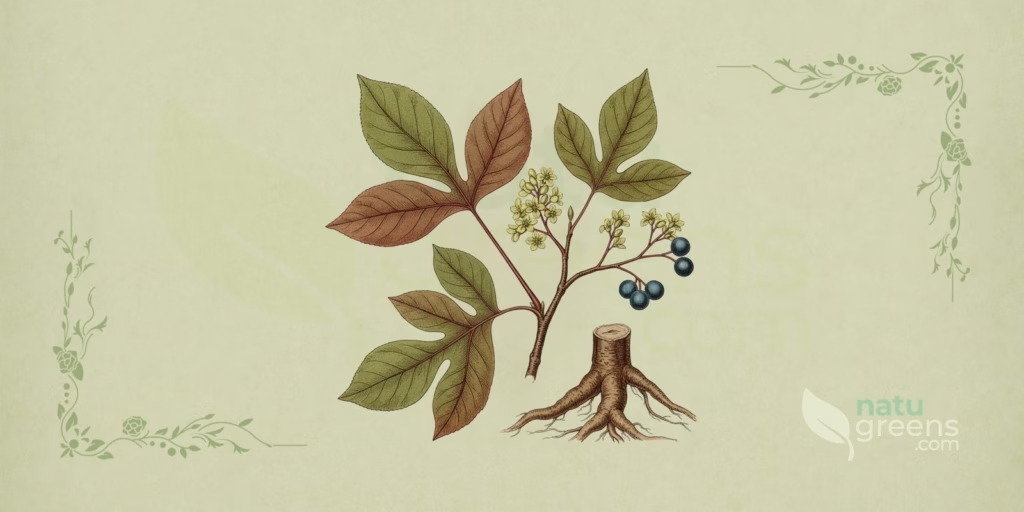
Few trees in the deciduous forests of eastern North America are as easy to name as sassafras, and much of that reputation rests on a single oddity: one branch can carry leaves in three different shapes. Entire oval blades, asymmetrical two-lobed blades shaped like a mitten and neatly three-lobed blades all share the same crown. Add the sweet fragrance released by any crushed leaf or shaved sliver of bark and the species becomes almost impossible to mistake for anything else on the continent.
Sassafras albidum belongs to the Lauraceae, the family of bay laurel, cinnamon and avocado, whose center of diversity lies in the tropics. A deciduous member able to withstand hard winters this far north is in itself an anomaly within the group. The genus Sassafras holds only three accepted species, split disjunctly between North America and eastern Asia, a biogeographic pattern that botanists have read for more than a century as evidence of forests once continuous across the Northern Hemisphere.
This page gathers the botanical profile of the species: formal classification checked against primary nomenclatural databases, field morphology, ecology, phenology, structural chemistry, cultural history and conservation status. The focus here is the tree as an organism, not as a raw material.
Taxonomy
Thomas Nuttall described the species in 1818 as Laurus albida, in the first volume of his work on the genera of North American plants. The transfer to the genus Sassafras was made by Christian Gottfried Daniel Nees von Esenbeck in 1836, in the monograph Systema Laurinarum, and that is the combination still in use today.
- Kingdom: Plantae
- Division: Magnoliophyta (angiosperms)
- Class: Magnoliopsida
- Order: Laurales
- Family: Lauraceae Juss. (1789)
- Genus: Sassafras J.Presl (1825)
- Species: Sassafras albidum (Nutt.) Nees (1836)
- Basionym: Laurus albida Nutt., Gen. N. Amer. Pl. 1: 259 (1818)
Synonyms
Nomenclatural databases recognize around twenty synonyms for the species, the residue of two centuries of generic reshuffling within the Lauraceae. Among the names most often cited in the literature:
- Laurus albida Nutt.
- Laurus sassafras L.
- Persea sassafras (L.) Spreng.
- Sassafras albidum var. molle (Raf.) Fernald
- Sassafras officinale Nees & C.H.Eberm.
- Sassafras officinale var. albidum (Nutt.) S.F.Blake
- Sassafras variifolium (Salisb.) Kuntze
- Sassafras variifolium var. albidum (Nutt.) Fernald
Etymology
The generic name was circulating in Europe well before any formal description existed. The Sevillian physician Nicolás Monardes wrote the word down around 1566, having learned it from a French Huguenot newly returned from Florida, and passed it on in his book about the plant novelties of the West Indies. The exact origin remains disputed: one hypothesis links the term to the Spanish “saxifraga”, another treats it as an adaptation of an Indigenous word now lost, reshaped by Castilian ears. The epithet albidum comes from the Latin albidus, whitish, and refers to the pale underside of the leaves and to the light tone of the sapwood.
Morphological Description
A medium-sized deciduous tree, 10 to 20 meters tall across most of its range, with exceptional records approaching 30 meters in the moist forests of the southern Appalachians. Trunk diameter rarely exceeds 60 centimeters, although old individuals may pass one meter. The crown is irregular and tiered, the result of a sympodial branching habit that arranges the limbs in layers. Bark on young twigs is yellow-green, smooth and glossy; with age it darkens to a reddish brown deeply furrowed into flat ridges. Oil cells occur throughout every tissue, which is why any cut releases fragrance at once.
Leaves
- Arrangement: alternate, simple, without stipules
- Color: matte green above, glaucous and finely downy beneath; in senescence they turn yellow, orange, red and purple, often on the same tree
- Dimensions: 7 to 15 centimeters long by 5 to 10 centimeters wide
- Fragrance: clear and sweet when the blade is crushed
- Margin: entire in all forms, never toothed
- Petiole: 2 to 4 centimeters, slender
- Shapes: striking heterophylly, with entire oval blades, asymmetrical two-lobed blades and symmetrical three-lobed blades coexisting on the same branch
Flowers
- Color and size: yellow-green, 5 to 8 millimeters
- Inflorescence: short, lax terminal racemes bearing three to eight flowers, produced before the leaves open
- Sexuality: functionally dioecious species, with separate staminate and pistillate individuals
- Structure: six free tepals; staminate flowers with nine stamens in three whorls, pistillate flowers with a superior unicarpellate ovary and staminodes
Fruits and Seeds
- Color: dark blue to nearly black at maturity, with a waxy sheen
- Pedicel: bright red, fleshy and club-shaped, forming a two-tone contrast that works as a visual signal for birds
- Seed: one per fruit, ovoid, with physiological dormancy in the embryo
- Size: 8 to 12 millimeters long
- Type: ovoid drupe, produced only on pistillate individuals
Root and Stem
The root system starts out as a taproot and soon develops shallow lateral roots of remarkable extent, capable of throwing up adventitious shoots several meters from the parent trunk. That single trait explains the dense thickets so typical of the species, which are often a single individual in genetic terms. Root bark carries the highest density of oil cells found anywhere in the plant. The wood is light and soft, with orange to pale brown heartwood, and holds up well against decay in contact with soil.
Sassafras Distribution and Habitat
The native range runs from southeastern Canada across the central and eastern United States. At its northern limit it reaches southern Ontario, Maine and Vermont; southward it extends into northern Florida; westward it advances to eastern Texas, Oklahoma, Kansas, Iowa and Wisconsin. This is one of the few genuinely temperate continental members of the Lauraceae, tolerating winter minima near thirty degrees below zero, which corresponds to zones 4 through 9 on the USDA scale.
It favors acid to neutral soils, with pH between 5.0 and 7.0, sandy to clay loam in texture and freely drained. It holds its own on poor, stony and degraded ground, but will not take prolonged waterlogging or shallow soils over limestone. It grows from sea level to around 1,500 meters in the Appalachian ranges. Ecologically it behaves as a pioneer: it colonizes gaps, forest edges, abandoned fields, road cuts and hedgerows, and regains ground quickly after fire or cutting thanks to root sprouting. Within its own native range it is sometimes treated as a troublesome colonizer in unmanaged pasture, precisely because of those suckers. Outside North America it has been grown as an ornamental in Europe since the seventeenth century, with no established record of invasive behavior.
Cultivation
Propagation
The seed shows physiological dormancy and calls for cold moist stratification of roughly three to four months at temperatures near 1 to 5 degrees, which in nature corresponds to a winter spent under the leaf litter. Even so, germination tends to be uneven and spread out across the spring. The vegetative route is far more predictable: root segments and young suckers lifted with part of their root system take readily, whereas softwood cuttings are notoriously difficult and root at a low rate.
Requirements
The tree does well in full sun and accepts partial shade while young, although fall color is more intense in direct light. Once established it takes drought in its stride. Compacted, saline or alkaline soils hold it back. Its taproot makes transplanting grown specimens a risky operation, which is why planting starts from young container stock. One planning detail is easy to overlook: because the species sprouts from its roots, a single plant tends to become a group over time, welcome in naturalized areas and awkward in a small bed.
Pests and Diseases
- Laurel wilt (Raffaelea lauricola): the most serious threat, covered in detail in the conservation section
- Mites and psyllids: they induce galls and leaf curling, cosmetic damage with little consequence for the tree
- Nectria cankers: trunk lesions on old or weakened specimens
- Popillia japonica: a beetle introduced into North America and a voracious defoliator in outbreak years
Harvest and Management
Where propagation is the aim, fruits are gathered once they reach full blue, between late summer and early fall, and the pulp is removed before storage or stratification. Wood, when it is used, is cut in winter with the tree dormant. Landscape use involves no harvest at all: the interest lies in the fall foliage and the tiered architecture.
Phenology
Flowering runs from March to May depending on latitude and lasts little more than a week. It happens before the leaves open, which leaves the yellow racemes clearly visible against bare branches and makes the tree one of the first floral resources of the season. That early calendar carries ecological weight: solitary bees of the genera Andrena and Osmia, bumblebee queens newly out of hibernation, flies and small beetles find nectar and pollen there at a moment when almost nothing else has bloomed.
Fruits ripen from June to September in southern populations and from August to October in northern ones. They are rich in lipids and vanish quickly, often before they can fall. Dispersal is essentially ornithochorous and involves more than twenty bird species, among them thrushes, vireos, orioles, tyrant flycatchers and woodpeckers, many of them on migration. Mammals such as opossums and black bear take the fruit occasionally. Leaf senescence concentrates in October and produces the color display that gives the species its ornamental value. Alongside sexual reproduction, clonal expansion through root suckers works year round and accounts for much of the tree’s territorial advance.
Related Species and Confusions
The genus is small and geographically split. Besides the North American species there are Sassafras randaiense (Hayata) Rehder, endemic to the montane forests of Taiwan and considered rare, and Sassafras tzumu (Hemsl.) Hemsl., of central and southern China, a large tree logged for its timber. Neither occurs naturally outside Asia, so confusion between congeners is unlikely in the field.
The real confusions involve species from other families that also bear lobed leaves:
- Broussonetia papyrifera: polymorphic, lobed leaves, but rough to the touch, with a toothed margin and milky latex at the broken petiole
- Lindera benzoin: same family, but shrubby, with leaves always entire, red ellipsoid fruits and a citrus-peppery scent quite unlike sassafras
- Liriodendron tulipifera: four-lobed leaf with a truncate tip, stipules present, far larger stature and no fragrance whatsoever in the tissues
- Morus rubra and Morus alba: the mulberries also show blades that are sometimes entire and sometimes lobed, but their margin is toothed and they release latex
Two characters settle nearly every case: the leaf margin of sassafras is entire in all three shapes, and the fragrance released by crushing a leaf has no parallel among the trees it is usually confused with. There is no acutely toxic look-alike within its range that would make a misidentification dangerous in itself.
Phytochemistry
The chemical signature of the species is dominated by phenylpropanoids, and safrole is the major compound. The essential oil obtained from root bark accounts for somewhere between 1% and 3% of the mass of that tissue, and within it safrole may represent 75% to 90% of the volatile fraction. Concentration falls sharply from root to stem and from stem to leaf, which makes root bark the most chemically concentrated portion of the plant.
- Alkaloids: benzylisoquinoline compounds, characteristic of the Lauraceae, have been detected in the bark
- Monoterpenes and other phenylpropanoids: alpha-pinene, camphor, eugenol and methyleugenol accompany safrole in smaller proportions
- Mucilages: abundant in young leaves and responsible for their characteristic viscous texture
- Safrole: a phenylpropanoid with a methylenedioxyphenyl ring, dominant in the root bark oil
- Sesquiterpenes: alpha-copaene and alpha-cubebene among those identified
- Tannins: present in the bark of both stem and root
One safety point is not historical and holds in the present: safrole is hepatotoxic and carcinogenic in animal models, and for that reason the United States food safety agency banned its use as a food additive in 1960. Ingesting parts of the plant poses a risk to people and also to dogs and cats, in which oral contact with bark and twigs is associated with digestive signs and liver damage.
History and Ethnobotany
Among the Indigenous peoples of the southeastern United States, sassafras held a prominent place in daily life. The Choctaw of Louisiana dried and ground the leaves into an aromatic thickening powder, a practice French colonists took up and one that survived as the filé of Creole and Cajun cooking, still present in the gumbos of the region. Nineteenth-century ethnographic records also document the use of the light, durable wood in dugout canoes, fence posts and household implements.
The European career of the tree was of a different order. After Monardes publicized the bark in Seville in the second half of the sixteenth century, it reached Old World markets wrapped in extraordinary claims, among them that it would cure syphilis, an assertion that later pharmacology never supported. The commercial effect was immediate and out of all proportion. Sassafras bark became the second export of colonial North America, behind tobacco alone, and expeditions sent to the New England coast in 1602 and 1603 came home with their holds full. Colonial charters went so far as to set minimum shipping quotas. When the therapeutic promise collapsed, so did the price, and the episode stands as one of the earliest commodity bubbles built on an American plant.
Through the nineteenth century and the first half of the twentieth, root bark gave root beer its original aromatic character in the United States, until the 1960 ban on safrole as an additive forced the industry to switch to synthetic formulations or to extracts with the compound removed. The flavor the public now associates with the drink is, from that point on, a reconstruction.
Conservation
The species is assessed as Least Concern (LC) on the IUCN Red List. That rating rests on the breadth of its distribution, its local abundance and its pioneer behavior, which secures rapid recolonization of disturbed ground. It appears in no CITES appendix and faces no international restriction on its trade as a plant.
This comfortable picture coexists with an emerging threat of considerable severity. Laurel wilt, caused by the fungus Raffaelea lauricola and carried by the ambrosia beetle Xyleborus glabratus, introduced accidentally into Georgia around 2002, has already killed hundreds of millions of Persea borbonia on the southeastern coastal plain. Every native North American member of the Lauraceae is susceptible, and sassafras is no exception: inoculation trials show wilting beginning at about 14 days and complete mortality of inoculated individuals within 30 days. Records of the disease in Sassafras albidum were published in Alabama, Arkansas, Kentucky and Tennessee between 2013 and 2020, marking its advance into the interior of the continent. The concern among plant pathologists is geographic: the range of sassafras is far larger than that of Persea borbonia, which gives the pathogen a potential corridor much longer than the one it has traveled so far. The long-term consequences for deciduous forests are not yet established.
Interesting Facts
- A genus cut in half: the three species of Sassafras occupy North America and eastern Asia with nothing in between, a classic disjunction cited since the nineteenth century as testimony to once continuous forests across the Northern Hemisphere
- A grove that is one tree: dense stands of sassafras with dozens of trunks are often a single organism, linked by lateral roots that throw up shoots meters away
- A tree that moved ships: for a few decades in the seventeenth century, the bark of this species was the second most exported item from colonial North America, surpassed only by tobacco
- Three leaves, one tree: heterophylly with entire, two-lobed and three-lobed blades on the same branch is rare among temperate trees and serves as an immediate diagnostic character
- Two-tone signaling: the red fleshy pedicel that holds up the blue drupe is no ornament; the contrast works as a visual flag for fruit-eating birds, a recurring strategy in species dispersed by migrants
Notice: this content is for informational purposes and does not replace professional medical advice. Consult a physician or herbal practitioner before using medicinal plants, especially during pregnancy, breastfeeding, or alongside medication.
References and Scientific Studies
View All 10 Cited References
Institutional Sources (2)
- GOV USDA Forest Service. Status of Sassafras albidum (Nutt.) Nees in the presence of laurel wilt disease and the redbay ambrosia beetle in the southeastern United States. Southern Research Station, Asheville. ↗
- GOV2008 USDA Forest Service. Woody Plant Seed Manual: Sassafras albidum. Agriculture Handbook 727, Washington. 2008. ↗
Supplementary Readings (8)
- 1997 Flora of North America Editorial Committee. Flora of North America North of Mexico, vol. 3: Magnoliophyta, Lauraceae. Oxford University Press, New York. 1997. ↗
- International Plant Names Index. Sassafras albidum (Nutt.) Nees. Royal Botanic Gardens Kew, Harvard University Herbaria and Australian National Herbarium. https://www.ipni.org/search?q=Sassafras albidum
- IUCN. The IUCN Red List of Threatened Species: Sassafras albidum. https://www.iucnredlist.org/search?query=Sassafras albidum
- 1995 Kamdem, D. P.; Gage, D. A. Chemical composition of essential oil from the root bark of Sassafras albidum. Planta Medica, 61(6): 574-575. 1995.
- Nees von Esenbeck, C. G. D. Systema Laurinarum. Veit et Socius, Berlin. 1836.
- 2007 Nie, Z. L.; Wen, J.; Sun, H. Phylogeny and biogeography of Sassafras (Lauraceae) disjunct between eastern Asia and eastern North America. Plant Systematics and Evolution, 267: 191-203. 2007.
- Nuttall, T. The Genera of North American Plants, vol. 1. D. Heartt, Philadelphia. 1818.
- Plants of the World Online. Sassafras albidum (Nutt.) Nees. Royal Botanic Gardens Kew. ↗