Inula helenium L. / Elecampane, commonly known as elecampane, elfwort, or scabwort, is a perennial herbaceous plant of the Asteraceae family, described by Carl Linnaeus. Native to Eurasia, from Europe to Western Asia, this species has been valued for millennia for its recognized therapeutic properties. The root of elecampane, bitter in taste and camphor-like in scent, is the part most widely used for preparing infusions, extracts, and other herbal products, particularly for respiratory and digestive conditions.
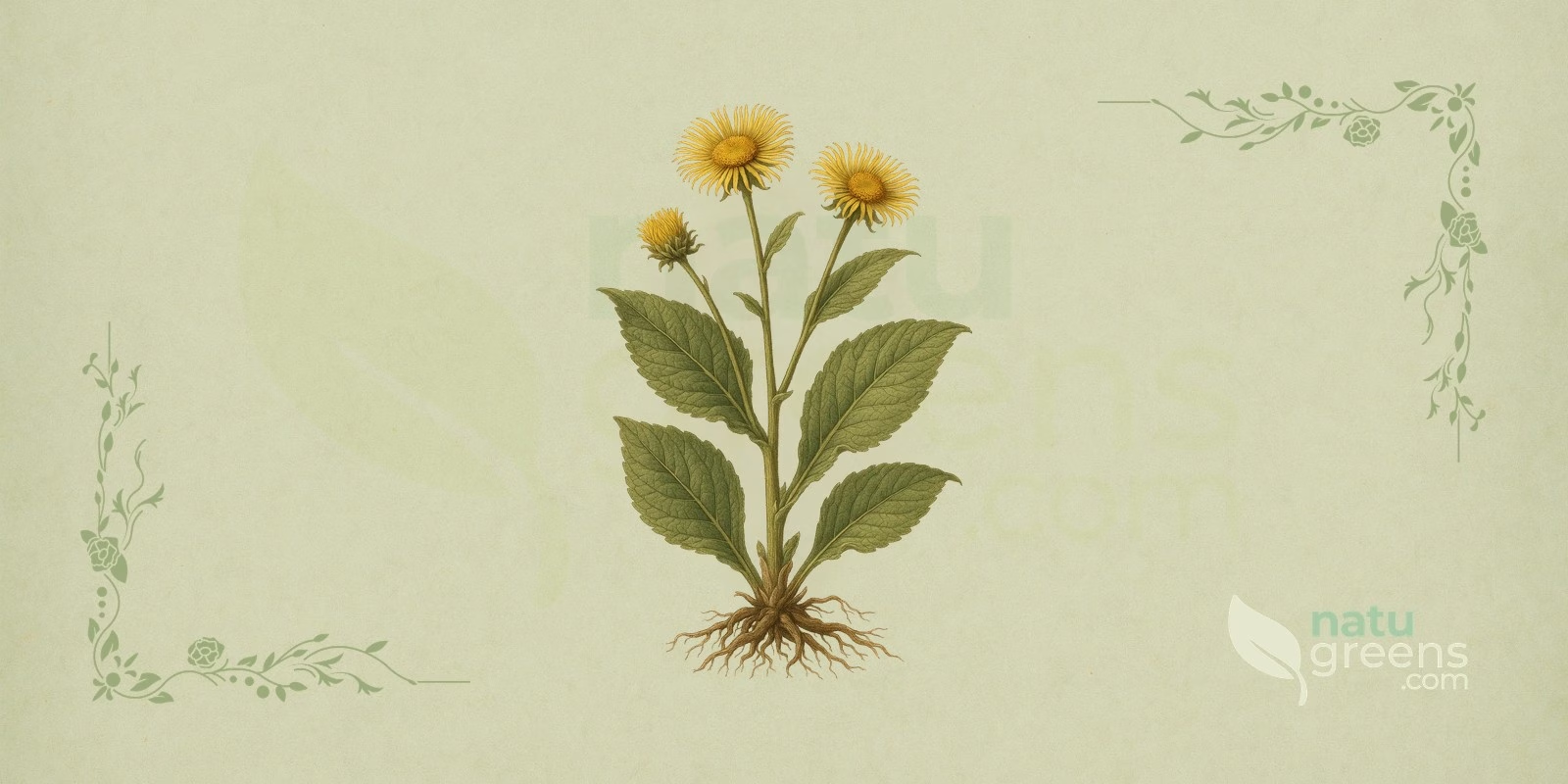
In traditional European medicine and in various ancient cultures, elecampane holds a prominent place as a tonic and expectorant. Its applications range from relieving gastrointestinal complaints to supporting lung health. The plant is recognized for its rich phytochemical composition, including inulin and sesquiterpene lactones such as helenin, which give it its anti-inflammatory, antioxidant, and antimicrobial properties. Modern scientific research has validated many of the traditional uses of elecampane, cementing its position as a medicinal plant of great interest.
Popular and International Names of Elecampane
- English: elecampane, elfdock, elfwort, horse yellowhead, horse-heal, scabwort, wild sunflower.
- Spanish: énula, énula-campana, helenio, hierba del moro.
- Portuguese: alant, campana-da-praia, énula, énula-campana, erva-campeira, helênio, ínula, madorneira-bastarda, olho de cavalo, omã, omanek.
- French: aunée, grande aunée, inule.
- Italian: enula, enula campana.
- German: Alant, Brustwurz, Echter Alant, Grosse Inula.
Botanical Synonyms of Inula helenium
The scientific name Inula helenium L. is the most widely accepted. However, the plant has several botanical synonyms that reflect its taxonomic history and the different classifications it has received over time. These synonyms matter for research and for the precise identification of the species across scientific sources and herbaria. Understanding these terms helps avoid confusion and ensures the correct application of the studies and traditional uses associated with elecampane.
- Aster helenium (L.) Scop.
- Aster officinalis All.
- Corvisartia helenium (L.) Mérat
- Helenium grandiflorum Gilib.
- Inula orgyalis Boiss.
Botanical Family: Asteraceae
Inula helenium belongs to the vast Asteraceae family, also known as Compositae. This is one of the largest families of flowering plants, comprising around 1,900 genera and more than 32,000 species distributed worldwide. The Asteraceae family is characterized by its capitulum inflorescences, in which small flowers cluster together to form a structure resembling a single bloom. Many plants in this family hold great economic, culinary, and medicinal importance, such as chamomile, sunflower, and artichoke.
Elecampane shares morphological features typical of the family, including composite flower heads made up of tubular disc florets and ray florets at the margins. The Asteraceae family is known for producing bioactive compounds, such as sesquiterpene lactones, flavonoids, and essential oils, which give many of its species medicinal properties. The chemical diversity of this family has been the subject of intense pharmacological research, contributing to the development of herbal drugs and dietary supplements.
Parts of Elecampane Used
- Root (rhizome)
Ethnobotanical and Traditional Uses
- Absinthe confection (France and Switzerland)
- Antiseptic
- Asthma
- Bites of vipers, spiders, and pine caterpillars (Ancient Greece)
- Bronchitis
- Condiment
- Confections (candied roots in medieval Europe)
- Cough (especially associated with bronchitis, asthma, and whooping cough)
- Cure for hydrophobia (1817 New England almanac)
- Digestive disorders
- Emmenagogue (property yet to be demonstrated)
- Expectorant
- Fevers (Ancient Egypt)
- Fluid retention
- Irritation of the trachea and bronchi
- Pulmonary tuberculosis (foreign studies)
- Relief of intestinal colic and flatulence
- Skin problems and rashes
- Tonic
- Vaginal catarrh
Therapeutic Properties of Elecampane
- Anti-inflammatory (effect studied in reducing inflammation, especially in respiratory diseases)
- Antibacterial (activity studied against bacteria such as Staphylococcus and Mycobacterium tuberculosis)
- Antimicrobial (activity against bacteria and yeasts such as Candida)
- Antioxidant (activity studied against oxidative stress)
- Antiproliferative (activity observed in laboratory studies, without clinical proof)
- Expectorant (helps thin mucus and ease coughing)
- Immunomodulatory (effect studied on the immune system)
- Tonic (effect studied on the body’s nutritive functions and general tone)
Detailed Phytochemical Profile of Elecampane
- Acrid resin
- Alantolactone
- Essential oils
- Eudesmane sesquiterpenoid
- Flavonoids
- Helenin (C15H20O2)
- Inulin (storage polysaccharide, fructose polymer)
- Isoalantolactone
- Phenolic acids (caffeic acid, chlorogenic acid)
- Sesquiterpene lactones
Preparation and Administration Forms of Elecampane
- Decoction
- Fluid Extract (Extratum Inulae Fluidum)
- Helenin (acicular crystals)
- Infusion
- Specific Medicine Inula
- Syrup
Synergy with Other Medicinal Plants
Respiratory Health
Elecampane can be combined with other expectorant and bronchodilator herbs, such as thyme (Thymus vulgaris) or eucalyptus (Eucalyptus globulus), to enhance its effects in relieving coughs and bronchial congestion. The synergy with thyme, rich in thymol, may increase antimicrobial and mucolytic action, while eucalyptus adds decongestant properties. This combination is particularly useful in cases of bronchitis and asthma, where the combined action of the plants may ease symptoms more effectively.
Immune Support
For immune system support, elecampane can be paired with echinacea (Echinacea purpurea) or elderberry (Sambucus nigra). Echinacea is traditionally recognized for its immune-stimulating properties, and combining it with elecampane may offer more robust support to the body against infections. Elderberry, in turn, has antiviral and anti-inflammatory properties, complementing elecampane’s action in preventing and easing colds and flu. This synergy aims to optimize the body’s immune response.
Digestive Health
For digestive disturbances, elecampane can be combined with carminative and digestive herbs, such as peppermint (Mentha × piperita) or ginger (Zingiber officinale). Peppermint helps relieve spasms and flatulence, while ginger stimulates digestion and reduces nausea. Elecampane’s tonic action on the gastrointestinal tract, together with the properties of these plants, may contribute to greater digestive comfort, supporting the balance of the digestive system.
Recipes and Usage Protocols of Elecampane
Root Decoction for Respiratory Issues
Add 1 teaspoon (2 to 3g) of dried elecampane root to 250ml of cold water. Bring to a boil and simmer for 10 to 15 minutes. Strain and drink up to 3 times a day. This decoction is traditionally used as an expectorant to ease persistent coughs, bronchitis, and asthma, helping thin mucus and support its expulsion. It is important not to exceed the recommended dose and to consult a healthcare professional if in doubt.
Infusion for Digestive Support
To prepare an infusion, use 1 teaspoon (1 to 2g) of dried elecampane root per 200ml of boiling water. Let steep for 5 to 10 minutes, strain, and drink before meals. This infusion may support digestion, ease colic and flatulence, and act as a gentle tonic for the gastrointestinal system. Its action is beneficial for those seeking natural support for digestive health, contributing to the overall well-being of the digestive tract.
Elecampane Tincture for General Use
Elecampane tincture is a concentrated and easy-to-administer form. The recommended dosage is 1 to 2ml, 2 to 3 times a day, diluted in a little water. The tincture is traditionally used for a variety of conditions, including respiratory, digestive, and immune support. It is important to obtain tinctures from reliable sources and to follow the manufacturer’s instructions or the guidance of a qualified healthcare professional to ensure safe and effective use. Its convenience makes it a popular option.
The preparations above follow traditional records and do not replace professional guidance. Before any internal use, check the contraindications and interactions described in this article.
Associated Therapies
Herbal Medicine
In modern herbal medicine, elecampane is valued for its expectorant, anti-inflammatory, and antimicrobial properties. According to herbal tradition, it is frequently used in formulations aimed at supporting chronic respiratory conditions, such as bronchitis and asthma, and at supporting the immune system. Standardized root extracts are used in supplements and herbal medicinal products, drawing on their richness in inulin and sesquiterpene lactones. Its effectiveness is recognized across various herbal traditions.
Homeopathy
In homeopathy, the remedy Inula helenium is prepared from the tincture of the fresh root. It is indicated for respiratory conditions with a deep cough and difficult expectoration, especially when there is a sensation of heaviness in the chest. It may also be considered for digestive issues with flatulence and a feeling of fullness. The choice of homeopathic remedy is based on the totality of the individual’s symptoms, and consultation with a qualified homeopath is essential for correct prescription.
Contraindications and Side Effects of Elecampane
Although elecampane is generally considered safe when used correctly, there are some contraindications and potential side effects. Individuals with a known allergy to plants in the Asteraceae family (such as daisies, chrysanthemums, or ragweed) should avoid elecampane, as allergic reactions may occur, including contact dermatitis and, in rare cases, anaphylaxis. Use during pregnancy and breastfeeding is not recommended due to the lack of conclusive studies on its safety during these periods. High doses may cause nausea, vomiting, and diarrhea.
Drug Interactions
Elecampane may interact with certain medications. Due to its inulin content, it may affect blood sugar levels, requiring caution in diabetic patients using hypoglycemic medications. In addition, its diuretic properties may potentiate the effect of pharmacological diuretics, leading to electrolyte imbalance. It is essential to consult a healthcare professional before starting elecampane, especially if taking other medications or having pre-existing health conditions, to avoid adverse interactions and ensure treatment safety.
Historical Notes and Interesting Facts
The Legend of Helen of Troy
The plant’s specific name, helenium, derives from the legend of Helen of Troy. It is said that elecampane sprang from the tears Helen shed when she was abducted, linking the plant to beauty and sorrow. This mythical connection underscores the plant’s long history in European culture and its symbolic importance, which goes beyond its medicinal uses. The legend adds a layer of fascination to the story of this remarkable herb.
Elecampane in Antiquity
Since Ancient Greece, elecampane was highly valued. Theophrastus, the Greek philosopher, already recommended its use in oil and wine to treat the bites of venomous animals. Pliny the Elder, in Ancient Rome, mentioned it as a medicine and condiment, and Apicius, author of a first-century AD cookbook, described its use for testing the quality of honey. These historical references demonstrate the plant’s long and varied use across the centuries, from medicine to cooking.
The Elf Herb and Magic
In Nordic and Celtic cultures, elecampane was known as elfwort, giving it a mystical connection to elves and the fae. This association reflects the folk belief in its healing and protective properties, which went beyond the purely physical. The plant was considered sacred and was used in rituals and folk magic practices, underscoring its cultural and spiritual importance in ancient times. This folkloric dimension enriches the perception of elecampane as a plant of power and mystery.
Frequently Asked Questions about Elecampane
Can Elecampane Tea Be Consumed Daily?
Daily consumption of elecampane tea should be done in moderation and under the guidance of a healthcare professional. While it is generally considered safe in traditionally used doses, prolonged use or high doses may cause unwanted effects. It is always advisable to follow a specialist’s recommendations to ensure safety and effectiveness, especially if there are pre-existing health conditions or use of other medications.
What Are the Main Parts of the Plant Used?
The main part of Inula helenium used for medicinal purposes is the root (rhizome). This is the part of the plant where the active compounds, such as inulin and sesquiterpene lactones, are concentrated, responsible for its therapeutic properties. The root is harvested and processed to produce extracts, tinctures, decoctions, and infusions, forming the basis for most elecampane herbal preparations.
Does Elecampane Interact With Any Medications?
Yes, elecampane may interact with certain medications. Due to its diuretic properties, it may potentiate the effect of pharmacological diuretics. In addition, the inulin present in the root may influence blood sugar levels, requiring caution in diabetic patients using hypoglycemic medications. It is essential to inform your doctor or pharmacist about elecampane use to avoid adverse interactions and ensure treatment safety.
Who Should Avoid Using Elecampane?
People with a known allergy to plants in the Asteraceae family, such as daisies, chrysanthemums, and ragweed, should avoid elecampane due to the risk of allergic reactions. Pregnant and breastfeeding women should also abstain, since conclusive studies on the plant’s safety during these periods are lacking. Diabetics using hypoglycemic medications and people taking pharmacological diuretics need professional guidance before using elecampane, given the risk of interactions.
How Is Elecampane Tea Prepared?
Elecampane can be prepared either as a decoction or an infusion, always using the dried root. In the decoction, the root is boiled for 10 to 15 minutes, which helps better extract the compounds from the more fibrous part of the plant; in the infusion, the chopped root is simply covered with hot water and left to steep for a few minutes. In both cases, the liquid should be strained before consumption, and the dose should not exceed the amount indicated in traditional recipes.
Which Compounds Explain Elecampane’s Properties?
Elecampane’s action is mainly associated with inulin, a storage polysaccharide, and with sesquiterpene lactones such as alantolactone, isoalantolactone, and helenin. These compounds, present in the root, underlie the expectorant, anti-inflammatory, and antimicrobial effects traditionally attributed to the plant. Essential oils, flavonoids, and phenolic acids round out the phytochemical profile responsible for elecampane’s tonic and antioxidant action.
Notice: this content is for informational purposes and does not replace professional medical advice. Consult a physician or herbal practitioner before using medicinal plants, especially during pregnancy, breastfeeding, or alongside medication.
References and Scientific Studies
- 1987 Howard, M. (1987). Traditional Folk Remedies: A Comprehensive Herbal. Century.
- Ellingwood, F. (1919). The American Materia Medica, Therapeutics and Pharmacognosy.
- 2005 Sanderson, H., & Renfrew, J. M. (2005). The Cultural History of Plants. Routledge.