Tanacetum parthenium (L.) Sch.Bip. / Feverfew, a perennial herbaceous plant of the Asteraceae family, is widely recognized for its medicinal properties, especially in migraine prevention. Native to the Balkan and Caucasus regions, this species has spread globally and is cultivated for both its ornamental and traditional medicinal value. Historically, feverfew has been used in traditional medicine to relieve fevers, headaches, and inflammation, cementing its reputation as a popular natural remedy.
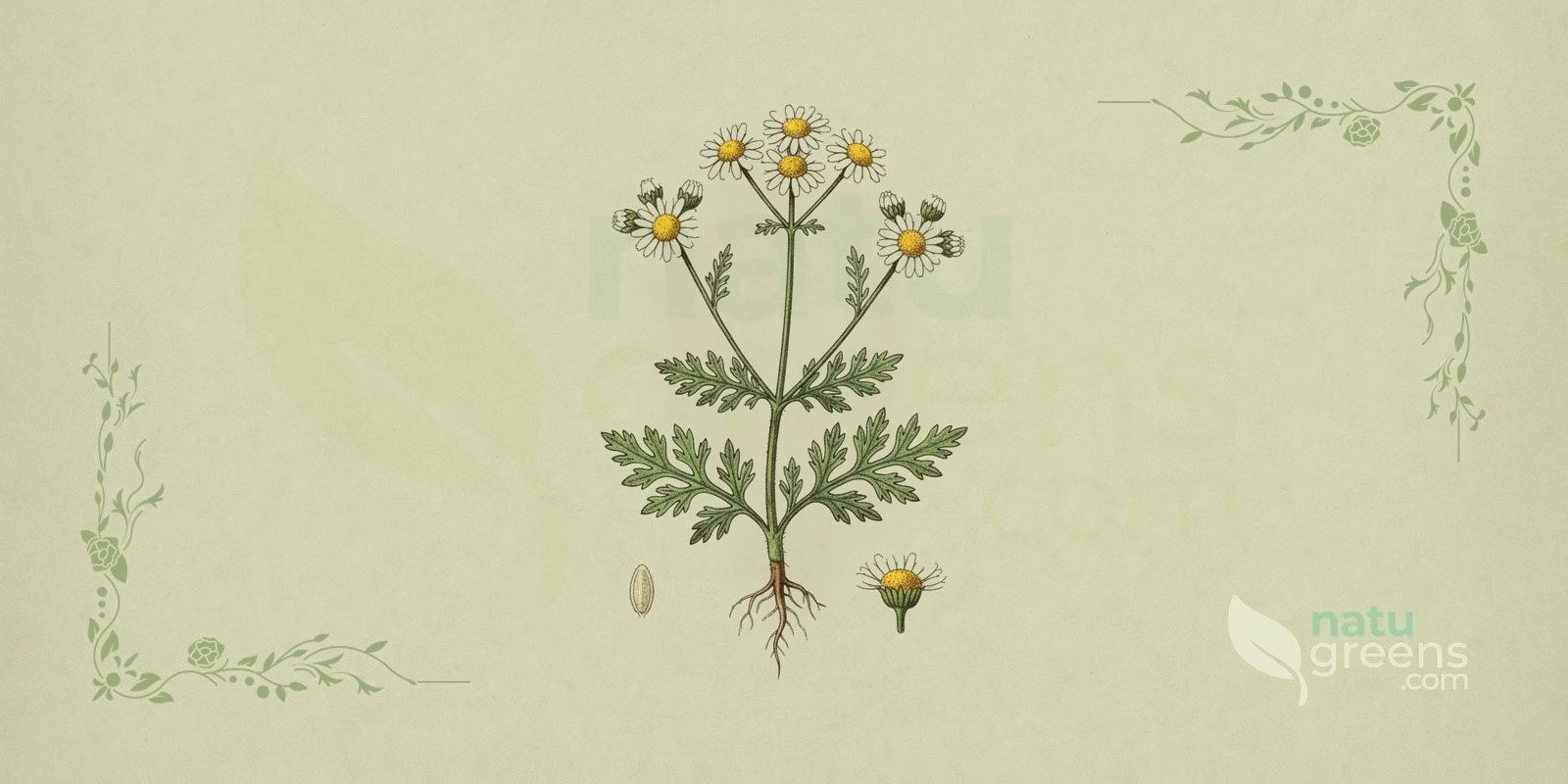
The use of feverfew dates back centuries, with records of its application in Ancient Greece and Egypt for various ailments. The plant, which bears small daisy-like flowers, is valued for its rich phytochemical composition, most notably parthenolide. This bioactive compound is identified as the main contributor to the anti-inflammatory and analgesic effects studied in the plant, making it a subject of growing interest in modern scientific research.
Popular and International Names of Feverfew
- English: bachelor’s buttons, featherfew, feverfew, hungarian chamomile, midsummer daisy, scented mayweed, wild chamomile.
- Spanish: altamisa, amargaza, amargazón, arrugas, artemisa, botón de oro, botón de plata, hierba de Santa María, manzanilla, manzanilla de huerta, migranela, Santa María, tanaceto.
- Portuguese: amargosa, artemijo, artemísia dos prados, camomila-pequena, crisântemo-de-jardim, febrífuga, macela-da-serra, margaridinha, margaridinha-branca, matricária, olguinha, rainha das ervas, tanaceto.
- French: grande camomille, matricaire, pyrèthre doré.
- Italian: camomilla romana, erba amara, partenio.
- German: Fieberkraut, Mutterkraut, Zierkamille.
Botanical Synonyms of Tanacetum parthenium
- Chrysanthemum parthenium (L.) Bernh.
- Leucanthemum parthenium (L.) Gren. & Godr.
- Matricaria parthenium L.
- Pyrethrum parthenium (L.) Sm.
- Tanacetum grossheimii (Sosn.) Muradyan.
Botanical Family: Asteraceae
The Asteraceae family, also known as Compositae, represents one of the largest groups of flowering plants, encompassing approximately 1,900 genera and more than 32,000 species distributed worldwide. This vast family is characterized by its distinctive inflorescence, the capitulum, in which numerous small flowers cluster together to form a structure that mimics a single bloom. Asteraceae includes many plants of great economic, culinary, and medicinal importance, such as lettuce, sunflower, and calendula.
Feverfew shares the morphological traits typical of this family, including flowers composed of tubular disc florets at the center and ligulate ray florets at the margins. The Asteraceae family is notable for producing bioactive compounds such as sesquiterpene lactones, flavonoids, and essential oils, which lend medicinal properties to many of its species, a chemical diversity that has been the subject of intense pharmacological research and has contributed significantly to the development of herbal medicines and dietary supplements.
Parts of Feverfew Used
- Flower heads (blooms)
- Leaves
Ethnobotanical and Traditional Uses
- Relief of general inflammation.
- Relief of headaches, especially migraines.
- Relief of insect bites.
- Relief of stomach pain and digestive disorders.
- Relief of toothaches.
- Relief of fevers.
- Reduction of menstrual cramps and irregularities.
- Treatment of rheumatoid arthritis.
Therapeutic Properties of Feverfew
- Analgesic (traditional use for pain relief, especially headaches and migraines)
- Anti-inflammatory (effect studied in reducing inflammation, attributed to the inhibition of inflammatory mediators)
- Antioxidant (activity studied against free radicals, protecting cells)
- Antiplatelet (may inhibit platelet aggregation, relevant for migraines); traditional use, without established clinical efficacy
- Antiproliferative (activity observed in laboratory studies, without clinical confirmation)
- Antipyretic (effect studied in reducing fever)
- Antispasmodic (helps relax smooth muscle, useful for cramps)
- Anxiolytic (potential to reduce anxiety, less studied than its effect on migraines)
- Neuroprotective (some studies suggest neuronal protection)
Detailed Phytochemical Profile of Feverfew
- Coumarins (scopoletin, umbelliferone)
- Essential Oils (camphor, bornyl acetate, chrysanthenone, pinene, limonene)
- Flavonoids (apigenin, luteolin, quercetagetin, jaceidin, santin, chrysosplenol, chrysosplenetin)
- Phenolic Acids (caffeic acid, chlorogenic acid)
- Sesquiterpene Lactones (parthenolide, 3-β-hydroxyparthenolide, canin, chrysanthemin)
Preparation and Administration Forms of Feverfew
- Capsules/Tablets
- Fluid Extract
- Infusion (Tea)
- Tincture
- Topical Use (compresses, oils, creams)
Synergy with Other Medicinal Plants
Migraines
To enhance the analgesic and anti-inflammatory effect in the traditional management of migraines, feverfew can be combined with Valeriana officinalis (valerian) and Salix alba (white willow), a synergy aimed at providing broader relief from the pain and inflammation associated with attacks, offering a complementary and more robust approach. Because it brings together two plants with the potential to reduce platelet aggregation, this combination should be avoided by people who use anticoagulants or have a tendency to bleed, always under the guidance of a healthcare professional.
Inflammation
In cases of generalized inflammation, combining feverfew with Matricaria chamomilla (chamomile) and Salix alba (white willow) may provide a more complete anti-inflammatory effect, since feverfew acts mainly through parthenolide, while chamomile and white willow contribute other compounds that modulate different inflammatory pathways, resulting in a synergistic action. Because white willow also interferes with clotting, this combination requires extra caution in people who use anticoagulants.
Digestive Issues
For relief of gastrointestinal disorders, feverfew can be used together with Mentha piperita (peppermint) or Melissa officinalis (lemon balm), combinations useful for reducing spasms, flatulence, and abdominal discomfort, taking advantage of the carminative and antispasmodic properties of the associated plants.
Recipes and Usage Protocols of Feverfew
Tea for Migraine
Ingredients: 1 teaspoon of dried feverfew leaves and flowers, 200 ml of boiling water.
Preparation: Place the dried leaves and flowers in a cup and add the boiling water. Let steep for 10 minutes, then strain and drink. To make the flavor more pleasant, a slice of fresh ginger or a few mint leaves can be added. Drink one cup at the first sign of a migraine or as a daily preventive measure, as directed by a professional.
Tincture for Migraine Prevention
Ingredients: Feverfew tincture (1:5, 45% alcohol).
Preparation: The tincture is a concentrated form of extract. Take 20 to 30 drops diluted in a small amount of water, 2 to 3 times a day. It is essential to follow the guidance of a healthcare professional for the exact dosage and duration of treatment, especially for prolonged use in migraine prevention. Abrupt discontinuation may lead to “post-feverfew syndrome.”
The preparations above follow traditional records and do not replace professional guidance. Before any internal use, review the contraindications and interactions described in this article.
The preparations above follow traditional records and do not replace professional guidance. Before any internal use, check the contraindications and interactions described in this article.
Associated Therapies
Herbal Medicine
Feverfew is widely used in herbal medicine, mainly for migraine prevention and support in various inflammatory conditions. According to herbal tradition and preliminary studies, its effects are attributed to the presence of sesquiterpene lactones, such as parthenolide, which modulate inflammatory pathways and platelet aggregation. In herbal medicine, feverfew is frequently used in standardized extracts, capsules, or infusions, with specific dosages meant to optimize results and minimize adverse effects.
Homeopathy
Although not as prominent as other plants in homeopathy, feverfew may be used in homeopathic preparations for specific conditions. The choice of homeopathic remedy is based on the totality of an individual’s symptoms, and feverfew may be considered for headaches, fevers, and other complaints, depending on the individual’s symptom picture, with homeopathic use differing significantly from herbal use in terms of preparation and dosage.
Aromatherapy
Feverfew essential oil can be used in aromatherapy, but with caution, due to its chemical composition, which includes camphor and other components. Although not one of the most common essential oils, it can be used for certain applications, always diluted and under the supervision of a qualified aromatherapist, since the use of the plant’s extracts and infusions is generally more common and safer for most applications.
Contraindications and Side Effects of Feverfew
General Contraindications
Feverfew is contraindicated for individuals with a known allergy to plants of the Asteraceae family, which includes daisies, chrysanthemums, and ragweed. Allergic reactions may present as contact dermatitis, hives, or, in more severe cases, anaphylaxis. Pregnant and breastfeeding women should avoid feverfew due to its potential to stimulate uterine contractions and the lack of safety data on its excretion in breast milk, so caution advises consulting a physician before any use during pregnancy or breastfeeding.
Drug Interactions
Feverfew may interact with various medications, especially anticoagulants such as warfarin, increasing the risk of bleeding due to its ability to inhibit platelet aggregation. Individuals taking diabetes medication should carefully monitor their glucose levels, as feverfew may have hypoglycemic effects, and combining it with sedatives or benzodiazepines may potentiate central nervous system depressant effects. It is crucial to consult a healthcare professional before starting feverfew, especially if taking other medications.
Common Side Effects
Side effects of feverfew are generally rare and mild, and may include gastrointestinal disturbances such as nausea, vomiting, diarrhea, and abdominal pain. Chewing fresh leaves can cause irritation of the mouth and tongue, including ulcers, and contact dermatitis may occur in sensitive individuals. “Post-feverfew syndrome,” characterized by nervousness, insomnia, headaches, and joint pain, can arise after abruptly discontinuing prolonged use of the plant.
Historical Notes and Interesting Facts
Origin of the Name
The popular English name, feverfew, derives from the Latin febrifugia, meaning “fever chaser.” This etymology reflects one of the plant’s oldest and most recognized traditional uses, having been employed to reduce feverish states across various cultures. The association with fever highlights feverfew’s long history as a natural remedy for easing symptoms of illness.
The “Aspirin of the Middle Ages”
Due to its notable analgesic and antipyretic properties, feverfew was often referred to as the “aspirin of the Middle Ages.” This designation underscores its importance as one of the main medicinal resources available at the time for relieving pain and fever, long before the discovery and synthesis of modern medications such as aspirin.
Ancient Use and Rediscovery
Feverfew has a history of medicinal use dating back to Ancient Greece and Egypt, where it was employed to treat menstrual pain and inflammation. Its popularity for traditional migraine use resurged in the 1970s, following reports of a woman who noted improvement in chronic migraines after chewing the plant’s leaves, a rediscovery that spurred modern scientific research into its mechanisms of action.
Ornamental and Medicinal Plant
Beyond its medicinal applications, feverfew is also a common ornamental garden plant, valued for its small white daisy-like flowers and its characteristic aroma. Its dual role as a decorative and traditional medicinal plant demonstrates the versatility and cultural value of this species throughout history.
Frequently Asked Questions about Feverfew
Is Feverfew Safe for Daily Use?
Yes, feverfew can be taken daily in appropriate doses, especially for migraine prevention, under professional guidance. However, abruptly stopping prolonged use can trigger “post-feverfew syndrome,” with symptoms such as nervousness and headaches. A gradual reduction in dosage is advisable.
Are Feverfew and Chamomile the Same Plant?
No, feverfew (Tanacetum parthenium) and chamomile (Matricaria chamomilla) are distinct species, although both belong to the Asteraceae family and have similar daisy-like flowers. Each has a specific phytochemical profile and traditional uses, though there is some overlap in their properties.
Can Children Use Feverfew?
The use of feverfew in children should be approached with extreme caution and always under medical supervision. The lack of safety studies specific to the pediatric population and the potential for side effects call for a cautious approach supervised by a qualified healthcare professional.
Does Feverfew Interact with Medications?
Yes, feverfew may interact with certain medications, such as anticoagulants, increasing the risk of bleeding. It may also affect glucose levels in people with diabetes and potentiate the effects of sedatives. It is essential to inform your doctor or pharmacist about feverfew use, especially if you are taking other medications.
Which Part of the Plant Is Most Important for Medicinal Use?
The leaves and flower heads (blooms) are the most important parts of feverfew for medicinal use. The leaves are particularly rich in parthenolide, the main active compound identified as responsible for many of its studied properties, especially its anti-inflammatory and migraine-related effects.
Notice: this content is for informational purposes and does not replace professional medical advice. Consult a physician or herbal practitioner before using medicinal plants, especially during pregnancy, breastfeeding, or alongside medication.
References and Scientific Studies
Peer-Reviewed Scientific Studies (3)
- PMC2011 Pareek, A., Suthar, M., Rathore, G. S., & Bansal, V. (2011). Feverfew (Tanacetum parthenium L.): A systematic review. Pharmacognosy Reviews, 5(9), 103-110.
- PMC2023 Hordiei, K., et al. (2023). Phenolic Composition and Antioxidant Activity of Tanacetum parthenium. Molecules, 28(17), 6338.
- PMC2007 Saadane, A., et al. (2007). Parthenolide Inhibits IκB Kinase, NF-κB Activation, and Inflammatory Response in Cystic Fibrosis Cells and Mice. American Journal of Respiratory Cell and Molecular Biology, 36(6), 728-736.
Institutional Sources (1)
- GOV National Center for Complementary and Integrative Health (NCCIH). (n.d.). Feverfew: Usefulness and Safety. Recuperado de NCCIH.
Supplementary Readings (3)
- 2024 Memorial Sloan Kettering Cancer Center (MSKCC). (2024). Feverfew. Recuperado de MSKCC.
- 2023 Zhu, S., et al. (2023). The therapeutic effect and mechanism of parthenolide in inflammation and cancer. Frontiers in Pharmacology, 14, 1111218.
- 2010 European Medicines Agency (EMA). (2010). Community herbal monograph on Tanacetum parthenium (L.) Schultz Bip., herba. Recuperado de EMA.