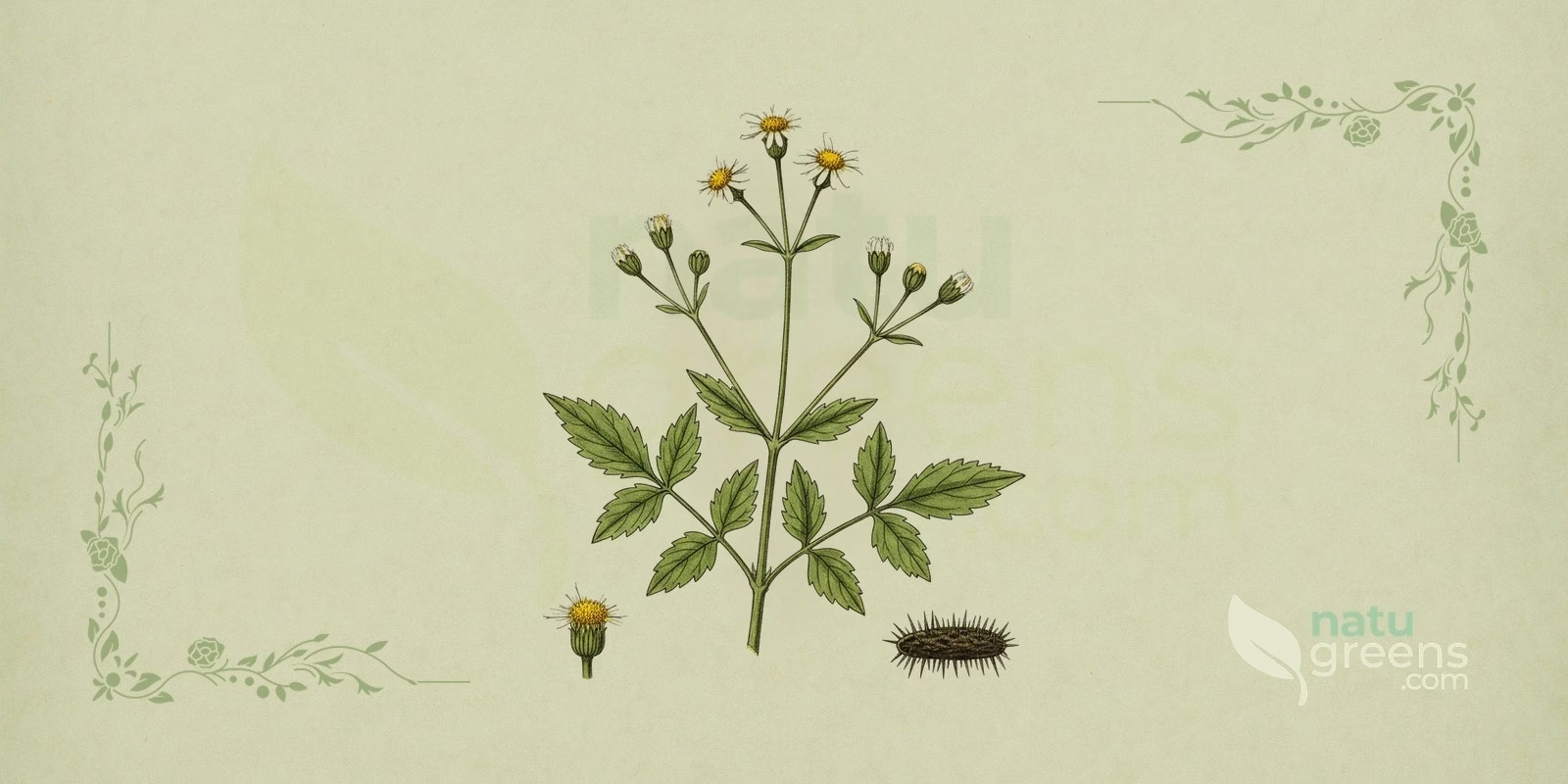
Bidens pilosa L. / Hairy Beggarticks is an annual herbaceous plant of the Asteraceae family, widely distributed across the tropical and subtropical regions of the world. In Brazil and Portugal it is popularly known as picão-preto, and in English it also goes by names such as black-jack and cobbler’s pegs. Valued in traditional medicine for its many folk uses, the plant is easy to recognize by its elongated fruits, commonly called seeds, which cling to clothing and animal fur and thereby help the species spread.
For generations, different cultures have used Bidens pilosa for a wide variety of health complaints. Ethnobotanical surveys and laboratory studies have examined many of these traditional uses and point to the plant as a promising source of bioactive compounds. Among them are flavonoids and polyacetylenes, associated with anti-inflammatory, antioxidant and antimicrobial activities observed mainly in preclinical studies.
Popular and International Names of Hairy Beggarticks
In Brazil, the plant goes by dozens of popular names, a reflection of how widely it is distributed across the country. The list below brings together the best-established names in English and Portuguese, alongside those used in Spanish.
- English: beggar ticks, black-jack, cobbler’s pegs, hairy beggarticks.
- Portuguese: amor-seco, carrapicho-de-agulha, cuambu, erva-picão, fura-capa, picão, picão-do-campo, picão-preto, pico-pico, piolho-de-padre.
- Spanish: aceitilla, amor seco, cadillo, masquia.
Botanical Synonyms of Bidens pilosa
The taxonomy of Bidens pilosa L. includes a number of botanical synonyms that reflect how complex its classification has been over time. These names still appear frequently in the scientific literature and in botanical databases, and knowing them helps identify the species precisely in different contexts.
- Bidens adhaerescens Vell.
- Bidens alausensis Kunth
- Bidens chilensis DC.
- Bidens hirsuta Nutt.
- Bidens leucantha (L.) Willd.
- Bidens montaubani Phil.
- Bidens reflexa Link
- Bidens scandicina Kunth
- Bidens sundaica var. minor Blume
- Coreopsis leucantha L.
- Kerneria pilosa Lowe
Botanical Family: Asteraceae
Bidens pilosa belongs to the Asteraceae family, one of the largest and most diverse families of flowering plants. Formerly known as Compositae, the family is characterized by flower heads (capitula) in which many small florets are clustered so closely that they look like a single flower. The group includes numerous species of great economic, nutritional and medicinal importance.
The Asteraceae are known for producing a wide range of bioactive compounds, such as sesquiterpene lactones, flavonoids and essential oils, which account for the medicinal properties of many of their species. This chemical diversity has been the subject of intensive pharmacological research and has already contributed to the development of several phytopharmaceuticals.
Parts of Hairy Beggarticks Used
Folk medicine relies mainly on the aerial parts of hairy beggarticks, especially the leaves and stems, and some records mention the use of the whole plant. In every case, the material must come from clean, uncontaminated sites, as explained in the contraindications.
- Aerial parts
- Leaves
- Stems
- Whole plant
Ethnobotanical and Traditional Uses
The uses below gather folk medicine records from different countries and do not amount to proven efficacy. Serious or infectious conditions require medical diagnosis and follow-up, and the plant should never take the place of the treatment prescribed by a health professional.
- Abscesses
- Allergies (symptom relief)
- Angina (sore throat)
- Blennorrhagia (gonorrhea)
- Bone and joint pain
- Colds
- Colic
- Conjunctivitis
- Diabetes (folk use as a complement, never as a substitute for treatment)
- Dysentery
- Dysmenorrhea
- Ear, nose and throat pain
- Edema
- Eye pain (ophthalmalgia)
- Fatigue
- Fever
- Food poisoning
- Fungal infections (mycoses)
- Gastroduodenal ulcers
- Gastroenteritis
- Headache (cephalalgia)
- Hemorrhoids
- Hepatitis (folk use, never replacing medical follow-up)
- Herpes
- High cholesterol
- Hypertension
- Indigestion
- Internal irritation
- Jaundice
- Laryngitis
- Leukorrhea
- Liver disorders
- Loss of appetite
- Malaria (traditional record that does not replace antimalarial treatment)
- Menstrual disorders
- Mouth and throat inflammation
- Mouth ulcers (canker sores)
- Pancreatic disorders
- Pharyngitis
- Rheumatism
- Scurvy
- Skin conditions and irritations
- Stomach and kidney infections
- Stomach problems
- Tonsillitis
- Toothache (odontalgia)
- Urinary and vaginal infections
- Weight loss (folk use as a dietary aid)
- Worm infestations (helminthiasis)
- Wound healing
Therapeutic Properties of Hairy Beggarticks
The properties listed combine folk medicine records with activities observed in laboratory and animal studies. Few of these effects have been confirmed in human clinical trials, which calls for caution when interpreting each item.
- Antiarthritic (traditional record in arthritis, with effects studied in animal models)
- Antibacterial (activity observed in laboratory studies)
- Antiblennorrhagic (traditional record in gonorrhea, not a substitute for medical treatment)
- Antidiarrheal (traditional use in cases of diarrhea)
- Antidysenteric (traditional use in dysentery)
- Antiedematous (traditional record in reducing edema)
- Antiemetic (traditional use for nausea and vomiting)
- Antihemorrhoidal (traditional use for hemorrhoids)
- Anti-inflammatory (activity observed in preclinical studies)
- Antileukorrheal (traditional record in leukorrhea)
- Antimalarial (activity investigated in the laboratory, not a substitute for malaria treatment)
- Antimicrobial (activity observed in laboratory studies)
- Antiodontalgic (folk use to relieve toothache)
- Antioxidant (activity observed in laboratory studies)
- Antipyretic (traditional use in feverish states)
- Antirheumatic (traditional record for rheumatic pain)
- Antiscorbutic (traditional record in scurvy)
- Antiseptic (traditional topical use for cleaning wounds)
- Antispasmodic (traditional use to relieve spasms)
- Aperitive (traditional record as an appetite stimulant)
- Astringent (tightens tissues and reduces secretions)
- Bitter (bitter taste traditionally associated with stimulating digestion)
- Blood tonic (folk record)
- Carminative (traditional use to relieve gas)
- Cathartic (laxative effect described in tradition)
- Cercaricidal (action on cercariae, the larvae of schistosomes, observed in the laboratory)
- Cicatrizant (traditional use to support wound healing)
- Depurative (traditional record as a cleanser of the body)
- Diuretic (traditional record of increased urine volume)
- Emmenagogue (traditional record of stimulating menstruation, a reason to avoid the plant during pregnancy)
- Emollient (topical use to soften and soothe the skin)
- Expectorant (traditional use to help clear mucus)
- Galactagogue (folk record of stimulating milk production, but use during breastfeeding should be avoided)
- Hemostatic (traditional topical use for minor bleeding)
- Hepatoprotective (effect observed in preclinical studies)
- Hypoglycemic (effect observed in animal studies, which calls for caution with antidiabetic drugs)
- Hypotensive (traditional record of lowering blood pressure)
- Immunomodulatory (activity investigated in preclinical studies)
- Liver deobstruent (traditional record in liver complaints)
- Mucilaginous (contains mucilage)
- Sedative (traditional record as a calming agent)
- Sialagogue (stimulates salivation)
- Stimulant (traditional record as a general tonic)
- Vermifuge (traditional use for worm infestations)
- Vulnerary (traditional use in wound care)
Detailed Phytochemical Profile of Hairy Beggarticks
Hairy beggarticks has a particularly rich chemical profile, dominated by flavonoids, polyacetylenes, triterpenes and phytosterols, the groups that account for much of the research on the species. Polyacetylenes such as phenylheptatriyne are also responsible for the phototoxicity described with topical use of the plant.
- Acetylenes
- Alpha-phellandrene
- Alpha-pinene
- Amines
- Apigenin
- Aurone glycosides
- Beta-amyrin
- Beta-D-glucopyranosyloxy-3-hydroxy-6(E)-tetradecene-8,10,12-triyne
- Beta-sitosterol
- Bioflavonoids
- Cadinene
- Calcium
- Chalcones
- Coumarins
- Esculetin
- Essential oil
- Flavonoids
- Friedelan-3-beta-ol
- Friedelin
- Glycosides (methoxylated flavone, quercetin-3,3′-dimethoxy-7-O-α-L-rhamnopyranosyl-(1→6)-β-D-glucopyranoside, quercetin-3,3′-dimethoxy-7-O-β-D-glucopyranoside)
- Hydrocarbons
- Limonene
- Linoleic acid
- Lupeol
- Luteolin
- Mucilage
- Nicotinic acid
- Okanin-3-glycoside
- Organic acids
- p-Coumaric acid
- Phenylacetylene (1-phenyl-1,3-diyn-5-en-7-ol acetate)
- Phenylheptatriyne
- Phosphorus
- Phytosterin-B
- Phytosterols
- Polyacetylenes
- Potassium salts
- Quercetin
- Salicylic acid
- Silica
- Sterols
- Tannic acid
- Tannins
- Thymol
- Trideca-2,12-diene-4,6,8,10-tetrayn-1-ol
- Trideca-3,11-diene-5,7,9-triyne-1,2-diol
- Trideca-5-ene-7,9,11-triene-3-ol
- Tridecapentayn-1-ene
- Triterpenes
- Xanthophylls
Preparation and Administration Forms of Hairy Beggarticks
In folk tradition, infusions and decoctions of the dried aerial parts are the most common forms of internal use, while baths, poultices and compresses make up most of the external use on the skin and joints.
- Bath
- Compresses
- Decoction
- Fresh leaf juice
- Infusion (tea)
- Poultice
Fresh leaf juice also appears in folk records, but it requires plants of reliable origin, since the species accumulates heavy metals and nitrates from the soil. There is no standardized dose validated in clinical studies for hairy beggarticks, so the amount of plant material, the frequency and the duration of use must be decided case by case. Consult a health professional before starting, especially if you take medication on a regular basis.
With external forms, the rule is to keep the treated area out of the sun for the following hours, because the plant’s polyacetylenes are phototoxic and can cause dermatitis.
Synergy with Other Medicinal Plants
Traditional Anti-Inflammatory Combinations
Because it combines flavonoids and polyacetylenes with anti-inflammatory activity observed in the laboratory, Bidens pilosa appears in folk combinations with other plants of similar use, such as turmeric (Curcuma longa) and ginger (Zingiber officinale). The hypothesis behind these combinations is that the compounds of each species would act on different inflammatory pathways, but this complementary effect has not yet been tested in clinical trials. It remains, therefore, a traditional record, and anyone taking anticoagulants should talk to a health professional before combining these plants.
Digestive Support Combinations
For digestive discomfort, herbal tradition pairs Bidens pilosa with plants recorded as carminative and antispasmodic, such as peppermint (Mentha × piperita) and lemon balm (Melissa officinalis). In folk medicine, these preparations are traditionally used for colic, flatulence and indigestion. The combined action of these extracts is thought to modulate intestinal motility and ease discomfort, although this interaction still awaits confirmation in controlled studies.
Combinations Related to Blood Sugar Control
In the context of blood glucose, Bidens pilosa is mentioned alongside Brazilian orchid tree (Bauhinia forficata) and gymnema (Gymnema sylvestre), species also investigated for their influence on insulin sensitivity and glucose absorption. Because the hypoglycemic effect of hairy beggarticks has been observed mainly in animals, combining three plants with this characteristic may lower blood glucose more than expected, particularly in people already taking antidiabetic drugs. For this reason, this combination should only be considered under medical supervision, with blood glucose monitoring.
Recipes and Usage Protocols of Hairy Beggarticks
Hairy Beggarticks Tea for Digestive Discomfort
This decoction is traditionally used for stomach and digestive discomfort, and folk medicine also mentions it for conditions such as hepatitis and diabetes, situations in which it should only be used under medical supervision and never in place of the recommended medical care.
Ingredients: Dried aerial parts of hairy beggarticks, of known origin and harvested away from roads, industrial areas and pesticide-sprayed crops, and water.
Preparation: Place a small portion of the dried plant in a pan of water, bring it to a boil and let it boil for 10 to 15 minutes. Then strain out the solid residue and wait for the tea to cool to lukewarm before drinking. The amount of plant material, the number of cups per day and the duration of use have no validated standard, so consult a health professional to define these points, especially if you take antidiabetic drugs, anticoagulants or sedatives.
Warm Compresses for Muscle Pain and Rheumatism
These compresses are traditionally used to relieve muscle and joint pain of rheumatic origin, always externally and on intact skin.
Ingredients: Dried or fresh parts of hairy beggarticks, of known origin, and water.
Preparation: Prepare a concentrated infusion, using more plant material than for the tea with the same amount of water, and let it cool to a warm temperature that feels comfortable to the touch. Soak clean compresses or sterile gauze in the infusion and apply them to the painful joints or muscles for 15 to 20 minutes, a procedure that can be repeated a few times a day, according to traditional records.
Caution: the polyacetylenes in hairy beggarticks, such as phenylheptatriyne, are phototoxic, and exposing the area to the sun after application can cause dermatitis. Apply the compresses preferably in the evening, or keep the skin covered and protected from sunlight for the following hours.
The preparations above follow traditional records and do not replace professional guidance. Before any internal use, check the contraindications and interactions described in this article.
Associated Therapies
Herbal Medicine
In herbal medicine, Bidens pilosa is known above all for its phytochemical richness. Tradition uses it for inflammation, infections and metabolic disorders, usually in the form of teas, tinctures, extracts and multi-herb formulations. The antioxidant, anti-inflammatory and antimicrobial activities described in laboratory studies explain part of the scientific interest in the plant. Modern research now seeks to verify, with controlled methods, which of these traditional uses hold up in humans.
Homeopathy
In homeopathy, the use of Bidens pilosa is uncommon and poorly documented. Any preparations would follow the principles of this practice, which works with ultra-diluted doses chosen on the basis of the patient’s totality of symptoms and their similarity to the plant’s pathogenesis. According to homeopathic doctrine, these dilutions would stimulate the body’s capacity for self-healing, an idea that belongs to the practice’s own theoretical framework.
Traditional Chinese Medicine (TCM)
Although Bidens pilosa is not part of the classical repertoire of Traditional Chinese Medicine, plants with a similar profile are used in this system to clear heat and toxins, dispel blood stasis and reduce swelling. Given the anti-inflammatory and depurative actions described in tradition, the species would in theory fit formulations aimed at infections, inflammation and skin problems, always in line with the diagnostic principles of TCM.
Contraindications and Side Effects of Hairy Beggarticks
Hairy beggarticks is usually described as well tolerated in traditional use, but the scarcity of long-term clinical studies in humans calls for attention to its contraindications and possible side effects. Guidance from a health professional is always recommended before starting to use any medicinal plant.
Phototoxicity in Topical Use
The plant’s polyacetylenes, especially phenylheptatriyne, are phototoxic, which means that topical use followed by sun exposure can cause dermatitis in the contact area. For this reason, any bath, compress or poultice of hairy beggarticks should be applied to an area that will remain protected from sunlight in the following hours, and this warning applies to all recipes for external use.
Sourcing, Heavy Metals and Nitrates
The plant accumulates heavy metals, such as cadmium, and nitrates from the soil, which makes the origin of the material as important as the way it is prepared. The recommendation is to harvest it only in clean places, away from roads, pesticide-sprayed crops and industrial areas, and never to buy hairy beggarticks of unknown origin. This care applies especially to fresh leaf juice and to eating the leaves as a vegetable.
Allergies and Hypersensitivity
People with a history of allergy to plants of the Asteraceae family, such as daisies, chrysanthemums or ragweed, may also react to Bidens pilosa. Reactions range from contact dermatitis to more severe symptoms such as hives and angioedema and, in rare cases, anaphylaxis. In these situations, the most prudent course is to avoid the plant or to use it only under professional guidance.
Pregnancy, Breastfeeding and Children
The use of Bidens pilosa should be avoided during pregnancy and breastfeeding. The plant has a traditional record as an emmenagogue in some regions, and conclusive studies on its safety during these periods are lacking. Some studies suggest a possible uterotonic effect at very high doses and, although there is no clear evidence in humans, caution is the best way to protect the health of mother and baby. In children, use is also not recommended without assessment by a health professional, as safety data for this age group are lacking.
Drug Interactions
Bidens pilosa may interact with several medications and, because it contains coumarins, it may potentiate the effect of anticoagulants such as warfarin, increasing the risk of bleeding. It may also intensify the action of sedatives and anxiolytics, with a risk of excessive drowsiness. The hypoglycemic effect observed in animals calls for caution with antidiabetic drugs, whose action may add to that of the plant, and its traditional record as a hypotensive suggests similar care in people taking antihypertensives. Anyone on long-term medication should consult a health professional before using hairy beggarticks.
Hypoglycemia and Heart Conditions
People diagnosed with hypoglycemia or with heart conditions should avoid consuming Bidens pilosa. The plant’s hypoglycemic properties may cause an excessive drop in blood sugar in those who are already prone to it. The lack of in-depth studies on its effects in heart conditions also calls for caution, and any use in these cases should be strictly supervised by a doctor.
Distinction from Other Species of the Genus Bidens
The information in this article refers only to Bidens pilosa and should not be extended to closely related species of the same genus, such as Bidens alba and Bidens tripartita, which have their own chemical composition and records of use. Bidens alba, often treated as a variety of Bidens pilosa, differs in its well-developed white ray florets, while Bidens tripartita is a wetland species of Europe and Asia. Correct botanical identification before harvesting helps avoid mix-ups and blends between them.
Historical Notes and Interesting Facts
- The species was described by Linnaeus in the 18th century, which explains the abbreviation L. that follows the scientific name Bidens pilosa.
- Bidens pilosa is considered a weed in many places, but in other regions it is cultivated precisely for its medicinal and food value.
- The fruits, achenes popularly called seeds, have hook-shaped structures that cling easily to clothing and animal fur, a mechanism that favors the wide dispersal of the species.
- Portuguese popular names such as fura-capa (“cloak-piercer”), carrapicho-de-agulha (“needle bur”) and piolho-de-padre (“priest’s louse”) allude precisely to these fruits that stick to the clothes of anyone who brushes past the plant.
- Hairy beggarticks is on the list of medicinal plants of interest to the Brazilian Ministry of Health, which brings together species with potential for the development of herbal medicines.
- It is a cosmopolitan plant, adapted to a wide range of environments in tropical and subtropical regions around the world.
- The aerial parts are rich in flavonoids and other phenolic compounds, as well as polyacetylenes, which are considered responsible for much of the plant’s biological activity.
- In some cultures, the young leaves are eaten as a vegetable or in salads, a custom that reinforces the importance of harvesting the plant only in places free from contamination.
Frequently Asked Questions about Hairy Beggarticks
Can Hairy Beggarticks Tea Help with Diabetes Control?
The hypoglycemic potential of hairy beggarticks has been studied mainly in animals and in the laboratory, where compounds from the plant showed an influence on blood sugar levels and insulin sensitivity. Clinical trials confirming this effect in people are still lacking. For this reason, the tea does not replace medical treatment for diabetes and should only be used as a complement under professional guidance, since it may add to the effect of antidiabetic drugs and cause hypoglycemia.
What Are the Main Traditional Uses of Hairy Beggarticks?
Folk medicine uses hairy beggarticks for urinary infections, digestive problems, rheumatism and hypertension. In some regions it is also associated with conditions such as malaria and herpes, which require medical diagnosis and treatment. In the laboratory and in animals, the plant has shown anti-inflammatory, antioxidant, antimicrobial and hepatoprotective activities, attributed to its richness in flavonoids and polyacetylenes, but these findings are still preliminary.
Are There Any Contraindications for Hairy Beggarticks?
Yes, and they are important: hairy beggarticks should be avoided during pregnancy and breastfeeding, is not recommended for children and calls for care in people with hypoglycemia, heart conditions or allergy to plants of the Asteraceae family. The plant may also interact with anticoagulants, sedatives and antidiabetic drugs. Because it accumulates heavy metals and nitrates from the soil, it should only be used when its origin is known, and a health professional should be consulted before use.
How Should Hairy Beggarticks Tea Be Prepared?
In the traditional preparation, the dried aerial parts are boiled in water for 10 to 15 minutes, and the liquid is strained before being drunk lukewarm, preferably using plant material of known origin. As there is no dose validated in clinical studies, the amount of plant material, the number of cups per day and the duration of use should be defined with a health professional, who can also assess possible interactions with any medications being taken.
Can Hairy Beggarticks Be Used for Skin Problems?
Tradition applies hairy beggarticks to the skin, in compresses, baths and poultices, for wounds, skin irritations and abscesses. Laboratory studies describe anti-inflammatory and antimicrobial activities that help explain this use. However, sun exposure of the area after application must be avoided, because the plant’s polyacetylenes are phototoxic and can cause dermatitis. Extensive, deep or infected lesions should be assessed by a specialist.
Where Can Hairy Beggarticks Be Harvested Safely?
Hairy beggarticks accumulates heavy metals, such as cadmium, and nitrates from the soil, so it should only be harvested in clean places, away from roads, pesticide-sprayed crops and industrial areas. When buying the dried plant, choose suppliers that state its origin and avoid material of unidentified provenance, a precaution that also helps avoid confusing the species with close relatives such as Bidens alba and Bidens tripartita.
Notice: this content is for informational purposes and does not replace professional medical advice. Consult a physician or herbal practitioner before using medicinal plants, especially during pregnancy, breastfeeding, or alongside medication.
References and Scientific Studies
- PMC2025 Etukudo EM, et al. Exploring the phytochemical profile, antioxidant and anti-inflammatory potential of Bidens pilosa: A Systematic Review. Front Pharmacol. 2025.
- PMC2023 Rodríguez-Mesa XM, et al. Immunomodulatory Properties of Natural Extracts and Compounds Derived from Bidens pilosa L.: Literature Review. Pharmaceutics. 2023.
- PMC2022 Yan Z, et al. Bioactive polyacetylenes from Bidens pilosa L and their anti-inflammatory activity. Nat Prod Res. 2022.
- PMC2014 Yang WC. Botanical, Pharmacological, Phytochemical, and Toxicological Aspects of the Antidiabetic Plant Bidens pilosa L. Evid Based Complement Alternat Med. 2014.
- PMC2013 Bartolome AP, et al. Bidens pilosa L. (Asteraceae): Botanical Properties, Traditional Uses, Phytochemistry, and Pharmacology. Evid Based Complement Alternat Med. 2013.