Adansonia digitata L. / Baobab
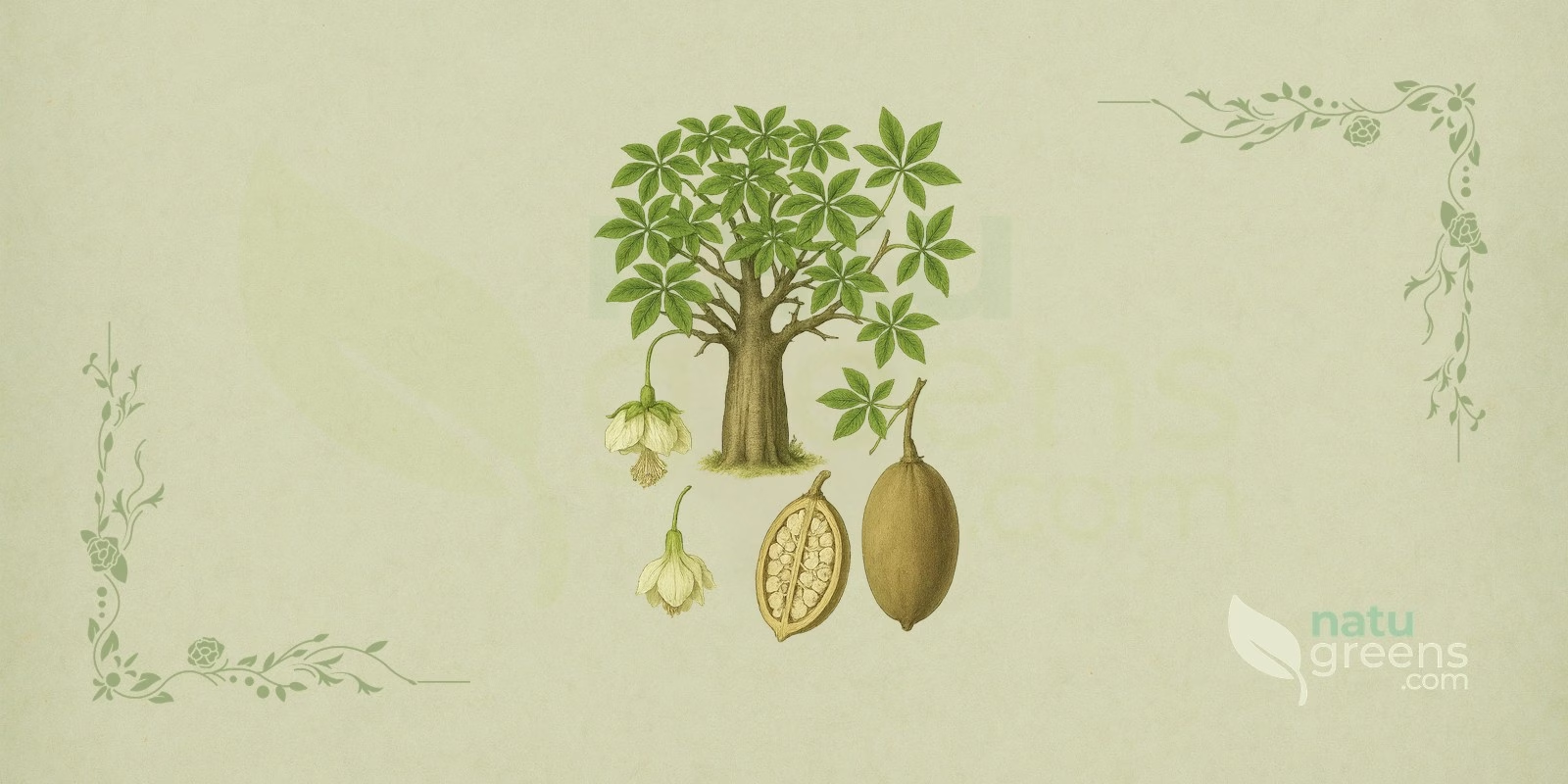
Baobab, scientifically known as Adansonia digitata L., is the most widely distributed species of the genus Adansonia. This iconic tree is native to the African continent and the southern Arabian Peninsula, thriving in hot, dry savannas. Traditionally, baobab has been valued as a vital source of food, water, medicine, and shelter. Its various parts are used for medicinal and nutritional purposes and as raw material for a range of useful items. The plant is rich in bioactive compounds and micronutrients, contributing to its well-recognized health benefits.
Popular and International Names of Baobab
- English: African baobab, baobab, cream of tartar tree, monkey-bread tree, upside-down tree.
- Spanish: árbol del pan de mono, árbol invertido, baobab.
- Portuguese: árvore-da-vida (BR); imbondeiro (PT), baobá, calabaceira, embondeiro.
- French: arbre à pain de singe, baobab africain.
- Italian: albero della vita, baobab.
- German: Affenbrotbaum, Baobab.
Botanical Synonyms of Adansonia digitata
Botanical synonyms for Adansonia digitata L. include Adansonia bahobab L., Adansonia baobab Gaertn., Adansonia integrifolia Raf., Adansonia kilima Pettigrew, K.L.Bell, Bhagw., Grinan, Jillani, Jean Mey., Wab., Adansonia scutula Steud. Syno., Adansonia situla (Lour.) Spreng., Adansonia somalensis Chiov., Adansonia sphaerocarpa A.Chev., Adansonia sulcata A.Chev., Baobabus digitata (L.) Kuntze, and Ophelus sitularius Lour.
Botanical Family: Malvaceae
Baobab belongs to the family Malvaceae, formerly known as Bombacaceae. This family is widely distributed across tropical and subtropical regions and includes trees, shrubs, and herbs. The Malvaceae family is known for species of great economic, food, and medicinal importance, such as cotton, cacao, and okra. Baobab shares morphological traits typical of the family, such as large flowers and indehiscent fruits. The chemical diversity of this family has been the subject of intense pharmacological research, contributing to the development of phytopharmaceuticals and dietary supplements.
Parts of Baobab Used
- Bark
- Fruit (pulp and seeds)
- Leaves
- Roots
Ethnobotanical and Traditional Uses
- Antiparasitic
- Antipyretic (fever reduction)
- Antitussive (cough relief)
- Diaphoretic (sweat induction)
- Hydration
- Relief of diarrhea and dysentery
- Treatment of anemia
- Treatment of asthma
- Treatment of cough
- Treatment of inflammation
- Treatment of kidney and bladder problems
- Treatment of malaria
- Treatment of microbial infections
- Treatment of mouth ulcers and gingivitis
Therapeutic Properties of Baobab
- Analgesic (traditional use for pain relief)
- Anti-inflammatory (studied effect in reducing inflammation)
- Antimicrobial (studied activity against microorganisms)
- Antioxidant (studied activity against free radicals)
Detailed Phytochemical Profile of Baobab
Baobab is a rich source of bioactive compounds that contribute to its medicinal properties. The fruit pulp, in particular, stands out for its high content of vitamin C, fiber, and essential micronutrients. The presence of compounds such as phenols, flavonoids, proanthocyanidins, tannins, catechins, and carotenoids gives the plant its antioxidant and anti-inflammatory activities. In addition, baobab is an important source of zinc, potassium, magnesium, iron, calcium, and protein, which may help reduce nutritional deficiencies. Scientific studies have revealed the diversity of bioactive compounds present in baobab, linking them to possible health benefits, including a potential contribution to blood sugar regulation, which is still being investigated in preliminary research.
Preparation and Administration Forms of Baobab
- Bark decoction for anemia
- Fruit pulp mixed with water for fever and diarrhea
- Leaf decoction for diarrhea, fever, inflammation, kidney and bladder problems, asthma, insect bites, toothache, and gingivitis
- Leaf infusion for diarrhea, fever, inflammation, kidney and bladder problems, and asthma
- Powdered seed decoction for cough
- Seed decoction for fever and diarrhea
- Stem bark decoction for wound healing
Synergy with Other Medicinal Plants
Suggested Combinations With Other Plants
Baobab can traditionally be combined with other plants to enhance its effects, an approach grounded in traditional use rather than any promise of clinical results. Combining it with plants rich in vitamin C, for example, may support iron absorption, while pairing it with anti-inflammatory herbs is traditionally used to support the body during inflammatory processes. It is essential to consult a healthcare professional before starting any combination.
Recipes and Usage Protocols of Baobab
Baobab Pulp Tea for Immunity
Ingredients: 2 teaspoons of baobab pulp powder, 200 ml of warm water (not boiling), honey to taste (optional).
Preparation: Dissolve the baobab powder in the warm water, stirring well to avoid lumps, and add honey if desired. Daily consumption is part of the traditional use as support for the immune system and as a source of vitamin C, with warm water being preferable to preserve the antioxidants.
Bark Decoction for Fever
Ingredients: 10 g of dried baobab bark, 500 ml of water.
Preparation: Boil the baobab bark in the water for 15 to 20 minutes. Strain and let it cool. Drink 100 ml twice a day to help reduce fever. This preparation is traditionally used in some African communities.
The preparations above follow traditional records and do not replace professional guidance. Before any internal use, check the contraindications and interactions described in this article.
Associated Therapies
Phytotherapy
Baobab is widely used in phytotherapy because of its nutritional and medicinal properties, as recognized by traditional use. The fruit pulp, leaves, and bark are used, according to this traditional use, in formulations aimed at a variety of conditions, ranging from nutritional deficiencies to inflammatory and infectious conditions. Modern phytotherapy recognizes baobab’s potential as a superfood, although in-depth clinical studies are still needed to confirm its effects.
Functional Nutrition
In functional nutrition, baobab is valued for its impressive nutritional profile, since the fruit pulp brings together vitamin C, prebiotic fiber, and minerals such as calcium, potassium, and magnesium. It is often incorporated into diets aimed at supporting gut health and the immune system and at providing antioxidants, according to traditional use and preliminary observations in nutritional studies. The use of baobab in functional nutrition seeks to contribute to more balanced eating habits, without replacing professional guidance.
Contraindications and Side Effects of Baobab
Although baobab is generally considered safe for consumption, it is important to be aware of possible contraindications and side effects. Because of its high fiber content, excessive consumption can cause gastrointestinal discomfort, such as bloating and gas. People with known allergies to plants in the Malvaceae family should exercise caution. Pregnant or breastfeeding women and individuals with pre-existing medical conditions should consult a healthcare professional before using baobab products. There is not enough data on specific drug interactions, but caution is advised when combining it with other medications.
Historical Notes and Interesting Facts
The African Tree of Life
Baobab is often called the Tree of Life because of its impressive longevity and the multitude of resources it provides. Some specimens can live for thousands of years, making them among the oldest documented flowering plants. Its ability to store large volumes of water in its trunk allows it to survive in arid climates, providing food and water for humans and animals during dry seasons. The tree is revered in many African cultures as a symbol of resilience and life.
Legends and Superstitions
In various African cultures, baobab is surrounded by legends and superstitions. One common legend tells that the gods, angered by the baobab’s arrogance, uprooted it and planted it upside down, leaving its roots exposed to the sky. Another legend, from the Zambezi region, says that evil spirits bring bad luck to anyone who picks its sweet white flowers, and that a lion will kill whoever does so. In Kafue National Park, one of the largest baobabs is known as Kondanamwali, or the tree that eats maidens, a story that reflects the deep cultural and spiritual connection people have with this majestic tree.
Frequently Asked Questions about Baobab
What Is Baobab Tea?
Baobab tea is a beverage prepared from the fruit pulp, leaves, or bark of the Adansonia digitata tree. It is valued for its citrus flavor and for its nutritional and medicinal properties, being a rich source of vitamin C, fiber, and antioxidants.
What Are the Main Benefits of Baobab Tea?
Baobab tea is known for strengthening the immune system thanks to its high vitamin C content, supporting digestion through its prebiotic fiber, and fighting oxidative stress thanks to its antioxidants. It may also have anti-inflammatory and antipyretic effects.
How to Prepare Baobab Tea?
To prepare baobab tea, you can use fruit pulp powder, dried leaves, or pieces of bark. The most common method is to dissolve 1 to 2 teaspoons of baobab powder in 200 ml of warm or hot water. Honey or lemon can be added to taste. For leaves or bark, prepare an infusion or decoction, respectively.
Are There Contraindications for Drinking Baobab Tea?
Although generally safe, excessive consumption of baobab tea can cause gastrointestinal discomfort due to its high fiber content. Pregnant or breastfeeding women and people with pre-existing medical conditions should consult a healthcare professional before consuming it regularly.
Where Can I Find Baobab Products?
Baobab products, such as fruit pulp powder, dried leaves, and extracts, can be found in natural product stores, health food markets, and online. Be sure to purchase products from reliable suppliers to ensure quality.
Notice: this content is for informational purposes and does not replace professional medical advice. Consult a physician or herbal practitioner before using medicinal plants, especially during pregnancy, breastfeeding, or alongside medication.
References and Scientific Studies
Peer-Reviewed Scientific Studies (3)
- PMC2023 Silva, M. L., Rita, K., Bernardo, M. A., Mesquita, M. F., Pintão, A. M., & Moncada, M. (2023). Adansonia digitata L. (Baobab) Bioactive Compounds, Biological Activities, and the Potential Effect on Glycemia: A Narrative Review. Nutrients, 15(9), 2170.
- PEER2015 Rahul, J., Khurana, N., & Singh, P. (2015). Adansonia digitata L. (baobab): a review of traditional information and taxonomic description. Asian Pacific Journal of Tropical Biomedicine, 5(1), 79-84.
- PEER2022 Uhuo, E. N., Okwu, D. E., & Nwachukwu, C. N. (2022). Antioxidative properties of Adansonia digitata L. (baobab) leaf extract exert protective effect on doxorubicin-induced cardiac toxicity in Wistar rats. Journal of Traditional and Complementary Medicine, 12(4), 387-395.
Supplementary Readings (1)
- 2024 Thompson, P. T., Boamah, V. E., & Badu, M. (2024). In-vitro antioxidant, antimicrobial and phytochemical properties of extracts from the pulp and seeds of the African baobab fruit (Adansonia digitata L.). Heliyon, 10(11), e29979.