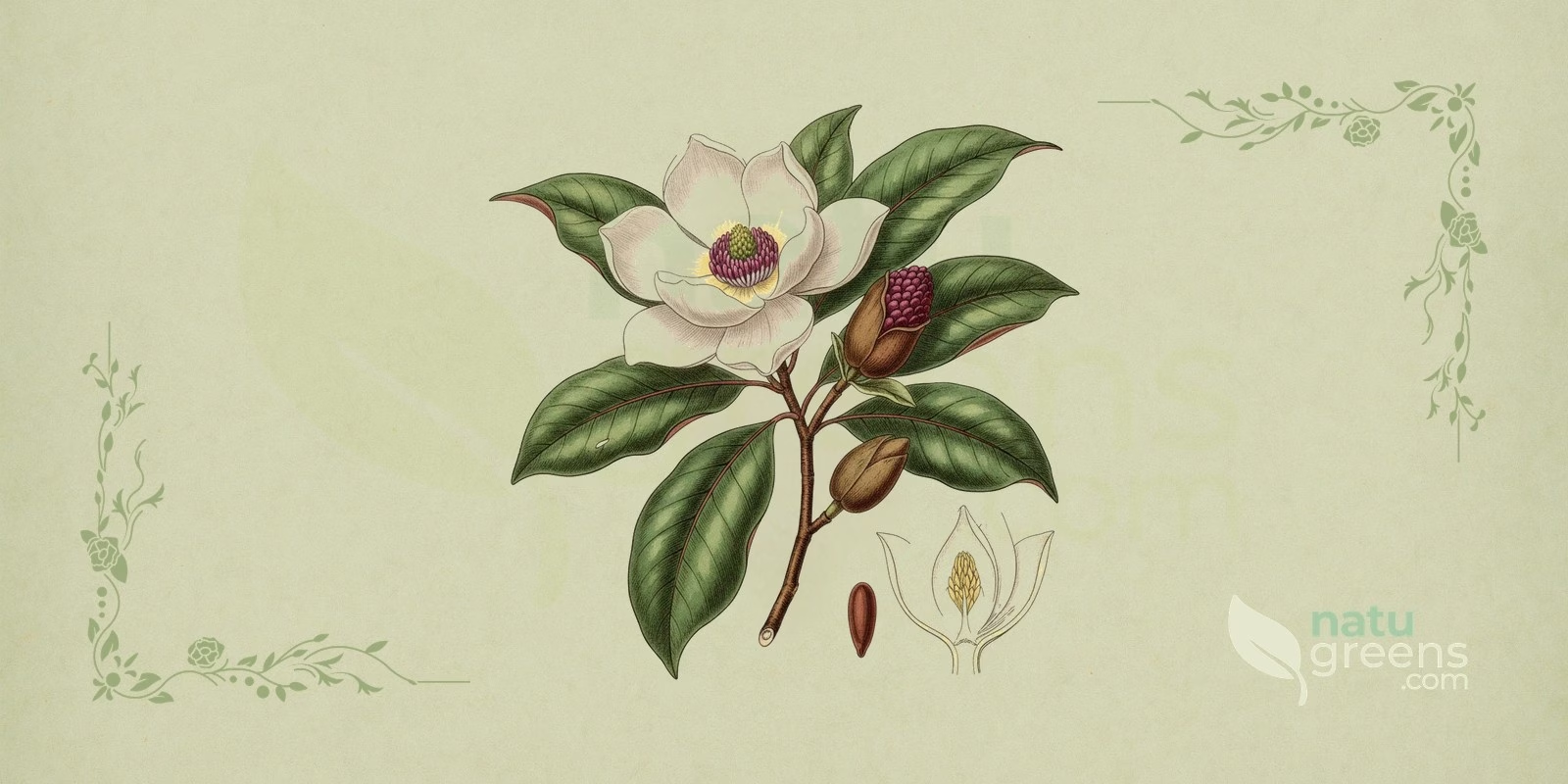
Magnolia officinalis Rehder & Wilson / Houpu Magnolia, commonly known as magnolia, houpu magnolia or magnolia bark, is a deciduous tree native to the mountains and valleys of China, where it has been used for millennia in traditional Chinese medicine, with use also recorded in traditional Japanese medicine. The tree can reach 20 meters in height and is prized above all for its aromatic bark, called houpo (also spelled houpu), which is the main part used in herbal preparations. Tradition turns to it for complaints ranging from gastrointestinal disorders to anxiety and low mood, uses that are now being investigated in laboratory studies and in a few small clinical trials, which explains the prominent place the species holds in the herbal medicine of several countries.
Popular and International Names of Houpu Magnolia
- English: houpu magnolia, magnolia, magnolia bark.
- Chinese: hou po (厚朴).
- French: écorce de magnolia, houpo, magnolia.
- German: Houpo-Magnolie, Magnolienrinde.
- Italian: corteccia di magnolia, houpo, magnolia.
- Portuguese: casca de magnólia, houpo, magnólia, magnólia-houpo, magnólia-houpu.
- Spanish: corteza de magnolia, houpu, magnolia.
Botanical Synonyms of Magnolia officinalis
- Houpoea officinalis (Rehder & E.H.Wilson) N.H.Xia & C.Y.Wu
- Magnolia hypoleuca Veitch (non Sieb. & Zucc.)
- Magnolia officinalis var. pubescens C.Y.Deng
The name Houpoea officinalis appears in classifications that separate the genus Houpoea from Magnolia, while those that keep the group within Magnolia regard it as a synonym of Magnolia officinalis, which is why both names coexist in the scientific literature and on product labels. The taxonomy of the species is still under study, and the variety Magnolia officinalis var. biloba, distinguished by leaves with a notch at the apex, is usually regarded as a cultigen, that is, a form that arose and is maintained through cultivation.
Botanical Family: Magnoliaceae
The Magnoliaceae family is one of the most ancient lineages among flowering plants and is characterized by large, showy, often fragrant flowers, with numerous stamens and carpels arranged in a spiral. It comprises about 210 species distributed mainly across the temperate and tropical regions of Asia and the Americas, known both for their ornamental value and for their medicinal use, since several of them are employed in traditional medicine because they contain bioactive compounds.
Magnolia officinalis shares morphological features typical of the family, such as its white, fragrant flowers, which appear between May and June in its native range, and its broad, oval leaves. The family is rich in alkaloids, lignans and essential oils, substances responsible for the pharmacological properties of many of its species, and this chemical diversity is being intensively researched for the development of herbal medicines and natural supplements.
Parts of Houpu Magnolia Used
- Bark (main part used, known as houpo)
- Flowers (secondary use)
- Leaves (poorly documented use)
- Seeds (poorly documented use)
The bark, stripped from the trunk, branches and roots of mature trees, concentrates honokiol and magnolol and is the reference part in the Chinese tradition, while the other organs of the plant have a much more limited use and have been far less studied.
Ethnobotanical and Traditional Uses
- Anxiety and nervousness
- Asthma
- Fever
- Gastrointestinal disorders (colic, constipation, diarrhea, indigestion)
- Headaches
- Insomnia and sleep disorders
- Mild depression (traditional record, never a substitute for treatment)
- Qi stagnation (Chinese medicine)
- Respiratory problems
- Stress
- Weight management (modern use in supplements)
Most of these records come from traditional Chinese medicine, which uses the bark to relieve abdominal distension and phlegm buildup, while the weight-management use is recent and appears mainly in supplements, and none of these uses does away with the need for assessment by a healthcare professional.
Therapeutic Properties of Houpu Magnolia
- Analgesic (pain relief reported in experimental studies)
- Antibacterial (activity against bacteria observed in the laboratory)
- Antidepressant (effect on mood investigated in preliminary studies)
- Antifungal (activity against fungi observed in the laboratory)
- Anti-inflammatory (reduction of inflammatory markers in experimental studies)
- Antimicrobial (action on microorganisms observed in the laboratory)
- Antioxidant (neutralization of free radicals in laboratory studies)
- Antiproliferative (activity observed in laboratory studies, not clinically proven)
- Antispasmodic (traditional record of relief from spasms and cramps)
- Antiviral (activity observed in the laboratory, not clinically proven)
- Anxiolytic (effect observed in studies with honokiol and magnolol)
- Cardioprotective (effect on the cardiovascular system investigated in experimental studies)
- Hepatoprotective (liver protection observed in animal studies)
- Hypoglycemic (mild effect on blood glucose observed in preliminary studies)
- Neuroprotective (protection of nerve cells investigated in experimental studies)
- Sedative (traditional record and effect observed in studies, favoring relaxation and sleep)
Most of this knowledge comes from research focused on two neolignans in the bark, honokiol and magnolol, which in laboratory and animal studies have shown antioxidant, anti-inflammatory, anxiolytic, antidepressant and neuroprotective activity. Human trials are still few and small, generally conducted with extracts that combine magnolia with Phellodendron amurense and focused on stress, anxiety and sleep, while interest in metabolic conditions and cancer rests almost entirely on experimental data. The ability of these molecules to cross the blood-brain barrier explains the attention they receive in the field of neurological disorders, but larger clinical studies are still needed to confirm their efficacy and safety in each application.
Detailed Phytochemical Profile of Houpu Magnolia
- Alkaloids
- Flavonoids
- Honokiol (neolignan, one of the two main markers of the bark)
- Lignans
- Magnolol (neolignan, the other main marker of the bark)
- Terpenoids (present in the essential oil of the bark)
Honokiol and magnolol are isomers, that is, molecules with the same chemical formula and different arrangements, and their levels serve as a reference for standardizing extracts, which can vary considerably depending on the origin of the bark, the age of the tree and the extraction method.
Preparation and Administration Forms of Houpu Magnolia
- Capsules
- Standardized extracts
- Tablets
- Tea (infusion or decoction of the bark)
- Tinctures
The appropriate amount varies with the form of preparation, the concentration of honokiol and magnolol in the product and each person’s condition, which is why there is no single measure that suits everyone. Because the quality and content of extracts vary considerably from one manufacturer to another, the safest course is to follow the guidance of a healthcare professional and the label instructions, choosing products of identified origin made from cultivated bark.
In the Chinese tradition, the bark is usually prepared as a decoction, which draws compounds out of hard plant parts better than a simple infusion, and it frequently goes into formulas combined with other herbs.
Synergy with Other Medicinal Plants
Anxiety and Insomnia
Magnolia appears alongside other plants used for sleep, such as valerian (Valeriana officinalis) and passionflower (Passiflora incarnata), in combinations traditionally used for anxiety and insomnia. Honokiol and magnolol are believed to add their action to that of the valerenic acids in valerian and of the flavonoids and alkaloids in passionflower, but it is precisely this sum of sedative effects that calls for caution, because the combination can cause marked drowsiness. For this reason it should only be used under the guidance of a healthcare professional and never together with benzodiazepines, alcohol or other central nervous system depressants.
Digestive Disorders
For gastrointestinal complaints, magnolia is traditionally combined with ginger (Zingiber officinale) and peppermint (Mentha × piperita), and the rationale behind the pairing is that the antispasmodic and anti-inflammatory action attributed to the bark’s compounds complements the carminative and digestive effects of the other two plants. This is a traditional record of use for cramps, gas, indigestion and nausea, with no clinical studies proving the outcome of the blend.
Stress and Mood
Another combination traditionally used for stress and mood swings brings together magnolia and adaptogens such as ginseng (Panax ginseng) or ashwagandha (Withania somnifera). The idea is that magnolia’s neolignans, investigated for their action on neurotransmitters, work alongside the ginsenosides in ginseng and the withanolides in ashwagandha in balancing the body’s response to stress and the feeling of fatigue, a hypothesis that still awaits confirmation in clinical studies. Because ginseng may interfere with anticoagulants and ashwagandha also has a calming effect, this combination should be discussed with a healthcare professional, especially by people on long-term medication.
Recipes and Usage Protocols of Houpu Magnolia
Bark Decoction Traditionally Used for Anxiety and Insomnia
Ingredients: chopped dried magnolia bark, in an amount advised by a healthcare professional, and about 250 ml of water.
Preparation: Add the bark to boiling water and keep it over low heat for 10 to 15 minutes, since decoction extracts the bark’s compounds more thoroughly than infusion. Strain and drink warm, preferably in the evening, the time of day when tradition usually turns to this drink to encourage relaxation. Consult a healthcare professional to determine how often and for how long to use it, especially if you take other medications.
Tincture Traditionally Used During Periods of Stress
Ingredients: 50 g of powdered dried magnolia bark and 250 ml of 70% grain alcohol.
Preparation: Place the powdered bark in a dark glass jar, cover it with the alcohol, seal tightly and leave it to macerate for 2 to 4 weeks in a cool, dark place, shaking it every day. Then strain and store the tincture in a tightly closed amber bottle, away from light and heat. Because it contains alcohol and concentrates the active principles, the tincture is not suitable for pregnant or breastfeeding women or for children, nor for anyone who needs to avoid alcoholic beverages or takes sedatives, and the number of drops, always diluted in water, should be set with professional guidance; consult a healthcare professional.
Standardized Extract Capsules
Use: Standardized magnolia extract capsules provide a defined concentration of honokiol and magnolol, which makes them a practical way to obtain a more consistent level of the active compounds than homemade tea.
The amount varies widely from one manufacturer to another, so use should follow the label instructions and, before that, an assessment by a healthcare professional who takes into account the medications being taken and each person’s condition; consult a healthcare professional before starting.
The preparations above follow traditional records and do not replace professional guidance. Before any internal use, check the contraindications and interactions described in this article.
Associated Therapies
Aromatherapy
The essential oil extracted from magnolia bark, although uncommon on the market, appears in records of aromatherapy use for its scent, considered calming and relaxing. Inhalation through diffusers, or topical application always diluted in a carrier oil, is traditionally employed to ease nervous tension and create a tranquil atmosphere, as a complement to the plant’s internal uses and without replacing professional follow-up in cases of persistent stress or anxiety.
Clinical Herbal Medicine
In clinical herbal medicine, magnolia is usually prescribed as standardized extracts, which offer a more consistent concentration of honokiol and magnolol. It is used for sleep disorders, anxiety and mild low mood, and also as an adjunct in weight-management and metabolic health programs, with an individualized prescription that takes into account the patient’s condition and possible drug interactions.
Traditional Chinese Medicine (TCM)
Magnolia bark, called hou po, is one of the reference herbs of TCM, which uses it to harmonize the stomach and spleen, dispel dampness and phlegm and relieve abdominal distension. It is often combined with other herbs in complex formulas aimed at digestive, respiratory and emotional complaints, such as Pinellia and Magnolia Bark Decoction (Ban Xia Hou Po Tang), described in classical texts attributed to Zhang Zhongjing, and the tradition values it for its ability to move stagnant Qi and bring the body’s energetic balance back into harmony.
Contraindications and Side Effects of Houpu Magnolia
General Contraindications
Magnolia officinalis is generally considered safe for short-term use in healthy adults, but it should be avoided during pregnancy, as traditional Chinese medicine contraindicates it during this period, and during breastfeeding, due to a lack of safety data. Use in children is also not recommended without medical guidance, and people with a known allergy to plants of the Magnoliaceae family should avoid it. Those with pre-existing liver or kidney disease should use the plant only with caution and under medical supervision, because the bark can be toxic at high doses and has been associated with kidney problems in rare cases.
Sedation, Alcohol and Surgery
Honokiol and magnolol have sedative and anxiolytic effects in studies, so magnolia should not be combined with benzodiazepines, alcohol or other central nervous system depressants, because of the risk of excessive drowsiness. Use should be stopped at least two weeks before surgery, because there is a risk of additive sedation with anesthetics, and the surgeon and anesthesiologist need to know that the plant has been used.
Common Side Effects
The side effects of magnolia are usually mild and infrequent and may include diarrhea, dizziness, drowsiness, heartburn and nausea. Drowsiness is the most common, especially at high doses or when the plant is used together with other sedatives, so it is advisable not to drive or operate machinery after taking it until you know how you react to the plant.
Drug Interactions
Magnolia may interact with sedative medications, such as benzodiazepines and barbiturates, enhancing their effects and causing excessive drowsiness, and also with anxiolytics and antidepressants, which act on the central nervous system. It may also interact with anticoagulants and antiplatelet drugs, such as warfarin and acetylsalicylic acid, increasing the risk of bleeding, and people taking glucose-lowering drugs for diabetes should monitor their blood glucose, since the plant may have a mild hypoglycemic effect. Before combining magnolia with any medication, consult a healthcare professional.
Bark Sourcing and Confusion with Other Species
Wild-harvested bark puts pressure on the native populations of the species in China, so the recommendation is to prefer cultivated material of identified origin. Magnolia officinalis should also not be confused with Magnolia grandiflora, the ornamental magnolia common in squares and gardens, nor with extracts sold as “magnolia” that are made from other species of the genus, since the composition and safety of these plants are not the same.
Historical Notes and Interesting Facts
Origin and History
Magnolia officinalis is native to China and has a history of use in traditional Chinese medicine dating back more than 2,000 years, during which it became established as one of the 50 fundamental herbs of that tradition, where it is known as hou po. Its traditional uses include gastrointestinal disorders, anxiety, depressive states and asthma, and the longevity of the tree, together with its resistance to pests and diseases, helped make it widely used and cultivated throughout history.
Varieties
There are two main varieties of Magnolia officinalis: var. officinalis, with acute-tipped leaves, and var. biloba, whose leaves have a notch at the apex and which is considered a cultigen, with no spontaneous occurrence in the wild. The tree, deciduous and able to reach 20 meters in height, is valued not only for its medicinal properties but also for the ornamental beauty of its large, fragrant flowers, which open in spring.
Cultivation and Harvest
The species thrives in temperate climates and prefers fertile, well-drained, slightly acidic soils, and it can be propagated from seeds or cuttings. The bark is traditionally harvested from mature trees, usually more than 10 years old, so that the concentration of active compounds is optimal, and it is then carefully removed, dried and processed for medicinal use. Because stripping the bark can harm the tree, sustainable harvesting and commercial cultivation are important for preserving the wild populations of the species.
Frequently Asked Questions about Houpu Magnolia
Can Magnolia Be Used for Weight Loss?
There is no evidence that Magnolia officinalis causes weight loss on its own. Small studies with an extract combining magnolia and Phellodendron amurense observed lower cortisol and better mood indicators in moderately stressed people, and since chronic stress can increase appetite and favor the accumulation of abdominal fat, a possible indirect effect on weight has been hypothesized. Even so, the plant is not a weight-loss solution and, if used, should be part of a healthy lifestyle with a balanced diet, physical activity and professional guidance.
Is It Safe to Use Magnolia During Pregnancy?
No, the use of Magnolia officinalis should be avoided during pregnancy, a period in which traditional Chinese medicine contraindicates the plant, and also during breastfeeding, due to a lack of data on its safety. Because the risks to mother and baby are unknown, pregnant and breastfeeding women should talk to a healthcare professional before using any supplement or medicinal plant.
Does Magnolia Help with Depression?
The evidence does not yet support that conclusion, although honokiol and magnolol have shown antidepressant potential in laboratory and animal studies, possibly by influencing neurotransmitters such as serotonin. Human data are scarce and do not confirm a benefit in depression, and magnolia does not replace conventional treatment, nor should it be combined with antidepressants or anxiolytics without medical guidance, especially in cases of clinical depression.
What Are the Main Active Compounds in Magnolia?
The main active compounds in Magnolia officinalis are honokiol and magnolol, two polyphenolic neolignans to which most of the plant’s studied actions are attributed, such as the anxiolytic, anti-inflammatory, antioxidant and neuroprotective effects observed in research. The bark also contains alkaloids, flavonoids and terpenoids, which round out a complex phytochemical profile and help explain the variety of traditional uses.
How Does Magnolia Interact with Other Medications?
Magnolia officinalis may enhance the effect of medications that act on the central nervous system, such as sedatives, benzodiazepines, anxiolytics and antidepressants, causing excessive drowsiness, and it may also interact with anticoagulants, increasing the risk of bleeding. It should not be combined with alcohol and must be stopped at least two weeks before surgery, because of the risk of additive sedation with anesthetics. Tell your doctor or pharmacist about all the medications and supplements you are taking before you start using it.
Is Garden Magnolia the Same Plant Used in Chinese Medicine?
No, Magnolia grandiflora, widely planted as an ornamental, is a different species and should not be confused with Magnolia officinalis, whose bark is the houpo of traditional Chinese medicine. That is why it is worth checking the scientific name on the label of any product, being wary of “magnolia” extracts without an identified species and preferring bark of cultivated origin, since wild harvesting puts pressure on native populations in China.
Notice: this content is for informational purposes and does not replace professional medical advice. Consult a physician or herbal practitioner before using medicinal plants, especially during pregnancy, breastfeeding, or alongside medication.
References and Scientific Studies
- PMC2021 Niu L, et al. The rich pharmacological activities of Magnolia officinalis and secondary effects based on significant intestinal contributions. J Ethnopharmacol. 2021.
- PMC2013 Talbott SM, et al. Effect of Magnolia officinalis and Phellodendron amurense (Relora®) on cortisol and psychological mood state in moderately stressed subjects. J Int Soc Sports Nutr. 2013.
- PMC2022 Zhu S, et al. Neuroprotective Potency of Neolignans in Magnolia officinalis Cortex Against Brain Disorders. Front Pharmacol. 2022.