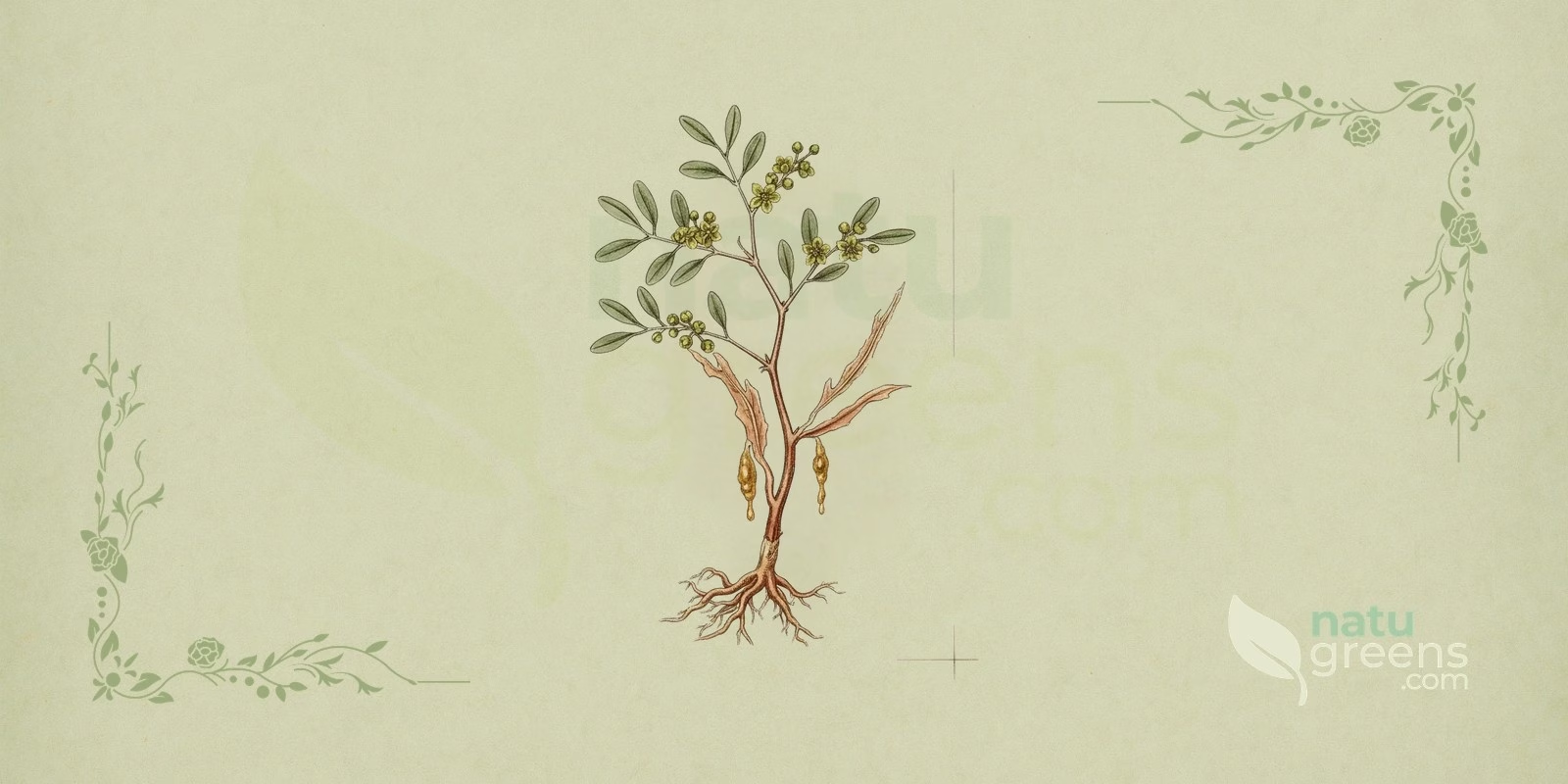
Commiphora myrrha (Nees) Engl. / Myrrh, commonly known as myrrh, Somali myrrh or common myrrh, is a thorny shrub or small tree of the Burseraceae family, native to the arid regions of eastern and northeastern Africa and the Arabian Peninsula, where it has been prized for millennia for the aromatic resin that shares its name. Throughout history, this resin has been used in religious rituals, in embalming and, above all, in traditional medicine, which attributes to it anti-inflammatory, antiseptic and antimicrobial actions that are now being investigated in laboratory and animal studies, thanks to the bioactive compounds found in the exudate that seeps naturally from the bark.
The importance of myrrh spans cultures and eras, as it appears in ancient Egyptian, Greek, Roman and Chinese texts as a remedy, a perfume and an offering. In the modern context, scientific research has been examining many of these traditional uses and pointing to possible pharmacological and cosmetic applications, although most of the evidence still comes from in vitro assays and animal models rather than from robust clinical studies in humans. Its complex phytochemical composition, which brings together terpenoids, volatile oils, resins and gums, makes Commiphora myrrha an ongoing subject of study in the search for new natural products.
Popular and International Names of Myrrh
The common names of myrrh vary little from one language to another, because almost all of them descend from the same Semitic root linked to the bitter taste of the resin, and some of them indicate the geographic origin or the commercial grade of the product, as with Somali myrrh and herabol myrrh.
- English: common myrrh, gum myrrh, herabol myrrh, myrrh, Somali myrrh.
- French: myrrhe.
- German: Echte Myrrhe, Myrrhe.
- Italian: mirra.
- Portuguese: mirra, mirra-árabe, mirra-comum, mirra-herabol, mirra-somali.
- Spanish: mirra, mirra del Yemen, mirra somalí.
Botanical Synonyms of Commiphora myrrha
The botanical synonyms of Commiphora myrrha reflect how complex its classification has been over time, since the species was described under different genera and varieties before the currently accepted name, Commiphora myrrha (Nees) Engl., became established. Knowing these names is important for identifying the species accurately in botanical and pharmacological studies, especially because much of the medical literature, including work on toxicity and drug interactions, refers to the plant as Commiphora molmol, and recognizing both names keeps research and the reading of safety data consistent.
- Balsamea myrrha Baill.
- Balsamea playfairii Engl.
- Balsamodendrum myrrha T.Nees
- Balsamodendrum simplicifolium Baker
- Commiphora coriacea Engl.
- Commiphora cuspidata Chiov.
- Commiphora habessinica var. grossedentata Chiov.
- Commiphora molmol (Engl.) Engl.
- Commiphora myrrha var. molmol (Engl.) Engl.
- Commiphora myrrha var. myrrha
- Commiphora playfairii (Engl.) Engl.
Botanical Family: Burseraceae
The Burseraceae family, known as the frankincense and myrrh family, comprises hundreds of species of trees and shrubs distributed across tropical and subtropical regions, and the genus Commiphora alone accounts for more than 150 species, concentrated mainly in Africa, Arabia and India. The group is characterized by the production of aromatic resins exuded from the bark, which hold a prominent place in traditional medicine and in the perfume industry, and many of its plants are adapted to arid environments, with thick trunks and bark that peels away in thin layers.
Commiphora myrrha is a prominent example of this family and shares with its relatives the ability to produce oleo-gum-resins rich in terpenoids. The economic and medicinal importance of the Burseraceae is linked to the diversity of bioactive compounds in these resins, the subject of extensive phytochemical and pharmacological studies that describe anti-inflammatory, antimicrobial and antioxidant activities, observed mainly in the laboratory and valued in a range of traditional and cosmetic applications.
Parts of Myrrh Used
The main part of Commiphora myrrha used for medicinal purposes is the resin, collected after it seeps naturally from the bark or after incisions are made in the trunk, and which hardens in the air into reddish-brown tears. This resin can be processed in several ways to produce extracts, tinctures, essential oil and other formulations, and practically all traditional and commercial preparations derive from it, while the use of other parts of the plant appears only in specific, poorly documented ethnobotanical contexts.
- Essential oil (obtained by distilling the resin)
- Resin (oleo-gum-resin exuded from the bark)
Ethnobotanical and Traditional Uses
Myrrh has a long, well-documented history of use across many cultures, from ancient Egypt to the traditional medicines of Asia and Africa, and it was valued not only for its medicinal applications but also for its role in religious rituals, in cosmetics and when burned as incense. The ethnobotanical uses listed below reflect this knowledge handed down through generations and are not equivalent to proven indications, since several of them still lack confirmation from well-designed clinical studies.
- Bacterial and viral infections (traditional record)
- Ceremonial incense and perfumery
- Digestive support in gastrointestinal disorders (traditional record)
- Embalming (ancient Egypt)
- Emmenagogue, to stimulate menstrual flow (a traditional record that is the reason to avoid the plant during pregnancy)
- Fungal infections, such as candidiasis and athlete’s foot (traditional record)
- Insect repellent
- Joint and rheumatic pain and inflammation (traditional record)
- Mouth antiseptic in gingivitis and mouth ulcers (traditional record)
- Parasitic diseases, such as intestinal worms, schistosomiasis and fascioliasis (traditional record, with clinical studies reporting conflicting results)
- Wound and skin ulcer healing (traditional topical use)
Therapeutic Properties of Myrrh
Commiphora myrrha brings together a wide range of properties attributed to it by tradition, and some of them are being investigated in modern studies, almost always in laboratory assays or in animals. These activities are associated with the interplay of its many phytochemical compounds, especially its antimicrobial and anti-inflammatory actions, which explain the place of myrrh in herbal medicine, particularly in oral and skin care, although none of them replaces medical treatment of a diagnosed disease.
- Analgesic (pain relief described in tradition and observed in animal studies)
- Anthelmintic (traditional record against intestinal worms, with studies reporting conflicting results)
- Antibacterial (activity against bacteria observed in laboratory assays)
- Antifungal (activity observed in vitro, including against Candida albicans)
- Anti-inflammatory (effect observed in laboratory and animal studies)
- Antimicrobial (inhibition of microbial growth in laboratory assays)
- Antioxidant (neutralization of free radicals in in vitro assays)
- Antiparasitic (activity investigated against Trichomonas vaginalis and Fasciola in preliminary studies)
- Antiproliferative (activity observed in laboratory studies, with no clinical evidence)
- Antiseptic (traditional use in cleansing living tissues and mucous membranes)
- Antispasmodic (traditional record of relief from cramps and muscle spasms)
- Antitussive (traditional record for cough relief)
- Antiviral (preliminary activity observed in laboratory studies)
- Astringent (contracts tissues and mucous membranes, the basis of its traditional use in mouth rinses)
- Carminative (traditional record for expelling intestinal gas)
- Emmenagogue (traditional record of stimulating menstrual flow)
- Expectorant (traditional record for expelling mucus from the airways)
- Hepatoprotective (effect observed in animal studies)
- Hypoglycemic (effect observed in animal studies, a reason for caution in people taking diabetes medication)
- Hypolipidemic (reduction in blood lipids observed in animal studies)
- Immunomodulatory (modulation of the immune system observed in preliminary studies)
- Neuroprotective (effect investigated in laboratory studies)
- Stomachic (traditional record of digestive support)
Detailed Phytochemical Profile of Myrrh
The diversity of activities attributed to myrrh reflects its rich and varied phytochemical composition, since the resin of Commiphora myrrha is a mixture of volatile oil, resin proper and gum, each fraction with a distinct set of bioactive compounds. The gum concentrates polysaccharides and proteins, while the oil and the resin contain several classes of terpenoids, above all furanosesquiterpenes, regarded as the main contributors to the characteristic fragrance and to much of the pharmacological activity studied so far. Compounds typical of other species in the genus, such as the guggulsterones of guggul, should not be attributed to myrrh without specific analytical confirmation.
- 2-tert-butyl-1,4-naphthoquinone
- 4-O-methylglucuronic acid
- Alpha-amyrin (3-epi-α-amyrin)
- Alpha-amyrone
- Alpha-camphorene
- Arabinose
- Benzenemethanol
- Beta-sitosterol
- Cadinene
- Campesterol
- Cholesterol
- Cinnamaldehyde
- Commiferin
- Commiphorinic acids (α, β and γ)
- Cresol (m-cresol)
- Curzerene
- Dipentene
- Elemol
- Esters
- Eugenol
- Flavonoids
- Furanodiene
- Furanoeudesma-1,3-diene
- Furanosesquiterpenoids (elemane, eudesmane and guaiane types)
- Galactose
- Heerabomyrrhols (α and β)
- Heeraboresene
- Lignans
- Limonene
- Lindestrene
- Menthofuran
- Myrcene
- Pinene
- Polysaccharides
- Proteins
- Resins
- Sesquiterpene lactones
- Sesquiterpenes
- Terpenoids (monoterpenoids, sesquiterpenoids, diterpenoids and triterpenoids)
- Volatile oil (essential oil)
- Xylose
Preparation and Administration Forms of Myrrh
Myrrh can be used in different preparations depending on the purpose and the route of application, and the resin, its main raw material, allows its compounds to be extracted by various methods, which results in products with very different concentrations and modes of use. The most common preparations are tinctures, extracts and essential oil, used mainly in mouth rinses, gargles and applications to the skin, while capsules, tablets and decoctions are less common and call for more caution because they are taken internally.
- Capsules
- Decoction (of the resin)
- Dry extract
- Essential oil
- Fluid extract
- Powder (of the resin)
- Tablets
- Tincture
There is no standardized, validated dose for the internal use of myrrh, which is why this article does not give amounts for teas, capsules or extracts. The general guidance, consistent with the available toxicity data, is to favor mouth rinses, gargles and diluted topical use, reserving internal use for small doses over short periods and always under the supervision of a healthcare professional, who can adjust the form and concentration to each case.
The resin is only partially soluble in water, so a decoction extracts only some of its compounds, while tinctures and standardized extracts vary widely in concentration from one manufacturer to another, which reinforces the need to follow the label and consult a healthcare professional before use. Because it is highly concentrated, the essential oil should only be applied diluted in a vegetable carrier oil or used in diffusers, never neat on the skin nor taken by mouth without professional guidance.
Synergy with Other Medicinal Plants
The combinations below belong to the traditional record and to folk herbal medicine and describe how myrrh is usually paired with other plants, with no clinical proof of an added effect for any of them.
Myrrh with Frankincense for Pain and Inflammation
Combining myrrh (Commiphora myrrha) with frankincense (Boswellia serrata or Boswellia carterii) is one of the most classic pairings in traditional medicine, present even in Chinese medicine, where the two resins are called Mo Yao and Ru Xiang. Both contain compounds studied for their anti-inflammatory activity, such as the boswellic acids of frankincense and the terpenoids of myrrh, and the pair is traditionally used for joint pain and inflammation, as in arthritis and osteoarthritis, with hypotheses of action through complementary mechanisms and metabolic pathways that still await confirmation in clinical studies.
Myrrh with Aloe Vera for Skin Care
Myrrh, traditionally associated with antisepsis and wound healing, is often combined with Aloe vera gel in topical preparations traditionally used for minor wounds, superficial ulcers, mild burns, cuts and skin irritation. Aloe gel, rich in polysaccharides and enzymes, is valued for hydration and for supporting skin regeneration, while myrrh contributes the antimicrobial and anti-inflammatory activity observed in the laboratory, and it is wise to test the mixture on a small area before use, since the resin can cause contact dermatitis.
Myrrh with Echinacea for the Respiratory Tract
In folk herbal medicine, myrrh is paired with echinacea (Echinacea purpurea) during periods of greater susceptibility to flu, colds and other upper respiratory tract infections, mostly in the form of gargles. Myrrh brings the antimicrobial and antiviral activity observed in laboratory studies, while echinacea is studied for its influence on immune cells such as macrophages and lymphocytes, but the combination remains a traditional record, with no clinical trials confirming any additional benefit.
Recipes and Usage Protocols of Myrrh
The preparations below describe traditional ways of using myrrh and favor external routes, which are the safest according to the available data, without replacing assessment by a healthcare professional in the case of persistent symptoms or an already diagnosed disease.
Myrrh Tincture Mouth Rinse and Gargle
A preparation traditionally used for gingivitis, mouth ulcers, sore throat and other irritations of the mouth: dilute a few drops of myrrh tincture in half a glass of warm water, or use a weak decoction of the resin once it has cooled, and rinse and gargle a few times a day without swallowing the liquid.
The compounds in the resin are associated with the antiseptic and astringent actions behind this traditional use, and it is best to stop if burning or irritation of the mucous membrane develops, and to see a dentist or doctor if gum bleeding, sore throat or mouth ulcers persist for more than two weeks.
Myrrh Compress for Use on the Skin
A traditional record of use on minor wounds, superficial ulcers, mild burns and irritated skin: prepare a concentrated decoction of the resin or dilute the tincture in boiled and cooled water, soak a clean gauze pad in the solution and apply it to the area for 15 to 20 minutes, a few times a day.
Before the first use, apply the solution to a small patch of skin and wait a few hours, since the resin and the oil can cause contact dermatitis, and remember that deep or infected wounds, or wounds that do not heal within the expected time, should be assessed by a healthcare professional.
Internal Use with Professional Supervision
For digestive discomfort such as flatulence or cramps, tradition uses myrrh by mouth in the form of capsules, tablets or standardized extracts, a use that should always be guided by a healthcare professional, who is responsible for setting the amount according to the concentration of the product and the individual’s condition.
The carminative and antispasmodic properties attributed to the resin underpin this traditional record, but because high doses can cause diarrhea and, in animal studies, led to kidney and heart changes, internal use should be limited to small doses and short periods, without self-medication and with a preference for mouth rinses and topical use whenever possible.
The preparations above follow traditional records and do not replace professional guidance. Before any internal use, check the contraindications and interactions described in this article.
Associated Therapies
Aromatherapy
Myrrh essential oil is valued in aromatherapy for its warm, resinous scent, which tradition associates with relaxing, meditative and purifying effects. Inhalation through diffusers or vaporizers is used to create a calm atmosphere, ease feelings of stress and accompany meditation, and the oil also appears in massage, always diluted in a vegetable carrier oil, to relieve muscle tension and support general well-being, taking care to avoid it during pregnancy and to test the blend on a small patch of skin first.
Western Herbal Medicine
In Western herbal medicine, myrrh is used mainly in situations involving mild inflammation and infection, and its most established use is in oral health, in tinctures for gingivitis, mouth ulcers and pharyngitis, as well as in digestive support. The antimicrobial activity observed in the laboratory explains its frequent presence in topical formulations for the skin and mucous membranes, although its use in established skin or parasitic infections should only ever complement conventional treatment and take place under professional guidance.
Traditional Chinese Medicine (TCM)
In Traditional Chinese Medicine, myrrh is called Mo Yao and is classified as an herb that moves the blood, relieves pain and promotes healing, and within this system it is indicated for blood stasis, traumatic pain, swelling, wounds and ulcers. It is usually combined with frankincense (Ru Xiang) and applied internally or externally in conditions such as arthritis, injuries and gynecological complaints, which shows its versatility within this ancient tradition, whose concepts do not correspond directly to the diagnoses of Western medicine.
Contraindications and Side Effects of Myrrh
Although myrrh is widely used and is usually well tolerated externally and in small amounts, there are contraindications, interactions and side effects that need to be considered before any use, especially in higher-risk groups. Consulting a healthcare professional is recommended before starting internal use, and the general safety rule is to take myrrh internally only in small doses and for short periods, favoring mouth rinses and topical use.
Contraindications
- Children: conclusive studies on the safety of myrrh in children are lacking, and internal use in children should be avoided without the guidance of a pediatrician.
- Diabetes: because a hypoglycemic effect has been observed in animals, people with diabetes need to monitor their blood glucose closely and talk to their doctor before taking myrrh by mouth.
- Heart and Kidney Disease: high-dose internal use caused kidney and heart changes in animal studies, so people with heart or kidney disease should avoid taking myrrh by mouth without medical supervision.
- Pregnancy and Breastfeeding: avoid during pregnancy, because of the traditional record of myrrh as an emmenagogue and the uterotonic activity observed in animal studies, and also avoid while breastfeeding, a period for which there are insufficient safety data.
- Surgery: it is recommended to stop using myrrh at least two weeks before any surgery, because of its possible interference with blood clotting and with the effect of anticoagulants.
Side Effects
- Contact Dermatitis: the resin and the oil can cause contact dermatitis, and other allergic reactions, such as skin rashes, may occur after topical application or, more rarely, after internal use.
- Gastrointestinal Disorders: high-dose internal use can cause diarrhea, as well as nausea, vomiting and abdominal pain.
- Kidney and Heart Changes: in animal studies, high oral doses of myrrh caused changes in the kidneys and heart, a finding that underpins the recommendation to use it internally only in small doses and for short periods.
Drug Interactions
- Anticoagulants: there is a case report of interference with warfarin, with a reduction in its anticoagulant effect, so anyone taking warfarin or any other anticoagulant should be cautious and only use myrrh with their doctor’s knowledge, so that clotting tests can be monitored.
- Hypoglycemic Drugs: because of the hypoglycemic effect observed in animals, myrrh may add to the action of diabetes medications and cause an excessive drop in blood sugar, which calls for caution and blood glucose monitoring.
Myrrh essential oil is far more concentrated than the resin and should not be swallowed or applied neat to the skin, and pregnant women, breastfeeding women and children should also avoid it in aromatherapy without professional guidance. If any unexpected symptom appears, such as persistent diarrhea, palpitations, swelling or severe skin irritation, use should be stopped and a healthcare professional consulted.
Not to Be Confused with Other Commiphora Species
Myrrh (Commiphora myrrha) should be distinguished from other resins of the same genus that also circulate in the medicinal plant trade, in particular Abyssinian myrrh (Commiphora erythraea) and guggul (Commiphora wightii), each with its own chemical profile, traditional uses and safety data. The information in this article refers only to Commiphora myrrha, and the properties attributed to guggul, such as those linked to guggulsterones, or to Abyssinian myrrh should not be transferred to it, a precaution that also applies when choosing a product, so always check the scientific name on the label.
Historical Notes and Interesting Facts
With thousands of years of history behind it, myrrh has gathered curiosities and historical facts that place it among the best-known medicinal plants of the ancient world, from its mention in religious texts to its role in the cultural and medical practices of several civilizations. Prized by kings and priests, the resin continues to attract the interest of researchers and of students of natural medicine, both for its historical value and for its unique chemistry.
- Ancient Medicine: physicians such as Galen and Dioscorides recorded the use of myrrh for a variety of complaints, from digestive problems to wounds and infections.
- Biblical Gift: myrrh is one of the three gifts the Magi offered Jesus at his birth, according to the Gospel of Matthew, and Christian tradition interprets it as a symbol of his mortality.
- Egyptian Embalming: in ancient Egypt, myrrh was an essential ingredient in embalming, thanks to the antiseptic and preservative properties that helped to preserve bodies.
- Etymology: the name “myrrh” derives from the Arabic word “murr”, meaning “bitter”, a reference to the characteristic taste of the resin.
- Perfume and Incense: in the ancient world, myrrh was a valuable commodity, used to make perfumes, aromatic oils and incense for religious and purification rituals.
- Use in TCM: in Traditional Chinese Medicine, myrrh is often combined with frankincense in formulas traditionally used for pain, inflammation and trauma, valued for its ability, according to this system, to move the blood and relieve stasis.
Frequently Asked Questions about Myrrh
Myrrh is best known for its resin, but it also appears in homemade teas and decoctions, which is why questions about preparation, quantity and safety are common, and the answers below are meant to support informed use.
How Do You Prepare Myrrh Tea?
Myrrh tea is actually a decoction: tradition uses a small portion of powdered or fragmented resin, boiled in water for a few minutes and strained before being drunk warm, sweetened with honey if desired. Because the resin is only partially soluble in water and there is no standardized dose, the amount and duration of use should be set with a healthcare professional, and for the mouth and throat the safest option is to use the same decoction, once cooled, as a mouth rinse and gargle.
How Much Myrrh Tea Is Appropriate?
There is no standardized, validated amount for myrrh tea, and popular recommendations vary considerably from one source to another. For safety, internal use should be restricted to small doses and short periods, stopping immediately at any adverse symptom, and personalized guidance from a healthcare professional is essential, especially for anyone with a medical condition or taking medication.
Can Children Use Myrrh Tea?
Myrrh tea is not recommended for children without medical supervision, because conclusive studies on the safety of the plant in children are lacking. The most prudent course is to avoid internal use and consult a pediatrician or a qualified herbalist before any application, including mouth rinses, which require the child to already know not to swallow the liquid.
Can Myrrh Be Used during Pregnancy and Breastfeeding?
Myrrh should be avoided during pregnancy, both because of its traditional record as an emmenagogue and because of the uterotonic activity observed in animal studies, and also while breastfeeding, a period for which there are no safety data. Pregnant and breastfeeding women should talk to their doctor before using any product that contains myrrh, including the essential oil in aromatherapy.
Are There Side Effects from Drinking Myrrh Tea?
Yes, excessive consumption of myrrh tea can cause diarrhea, nausea, vomiting and abdominal pain, and in animal studies high oral doses led to kidney and heart changes. Allergic reactions such as contact dermatitis can also occur, so use should be stopped at the first adverse symptoms, and people with pre-existing conditions need to take extra care.
Does Myrrh Tea Interact with Medications?
Yes, there is a case report in which myrrh reduced the anticoagulant effect of warfarin, and animal studies point to a hypoglycemic effect that may add to that of diabetes medications. If you are taking any medication, especially anticoagulants or hypoglycemic drugs, consult your doctor or pharmacist before drinking myrrh tea to avoid unwanted interactions.
Notice: this content is for informational purposes and does not replace professional medical advice. Consult a physician or herbal practitioner before using medicinal plants, especially during pregnancy, breastfeeding, or alongside medication.
References and Scientific Studies
- PMC2026 Zhang H, et al. Research progress on the anti-tumor effects of myrrh (Commiphora myrrha) and its bioactive constituents. Discover oncology. 2026.
- PMC2024 Fouad MM, et al. Commiphora myrrha acute toxicity. Clinical toxicology (Philadelphia, Pa.). 2024.
- PMC2022 Wang CC, et al. Cytotoxic sesquiterpenoid dimers from the resin of Commiphora myrrha Engl. Phytochemistry. 2022.