Atropa belladonna L. / Deadly Nightshade, known in English as deadly nightshade or simply belladonna, is a perennial herbaceous plant of the Solanaceae family and one of the most toxic species in the European flora. Native to Europe, North Africa and western Asia, it carries tropane alkaloids in every part, and these compounds can cause severe and potentially fatal poisoning. This guide is meant to help readers recognize the danger and avoid any form of self-medication with the plant.
In case of ingestion or suspected poisoning, seek emergency medical care immediately and contact your country’s poison control center. The condition can progress quickly, and nothing done at home can replace a medical assessment. The sections below cover the compounds behind its toxicity, the warning signs, the groups at greatest risk and the clues for identifying the plant before an accident happens.
Popular and International Names of Deadly Nightshade
In several languages, the plant’s names allude to the danger it poses. Examples include cereja-do-diabo (“devil’s cherry”) in Portuguese, deadly nightshade in English and Tollkirsche in German, which translates roughly as “mad cherry”.
- English: belladonna, deadly nightshade, death cherries, devil’s berries.
- French: belladone, morelle furieuse.
- German: Schwarze Tollkirsche, Tollkirsche, Wolfskirsche.
- Italian: belladonna, erba della bella donna.
- Portuguese: beladona, cereja-do-diabo, erva-da-morte, erva-moura-mortal.
- Spanish: belladona, cereza del diablo, solano mayor.
Popular names call for caution, because in Brazil the Portuguese name erva-moura on its own usually refers to a different species, Solanum americanum, also known as maria-pretinha.
Botanical Synonyms of Atropa belladonna
The World Checklist of Vascular Plants, the taxonomic backbone of Plants of the World Online (POWO), accepts the species under the hyphenated spelling used by Linnaeus in 1753, Atropa bella-donna L. The unhyphenated form Atropa belladonna is the most widespread orthographic variant in the medical literature and refers to exactly the same plant. The scientific names below, assigned to the species over the centuries, are now treated as synonyms:
- Atropa borealis Kreyer ex Pascher
- Atropa caucasica Kreyer
- Atropa cordata Pascher
- Atropa digitaloides Pascher
- Atropa lethalis Salisb.
- Atropa lutea (Döll) Al-Nowaihi & M.M.Mourad
- Atropa mediterranea Kreyer ex Pascher
- Atropa paschkewiczii Kreyer
- Belladona baccifera Lam.
- Belladona trichotoma Scop.
- Boberella bella-donna (L.) E.H.L.Krause
The yellow-fruited form, described as Atropa bella-donna var. lutea Döll, is also included in the synonymy of the species.
Botanical Family: Solanaceae
The Solanaceae family comprises about 2,700 species and includes foods such as eggplants, peppers, potatoes and tomatoes. Alongside them are plants rich in tropane alkaloids, such as angel’s trumpets, henbane and jimsonweed. Deadly nightshade belongs to the tribe Hyoscyameae, the same tribe as henbane (Hyoscyamus niger), with which it shares much of its toxic chemistry.
Toxicity of Deadly Nightshade: Hazard Level and Toxic Parts
The alert level for deadly nightshade is maximum: the whole plant is toxic, and no safe dose has been established for any of its parts. The root holds the highest concentration of alkaloids, but the berries, flowers, leaves and seeds are also enough to cause severe and potentially fatal poisoning, especially in children.
The glossy black berries, about the size of a small cherry, attract children and can fool adults who are used to picking wild fruit. Alkaloid content varies with the part of the plant, its age, where it grows and when it is collected, so there is no way to predict how serious an exposure will be from the amount swallowed. Even contact of the juice with the eyes can dilate the pupils, the very effect behind one of the best-known historical uses of the species.
Toxic Compounds and Mechanism of Toxicity in Deadly Nightshade
The main culprits are the tropane alkaloids: hyoscyamine, which partly converts to atropine during drying and extraction, and scopolamine, also known as hyoscine. These compounds are present in every part of the plant and are readily absorbed from the digestive tract.
The mechanism of action is antimuscarinic antagonism: the alkaloids occupy the muscarinic receptors for acetylcholine, the chemical messenger that governs “rest and digest” functions, and block its action. Without that brake, the heart speeds up, the pupils dilate, saliva and sweat dry up, the gut slows down and the bladder struggles to empty. Unable to sweat, the body also loses its ability to shed heat. Because they cross the blood-brain barrier, atropine and above all scopolamine reach the brain and produce the central anticholinergic syndrome, with agitation, confusion, delirium and hallucinations.
Symptoms of Deadly Nightshade Poisoning
The classic picture is the anticholinergic syndrome, which English-language medical literature sums up in a well-known mnemonic: “hot as a hare, blind as a bat, dry as a bone, red as a beet, mad as a hatter”. The signs most often described in poisoning cases include:
- Coma, in the most severe cases
- Delirium and incoherent speech
- Dilated pupils (mydriasis), with blurred vision and sensitivity to light
- High fever (hyperthermia), caused by the inability to sweat
- Hot, dry, flushed skin, especially on the face and neck
- Psychomotor agitation and mental confusion
- Seizures
- Tachycardia and palpitations
- Urinary retention
- Very dry mouth and throat, with difficulty swallowing
- Visual and auditory hallucinations
In the series of 49 children analyzed by Caksen and colleagues, the most common signs were meaningless speech, tachycardia, dilated pupils and flushing. Lethargy, coma and the absence of the expected tachycardia marked the most severe cases, which is why a heart that is not racing should reassure no one.
Risk Groups and Drug Interactions of Deadly Nightshade
Anyone can suffer severe poisoning from deadly nightshade, but some groups face a higher risk of accidental exposure or of complications:
- Children: they are the most vulnerable because of their lower body weight, the appeal of the shiny berries and their difficulty in reporting what they have swallowed.
- Older adults: they are more sensitive to anticholinergic effects, with a higher risk of mental confusion, urinary retention and falls.
- People with angle-closure glaucoma: pupil dilation can trigger an acute attack of raised intraocular pressure that puts vision at risk.
- People with benign prostatic hyperplasia: relaxation of the bladder muscle can lead to acute urinary retention.
- People with heart disease: the faster heartbeat and rhythm disturbances caused by the alkaloids can destabilize existing heart conditions.
- Pregnant and breastfeeding women: there is no known margin of safety, and tropane alkaloids cross the placenta.
Deadly nightshade alkaloids add to the effects of other anticholinergic medicines, which raises the risk even after small exposures. These include anticholinergic antiparkinsonian drugs, anticholinergic antispasmodics, certain antipsychotics, first-generation antihistamines and tricyclic antidepressants. Alcohol and sedatives can worsen confusion and drowsiness, and anyone on long-term medication needs to tell the healthcare team about it.
What to Do in Case of Deadly Nightshade Poisoning
In case of ingestion or suspected poisoning, seek emergency medical care immediately and contact your country’s poison control center. There is no safe home antidote, and trying to deal with the problem at home only wastes precious time.
Vomiting should not be induced without professional guidance, because doing so can cause choking and aspiration, especially in someone who is already agitated or drowsy. It helps to keep a sample of the plant, ideally with leaves and fruit, or at least to photograph it. Whoever provides assistance needs to know the approximate amount and the time of ingestion. If the exposure involved a homemade tea or a ready-made commercial product, the bottle, packaging or label should go along with the person.
In the hospital, treatment is mainly supportive, with cardiac monitoring, control of temperature and agitation and, when indicated, measures to reduce absorption of the alkaloids. Physostigmine is a specific antidote, but it is reserved exclusively for hospital settings under medical supervision, because it can also cause serious side effects. Since symptoms can be prolonged and fluctuate, even someone who appears to be improving needs to remain under observation.
Documented Cases and Regulatory Status of Deadly Nightshade
A review by Fatur and Kreft of poisonings published between 1966 and 2018 concluded that most deadly nightshade ingestions occurred because the berries were mistaken for edible fruit. In Turkey, Caksen and colleagues followed 49 children poisoned by the plant, six of whom developed a severe picture with encephalopathy. With hospital care, none of them required mechanical ventilation and none died in that series.
A case reported by Berdai and colleagues in Morocco shows the danger of self-medication. An 11-year-old girl was given the plant as a home remedy for jaundice and developed central anticholinergic syndrome, which required admission to intensive care before she recovered. Lee’s historical review also recalls that, in the nineteenth century, pure atropine was responsible for a large number of deaths by accident, suicide or homicide.
Regulatory status varies from country to country, but in several jurisdictions belladonna is classified as a restricted or controlled pharmaceutical raw material, and its purified alkaloids are available only as regulated medicines. In 2017, in the United States, the FDA found inconsistent amounts of belladonna in homeopathic teething tablets for babies, and the product was withdrawn from the market, as Kwakye and colleagues report.
Historical Uses of Deadly Nightshade and Their Risks
The Greeks and Romans already knew that the plant contained a powerful poison. In the Middle Ages, it appeared in formulas attributed to sorcerers and poisoners, including the so-called flying ointments, whose hallucinogenic effects were, in practice, signs of anticholinergic poisoning.
During the Renaissance, Italian women dripped the plant’s juice into their eyes to dilate their pupils, which were then seen as a mark of beauty, and according to tradition this is the origin of the epithet belladonna, “beautiful woman” in Italian. The practice brought blurred vision, sensitivity to light and a risk of systemic poisoning, and it could also precipitate attacks of glaucoma. When he named the genus, Linnaeus invoked Atropos, the Greek Fate who cut the thread of life.
Between the nineteenth and twentieth centuries, belladonna extracts, plasters and tinctures appeared in pharmacopeias as antispasmodics. Their variable alkaloid content and the narrow margin between effect and poisoning led to their gradual replacement, in most clinical practice, by purified and standardized compounds. Atropine, isolated in the 1830s, and scopolamine are now prescription or hospital-only drugs that cannot be obtained safely from the plant. They are employed in ophthalmology and anesthesiology, in the management of bradycardia and as an antidote in organophosphate insecticide poisoning.
There is also a registered homeopathic medicine called Belladonna, made by extremely high dilutions. These ultra-diluted preparations are a separate product from a regulatory standpoint, with no direct pharmacological link to the plant or to its alkaloids in detectable amounts, and mentioning them here does not constitute an endorsement.
Identification and Look-Alike Risks of Deadly Nightshade
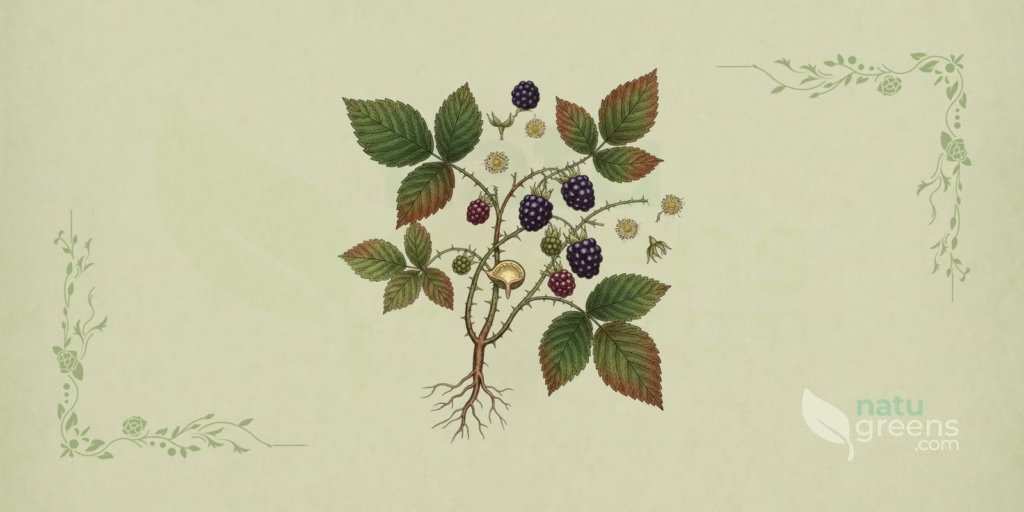
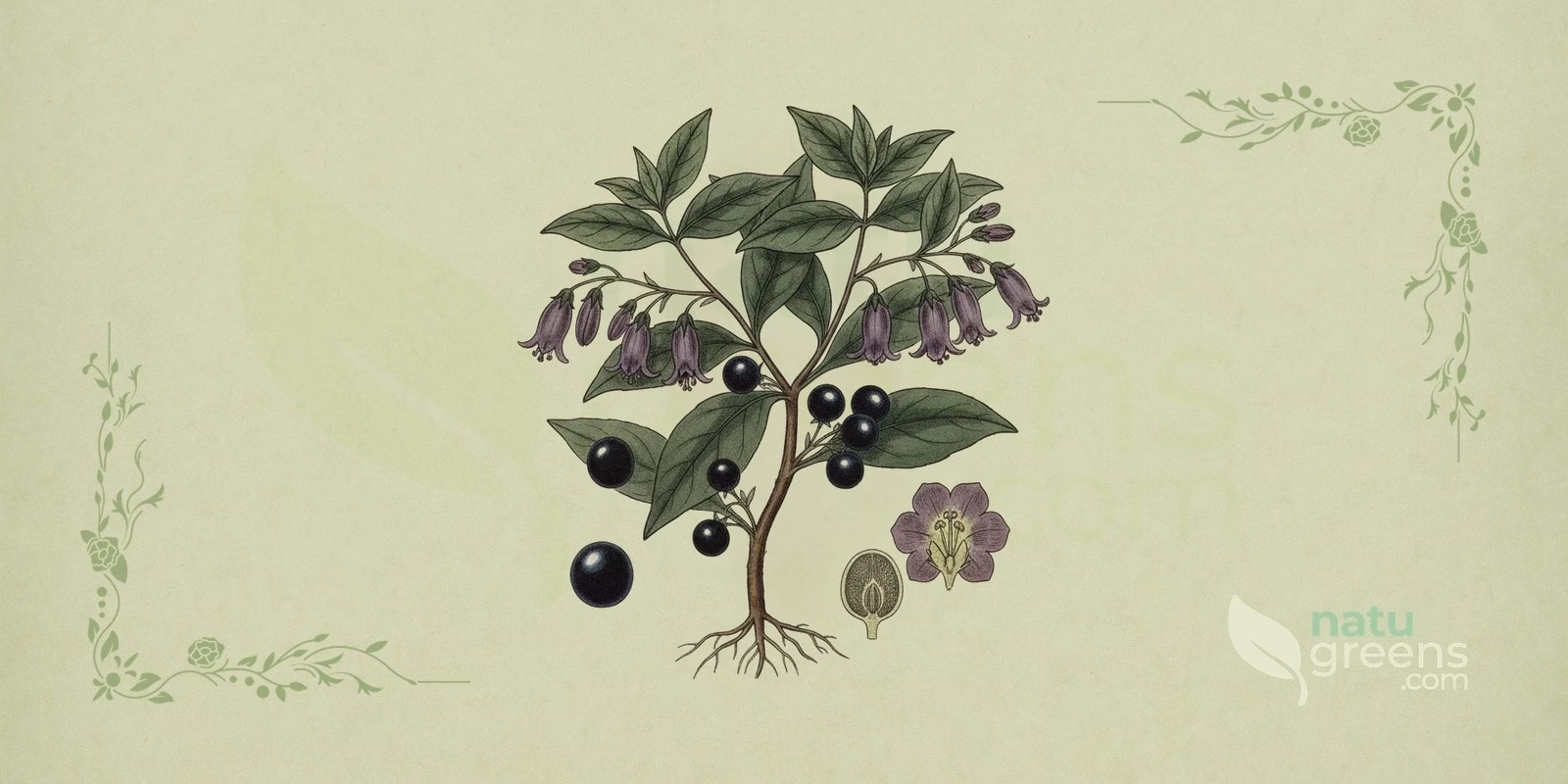
Deadly nightshade is a robust perennial herb that can grow taller than one meter, with oval, smooth-edged leaves that often come in unequal pairs, a large one next to a much smaller one. The solitary, bell-shaped flowers are brownish purple and appear in the leaf axils in summer. The fruit is a glossy black berry resting on a persistent green calyx that opens into five points like a star, a detail that helps with recognition.
A less common form, with pale yellow flowers and yellow berries, must not be regarded as harmless. Outside its native range, the plant is found mainly in cultivation, in medicinal plant gardens and botanical collections.
The main look-alike risk lies in the berries, which can be mistaken for blueberries, cherries or other wild berries, especially by children. According to the review by Fatur and Kreft, this mistake accounts for most ingestions of the plant. In Brazil, deadly nightshade should not be confused with erva-moura or maria-pretinha (Solanum americanum, American black nightshade), whose berries are much smaller, borne in small clusters and preceded by tiny white flowers. In any case, no wild black berry should ever go near the mouth without reliable identification. Angel’s trumpet (Brugmansia suaveolens) and jimsonweed (Datura stramonium), related plants that are common in Brazil, contain the same alkaloids and cause a very similar clinical picture.
Frequently Asked Questions about Deadly Nightshade
Is Deadly Nightshade Poisonous?
Yes, deadly nightshade is among the most toxic plants in Europe, and all of its parts, from the root to the berries, contain alkaloids capable of causing severe and potentially fatal poisoning. The alert level assigned to this species is maximum.
Is There a Safe Dose of Belladonna?
No safe dose of belladonna has been established, whether for internal or external application. Alkaloid content varies widely from plant to plant, which makes any exposure unpredictable, and no proven benefit justifies that risk. Derived drugs such as atropine are produced by the pharmaceutical industry and employed only on prescription or in hospital settings.
What Should You Do if Someone Swallows Deadly Nightshade?
The advice is to seek emergency help without delay by calling emergency services or a poison control center, even if the person has no symptoms yet. Do not induce vomiting without professional guidance and, if possible, bring a sample or a photo of the plant and report the approximate amount and the time of ingestion.
What Are the First Symptoms of Deadly Nightshade Poisoning?
The first signs are usually a very dry mouth, dilated pupils with blurred vision, hot and flushed skin and a racing heart. Agitation, incoherent speech, confusion and hallucinations may follow and, in severe cases, seizures and coma.
Is Belladonna Banned?
Legislation varies from country to country, and no single rule applies everywhere. In several jurisdictions, belladonna is classified as a restricted or controlled pharmaceutical raw material, and its alkaloids reach patients only as regulated medicines. In any scenario, self-medication with the plant is dangerous and should never be attempted.
Does Homeopathic Belladonna Carry the Same Risk as the Plant?
The homeopathic medicine called Belladonna is made by ultra-high dilution and is a separate product from a regulatory standpoint, with no direct pharmacological link to the plant or to its alkaloids in detectable amounts. Manufacturing failures, however, have already prompted warnings, such as the one the FDA issued in 2017 about infant teething tablets with inconsistent amounts of belladonna. The existence of this product does not mean that the plant is safe, and mentioning it here does not constitute an endorsement.
Notice: this content is for informational purposes and does not replace professional medical advice. Consult a physician or herbal practitioner before using medicinal plants, especially during pregnancy, breastfeeding, or alongside medication.
References and Scientific Studies
- PMC2012 Berdai MA, et al. Atropa belladonna intoxication: a case report. Pan Afr Med J. 2012.
- PMC2003 Caksen H, et al. Deadly nightshade (Atropa belladonna) intoxication: an analysis of 49 children. Hum Exp Toxicol. 2003.
- PMC1966 Fatur K, Kreft S. Common anticholinergic solanaceaous plants of temperate Europe – A review of intoxications from the literature (1966-2018). Toxicon. 2020.
- PMC1998 Holzman RS. The legacy of Atropos, the fate who cut the thread of life. Anesthesiology. 1998.
- PMC2018 Kwakye GF, et al. Atropa belladonna neurotoxicity: Implications to neurological disorders. Food Chem Toxicol. 2018.
- PMC2007 Lee MR. Solanaceae IV: Atropa belladonna, deadly nightshade. J R Coll Physicians Edinb. 2007.
- PMC2004 Ulbricht C, et al. An evidence-based systematic review of belladonna by the natural standard research collaboration. J Herb Pharmacother. 2004.