In traditional Chinese medicine (TCM), Codonopsis pilosula is one of the most highly regarded tonic roots, traded internationally under the market name “dang shen” and often presented as a more affordable alternative to Asian ginseng. Traditional records use it for fatigue, poor appetite and respiratory weakness, which TCM interprets as Qi deficiency of the spleen and lung, and also turn to it to support the immune system and digestive function. The root contains alkaloids, saponins, polyacetylenes and polysaccharides, a group of compounds that laboratory and animal studies associate with immunomodulatory, antioxidant and anti-inflammatory effects, although many of these traditional uses still lack confirmation in clinical trials in humans.
Popular and International Names of Codonopsis pilosula
- English: Bonnet Bellflower, Dangshen, Poor Man’s Ginseng.
- Chinese: 党参 (Dǎngshēn), 川党参 (Chuān Dǎngshēn, a name applied to the tangshen form).
- French: Dangshen, Ginseng du Pauvre.
- German: Arme-Leute-Ginseng, Dangshen.
- Italian: Dangshen, Ginseng dei Poveri.
- Portuguese: no established common name; in trade, the root circulates as “dang shen”, a form cited here only as a market reference.
- Spanish: Dangshen, Ginseng de los Pobres.
Because the species has no Portuguese common name in current use, this article adopts the scientific binomial as its main name. Poor man’s ginseng is an English nickname, and expressions such as ginseng do pobre are mere translations of it, with no counterpart in Brazilian popular usage. Generic names such as “bellflower root” should not be taken as equivalents of the species either, since in trade they usually refer to other plants of the family, such as Platycodon grandiflorus.
Botanical Synonyms of Codonopsis pilosula
- Campanumoea pilosula Franch. (basionym).
- Codonopsis tangshen Oliv. (treated as a subspecies, Codonopsis pilosula subsp. tangshen).
The species was originally described by the French botanist Adrien Franchet in the genus Campanumoea and later transferred to Codonopsis by Nannfeldt, which explains the author abbreviation (Franch.) Nannf. that follows the scientific name. Codonopsis tangshen, proposed by the British botanist Daniel Oliver, is treated in recent taxonomic revisions as a subspecies, Codonopsis pilosula subsp. tangshen (Oliv.) D.Y.Hong, and also appears in the literature as var. tangshen. The Chinese Pharmacopoeia, for its part, keeps it as one of the official sources of the herbal drug Codonopsis Radix, alongside typical Codonopsis pilosula and its variety modesta.
The kinship with Campanumoea, a botanically close but distinct genus, has a practical consequence, because species of that genus are sometimes confused with Codonopsis pilosula in trade, which makes it important to buy the root from suppliers who state the botanical identification of the material.
Botanical Family: Campanulaceae
The Campanulaceae, known as the bellflower family, comprise about 84 genera and more than 2,300 species distributed mainly across temperate and subtropical regions, and are characterized by bell-shaped flowers that are often showy and attractive to pollinators. Many plants in the group store inulin in their roots, and some lineages produce alkaloids of pharmacological interest, which explains the attention the family receives in phytochemical studies.
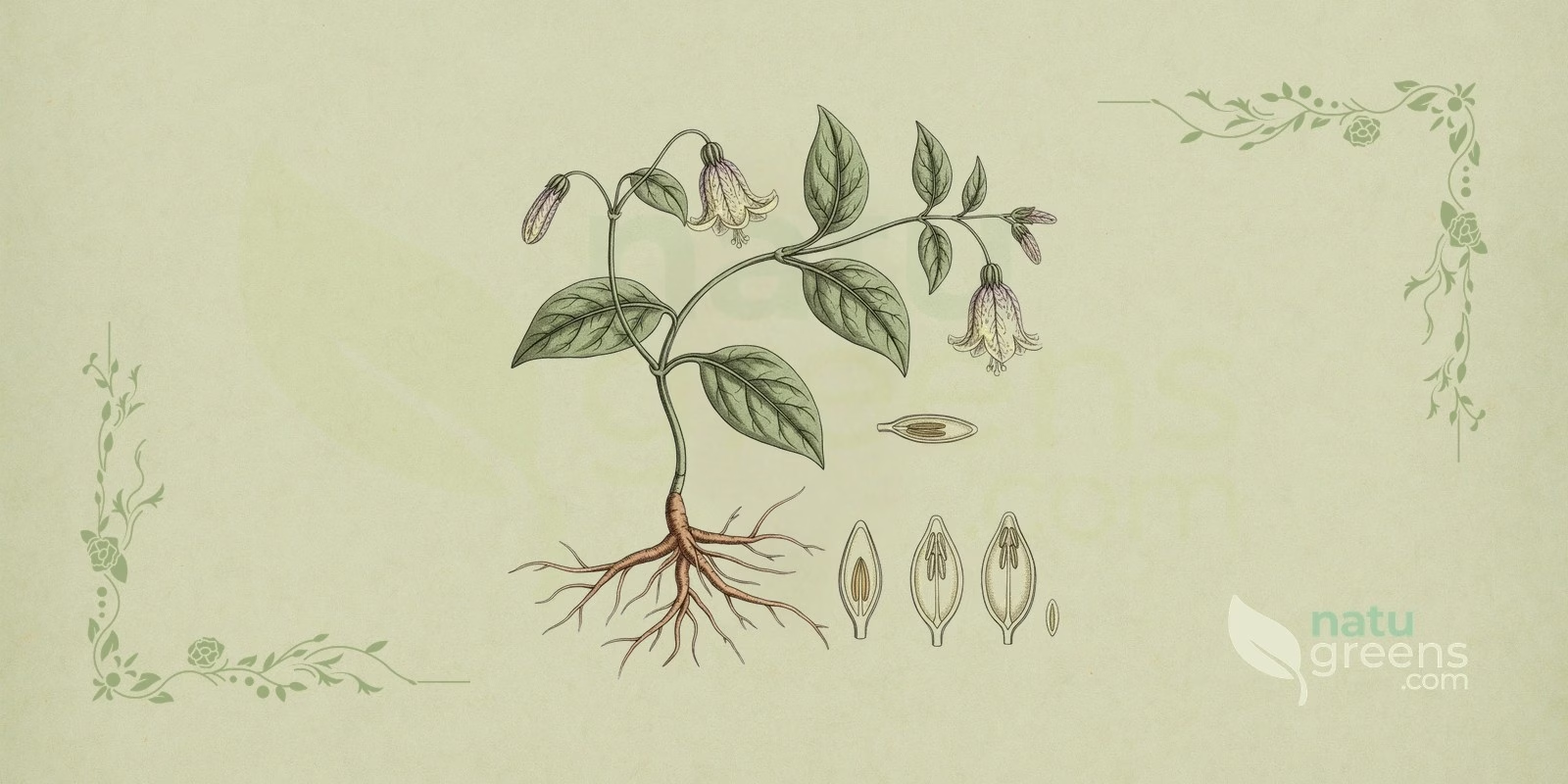
Codonopsis pilosula shares with its relatives the bell-shaped flowers and the storage root, which in its case is long, cylindrical and fleshy and is the part of medicinal interest. The chemical diversity of the family is the subject of research that assesses the potential of several of its species for pharmacological and ethnobotanical applications, a field in which correct taxonomic identification is a basic condition for results to be comparable.
Parts of Codonopsis pilosula Used
- Root (Codonopsis Radix), used dried and sliced.
The root is the only part with an established medicinal use and, after harvest, it is dried and cut into slices or segments, the form in which it goes into decoctions, soups and stews, besides serving as raw material for the extracts, tinctures and capsules sold on the international market.
Ethnobotanical and Traditional Uses
- Aging, memory and learning, topics explored only in preliminary studies.
- Body fluid deficiency accompanied by thirst, in the terminology specific to TCM.
- Cardiovascular complaints, as a component of traditional Chinese formulas, without replacing follow-up with a cardiologist.
- Chronic atrophic gastritis and gastric ulcer, a traditional record with a protective effect observed in rats.
- Convalescence, as a tonic ingredient in soups and decoctions in traditional Chinese cooking.
- Dyspnea and cough linked to weakness (asthenic cough), according to traditional texts.
- Excessive thirst and internal heat, a pattern that Chinese tradition associates with diabetes, without replacing prescribed medical treatment.
- Fatigue and poor appetite, conditions that TCM attributes to spleen Qi deficiency.
- Hypotension, a traditional record still without clinical confirmation.
- Nourishing the blood and generating fluids, in the language specific to TCM.
- Palpitations and shortness of breath, when tradition links them to Qi deficiency.
- Qi and blood deficiency with a pale complexion, according to Chinese tradition.
- Strengthening the spleen and tonifying the lung, core functions that TCM attributes to the root.
Therapeutic Properties of Codonopsis pilosula
- Adaptogenic (traditional record of supporting the body under stress, without clinical proof).
- Anti-inflammatory (effect observed in laboratory and animal studies).
- Antibacterial (activity observed in laboratory tests).
- Antioxidant (activity against free radicals observed in the laboratory).
- Antiproliferative (activity observed in laboratory studies, without clinical proof).
- Antiviral (activity investigated in laboratory studies).
- Cardioprotective (effect investigated in animal models).
- Gastroprotective (protection against induced gastric ulcer, observed in rats).
- Hypoglycemic (reduction in blood sugar observed in preliminary studies, which calls for caution with diabetes medication).
- Immunomodulatory (modulation of the immune system observed in studies with root polysaccharides).
- Neuroprotective (effect investigated in preclinical studies).
- Qi tonic (traditional Chinese medicine concept linked to vitality).
Most of these properties come from experiments with extracts and isolated fractions in cells and animals, whose results do not automatically carry over to people consuming the root, and for that reason none of them justifies using the plant in place of medical treatment.
Detailed Phytochemical Profile of Codonopsis pilosula
- Alkaloids (e.g., codonopsine and perlolyrine, a beta-carboline alkaloid isolated from the root).
- Atractylenolides (e.g., atractylenolides II and III).
- Polyacetylenes (e.g., lobetyolin).
- Polysaccharides (water-soluble fractions, the most studied in the root).
- Saponins.
- Steroids.
- Tannins.
- Triterpenes.
Polysaccharides account for most of the recent research, which examines their composition and their relationship with root quality, while perlolyrine was described in the species as early as the late 1980s. Quantitative nuclear magnetic resonance has also been applied to the quality assessment of Codonopsis Radix, a useful tool in a market where the root circulates under the same trade name from more than one taxon.
Preparation and Administration Forms of Codonopsis pilosula
- Aqueous and ethanolic extracts.
- Capsules and tablets made from powdered root or extract.
- Decoction of the dried root.
- Soups and stews, in traditional Chinese cooking.
- Tinctures.
Decoction is the classic form, because the hard slices of the root need prolonged simmering to release their constituents, whereas capsules, extracts and tinctures vary widely in concentration from one manufacturer to another and should be used according to the label and the guidance of a health professional.
Synergy with Other Medicinal Plants
Astragalus (Astragalus membranaceus)
Codonopsis pilosula and astragalus form one of the most frequent pairings in Chinese tradition for tonifying Qi, since both roots are considered tonics and are traditionally used during periods of persistent fatigue, low resistance and convalescence. The polysaccharides of both plants are being investigated in laboratory and animal studies for their influence on the immune response, but there are no clinical trials that would allow a combined effect in people to be claimed.
Ginseng (Panax ginseng)
Although Codonopsis pilosula is sold in English as poor man’s ginseng, the two roots are also combined in traditional formulas intended for states of marked debility, in which ginseng contributes a tonification considered more vigorous. Because ginseng can also lower blood sugar and interact with anticoagulants, this combination calls for even more care in people who take medication for diabetes or to thin the blood.
Licorice (Glycyrrhiza uralensis)
Pairing Codonopsis pilosula with licorice is a classic feature of Chinese formulas, in which licorice is traditionally used to harmonize the action of the other herbs and round out the digestive tonification attributed to the root. In TCM logic, the pair appears in preparations aimed at fatigue and sluggish digestion, but licorice has its own restrictions, since prolonged use can raise blood pressure and lower potassium levels in the blood, which calls for special caution in people with hypertension.
Recipes and Usage Protocols of Codonopsis pilosula
Traditional Decoction of the Dried Root
Ingredients: traditional references cite 10 to 30 g of dried Codonopsis pilosula root for 500 ml of water.
Preparation: Simmer the root over low heat for 30 to 45 minutes, strain and divide the liquid into two or three portions over the course of the day, a regimen traditionally used for fatigue, shortness of breath and general weakness associated with Qi deficiency. In Chinese practice, the decoction is usually combined with other tonic roots, such as astragalus, and the amount and duration of use should be set together with a health professional, especially for people who take diabetes medication.
Traditional Soup with Codonopsis pilosula
Ingredients: 15 to 20 g of Codonopsis pilosula root, 500 g of chicken or lean meat, vegetables to taste (such as potato and carrot), salt and pepper.
Preparation: Add the root to the pot while the chicken or meat is cooking and keep it on the heat until all the ingredients are tender. In traditional Chinese cooking, this broth is served as a tonic dish during periods of convalescence and fatigue, and the root contributes a mild, slightly sweet flavor that goes well with meat and vegetables.
The preparations above follow traditional records and do not replace professional guidance. Before any internal use, check the contraindications and interactions described in this article.
Associated Therapies
Traditional Chinese Medicine
In traditional Chinese medicine, Codonopsis pilosula ranks among the main Qi tonics and is traditionally used for deficiencies of the spleen and lung, which, according to this system, manifest as prolonged fatigue, poor appetite, diarrhea, shortness of breath and cough. Its action is described as gentle, which is why tradition includes it in complex formulas to balance and complement other herbs, always within an individualized prescription that does not replace medical follow-up.
Traditional Chinese Cuisine
Outside the clinic, the root is a common ingredient in home-cooked soups and stews in China, where it is valued both for the tonic role that tradition assigns to it and for its mild, slightly sweet flavor, a culinary use that helps explain its wide circulation in the trade of Asian products.
Contraindications and Side Effects of Codonopsis pilosula
General Contraindications
According to TCM, Codonopsis pilosula is not indicated in patterns of excess heat or fire in the body, nor in acute conditions accompanied by high fever, and it should be avoided by people with Yin deficiency showing signs of heat, such as night sweats and dry mouth. The plant should not be used as a substitute for prescribed medical treatment, and any continuous use needs to be discussed with a qualified health professional.
Pregnancy, Breastfeeding and Children
Safety data in pregnancy and breastfeeding are insufficient, so it is recommended to avoid Codonopsis pilosula during these periods. Studies on use in children are also lacking, so any use in this age group depends on an individual pediatric assessment.
Side Effects
The root is usually well tolerated, but very high doses can cause bloating and abdominal distension or diarrhea, and allergic reactions, although rare, are possible in people sensitive to plants of the Campanulaceae family. The recommendation is to start with small amounts, observe how the body responds and, if any adverse effect appears, stop use and seek medical care.
Drug Interactions
Because of its possible hypoglycemic effect, caution is advised for people who take diabetes medication, given the risk of additive hypoglycemia, a situation in which the physician may need to review the dose of the medicines. The immunomodulatory effects observed in studies suggest possible interference with immunosuppressants, and people taking anticoagulants or blood pressure medication should also consult a health professional before starting use, to avoid unwanted interactions.
Botanical Identification and Adulteration
Codonopsis pilosula is sometimes confused in trade with species of the genus Campanumoea, which are botanically close but distinct, and the name “dang shen” itself is applied to more than one Codonopsis taxon in China. For this reason, it is advisable to buy the root only from suppliers who state the scientific name and origin of the material, since a species substitution undermines both the predictability of the effects and the safety of the consumer.
Historical Notes and Interesting Facts
The English nickname poor man’s ginseng, which has been translated literally into several languages, arose from the root’s use as a cheaper substitute for Panax ginseng in Chinese medicine, since tradition attributes to it a similar but gentler tonic action. The Chinese name 党参 refers to the ancient region of Shangdang, in present-day Shanxi province, historically associated with the plant, and the root has also earned a place in Chinese cuisine, where it goes into soups and stews for its mild, slightly sweet flavor. This dual presence, in the clinic and at the table, helped turn it into one of the pillars of Asian herbal medicine and a commonplace item in the international herb trade.
Frequently Asked Questions about Codonopsis pilosula
What Is Codonopsis pilosula?
Codonopsis pilosula is a perennial herbaceous climber of the Campanulaceae family, native to East Asia, whose dried root is one of the most widely used tonic herbal drugs in traditional Chinese medicine. The Chinese Pharmacopoeia groups under the name Codonopsis Radix the root of this species, of its variety modesta and of Codonopsis tangshen, all sold as “dang shen”.
Is There a Portuguese Common Name for Codonopsis pilosula?
There is no Portuguese common name in current use, which is why this article uses the scientific binomial as its main name. In trade, the root appears as “dang shen”, a form cited here only as a market reference, while translations such as ginseng do pobre are calques of the English nickname poor man’s ginseng. The species is also sometimes confused in trade with plants of the genus Campanumoea, which are botanically close but distinct.
What Are the Traditional Uses of Codonopsis pilosula?
Chinese tradition uses the root as a Qi tonic for fatigue, poor appetite, shortness of breath and cough associated with weakness, and also adds it to convalescence soups. Laboratory and animal studies are investigating immunomodulatory, antioxidant and gastroprotective effects, but these findings have not yet been confirmed by robust clinical trials.
Can Codonopsis pilosula Replace Ginseng?
Tradition regards Codonopsis pilosula as a gentler tonic than Panax ginseng and therefore uses it as a more affordable alternative in some applications, when energy support is sought without the stimulating intensity attributed to ginseng. The two roots are not equivalent, and the choice between them, or the combination of both, should go through a health professional.
Who Should Avoid Codonopsis pilosula?
Safety data in pregnancy and breastfeeding are insufficient, so it is recommended to avoid the plant during these periods, and people who take diabetes medication need to be cautious because of the risk of additive hypoglycemia. People with high fever, acute conditions or signs of heat according to TCM should also avoid it, and the root should never be used as a substitute for prescribed medical treatment.
How Is Codonopsis pilosula Traditionally Prepared?
The classic form is a decoction of the sliced dried root, simmered over low heat for about half an hour or longer, and the root is also cooked in soups and stews as a tonic ingredient. Capsules, extracts and tinctures are available on the international market, but the appropriate amount should be set with professional guidance.
Notice: this content is for informational purposes and does not replace professional medical advice. Consult a physician or herbal practitioner before using medicinal plants, especially during pregnancy, breastfeeding, or alongside medication.
References and Scientific Studies
- PMC2018 Gao SM, et al. Traditional uses, phytochemistry, pharmacology and toxicology of Codonopsis: A review. J Ethnopharmacol. 2018.
- PMC2009 Li CY, et al. Quality assessment of Radix Codonopsis by quantitative nuclear magnetic resonance. J Chromatogr A. 2009.
- PMC2024 Liang W, et al. Codonopsis radix: a review of resource utilisation, postharvest processing, quality assessment, and its polysaccharide composition. Front Pharmacol. 2024.
- PMC1988 Liu T, et al. Perlolyrine: a beta-carboline alkaloid from Codonopsis pilosula. Planta Med. 1988.
- PMC1997 Wang ZT, et al. Investigations on the protective action of Condonopsis pilosula (Dangshen) extract on experimentally-induced gastric ulcer in rats. Gen Pharmacol. 1997.
- PMC2022 Yue J, et al. Characterization of Codonopsis pilosula subsp. tangshen plastome and comparative analysis of Codonopsis species. PLoS One. 2022.