Glechoma hederacea L. / Ground-Ivy is a creeping perennial herb in the Lamiaceae family, native to Europe and Asia. The species has become naturalized across much of North America and other temperate regions, where it forms dense mats in lawns, woodland edges and damp, shady ground. Its use in European folk medicine goes back a long way and appears in old herbals, in the English brewing tradition and in homemade teas and compresses, nearly always linked to the respiratory tract, digestion and the skin. Laboratory and animal studies have been investigating some of these records, with particular attention to the plant’s phenolic compounds and triterpenes, but clinical trials in humans capable of confirming any benefit are still lacking. Because its essential oil contains pulegone, ground-ivy calls for specific precautions, described throughout this article, and should not be confused with common ivy, a toxic climbing plant from another botanical family.
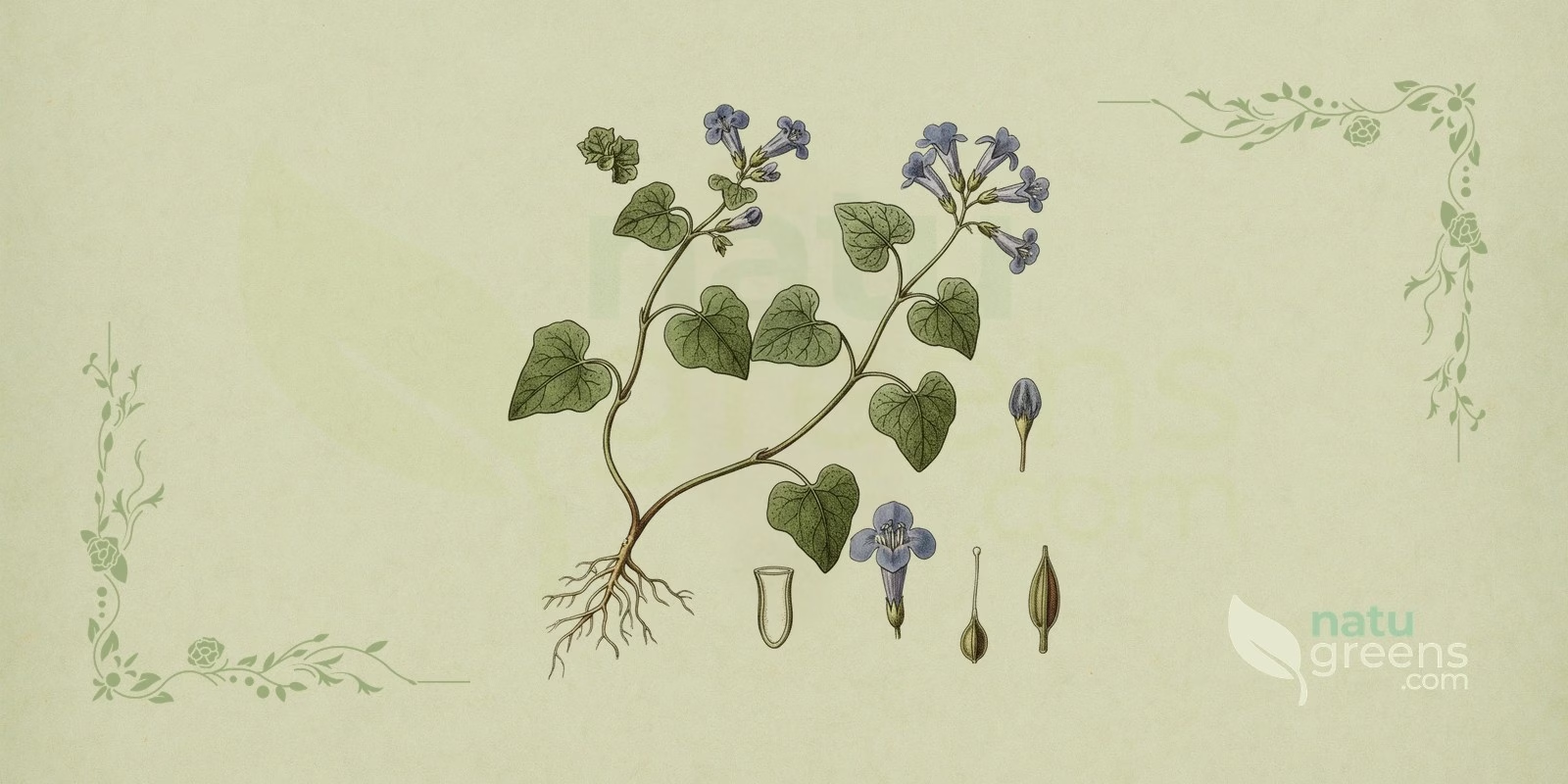
Popular and International Names of Ground-Ivy
- English: alehoof, catsfoot, creeping charlie, field balm, gill-over-the-ground, ground-ivy, run-away-robin, tunhoof.
- French: gléchome, lierre terrestre.
- German: Efeublättriger Gundermann, Erd-Efeu, Gundermann.
- Italian: edera terrestre, ellera terrestre.
- Portuguese: glecoma, hera-terrestre.
- Spanish: hiedra terrestre, hierba terrestre, yedra terrestre.
Many of these names refer to the resemblance of the plant’s rounded leaves and creeping habit to ivy, while the English names alehoof and tunhoof recall its old role in brewing beer. Some popular names found in older sources have been left off this list because they cannot be verified for this species or because they refer to other plants. One example is the Portuguese name erva-de-são-joão, best known as a name for St John’s wort (Hypericum perforatum), and leaving it out helps avoid confusion when buying or identifying the herb.
Botanical Synonyms of Glechoma hederacea
The main botanical synonyms of Glechoma hederacea L. are Nepeta glechoma Benth. and Nepeta hederacea, names that reflect the plant’s closeness to the genus Nepeta, to which catnip belongs, within the same lineage of the Lamiaceae family. These names appear in older taxonomic classifications and in part of the herbarium literature, but Glechoma hederacea L. is the currently accepted name. In East Asia, the plant used in traditional medicine is often treated as Glechoma hederacea var. longituba or as a separate species, Glechoma longituba, a divergence that comes up frequently in phytochemical studies published in China and Korea. Knowing these synonyms and varieties helps locate older and recent research on the same plant and reduces the risk of confusing species in databases, herbarium catalogs and product labels.
Botanical Family: Lamiaceae
Glechoma hederacea belongs to the Lamiaceae, the mint family, which comprises more than 7,000 species and includes many aromatic plants used in cooking, perfumery and herbal medicine, such as lavender, mint, rosemary and thyme. Plants in this group typically have square stems, opposite leaves, two-lipped flowers and tiny glands on the leaf surface that store essential oils. Ground-ivy shares these traits, which explain the faintly minty scent of its leaves when crushed. The family’s typical fruit splits into four small nutlets, and the group’s chemistry is marked by rosmarinic acid, flavonoids and terpenoids, compounds that are also present in significant amounts in ground-ivy. Within the family, the genus Glechoma is small, with only a few species distributed across Eurasia, among them Glechoma hirsuta, which has been analyzed in comparative studies alongside ground-ivy.
Parts of Ground-Ivy Used
- Flowering aerial parts, from which the essential oil is also obtained
- Flowers
- Leaves
The leaves and flowering aerial parts hold most of the phenolic compounds and essential oil, and they are the parts that appear in traditional recipes for tea, tincture and compresses. The plant blooms in spring, with small blue-violet flowers clustered in the leaf axils, and European herbal tradition usually gathers it at that time. The essential oil, obtained by distilling the aerial parts, is a concentrated product meant only for diluted external use or for inhalation, never for ingestion.
Ethnobotanical and Traditional Uses
The records below come from European folk medicine and Asian traditions and describe how the plant has been used over time, with no value as a clinical indication.
- Anxiety and nervousness
- Asthma
- Bronchitis
- Catarrh
- Constipation
- Cough
- Cystitis
- Dermatitis
- Diabetes (traditional record, not clinically proven)
- Diarrhea
- Digestive disorders
- Expectoration support
- Fever
- Flu
- Gastric hyperacidity
- Headaches
- Hemorrhoids
- Inflammation (eye, general and skin)
- Insomnia
- Intestinal cramps and flatulence
- Irritable bowel syndrome
- Kidney diseases
- Liver and bile disorders
- Respiratory congestion
- Superficial wounds
- Tinnitus
Many of these uses rest on oral tradition and old herbals, and only a few of them, such as effects on the liver, gallbladder and skin, have been explored in laboratory and animal studies. For any of these conditions, especially asthma, diabetes, kidney disease or liver disease, an assessment by a healthcare professional should come before the use of any plant, which does not replace the treatment prescribed by a doctor.
Therapeutic Properties of Ground-Ivy
The properties listed below combine terms from traditional herbal medicine with activities observed in preliminary research. In the laboratory, aqueous extracts of the plant showed antioxidant and anti-inflammatory activity, and in rodents there was a reduction in gallstone formation and in the liver injury associated with bile duct obstruction, results that have not yet been confirmed in people. For this reason, each item comes with a brief note on the level of evidence available so far.
- Analgesic (traditional record for mild pain, without clinical confirmation)
- Antiallergic (activity suggested in preliminary studies)
- Antibacterial (activity observed in laboratory tests)
- Anticatarrhal (traditional use to reduce catarrh)
- Antihistaminic (mechanism investigated in preliminary studies)
- Anti-inflammatory (effect observed in laboratory studies with aqueous extract)
- Antioxidant (ability to neutralize free radicals measured in the laboratory)
- Antiproliferative (activity observed in laboratory studies, without clinical proof)
- Antispasmodic (traditional use for cramps and digestive spasms)
- Antiviral (activity reported in laboratory studies)
- Astringent (attributed to the tannins, with a traditional record in mild diarrhea and minor injuries)
- Carminative (traditional use to help expel gas)
- Diuretic (traditional record of increased urine volume)
- Expectorant (traditional use to ease the clearing of mucus)
- Hepatoprotective (effect observed in rodent studies)
- Hypoglycemic (effect on blood glucose investigated in preliminary studies, not a substitute for treatment)
- Neuroprotective (protection of nerve cells observed in laboratory cell culture)
- Stimulant (traditional record, with no clinical studies to confirm it)
- Tonic (traditional herbal term for plants used during convalescence)
- Vulnerary (traditional term for plants applied to superficial wounds)
- Wound-healing (effect observed in an animal model of skin wounds)
Detailed Phytochemical Profile of Ground-Ivy
The chemical profile of ground-ivy is dominated by phenolic compounds, especially rosmarinic acid, together with caffeic, chlorogenic and ferulic acids and flavonoids such as apigenin, luteolin, quercetin and rutin. Among the triterpenes, oleanolic and ursolic acids have been quantified in the aerial parts, while the essential oil contains monoterpenes such as pulegone and 1,8-cineole and sesquiterpenes such as beta-elemene and germacrenes B and D.
- Apigenin
- Beta-elemene
- Caffeic acid
- Chlorogenic acid
- Cineole (1,8-cineole)
- Essential oils
- Ferulic acid
- Flavonoids
- Genistin
- Germacrene B
- Germacrene D
- Luteolin
- Mucilages
- Oleanolic acid
- Potassium
- Pulegone (monoterpene of variable content, relevant to safety)
- Quercetin
- Rosmarinic acid
- Rutin
- Saponins
- Tannins
- Terpenoids
- Ursolic acid
Composition varies considerably with collection site, cultivation and time of year, and studies comparing wild and cultivated plants from different countries found substantial differences in phenolic and essential oil content. This variation explains why the amount of pulegone is not fixed and reinforces caution with concentrated preparations, since there is no way to know in advance how much of each compound a homemade or commercial product contains.
Preparation and Administration Forms of Ground-Ivy
- Compresses
- Cream
- Essential oil, only diluted for external use or inhalation, never ingested
- Extracts (fluid and dry), preferably for external use or under professional supervision
- Poultice
- Teas (light infusions)
- Tinctures, preferably for external use
For internal use, the only form considered appropriate is a light infusion of the dried leaves or aerial parts, prepared with a small amount of plant material and taken for a short period. The amount and duration should always be guided by a healthcare professional. Tinctures and concentrated extracts are reserved for external use or professional supervision, because they also concentrate pulegone and the other monoterpenes of the essential oil. Compresses, creams and poultices are applied to intact skin or to minor superficial lesions, and the essential oil must always be diluted in a vegetable oil before any topical application, and never ingested.
Synergy with Other Medicinal Plants
Anxiety and Insomnia
In herbal tradition, ground-ivy appears alongside valerian (Valeriana officinalis) and passionflower (Passiflora incarnata) in blends traditionally used for nervousness and difficulty sleeping. The idea is that the compounds in ground-ivy add to the calming action attributed to valerian and passionflower, which have more studies of their own, although this specific combination has never been tested in clinical trials. Because all three plants can cause drowsiness, the blend should not be combined with sedative or anti-anxiety medications or alcoholic drinks without medical advice, and anyone who drives or operates machinery needs to take extra care.
Digestive Disorders
For digestive discomfort, ground-ivy is traditionally paired with peppermint (Mentha × piperita) and lemon balm (Melissa officinalis), two Lamiaceae with a long history of use in dyspepsia, flatulence and intestinal cramps. The menthol in peppermint and the phenolic compounds in lemon balm, including rosmarinic acid itself, combine with those of ground-ivy in a pleasant-tasting blend to which tradition attributes antispasmodic, carminative and anti-inflammatory action in the digestive tract. Because it involves internal use, this combination follows the same rule as the plant on its own, that is, a light infusion, for a short time and with professional guidance.
Skin Inflammation
In external applications, ground-ivy is traditionally combined with calendula (Calendula officinalis) and St John’s wort (Hypericum perforatum) in homemade compresses and ointments used on small wounds, mild burns and dermatitis. The terpenoids in ground-ivy, the triterpenes in calendula and the hypericin in St John’s wort are the compounds credited with the blend’s effect, which still lacks clinical evaluation as a combination. St John’s wort can increase the skin’s sensitivity to sunlight, so the area where the blend is applied should be kept out of the sun, and extensive, deep or infected-looking wounds need medical assessment before any homemade preparation.
Recipes and Usage Protocols of Ground-Ivy
Light Ground-Ivy Infusion for the Respiratory Tract
Traditional record: this infusion is traditionally used in European folk medicine for colds, coughs and congestion, always as a light preparation and for only a few days, because of the pulegone present in the plant.
Ingredients:
- Dried ground-ivy leaves (Glechoma hederacea) in a small amount, as advised by a healthcare professional
- 1 cup of boiling water
Method:
- Place the ground-ivy leaves in a cup.
- Pour the boiling water over the leaves.
- Cover and let steep for 5 to 10 minutes.
- Strain and drink warm.
How to Use: The amount of leaves, the number of cups per day and the duration of use should be set with a healthcare professional, and consumption should be limited to a short period. The infusion is not suitable for pregnant or breastfeeding women, children or people with liver disease, and respiratory symptoms that persist or come with high fever and shortness of breath call for medical assessment.
Ground-Ivy Tincture for Topical Use
Traditional record: the tincture is traditionally used in compresses on superficial skin inflammation and never by mouth.
Ingredients:
- 50 g of dried ground-ivy leaves
- 250 ml of 70% grain alcohol
Method:
- Place the ground-ivy leaves in a sterilized glass jar.
- Cover with the grain alcohol, making sure all the leaves are submerged.
- Seal the jar tightly and store it in a cool, dark place for 2 to 4 weeks, shaking it daily.
- After the maceration period, strain the tincture and store it in a dark glass bottle.
How to Use: Dilute 10 to 20 drops of the tincture in water, moisten a compress and apply it to the affected area up to 2 to 3 times a day, only on intact skin or on superficial inflammation. Before first use, test the dilution on a small patch of skin and stop if redness, itching or burning occurs. Because it contains alcohol, the tincture should not be applied to open wounds, mucous membranes or children’s skin, nor should it be swallowed.
The preparations above follow traditional records and do not replace professional guidance. Before any internal use, check the contraindications and interactions described in this article.
Associated Therapies
Aromatherapy
In aromatherapy, ground-ivy essential oil is associated with a sense of calm and relaxation, with recorded use in room diffusers and warm baths to ease stress and anxiety and encourage restful sleep. These effects come from aromatherapy tradition and have not been evaluated in clinical studies with this species. For topical application, including on pulse points, the oil must always be diluted in a vegetable oil, and in the bath it must first be mixed with a vegetable oil, because it does not dissolve in water. Because of its pulegone content, the essential oil must never be ingested and should be avoided by pregnant or breastfeeding women, children and people with liver disease, including through diffusion in enclosed spaces where these people spend long periods.
Western Herbal Medicine
In Western herbal medicine, ground-ivy is a versatile traditional plant, cited for digestive complaints such as dyspepsia, cramps and irritable bowel syndrome, for inflammatory conditions such as gingivitis and dermatitis, and for complaints such as anxiety, insomnia and menstrual pain. Herbals present it as infusions, tinctures, fluid extracts, capsules and topical preparations. For safety reasons linked to pulegone, however, the most prudent internal use is limited to a light infusion taken for a short time, while concentrated forms require professional supervision. Recent interest in oral health has led researchers to investigate the effect of the plant’s extracts on cells involved in bone resorption, a line of research that has not yet left the laboratory.
Homeopathy
In homeopathy, Glechoma hederacea appears in traditional materia medica as a remedy of infrequent use, prepared in high dilutions. The choice follows the principle of similars and each person’s set of symptoms, with no direct relationship to the amount of plant used in herbal medicine. The indications described vary among the reference works of the practice, which favors an individualized approach and considers the patient as a whole. As with all homeopathy, there is no efficacy demonstrated in good-quality clinical trials, and its use does not replace medical assessment, especially in children, pregnant women or when symptoms persist.
Contraindications and Side Effects of Ground-Ivy
Ground-ivy contains pulegone in variable amounts and other monoterpenes, so it should be avoided during pregnancy and breastfeeding, by people with liver disease and in children. Internal use should be limited to a light infusion taken for a short period, and the essential oil must never be ingested. Pulegone is the same compound linked to the liver toxicity of pennyroyal oil, and the amount present in the plant varies with origin and cultivation, which makes exposure from concentrated preparations hard to predict. Outside these groups, the plant is usually described as well tolerated as a light infusion, but human safety studies are lacking. In practice, a healthcare professional should be consulted before use, especially by anyone with a chronic disease or who takes long-term medication.
Contraindications
- Allergy to plants in the Lamiaceae family: people with a known sensitivity to plants such as mint, oregano or thyme may have allergic reactions to ground-ivy.
- Children: use should be avoided in children, whether as an infusion, tincture or essential oil, because of the pulegone content.
- Confusion with common ivy: ground-ivy should not be confused with Hedera helix, common ivy, a woody climber in the Araliaceae family with lobed, leathery leaves that is toxic when ingested. Despite the similar common name, the two plants are not related, and swapping one for the other in homemade teas can cause poisoning.
- Liver disease: people with liver disease should avoid the plant, since pulegone is toxic to the liver at high doses.
- Pregnancy and breastfeeding: ground-ivy should be avoided during pregnancy and breastfeeding, because of its pulegone content and the lack of safety studies in these stages.
- Surgery: it is recommended to stop using ground-ivy at least two weeks before any surgery, because of the potential anticoagulant effect observed in the laboratory.
- Toxicity to horses: the plant is toxic to horses and can poison these animals when eaten in quantity, so it should be controlled in pastures and areas where they graze.
Drug Interactions
- Anticoagulants and antiplatelet drugs: ground-ivy showed an anticoagulant effect in laboratory studies and may potentiate drugs such as warfarin, increasing the risk of bleeding.
- Hypoglycemic drugs: since tradition and preliminary studies attribute an effect on blood glucose to the plant, anyone using insulin or other diabetes medications should talk to their doctor before use.
- Sedatives and anti-anxiety drugs: the plant can cause drowsiness and add to the effect of sedatives, anti-anxiety drugs, sleep aids and alcoholic drinks, especially when combined with valerian and passionflower.
Side Effects
- Allergic reactions: allergic reactions can occur, especially in sensitive people, with skin rashes, hives, swelling or, in rare cases, anaphylaxis.
- Drowsiness: in large amounts, ground-ivy can cause drowsiness, which becomes dangerous when driving or operating machinery.
- Nausea and vomiting: rarely, excessive consumption can lead to nausea and vomiting.
Historical Notes and Interesting Facts
The genus name comes from the Greek glechon, an ancient term for pennyroyal, a species of mint, and the epithet hederacea means ivy-like, a reference to the plant’s rounded leaves and creeping habit. By coincidence, pulegone, the main reason for caution when using ground-ivy, also takes its name from pennyroyal, Mentha pulegium, a plant whose essential oil has this compound as its main constituent.
Before hops became widespread, ground-ivy was used in England to clarify and flavor beer, a practice attributed to the Saxons and still remembered today in the English names alehoof and tunhoof. European herbals of the 16th and 17th centuries, such as that of the English herbalist John Gerard, recommended the plant for ringing in the ears. Folk tradition also used it for eye inflammation, uses that survive in the species’ list of ethnobotanical records.
European settlers brought ground-ivy to North America as a medicinal and aromatic herb, and there it spread to the point of being considered one of the most persistent lawn weeds, earning the nickname creeping charlie. Botanically, the species is gynodioecious, meaning that a single population contains plants with hermaphrodite flowers alongside plants bearing only female flowers with sterile stamens, a trait studied in plant reproductive biology.
More recently, research groups in Croatia have tested ground-ivy extracts encapsulated in candies and chocolates, interested in the plant’s polyphenol content as a food ingredient. This line of research is still experimental and does not justify unrestricted consumption of the herb.
Frequently Asked Questions about Ground-Ivy
What Is Ground-Ivy Tea Used For?
In folk medicine, ground-ivy tea is traditionally used for coughs, colds and congestion, for digestive complaints such as cramps, flatulence and gastritis, and as an aid to relaxation. These uses come from tradition and from preliminary laboratory and animal studies, with no confirmation in clinical trials in people. Because of pulegone, the tea should always be a light infusion, taken for a short time and with professional guidance.
Does Ground-Ivy Have Contraindications?
Yes, and because it contains pulegone in variable amounts, the plant should be avoided during pregnancy and breastfeeding, by children and by people with liver disease, as well as by anyone allergic to plants in the Lamiaceae family. People taking anticoagulants, hypoglycemic drugs or sedatives need to talk to their doctor first, and use should be stopped at least two weeks before surgery. The essential oil must never be ingested.
How Do You Make Ground-Ivy Tea?
The tea is a simple infusion in which the dried leaves are placed in a cup, covered with boiling water and left to steep, covered, for 5 to 10 minutes before straining. The amount of leaves, the number of cups and the duration of use should be set with a healthcare professional, always keeping the preparation light and the period short. To soften the flavor, you can add honey or lemon.
Are Ground-Ivy and Common Ivy the Same Plant?
No. Ground-ivy (Glechoma hederacea) is a creeping, aromatic herb in the Lamiaceae family, while common ivy (Hedera helix) is a woody climber in the Araliaceae family that is toxic when ingested. The resemblance lies only in the name and the leaf shape, so correctly identifying the plant before any preparation is essential.
What Are the Common Names of Ground-Ivy?
In English, the plant is mainly known as ground-ivy, along with names such as alehoof, creeping charlie and gill-over-the-ground. In other languages, it goes by names such as Gundermann in German, hiedra terrestre in Spanish, lierre terrestre in French, edera terrestre in Italian and hera-terrestre in Portuguese. The Portuguese name erva-de-são-joão, sometimes associated with it, belongs to St John’s wort and should not be used for this species, precisely to avoid confusion when buying and preparing the herb.
Is Ground-Ivy Toxic?
For people, ground-ivy as a light infusion is usually described as well tolerated, but pulegone makes the plant unsuitable for pregnant or breastfeeding women, children and people with liver disease, and the essential oil must never be ingested. Excessive consumption can cause drowsiness, nausea and vomiting, and allergic reactions are possible in sensitive people. The plant is toxic to horses, while reports of toxicity in other animals are conflicting.
Notice: this content is for informational purposes and does not replace professional medical advice. Consult a physician or herbal practitioner before using medicinal plants, especially during pregnancy, breastfeeding, or alongside medication.
References and Scientific Studies
- PMC2026 Krasocka W, et al. Glechoma hederacea: A Comprehensive Insight into the Botanical Specification, Traditional Uses, Phytochemistry, Nutritional Value, Pharmacology, and Non-medicinal Applications. Planta Med. 2026.
- PMC2022 Sile I, et al. Wild-Grown and Cultivated Glechoma hederacea L.: Chemical Composition and Potential for Cultivation in Organic Farming Conditions. Plants (Basel). 2022.
- PMC2023 Sławińska N, et al. New Aspect of Composition and Biological Properties of Glechoma hederacea L. Herb: Detailed Phytochemical Analysis and Evaluation of Antioxidant, Anticoagulant Activity and Toxicity in Selected Human Cells and Plasma In Vitro. Nutrients. 2023.
- PMC2023 Šeremet D, et al. Studying the Functional Potential of Ground Ivy (Glechoma hederacea L.) Extract Using an In Vitro Methodology. Int J Mol Sci. 2023.