Lycopus virginicus L. / Sweet Bugleweed, known in Brazil by names such as erva-de-bugre and hortelã-d’água, is a perennial herbaceous plant of the Lamiaceae family, described by Carl Linnaeus in 1753. Native to North America, this species is found in damp, shady habitats such as swamps and riverbanks. Sweet bugleweed has a long history of use in the traditional medicine of Native Americans and early European settlers, valued for its sedative and astringent properties.
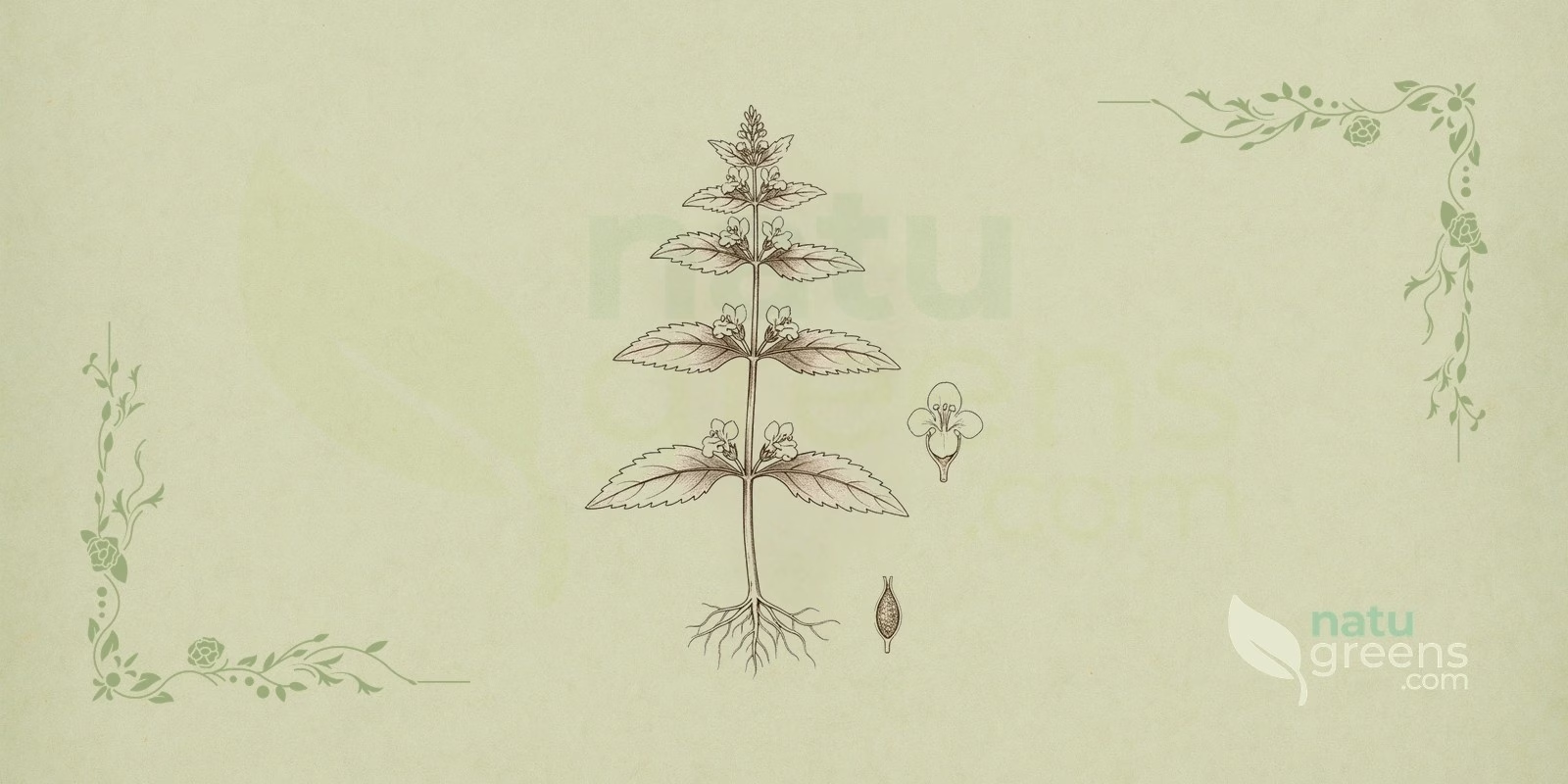
In North American herbal tradition, sweet bugleweed is recognized for its ability to soothe coughs and ease heart palpitations. Its phytochemical composition, rich in phenolic acids such as rosmarinic, lithospermic, and chlorogenic acid, gives it properties that have been investigated by modern science, particularly regarding its potential action on thyroid function.
Popular and International Names of Sweet Bugleweed
- English: american water hoarhound, carpenter’s herb, sweet bugleweed, virginia water horehound, water bugle.
- Spanish: licopo de virginia, menta de lobo.
- Portuguese: erva-de-bugre, erva-do-bicho, hortelã-d’água, licopódio-da-virgínia, marroio-d’água.
- French: lycope de virginie, marrube de virginie.
- Italian: licopo della virginia.
- German: Virginischer Wolfsfuß.
Botanical Synonyms of Lycopus virginicus
Lycopus membranaceus Bickn.
Botanical Family: Lamiaceae
The Lamiaceae family, also known as the mint family, is a group of flowering plants comprising about 236 genera and more than 7,000 species, characterized by the production of essential oils responsible for their aromas and much of their medicinal properties. Among the best-known members of this family are culinary and medicinal herbs such as mint, rosemary, thyme, and sage.
Parts of Sweet Bugleweed Used
- Aerial parts (leaves and flowers)
Ethnobotanical and Traditional Uses
- Anxiety and nervousness
- Asthma and other respiratory diseases
- Cough
- Fever
- Heart disease, including palpitations
- Hyperthyroidism
- Insomnia
Therapeutic Properties of Sweet Bugleweed
- Antitussive (traditional use to relieve coughing)
- Astringent (contracts tissues)
- Cardiotonic (tones the heart)
- Febrifuge (studied effect in reducing fever)
- Sedative (calms the nervous system)
Detailed Phytochemical Profile of Sweet Bugleweed
- 1,8-Cineole
- Alpha-pinene
- Beta-bourbonene
- Beta-pinene
- Caffeic acid
- Camphene
- Caryophyllene
- Chlorogenic acid
- Cis-isopulegone
- Delta-cadinene
- Ellagic acid
- Gallic acid
- Germacrene D
- Limonene
- Linalool
- Lithospermic acid
- Lycopene
- Rosmarinic acid
Preparation and Administration Forms of Sweet Bugleweed
- Infusion
- Tincture
Synergy with Other Medicinal Plants
Hyperthyroidism
The combination of sweet bugleweed with motherwort (Leonurus cardiaca) and lemon balm (Melissa officinalis) is traditionally used to enhance calming effects and gently support balanced thyroid activity, easing symptoms associated with mild hyperthyroidism, such as palpitations, anxiety, and insomnia.
Recipes and Usage Protocols of Sweet Bugleweed
Infusion for Cough
Ingredients: 1 to 2 teaspoons of dried aerial parts of sweet bugleweed, 250 ml of boiling water.
Preparation: Place the herb in a cup and add the boiling water. Cover and let steep for 10 to 15 minutes. Strain and drink up to 3 times a day.
Tincture for Anxiety
Ingredients: 50 g of dried aerial parts of sweet bugleweed, 250 ml of 45% alcohol.
Preparation: Place the herb in a glass jar and cover with the alcohol. Seal tightly and let macerate for 2 to 4 weeks, shaking daily. Strain and store in a dark glass bottle. Take 1 to 2 ml (20 to 40 drops) diluted in water, up to 3 times a day.
The preparations above follow traditional records and do not replace professional guidance. Before any internal use, check the contraindications and interactions described in this article.
Associated Therapies
Clinical Phytotherapy
In clinical phytotherapy, sweet bugleweed is traditionally used in the management of mild hyperthyroidism symptoms, easing associated manifestations such as tachycardia and anxiety, an effect attributed mainly to phenolic compounds present in the plant, such as rosmarinic acid.
Homeopathy
In homeopathy, the remedy prepared from the fresh plant of Lycopus virginicus, following dilution and dynamization, is traditionally indicated to relieve symptoms of hyperthyroidism, such as heart palpitations and anxiety.
Contraindications and Side Effects of Sweet Bugleweed
Sweet bugleweed is contraindicated during pregnancy and breastfeeding, since the plant has a mild effect on prolactin and the hormonal axis, which calls for extra caution during these periods. Its use is explicitly contraindicated in cases of hypothyroidism and for people concurrently using levothyroxine or any other thyroid hormone, because the plant reduces the release of thyroid hormones and the glandular response to TSH, which could worsen the condition or interfere with hormone replacement treatment. For the same reason, the species should be avoided before undergoing tests involving radioactive iodine, since it may alter the results of these tests. Prolonged use may also increase the size of the thyroid gland; therefore, sweet bugleweed should not be used for any thyroid condition without medical guidance, and it is always advisable to consult a healthcare professional before starting use of this or any other medicinal plant.
Historical Notes and Interesting Facts
Cherokee Native Americans chewed sweet bugleweed roots and gave them to young children, in the belief that the practice would bestow eloquence, and also used the plant in ceremonial practices observed by various tribes.
Frequently Asked Questions about Sweet Bugleweed Tea
Can Sweet Bugleweed Tea Be Consumed Daily?
Daily consumption of sweet bugleweed tea is not recommended without professional supervision, since the plant reduces the release of thyroid hormones and the glandular response to TSH. This effect makes continuous use unsuitable for people with hypothyroidism, those undergoing levothyroxine replacement therapy, or anyone about to undergo tests involving radioactive iodine. For this reason, it is best to limit consumption to short periods and always under the guidance of a healthcare professional.
Does Sweet Bugleweed Help Treat Cough?
Traditionally, sweet bugleweed is used as a remedy to relieve cough, an effect attributed to its antitussive and astringent properties, long recognized in North American herbal tradition. Infusion of the dried aerial parts is the most common way to prepare it for this purpose. Even so, this is a use based mainly on folk tradition, without robust clinical studies confirming its effectiveness.
What Are the Main Benefits of Sweet Bugleweed?
The main traditional uses of sweet bugleweed involve relieving symptoms associated with mild hyperthyroidism, such as palpitations and anxiety, along with support for easing cough, thanks to its antitussive properties. The plant is also valued, in herbal tradition, for its sedative and astringent effect. These uses are supported mainly by traditional medicine and homeopathy, and they do not replace medical follow-up.
Who Should Not Use Sweet Bugleweed?
Sweet bugleweed is contraindicated for pregnant and breastfeeding women, for people with hypothyroidism, and for those using levothyroxine or any other thyroid hormone, since the plant may reduce thyroid hormone release and interfere with treatment. It should also be avoided before tests involving radioactive iodine, as it may alter the results. For any thyroid condition, use should only occur under medical guidance.
How Is Sweet Bugleweed Infusion Prepared?
The traditional infusion is made with 1 to 2 teaspoons of the plant’s dried aerial parts in 250 ml of boiling water, left to steep for 10 to 15 minutes before straining. The drink can be consumed up to three times a day, according to the traditional recipe described in this article. Because of its potential effect on the thyroid, prolonged consumption should be avoided without professional supervision.
What Is the Difference between Using Sweet Bugleweed in Phytotherapy and in Homeopathy?
In clinical phytotherapy, the plant’s extract or infusion made from the dried herb is used in measurable amounts for the traditional management of mild hyperthyroidism symptoms, such as tachycardia and anxiety. In homeopathy, on the other hand, the remedy is prepared from the fresh plant through dilution and dynamization, and it is indicated according to the principles specific to that practice. Both approaches start from the same plant but follow very different logics of preparation and use.
Notice: this content is for informational purposes and does not replace professional medical advice. Consult a physician or herbal practitioner before using medicinal plants, especially during pregnancy, breastfeeding, or alongside medication.