Sandalwood, scientifically known as Santalum album L., is a small tropical tree that has been prized for thousands of years for the scent of its wood and for the place it holds in the traditional medicine systems of Asia. Considered native to regions such as Indonesia, the Philippines and Western Australia, it is thought to have been introduced and naturalized in southern India around 1300 BC, according to archaeobotanical hypotheses, and there it became a cultural and religious element of great importance. The wood and the essential oil extracted from it appear in ritual pastes, incense, cosmetics and folk medicine preparations. Scientific research, for its part, investigates its composition, which is rich in sesquiterpenes, although most of the effects described come from traditional use and laboratory studies.
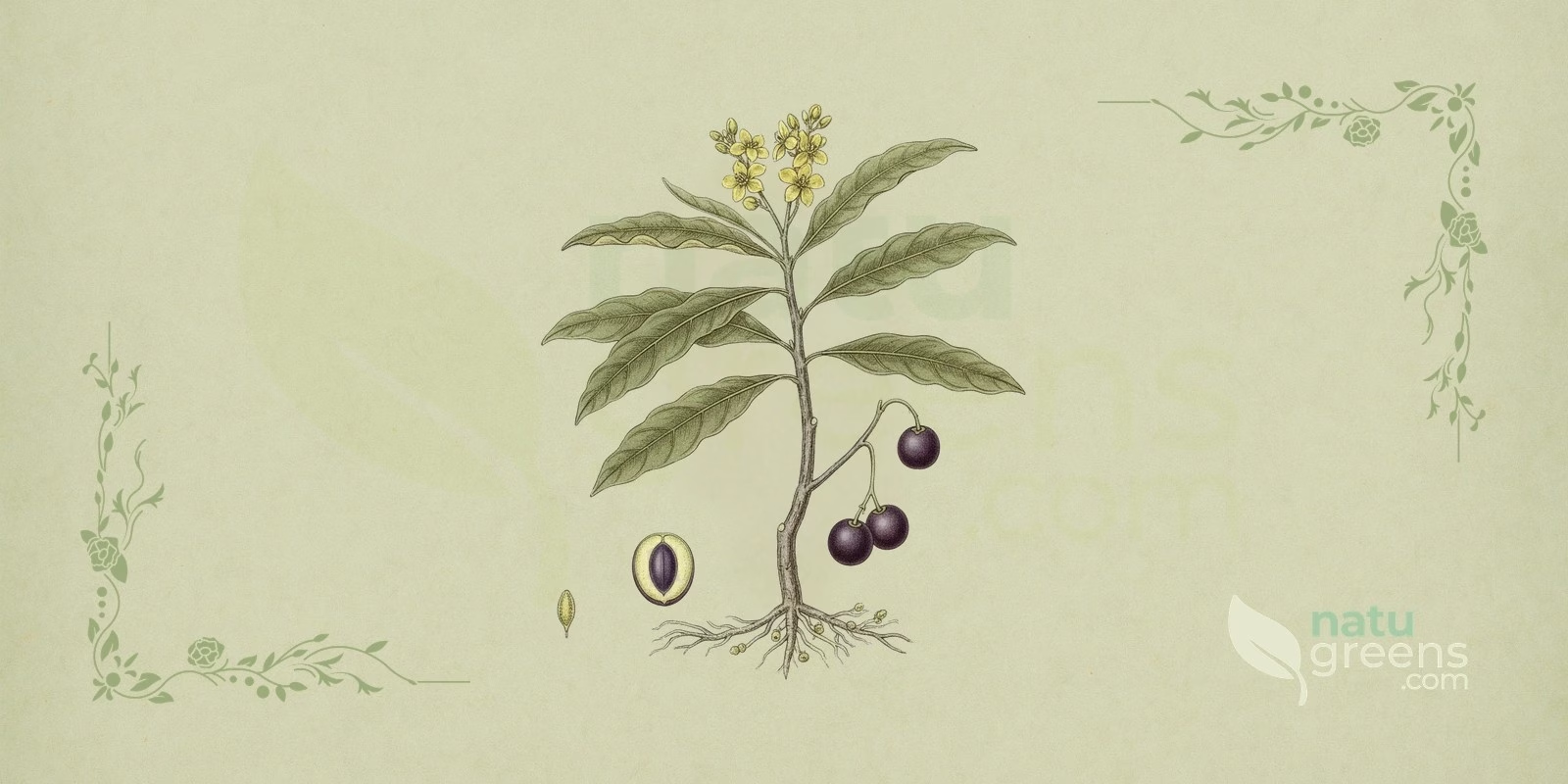
Santalum album is an evergreen tree that reaches 4 to 9 meters in height and adapts to different growth habits. It maintains a hemiparasitic relationship with the roots of other tree species, from which it draws water and nutrients without causing significant harm to its hosts. Its life cycle is long, and fruits with viable seeds only appear after the plant has been developing for a few years. The heartwood, the most valuable part of the wood, begins to form its characteristic fragrance at around 10 years of age, but harvesting is usually considered ideal only after 20 years of growth. This long interval helps explain why the species became such a sought-after natural resource and now depends on controlled management.
Popular and International Names of Sandalwood
The popular names of sandalwood vary little from one language to another, since almost all of them derive from the same root, and they often add the adjective white or a reference to India to set the species apart from other commercial sandalwoods, such as the Australian one.
- English: East Indian sandalwood, Indian sandalwood, sandalwood, white sandalwood.
- French: bois de santal, santal.
- German: Sandelholz, Weißes Sandelholz.
- Italian: sandalo, sandalo bianco.
- Portuguese: sândalo, sândalo-branco, sândalo-indiano.
- Spanish: sándalo, sándalo blanco, sándalo de la India.
Botanical Synonyms of Santalum album
The botanical synonyms of Santalum album L. reflect the taxonomic history of the species and the different names it has received over time. Knowing them helps identify the plant accurately in scientific studies, in herbaria and in older botanical literature, and keeps the same tree from being treated as if it were several distinct species.
- Santalum myrtifolium
- Santalum ovatum
- Sirium myrtifolium
Botanical Family: Santalaceae
Santalum album belongs to the botanical family Santalaceae, which mainly brings together hemiparasitic plants able to obtain water and nutrients from host plants through specialized structures called haustoria. The family includes several species of ecological and economic importance, many of them valued for their wood, essential oils or fruits. Understanding this kinship helps explain both the biology of sandalwood and the demands of its cultivation, since the tree depends on hosts to grow well.
Parts of Sandalwood Used
The parts of sandalwood most valued for medicinal and aromatic use are the heartwood and the essential oil obtained from it, both of which concentrate the bioactive compounds studied in the species. The sapwood, the outer layer of the wood, may have other uses, but it lacks the characteristic fragrance of the heartwood and therefore has little value in perfumery and traditional preparations.
- Essential oil (distilled from the heartwood)
- Heartwood (used in pieces or ground into powder)
Ethnobotanical and Traditional Uses
Sandalwood has a long history of ethnobotanical and traditional uses in many cultures, especially in Asia, where it is valued at once as a fragrance, a folk remedy and a spiritual element. Its scent is considered sacred in Hinduism, which uses it in ceremonies and in the making of ritual pastes. Traditional medicine, in turn, records its use for a variety of health complaints, although most of these uses have not been confirmed by clinical studies.
- Acne and skin irritation, in traditional external application.
- Anxiety, nervousness and insomnia, as a calming agent in folk tradition.
- Coughs, colds and bronchitis, mainly through inhalation.
- Fever and throat inflammation, according to folk records.
- Headaches, with aromatic or topical use.
- Liver and gallbladder problems, in folk medicine records.
- Religious and spiritual rituals.
- Urinary complaints and vaginitis, in a traditional record that does not replace medical evaluation.
Therapeutic Properties of Sandalwood
The properties attributed to sandalwood are mainly linked to the santalols and other sesquiterpenes in the essential oil, and they combine accounts from tradition with results from laboratory studies. So far, few of these actions have been evaluated in clinical trials in humans, so the list below describes potential effects under investigation and uses established by tradition, without replacing the guidance of a health professional.
- Analgesic (pain relief described in the traditional record)
- Anti-inflammatory (reduction of inflammatory processes observed in laboratory studies)
- Antimicrobial (activity against bacteria and fungi observed in vitro, not clinically proven)
- Antioxidant (cell protection against free radicals observed in the laboratory)
- Antiseptic (traditional use in cleansing the skin and small superficial wounds)
- Astringent (tightens tissues and reduces secretions, according to traditional use)
- Calming (relaxing effect associated with the aroma in tradition and in preliminary studies)
- Cardiotonic (attributed by traditional medicine, not clinically proven)
- Diuretic (increased urine production according to the traditional record)
- Lymphatic and venous decongestant (traditional record of relief from swelling, not clinically proven)
- Sedative (inducing sleep and reducing nervous excitement in the traditional record)
Detailed Phytochemical Profile of Sandalwood
The phytochemical profile of Santalum album is dominated by sesquiterpenes, which are mainly responsible for the aroma of the wood and for most of the biological activities investigated. Research has been identifying and characterizing these compounds, including the genes involved in their formation, and reveals a complex composition that varies with the age of the tree and the origin of the material, a factor that weighs directly on the quality of the oil sold on the market.
- Alpha-santalol (main sesquiterpene, responsible for the fragrance and the focus of most studies on biological activity)
- Beta-santalol (another important sesquiterpene that contributes to the aroma and to the biological effects under investigation)
- Farnesol (sesquiterpene alcohol with antimicrobial and anti-inflammatory activity described in the laboratory)
- Linalool (monoterpene alcohol associated with a calming effect and antimicrobial activity in preliminary studies)
- Santalenes (sesquiterpene hydrocarbons that accompany the santalols in the oil)
Preparation and Administration Forms of Sandalwood
Sandalwood can be prepared in several ways, and the choice depends on the intended purpose and the part of the plant used. The most common preparations involve the essential oil, which is applied to the skin always diluted in a vegetable oil or used in diffusers, and the powdered wood, which goes into pastes, masks and incense. Some traditions also prepare infusions with the wood powder, but this internal use lacks safety data and standardization. For this reason, no home dosage can be recommended, and any consumption should be discussed with a health professional first.
Always choose oil from cultivated, certified sources, since the species is threatened in the wild and the market records frequent adulteration. It is also wise to avoid keeping the skin exposed to high concentrations for long periods, as prolonged and excessive use increases the risk of sensitization.
- Essential oil (extracted from the heartwood by steam distillation, used in aromatherapy and, always diluted, in topical applications)
- Incense (wood or powder burned in rituals and meditation practices)
- Wood powder (used in pastes and masks and, in some traditions, in infusions whose consumption requires professional guidance)
Synergy with Other Medicinal Plants
In herbal and aromatherapy tradition, sandalwood is often combined with plants that have complementary properties, and the most frequently cited pairings involve calming scents and preparations for external use. These combinations mainly reflect the traditional record, since studies evaluating the blends themselves are lacking, and they should follow the same precautions that apply to each plant used on its own.
Sandalwood and Lavender for Relaxation
Combining sandalwood essential oil with lavender oil (Lavandula angustifolia) is a traditional way to promote relaxation and ease the feeling of stress. Both are reputed to be calming, and aromatherapy associates the pair with a more pronounced anxiolytic effect. The blend can be used in room diffusers or, always diluted in a vegetable oil, in massages meant to create a tranquil atmosphere.
Sandalwood and Chamomile for Digestive Discomfort
For digestive discomfort and mild inflammation, tradition records the pairing of sandalwood with chamomile (Matricaria chamomilla), a plant known for its digestive and anti-inflammatory use that would complement the actions attributed to sandalwood. Some traditions prepare infusions of sandalwood powder together with chamomile. Since internal use of sandalwood lacks safety data, however, the most prudent option is a warm compress applied to the abdomen, in line with the traditional record of topical use for gastrointestinal discomfort.
Recipes and Usage Protocols of Sandalwood
Sandalwood, mainly in the form of essential oil, appears in a number of traditional external applications, and all of them call for respecting the dilutions and precautions described in each preparation. External use is the most common, oral ingestion of the oil is not recommended, and none of the recipes below replaces the diagnosis or care prescribed by a health professional.
Traditional Sitz Bath for Urinary Discomfort
Ingredients: 10 drops of sandalwood essential oil, 2 liters of warm water and a little vegetable oil to disperse the essential oil.
Preparation: Mix the drops of essential oil into the vegetable oil and only then add the blend to the warm water in a basin, since pure essential oil does not dissolve in water and can irritate the mucous membranes. Sit in the water for about 20 minutes and repeat for only a few days, stopping at the first sign of burning or itching. The preparation is traditionally used as a complementary aid for urinary discomfort and vaginitis. A urinary tract infection, however, requires medical evaluation and proper care, and the bath should not delay that consultation.
Traditional Inhalation for Respiratory Relief
Ingredients: 10 drops of sandalwood essential oil, 1 liter of boiling water.
Preparation: Pour the hot water into a sturdy basin, out of the reach of children, and add the essential oil, starting with fewer drops if you are sensitive. Cover your head with a towel, keep your eyes closed and breathe in the steam for up to 10 minutes, once a day. The protocol is traditionally used to relieve the symptoms of colds, coughs and bronchitis and to make breathing easier, but high fever, shortness of breath or a persistent cough call for medical evaluation.
Aromatherapy for Mild Anxiety and Relaxation
Ingredients: 2 to 3 drops of sandalwood essential oil, a room diffuser or a cup of boiling water.
Preparation: Add the drops of essential oil to the diffuser with water, following the device’s instructions, or to a cup of boiling water placed in a safe spot. The aroma released is traditionally used to promote relaxation and ease anxiety and emotional tension. The preparation is often chosen to create a calm atmosphere before bedtime or during meditation, always in a well-ventilated room.
Traditional Topical Application for Skin Problems
Ingredients: 3 drops of sandalwood essential oil, 180 ml of water or 10 ml of carrier oil (almond, coconut).
Preparation: Mix the essential oil into the carrier oil, the preferable option because the oil disperses better, or into the water, shaking well before each use. First do a patch test on a small area of skin and, if there is no reaction by the next day, apply the mixture to the affected area with a cotton ball or a gentle massage, up to 3 times a day. The preparation is traditionally used for acne and mild skin irritation, drawing on the antiseptic and anti-inflammatory properties attributed to sandalwood. Infected wounds or lesions that get worse, on the other hand, need medical evaluation.
The preparations above follow traditional records and do not replace professional guidance. Before any internal use, check the contraindications and interactions described in this article.
Associated Therapies
Sandalwood can be integrated into various complementary therapies that seek physical, emotional and spiritual well-being, always as support and never as a substitute for regular health care. The versatility of its scent and wood explains its presence in approaches as different as Western aromatherapy, Indian Ayurveda and the meditation practices of the East.
Aromatherapy
In aromatherapy, sandalwood essential oil is among the most highly valued, and its woody, sweet and exotic scent is traditionally associated with states of calm, meditation and deep relaxation. Aromatherapists use it to ease anxiety, stress and insomnia and to support mental clarity, diffusing it in the room, inhaling it directly or applying it, always diluted, to the pulse points and temples.
Ayurveda
In Ayurvedic medicine, sandalwood is a sacred wood and an essential component of many formulations, known for its cooling properties and used to balance the Pitta and Vata doshas. It goes into skin pastes intended to reduce inflammation and irritation, into massage oils for muscle and joint pain and, internally, into specific preparations for urinary and digestive problems, a use that should be limited to the guidance of a qualified professional. Sandalwood also takes part in rituals and spiritual practices of purification and meditation.
Meditation and Spiritual Practices
Thanks to its calming and uplifting scent, sandalwood is widely used in meditation, yoga and spiritual rituals in many cultures, especially in the East, where incense, oils and pastes made from the wood are part of everyday religious life. In tradition, it is believed to help focus the mind, deepen meditation and promote inner peace and spiritual connection. These beliefs belong to the cultural sphere and are not supported by clinical studies.
Contraindications and Side Effects of Sandalwood
Although sandalwood is widely used and considered safe for external use in most cases, improper use or use by sensitive people can cause adverse reactions, and some situations call for extra caution. Before starting any use for health purposes, especially if you have a specific condition or are undergoing treatment, consult a health professional.
General Contraindications
Internal use of the essential oil is not recommended, given historical reports of urinary irritation and kidney damage with prolonged use. For this reason, people with pre-existing kidney problems should avoid sandalwood in any form of consumption, as it may worsen their condition. The guidance is to avoid it during pregnancy and breastfeeding, since there are no studies on the plant’s safety at these stages. Young children should not use it either, not even by inhalation or skin application, without professional guidance.
Common Side Effects
Topical use should always be diluted, and in this form side effects are usually mild, such as skin irritation, redness or allergic reactions in sensitive people, while contact dermatitis is rare. A patch test on a small area of skin is recommended before widespread application, bearing in mind that prolonged and excessive use increases the risk of sensitization.
Drug Interactions
There is no extensive information on significant drug interactions with sandalwood, but since tradition attributes a sedative effect to it, there may be an additive effect when the aroma or other preparations are used together with sedative or anti-anxiety medications. Tell your doctor about all the medications and supplements you take, including essential oils, before combining them with any treatment.
Sourcing, Conservation and Adulteration
Santalum album is classified as Vulnerable by the IUCN, and in India the harvesting and export of the wood are controlled. For this reason, only oil from cultivated, certified sources, coming from plantations in India and Australia, should be used, never wood or oil of wild origin, and proof of that origin should be required with any purchase.
Adulteration is also common, and oil sold as Indian sandalwood may be mixed with or replaced by Amyris balsamifera (a species from another family sometimes marketed as sandalwood), Osyris spp., Australian sandalwood (Santalum spicatum) or synthetic compounds. Labels that state the binomial Santalum album, the plantation of origin and a certificate of analysis for the oil help reduce this risk.
Historical Notes and Interesting Facts
Sandalwood is a plant steeped in history and mysticism, whose importance goes beyond medicinal use and reaches into cultural, religious and economic aspects that span centuries. The facts below help explain why this slow-growing tree became so valuable and, at the same time, so threatened.
Sacred Wood
In many Eastern cultures, especially in India, sandalwood is considered a sacred wood, used in building temples, in carving statues of deities and in religious rituals, in which it symbolizes purity and spirituality. Burning it in censers is a common practice to perfume and purify the space and to accompany meditation.
Longevity and Slow Growth
Santalum album is a remarkably slow-growing tree that can live for more than 100 years, and the fragrance that makes its wood so valuable only develops fully after about 10 to 20 years. This longevity, combined with the long time needed for the heartwood to form its aromatic qualities, explains the high value of the wood and its scarcity on the market.
A Hemiparasitic Tree
One of the most curious features of sandalwood is its hemiparasitic behavior, because even though it photosynthesizes, the tree connects to the roots of other plants to obtain water and nutrients without significantly harming them. This strategy allows sandalwood to thrive in varied environments, drawing on its hosts’ resources in a balanced way. That is why anyone who grows it must always plant it alongside other species.
Controlled Harvesting and Commercial Plantations
Centuries of demand for the wood and oil help explain why the species is now classified as Vulnerable by the IUCN and why India began to control the harvesting and export of sandalwood. The oil recommended today comes from cultivated, certified plantations in India and Australia, where the tree grows alongside its hosts and is harvested only after decades. This model reduces pressure on wild populations.
Frequently Asked Questions about Sandalwood
Can Sandalwood Tea Be Consumed Safely?
Internal consumption of sandalwood, including as a tea made from the wood powder, should be approached with caution, because safety data are lacking and the preparations are not standardized. Although some traditions use it, modern recommendations focus on external use of the essential oil, and ingesting large amounts can be harmful, especially to the kidneys. Pregnant and breastfeeding women, children and people with kidney disease should avoid the tea. For everyone else, the recommendation is to consult a health professional before drinking it.
What Benefits Are Attributed to Sandalwood Tea?
In tradition, sandalwood tea is associated with calming, diuretic and anti-inflammatory effects and appears in records of use for urinary complaints, mild digestive discomfort and relaxation. The scientific evidence for the tea, however, is very limited compared with that for the essential oil, and these uses have not been confirmed in clinical studies in humans.
How Does Tradition Prepare Sandalwood Tea?
In the traditions that use it, a small portion of sandalwood powder is steeped in hot water and then strained before drinking. Since there is no safely established home dose and commercial powder may be adulterated, the amount, frequency and duration of use should be set with a health professional, never on your own, and consumption should not be prolonged.
Can I Take Sandalwood Essential Oil Internally?
No, internal use of the essential oil is not recommended, given historical reports of urinary irritation and kidney damage with prolonged use. The oil should be limited to aromatherapy and skin application, always diluted. In case of accidental ingestion, especially by children, seek medical care or contact a poison control center.
How Can I Use Sandalwood Oil Safely on the Skin?
Sandalwood essential oil should always be diluted in a carrier oil, such as almond or coconut oil, and tested first on a small area of skin. Reactions such as redness and itching are possible in sensitive people, and contact dermatitis, although rare, warrants stopping use at the first sign of irritation. Avoid applying the concentrated oil to mucous membranes and open wounds, as well as to the skin of young children.
How Do I Choose Responsibly Sourced Sandalwood Oil?
Because Santalum album is classified as Vulnerable by the IUCN and its harvesting and export are controlled in India, the best choice is oil from cultivated, certified sources only, from plantations in India or Australia, and never wood or oil of wild origin. Check that the label shows the correct binomial and the plantation of origin, as adulteration with Amyris balsamifera, Osyris spp., Santalum spicatum and synthetics is common.
Notice: this content is for informational purposes and does not replace professional medical advice. Consult a physician or herbal practitioner before using medicinal plants, especially during pregnancy, breastfeeding, or alongside medication.
References and Scientific Studies
- PMC2008 Burdock GA, et al. Safety assessment of sandalwood oil (Santalum album L.). Food Chem Toxicol. 2008.
- PMC2027 Cebollada P, et al. Antibacterial and anti-inflammatory properties of Santalum spicatum (R.Br.) A.DC. and Santalum album L. essential oils: activity against clinical isolates, modulation of ROS production in keratinocytes, and inhibition of eicosanoid pathway enzymes. J Ethnopharmacol. 2027.
- PMC2019 Fatima T, et al. Assessment of morphological and genetic variability through genic microsatellite markers for essential oil in Sandalwood (Santalum album L.). 3 Biotech. 2019.
- PMC2025 Rajarajan K, et al. Genetic and genomic resources of Santalum album: past achievements and future prospects. Genetica. 2025.