Quick summary
Medicago sativa L. / Alfalfa, known in Brazil as alfafa and in much of the English-speaking world as lucerne, is a perennial herbaceous plant of the Fabaceae family, described by Carl Linnaeus and grown all over the world as a forage crop of great importance, although it also has a long history of medicinal use that…
Main caution: Alfalfa is usually well tolerated when eaten in food amounts, but there are important contraindications. People with a known allergy to plants of the Fabaceae family (legumes), such as clovers or peas, should avoid it…
Medicago sativa L. / Alfalfa, known in Brazil as alfafa and in much of the English-speaking world as lucerne, is a perennial herbaceous plant of the Fabaceae family, described by Carl Linnaeus and grown all over the world as a forage crop of great importance, although it also has a long history of medicinal use that goes back to ancient civilizations. Native to warmer temperate regions such as the Mediterranean and Western Asia, alfalfa is valued for its nutritional profile and for the traditional uses it has accumulated, which explains its presence in both animal feed and the human diet.
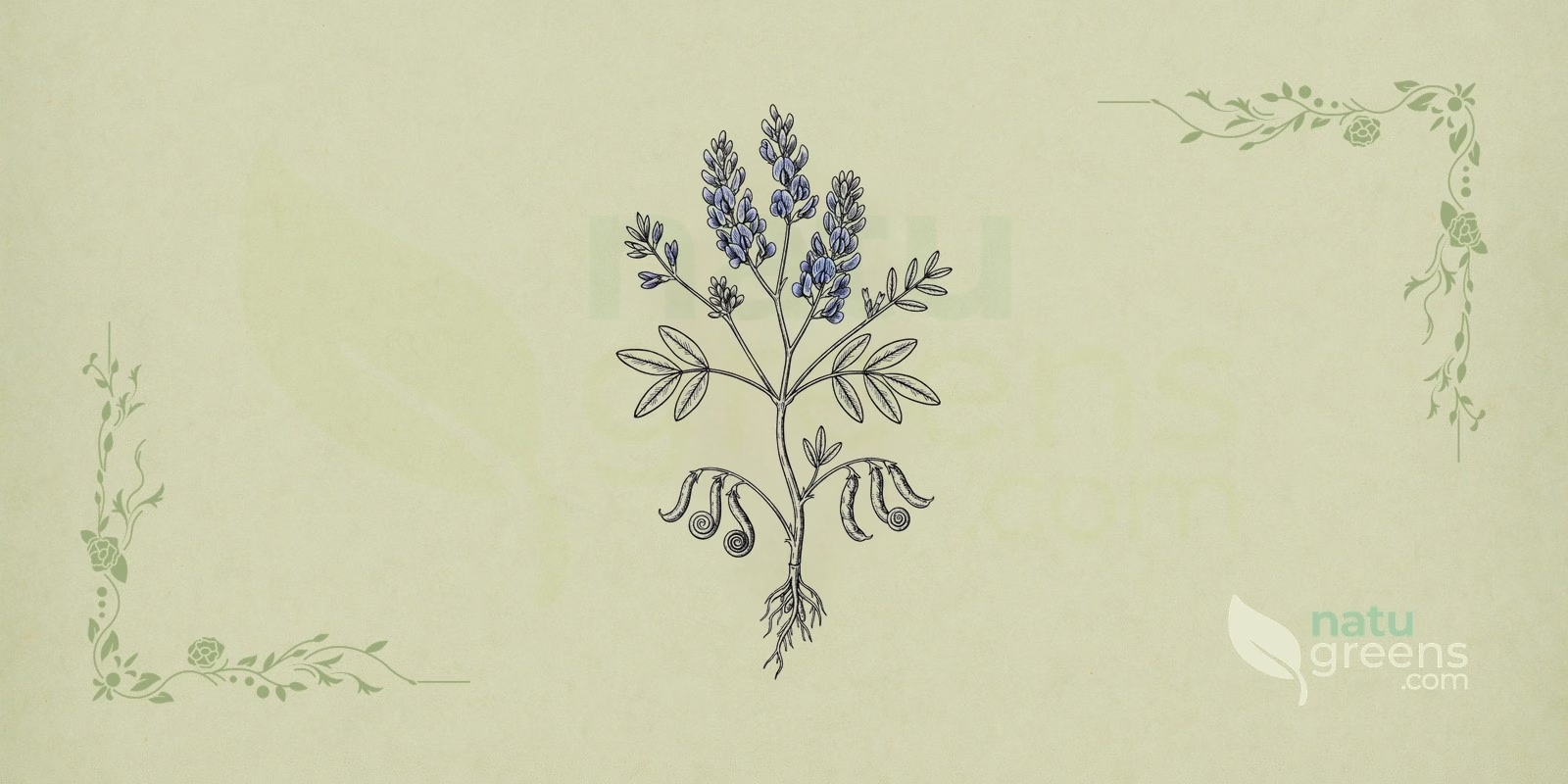
The plant stands out for its robust root system, which can reach great depths and draw water and nutrients from the lower layers of the soil, a trait that gives it remarkable resistance during dry spells. Its flowers, usually purple, and its trifoliate leaves concentrate vitamins, minerals, and bioactive compounds that modern research has been investigating, and several traditional uses of alfalfa have already been examined, even though many of the results come from laboratory studies, animal studies, or small and dated clinical trials.
Popular and International Names of Alfalfa
- English: alfalfa, lucerne, purple medick.
- French: luzerne, luzerne cultivée.
- German: Luzerne, Saat-Luzerne.
- Italian: alfalfa, erba medica.
- Portuguese: alfafa (Brazil), luzerna (Portugal).
- Spanish: alfalfa, mielga.
Botanical Synonyms of Medicago sativa
Although Medicago sativa L. is the accepted scientific name, the species appears in the literature under a few alternative designations, the most notable of which are:
- Medica sativa (L.) Mill.
- Medicago sativa var. sativa
These taxonomic variations reflect different classifications and observations over the history of botany, but they all refer to the same plant, with the same morphological features and the same set of known properties.
Botanical Family: Fabaceae
Medicago sativa belongs to the vast and diverse Fabaceae family, also called Leguminosae, which is the third largest family of flowering plants and brings together an enormous variety of species of great ecological and economic importance. The Fabaceae are known for their ability to fix nitrogen in the soil through a symbiosis with bacteria housed in root nodules, a process that increases soil fertility and makes these plants valuable in sustainable farming systems.
Plants in this family are characterized by pod-type fruits and often by compound leaves, and alfalfa shares with other legumes a high protein content and the ability to enrich the soil. Because the phytochemical diversity of the Fabaceae is immense, with many species producing bioactive compounds of medicinal, food, and industrial interest, alfalfa holds a relevant place in this botanical context.
Parts of Alfalfa Used
- Leaves (fresh and dried)
- Seeds (mainly for sprouting)
Ethnobotanical and Traditional Uses
- Ayurvedic Medicine: there are traditional records of its use in inflammatory conditions and in disorders associated with oxidative damage.
- Food Use: grown as livestock forage (hay, silage, and pasture), green manure, and ground cover, while the sprouts are eaten by people in salads and sandwiches.
- General Uses: traditionally regarded as a general tonic, alfalfa was used for weakness during convalescence, anemia, hemorrhages, menopausal complaints, premenstrual tension, fibroids, jaundice, indigestion, arthritis, and kidney stones, and there are folk records of its use to stimulate breast milk production and for blood pressure, with no consistent clinical evidence.
- Native Americans: they ground the seeds into flour, making use of their nutritional value.
- Traditional Chinese Medicine: since the 6th century, the tradition has used the plant for kidney stones, fever, dysuria (difficult urination), fluid retention, and swelling.
Therapeutic Properties of Alfalfa
- Anti-Inflammatory (traditional use and preliminary studies): the plant's bioactive compounds are being investigated for anti-inflammatory activity, and tradition uses it to ease pain associated with arthritis and other inflammatory conditions.
- Antioxidant (in vitro and animal studies): laboratory and animal studies indicate that alfalfa extracts may reduce cell death and DNA damage caused by free radicals, both by lowering their production and by reinforcing the body's antioxidant defenses, an effect not yet confirmed in humans.
- Coagulant (linked to vitamin K content): because of its high concentration of vitamin K, alfalfa may favor blood clotting, which is why it was historically used for hemorrhages and which also explains its interaction with warfarin.
- Diuretic (traditional use): traditionally used to increase urine output in cases of fluid retention.
- Galactagogue (traditional use): a common ethnobotanical use in several cultures to stimulate breast milk production, with no safety data for medicinal doses during breastfeeding.
- Hypocholesterolemic (under study, small and dated trials): research suggests that alfalfa saponins may reduce the intestinal absorption of cholesterol and increase the excretion of its precursors, with effects on total cholesterol, LDL, and triglycerides observed in studies that remain limited.
- Hypoglycemic (under study, mostly in animals): animal studies suggest a possible reduction in blood fat and blood sugar, but the human data come from small and dated trials and do not support any recommendation for blood sugar control.
- Nutritional Tonic (food value): it is a source of protein, vitamins (A, C, E, K, folate, riboflavin, and thiamine), and minerals (calcium, copper, iron, magnesium, manganese, phosphorus, potassium, and sulfur), which is why it is traditionally considered a general tonic.
- Phytoestrogenic (effect under study): it contains phytoestrogens such as coumestrol, plant compounds structurally similar to human estrogen, and is therefore being investigated for the relief of menopausal symptoms such as hot flashes, with no conclusive clinical evidence.
Detailed Phytochemical Profile of Alfalfa
- Alkaloids: several alkaloids are present and add to the pharmacological complexity of the plant.
- Amino Acids: these include L-canavanine, a non-protein amino acid concentrated mainly in the seeds and sprouts, associated with the reactivation or induction of lupus and calling for special attention in people with autoimmune diseases.
- Coumarins: these may have anticoagulant activity, which calls for caution in certain contexts, although alfalfa should not be confused with sweet clover, a plant of another genus with a significant coumarin content.
- Flavonoids: these include apigenin, luteolin, naringenin, and tricin, studied for their antioxidant and anti-inflammatory activities.
- Minerals: it contains calcium, copper, iron, magnesium, manganese, phosphorus, potassium, and sulfur, which are essential for many body functions.
- Phytoestrogens: plant compounds with estrogenic activity, such as coumestrol, investigated in relation to menopausal symptoms.
- Polysaccharides, Phenols, and Tannins: other bioactive compounds that contribute to the plant's chemical profile.
- Saponins: glycosidic compounds investigated for their ability to interfere with the intestinal absorption of cholesterol.
- Vitamins: rich in vitamin A (eye health and immunity), vitamin C and vitamin E (antioxidant action), vitamin K (essential for blood clotting), folate, riboflavin (B2), and thiamine (B1).
Preparation and Administration Forms of Alfalfa
- Infusions (Teas): the dried leaves can be used in an infusion, usually in a ratio of one teaspoon to one cup of boiling water, left to steep for a few minutes, a form that is popular because of its traditional use as a digestive and tonic.
- Sprouts: the seeds are germinated to produce sprouts, appreciated for their mild flavor and crunchy texture in salads, sandwiches, wraps, and other dishes, but pregnant women, young children, older adults, and immunocompromised people should only eat them cooked.
- Supplements: the dried leaves are processed and sold as tablets, capsules, powders, and teas, concentrated forms that require guidance from a healthcare professional, especially for anyone with an autoimmune disease or on long-term medication.
Synergy with Other Medicinal Plants
Cleansing Blend with Dandelion and Burdock
Alfalfa is traditionally combined with dandelion (Taraxacum officinale) and burdock root (Arctium lappa) in preparations intended as diuretic and cleansing, since dandelion has a traditional record of supporting liver and kidney function and burdock is a classic cleansing herb in folk herbalism. This pairing is traditionally used to support digestion and fluid excretion, complementing the profile of alfalfa, although there are no clinical studies on the combination.
Nutritional Blend with Spirulina and Chlorella
For a nutritional boost, alfalfa can be paired with microalgae such as spirulina (Arthrospira platensis) or chlorella (Chlorella vulgaris), foods rich in protein, vitamins, and minerals that, together with alfalfa, broaden the range of nutrients in the diet. The combination is traditionally used during periods of weakness or by people who exercise regularly, as a dietary complement and not as a substitute for a balanced diet.
Traditional Menopause Blend
Because it contains phytoestrogens, alfalfa appears in traditional formulas alongside other plants with estrogenic activity, such as red clover (Trifolium pratense) or black cohosh (Actaea racemosa), which are traditionally used for menopausal complaints such as hot flashes and night sweats. This pairing adds up compounds with hormonal effects and should therefore only be considered under professional guidance, and it should be avoided in hormone-sensitive conditions and by anyone on hormone therapy.
Recipes and Usage Protocols of Alfalfa
Nourishing Alfalfa Tonic Infusion
Ingredients: 1 tablespoon of dried alfalfa leaves, 250 ml of boiling water, honey or lemon (optional).
Preparation: place the leaves in a cup, pour the boiling water over them, cover, and let steep for 10 to 15 minutes before straining, adding honey or a few drops of lemon for flavor if you like. The infusion is traditionally used as a tonic and as a source of vitamins and minerals during periods of tiredness, and how often to drink it should be decided with a healthcare professional, especially by anyone taking warfarin, diabetes medication, or hormone therapy.
Salad with Alfalfa Sprouts
Ingredients: 1 cup of alfalfa sprouts, mixed greens (lettuce and spinach), cherry tomatoes, cucumber, grated carrot, extra virgin olive oil, balsamic vinegar, salt, and pepper to taste.
Preparation: rinse the sprouts and greens thoroughly and, in a large bowl, combine the greens, the halved cherry tomatoes, the sliced cucumber, and the grated carrot, placing the sprouts on top. Dress with olive oil, balsamic vinegar, salt, and pepper and toss gently, serving it as a side dish or a light meal. Pregnant women, young children, older adults, and immunocompromised people must not eat raw sprouts, and for these groups the sprouts must be cooked before they go into the dish.
Green Smoothie with Alfalfa
Ingredients: 1 tablespoon of alfalfa powder (or half a cup of cooked sprouts), 1 ripe banana, 1 cup of fresh spinach, 200 ml of water or plant-based milk (almond or oat), and 1 teaspoon of chia seeds (optional).
Preparation: put all the ingredients in a blender and blend until smooth and creamy, adding a little more water or plant-based milk if the consistency is too thick. Drink it right away as a practical way to include alfalfa in your diet, bearing in mind that people with lupus or another autoimmune disease should avoid concentrated powders and extracts of the plant.
The preparations above follow traditional records and do not replace professional guidance. Before any internal use, check the contraindications and interactions described in this article.
Associated Therapies
Herbal Medicine
In herbal medicine, alfalfa is valued as a nourishing and remineralizing tonic and is traditionally used for fatigue, anemia, and general weakness, thanks to its vitamin and mineral content, notably iron and vitamin K. Extracts and powders of the plant appear in formulations aimed at bone, cardiovascular, and digestive health, and its phytoestrogen content makes it a frequent ingredient in women's health products, although modern herbal medicine regards it mainly as a dietary supplement and adjunct whose clinical effects are still under study.
Orthomolecular Nutrition
Orthomolecular nutrition is devoted to supplying the body with adequate levels of nutrients, and alfalfa fits this approach because of its rich profile of vitamins (A, C, E, K, and B complex), minerals (calcium, iron, magnesium, phosphorus, potassium, and zinc), and protein, which is why it is often described as a superfood. In this context, it is used as a complement in nutritional deficiencies and to support cellular metabolism, and the sprouts are often mentioned as a source of phytonutrients, always cooked for people in risk groups.
Contraindications and Side Effects of Alfalfa
General Contraindications of Alfalfa
Alfalfa is usually well tolerated when eaten in food amounts, but there are important contraindications. People with a known allergy to plants of the Fabaceae family (legumes), such as clovers or peas, should avoid it, and there are no safety data for medicinal doses during pregnancy and breastfeeding (occasional use as a food is not the target of this caveat), so pregnant and breastfeeding women should consult a healthcare professional before using supplements, also because of a possible emmenagogue effect at high doses.
Seeds and sprouts contain L-canavanine, which has been associated with the reactivation or induction of systemic lupus erythematosus in human case reports and in primate studies: people with lupus or another autoimmune disease must NOT consume alfalfa seeds, sprouts, or concentrated extracts; the mature leaf has a much lower concentration of canavanine, but caution still applies.
Raw sprouts are a recurrent and documented vehicle of Salmonella and E. coli O157 outbreaks: pregnant women, young children, older adults, and immunocompromised people must NOT eat raw sprouts, only cooked ones. The moisture and warmth of germination also favor the growth of Listeria, and rinsing the sprouts does not remove this risk. There are also reports of photosensitivity, so anyone who notices skin reactions after sun exposure while using alfalfa should stop consuming it and seek advice.
Drug Interactions of Alfalfa
Alfalfa is very rich in vitamin K: anyone taking warfarin should keep their intake consistent and inform their doctor. Sudden changes in consumption, especially of supplements, can reduce the effectiveness of this and other vitamin K antagonist anticoagulants and increase the risk of clots, which is why any change in diet should be reported to the team overseeing the treatment.
The plant contains phytoestrogens (coumestrol), which calls for caution in hormone-sensitive conditions and in anyone on hormone therapy, even though the evidence on this interaction is limited. The effect on cholesterol and blood sugar is considered under study, based on small and dated trials, and should not be treated as a proven claim, but caution is advised with diabetes medication, since the effect may be potentiated and blood glucose may need monitoring; before combining alfalfa with any medication, consult a healthcare professional.
Distinguishing Alfalfa from Clovers and Sweet Clover
Alfalfa should not be confused with clovers, plants of the genus Trifolium that also have trifoliate leaves, nor with sweet clover, of the genus Melilotus, which contains a significant amount of coumarin and has a different safety profile. All three belong to the same family and can grow in the same pastures, so correct identification of the species is essential before any use.
Historical Notes and Interesting Facts
The name alfalfa comes from Spanish, as an adaptation of the Arabic word al-faṣfaṣa, which is popularly translated as "the best food" or "father of all foods", a reference to the plant's high nutritional value as forage. In the United Kingdom, South Africa, Australia, and New Zealand it is better known as lucerne, and it reached the Americas in the 16th century, brought by Spanish colonists as essential forage for horses, which shows its historical importance in agriculture and livestock farming.
Cultivated since antiquity and already appreciated by the Greeks and Romans, alfalfa also plays a relevant ecological role, as it is considered an "insectary" plant, able to shelter predatory and parasitoid insects that protect other crops and make it useful in biological pest control systems. Combined with nitrogen fixation through its symbiosis with root bacteria, which enriches the soil and helps protect it from erosion, this trait makes it an ally of sustainable farming practices.
Another botanical curiosity is the autotoxicity of alfalfa: its seeds have difficulty germinating and developing in soils where an established stand of the same species already exists, which is why crop rotation is common before a new sowing. This natural self-regulating mechanism directly influences soil management and the practices adopted to get the most out of the crop.
Frequently Asked Questions about Alfalfa
What Are the Main Studied Benefits of Alfalfa?
Alfalfa is valued above all for its nutritional value, since it is rich in vitamins (A, C, E, K, and B complex) and minerals such as calcium, iron, and magnesium. Its possible effects on cholesterol and blood sugar are under study, based on small and dated trials, and its phytoestrogens are being investigated for menopausal symptoms, with no conclusive evidence. Tradition also attributes diuretic and galactagogue action to it.
Who Should Not Consume Alfalfa?
People with lupus or another autoimmune disease should not consume alfalfa seeds, sprouts, or concentrated extracts, because of L-canavanine. Pregnant women, young children, older adults, and immunocompromised people should not eat raw sprouts, only cooked ones, and anyone taking warfarin, diabetes medication, or hormone therapy should consult a healthcare professional. There are also no safety data for medicinal doses during pregnancy and breastfeeding.
Are Raw Alfalfa Sprouts Safe?
Raw sprouts are a recurrent and documented vehicle of Salmonella and E. coli O157 outbreaks, because germination conditions favor the growth of these bacteria. For this reason, pregnant women, young children, older adults, and immunocompromised people should eat them only cooked. Sprouts and seeds also concentrate L-canavanine, which makes them unsuitable for people with an autoimmune disease.
Are Alfalfa, Lucerne, and Alfafa the Same Plant?
Yes, all three names refer to the same species, Medicago sativa, with the same features and properties. Alfalfa is the usual name in the United States and in Spanish, a form of Arabic origin, lucerne prevails in the United Kingdom and Australia (luzerne in France), alfafa is the name used in Brazil, and luzerna is the common name in Portugal. The plant should not be confused with clovers (Trifolium) or with sweet clover (Melilotus).
How Do You Make Alfalfa Tea?
Use one tablespoon of dried leaves for every 250 ml of boiling water, pour the water over the leaves in a cup, cover, and let steep for 10 to 15 minutes before straining. You can add honey or a few drops of lemon to taste. How often to drink it should be agreed with a healthcare professional, especially by anyone on long-term medication.
Does Alfalfa Interact with Medications?
Yes, because its high vitamin K content can reduce the effectiveness of warfarin, and anyone taking this anticoagulant should keep their intake consistent and inform their doctor. Its phytoestrogens call for caution in anyone on hormone therapy, and its possible effect on blood sugar requires attention from people taking diabetes medication. Before using alfalfa as a supplement while under treatment, talk to a doctor or pharmacist.
Notice: this content is for informational purposes and does not replace professional medical advice. Consult a physician or herbal practitioner before using medicinal plants, especially during pregnancy, breastfeeding, or alongside medication.
How to cite this article
NATUGREENS. Alfalfa (Medicago sativa): Properties and Benefits. Natugreens, 8 Nov. 2026. Disponível em: https://natugreens.com/medicago-sativa-alfalfa/. Accessed: Nov. 8, 2026.
Natugreens. (2026). Alfalfa (Medicago sativa): Properties and Benefits. Natugreens. https://natugreens.com/medicago-sativa-alfalfa/
References and Scientific Studies
Peer-Reviewed Scientific Studies (2)
- PEER2011 Bora KS, Sharma A. Phytochemical and pharmacological potential of Medicago sativa: A review. Pharmaceutical Biology. 2011.
- PMC2022 Raeeszadeh M, et al. The Antioxidant Properties of Alfalfa (Medicago sativa L.). Oxidative Medicine and Cellular Longevity. 2022.
Institutional Sources (1)
- GOV2013 Karimi E, et al. Insight into the functional and medicinal properties of Medicago sativa (Alfalfa) leaves extract. Journal of Medicinal Plants Research. 2013.
Supplementary Readings (1)
- 2017 Krakowska A, et al. Comparison of Various Extraction Techniques of Medicago sativa: Yield, Antioxidant Activity, and Content of Phytochemical Constituents. Journal of AOAC International. 2017.