Quick summary
Glycine max (L.) Merr. / Soybean, commonly known as soybean, soya bean or soy, is an annual herbaceous plant of the Fabaceae family, domesticated thousands of years ago in East Asia, above all in China, and today one of the pillars of the world’s food supply. Valued for the nutritional richness of its beans…
Main caution: Soy allergy is one of the major food allergies, which is why its presence must be declared on food labels in Brazil. In some cases there is cross-reactivity with peanuts and other legumes, so people with a known legume…
Glycine max (L.) Merr. / Soybean, commonly known as soybean, soya bean or soy, is an annual herbaceous plant of the Fabaceae family, domesticated thousands of years ago in East Asia, above all in China, and today one of the pillars of the world’s food supply. Valued for the nutritional richness of its beans, soybean appears both in everyday cooking and in the records of traditional Asian medicine, and it is treated here first and foremost as a food, not as an herbal remedy.
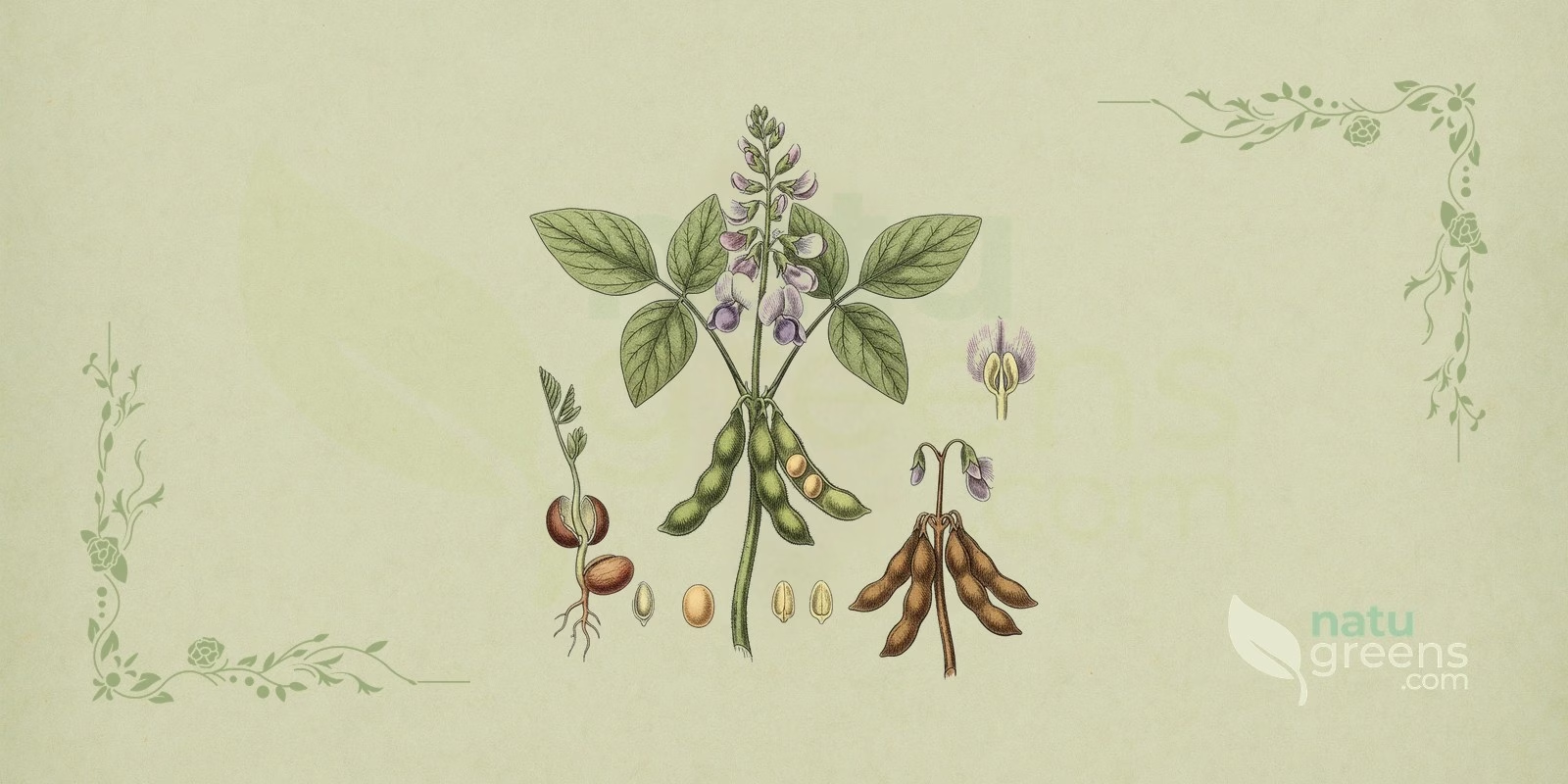
The spread of soybean around the world owes much to its adaptability and to the nutritional profile of its beans, which are an abundant source of protein, vitamins and minerals, as well as bioactive compounds such as isoflavones. Scientific research is looking at these compounds in areas such as menopausal symptoms, cholesterol and chronic diseases, but clinical trials still show conflicting results, and none of them supports treating soybean as a remedy for these conditions.
Popular and International Names of Soybean
- English: soy bean, soya bean, soybean.
- French: soja.
- German: Sojabohne.
- Italian: soia.
- Portuguese: feijão-chinês, feijão-soja, soja.
- Spanish: frijol de soya, haba soya, soja, soya.
Botanical Synonyms of Glycine max
The accepted name of soybean, Glycine max (L.) Merr., has gathered several synonyms over the history of its classification, reflecting different taxonomic approaches and variations in how the species was identified across regions and periods. Knowing these names helps when reading older scientific literature, and they should not be confused with Glycine soja Siebold & Zucc., the wild soybean, which is treated as a separate species.
- Dolichos soja L.
- Glycine hispida (Moench) Maxim.
- Phaseolus max L.
- Soja hispida Moench
- Soja max (L.) Piper
Botanical Family: Fabaceae
Soybean belongs to the vast and diverse Fabaceae family, also known as Leguminosae, the third largest family of flowering plants, with about 750 genera and more than 19,000 species. Its members stand out for their ability to form a symbiosis with nitrogen-fixing bacteria in the soil, which enriches the land and makes the family essential to sustainable agriculture, and it also includes plants of great economic importance, such as beans, lentils, peas and peanuts.
As a member of the family, soybean shares morphological features such as pods and the ability to fix nitrogen. The Fabaceae are rich in secondary compounds, among them alkaloids, flavonoids and, most notably, isoflavones, which are abundant in soybean and account for much of the scientific interest in the species. The importance of the family extends to human and animal nutrition, traditional medicine and soil restoration.
Parts of Soybean Used
The part of the plant that is used is the bean, eaten mature and dried or still green inside the pod; the other items on the list are derived from it.
- Dry isoflavone extract
- Flour
- Immature pods (edamame)
- Mature beans
- Soy milk
- Tofu
Ethnobotanical and Traditional Uses
- Dietary inclusion in the context of chronic disease prevention, a subject of observational studies that have not yet reached a firm conclusion
- Ornamental and experimental use in European gardens before its adoption as a large-scale crop in the West
- Popular use for menopausal and premenstrual symptoms, attributed to isoflavones, with clinical trials showing conflicting results
- Staple food and source of protein in Asian diets for thousands of years
- Traditional Chinese medicine: the fermented bean appears in traditional records to “clear heat” in cases of colds and fever
Therapeutic Properties of Soybean
- Antioxidant (activity observed mainly in laboratory studies)
- Cardioprotective (investigated in studies on cardiovascular risk factors, with no clinical effect established on its own)
- Cholesterol-lowering (clinical studies point to a modest reduction in LDL cholesterol with soy protein in the diet)
- Hypoglycemic (effect on blood glucose investigated in preliminary studies)
- Osteoprotective (investigated in postmenopausal women, with conflicting results)
- Phytoestrogenic (isoflavones bind to estrogen receptors; their effect in the human body is still under study)
Detailed Phytochemical Profile of Soybean
- Daidzein.
- Dietary fiber (soluble and insoluble).
- Essential amino acids.
- Genistein.
- Isoflavones.
- Magnesium.
- Minerals (calcium, copper, phosphorus, potassium, zinc).
- Phytic acid (phytate).
- Proteins.
- Riboflavin.
- Trypsin inhibitors.
- Vitamins (B complex, E).
Preparation and Administration Forms of Soybean
- Cooked green pods (edamame)
- Cooked or roasted beans, never raw
- Dry isoflavone extract capsules, only with professional guidance
- Processed foods (miso, tempeh, tofu)
- Soy flour in a variety of culinary preparations
- Soy milk as an alternative to animal milk
Synergy with Other Medicinal Plants
Menopause and Bone Health
In folk herbal practice, soybean is often paired with plants that are also rich in compounds with estrogenic activity, such as black cohosh (Actaea racemosa) and red clover (Trifolium pratense), in combinations traditionally used for menopausal symptoms and bone health. No clinical trials confirm any advantage of these blends over each plant on its own, and anyone with a history of hormone-dependent cancer or on hormone therapy should not combine them without medical advice.
Cardiovascular Health
In the cardiovascular field, soybean appears in the diet alongside garlic (Allium sativum) and green tea (Camellia sinensis), a pairing rooted in tradition and in everyday eating. Garlic is studied for possible effects on blood lipids and blood pressure, while green tea is known for its antioxidant content; the combination of the three within a balanced diet is being investigated in relation to LDL cholesterol and oxidative stress, though there is no proof of a combined effect. Garlic in concentrated doses can potentiate anticoagulants, which is one more reason to inform your doctor.
Recipes and Usage Protocols of Soybean
Boiled Edamame
Ingredients: 500 g of green soybean pods (edamame), fresh or frozen, water and salt to taste.
Preparation: Bring a pot of lightly salted water to a boil, add the pods and cook for 5 to 6 minutes, until the beans are tender. Drain, sprinkle with coarse salt and serve warm or cold. Only the bean is eaten, squeezed out of the pod with the teeth, and the pod itself is discarded.
Homemade Soy Milk
Ingredients: 1 cup of dried soybeans, 4 cups of filtered water and sweetener to taste (optional).
Preparation: Soak the beans in water for 8 to 12 hours, then drain and rinse well. Blend the soaked beans with the 4 cups of water until smooth and strain through a fine cloth or a nut milk bag, squeezing firmly to extract all the liquid. Bring the strained liquid to the heat and cook for 15 to 20 minutes, stirring from time to time, a step that cannot be skipped because it reduces the antinutrients in the bean. Sweeten if you like and serve hot or cold, on its own, with cereal or in smoothies.
Homemade Fresh Tofu
Ingredients: 2 cups of dried soybeans, 8 cups of filtered water and 2 teaspoons of nigari (magnesium chloride) dissolved in 1/2 cup of hot water.
Preparation: Make the soy milk following the previous recipe and heat it to 70-80 °C. Turn off the heat, add the nigari solution little by little, stirring gently for 1 minute, and let it rest for 15 to 20 minutes, until the milk curdles and separates from the whey. Transfer the curds to a tofu mold lined with cheesecloth and press with a weight for 30 to 60 minutes, depending on the firmness you want. Cut into cubes and store covered in water in the refrigerator, for use in salads, stir-fries or on the grill.
Stir-Fried Tofu with Vegetables
Ingredients: 1 block of firm tofu, 1 tablespoon of olive oil or vegetable oil, 1 clove of garlic, chopped, 1 carrot cut into strips, 1 cup of broccoli florets, salt, pepper and soy sauce to taste (optional).
Preparation: Pat the tofu dry with paper towels and cut it into cubes. Brown the cubes in the oil in a wide frying pan, turning them carefully, and set aside. In the same pan, sauté the garlic, add the carrot and broccoli with a splash of water and cook until tender but still firm. Return the tofu to the pan, season with salt, pepper and, if you like, a little soy sauce, and serve with rice. People taking MAOI antidepressants should leave out the soy sauce because of its tyramine content.
The preparations above follow traditional records and do not replace professional guidance. Before any internal use, check the contraindications and interactions described in this article.
Associated Therapies
Clinical Herbal Medicine
In clinical herbal medicine, standardized soy isoflavone extracts are studied for menopausal symptoms such as hot flashes and night sweats, but published trials are conflicting: some report a modest reduction, while others find no difference compared with placebo. For this reason soybean is not an established treatment for menopause, and concentrated supplements, which are also being investigated in relation to bone health and cardiovascular risk factors, should only be used under the supervision of a qualified health professional.
Nutrition and Dietetics
In nutrition, soybean is a central food in vegetarian and vegan diets, as it provides plant protein containing all the essential amino acids. Dietitians often include tofu, tempeh and soy milk in balanced meal plans, including weight management plans, and the fiber and bioactive compounds of the bean are studied in relation to digestive health and metabolism, always as part of the overall diet and not as the isolated effect of a single food.
Contraindications and Side Effects of Soybean
Soy Allergy
Soy allergy is one of the major food allergies, which is why its presence must be declared on food labels in Brazil. In some cases there is cross-reactivity with peanuts and other legumes, so people with a known legume allergy should be especially careful. Reactions range from mild to severe, and asthma attacks have been reported in sensitive individuals.
Thyroid and Levothyroxine
Soy and soy-based formulas reduce the absorption of levothyroxine, so anyone taking this medication should keep soy intake at least 4 hours apart from the dose and inform their doctor, who may need to monitor hormone levels. In hypothyroidism with iodine deficiency, isoflavones have a goitrogenic action, and moderate consumption is recommended.
Breast Cancer and Hormone Therapy
For women with hormone-dependent breast cancer, including those taking tamoxifen or aromatase inhibitors, soy as a food, in moderation, is considered safe under current oncology guidelines. Concentrated isoflavone supplements, however, should only be used with the oncologist’s approval. Combining these supplements with oral contraceptives or other female hormone therapies without medical guidance is also not recommended, because of possible interference with their effectiveness.
Pregnancy, Breastfeeding and Infants
During pregnancy and breastfeeding, soy can be part of the usual diet, but concentrated isoflavone supplements should be avoided without medical guidance. Soy infant formula should only be used on a pediatrician’s recommendation, and young children should not be given soy products that have not been specifically formulated for their age.
Common Side Effects
Some people experience mild gastrointestinal reactions, such as constipation, bloating, flatulence, nausea, vomiting and diarrhea, especially when they start eating soy products or taking supplements, and these effects are usually temporary. In premenopausal women, some studies have reported a lengthening of the menstrual cycle with high doses of isoflavones. The antinutrients in the bean, such as phytates and trypsin inhibitors, require cooking, and the raw bean is indigestible.
Drug Interactions
Beyond levothyroxine and hormone therapies, there is a report of a reduced INR in a person taking warfarin who was drinking soy milk; the evidence is limited, but anyone on this anticoagulant should keep their soy intake consistent and inform their doctor. Fermented products such as soy sauce and miso contain tyramine and call for caution in people taking MAOI antidepressants. Because isoflavone supplements are being studied in relation to blood glucose, people using glucose-lowering medication should consult their doctor before taking them, and antibiotics, by altering the gut flora, may change how isoflavones are metabolized. Tell your doctor about your intake of soy and soy products whenever you start a course of medication.
Historical Notes and Interesting Facts
Origin of the Name
The word “soy” has Japanese roots and derives from shoyu, the name of soy sauce, which reveals the deep cultural and historical bond between the plant and Asian culinary traditions, in which the bean has been an essential ingredient for thousands of years and became established both as a food and as a condiment.
Functional Food
Soybean is often described as a functional food, a term used for foods that, in addition to basic nutrients, contain compounds studied for possible additional effects on health. Isoflavones, good-quality protein, fiber and essential fatty acids support this classification, which has driven research on cardiovascular disease, osteoporosis and some types of cancer, with results that remain inconclusive.
The Feminization Myth
A widespread belief holds that soy “feminizes” men because of its isoflavones. The available meta-analyses are reassuring and found no relevant change in testosterone or estrogen in men who eat soy as part of their diet, which does not mean any promise of a specific benefit for men’s health either.
Tropicalization in Brazil
Brazil played a decisive role in the so-called “tropicalization” of soybean, originally a short-day plant, sensitive to photoperiod, whose flowering depended on specific day-length conditions. Through extensive breeding programs and the development of adapted cultivars, the country began to grow it successfully in tropical regions and became one of the world’s largest producers, with a significant impact on the economy and on global agriculture.
Frequently Asked Questions about Soybean
Is Soybean Safe to Eat Every Day?
For most healthy people, eating soy and soy products every day as part of a balanced diet is considered safe. Anyone with an allergy to soy or other legumes, who takes levothyroxine or who has specific hormonal conditions should talk to a health professional, and it is best to choose minimally processed products and always eat the beans well cooked.
Does Soybean Relieve Menopause Symptoms?
Soy isoflavones are being investigated for hot flashes and night sweats, but clinical trials are conflicting: some show a modest reduction and others find no difference compared with placebo. Soybean is not a treatment for menopause, and concentrated supplements should only be used with medical guidance.
Is Soybean Linked to Cancer?
Observational studies associate regular soy consumption with different outcomes, but the relationship is complex and does not allow anyone to say that soybean prevents cancer. For women with hormone-dependent breast cancer, including those taking tamoxifen or aromatase inhibitors, soy as a food in moderation is considered safe under current oncology guidelines, while concentrated isoflavone supplements should only be used with the oncologist’s approval.
Can Soybean Affect the Thyroid?
In people with normal thyroid function and adequate iodine intake, moderate soy consumption does not usually affect the thyroid, but in hypothyroidism with iodine deficiency isoflavones are goitrogenic and call for moderation. Soy and soy formulas reduce the absorption of levothyroxine, so soy intake must be kept at least 4 hours apart from the medication and the doctor should be informed.
Can People with a Peanut Allergy Eat Soybean?
Not always. Soy allergy is one of the major food allergies, with mandatory labeling in Brazil, and in some cases there is cross-reactivity with peanuts and other legumes, so introducing soy should be assessed by an allergist.
Does Soybean Cause Feminization in Men?
There is no basis for this idea: the available meta-analyses are reassuring and show no relevant hormonal change in men who eat soy as part of their diet. Nor does this make soybean a food with a guaranteed benefit for men’s health, and the bean should be seen as part of a varied diet.
Notice: this content is for informational purposes and does not replace professional medical advice. Consult a physician or herbal practitioner before using medicinal plants, especially during pregnancy, breastfeeding, or alongside medication.
How to cite this article
NATUGREENS. Soybean (Glycine max): Properties and Benefits. Natugreens, 4 Nov. 2026. Disponível em: https://natugreens.com/soybean-glycine-max/. Accessed: Nov. 4, 2026.
Natugreens. (2026). Soybean (Glycine max): Properties and Benefits. Natugreens. https://natugreens.com/soybean-glycine-max/
References and Scientific Studies
- PMC2022 Choi SW, et al. Breeding of Penta Null Soybean [Glycine max (L.) Merr.] for Five Antinutritional and Allergenic Components of Lipoxygenase, KTI, Lectin, 7S α’ Subunit, and Stachyose. Front Plant Sci. 2022.
- PMC2018 Lu M, et al. Combining 2-DE immunoblots and mass spectrometry to identify putative soybean (Glycine max) allergens. Food Chem Toxicol. 2018.
- PMC2025 Meghana D, et al. Nutritional analysis of vegetable soybean [Glycine max (L.) Merrill] accessions in Eastern India. Front Nutr. 2025.
- PMC2025 Palange NJ, et al. Unraveling the genetic architecture of anti-nutritional factors in soybean (Glycine max.) for nutritional enhancement. Sci Rep. 2025.
- PMC2024 Zhou Q, et al. Sprouting facilitates the antiglycative effect of black soybean (Glycine max (L.) Merr.) by promoting the accumulation of isoflavones. Curr Res Food Sci. 2024.