Quick summary
The maritime pine (Pinus pinaster Aiton), known in Portugal as pinheiro-bravo, is a large coniferous tree of the Pinaceae family, native to the Atlantic fringe of southern Europe and to parts of the western Mediterranean. Valued for its hardiness and fast growth, it occurs naturally from Portugal and Spain to France…
Main caution: The use of Pinus pinaster preparations is contraindicated in cases of known hypersensitivity to any of their components. The needle infusion is a traditional record of occasional use and should not be consumed during…
The maritime pine (Pinus pinaster Aiton), known in Portugal as pinheiro-bravo, is a large coniferous tree of the Pinaceae family, native to the Atlantic fringe of southern Europe and to parts of the western Mediterranean. Valued for its hardiness and fast growth, it occurs naturally from Portugal and Spain to France, Italy and Croatia, reaches northern Tunisia, Algeria and Morocco, and adapts well to Mediterranean climates with rainy winters and dry summers.
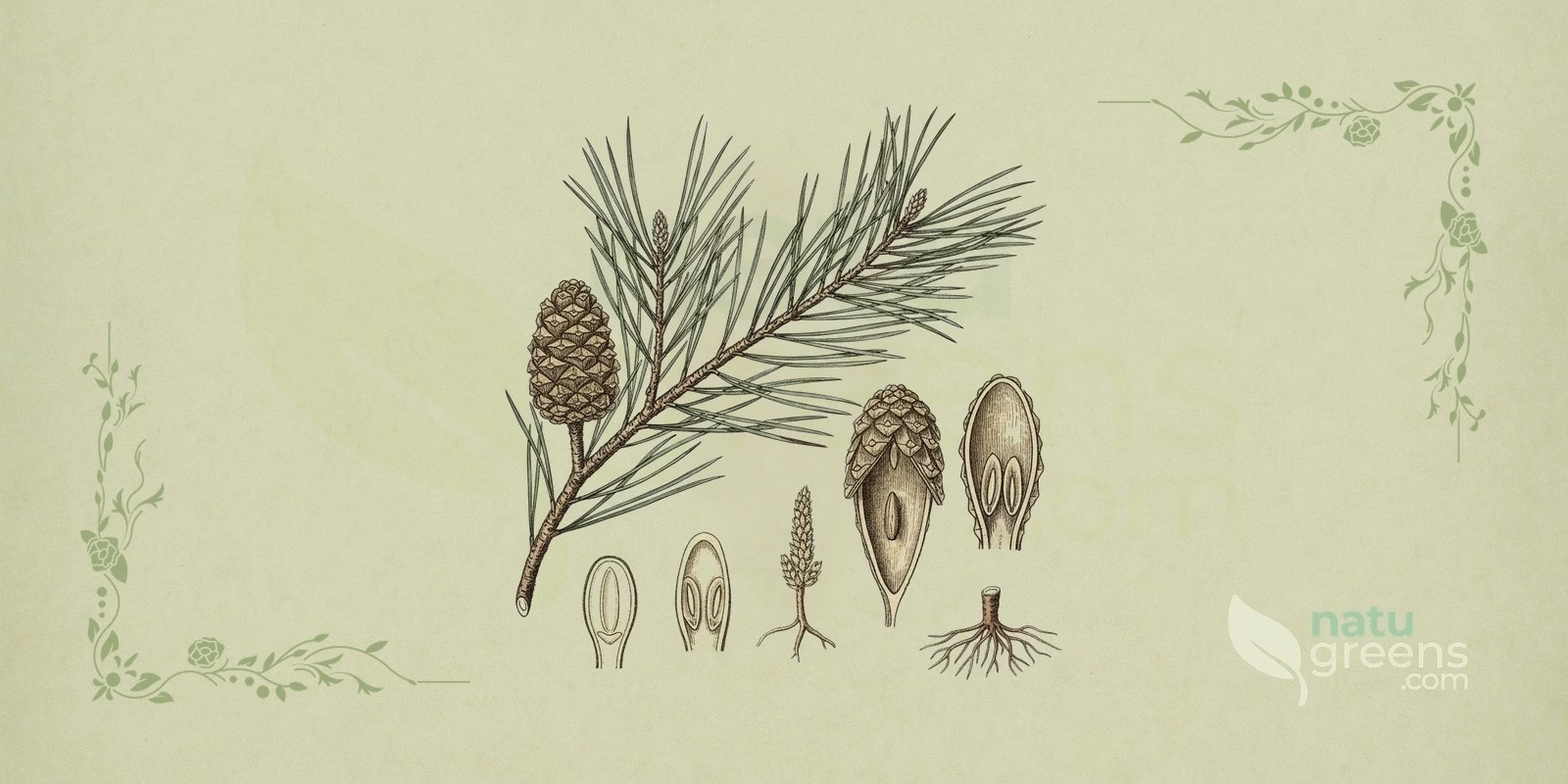
Throughout history, the maritime pine has been a valuable source of raw materials. Its timber is widely used by the forestry industry, especially in France, Spain and Portugal, where vast forests were planted for this purpose, while the resin tapped from the tree is the raw material for turpentine and rosin, substances with a wide range of industrial applications. Its presence in coastal landscapes and its ability to grow in poor soils have also made it a frequent choice for reforestation and dune stabilization.
Beyond its industrial and ornamental uses, Pinus pinaster attracts interest for its possible medicinal properties, which are concentrated mainly in the bark. In Brazil, the commercial extract is usually sold as casca de pinheiro marítimo francês (French maritime pine bark), and standardized bark extracts are rich in bioactive compounds such as flavonoids, catechins, procyanidins and phenolic acids. These compounds are studied for their antioxidant, antimicrobial and anti-inflammatory activities, which suggests a promising role in human health, although the scientific evidence is still developing and more research is needed to confirm any clinical benefit in specific conditions.
Popular and International Names of Maritime Pine
- English: cluster pine, maritime pine, turpentine pine
- French: pin des Landes, pin maritime, pinastre
- German: Strandkiefer
- Italian: pino marittimo
- Portuguese: pinheiro-bravo, pinheiro-marítimo
- Spanish: pino marítimo, pino resinero, pino rodeno
Botanical Synonyms of Pinus pinaster
Pinus pinaster Aiton is the accepted botanical name and the one most often found in contemporary scientific literature, described by William Aiton in 1789. Although Pinus pinaster remains the name accepted by the main botanical reference databases, such as World Flora Online and GBIF, a few synonyms still appear in older or regionally circulated publications.
- Pinus hamiltonii Ten.
- Pinus maritima Lam.
- Pinus mesogeensis Fieschi & Gaussen
None of these synonyms should be confused with Pinus sylvestris, the Scots pine, which is a different species of the same genus, used mainly for its buds, needles and essential oil, whereas the medicinal interest in Pinus pinaster centers on the bark extract.
Botanical Family: Pinaceae
The Pinaceae family, to which Pinus pinaster belongs, is one of the most important among the conifers and comprises about 220 species distributed across 11 genera. It is characterized by resinous trees and shrubs with needle-shaped leaves and woody cones that hold the seeds, and it predominates in the temperate and boreal regions of the Northern Hemisphere.
The Pinaceae are of enormous ecological and economic importance, since many species support entire forest ecosystems and provide shelter and food for wildlife. Economically, they are a primary source of timber for construction, paper and other forest products, and several species are valued for their resin, their essential oils and, in some cases, their medicinal interest, as happens with the maritime pine.
Parts of Maritime Pine Used
- Bark
- Needles (leaves)
- Resin (external and industrial use only)
Ethnobotanical and Traditional Uses
Traditional records and modern use of the maritime pine fall into three areas: the occasional infusion of the needles, the external application of aromatic preparations and, more recently, the intake of bark extract as a supplement.
- Care of minor skin injuries (traditional record of use for wound healing)
- Inhalation of aromatic vapors (traditional record for a feeling of clearer airways)
- Mild respiratory discomfort, such as cough (traditional record of the needle infusion)
- Support for cardiovascular health (modern use of the bark extract, still under study)
Therapeutic Properties of Maritime Pine
The properties attributed to the maritime pine come largely from studies with a trademarked, standardized bark extract containing 65 to 75% procyanidins, and these results do not apply to homemade bark decoctions or to needle tea. A Cochrane systematic review concluded that the available evidence is still insufficient to support the use of pine bark extract in the treatment of chronic disorders.
- Anti-inflammatory (effect observed in studies with the standardized bark extract)
- Antimicrobial (activity observed in laboratory studies)
- Antioxidant (attributed to the procyanidins and phenolic acids in the bark)
- Mild antiplatelet (effect of the bark extract relevant for people taking anticoagulants)
- Mild hypoglycemic (modest effect of the bark extract, calls for caution with antidiabetic drugs)
- Mild hypotensive (modest effect of the bark extract, calls for caution with antihypertensive drugs)
Detailed Phytochemical Profile of Maritime Pine
The bark of Pinus pinaster holds most of the compounds studied, above all the procyanidins, catechin polymers that make up the largest fraction of standardized extracts and are also used in food chemistry research. The resin and the essential oil, from which turpentine is obtained, have a very different composition and a toxicological profile of their own, which is why they should not be confused with the bark extract.
- Catechins
- Flavonoids
- Phenolic acids
- Procyanidins
- Tannins
Preparation and Administration Forms of Maritime Pine
- Essential oil (inhalation or diluted topical use only, never ingested)
- Needle infusion (tea, occasional use)
- Standardized bark extract capsules
- Tincture (alcoholic bark extract)
Each preparation has its own concentration and safety profile, so the dose and frequency of use of capsules and tinctures should be set with a health professional, especially by people who already take long-term medication.
Synergy with Other Medicinal Plants
Ginkgo Biloba
The combination of Pinus pinaster extract with Ginkgo biloba has been investigated in preliminary studies for a possible combined effect on cognitive function and blood circulation, since both plants are known for their antioxidant properties and for the research interest they attract regarding cerebral blood flow. Because both have an antiplatelet effect, the pairing calls for extra care in people taking anticoagulants or antiplatelet drugs and should only be used under professional guidance.
Recipes and Usage Protocols of Maritime Pine
Maritime Pine Needle Tea
This infusion is traditionally used, on an occasional basis, for mild respiratory complaints accompanied by cough, and it should not be consumed during pregnancy or given to children without professional guidance.
- Boiling water (one cup)
- Fresh Pinus pinaster needles, well washed and taken from a correctly identified tree, in a small amount
- Honey or lemon to taste (optional)
Place the needles in a cup, pour the boiling water over them and let them steep for 5 to 10 minutes. After straining, add honey or lemon if you like. The amount of needles and how often the tea is taken should be agreed with a health professional, since there are not enough safety data to recommend a standardized dose.
The preparations above follow traditional records and do not replace professional guidance. Before any internal use, check the contraindications and interactions described in this article.
Associated Therapies
Aromatherapy
The essential oil extracted from the needles and resin of Pinus pinaster is used in aromatherapy for its invigorating scent and the feeling of freshness it conveys. A few drops in hot water vapor are traditionally inhaled for a feeling of clearer airways, and the oil also appears in diffusers and aromatic baths associated with relaxation in the face of stress and fatigue. On the skin it should only be used well diluted in a vegetable oil, and it must never be ingested.
Phytotherapy
In phytotherapy, Pinus pinaster bark extract is valued for the antioxidant and anti-inflammatory properties observed in studies and is often included in supplements aimed at cardiovascular health, cognitive function and cellular protection against oxidative stress. This use rests on research into the modulation of inflammatory processes and circulation, but the results concern the standardized extract and cannot be extended to homemade preparations.
Contraindications and Side Effects of Maritime Pine
Contraindications
The use of Pinus pinaster preparations is contraindicated in cases of known hypersensitivity to any of their components. The needle infusion is a traditional record of occasional use and should not be consumed during pregnancy, and pregnant women, breastfeeding women and people with pre-existing medical conditions should consult a health professional before using any product derived from the plant. In children, use should only take place under professional guidance.
Turpentine and pine essential oil are toxic if ingested and can cause aspiration pneumonitis and nephrotoxicity, so the resin or the essential oil must never be ingested, and topical use is only acceptable with the oil diluted.
Drug Interactions
The bark extract has a mild antiplatelet action and a mild hypotensive effect, which calls for caution with anticoagulants, antiplatelet agents and antihypertensive drugs, as well as stopping use 2 weeks before any surgery. Because of its theoretical immunomodulatory effect, the extract should only be used under professional guidance by people with autoimmune diseases or on immunosuppressant treatment, and its mild hypoglycemic effect also calls for caution in people taking antidiabetic drugs.
Side Effects
Although it is generally well tolerated, maritime pine bark extract can cause side effects such as mild gastrointestinal discomfort, nausea, dizziness and headache, and allergic reactions may occur in rare cases. Use should be stopped at any sign of an adverse reaction, and long-term safety, as well as the effects in specific populations, still needs further research.
Not to Be Confused with Scots Pine
Pinus sylvestris, known as Scots pine, is a different species, used for its buds, needles and essential oil. The clinical trials with pine bark were carried out with a trademarked standardized extract containing 65 to 75% procyanidins, and they do not apply to homemade bark decoctions or to needle tea from either species.
Historical Notes and Interesting Facts
Longevity and Resilience
Pinus pinaster is known for its longevity and resilience and can live for hundreds of years in harsh conditions. Its ability to adapt to poor soils and to fire-prone environments, with seed release stimulated by the heat of fire, reveals an efficient survival strategy that is essential for the natural regeneration of the species in Mediterranean ecosystems.
Use in Perfumery
Thanks to its fresh, woody scent, Pinus pinaster essential oil is occasionally used in perfumery and personal care products, where its olfactory notes lend a natural, invigorating touch to fragrances, soaps and other cosmetics inspired by the Mediterranean forest.
From Pinheiro-Bravo to French Maritime Pine
The name pinheiro-bravo is the most common in Portugal, where the tree forms extensive production forests, whereas in Brazil the species reached the public mainly through supplement labels, sold as casca de pinheiro marítimo francês (French maritime pine bark) in reference to the large planted forests of France.
Frequently Asked Questions about Maritime Pine
Is Maritime Pine Needle Tea Safe for Everyone?
No. The needle infusion is a traditional record of occasional use, it should not be consumed during pregnancy and, in children, it should only be used under professional guidance. Breastfeeding women and people with pre-existing medical conditions should consult a health professional before use, and allergic reactions, although rare, are possible.
What Are the Studied Benefits of Maritime Pine Bark Extract?
The most studied effects of the bark extract are its antioxidant action, linked to the neutralization of free radicals and to oxidative stress, and its anti-inflammatory action. The extract is also being investigated for cardiovascular health, circulation and cognitive function, but a Cochrane review considered the evidence still insufficient to confirm these benefits.
Do Studies with Bark Extract Apply to Homemade Tea?
No. The clinical trials with pine bark were carried out with a trademarked standardized extract containing 65 to 75% procyanidins, and they do not apply to homemade bark decoctions or to needle tea, which have a very different composition and concentration.
Are Maritime Pine and Scots Pine the Same Plant?
No. Pinus sylvestris, the Scots pine, is a different species, used for its buds, needles and essential oil, whereas the medicinal interest in Pinus pinaster centers on the bark extract. For this reason, information about one of these plants should not be automatically transferred to the other.
Can I Ingest Pine Resin or Essential Oil?
No. Turpentine and pine essential oil are toxic if ingested, with a risk of aspiration pneumonitis and nephrotoxicity, and serious poisonings have been reported, including in children. Topical use should only be done with the oil well diluted, and the resin must never be ingested.
Can People on Anticoagulants Take Pine Bark Extract?
Only under medical guidance, because the extract has a mild antiplatelet action and a mild hypotensive effect, which calls for caution with anticoagulants, antiplatelet agents and antihypertensive drugs. Use should also be stopped 2 weeks before any surgery, and people taking antidiabetic drugs or immunosuppressants need professional follow-up.
Notice: this content is for informational purposes and does not replace professional medical advice. Consult a physician or herbal practitioner before using medicinal plants, especially during pregnancy, breastfeeding, or alongside medication.
How to cite this article
NATUGREENS. Maritime Pine (Pinus pinaster): Properties and Benefits. Natugreens, 4 Nov. 2026. Disponível em: https://natugreens.com/pinus-pinaster-maritime-pine/. Accessed: Nov. 4, 2026.
Natugreens. (2026). Maritime Pine (Pinus pinaster): Properties and Benefits. Natugreens. https://natugreens.com/pinus-pinaster-maritime-pine/
References and Scientific Studies
- PMC2015 Güzel A, et al. A lethal danger in the home: turpentine poisoning. Turk J Pediatr. 2015.
- PMC2011 Iravani S, Zolfaghari B. Pharmaceutical and nutraceutical effects of Pinus pinaster bark extract. Res Pharm Sci. 2011.
- PMC2020 Robertson NU, et al. Pine bark (Pinus spp.) extract for treating chronic disorders. Cochrane Database Syst Rev. 2020.
- PMC2005 Selga A, Torres JL. Efficient preparation of catechin thio conjugates by one step extraction/depolymerization of pine (Pinus pinaster) bark procyanidins. J Agric Food Chem. 2005.