Quick summary
Pueraria montana (Lour.) Merr. / Kudzu, commonly known as kudzu, Japanese arrowroot or kudzu vine, is a vigorous perennial climber in the Fabaceae family, native to East Asia, particularly China, Japan and Korea. The species has spread across many subtropical and temperate regions and became famous for its extremely…
Main caution: Kudzu is contraindicated during pregnancy and breastfeeding, because its isoflavones act as phytoestrogens, and it should not be used by children. The isoflavones (puerarin, daidzein) have estrogenic activity, so kudzu…
Pueraria montana (Lour.) Merr. / Kudzu, commonly known as kudzu, Japanese arrowroot or kudzu vine, is a vigorous perennial climber in the Fabaceae family, native to East Asia, particularly China, Japan and Korea. The species has spread across many subtropical and temperate regions and became famous for its extremely fast growth and remarkable adaptability, yet Asian cultures have valued it for thousands of years as food, a source of fiber and a medicinal resource. The herbal drug used in Traditional Chinese Medicine, the root known as ge gen (Puerariae lobatae Radix), comes from the variety Pueraria montana var. lobata, and most of the medicinal and phytochemical data gathered in this article come from that variety.
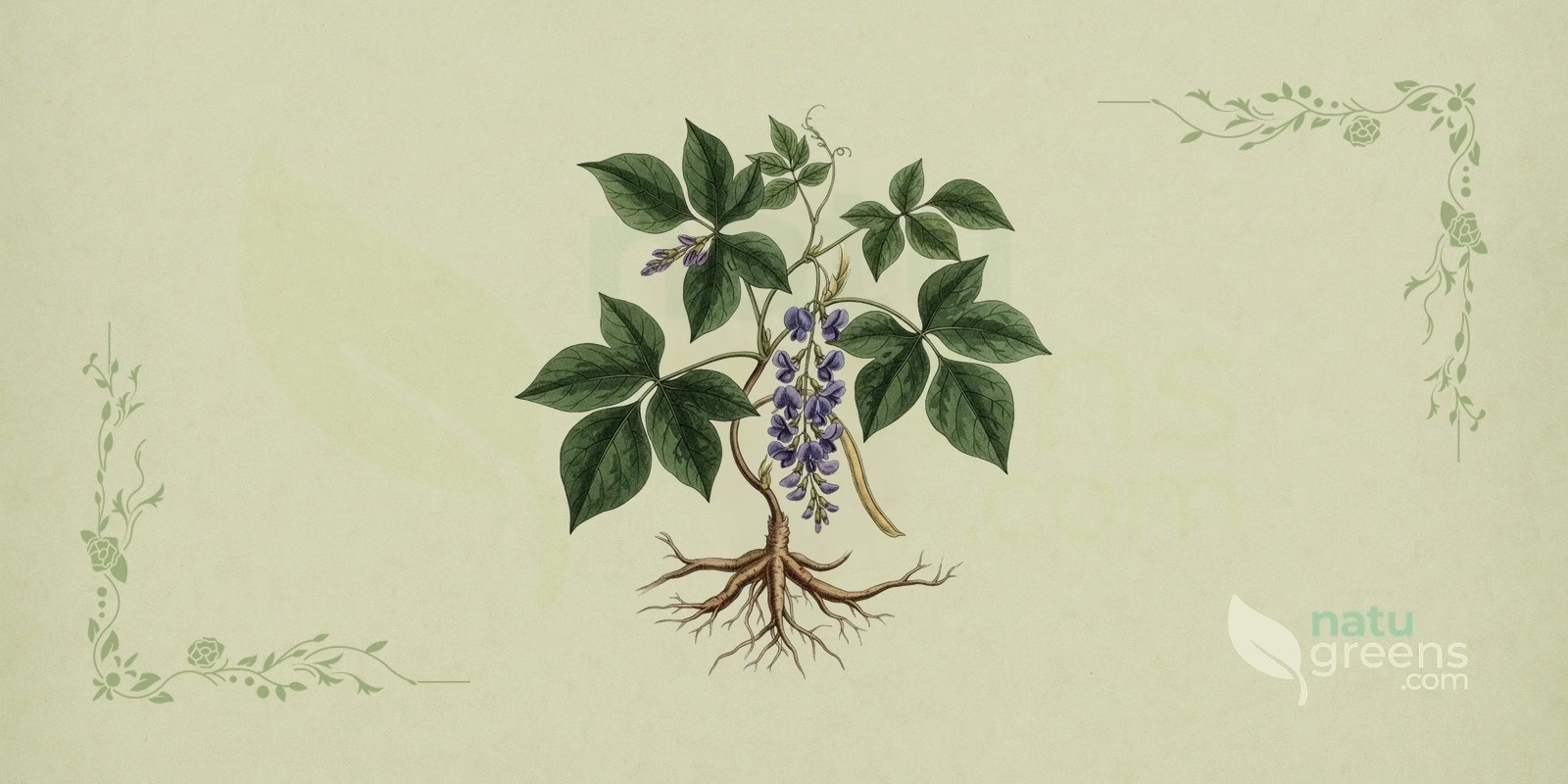
The plant forms an extensive tuberous root system that can reach large dimensions and considerable weight, and it develops woody stems that spread for tens of meters over the ground, fences and trees. Its compound leaves, made up of three leaflets, and its fragrant reddish-purple flowers with yellow markings help identify it in the field. Despite its long history of traditional use, the introduction of the species into new regions, such as the southeastern United States, led to its official classification as an invasive plant, because of the ease with which it covers and smothers native vegetation.
Popular and International Names of Kudzu
- English: Japanese arrowroot, kudzu, wild kudzu.
- French: arrow-root du Japon, kudzu, vigne kudzu.
- German: japanischer Pfeilwurz, Kudzu, Kudzu-Wein.
- Italian: arrowroot giapponese, kudzu, vite kudzu.
- Portuguese: batata-do-japão, kudzu, puerária, videira-kudzu.
- Spanish: arrurruz japonés, kudzu, vid kudzu.
Botanical Synonyms of Pueraria montana
The accepted scientific name is Pueraria montana (Lour.) Merr., but several botanical synonyms have circulated over time, which reflects the taxonomic complexity of the species and its varieties. The medicinal plant corresponds to Pueraria montana var. lobata (Willd.) Maesen & S.M.Almeida ex Sanjappa & Predeep, the form most studied by science and the source of the root known as ge gen. Much of the pharmacological literature still uses the name Pueraria lobata (Willd.) Ohwi for this variety, which is now treated as its synonym, so studies published under either name refer, in practice, to the same plant.
- Dolichos montanus Lour.
- Pueraria lobata (Willd.) Ohwi (synonym of var. lobata)
- Pueraria lobata var. montana (Lour.) Maesen
Botanical Family: Fabaceae
The Fabaceae, also called Leguminosae, is one of the largest families of flowering plants and brings together an enormous diversity of species spread across every continent. Many of its plants fix atmospheric nitrogen thanks to a symbiotic relationship with bacteria living in root nodules, which enriches the soil where they grow. The family includes important food crops such as beans, lentils and soybeans, as well as trees and shrubs of ornamental and medicinal value. Kudzu shares these traits, contributes to soil fertility and has a phytochemical profile rich in isoflavones, a group of compounds also found in soybeans and other legumes.
Parts of Kudzu Used
- Flowers
- Leaves
- Root (tuberous)
- Seeds
- Young stems
Ethnobotanical and Traditional Uses
- Alcohol consumption (reduction under study, in small trials with a standardized extract)
- Angina pectoris (traditional record in Traditional Chinese Medicine, never a substitute for cardiology care)
- Basketry
- Boils
- Canker sores
- Colds
- Diarrhea
- Dysentery
- Fever
- Fibers for ropes and textiles
- Food (starchy root, flowers, young stems)
- Livestock fodder
- Measles
- Migraine
- Noodles (made from root flour)
- Soil erosion control
- Swellings
- Traditional Chinese Medicine (one of the 50 fundamental herbs)
Therapeutic Properties of Kudzu
- Analgesic (traditional use for pain relief)
- Antidiarrheal (traditional record in cases of diarrhea)
- Antidote (traditional record, without clinical evidence)
- Antiemetic (traditional use against nausea and vomiting)
- Anti-inflammatory (activity observed in preliminary studies)
- Antioxidant (activity observed in laboratory studies)
- Antipyretic (traditional use in feverish states)
- Antispasmodic (traditional record for spasms)
- Cardioprotective (effect investigated in preliminary studies)
- Demulcent (traditional use to soothe irritation)
- Diaphoretic (traditionally used to induce sweating)
- Digestive (traditional use as a digestive aid)
- Febrifuge (traditional use in fevers)
- Hypoglycemic (effect observed in preliminary studies; caution required with antidiabetic drugs)
- Hypotensive (effect investigated in preliminary studies)
- Neuroprotective (activity observed in laboratory studies)
- Styptic (traditional record, without clinical evidence)
Detailed Phytochemical Profile of Kudzu
- Coumarins
- Daidzein
- Daidzin
- Formononetin
- Genistein
- Puerarin
- Saponins (soyasaponins)
- Starch
Preparation and Administration Forms of Kudzu
- Decoction
- Dry extract
- Fluid extract
- Infusion
- Poultice
- Powder
- Tincture
Synergy with Other Medicinal Plants
Alcohol Consumption: A Combination Under Study
In traditional formulas aimed at excessive alcohol consumption, kudzu is often paired with chrysanthemum (Chrysanthemum × morifolium), a combination that tradition uses as complementary support and that does not replace medical and psychological care for dependence. The daidzin and daidzein in kudzu are being investigated in small trials with a standardized extract for a possible effect on the urge to drink, while chrysanthemum enters the formula on the strength of its traditional record as a calming and depurative plant. This combination must never be used together with disulfiram, nor started without guidance from a health professional.
Recipes and Usage Protocols of Kudzu
Root Decoction Traditionally Used for Diarrhea and Dysentery
Ingredients: dried kudzu root, in an amount advised by a health professional, and 500 ml of water.
Preparation: Wash the root well, cut it into small pieces if needed and place it in a pot with the water, letting it simmer over low heat for 20 to 30 minutes, until the volume has reduced to roughly half. Once strained, the decoction is taken warm, a preparation that tradition uses in cases of diarrhea and dysentery because of the antidiarrheal action attributed to the plant. The amount and frequency should be set by a professional, and bloody diarrhea, high fever or signs of dehydration call for immediate medical assessment; consult a health professional before use.
Flower Infusion Traditionally Used for Fever and Colds
Ingredients: dried kudzu flowers, in an amount advised by a health professional, and 250 ml of boiling water.
Preparation: Place the flowers in a cup, add the boiling water, cover and let steep for 10 to 15 minutes before straining and drinking warm. In tradition, kudzu flowers are associated with antipyretic and diaphoretic properties and appear in preparations for feverish states, colds and flu. A fever that persists, runs very high or comes with other symptoms calls for medical assessment, and how often to use the infusion should be agreed with a professional, so consult a health professional before use.
Standardized Extracts and Alcohol Consumption (Use Under Study)
Protocol: Standardized kudzu extracts, rich in daidzin and daidzein, are being evaluated in small trials on reducing alcohol consumption, and this use remains under study, without constituting an established treatment for alcoholism. The dose and form of administration, whether capsules or tinctures, must be strictly supervised by a qualified health professional, because the extract does not replace medical and psychological treatment of alcohol dependence and must not be combined with disulfiram. A comprehensive care plan, with professional follow-up, remains the foundation of any approach.
The preparations above follow traditional records and do not replace professional guidance. Before any internal use, check the contraindications and interactions described in this article.
Associated Therapies
Clinical Herbal Medicine
In modern clinical herbal medicine, kudzu appears in formulations such as standardized extracts and capsules, and it is being investigated in areas such as excessive alcohol consumption, menopausal symptoms and cardiovascular health, always with results that are still preliminary. The clinical approach values the standardization of active compounds, such as puerarin and its derivatives, so that the product’s composition is known and doses are reproducible. Prescription needs to be individualized, taking into account the patient’s health history and possible drug interactions, which makes follow-up by a health professional indispensable.
Traditional Chinese Medicine (TCM)
Known as ge gen in Traditional Chinese Medicine, kudzu is counted among the 50 fundamental herbs of that tradition and has a wide range of recorded applications, including fever, colds, diarrhea, dysentery, angina pectoris, migraine and measles. Within TCM reasoning, the root is valued for releasing the exterior, clearing heat, generating fluids and raising the Yang. Its use starts from energetic diagnoses and patterns of imbalance, and the root usually enters complex formulas alongside other herbs, always under the guidance of a qualified practitioner and never in place of a medical diagnosis.
Contraindications and Side Effects of Kudzu
General Contraindications
Kudzu is contraindicated during pregnancy and breastfeeding, because its isoflavones act as phytoestrogens, and it should not be used by children. The isoflavones (puerarin, daidzein) have estrogenic activity, so kudzu should be avoided in hormone-dependent cancers, such as breast, uterine and ovarian cancer, in endometriosis and uterine fibroids, and by anyone taking tamoxifen or hormone therapy. The plant has a mild antiplatelet effect, which calls for caution in people with bleeding disorders or who take anticoagulants, and it is advisable to stop using it at least two weeks before any scheduled surgery, since it can also alter blood sugar levels. People with liver disease or a history of liver problems should refrain from using it, and anyone who intends to use kudzu to cut down on alcohol needs to know that this use is still under study and that it must not be combined with disulfiram.
Common Side Effects
Reported side effects tend to be infrequent and mild, such as nausea, vomiting or allergic skin reactions in sensitive people, and topical preparations, such as gels, can cause mild irritation. There are isolated reports of liver injury associated with kudzu supplements, not yet firmly confirmed in primary sources, and as a precaution use should be stopped immediately if jaundice (yellowing of the skin or eyes) or abdominal pain appears, and medical care sought. It is also important not to confuse the tea or the extract with Chinese puerarin injection, a hospital drug with reported hemolytic reactions, which is not the tea and should not serve as a reference for home use of the plant. Any adverse reaction deserves attention, and symptoms that persist or worsen call for assessment by a health professional.
Drug Interactions
Kudzu can interact with several medications, altering their effectiveness or increasing the risk of adverse effects. Because of the estrogenic activity of its isoflavones, it may interfere with hormonal medications and reduce the effectiveness of tamoxifen, and its mild antiplatelet effect calls for caution with anticoagulants such as warfarin, given the increased risk of bleeding. In a preclinical study, kudzu increased the toxicity of methotrexate through a pharmacokinetic interaction observed in rats, which makes medical guidance mandatory for anyone taking this drug. The plant also has a hypoglycemic action, requiring caution and monitoring in people who take antidiabetic drugs, it may slow the metabolism of caffeine and intensify its effects, and it must not be combined with disulfiram.
Historical Notes and Interesting Facts
An Invader in the Southeastern United States
In the United States, kudzu became known for its invasive growth and its ability to cover vast areas of native vegetation, utility poles and abandoned buildings. Introduced to the American public in 1876 and, decades later, planted on a large scale to hold back soil erosion, it adapted so well to the southeastern climate that it ended up becoming an environmental pest. This trait, although problematic from an ecological standpoint, reveals the remarkable resilience and vigor of the plant, which can grow about 30 centimeters a day under ideal conditions.
A Millennia-Old History of Human Use
Despite its reputation as an invader, kudzu has a history of human use stretching back thousands of years in its native region. In China, archaeological records indicate that its fibers, known as ko-pu, were used to make textiles at least 6,000 years ago, and the starchy root served as a staple food in times of famine. It is still an important culinary ingredient in Japan and Korea today, where it is turned into noodles and thickeners, and this long coexistence with humans has shaped the genetic diversity of the plant, which includes interconnected cultivated and wild varieties.
Sustainable Innovation
In 2023, kudzu drew attention for an innovative application in the field of sustainability, when researchers developed a biodegradable alternative to plastic packaging from materials derived from the plant. The initiative shows how a species seen as a problem can become a resource for creating more sustainable products, since its fibers and starch lend themselves to a variety of processes, which extends the value of kudzu beyond its traditional uses.
Frequently Asked Questions about Kudzu
What Is Kudzu Tea?
Kudzu tea is a drink prepared from the roots, flowers or leaves of Pueraria montana, mainly the variety lobata, which supplies the root used in Traditional Chinese Medicine. The root decoction is the most traditional form, while the flowers are usually used in milder-tasting infusions. The preparation aims to extract the plant’s bioactive compounds, such as isoflavones.
What Is Kudzu Tea Used For?
According to traditional records, kudzu tea is used for fever, colds, diarrhea and dysentery, and the standardized extract is under study for reducing alcohol consumption, without constituting a treatment for alcoholism. Anti-inflammatory and antioxidant activities have been observed in preliminary studies. The tea does not replace medical treatment and should be used with professional guidance.
Is Kudzu Tea Safe for Everyone?
No. Kudzu is contraindicated during pregnancy, breastfeeding and for children, and it should be avoided in hormone-dependent cancers, endometriosis and by anyone taking tamoxifen or hormone therapy, because of the estrogenic activity of its isoflavones. It calls for caution with anticoagulants and antidiabetic drugs, requires medical guidance for anyone taking methotrexate and should be stopped if jaundice or abdominal pain appears.
Does Kudzu Help Reduce Alcohol Consumption?
This use is under study, with small trials that used a standardized extract and found reduced consumption in some participants, a result that does not yet allow it to be called a treatment for alcoholism. Kudzu does not replace medical and psychological care for dependence and must not be combined with disulfiram.
Is Puerarin Injection the Same as Kudzu Tea?
No. Chinese puerarin injection is a concentrated hospital drug with reported hemolytic reactions, and it is not the tea. The safety data for this injection do not apply directly to homemade tea, and the reverse is also true, so neither should be used without professional guidance.
What Are the Main Studied Uses of Kudzu?
Scientific research investigates kudzu mainly in relation to excessive alcohol consumption, glucose metabolism and cardiovascular health, based on compounds such as puerarin and daidzein. The available results are still preliminary, come largely from laboratory studies or small trials and do not justify use without the supervision of a health professional.
Notice: this content is for informational purposes and does not replace professional medical advice. Consult a physician or herbal practitioner before using medicinal plants, especially during pregnancy, breastfeeding, or alongside medication.
How to cite this article
NATUGREENS. Kudzu (Pueraria montana): Properties and Benefits. Natugreens, 4 Nov. 2026. Disponível em: https://natugreens.com/kudzu-pueraria-montana/. Accessed: Nov. 4, 2026.
Natugreens. (2026). Kudzu (Pueraria montana): Properties and Benefits. Natugreens. https://natugreens.com/kudzu-pueraria-montana/
References and Scientific Studies
- PMC2011 Wong KH, et al. Kudzu root: traditional uses and potential medicinal benefits in diabetes and cardiovascular diseases. J Ethnopharmacol. 2011.
- PMC2025 Kou B, et al. Unveiling the power of Pueraria lobata: a comprehensive exploration of its medicinal and edible potentials. Front Pharmacol. 2025.
- PMC2013 Lukas SE, et al. A standardized kudzu extract (NPI-031) reduces alcohol consumption in nontreatment-seeking male heavy drinkers. Psychopharmacology (Berl). 2013.
- PMC2015 Penetar DM, et al. A single dose of kudzu extract reduces alcohol consumption in a binge drinking paradigm. Drug Alcohol Depend. 2015.
- PMC2026 Keith DR, et al. Effects of kudzu extract on alcohol consumption among men and women seeking treatment for alcohol use disorder. Drug Alcohol Depend Rep. 2026.