Quick summary
Piper longum L. / Long Pepper, commonly known as Indian long pepper, Bengal pepper or pippali, is a perennial, aromatic climbing plant in the Piperaceae family. Native to the Indo-Malayan region, the species occurs in tropical and subtropical areas that include the Indian subcontinent, Sri Lanka, the Middle East and…
Main caution: Despite its long history of use, Piper longum should be used with caution, because it has contraindications and can cause side effects, especially at high doses, in concentrated preparations or over long periods.…
Piper longum L. / Long Pepper, commonly known as Indian long pepper, Bengal pepper or pippali, is a perennial, aromatic climbing plant in the Piperaceae family. Native to the Indo-Malayan region, the species occurs in tropical and subtropical areas that include the Indian subcontinent, Sri Lanka, the Middle East and the Americas, and its fruits are prized both as a culinary spice and as a resource in several systems of traditional medicine.
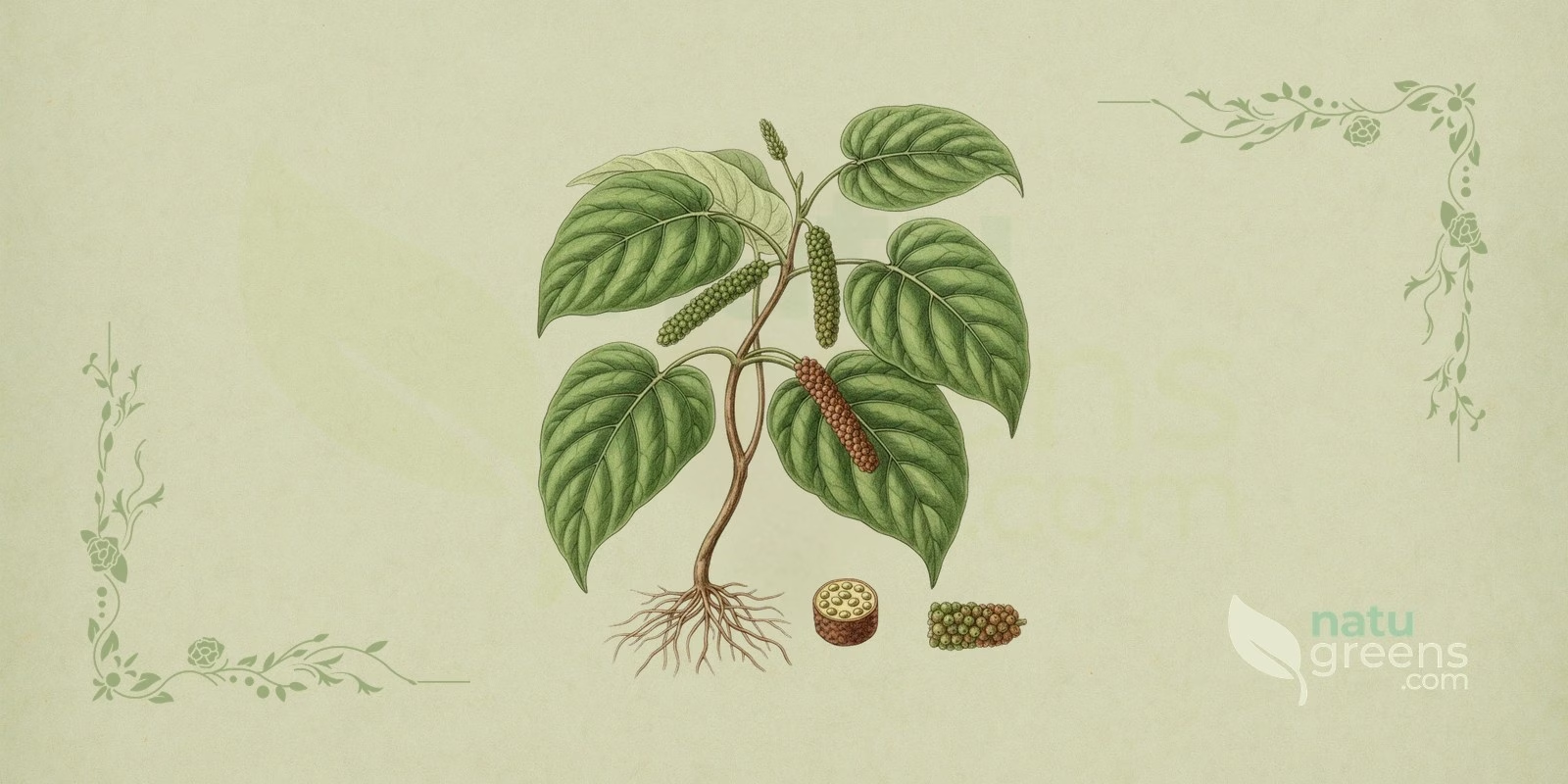
For thousands of years long pepper has held a prominent place in Ayurvedic medicine, where it is called pippali, and much of the interest it attracts comes from a phytochemical makeup rich in alkaloids such as piperine and piperlongumine. Modern research has examined several of these traditional uses in laboratory studies, animal models and a few small clinical trials, with particular attention to the respiratory tract and the immune system, although most of the findings remain preliminary and do not replace professional advice.
Popular and International Names of Long Pepper
- English: Bengal pepper, Indian long pepper, long pepper, pippali.
- French: poivre long.
- German: Langer Pfeffer, Stangenpfeffer.
- Italian: pepe lungo.
- Portuguese: pimenta-de-bengala, pimenta-longa, pimenta-longa-da-índia, pippali.
- Spanish: pimienta larga, pippali.
Botanical Synonyms of Piper longum
Although Piper longum L. is the accepted scientific name, the plant has received other names over the history of taxonomy, most notably Chavica roxburghii Miq. Knowing this synonym helps identify the species in older literature or in works from different geographic regions, since it reflects the classifications and reclassifications made by botanists of different eras.
Paying attention to nomenclature also avoids frequent mix-ups in the trade. Black pepper (Piper nigrum) and Javanese long pepper (Piper retrofractum), which is often sold as pippali, are other species of the same genus; piperine is common to all three, but the species and the fruit differ, so information about one of them should not be transferred automatically to the others.
Botanical Family: Piperaceae
Piper longum belongs to the Piperaceae family, a group of flowering plants that comprises about 3,600 species in 13 genera and is widely known for its aromatic and medicinal members, such as black pepper (Piper nigrum) and Javanese long pepper (Piper retrofractum). Plants in this family are characterized by spike-shaped inflorescences, simple alternate leaves and the presence of bioactive compounds such as alkaloids, which give many of them relevant pharmacological properties, and their diversity carries great economic and medicinal importance in tropical and subtropical regions.
Parts of Long Pepper Used
- Fruits (dried, harvested while still unripe)
- Roots
Ethnobotanical and Traditional Uses
- Abdominal pain
- Antidote for snake and scorpion bites (traditional record)
- Arthritis
- Asthma
- Blood circulation
- Bronchitis
- Colds and coughs
- Contraceptive (traditional record)
- Culinary spice and preservative
- Epilepsy
- Excess mucus
- Heart disease
- Indigestion
- Jaundice
- Liver, as support for liver function
- Lung detoxification
- Lung problems
- Metabolism, as a digestive stimulant
- Rejuvenator for pranavaha srotas (the channels linked to breathing and vital energy in Ayurveda)
- Relief of intestinal cramps and flatulence
- Reproductive functions, as a tonic
- Stress
Therapeutic Properties of Long Pepper
- Analgesic (pain reduction observed in experimental studies)
- Anthelmintic (action against parasitic worms described in laboratory studies)
- Antiarthritic (effect investigated in experimental models of arthritis)
- Antiasthmatic (under study, without established clinical evidence)
- Antihyperglycemic (lower blood glucose observed in animal models)
- Antihyperlipidemic (lower blood lipids observed in animal models)
- Anti-inflammatory (activity observed in preclinical studies)
- Antimicrobial (action on bacteria and fungi observed in the laboratory)
- Antiophidic (neutralization of snake venom observed in experimental models)
- Antioxidant (free radical scavenging in laboratory tests)
- Antiparasitic (activity against parasites described in preliminary studies)
- Antiproliferative (activity observed in laboratory studies, without clinical evidence)
- Antiulcer (protection of the gastric mucosa observed in animal models)
- Cardioprotective (effect investigated in preclinical studies)
- Hepatoprotective (liver protection observed in animal models)
- Immunomodulatory (modulation of the immune system in preliminary studies)
- Larvicidal (action on mosquito larvae observed in the laboratory)
- Neuropharmacological (effects on the nervous system investigated in animal models)
Detailed Phytochemical Profile of Long Pepper
- Alkaloids (mainly piperine and piperlongumine)
- Diaeudesmin
- Essential oils (from roots and fruits)
- Esters
- Flavonoids
- Piperlonguminine
- Pipermonaline
- Sesamin
- Steroids
- Sylvatine
Preparation and Administration Forms of Long Pepper
- Extract: obtained by extraction with solvents such as ethanol, it concentrates the plant's bioactive compounds for use in specific formulations and, precisely because it is concentrated, requires professional guidance, especially for people who take medications.
- Powder: the dried fruits are ground into a fine powder that is widely used in many Ayurvedic preparations and blends.
- Tea/Infusion: to prepare a warming infusion traditionally used for digestion, water is brought to a boil, a pinch of pippali powder is added and the mixture is left to steep for 5 to 10 minutes before straining and drinking; tradition also uses it for coughs and colds.
- Tincture: a concentrated liquid extract of the plant, usually prepared with alcohol as the solvent, which should only be used under the supervision of a healthcare professional.
Synergy with Other Medicinal Plants
Trikatu, the Classic Ayurvedic Combination
Piper longum is one of the three components of Trikatu, an Ayurvedic formulation whose name means "three pungents" and which also includes black pepper (Piper nigrum) and ginger (Zingiber officinale). According to traditional records, the blend is used for digestive problems, cough, asthma and obesity, and Ayurveda credits it with the ability to enhance other herbs and support nutrient assimilation, an effect that research partly links to piperine, the same substance that increases the absorption of several medications and therefore calls for caution.
Pairing with Amalaki and Guduchi
In Ayurvedic medicine, long pepper is traditionally combined with Amalaki (Phyllanthus emblica, synonym Emblica officinalis) and Guduchi (Tinospora cordifolia) in preparations aimed at the immune system. This combination is valued for qualities that tradition describes as immunostimulant and adaptogenic, used to help the body resist infections and maintain overall balance, although these combined effects have not been confirmed in clinical studies.
Infusions for Immunity and Well-Being
In infusions, Piper longum can be prepared together with ginger and Tulsi, or holy basil (Ocimum tenuiflorum), producing an aromatic, warming drink that tradition uses to ease cold and flu symptoms and to provide a general sense of well-being.
Recipes and Usage Protocols of Long Pepper
Pippali Tea or Infusion
To make the tea, bring a cup of water to a boil, add a small pinch of Piper longum powder and let it steep for 5 to 10 minutes before straining and drinking. This preparation is traditionally used to ease cough and cold symptoms and to bring comfort to the airways.
Pippali Powder with Honey
In the traditional Ayurvedic record for cough, a small amount of pippali powder is mixed with a teaspoon of honey. Tradition also uses this combination after main meals to help loosen mucus; the amount and frequency should be set with a healthcare professional, and people on long-term medication should not take the concentrated powder without guidance.
Pippali with Honey in the Ayurvedic Record on Kapha
In Ayurveda, long pepper is traditionally given with honey in cases of obesity and Kapha dosha imbalance. Tradition attributes warming qualities to it that are said to stimulate the digestive fire (agni) and support the balance of body weight, an interpretation specific to the Ayurvedic system that has not yet been confirmed in clinical studies.
General Guidance on Amounts
In Ayurvedic texts, pippali powder is taken in small daily amounts with warm water, honey or ghee, according to the condition and the advice of an Ayurvedic practitioner. Because piperine interferes with the absorption of many medications and excessive use irritates the stomach, the appropriate amount must be determined individually; consult a healthcare professional before use.
Whole Long Pepper Spike Infusion
For an infusion made from the whole fruit, crush a piece (spike) of long pepper and leave it in hot water for 5 to 10 minutes. This method extracts the compounds more gently and suits those who prefer a milder flavor, and it also works for culinary use.
The preparations above follow traditional records and do not replace professional guidance. Before any internal use, check the contraindications and interactions described in this article.
Associated Therapies
Ayurveda
Known as pippali, Piper longum is a highly valued herb in Ayurvedic medicine, which uses it mainly for the respiratory, digestive and metabolic systems. According to this tradition, pippali serves to rejuvenate lung tissue, detoxify the lungs and balance the Kapha dosha, which is associated with conditions such as congestion and excess mucus, while its use in asthma and bronchitis remains under study, without established clinical evidence.
Ayurveda also regards long pepper as an aphrodisiac and a rejuvenating agent linked to general vitality, and includes it in several formulations traditionally used for gastric and abdominal disorders, asthma, bronchitis and cough, such as Trikatu, which should be understood as a traditional record. The Ayurvedic texts themselves advise that continuous, prolonged use be closely monitored, because it can aggravate the Kapha and Pitta doshas and requires careful balance in administration.
Contraindications and Side Effects of Long Pepper
Despite its long history of use, Piper longum should be used with caution, because it has contraindications and can cause side effects, especially at high doses, in concentrated preparations or over long periods. Knowing these points is essential for safe use.
Specific Contraindications
- Drug Interactions: piperine inhibits the CYP3A4 enzyme and P-glycoprotein and increases the bioavailability of many drugs, such as phenytoin, propranolol, theophylline, carbamazepine and antiretrovirals, as well as the curcumin in supplements "with piperine". For this reason, people on long-term medication should not take concentrated extract or powder without guidance.
- Anticoagulants and Bleeding Disorders: long pepper may slow blood clotting, and there is a case report of a probable interaction between warfarin and a solution containing Piper longum; people with bleeding disorders or taking anticoagulants should avoid the plant.
- Antidiabetic Medications: since experimental studies have observed lower blood glucose, people taking medication for diabetes should consult their doctor before any medicinal use, given the risk of additive effects.
- Gastritis and Ulcers: long pepper irritates the digestive mucosa and should be avoided by people with gastritis or ulcers.
- Pregnancy: contraindicated at medicinal doses, because of its traditional use as an abortifacient and animal data on the reproductive toxicity of piperine.
- Breastfeeding: avoid medicinal use while breastfeeding.
- Surgery: stopping use at least two weeks before any surgical procedure is recommended, due to the possible effect on blood clotting.
- Prolonged Continuous Use: continuous use over long periods is not recommended, since according to Ayurvedic medicine it can aggravate the Kapha and Pitta doshas.
Common Side Effects
- Allergic Reactions: although rare, they can occur in people sensitive to the plant's components.
- Gastric Irritation: even in people without a diagnosis of gastritis, excessive consumption can irritate the stomach lining.
- Heartburn and Acidity: because of its hot nature (hot virya, in Ayurvedic terminology), long pepper can cause heartburn and stomach acidity in some people, especially those already prone to gastric problems.
- Intestinal Inflammation and Excessive Heat: at high doses, it can cause intestinal inflammation and a feeling of excessive heat in the body.
Ayurvedic formulas containing the plant, such as Trikatu, are a traditional record and do not replace individual assessment. Always consult a qualified healthcare professional before using Piper longum for medicinal purposes, especially if you have pre-existing conditions or take other medications.
Historical Notes and Interesting Facts
The history of Piper longum is as rich as its flavor. Native to India and Indonesia, this spice has been cultivated and valued for thousands of years and has played an important role in many cultures and systems of traditional medicine, appearing in ancient Ayurvedic texts dated between 1200 and 900 BCE, where it was already described for its medicinal qualities.
Long pepper reached Greece around the 6th or 5th century BCE and became a prominent spice in Europe long before Europeans arrived in the New World and before black pepper became popular. In Ancient Rome it was considered a luxury item, costing up to twice as much as black pepper, and in medieval Europe it remained prized for its warming and digestive qualities, as well as being a common ingredient in medicinal preparations.
Over time, Piper longum came to be confused in the trade with Javanese long pepper (Piper retrofractum), whose spikes look similar and which often reaches consumers under the name pippali, a confusion that botany resolves by treating them as distinct species.
Frequently Asked Questions about Long Pepper
What Is Long Pepper?
Long pepper, scientifically named Piper longum, is a flowering vine of the Piperaceae family grown for its fruits, which serve as a spice and as a resource in traditional medicine. Native to India and Southeast Asia, it is an important ingredient in both cooking and Ayurveda.
What Is Long Pepper Traditionally Used For?
The Ayurvedic tradition uses long pepper tea and powder for digestion, metabolism and respiratory comfort during coughs and colds. Preliminary studies are investigating anti-inflammatory, antioxidant and immunomodulatory activities, but these findings have not yet been confirmed in large clinical trials.
How Do You Make Long Pepper Tea?
Bring a cup of water to a boil, add a pinch of long pepper powder or a crushed piece of the fruit and let it steep for 5 to 10 minutes. After straining, the drink can be sweetened with honey if desired.
Does Long Pepper Have Side Effects?
Yes, especially with excessive use, when it can cause heartburn, stomach acidity and intestinal inflammation, and because it is an irritant it should be avoided by people with gastritis or ulcers. It is contraindicated at medicinal doses during pregnancy, should be avoided while breastfeeding and by people with clotting disorders, and medicinal use always calls for the guidance of a healthcare professional.
Does Long Pepper Interact with Medications?
Yes. Piperine inhibits CYP3A4 and P-glycoprotein and increases the bioavailability of many drugs, such as phenytoin, propranolol, theophylline, carbamazepine and antiretrovirals, as well as the curcumin in supplements "with piperine", so people on long-term medication should not take concentrated extract or powder without guidance.
Are Long Pepper, Black Pepper and Javanese Long Pepper the Same Plant?
No. Black pepper (Piper nigrum) and Javanese long pepper (Piper retrofractum), which is often sold as pippali, are other species of the genus Piper; piperine is common to all three, but the species and the fruit differ. Long pepper has a more complex and pungent flavor than black pepper and is the most highly valued of the three in Ayurvedic medicine.
Notice: this content is for informational purposes and does not replace professional medical advice. Consult a physician or herbal practitioner before using medicinal plants, especially during pregnancy, breastfeeding, or alongside medication.
How to cite this article
NATUGREENS. Long Pepper (Piper longum): Properties and Benefits. Natugreens, 4 Nov. 2026. Disponível em: https://natugreens.com/piper-longum-long-pepper/. Accessed: Nov. 4, 2026.
Natugreens. (2026). Long Pepper (Piper longum): Properties and Benefits. Natugreens. https://natugreens.com/piper-longum-long-pepper/
References and Scientific Studies
- PMC2022 Biswas P, et al. Piper longum L.: A comprehensive review on traditional uses, phytochemistry, pharmacology, and health-promoting activities. Phytotherapy Research. 2022.
- PMC2020 Yadav V, et al. A systematic review on Piper longum L.: Bridging traditional knowledge and pharmacological evidence for future translational research. Journal of Ethnopharmacology. 2020.
- PMC2026 Bhatia A, et al. From Ancient Spice to Advanced Science: Therapeutic, Nutraceutical and Nanotechnological Insights into the Fruits of Piper Longum Linn for Modern Drug Development. Drug Design, Development and Therapy. 2026.
- PMC2026 Huang J, et al. Probable interaction between warfarin and a toothache solution containing Piper longum L. leading to ischemic stroke: a case report. Journal of Ethnopharmacology. 2026.