Quick summary
Simarouba amara Aubl., known in Brazil as marupá and recorded as simaruba in old pharmacopoeias, is an evergreen tree of the Simaroubaceae family described by Jean Baptiste Christophore Fusée Aublet in 1775. Native to the Neotropics, the species ranges widely from Guatemala to Bolivia and from Ecuador to the east…
Main caution: The quassinoids in simarouba bark, such as glaucarubinone and ailanthinone, are cytotoxic and antiproliferative in the laboratory, and this fact shapes every precaution for use. Pregnancy and breastfeeding…
Simarouba amara Aubl., known in Brazil as marupá and recorded as simaruba in old pharmacopoeias, is an evergreen tree of the Simaroubaceae family described by Jean Baptiste Christophore Fusée Aublet in 1775. Native to the Neotropics, the species ranges widely from Guatemala to Bolivia and from Ecuador to the east coast of Brazil, and it is valued both for the traditional use of its bark and for its light, versatile wood, which local communities have worked for centuries.
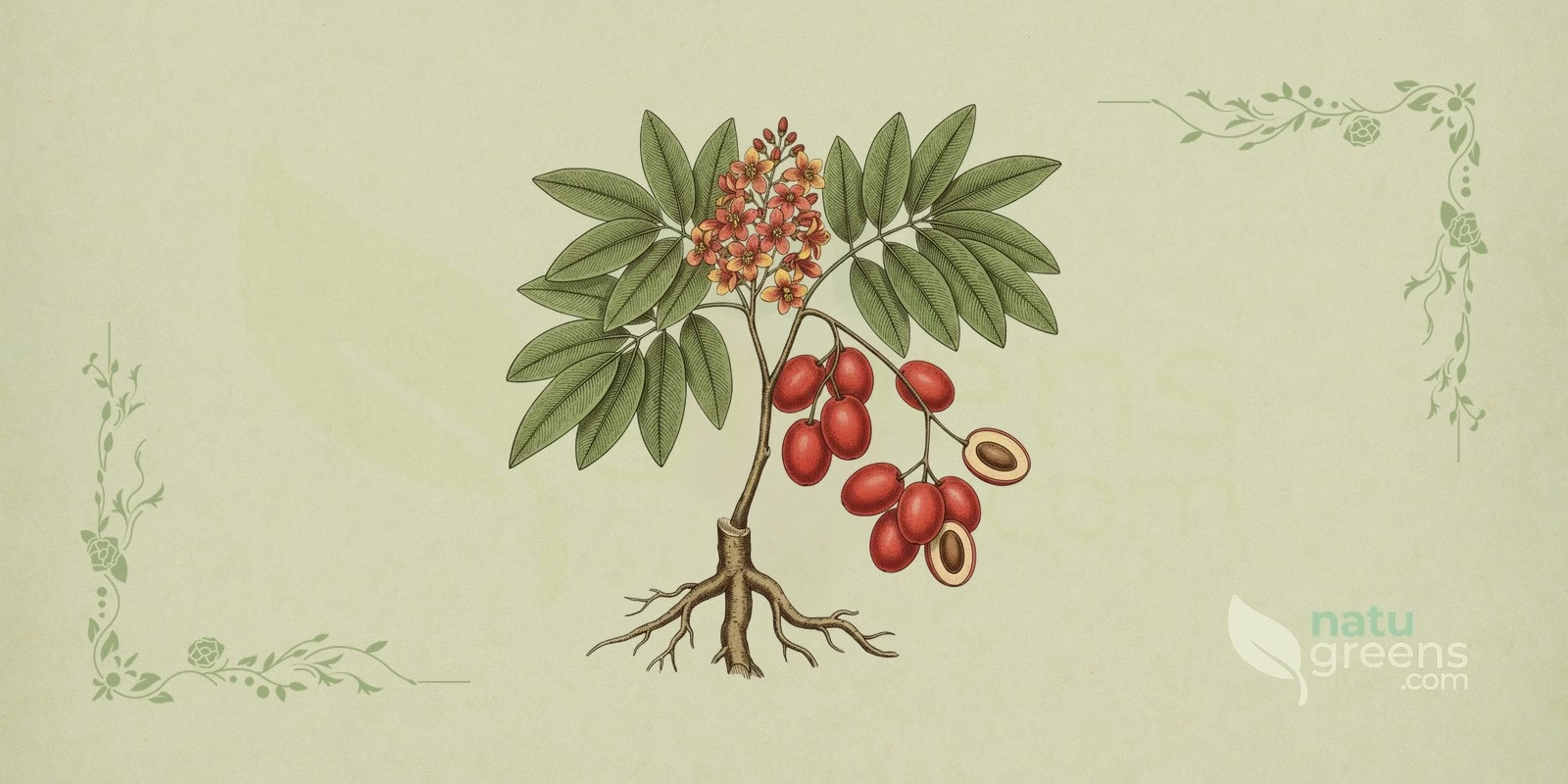
In the herbal tradition of Latin America, Simarouba amara holds a prominent place as a bitter plant associated with intestinal and parasitic complaints, with records ranging from diarrhea and dysentery to fevers and other infections. Its phytochemical makeup, particularly rich in quassinoids, explains the interest of modern scientific research, which is investigating some of these traditional uses in the laboratory and in animal models, although there are still no clinical trials confirming efficacy and safety in humans.
Popular and International Names of Simarouba amara
- English: bitterwood, dysentery bark, mountain damson, Orinoco simarouba, paradise tree, slave wood, stavewood, wing-leaved quassia.
- French: bois blanc, simarouba, simarouba glabre.
- German: Simarouba.
- Italian: simaruba.
- Portuguese: amarelinho, caixeta, cedro-amargo, marupá, marupaúba, paraíba, pau-paraíba, simaruba, tamanqueira.
- Spanish: cedro amargo, cuna, gavilán (Cuba), guitarro, simaruba.
Botanical Synonyms of Simarouba amara
Simarouba amara Aubl. has accumulated several botanical synonyms over time, a reflection of successive revisions of its classification and of the tree’s wide range, which led botanists from different regions to describe it more than once. The best known are Quassia simarouba and Quassia simaruba, used in different periods and contexts, while the name simaruba survived in old pharmacopoeias as the designation of the herbal drug obtained from the bark, Simarubae cortex.
- Picraena officinalis
- Pistacia americana Mill.
- Quassia alatifolia Stokes
- Quassia dioica P.J.Bergius
- Quassia glauca (DC.) Spreng.
- Quassia officinalis Rich.
- Quassia simarouba
- Quassia simaruba
- Simarouba medicinalis
- Zwingera amara
Botanical Family: Simaroubaceae
Simarouba amara belongs to the Simaroubaceae, a family of dicotyledonous plants made up of trees and shrubs found mainly in tropical and subtropical regions. The family is known for producing bitter compounds, especially quassinoids, to which much of the pharmacological interest in its species is attributed, and many of its members appear in traditional medicine in connection with fevers, inflammation and parasitic diseases because of these secondary metabolites.
Simaroubaceae typically have alternate, usually pinnate leaves and small, often unisexual flowers gathered in inflorescences. The wood of several species in the family is prized for its lightness and ease of working, which gives it a range of commercial applications, while the presence of bioactive compounds keeps the group on the radar of pharmacological research, which looks to these plants for new substances worth studying.
Parts of Simarouba amara Used
- Bark
- Fruits (pulp and seeds)
- Leaves
Ethnobotanical and Traditional Uses
- Abdominal pain (traditional record)
- Anemia (traditional record)
- Diarrhea (traditional Amazonian and Caribbean record, under study)
- Dysentery (traditional record, under study; does not replace rehydration or medical treatment)
- Fever (traditional record)
- Indigestion (traditional record)
- Inflammation (traditional record)
- Intestinal parasites (traditional record)
- Malaria (traditional record; in vitro and animal data only)
- Wounds (traditional external use)
Therapeutic Properties of Simarouba amara
- Analgesic (pain relief in the traditional record, without clinical confirmation)
- Antidiarrheal (traditional Amazonian and Caribbean use, under study)
- Antidysenteric (traditional use under study, which does not replace rehydration or medical treatment)
- Anti-inflammatory (activity investigated in preliminary studies)
- Antimicrobial (activity against microorganisms observed in the laboratory)
- Antiparasitic (antiamoebic activity observed in vitro)
- Antiproliferative (activity observed in laboratory studies, without clinical evidence)
- Antipyretic (fever reduction in the traditional record)
- Astringent (tightens tissues and reduces secretions, according to the traditional record)
- Diuretic (increased urine production in the traditional record)
Detailed Phytochemical Profile of Simarouba amara
The phytochemical profile of Simarouba amara is dominated by quassinoids, a group of degraded, highly oxygenated triterpenes known for their intensely bitter taste and marked biological activities, which makes them the main candidates to explain the effects attributed to the plant. Among the most studied are ailanthinone, glaucarubinone and holacanthone, along with derivatives such as 13,18-dehydroglaucarubinone, isolated from the species back in the 1970s. Glaucarubinone in particular has shown antiplasmodial and antiproliferative activity in preclinical assays, results confined to the laboratory and to animal models that do not support any use against malaria or cancer.
Besides quassinoids, the bark contains tirucallane and apotirucallane triterpenes, alkaloids and essential oils, which may contribute to the plant’s range of action. This complex composition suggests pharmacological effects through multiple pathways that science is still exploring, and current research seeks to isolate and characterize new compounds while trying to clarify the mechanisms of action of the known ones, including their toxicity.
- Ailanthinone (quassinoid)
- Alkaloids
- Essential oils
- Glaucarubinone (quassinoid)
- Holacanthone (quassinoid)
- Tirucallane and apotirucallane triterpenes
Preparation and Administration Forms of Simarouba amara
- Bark decoction
- Extracts
- Leaf infusion
- Seed oil
- Tincture
Synergy with Other Medicinal Plants
Gastrointestinal Disorders
In the traditional record, Simarouba amara appears combined with tannin-rich plants such as guava (Psidium guajava) and pomegranate (Punica granatum) in preparations used for diarrhea. The idea behind the pairing is to add the bitterness of the tree’s quassinoids to the astringency of the tannins, a hypothesis that remains under study and does not replace rehydration or medical assessment, especially when there is blood in the stool, fever or signs of dehydration.
Febrile Conditions
Traditional sources mention simarouba alongside cinchona (Cinchona officinalis) and sweet wormwood (Artemisia annua) in preparations for fevers. Cinchona is the historical source of quinine and sweet wormwood gave rise to artemisinin, whereas the quassinoids of Simarouba amara, such as glaucarubinone, have shown antiplasmodial activity only in vitro and in animals, so none of these home combinations replaces diagnosis and the standardized antimalarial drugs prescribed by a physician when malaria is suspected.
Inflammation and Pain
Tradition also pairs Simarouba amara with devil’s claw (Harpagophytum procumbens) and turmeric (Curcuma longa) in preparations aimed at pain and inflammation. The proposal brings together the quassinoids of simarouba, the iridoids of devil’s claw and the curcuminoids of turmeric for conditions such as arthritis and muscle pain, a combination traditionally used for chronic discomfort, but with no clinical studies evaluating the mixture and no basis for reducing or stopping anti-inflammatory drugs on one’s own.
Recipes and Usage Protocols of Simarouba amara
Light Bark Decoction
A preparation traditionally used for mild intestinal complaints in the Amazonian and Caribbean record, made with a small amount of dried simarouba bark boiled in water for a few minutes, strained and taken warm.
Usage guidance: the decoction should be light and the use short, and only under the guidance of a health professional, because the bark is emetic and purgative at high doses. The preparation does not replace oral rehydration or medical treatment of dysentery, and blood in the stool, fever or dehydration call for prompt medical care. Consult a health professional before use.
Leaf Infusion
A preparation recorded in tradition for feverish states, in which dried simarouba leaves are placed in boiling water, covered for a few minutes and strained before the warm infusion is drunk.
Usage guidance: since there are no safety data that would allow a dose to be set, the infusion should be weak and used only occasionally, always with professional follow-up. Persistent fever, or fever accompanied by other symptoms, requires medical evaluation, especially in regions where malaria occurs. Consult a health professional.
Bark Tincture
A preparation cited in the traditional record for intestinal parasites, obtained by macerating the dried, powdered bark in grain alcohol inside a dark glass jar kept in a cool place and shaken daily for about two weeks, before it is strained and stored.
Usage guidance: the tincture concentrates cytotoxic quassinoids, so it should not be used without the prescription and supervision of a health professional, who decides whether its use is appropriate and for how long. Consult a health professional.
The preparations above follow traditional records and do not replace professional guidance. Before any internal use, check the contraindications and interactions described in this article.
Associated Therapies
Clinical Herbal Medicine
In clinical herbal medicine, Simarouba amara appears in standardized formulations, such as dry or fluid extracts, designed to control the quassinoid content of each dose. Its use is being studied in gastrointestinal disorders and parasitic infections, always with individualized prescription that takes into account the diagnosis, the patient’s condition and possible interactions with other medicines, and modern herbal medicine seeks to integrate this traditional knowledge with the available scientific evidence, which is still mostly preclinical.
Indigenous Traditional Medicine
Simarouba holds a central role in the traditional medicine of many Indigenous communities in South and Central America, where it takes part in healing rituals and in preparations for a wide range of complaints, from digestive problems and fevers to more complex conditions. Knowledge of the tree is passed down orally from generation to generation, and the plant is seen not only as a remedy but as an integral part of the local ecosystem and culture, which is why understanding these uses matters both to research and to the appreciation of biodiversity.
Contraindications and Side Effects of Simarouba amara
General Contraindications
The quassinoids in simarouba bark, such as glaucarubinone and ailanthinone, are cytotoxic and antiproliferative in the laboratory, and this fact shapes every precaution for use. Pregnancy and breastfeeding: contraindicated, because of the emmenagogue effect described in tradition and the cytotoxicity of the quassinoids. Children: do not use. People with low blood pressure should be cautious, since there is a traditional record of blood pressure drops, and anyone with pre-existing liver or kidney disease should avoid use, as should people with known hypersensitivity to any component of the plant.
The traditional antidiarrheal and antidysenteric use of simarouba, recorded in the Amazon and the Caribbean, is under study and does not replace rehydration or medical treatment of dysentery. The plant must also not be presented or used as an anticancer, antimalarial or antiviral agent, because the available data come only from in vitro and animal studies. Consult a health professional before any use, especially in case of chronic disease or continuous use of medication.
Drug Interactions
Because quassinoids may interfere with liver enzymes, there is potential for altered efficacy or increased toxicity of other drugs. Anyone taking anticoagulants, blood sugar-lowering drugs, immunosuppressants or antihypertensives should talk to their doctor before consuming any simarouba preparation, and the same applies to anyone who continuously takes medicines metabolized by the liver.
Side Effects and Toxicity
At high doses, simarouba bark is emetic and purgative and can cause nausea, vomiting, sweating and cramps, effects more likely in sensitive people or with concentrated preparations. A veterinary case of dermatitis and erosive stomatitis has been published in dogs exposed to Simarouba amara sawdust, and there are reports of poisoning in horses linked to wood residues, which underlines the risk of contact irritation from wood and bark dust when handling the plant, a situation in which gloves and a mask are advisable. The safety and efficacy of prolonged use have not yet been established by robust clinical studies.
Historical Notes and Interesting Facts
Simarouba amara has a long history, having been used by Indigenous peoples of the Americas well before the arrival of Europeans. The bark gained notoriety in Europe in the eighteenth century, when it was exported to France in 1713 and used during dysentery epidemics between 1718 and 1725, an episode that marked one of the first Western recognitions of the plant and established the name simaruba for the herbal drug in the pharmacopoeias of the time.
Historical accounts from the twentieth century describe, in 1918, the use of the bark in a military hospital against amoebic dysentery and, in 1944, a report that attributed a high response rate to the bark in intestinal amoebiasis, period data that do not meet the standards of today’s clinical trials. Beyond its medicinal interest, the light, pale wood of the tree is in strong demand in the furniture and construction industries and is exported to European markets, and the tree plays an important ecological role, since its seeds are dispersed by many vertebrates, among them monkeys, birds and fruit bats.
Frequently Asked Questions about Simarouba amara
Can Children Drink Simarouba Tea?
No. Children should not use simarouba, since there are no safety studies in pediatric populations and the bark, at high doses, is emetic and purgative, which increases the risk of dehydration. In case of diarrhea or fever in a child, the right course is to seek medical care.
What Is the Safe Dose of Simarouba Tea?
No safe dose has been established by clinical studies, so the guidance is to use only a light decoction, for a short time and with the supervision of a health professional. At high doses, the bark causes nausea, vomiting, sweating and cramps, effects linked to the cytotoxic quassinoids it contains.
Can Simarouba Interact with Medications?
Yes, simarouba can interact with medications, especially those metabolized by the liver, because quassinoids may influence liver enzymes. Anyone taking anticoagulants, blood sugar-lowering drugs, immunosuppressants or blood pressure medication should consult their doctor before consuming any preparation of the plant.
Can Pregnant and Breastfeeding Women Use Simarouba?
No. Use is contraindicated during pregnancy and breastfeeding because of the emmenagogue effect described in tradition and the cytotoxicity of the bark’s quassinoids, which have proved cytotoxic and antiproliferative in the laboratory.
Does Simarouba Tea Replace Dysentery Treatment?
No. The traditional antidiarrheal and antidysenteric use of simarouba, recorded in the Amazon and the Caribbean, is under study and does not replace rehydration or medical treatment of dysentery. The plant must also not be used as an anticancer, antimalarial or antiviral agent, because these data exist only in vitro and in animals.
What Is the Difference between Marupá and Simaruba?
Both names refer to the same species, Simarouba amara. Marupá is the Brazilian name for the tree and its wood, while simaruba is the name of the herbal drug recorded in old pharmacopoeias, Simarubae cortex, obtained from the bark, which is why it still appears in historical texts and in some medicinal plant markets.
Notice: this content is for informational purposes and does not replace professional medical advice. Consult a physician or herbal practitioner before using medicinal plants, especially during pregnancy, breastfeeding, or alongside medication.
How to cite this article
NATUGREENS. Simarouba amara: Properties, Benefits and Uses. Natugreens, 4 Nov. 2026. Disponível em: https://natugreens.com/simarouba-amara/. Accessed: Nov. 4, 2026.
Natugreens. (2026). Simarouba amara: Properties, Benefits and Uses. Natugreens. https://natugreens.com/simarouba-amara/
References and Scientific Studies:
- PMC2014 Maranhão HM, et al. Hepatoprotective effect of the aqueous extract of Simarouba amara Aublet (Simaroubaceae) stem bark against carbon tetrachloride (CCl4)-induced hepatic damage in rats. Molecules. 2014.
- PMC2021 Veena H, et al. Molecular mechanism of Escherichia coli H10407 induced diarrhoea and its control through immunomodulatory action of bioactives from Simarouba amara (Aubl.). J Microbiol. 2021.
- PMC2006 Grosvenor SN, et al. Tirucallane, apotirucallane, and octanorapotirucallane triterpenes of Simarouba amara. J Nat Prod. 2006.
- PMC1988 Wright CW, et al. Use of microdilution to assess in vitro antiamoebic activities of Brucea javanica fruits, Simarouba amara stem, and a number of quassinoids. Antimicrob Agents Chemother. 1988.
- PMC1988 O’Neill MJ, et al. Plants as sources of antimalarial drugs, Part 6: Activities of Simarouba amara fruits. J Ethnopharmacol. 1988.