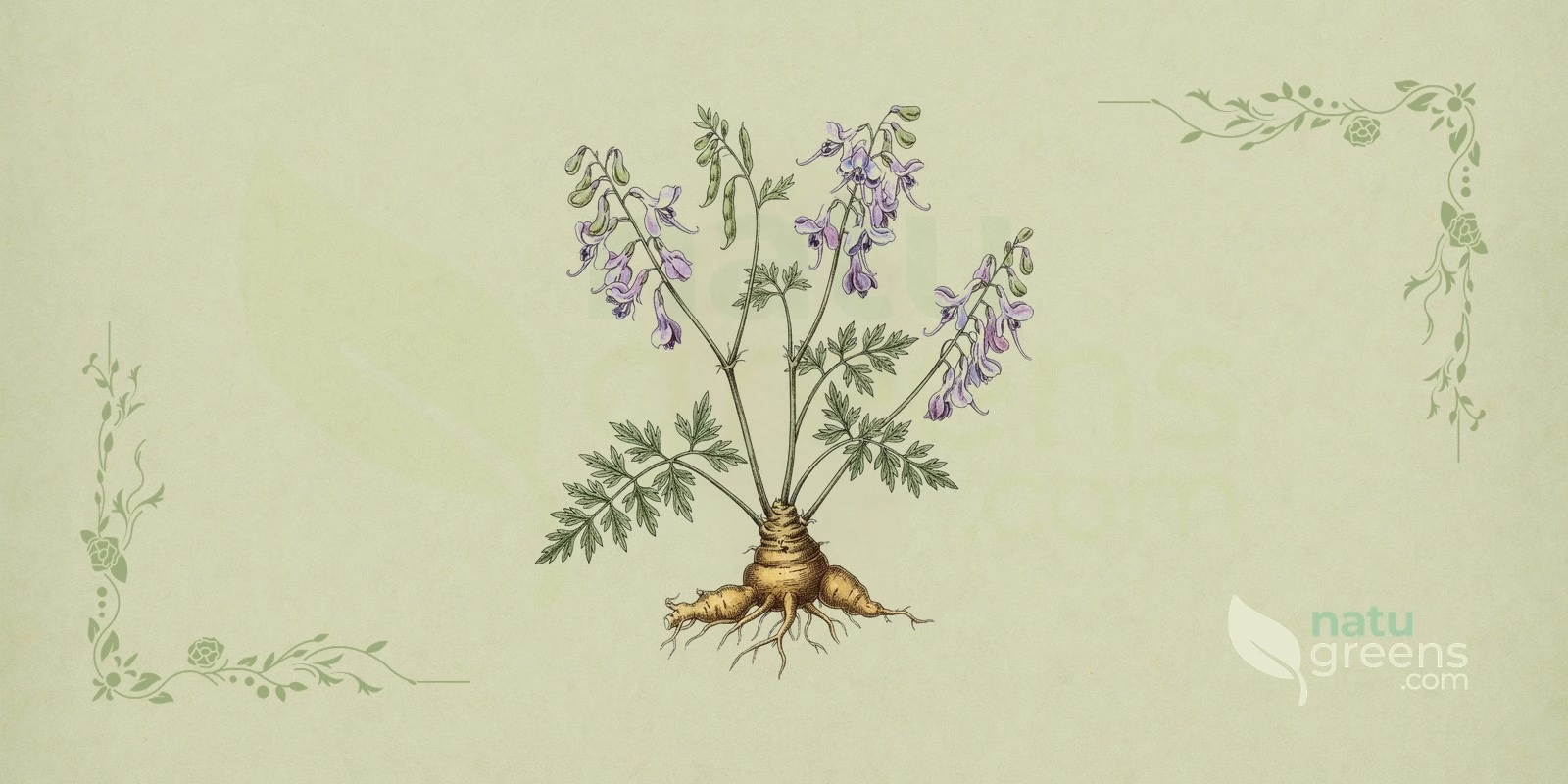
Corydalis yanhusuo W. T. Wang / Corydalis, popularly known as Corydalis or Yanhusuo, is a perennial herbaceous plant of the Papaveraceae family, described by Wang in 1989. Native to China, Japan, Korea, and other Asian countries, this species is widely used in Traditional Chinese Medicine (TCM) for its recognized analgesic and sedative properties. The plant’s tuberous rhizome is the medicinally valued part, harvested and processed for various herbal preparations.
In TCM, Corydalis holds a prominent place in the management of pain and disorders related to Qi and blood stagnation. Its applications range from the relief of acute and chronic pain to the management of conditions such as dysmenorrhea and gastrointestinal spasms. The plant is recognized for its complex phytochemical composition, rich in alkaloids such as tetrahydropalmatine (THP) and berberine, which give it its pharmacological properties. Modern scientific research has been validating many of the traditional uses of Corydalis, consolidating its position as a medicinal plant of great interest for study.
Popular and International Names of Corydalis
- English: chinese corydalis, corydalis, yanhusuo.
- Spanish: coridalis, yanhusuo.
- Portuguese: Corydalis, Yanhusuo.
- French: corydale, yanhusuo.
- Italian: coridalide, yanhusuo.
- German: Erdrauch, Lerchensporn.
Botanical Synonyms of Corydalis yanhusuo
The accepted scientific name for this species is Corydalis yanhusuo W. T. Wang. However, in some literature and contexts, synonyms or related names may be found, although taxonomic distinction is crucial to avoid confusion with other species of the genus Corydalis, which have different phytochemical profiles and uses. It is important to note that substitution with other Corydalis species is not recommended due to differences in their pharmacological actions.
Botanical Family: Papaveraceae
The Papaveraceae family, known as the poppy family, comprises about 770 species distributed across 44 genera, predominantly in temperate and subtropical regions of the Northern Hemisphere. This family is notable for producing isoquinoline alkaloids, which are responsible for many of its medicinal and psychoactive properties. Plants such as the opium poppy (Papaver somniferum) are well-known examples of this family’s pharmacological importance.
Corydalis yanhusuo shares morphological and chemical characteristics typical of the family, including the presence of alkaloids that act on the central nervous system. The chemical diversity within Papaveraceae has been the subject of intense research, contributing to the discovery of new bioactive compounds and to drug development. The presence of alkaloids such as tetrahydropalmatine and berberine in Corydalis yanhusuo underscores the relevance of this plant within its botanical family.
Parts of Corydalis Used
- Tuberous rhizome
Ethnobotanical and Traditional Uses
- Improved blood circulation
- Mild sedative and tranquilizer
- Promotion of Qi movement
- Reduction of anxiety and nervousness
- Relief of chest and abdominal pain
- Relief of dysmenorrhea (menstrual cramps)
- Relief of headaches and migraines
- Relief of intestinal colic and gastrointestinal spasms
- Relief of pain (acute, inflammatory, neuropathic)
- Relief of postpartum blood stasis
- Relief of spleen and stomach stagnation
- Treatment of amenorrhea
- Treatment of insomnia
- Treatment of neuralgia
Therapeutic Properties of Corydalis
- Analgesic (traditional use to relieve pain)
- Anti-arrhythmic (studied effect in preventing and correcting cardiac arrhythmias)
- Anti-inflammatory (studied effect in reducing inflammation)
- Antimetastatic (studied inhibitory effect on metastasis formation)
- Antiproliferative (studied inhibitory effect on cell growth)
- Antispasmodic (traditional use to relieve muscle spasms)
- Sedative (induces relaxation and sleep)
- Tranquilizing (studied effect in reducing anxiety)
Detailed Phytochemical Profile of Corydalis
- Alcohols
- Alkaloids (more than 80 identified, including berberine, corydaline, dehydrocorydaline, palmatine, protopine, tetrahydropalmatine)
- Amino acids
- Organic acids
- Sugars
- Volatile oils
Alkaloids are the most biologically active constituents of Corydalis yanhusuo. Tetrahydropalmatine (THP) is one of the most studied alkaloids, known for its analgesic, sedative, and anxiolytic properties, acting as an antagonist of D1 and D2 dopaminergic receptors. Berberine, another alkaloid present in the plant, contributes anti-inflammatory and antioxidant actions, but is also associated with important contraindications and drug interactions. Corydaline and dehydrocorydaline also exhibit analgesic effects, with the latter being particularly effective for dysmenorrhea. Protopine and palmatine round out the profile with anti-inflammatory and antioxidant activities.
Preparation and Administration Forms of Corydalis
- Capsules
- Decoction (tea)
- Extracts
- Pills
- Tinctures
Synergy with Other Medicinal Plants
Chronic Pain Relief
Corydalis yanhusuo can be combined with other analgesic and anti-inflammatory plants to enhance relief from chronic pain. For example, pairing it with turmeric (Curcuma longa) may offer a synergistic anti-inflammatory effect, while combining it with white willow (Salix alba) may support its analgesic properties. These synergies aim to address pain through multiple mechanisms of action, reducing the need for high doses of each individual component.
Blood Circulation and Stasis
For conditions involving blood stasis and poor circulation, Corydalis yanhusuo can be used together with plants such as Chinese salvia (Salvia miltiorrhiza) or dong quai (Angelica sinensis). These combinations are traditional in TCM to promote blood circulation and dissipate stasis, complementing Corydalis’s action in mobilizing Qi and blood. This synergy may optimize therapeutic effects in cases of pain associated with circulatory problems.
Recipes and Usage Protocols of Corydalis
Analgesic Decoction for Generalized Pain
Ingredients: Dried Corydalis yanhusuo rhizome and water, in a proportion defined by a qualified healthcare professional.
Preparation: Add the Corydalis rhizome to the water and bring to a boil. Reduce the heat and let simmer for 20 to 30 minutes, strain, and drink the decoction warm. This protocol is traditionally used to relieve headaches, abdominal pain, and menstrual pain, but the amount of rhizome and the number of daily doses must always be determined by a healthcare professional, given the known toxicity of Corydalis yanhusuo and its relevant contraindications.
Tincture for Rapid Pain Relief
Ingredients: Dried Corydalis yanhusuo rhizome, 70% alcohol (traditional proportion of 1 part rhizome to 5 parts alcohol).
Preparation: Grind the dried rhizome and place it in a dark glass jar. Cover with the 70% alcohol, making sure the plant material is completely submerged. Seal tightly and let macerate for 2 to 4 weeks in a cool, dark place, shaking daily. Strain and store the resulting tincture in a dropper bottle. Dosage and frequency of use must be guided by a healthcare professional, given the known toxicity of Corydalis yanhusuo; this form of preparation allows for faster absorption of the active alkaloids.
The preparations above follow traditional records and do not replace professional guidance. Before any internal use, check the contraindications and interactions described in this article.
Associated Therapies
Acupuncture
Acupuncture, an ancient TCM practice, can be combined with the use of Corydalis yanhusuo for pain management. Combining needles at specific points on the body with ingestion of the plant may enhance analgesic effects and harmonize the flow of Qi and blood. This integrative approach is often used for chronic pain conditions, such as fibromyalgia, arthritis, and neuropathic pain, where the synergy between the two therapies may offer more complete and lasting relief.
Western Herbal Medicine
In Western herbal medicine, Corydalis yanhusuo may be considered a natural analgesic for pain conditions that do not respond well to conventional treatments, or for patients seeking alternatives with fewer side effects. It can be formulated into capsules or standardized extracts, allowing for more precise dosing of its active components. Western herbal medicine incorporates Corydalis into protocols for musculoskeletal pain, tension headaches, and dysmenorrhea, always with careful assessment of interactions and contraindications.
Therapeutic Massage
Therapeutic massage, especially Tui Na (Chinese massage), can be an effective complementary therapy to the use of Corydalis yanhusuo. Applying oils or balms containing extracts of the plant to areas affected by pain may promote muscle relaxation, improve local circulation, and enhance analgesic effects. This combination is particularly useful for muscle pain, tension, and stiffness, providing localized relief and promoting overall well-being.
Contraindications and Side Effects of Corydalis
General Contraindications
Corydalis yanhusuo is categorically contraindicated during pregnancy, both due to the absence of safety data and because it contains isoquinoline alkaloids with relevant pharmacological effects on the central nervous system; there are also reports that the plant may induce uterine contractions and menstrual bleeding, increasing the risk of miscarriage. It is also contraindicated during breastfeeding, as the berberine present in the plant can be transferred into breast milk and cause brain damage in newborns, especially those with jaundice, which is why it is likewise contraindicated in newborn infants due to the same risk of berberine-induced brain damage. Individuals with bleeding disorders or who take anticoagulants should avoid use, as Corydalis may slow blood clotting, and people with elevated bilirubin levels should refrain from using it, since berberine can impair the liver’s proper removal of bilirubin, leading to brain problems.
Common Side Effects
Side effects of Corydalis yanhusuo are generally mild, but may include muscle spasms and tremors when consumed in high doses. Other effects may include nausea, vomiting, diarrhea, dry mouth, fatigue, and dizziness. It is important to monitor individual response to the plant and adjust the dosage as needed. In case of persistent or severe adverse reactions, use should be discontinued and a healthcare professional consulted.
Risk of Hepatotoxicity
There are reports in the medical literature of hepatotoxicity associated with the use of Corydalis yanhusuo, both alone and in combined Traditional Chinese Medicine formulas. In the presence of symptoms such as jaundice, dark urine, or persistent malaise, use should be discontinued immediately and a healthcare professional should be consulted for evaluation of liver function.
Drug Interactions
Corydalis yanhusuo, due to the presence of berberine, may interact with a wide range of medications. It may potentiate the effects of diabetes medications (risk of hypoglycemia) and high blood pressure medications (risk of hypotension). It interacts with anticoagulants and antiplatelet drugs, increasing the risk of bleeding. It may alter the metabolism of drugs processed by the liver (CYP2C9, CYP2D6, CYP3A4 substrates), such as cyclosporine, dextromethorphan, losartan, midazolam, and tacrolimus, increasing their effects and side effects. Combining it with sedatives (including pentobarbital) may increase drowsiness and respiratory depression. Metformin’s effects may be increased when used together with Corydalis.
Historical Notes and Interesting Facts
Ancient Origins in Chinese Medicine
Corydalis yanhusuo has a rich, centuries-old history in Traditional Chinese Medicine (TCM), where it is revered as one of the principal natural analgesics. Its earliest records date back to the Shennong Herbal Classic, one of the oldest works on Chinese herbal medicine, where it was classified as a mid-grade drug. Its use was documented between 618 and 907 CE in the Lei Gong Pao Zhi Lun, mainly for relieving chest pain. Over the centuries, its application expanded to treat a variety of painful conditions, cementing its status as an essential herb in the Chinese pharmacopoeia.
Analgesic Power of Tetrahydropalmatine (THP)
One of the most notable alkaloids in Corydalis yanhusuo is tetrahydropalmatine (THP). This compound has been the subject of intense research due to its potent analgesic properties, which in some studies have been compared to morphine, albeit at a fraction of its potency (1% to 40%). Most fascinating is that THP acts on the dopaminergic system, offering pain relief without the dependence risks associated with traditional opioids, making it a promising alternative for chronic pain management. In addition, THP has been investigated for its potential in treating substance dependence, such as opioids and cocaine, due to its ability to modulate dopamine receptors in the brain.
Cultivation and Harvesting
Corydalis yanhusuo is cultivated mainly in the Chinese provinces of Zhejiang, Jiangxi, and Anhui. Harvesting the tuberous rhizome, the medicinally active part, is a careful process that takes place after the plant’s flowering period. The quality and concentration of its alkaloids can vary significantly depending on growing conditions, soil, and the timing of harvest, underscoring the importance of traditional and modern agricultural practices in ensuring the plant’s therapeutic effectiveness.
Frequently Asked Questions about Corydalis
Is Corydalis Safe for Daily Use?
The safety of daily use of Corydalis yanhusuo depends on several factors, including dosage, form of preparation, and individual health. Although it has been used for centuries in TCM, the presence of potent alkaloids, such as berberine and tetrahydropalmatine, calls for caution. It is essential to consult a qualified healthcare professional before starting regular use, especially in the presence of pre-existing medical conditions or use of other medications, due to the risk of interactions and side effects.
What Are the Main Uses of Corydalis?
Corydalis yanhusuo is mainly used for pain relief, including headaches, abdominal pain, menstrual pain (dysmenorrhea), and neuropathic pain. It is also used as a mild sedative and tranquilizer, to reduce anxiety and promote relaxation. In TCM, it is valued for its ability to improve blood circulation and dissipate Qi and blood stagnation, contributing to the management of various painful and inflammatory conditions.
Can Corydalis Cause Dependence?
Unlike some conventional analgesics, Corydalis yanhusuo, and specifically its alkaloid tetrahydropalmatine (THP), has been studied for its potential to offer pain relief without the dependence risks associated with opioids. Research suggests that THP may even play a role in treating substance dependence. However, as with any substance with effects on the central nervous system, use should be monitored and guided by a healthcare professional to avoid any potential risks.
Are There Important Drug Interactions with Corydalis?
Yes, Corydalis yanhusuo may interact with several medications, mainly due to the presence of berberine. It may potentiate the effects of diabetes and high blood pressure medications, increase the risk of bleeding with anticoagulants and antiplatelet drugs, and alter the metabolism of drugs processed by the liver. It is crucial to inform your doctor or pharmacist about all medications and supplements you are taking before using Corydalis to avoid adverse interactions.
Notice: this content is for informational purposes and does not replace professional medical advice. Consult a physician or herbal practitioner before using medicinal plants, especially during pregnancy, breastfeeding, or alongside medication.
References and Scientific Studies
Peer-Reviewed Scientific Studies (4)
- PMC2021 Alhassen, L., Dabbous, T., Ha, A., Dang, L. H., & Civelli, O. (2021). The Analgesic Properties of Corydalis yanhusuo. Molecules, 26(24), 7498.
- PEER2023 Feng, J., et al. (2023). The composition, pharmacological effects, related mechanisms and drug delivery systems of alkaloids from Corydalis yanhusuo. Biomedicine & Pharmacotherapy, 167, 115562.
- PEER2021 Wu, L., et al. (2021). Processing and Compatibility of Corydalis yanhusuo: Phytochemistry, Pharmacology, Pharmacokinetics, and Safety. Evidence-Based Complementary and Alternative Medicine, 2021.
- PEER2020 Zhang, J., et al. (2020). A Review of the Traditional Uses, Botany, Phytochemistry, Pharmacology, Pharmacokinetics, and Toxicology of Corydalis yanhusuo. Journal of Dietary Supplements, 17(5), 572-595.
Supplementary Readings (1)
- 2024 Zhao, X., et al. (2024). Metabolomics and transcriptomics reveal the mechanism of alkaloid synthesis in Corydalis yanhusuo bulbs. PLoS ONE, 19(6), e0304258.