Quick summary
Fireweed (Epilobium angustifolium L.), also known as rosebay willowherb in some regions, is a perennial herbaceous plant of the Onagraceae family, described by Carl Linnaeus and native to vast areas of the temperate Northern Hemisphere, where it covers large stretches of the boreal forests. For centuries fireweed has…
Main caution: Fireweed is generally well tolerated in usual amounts, but like any medicinal plant it has contraindications and may cause unwanted effects in sensitive people or in specific situations, so the information below should…
Fireweed (Epilobium angustifolium L.), also known as rosebay willowherb in some regions, is a perennial herbaceous plant of the Onagraceae family, described by Carl Linnaeus and native to vast areas of the temperate Northern Hemisphere, where it covers large stretches of the boreal forests. For centuries fireweed has appeared in the traditional medicine of several cultures, especially in Europe and North America, and today some of these uses are the subject of laboratory studies and scientific reviews.
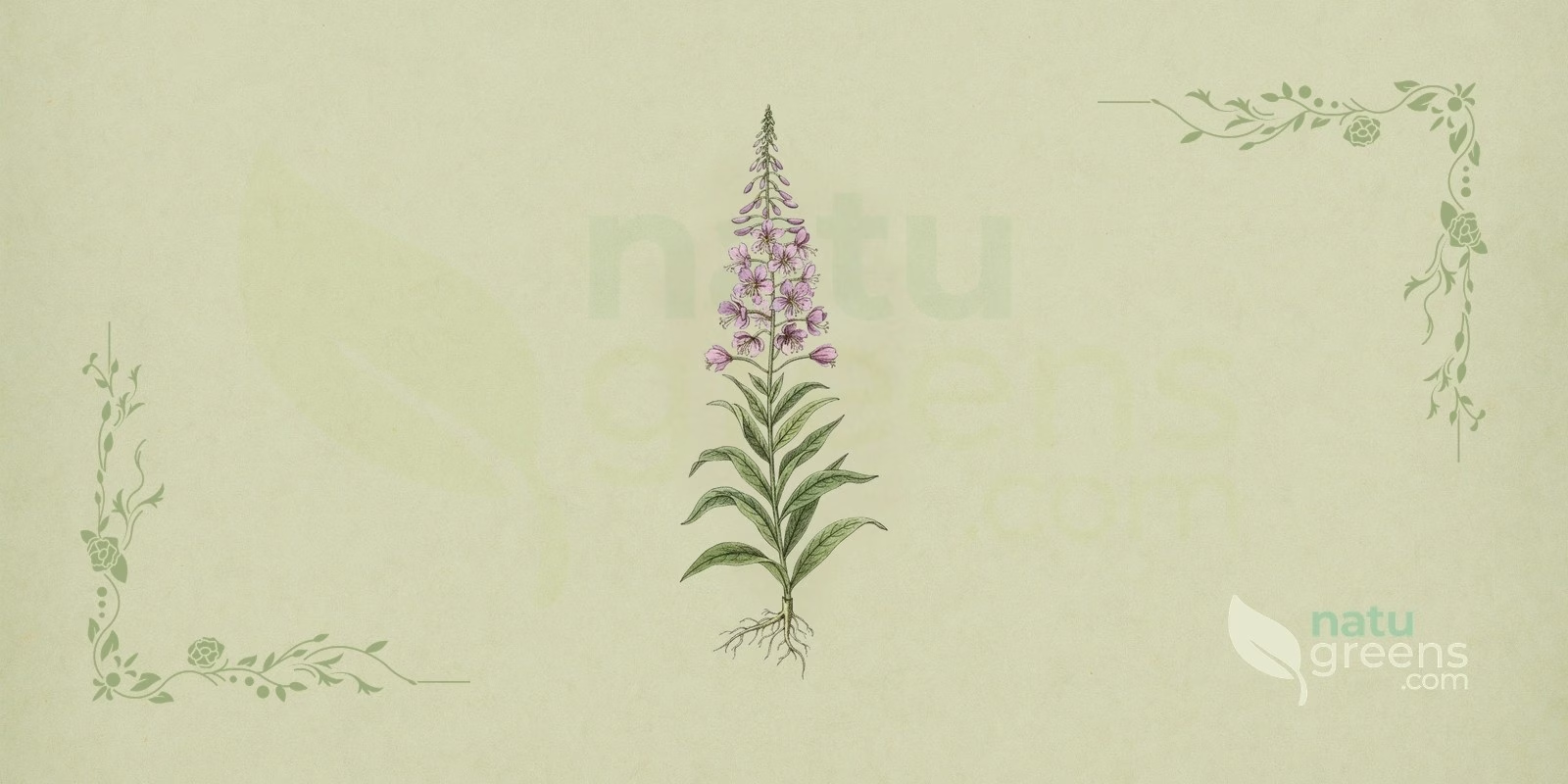
The plant stands out for its vibrant flowers, ranging from magenta to pink, and for how quickly it colonizes disturbed ground, such as clearings opened by forest fires, a trait that earned it the English name “fireweed.” Its chemical composition, notably flavonoids, tannins and phenolic acids, helps explain the traditional uses and the growing interest of scientific research, which mainly investigates the anti-inflammatory and antioxidant activity of its extracts.
Popular and International Names of Fireweed
- English: fireweed, great willowherb, rosebay willowherb.
- French: épilobe en épi, laurier de Saint-Antoine.
- German: Schmalblättriges Weidenröschen.
- Italian: epilobio, garofanino di bosco.
- Portuguese: chá-de-ivan, epilóbio, epilóbio-de-folhas-estreitas, erva-de-fogo.
- Spanish: adelfilla, epilobio, laurel de San Antonio.
Botanical Synonyms of Epilobium angustifolium
The accepted name used here is Epilobium angustifolium L., the original name given by Linnaeus and also the one used by the European Medicines Agency (EMA) and by most of the scientific literature. The species is treated as Chamaenerion angustifolium (L.) Scop. in POWO and GBIF, and its main botanical synonyms are Chamaenerion angustifolium (L.) Scop., Chamerion angustifolium (L.) Holub, used by botanists who separate the genus on the basis of specific morphological features, and Epilobium spicatum Lam.
Fireweed should not be confused with Epilobium parviflorum (small-flowered willowherb), the other species included in the EMA monograph and the one most often used in prostate products. The official data refer to the herbal substance “Epilobii herba,” which covers both species, and not to E. angustifolium alone. Nor should it be confused with Oenothera biennis (evening primrose), a plant of the same family with different uses and composition.
Botanical Family: Onagraceae
The Onagraceae family, to which fireweed belongs, is a diverse group of flowering plants with about 650 species in 17 genera, widely distributed around the world and found in habitats ranging from temperate to tropical regions. Its plants usually have flowers with four petals and four sepals, as well as capsule fruits.
Many species in the family are valued for their ornamental, food or medicinal worth, and fireweed stands out for its traditional use and for a phytochemical profile rich in biologically active compounds. Because it gathers a variety of secondary metabolites of interest, the Onagraceae family is a relevant field of study for phytochemistry and pharmacology.
Parts of Fireweed Used
- Flowers
- Leaves
- Roots
- Young stems
Ethnobotanical and Traditional Uses
- Anxiety and insomnia
- Asthma and cough
- Culinary use of shoots, young leaves and roots
- Diarrhea and gastrointestinal discomfort
- Fermented tea preparation (Ivan chai)
- Relief of headaches and sore throats
- Urinary symptoms of benign prostatic hyperplasia (traditional use recognized by the EMA, after medical diagnosis)
- Wounds, infections and skin conditions
Therapeutic Properties of Fireweed
- Analgesic (traditional record of pain relief)
- Antibacterial (activity observed in laboratory studies)
- Antifungal (activity observed in laboratory studies)
- Anti-inflammatory (effect investigated in preliminary studies)
- Antioxidant (neutralizes free radicals in laboratory assays)
- Antiproliferative (activity observed in laboratory studies, without clinical proof)
- Astringent (tightens tissues, an action associated with tannins)
- Immunomodulatory (effect of oenothein B on immune cells in experimental studies)
Detailed Phytochemical Profile of Fireweed
- Beta-sitosterol
- Ellagic acid
- Ellagitannins (e.g., oenothein B)
- Flavonoids (e.g., kaempferol, myricetin, quercetin)
- Gallic acid
- Provitamin A
- Tannins
- Vitamin C
Preparation and Administration Forms of Fireweed
- Compresses
- Decoction
- Extracts
- Infusion
- Poultice
- Tinctures
Synergy with Other Medicinal Plants
Prostate Health
In herbal tradition, fireweed is often combined with Serenoa repens (saw palmetto) and Urtica dioica (stinging nettle) in preparations aimed at the urinary symptoms of benign prostatic hyperplasia (BPH), always after a medical evaluation. The rationale behind this pairing is to bring together the ellagitannins of fireweed, the phytosterols of saw palmetto and the lignans of nettle, but evidence on their combined effect is still limited and use should be supervised by a professional.
Digestive Support
For digestive discomfort, fireweed may be combined with Mentha × piperita (peppermint) and Melissa officinalis (lemon balm), a pairing traditionally used for the carminative and antispasmodic effect attributed to these plants in cases of cramps, gas and indigestion. In this traditional account, the astringent action of fireweed would complement the relaxing effect of peppermint and lemon balm on the muscles of the gastrointestinal tract.
Skin Care
In topical applications, fireweed is traditionally used together with Calendula officinalis (calendula) and Hypericum perforatum (St. John’s wort) on superficial wounds, irritations and skin inflammation. In this combination, tradition adds the astringent properties of fireweed to the triterpenes of calendula and the hypericin of St. John’s wort, although there are no clinical studies on the effect of the mixture.
Recipes and Usage Protocols of Fireweed
Traditional Fireweed Infusion
Ingredients: 1 teaspoon of dried fireweed leaves and 200 ml of boiling water.
Preparation: place the leaves in a cup, pour in the boiling water, cover and let steep for 10 to 15 minutes before straining. This infusion is traditionally used for urinary symptoms linked to benign prostatic hyperplasia, a use the EMA recognizes only as traditional and that presupposes a prior medical diagnosis. How often and for how long to drink it should be decided with a healthcare professional, with periodic breaks and keeping a 2-hour gap from medicines and iron supplements.
Compress for Skin Irritations
Ingredients: 2 tablespoons of dried fireweed leaves and flowers and 500 ml of water.
Preparation: boil the leaves and flowers in the water for 5 minutes, remove from the heat, cover and let cool until lukewarm. After straining, soak a clean cloth in the decoction and apply it to the affected area for 15 to 20 minutes, 2 to 3 times a day. This compress is traditionally used for irritations, inflammation and small skin wounds, a use associated with the astringent properties of fireweed; deep, infected or non-healing wounds need medical evaluation.
Traditional Tincture for Digestive Use
Ingredients: 50 g of dried fireweed leaves and flowers and 250 ml of 70% grain alcohol.
Preparation: place the leaves and flowers in a dark glass jar, cover with the alcohol, seal tightly and let macerate for 2 to 4 weeks in a cool, dark place, shaking every day, before straining and storing. This tincture is traditionally used for digestive discomfort, and the dose, always diluted in water, should be set by a healthcare professional, since the preparation contains alcohol and is not suitable for pregnant or breastfeeding women or for anyone under 18.
The preparations above follow traditional records and do not replace professional guidance. Before any internal use, check the contraindications and interactions described in this article.
Associated Therapies
Herbal Medicine
In modern herbal medicine, fireweed appears in standardized extracts, usually in capsules or tablets that allow more precise dosing of the active compounds. Its main application is the traditional use recognized by the EMA to relieve lower urinary tract symptoms linked to benign prostatic hyperplasia, once a doctor has ruled out serious conditions, and research is also looking into its antioxidant and anti-inflammatory properties.
Indigenous Traditional Medicine
Several Indigenous communities in North America use fireweed in their traditional practices, applying the leaves and flowers to wounds, burns, infections and gastrointestinal problems, while the roots, sometimes roasted, serve a range of purposes. This ethnobotanical tradition reflects ancestral knowledge of the plant and its place in the culture and health care of these peoples.
Contraindications and Side Effects of Fireweed
Fireweed is generally well tolerated in usual amounts, but like any medicinal plant it has contraindications and may cause unwanted effects in sensitive people or in specific situations, so the information below should be known before use.
Medical Diagnosis Before Use
The use for urinary symptoms of benign prostatic hyperplasia is a traditional use recognized by the EMA, not a treatment. Urinary symptoms require a prior medical diagnosis to rule out prostate cancer and infection, and fireweed does not replace that evaluation or the follow-up of the condition.
Who Should Not Use It
Pregnant and breastfeeding women and anyone under 18 should not use fireweed, according to the EMA, due to a lack of safety data. People allergic to fireweed or to other plants of the Onagraceae family should also avoid it.
Potential Side Effects
At high doses, fireweed may cause mild gastrointestinal discomfort in sensitive people, an effect linked to its high tannin content. Allergic reactions are rare but possible, and if symptoms such as skin rash, itching or difficulty breathing appear, use should be stopped and medical care sought. Because it is rich in ellagitannins (oenothein B), fireweed should not be used for long periods without a break.
Drug Interactions
Ellagitannins can reduce the absorption of iron and of medicines, so fireweed should be taken 2 hours apart from iron supplements and from any medication. There is a theoretical interaction with antiandrogens and 5-alpha-reductase inhibitors, such as finasteride and dutasteride, in which case use requires professional guidance. People taking anticoagulants, such as warfarin, or other medicines that affect blood clotting should also, as a precaution, consult a healthcare professional before using fireweed.
Historical Notes and Interesting Facts
A Pioneer Plant
Fireweed is among the first plants to colonize land devastated by forest fires, hence its English name. Its light seeds, covered in silky hairs, are easily carried by the wind and quickly take hold in burned, ash-enriched soils, which has made the plant a symbol of renewal and resilience in nature.
Ivan Chai: A Russian Tradition
In Russia, fermented fireweed leaves are used to make a traditional drink known as “Ivan chai” (Ivan’s tea), caffeine-free and long enjoyed as a popular alternative to black and green tea. In Russian culture this drink has a long history of use and was traditionally regarded as a health tonic.
Bombweed in World War II
In the United Kingdom, fireweed earned the nickname “bombweed” during World War II, when it spread across bomb craters and urban areas destroyed by the air raids, turning desolate landscapes into fields of flowers. The phenomenon showed how well the plant adapts to disturbed environments and made it a symbol of hope in difficult times.
Frequently Asked Questions about Fireweed
Does Fireweed Tea Help with Prostate Health?
The use of fireweed for urinary symptoms of benign prostatic hyperplasia is a traditional use recognized by the EMA, not a treatment, and it rests on long-standing experience of use rather than on conclusive clinical trials. Laboratory studies are investigating compounds such as ellagitannins, including oenothein B. Urinary symptoms require a prior medical diagnosis to rule out prostate cancer and infection before any use of the plant.
Is Fireweed the Same as Small-Flowered Willowherb?
No. Epilobium parviflorum (small-flowered willowherb) is the other species in the EMA monograph and the one most often used in prostate products, and the official data refer to the herbal substance “Epilobii herba,” which covers both species, not just E. angustifolium. Fireweed should also not be confused with Oenothera biennis (evening primrose), from the same Onagraceae family.
Can Fireweed Be Used for Skin Problems?
Traditionally, fireweed is applied to the skin in compresses or ointments for superficial wounds, irritations and minor burns, a use associated with its astringent properties. Laboratory studies have observed anti-inflammatory and antimicrobial activity in its extracts, but there is no clinical proof for conditions such as eczema or acne, which should be assessed by a dermatologist.
Are There Side Effects from Drinking Fireweed Tea?
Fireweed tea is generally well tolerated, but very high doses can cause gastrointestinal discomfort, and allergic reactions, though rare, are possible. Pregnant and breastfeeding women and anyone under 18 should not use the plant, and the tea should be kept 2 hours apart from iron and from medicines. Anyone taking anticoagulants, antiandrogens or 5-alpha-reductase inhibitors should consult a healthcare professional before use.
What Is the Difference Between Fireweed and St. John’s Wort?
Fireweed (Epilobium angustifolium) and St. John’s wort (Hypericum perforatum) are distinct species from different families, each with its own phytochemical profile and uses. Fireweed is best known for its traditional use related to the male urinary tract and for its astringent action, while St. John’s wort is studied in mood disorders and has several important drug interactions, which calls for professional guidance.
How Should I Store Dried Fireweed?
To preserve dried fireweed, keep it in airtight containers, preferably glass or metal, in a cool, dark and dry place, since light, heat and moisture degrade its compounds. Stored this way, it usually keeps its qualities for up to a year.
Notice: this content is for informational purposes and does not replace professional medical advice. Consult a physician or herbal practitioner before using medicinal plants, especially during pregnancy, breastfeeding, or alongside medication.
How to cite this article
NATUGREENS. Fireweed (Epilobium angustifolium): Properties and Benefits. Natugreens, 4 Nov. 2026. Disponível em: https://natugreens.com/epilobium-angustifolium-fireweed/. Accessed: Nov. 4, 2026.
Natugreens. (2026). Fireweed (Epilobium angustifolium): Properties and Benefits. Natugreens. https://natugreens.com/epilobium-angustifolium-fireweed/
References and Scientific Studies
- PMC2023 Dreger M, et al. Antibacterial and Antimycotic Activity of Epilobium angustifolium L. Extracts: A Review. Pharmaceuticals (Basel). 2023.
- PMC2015 Kaškonienė V, et al. Evaluation of phytochemical composition of fresh and dried raw material of introduced Chamerion angustifolium L. using chromatographic, spectrophotometric and chemometric techniques. Phytochemistry. 2015.
- PMC2025 Kozhantayeva A, et al. Phytochemical Insights and Therapeutic Potential of Chamaenerion angustifolium and Chamaenerion latifolium. Molecules. 2025.
- PMC2009 Schepetkin IA, et al. Immunomodulatory activity of oenothein B isolated from Epilobium angustifolium. J Immunol. 2009.
- PMC2016 Schepetkin IA, et al. Therapeutic Potential of Polyphenols from Epilobium Angustifolium (Fireweed). Phytother Res. 2016.
- PMC2015 Kaškonienė V, et al. Evaluation of phytochemical composition of fresh and dried raw material of introduced Chamerion angustifolium L. using chromatographic, spectrophotometric and chemometric techniques. Phytochemistry. 2015.
- PMC2025 Kozhantayeva A, et al. Phytochemical Insights and Therapeutic Potential of Chamaenerion angustifolium and Chamaenerion latifolium. Molecules. 2025.