



Quick summary
Jasminum sambac (L.) Aiton / Arabian Jasmine, commonly known as Arabian jasmine or sambac jasmine, and in Brazil as jasmim-árabe, jasmim-sambac or bogari, is a shrub with semi-climbing stems in the Oleaceae family, famous for its white, waxy and intensely fragrant flowers, which open at dusk. Despite its name, the…
Main caution: Warning: Carolina jasmine or yellow jessamine (Gelsemium sempervirens) is a toxic plant that can cause serious poisoning, and it is unrelated to Arabian jasmine. Never use the flowers or leaves of plants called jasmine…
Jasminum sambac (L.) Aiton / Arabian Jasmine, commonly known as Arabian jasmine or sambac jasmine, and in Brazil as jasmim-árabe, jasmim-sambac or bogari, is a shrub with semi-climbing stems in the Oleaceae family, famous for its white, waxy and intensely fragrant flowers, which open at dusk. Despite its name, the species is native to the eastern Himalaya, and it was its long history of cultivation in Asia and the Arab world that earned it the name by which it is known today.
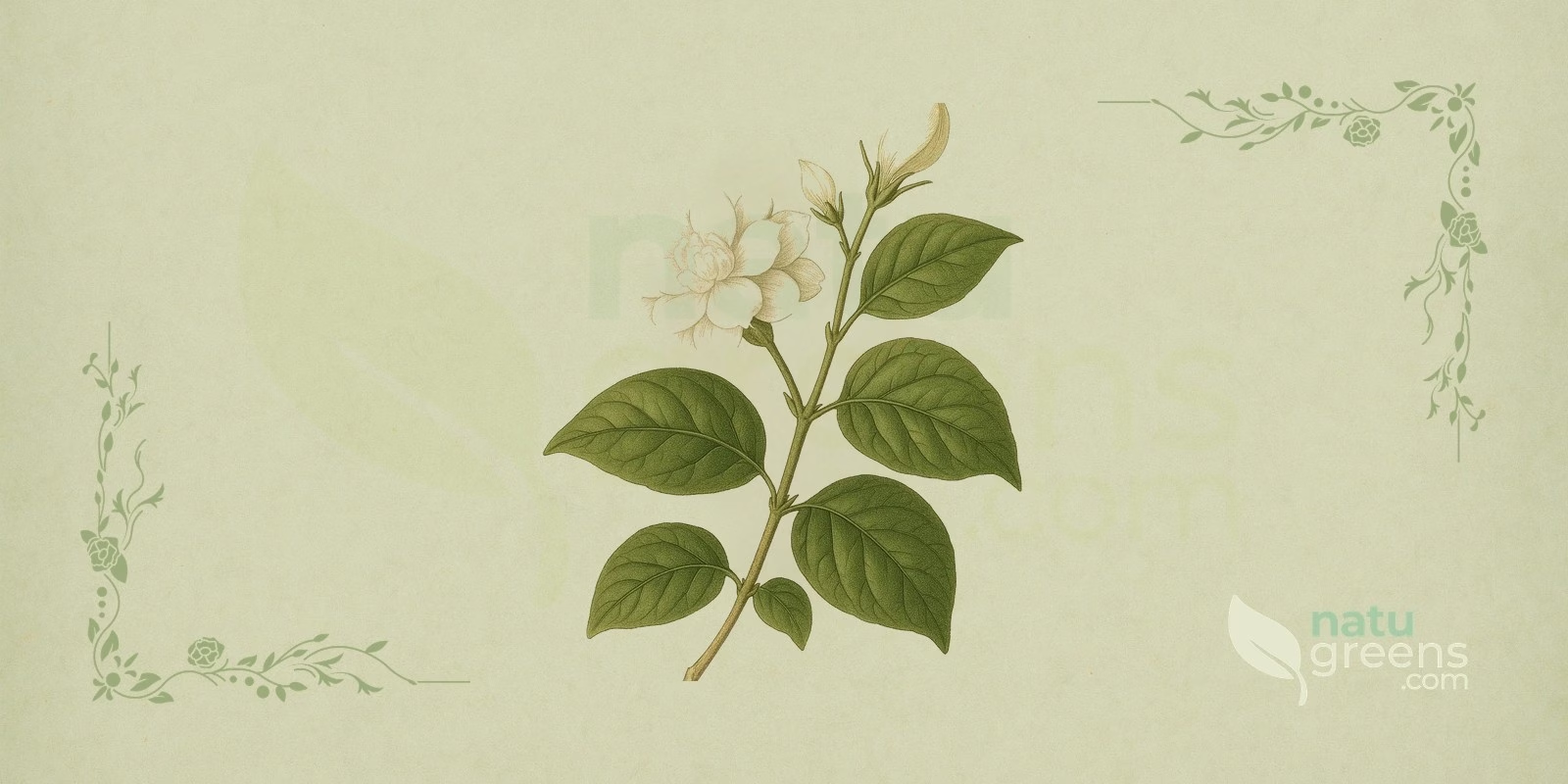
Arabian jasmine is the flower that scents the well-known jasmine tea, which is in fact green tea (Camellia sinensis) flavored with the flowers and therefore contains caffeine. In aromatherapy, its fragrance is associated with relaxation, an effect that is still being studied, and the flower absolute is a prized perfumery ingredient but also a known skin sensitizer. Its traditional medicinal uses are varied and, for the most part, lack scientific confirmation.
Popular and International Names of Arabian Jasmine
- English: Arabian jasmine, pikake, sambac jasmine.
- French: jasmin d'Arabie.
- German: Arabischer Jasmin.
- Italian: gelsomino d'Arabia.
- Portuguese: bogari, jasmim-árabe, jasmim-sambac.
- Spanish: jazmín de Arabia, sampaguita.
Not Every Jasmine Is a Jasmine
The name "jasmine" is given to many plants that are unrelated to Arabian jasmine:
- Cape jasmine: Gardenia jasminoides, a gardenia in the Rubiaceae family, which has its own article on this site. It is a different species, not a synonym of Arabian jasmine.
- Carolina jasmine or yellow jessamine: Gelsemium sempervirens, a toxic plant with no relation whatsoever to the true jasmines.
- Frangipani: Plumeria species, called jasmim-manga in Brazil, from the Apocynaceae family.
- Star jasmine: Trachelospermum species, climbers that also belong to the Apocynaceae family.
The true jasmines belong to the genus Jasminum, in the Oleaceae family.
Botanical Synonyms of Arabian Jasmine
The species was described by Linnaeus as Nyctanthes sambac and later moved to the genus Jasminum by William Aiton, which explains the author citation "(L.) Aiton".
- Jasminum fragrans Salisb.
- Mogorium sambac (L.) Lam.
- Nyctanthes sambac L.
Botanical Family: Oleaceae
Arabian jasmine belongs to the Oleaceae family, the same family as the olive tree, ash, lilac and privet. The genus Jasminum brings together the true jasmines, about 200 species of shrubs and climbers that usually bear white or yellow, highly fragrant flowers. Plants called jasmine in other families, such as gardenia and frangipani, are not close relatives.
Parts of Arabian Jasmine Used
- Flowers, both buds and open blooms (teas, perfumes, garlands)
- Leaves (traditional use)
Ethnobotanical and Traditional Uses of Arabian Jasmine
- Aromatherapy: the fragrance is traditionally used for relaxation and well-being.
- Culinary uses: the flowers scent desserts and drinks in some cultures.
- Garlands and rituals: the flowers are used in offerings, weddings and festivals in India, the Philippines and Indonesia.
- Jasmine tea: the flowers scent green tea leaves, especially in China.
- Lactation: traditional use of the flowers on the breasts to reduce milk supply (under study).
- Perfumery: jasmine absolute is a prized ingredient in fine perfumes.
- Traditional medicine: records of use for menstrual pain, fever and skin conditions, without scientific confirmation.
These records document Asian tradition and do not amount to proven efficacy.
Therapeutic Properties of Arabian Jasmine
- Antimicrobial (extracts and oil tested in the laboratory)
- Antioxidant (flavonoids with activity observed in the laboratory)
- Reduced lactation (under study; one small study with flowers applied to the breasts)
- Relaxing aroma (under study; small aromatherapy studies in volunteers)
A Japanese study observed that the aroma of jasmine tea reduced measures of nerve activity and improved the mood of volunteers, and an older Indian study compared jasmine flowers with a medication for suppressing lactation after childbirth. These are small studies, and they do not allow jasmine to be presented as a treatment for anxiety, insomnia or any other condition.
Detailed Phytochemical Profile of Arabian Jasmine
- Benzyl acetate
- Benzyl alcohol
- Benzyl benzoate
- Beta-sitosterol
- Flavonoids (isoquercetin, quercetin, rutin)
- Linalool
- Methyl benzoate
- Methyl jasmonate
- Oleanolic acid
The scent of the flowers comes from a blend of linalool, benzyl acetate and other esters, which gives jasmine its sweet, enveloping aroma.
Preparation and Administration Forms of Arabian Jasmine
- Absolute and oil for perfumery and aromatherapy (external use and room fragrance)
- Infusion of dried flowers
- Jasmine tea (green tea scented with the flowers)
- Vegetable oil macerated with the flowers (external use)
Ready-made jasmine tea is almost always green tea, sometimes white tea, scented with the flowers, and for that reason it contains caffeine. An infusion made only from jasmine flowers, without tea leaves, is caffeine-free. The absolute and the essential oil must never be swallowed.
Synergy with Other Medicinal Plants
Chamomile
Jasmine flowers appear in tea blends with chamomile (Matricaria chamomilla), traditionally associated with winding down in the evening. If the blend contains green tea, it will also contain caffeine, which does not sit well with bedtime.
Green Tea
The pairing with green tea (Camellia sinensis) is the most classic of all: the flowers scent the leaves overnight, and the result is traditional Chinese jasmine tea, with the caffeine and compounds of green tea.
Lavender
In diffusers and massage oils, jasmine is combined with lavender (Lavandula angustifolia) for its aroma. The relaxing effect of these blends is still being studied, and combining essential oils also adds up their risk of skin irritation and allergy.
Roses
Rose petals (Rosa spp.) and jasmine flowers are used together in fragrant teas and cosmetics. This is a pairing of aroma and tradition, with no studied medicinal effect.
Recipes and Usage Protocols of Arabian Jasmine
Traditional Jasmine Tea
Ingredients: 1 teaspoon of jasmine green tea and 1 cup of water at about 80 °C.
Preparation: heat the water without letting it boil, pour it over the leaves and let them steep for 2 to 3 minutes so the tea does not turn bitter. Remember that the drink contains caffeine, and avoid it in the evening if you are sensitive to it.
Caffeine-Free Flower Infusion
A few dried, food-grade and pesticide-free Arabian jasmine flowers can be steeped in hot water for a few minutes to make a fragrant, caffeine-free infusion. Use only flowers of Jasminum sambac identified with certainty, never those of other plants called jasmine.
Room Fragrance
A few drops of jasmine absolute or diluted jasmine oil in a diffuser will scent a room. Use it in a well-ventilated space and for short periods, because intense aromas can cause headaches or nausea.
Diluted Massage Oil
For use on the skin, dilute the absolute well in a vegetable oil and first do a patch test on the inside of the elbow, waiting 24 to 48 hours. Do not apply it to irritated skin or to young children, and breastfeeding women should not apply it to the breasts.
The preparations above follow traditional records and do not replace professional guidance. Before any internal use, check the contraindications and interactions described in this article.
Associated Therapies of Arabian Jasmine
Aromatherapy
In aromatherapy, the fragrance of jasmine is used for relaxation and well-being. Small studies suggest effects on mood and nerve activity, but the results are still under study, and aromatherapy is no substitute for the treatment of anxiety, depression or insomnia, which require professional care.
Perfumery
Jasmine absolute is one of the most highly valued ingredients in perfumery. Because of its allergenic potential, its use in cosmetics is subject to limits and labeling rules in several countries.
Contraindications and Side Effects of Arabian Jasmine
Toxic Plants Called Jasmine
Warning: Carolina jasmine or yellow jessamine (Gelsemium sempervirens) is a toxic plant that can cause serious poisoning, and it is unrelated to Arabian jasmine. Never use the flowers or leaves of plants called jasmine without reliable botanical identification.
Skin and Allergy
Jasmine absolute and essential oil are known skin sensitizers and can cause contact dermatitis. Use them only diluted, after a patch test, and stop at the first sign of redness or itching.
Breastfeeding
The flowers are traditionally used to reduce milk production, an effect that is under study. Breastfeeding women who wish to keep nursing should avoid applying jasmine flowers or oil to the breasts.
Pregnancy
During pregnancy, avoid concentrated essential oil and absolute, as safety data are lacking.
Caffeine in Jasmine Tea
Ready-made jasmine tea is green tea and contains caffeine. People who need to limit caffeine, such as pregnant women and people with insomnia, heart rhythm disorders or anxiety, should take this into account.
Do Not Swallow the Essential Oil
Jasmine essential oil and absolute must not be swallowed. Keep the bottles out of the reach of children.
Historical Notes and Interesting Facts about Arabian Jasmine
A National Flower
Arabian jasmine is the national flower of the Philippines, where it is called sampaguita, and one of the national flowers of Indonesia, as melati putih, featured in garlands, weddings and ceremonies.
Chinese Jasmine Tea
In China, jasmine flowers have been used for centuries to scent tea: the buds are mixed with the leaves at dusk and, as they open during the night, pass on their aroma. For the finest teas, the process may be repeated several times.
Zanbaq
The epithet sambac comes from the medieval Arabic zanbaq, a word associated with the scented oil of jasmine flowers.
Frequently Asked Questions about Arabian Jasmine
Is Jasmine Tea Made Only from Flowers?
In most cases, no. Traditional jasmine tea is green tea, sometimes white tea, scented with Arabian jasmine flowers. Flower-only infusions do exist, but they are less common.
Does Jasmine Tea Contain Caffeine?
Yes, when it is made with green or white tea, as is almost always the case. Only an infusion made exclusively from the flowers is caffeine-free.
Does Jasmine Help with Anxiety?
The aroma of jasmine is associated with relaxation, and small aromatherapy studies suggest an effect on mood that is still under study. Persistent anxiety needs professional assessment and follow-up.
Does Jasmine Reduce Breast Milk?
There is a traditional use and one small study with flowers applied to the breasts, which is why the effect remains under study. Breastfeeding women who want to keep nursing should avoid applying jasmine to the breasts.
Are Arabian Jasmine and Cape Jasmine the Same Plant?
No. Cape jasmine is a gardenia (Gardenia jasminoides) from a different family. Arabian jasmine is a true jasmine, of the genus Jasminum.
Can Jasmine Oil Cause Allergies?
Yes. The absolute and the essential oil are known skin sensitizers and should always be used diluted, after a patch test.
Notice: this content is for informational purposes and does not replace professional medical advice. Consult a physician or herbal practitioner before using medicinal plants, especially during pregnancy, breastfeeding, or alongside medication.
How to cite this article
NATUGREENS. Arabian Jasmine (Jasminum sambac): Uses and Precautions. Natugreens, 20 Nov. 2026. Disponível em: https://natugreens.com/jasminum-sambac-arabian-jasmine/. Accessed: Nov. 20, 2026.
Natugreens. (2026). Arabian Jasmine (Jasminum sambac): Uses and Precautions. Natugreens. https://natugreens.com/jasminum-sambac-arabian-jasmine/
References and Scientific Studies
- DOI1988 Shrivastav P, et al. (1988). Suppression of puerperal lactation using jasmine flowers (Jasminum sambac). Australian and New Zealand Journal of Obstetrics and Gynaecology, 28(1), 68-71. A small study comparing jasmine flowers with bromocriptine. ↗
- DOI2012 Kunhachan P, et al. (2012). Chemical Composition, Toxicity and Vasodilatation Effect of the Flowers Extract of Jasminum sambac (L.) Ait. "G. Duke of Tuscany". Evidence-Based Complementary and Alternative Medicine, 2012, 471312. Composition of the flower extract and its toxicity in animals. ↗
- DOI2005 Kuroda K, et al. (2005). Sedative effects of the jasmine tea odor and (R)-(-)-linalool, one of its major odor components, on autonomic nerve activity and mood states. European Journal of Applied Physiology, 95(2-3), 107-114. Effect of jasmine tea aroma in volunteers. ↗
You May Also Like
Take your time and tell us everything you think, details included. Every response is read by someone on our editorial team and goes into the article's revision. An honest critique helps us more than a polite compliment.
Take your time and tell us everything you think, details included. Every response is read by someone on our editorial team and goes into the article's revision. An honest critique helps us more than a polite compliment.