Quick summary
Malpighia emarginata DC. / Acerola, also commonly known as Barbados cherry or West Indian cherry, is a tropical fruit-bearing shrub or small tree of the Malpighiaceae family, native to the Caribbean and neighboring areas of the Americas and now grown on a large scale in Brazil. Malpighia emarginata is prized above all…
Main caution: Acerola is generally considered safe for most people when eaten as a food, but individuals with a known allergy to plants of the Malpighiaceae family should avoid it because of the risk of allergic reactions. Its…
Malpighia emarginata DC. / Acerola, also commonly known as Barbados cherry or West Indian cherry, is a tropical fruit-bearing shrub or small tree of the Malpighiaceae family, native to the Caribbean and neighboring areas of the Americas and now grown on a large scale in Brazil. Malpighia emarginata is prized above all for its remarkable vitamin C content, which explains why its fruits have been used for generations in both the cooking and the traditional medicine of many peoples.
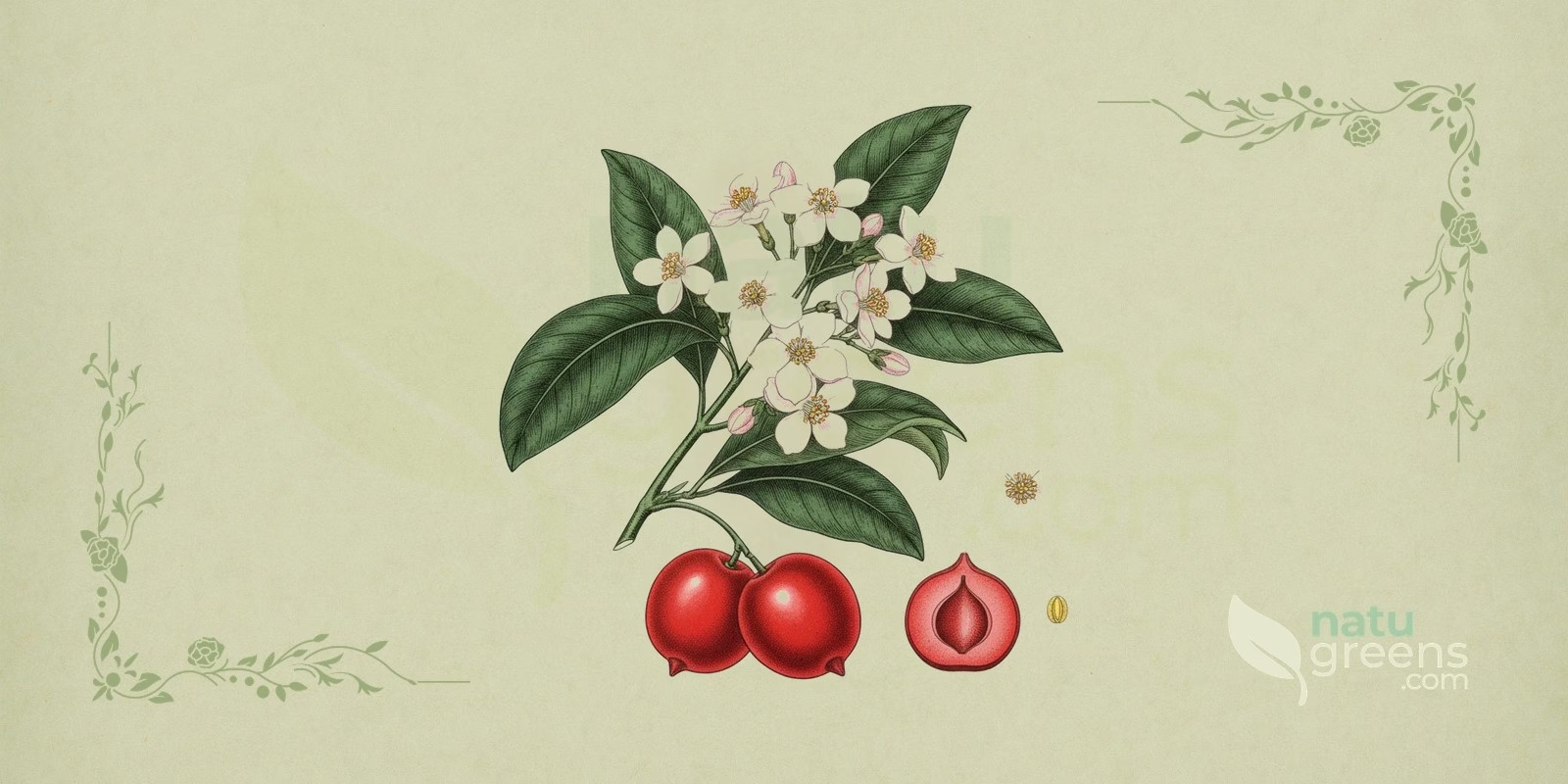
Acerola stands out among the most concentrated natural sources of ascorbic acid, with levels dozens of times higher than those of citrus fruits such as orange and lemon. Beyond vitamin C, the plant has a diverse phytochemical profile that includes carotenoids, phenolic compounds and flavonoids, substances associated with the antioxidant and anti-inflammatory activity observed in laboratory studies. Modern scientific research has been investigating several of its traditional uses, although much of the evidence still comes from experimental work rather than from large clinical studies in humans.
Popular and International Names of Acerola
- English: acerola, Barbados cherry, West Indian cherry, wild crepe myrtle.
- French: acérola, cerise des Antilles, cerise des Barbades.
- German: Acerola, Antillenkirsche, Barbados-Kirsche.
- Italian: acerola, ciliegia di Barbados.
- Portuguese: acerola, cereja-das-antilhas, cereja-das-índias-ocidentais, cereja-de-barbados, cereja-do-pará (BR).
- Spanish: acerola, cereza de Barbados, cereza de las Indias Occidentales, manzanita.
Botanical Synonyms of Malpighia emarginata
Malpighia emarginata DC. has accumulated several botanical synonyms over the history of the genus's taxonomy, and although Malpighia emarginata is today the accepted scientific name, other names still appear in older literature or in different taxonomic contexts. These synonyms reflect the complexity of botanical classification within the Malpighiaceae and the gradual growth of knowledge about the cultivated species.
- Malpighia berteroana Spreng.
- Malpighia lanceolata Griseb.
- Malpighia punicifolia var. lancifolia Nied.
- Malpighia punicifolia var. obovata Nied.
- Malpighia punicifolia var. vulgaris Nied.
- Malpighia retusa Benth.
- Malpighia umbellata Rose
- Malpighia urens var. lanceolata (Griseb.) Griseb.
The name Malpighia punicifolia L., in its species-level form, was historically applied to acerola in older literature, but it should not be read as a full synonym of the cultivated species. Likewise, Malpighia glabra L. is a distinct species with smaller fruits that is often confused with acerola in popular texts, which is why it does not appear in this list of synonyms.
Botanical Family: Malpighiaceae
The Malpighiaceae family is a diverse group of flowering plants found mainly in tropical and subtropical regions, bringing together shrubs, trees and lianas, many of them recognized for their showy flowers and for fruits of nutritional or medicinal value. The family comprises about 75 genera and more than 1,300 species, distributed mainly across the Americas and, to a lesser extent, in Africa and Asia.
Malpighia emarginata shares features typical of the family, such as the T-shaped hairs (trichomes) found on the leaves and young stems and the flowers with fringed petals. Many Malpighiaceae species are being studied for their phytochemical potential, especially for producing bioactive compounds with antioxidant and anti-inflammatory activity, and acerola is a prominent example of how important this family is for human nutrition and for the economy of producing regions.
Parts of Acerola Used
- Bark
- Fruits (drupes)
- Leaves
- Seeds
Ethnobotanical and Traditional Uses
- Cardiovascular support (traditional record)
- Colds, flu and cough (traditional record, no evidence of a curative effect)
- Gargle for sore throat (folk use)
- Liver problems (traditional record, no clinical evidence)
- Nutritional support in anemia (traditional record)
- Relief of diarrhea and dysentery (traditional record)
- Wound healing (folk use)
Therapeutic Properties of Acerola
- Anti-aging (protection against cellular oxidative stress observed in experimental studies)
- Antibacterial (activity against bacteria observed in laboratory studies)
- Antifungal (activity against fungi observed in leaf extracts, in the laboratory)
- Antigenotoxic (protection of genetic material observed in experimental studies)
- Anti-inflammatory (reduction of inflammatory markers in preliminary studies)
- Antioxidant (free radical scavenging, attributed mainly to vitamin C and phenolics)
- Immunomodulatory (effect on immune cells observed in preliminary studies, without clinical evidence)
- Multidrug resistance modulator (activity observed only in laboratory studies)
Detailed Phytochemical Profile of Acerola
- Albumin
- Anthocyanins
- Ascorbic acid (vitamin C)
- Calcium
- Carotenoids
- Citric acid
- Flavonoids
- Fructose
- Glucose
- Iron
- Malic acid
- Niacin (vitamin B3)
- Phenolics
- Phosphorus
- Provitamin A
- Sucrose
- Tartaric acid
- Vitamins B1 and B2
The vitamin C content of acerola is extremely high, in the order of 1 to 4 g per 100 g of pulp, and varies with the variety, the growing climate and above all the degree of ripeness, since the still-green fruit concentrates more ascorbic acid than the ripe one, which in turn accumulates more of the anthocyanins and carotenoids responsible for its red color.
Preparation and Administration Forms of Acerola
- Concentrates
- Creams
- Jams
- Juices
- Liqueurs
- Poultice
- Powder (as a bread improver)
- Sauces
- Teas and infusions
Synergy with Other Medicinal Plants
Antioxidant and Anti-Inflammatory Synergy with Green Tea
Acerola (Malpighia emarginata) has been studied in combination with green tea (Camellia sinensis), and a blend formulated with compounds from both plants was able, in macrophages cultured in the laboratory, to modulate redox parameters and the secretion of inflammatory cytokines. These findings suggest that the bioactive compounds of the two species may act in a complementary way on oxidative stress and inflammation, but this remains an experimental result, with no confirmation from clinical studies that would allow any talk of preventing chronic diseases.
Recipes and Usage Protocols of Acerola
Fresh Acerola Juice
A homemade preparation traditionally used as a dietary source of vitamin C, which should be drunk right after it is made, because ascorbic acid breaks down quickly on contact with air and light.
Ingredients:
- 200 g fresh acerolas
- 200 ml filtered water
- Sugar or honey to taste (optional)
Preparation:
- Wash the acerolas well and remove the stems.
- Blend the acerolas with the water for about 30 seconds.
- Strain the juice to remove the seeds and excess pulp.
- Add sugar or honey to taste, if desired, and serve chilled.
Dosage: As a food, the traditional record speaks of 1 to 2 glasses a day as part of a balanced diet, with no need to exceed that amount.
Homemade Acerola Jam
A traditional culinary recipe that makes use of the abundant harvest and the short shelf life of the fresh fruit, allowing acerola to be kept for longer, even though cooking reduces part of its original vitamin C content.
Ingredients:
- 500 g ripe acerolas
- 250 g sugar
- 50 ml water
Preparation:
- Wash the acerolas and cook them with the water over low heat until soft.
- Press the cooked acerolas through a fine sieve to obtain the pulp, discarding the seeds and skins.
- Return the pulp to the heat with the sugar, stirring constantly, until it reaches setting point, when the mixture thickens and pulls away from the bottom of the pan.
- Pour the hot jam into sterilized jars and seal tightly.
Dosage: Eat with bread, toast or as an accompaniment, bearing in mind that this is a sweet preserve with a lot of sugar.
The preparations above follow traditional records and do not replace professional guidance. Before any internal use, check the contraindications and interactions described in this article.
Associated Therapies
Herbal Medicine
In folk herbal medicine, acerola is widely used because of its high content of vitamin C and other phytochemicals, and tradition employs it as support for the immune system during periods of colds, flu and other infections, although there is no evidence that it prevents or cures these illnesses. Acerola extracts and juices are valued for the antioxidant, anti-inflammatory and immunomodulatory activity observed in preliminary studies, and their use extends to nutritional support in states of weakness, always as a complement to and never as a substitute for medical care.
Functional Nutrition
In functional nutrition, acerola is often classed as a superfood, especially as fresh fruit, juice or frozen pulp, which preserve natural vitamin C better than processed products. Professionals in the field usually recommend eating it as a food within a varied diet and using concentrated supplements only under the guidance of a health professional, because of the risks described in the contraindications section.
Contraindications and Side Effects of Acerola
Acerola is generally considered safe for most people when eaten as a food, but individuals with a known allergy to plants of the Malpighiaceae family should avoid it because of the risk of allergic reactions. Its vitamin C content is extremely high, in the order of 1 to 4 g per 100 g of pulp, so excessive chronic consumption or the use of a concentrated supplement carries a risk of oxalate kidney stones in predisposed people, as well as gastrointestinal discomfort and osmotic diarrhea.
Acerola increases the absorption of non-heme iron, and for this reason the concentrated form is contraindicated for people with hemochromatosis or iron overload. Concentrated consumption can also interfere with laboratory tests, such as glucose test strips and the fecal occult blood test, so it is advisable to stop concentrated consumption 2 days before the test. People undergoing chemotherapy or radiotherapy should ask their oncologist before using a concentrated acerola antioxidant.
Patients taking anticoagulants should consult a health professional before turning to acerola products in high doses or on a regular basis, and the same applies to anyone taking other long-term medications. There is not enough evidence to advise against eating the fruit during pregnancy and breastfeeding, but pregnant women, breastfeeding women and children should not use concentrated supplements without medical advice.
Care is also needed when buying acerola powder or capsules, because products of this kind often contain added synthetic vitamin C that is nonetheless labeled as "from acerola", a commercial practice that confuses consumers about the origin of the nutrient; reading the ingredient list and looking for added ascorbic acid helps identify these cases. No acerola product should be presented as a cure for colds or as a guarantee of stronger immunity.
Historical Notes and Interesting Facts
Acerola is recognized as one of the richest natural sources of vitamin C in the world, a remarkable trait first documented in 1946 by Asenjo and de Guzmán in Puerto Rico, which marked the start of its scientific recognition. The fruit is extremely perishable, with a shelf life of only 2 to 3 days at room temperature after harvest, which makes transporting and selling the fresh fruit a challenge for growers and distributors.
Brazil is the world's largest producer of acerola and has built a solid agro-industrial market for the fruit, focused on pulps, juices and powdered ingredients. Interestingly, immature acerola, still green, is often harvested for industrial purposes because its vitamin C content is higher at that stage. Beyond its nutritional value, Malpighia emarginata is also appreciated as an ornamental plant and is a popular choice for the art of bonsai, thanks to its small size and delicate fruits.
Another curiosity involves the confusion of names in popular literature, where cultivated acerola often appears identified as Malpighia glabra, a distinct species with smaller fruits, which calls for care when comparing information from older sources or from commercial labels.
Frequently Asked Questions about Acerola
What Is the Main Characteristic of Acerola?
The main characteristic of acerola is its extraordinary vitamin C content, in the order of 1 to 4 g per 100 g of pulp, which makes it a food with high antioxidant capacity. This vitamin takes part in collagen formation and in protecting cells against oxidative damage, but its effect on immunity depends on the diet as a whole and should not be treated as a guarantee.
Can Acerola Be Eaten Every Day?
Yes, the fresh fruit or the juice can be part of a balanced diet and contribute to an adequate intake of vitamin C and other nutrients. The main concern lies with concentrated supplements, whose prolonged use at high doses increases the risk of unwanted effects and should be guided by a health professional.
Are There Side Effects from Eating Acerola?
In general, acerola is well tolerated as a food, but excessive consumption or the use of a concentrated supplement can cause gastrointestinal discomfort and osmotic diarrhea, as well as a risk of oxalate kidney stones in predisposed people. Anyone allergic to plants of the Malpighiaceae family should avoid it and, when in doubt, consult a health professional.
Who Should Avoid Concentrated Acerola?
The concentrated form is contraindicated for people with hemochromatosis or iron overload, because acerola increases the absorption of non-heme iron. People undergoing chemotherapy or radiotherapy should ask their oncologist before using a concentrated acerola antioxidant, and anyone scheduled for tests such as glucose test strips or a fecal occult blood test should stop concentrated consumption 2 days beforehand.
Does Acerola Powder Contain Only Natural Vitamin C?
Not always, because powdered products often contain added synthetic vitamin C that is nonetheless labeled as "from acerola". Reading the ingredient list and checking for added ascorbic acid helps consumers know what they are actually buying.
Are Acerola and Malpighia glabra the Same Plant?
No, cultivated acerola corresponds to Malpighia emarginata DC., while Malpighia glabra L. is a distinct species with smaller fruits whose name is often applied to acerola in popular literature. For this reason, information attributed to M. glabra in older sources does not always refer to the fruit found on the Brazilian market.
Notice: this content is for informational purposes and does not replace professional medical advice. Consult a physician or herbal practitioner before using medicinal plants, especially during pregnancy, breastfeeding, or alongside medication.
How to cite this article
NATUGREENS. Acerola (Malpighia emarginata): Properties and Benefits. Natugreens, 8 Nov. 2026. Disponível em: https://natugreens.com/acerola-malpighia-emarginata-benefits/. Accessed: Nov. 8, 2026.
Natugreens. (2026). Acerola (Malpighia emarginata): Properties and Benefits. Natugreens. https://natugreens.com/acerola-malpighia-emarginata-benefits/
References and Scientific Studies
- PMC2019 Barros BRS, et al. Saline extract from Malpighia emarginata DC leaves showed higher polyphenol presence, antioxidant and antifungal activity and promoted cell proliferation in mice splenocytes. An Acad Bras Cienc. 2019.
- PMC2024 Olędzki R, et al. Acerola (Malpighia emarginata) Anti-Inflammatory Activity: A Review. Int J Mol Sci. 2024.
- PMC2018 Prakash A, et al. Acerola, an untapped functional superfruit: a review on latest frontiers. J Food Sci Technol. 2018.
- PMC2020 Souza NC, et al. Anti-inflammatory and antixidant properties of blend formulated with compounds of Malpighia emarginata D.C (acerola) and Camellia sinensis L. (green tea) in lipopolysaccharide-stimulated RAW 264.7 macrophages. Biomed Pharmacother. 2020.