Quick summary
Artemisia annua L., known in English as sweet wormwood or sweet annie, is an aromatic annual herb of the Asteraceae family, native to the temperate regions of Asia and now naturalized in many parts of the world. Its use in traditional Chinese medicine, where it is called qing hao, spans more than two thousand years…
Main caution: The World Health Organization (WHO) opposes the use of non-pharmaceutical forms (tea, dried leaf, plant capsules) to treat or prevent malaria, because of subtherapeutic dosing and the risk of inducing resistance in the…
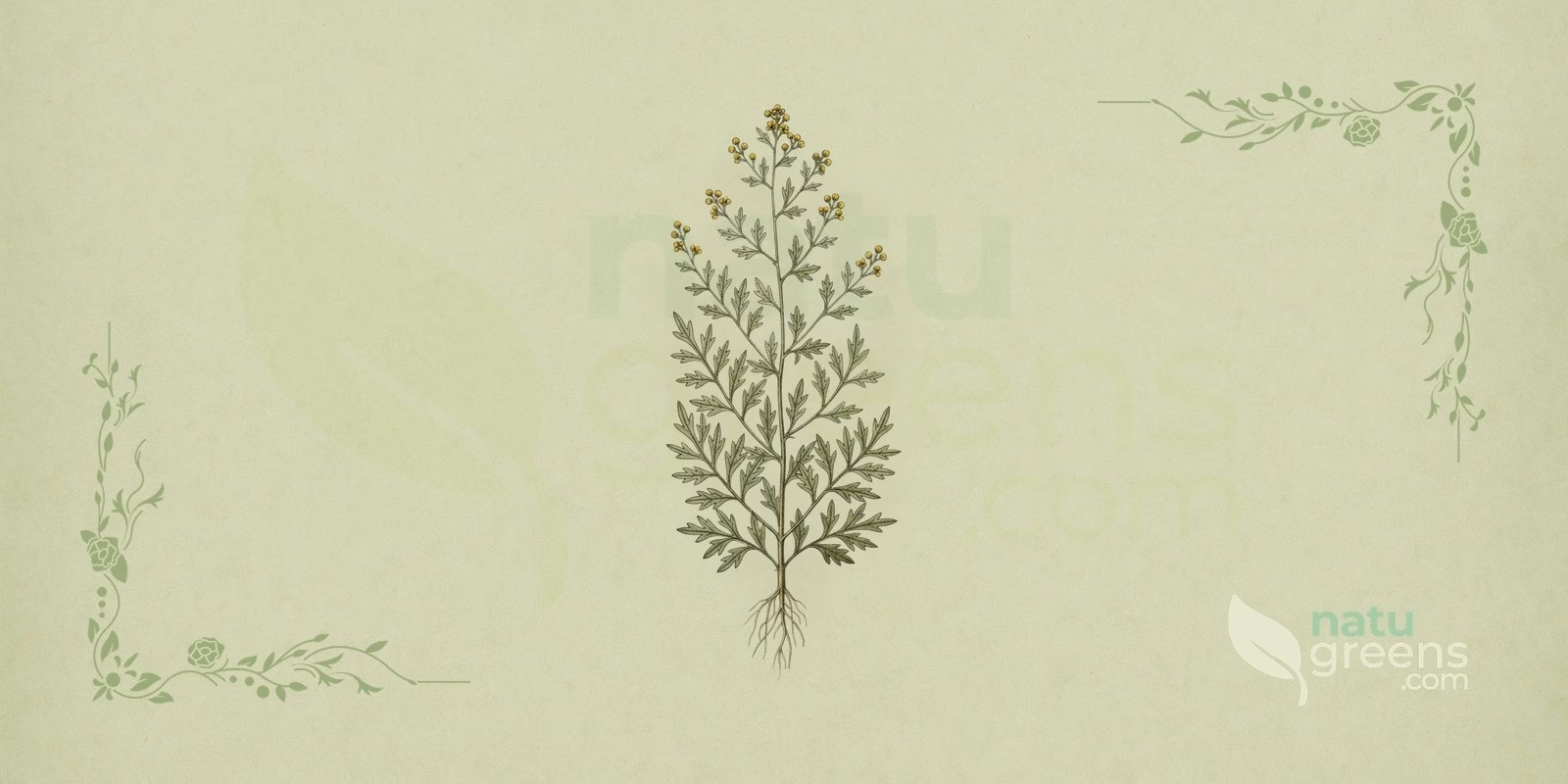
Artemisia annua L., known in English as sweet wormwood or sweet annie, is an aromatic annual herb of the Asteraceae family, native to the temperate regions of Asia and now naturalized in many parts of the world. Its use in traditional Chinese medicine, where it is called qing hao, spans more than two thousand years, and its leaves and flowers are rich in bioactive compounds that drew enormous scientific interest throughout the twentieth century. Artemisinin, the substance behind modern pharmaceutical antimalarials, was isolated from this species, which is why Artemisia annua holds a unique place between tradition and pharmacology, even though tea made from the plant can never replace the medicines derived from it.
Popular and International Names of Sweet Wormwood
- English: annual mugwort, annual wormwood, sweet annie, sweet sagewort, sweet wormwood.
- Chinese: qing hao.
- French: absinthe annuelle, armoise annuelle, armoise douce.
- German: Einjähriger Beifuß, Süßer Beifuß.
- Italian: artemisia annuale, assenzio dolce.
- Portuguese: artemísia-anual, artemísia-chinesa, artemísia-doce.
- Spanish: ajenjo anual, ajenjo dulce, artemisa china, artemisa dulce.
Botanical Synonyms of Artemisia annua
- Artemisia apiacea Hance (attribution disputed among floras)
- Artemisia chamomilla C.Winkl.
- Artemisia stewartii C.B.Clarke
The most frequently cited synonym of Artemisia annua L. is Artemisia chamomilla C.Winkl., which still turns up in part of the scientific literature, although current taxonomic databases accept Artemisia annua L. as the correct name. The names Artemisia apiacea Hance and Artemisia stewartii C.B.Clarke are also linked to the species, but the placement of A. apiacea varies with the flora consulted, since some works treat it under another Chinese species, Artemisia carvifolia, so older texts on qing hao call for careful reading.
Botanical Family: Asteraceae
Artemisia annua belongs to the Asteraceae, one of the largest and most diverse families of flowering plants, formerly called Compositae because of its typical inflorescence, the flower head, in which dozens of tiny florets cluster on a shared receptacle and look like a single flower. The family includes many species of economic and medicinal importance, and sweet wormwood shares the morphological traits that define the group. The Asteraceae also stand out for their chemistry, as they produce sesquiterpene lactones and flavonoids responsible for many of the properties attributed to several of their species, and this chemical diversity remains the subject of intense scientific research, with artemisinin itself as the best-known example.
Parts of Sweet Wormwood Used
- Aerial parts (stem, leaves and flowers)
- Flowers
- Leaves
- Seeds
Ethnobotanical and Traditional Uses
- Fevers, including the intermittent fevers described in ancient Chinese texts (traditional record)
- Headaches (traditional record)
- Hemorrhoids (traditional record)
- Indigestion and other digestive complaints (traditional record)
- Inflammation (traditional record)
- Parasitic infections (traditional record, with no clinical validation for use of the plant)
In traditional Chinese medicine, qing hao was used above all for febrile conditions, among them intermittent fevers now known to correspond, in part, to malaria. This historical record guided the research that led to the discovery of artemisinin, but it does not justify home use of the plant against malaria, a disease that requires laboratory diagnosis and treatment with standardized pharmaceutical drugs.
Therapeutic Properties of Sweet Wormwood
- Analgesic (pain relief reported in traditional use and investigated in experimental studies)
- Antibacterial (activity of extracts and essential oil observed in the laboratory)
- Anti-inflammatory (effect observed in preclinical studies)
- Antimalarial (property of isolated artemisinin and its pharmaceutical derivatives; tea, dried leaf or plant capsules are not a treatment)
- Antioxidant (activity attributed to flavonoids and phenolic acids in laboratory assays)
- Antiparasitic (activity investigated in preliminary studies)
- Antipyretic (fever reduction according to the traditional record)
Claims of antiviral or anticancer action, or of immune-boosting effects, often circulate around sweet wormwood, but they have no clinical support and should not guide use of the plant, whose main proven contribution to medicine comes through artemisinin purified and made into a drug.
Detailed Phytochemical Profile of Sweet Wormwood
- Artemisia ketone (monoterpene of the essential oil)
- Artemisinic acid
- Artemisinin
- Camphor
- Coumarins
- Dihydroartemisinic acid
- Essential oils (1,8-cineole, alpha-pinene)
- Flavones
- Flavonoids (quercetin)
- Flavonols
- Germacrene D
- Monoterpenoids
- Phenolic acids (coumaric acid)
- Polyphenols
- Sesquiterpenes (including 38 described types)
Artemisinin, a sesquiterpene lactone with an endoperoxide bridge that is rare in nature, is the exclusive chemical marker of Artemisia annua and forms in the plant from artemisinic and dihydroartemisinic acids, which also appear in the species' profile. Its content varies widely with variety, cultivation and post-harvest handling, which is why the pharmaceutical industry works with the extracted and purified compound, while the essential oil, rich in camphor, 1,8-cineole and artemisia ketone, gives the leaves their sweet, distinctive scent.
Preparation and Administration Forms of Sweet Wormwood
- Capsules
- Decoction
- Dry extract
- Essential oil
- Tablets
- Tea (infusion)
- Tincture
Tablets containing artemisinin derivatives, such as artesunate and artemether, are prescription medicines always used in combination with another antimalarial, which is entirely different from capsules of ground leaf, teas, decoctions or tinctures of the plant, whose artemisinin content is variable and unpredictable. Home preparations belong to the traditional record and must not be used to treat or prevent malaria or any other infection.
Synergy with Other Medicinal Plants
Combinations in the Traditional Record
In traditional practice, Artemisia annua is often combined with herbs used against parasites or with plants regarded as tonics, forming broader formulas intended for febrile conditions. These pairings belong to the traditional record and have not been validated in clinical studies, so no herbal blend can take the place of medical care for an undiagnosed fever, especially in anyone who has been in a region where malaria is endemic.
The Logic of Artemisinin-Based Combination Therapies
The idea of synergy that truly took hold in modern medicine is pharmaceutical: the World Health Organization recommends artemisinin-based combination therapies (ACTs), in which a derivative of the compound is paired with a longer-acting antimalarial such as mefloquine or lumefantrine. The combination exists precisely to clear the parasite quickly and lower the risk of resistance, and this reasoning does not apply to tea made from the plant, whose artemisinin dose is low and erratic.
Recipes and Usage Protocols of Sweet Wormwood
Leaf Infusion in the Traditional Record
An infusion of the dried leaves is the oldest way of preparing sweet wormwood and, according to the traditional record, was used for mild febrile and inflammatory conditions, never as a substitute for medical diagnosis.
Ingredients: a small portion of dried Artemisia annua leaves and boiling water.
Preparation: place the leaves in a cup, add the boiling water, cover and let steep for a few minutes before straining. The amount of leaves, the frequency and the duration of use should be set with individual guidance, so consult a health professional before drinking it, as there are reports of hepatitis associated with tea made from the plant. Fever in anyone who has been in a malaria area calls for immediate testing and medical care, not tea.
Tincture in the Traditional Record
A tincture is a hydroalcoholic extract traditionally used to preserve the plant's components for longer, with a higher concentration than an infusion.
Ingredients: dried Artemisia annua leaves and 70% grain alcohol.
Preparation: place the leaves in a dark glass jar, cover them with the alcohol, seal tightly and leave to macerate for about two weeks, shaking daily, then filter and store in a dark bottle. Because it is more concentrated, the tincture should not be used without guidance, and the dose and dilution method must be set by a health professional.
The preparations above follow traditional records and do not replace professional guidance. Before any internal use, check the contraindications and interactions described in this article.
Associated Therapies
Clinical Phytotherapy
In modern clinical phytotherapy, Artemisia annua is valued mainly as a source of artemisinin, whose antimalarial efficacy is proven when the compound is purified and converted into derivatives that make up standardized medicines, used in endemic regions as part of combination therapies. The plant is also being studied for its anti-inflammatory and antioxidant properties, but these findings still come mostly from laboratory studies, and any use should be prescribed and monitored by qualified professionals.
Traditional Chinese Medicine (TCM)
In Traditional Chinese Medicine (TCM), Artemisia annua is known as qing hao and was used for centuries for fevers and inflammation, including febrile conditions that would today be identified as malaria, prepared as an infusion or decoction of the leaves and flowers. TCM values the plant for its ability to "clear heat" and "cool the blood", concepts specific to that system that apply it to a range of febrile syndromes, and it was precisely this historical use that guided the scientific research behind the discovery of artemisinin.
Contraindications and Side Effects of Sweet Wormwood
WHO Position on Tea and Malaria
The World Health Organization (WHO) opposes the use of non-pharmaceutical forms (tea, dried leaf, plant capsules) to treat or prevent malaria, because of subtherapeutic dosing and the risk of inducing resistance in the parasite. Sweet wormwood tea is not a treatment for malaria, dengue, COVID-19 or any infection, and anyone who develops a fever after visiting an endemic area must seek medical care and get tested for malaria without delay.
General Contraindications
Artemisia annua should be avoided during pregnancy, especially in the first trimester, because its emmenagogue potential may stimulate uterine contractions, and also during breastfeeding. There is a risk of cross-allergy in people sensitive to plants of the Asteraceae family, such as chrysanthemums and daisies, with reactions ranging from contact dermatitis to hives, and use is not recommended for children under 6 years of age.
Drug Interactions
Artemisinin induces the enzymes CYP2B6 and CYP3A4 and auto-induces its own metabolism, which can alter blood levels of other drugs. Caution is therefore needed with any medication that has a narrow therapeutic window, and anyone taking regular medication should talk to a doctor or pharmacist before using the plant.
Side Effects and Warning Signs
There are case reports of acute cholestatic hepatitis associated with A. annua tea, and if jaundice (yellowing of the skin or eyes), dark urine or abdominal pain appears, the reader must stop use immediately and seek medical care. Excessive intake can also cause insomnia, nausea, vomiting and dizziness, and hallucinations and seizures have been described in rare cases, which is why the plant should not be used without guidance and any adverse reaction warrants stopping use.
Not to Be Confused with Other Artemisia Species
Sweet wormwood is not common mugwort (Artemisia vulgaris), not absinthe wormwood (Artemisia absinthium) and not Artemisia afra, species with their own chemical composition, uses and risks. Artemisinin is an exclusive chemical marker of A. annua, so information about any one of these plants does not apply to the others.
Historical Notes and Interesting Facts
Artemisia annua has been used in China for more than 2,000 years under the name qing hao, and ancient texts already recorded its use for fevers that partly corresponded to malaria. This knowledge took on new significance in the late 1960s, when the Chinese pharmacologist Tu Youyou joined a national program searching for new antimalarials and reviewed hundreds of traditional medicine recipes in search of leads.
Reading a fourth-century treatise that described using the juice of the plant soaked in cold water led her team to switch from hot extraction to low-temperature methods, and in 1971 the group obtained an active extract that led to the isolation of artemisinin. Tu Youyou received the Nobel Prize in Physiology or Medicine in 2015 for this discovery, which became the basis of modern pharmaceutical antimalarials and has saved millions of lives, and her own story shows that the path from plant to medicine ran through purification of the compound, not through tea.
The plant returned to the headlines during the COVID-19 pandemic, when Madagascar promoted an artemisia-based drink called "Covid-Organics", an episode that sparked international controversy and WHO warnings against untested remedies, with no evidence whatsoever of efficacy. Outside medicine, the species has adapted to varied climates and is also grown for its ornamental qualities, and the sweet scent of its foliage earned it the common name sweet annie in English, while research on its compounds keeps showing how traditional plants can inspire modern medicine.
Frequently Asked Questions about Sweet Wormwood
How Is Sweet Wormwood Related to Malaria?
Artemisia annua is the source of artemisinin, a compound whose derivatives are part of the artemisinin-based combination therapies (ACTs) recommended by the WHO to treat malaria. The WHO, however, opposes the use of tea, dried leaf or plant capsules to treat or prevent malaria, because of subtherapeutic dosing and the risk of inducing resistance in the parasite, and treatment must always follow medical advice.
Does Sweet Wormwood Tea Work for Dengue or COVID-19?
There is no evidence to support using sweet wormwood tea against dengue, COVID-19 or any other infection. The case of the "Covid-Organics" drink, promoted in Madagascar in 2020, is remembered only as an example of controversy, and the WHO warned against untested remedies at the time.
What Are the Main Uses of Sweet Wormwood?
In the traditional record, Artemisia annua was used for fevers, inflammation and digestive complaints, and Traditional Chinese Medicine uses it for febrile conditions. Today its most relevant role is as the raw material for the artemisinin in antimalarial medicines, while its antioxidant and anti-inflammatory activities are still under investigation, mostly in the laboratory.
Are There Contraindications to Sweet Wormwood?
Yes, the plant should be avoided during pregnancy, especially in the first trimester, and during breastfeeding, and it is not recommended for children under 6 or for people allergic to plants of the Asteraceae family. Artemisinin induces the enzymes CYP2B6 and CYP3A4, which calls for caution with drugs that have a narrow therapeutic window, and if jaundice, dark urine or abdominal pain appears, use must be stopped and medical care sought.
How Is Sweet Wormwood Traditionally Prepared?
The most common traditional forms are an infusion of the dried leaves in hot water and the tincture, a more concentrated alcoholic extract, and dry extracts and capsules are also sold. Because artemisinin content varies greatly between batches and there are reports of hepatitis associated with the tea, the amount and frequency of use should be set with a health professional.
What Is the Most Important Compound in Sweet Wormwood?
The most important compound is artemisinin, a sesquiterpene lactone isolated in the 1970s by Tu Youyou's team, for which she received the Nobel Prize in Physiology or Medicine in 2015. The plant also contains flavonoids, coumarins and essential oil, but it is artemisinin, converted into pharmaceutical derivatives, that revolutionized malaria treatment and accounts for most of the research.
Notice: this content is for informational purposes and does not replace professional medical advice. Consult a physician or herbal practitioner before using medicinal plants, especially during pregnancy, breastfeeding, or alongside medication.
How to cite this article
NATUGREENS. Sweet Wormwood (Artemisia annua): Properties and Benefits. Natugreens, 8 Nov. 2026. Disponível em: https://natugreens.com/artemisia-annua-sweet-wormwood/. Accessed: Nov. 8, 2026.
Natugreens. (2026). Sweet Wormwood (Artemisia annua): Properties and Benefits. Natugreens. https://natugreens.com/artemisia-annua-sweet-wormwood/
References and Scientific Studies
- PMC2022 Kane NF, et al. Artemisia extracts differ from artemisinin effects on human hepatic CYP450s 2B6 and 3A4 in vitro. J Ethnopharmacol. 2022.
- PMC2019 Ruperti-Repilado FJ, et al. Danger of Herbal Tea: A Case of Acute Cholestatic Hepatitis Due to Artemisia annua Tea. Front Med (Lausanne). 2019.
- PMC2011 Tu Y. The discovery of artemisinin (qinghaosu) and gifts from Chinese medicine. Nat Med. 2011.
- PMC2014 Zang M, et al. Auto-induction of phase I and phase II metabolism of artemisinin in healthy Chinese subjects after oral administration of a new artemisinin-piperaquine fixed combination. Malar J. 2014.