Quick summary
Atractylodes macrocephala Koidz. / Bai Zhu is a perennial herb of the Asteraceae family, native to central China, where it grows at altitudes ranging from 600 to 2,800 meters, and it holds a prominent place in Traditional Chinese Medicine (TCM). Its rhizomes, used for centuries in a wide range of herbal formulas, make…
Main caution: Almost all the clinical data available come from compound formulas of Traditional Chinese Medicine, not from the isolated plant, so the studies cited in this article should always be understood as results in traditional…
Atractylodes macrocephala Koidz. / Bai Zhu is a perennial herb of the Asteraceae family, native to central China, where it grows at altitudes ranging from 600 to 2,800 meters, and it holds a prominent place in Traditional Chinese Medicine (TCM). Its rhizomes, used for centuries in a wide range of herbal formulas, make the species one of the best-known examples of the Eastern pharmacopoeia, although nearly all the clinical knowledge available comes from its use within compound formulas rather than from the plant on its own.
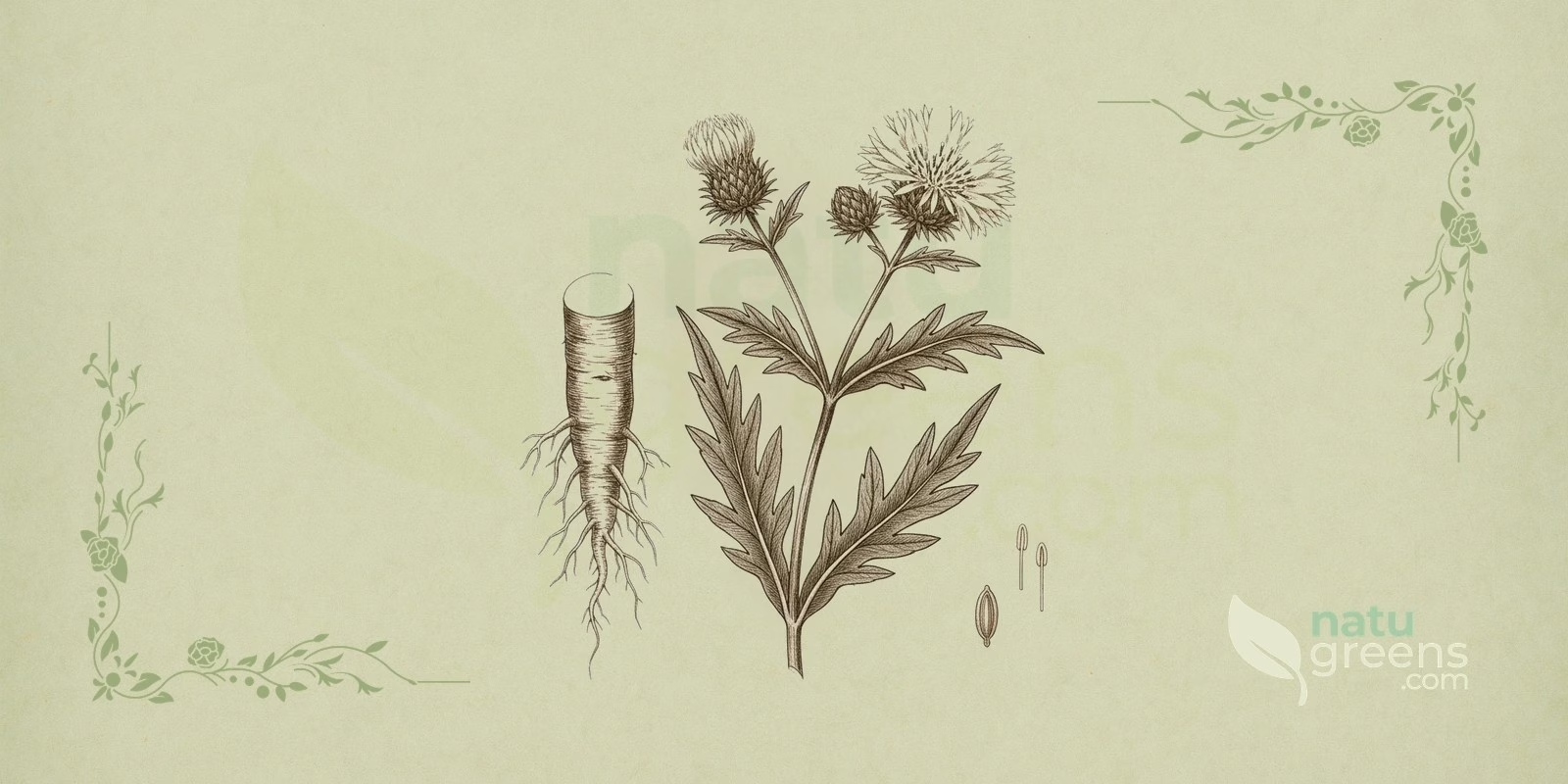
Also known in the West by the secondary descriptor white atractylodes, Atractylodes macrocephala appears in traditional applications that range from digestive support to what is called Qi tonification, and modern research has examined some of these ancestral uses in laboratory studies, in animals and in traditional formulas. The plant remains a subject of scientific study because it reveals a complex phytochemical profile, with sesquiterpenes, polysaccharides and volatile oils, whose relevance to human health still depends on clinical trials with the isolated species.
Popular and International Names of Bai Zhu
In English, the pinyin Bai Zhu is the most widely used form, alongside the standardized name largehead atractylodes, and Atractylodes macrocephala also carries several international names that reflect its circulation across different cultures and pharmacopoeias:
- English: bai zhu, largehead atractylodes, white atractylodes rhizome
- Chinese: bai zhu (白术)
- French: atractylodes blanc, bai zhu
- German: Bai Zhu, großköpfige Atractylodes
- Italian: atractilode a testa grande, bai zhu
- Portuguese: atractylodes-branco, atractylodes-de-cabeça-grande, bai zhu, rizoma de atractylodes-branco
- Spanish: atractilodes de cabeza grande, bai zhu, rizoma de atractilodes blanco
Botanical Synonyms of Atractylodes macrocephala
Atractylodes macrocephala Koidz. is the accepted scientific name for this species, but over the course of botanical history other names have been applied to it, as a result of taxonomic reclassifications and regional variations in how the plant was identified. Knowing these names is useful for tracing the scientific and traditional literature, provided that a full synonym is distinguished from a mere misapplication of the name:
- Atractylis macrocephala (Koidz.) Hand.-Mazz.
- Atractylis ovata auct. non Thunb. (the abbreviation "auct." indicates a historical misapplication of the name by some authors, not a full synonym)
Names linked to Atractylodes lancea and Atractylodes chinensis should not be treated as synonyms of Bai Zhu, because they correspond to different species and different herbal drugs in the Chinese Pharmacopoeia.
Botanical Family: Asteraceae
Atractylodes macrocephala belongs to the vast Asteraceae family, also called Compositae, one of the largest families of flowering plants, which comprises roughly 1,900 genera and more than 32,000 species. The family is characterized by flower heads in which small florets cluster on a common receptacle, and it includes many species of economic, culinary and medicinal importance, such as lettuce, sunflower and chamomile.
Plants of the Asteraceae family are known for producing a variety of bioactive compounds, notably sesquiterpene lactones, flavonoids and essential oils, which account for much of the properties attributed to many of its species. This chemical diversity has been the subject of intensive pharmacological research and contributes to the development of plant-based drugs and supplements, and Atractylodes macrocephala, with its rhizome rich in sesquiterpenes and polysaccharides, is a frequently studied example. Belonging to this family also means sharing the risk of cross-allergy with related plants, a topic covered under Contraindications.
Parts of Bai Zhu Used
The most widely used part of Atractylodes macrocephala is the rhizome, the underground portion of the plant where bioactive compounds are concentrated, which is harvested, dried and processed before it goes into different herbal preparations:
- Dried rhizome: sliced or ground, the basis of the decoctions and powders used in Chinese medicinal cuisine.
- Processed rhizome: roasted with bran and honey, a traditional method that alters the chemical composition and pharmacological profile of the herbal drug.
Ethnobotanical and Traditional Uses
Historically, Bai Zhu has been employed in a wide range of ethnobotanical and traditional applications, almost always as part of TCM compound formulas, and the most frequently cited records are the following:
- Diarrhea and gastrointestinal dysfunction: traditional use in digestive formulas.
- Fluid retention: traditional use linked to the TCM concept of "dampness".
- General digestive tonic: traditional record as support for appetite and digestion.
- Indigestion and abdominal bloating: traditional record for relief of digestive discomfort.
- Spleen asthenia: TCM traditional record for the pattern described as spleen deficiency.
There are also historical records of use in pregnant women to "calm the fetus", but this practice has no modern safety data and should not be followed, as explained under Contraindications.
Therapeutic Properties of Bai Zhu
Bai Zhu has been associated with several properties, most of them observed in laboratory studies, in animal models or in traditional formulas that combine several plants, so none of them can be considered a proven effect of the isolated species in humans:
- Anti-inflammatory (effect observed in laboratory and animal studies)
- Antioxidant (activity observed in laboratory assays)
- Antiproliferative (activity observed in laboratory studies, without clinical proof)
- Diuretic (TCM traditional record, with preliminary animal studies)
- Gastrointestinal protective (traditional record and animal studies, including on intestinal transit)
- Hepatoprotective (preliminary studies in animal models)
- Hypoglycemic (preliminary animal studies, without clinical proof)
- Immunomodulatory (preliminary studies with polysaccharides from the rhizome)
- Neuroprotective (effect observed in laboratory studies)
The available clinical data come almost entirely from compound formulas of Traditional Chinese Medicine, so study results should always be read as findings in traditional formulas, never as proof that the rhizome alone produces the same effect.
Detailed Phytochemical Profile of Bai Zhu
The phytochemical profile of Bai Zhu is complex and diverse, and the groups of compounds most studied in the rhizome help explain the pharmacological interest in the species:
- Atractylenolides: sesquiterpene lactones characteristic of the genus, investigated in laboratory studies for anti-inflammatory and antiproliferative actions.
- Eudesmol and other volatile oils: aromatic components that contribute to the pharmacological profile of the herbal drug.
- Flavonoids: associated with antioxidant activity.
- Phenolic acids: related to the antioxidant and anti-inflammatory activities observed in the laboratory.
- Polysaccharides: studied in animal models for gastrointestinal and immunomodulatory effects.
The proportion of these compounds varies with the origin of the material and the processing method, which is why the raw rhizome and the bran-roasted rhizome are treated as herbal drugs with distinct profiles in the Chinese tradition.
Preparation and Administration Forms of Bai Zhu
Bai Zhu can be prepared in different ways, depending on the traditional purpose and the school of practice, and the choice of preparation influences the extraction of compounds and the intensity of the expected action:
- Decoction (tea): the rhizome is boiled in water for an extended time to extract its compounds, the classic form in TCM.
- Extracts: more concentrated preparations of the plant's components, usually standardized by manufacturers.
- Tinctures: hydroalcoholic solutions of the rhizome's components.
Whatever the form, the amount and duration of use should be set by a healthcare professional, and the material should come from a supplier with a quality certificate, since the commercial herbal drug is often adulterated through sulfur fumigation.
Synergy with Other Medicinal Plants
Digestive Pairing with Ginseng and Fu Ling
Atractylodes macrocephala is often combined with other plants in Traditional Chinese Medicine, and in classic formulas such as Shen Ling Bai Zhu San it appears alongside Panax ginseng (ginseng) and Poria cocos (fu ling). This combination is traditionally used to tonify spleen Qi, reduce "dampness" and support nutrient absorption, following the TCM reasoning that the plants complement each other within the formula, although this interaction has not been demonstrated in clinical trials with each component on its own.
Pairing with Peony Root in Intestinal Disorders
The combination of Atractylodes macrocephala with Paeonia lactiflora (peony root) forms a class of traditional formulas investigated in studies on functional constipation and irritable bowel syndrome, in which the pairing was linked to the regulation of intestinal transit. These results concern the traditional formulas and still depend on better-quality studies, so the combination should be understood as a traditional record and not as a sure fix for intestinal discomfort.
Classic Pairing with Chinese Skullcap
In TCM texts, Atractylodes macrocephala also appears paired with Scutellaria baicalensis (Chinese skullcap or huang qin), a duo the tradition used to modulate the character of formulas and reduce unwanted effects of other plants. Part of this historical use involved pregnant women, an application that has no modern safety data and should not be reproduced, so the pairing should only be considered under the guidance of a qualified TCM practitioner.
Recipes and Usage Protocols of Bai Zhu
Traditional Bai Zhu Decoction
Ingredients: dried rhizome of Atractylodes macrocephala (Bai Zhu), in an amount advised by a healthcare professional, and water.
Preparation: place the sliced or ground rhizome in the water and bring it to the heat, keeping it at a low simmer for 30 to 60 minutes, then strain and drink the liquid warm. In the Chinese tradition, this decoction is used to tonify spleen Qi and support digestion, usually before meals. Dose and frequency vary greatly from person to person, so consult a healthcare professional before use.
Rice Congee with Bai Zhu
Ingredients: powdered rhizome of Atractylodes macrocephala (Bai Zhu), in a small amount advised by a healthcare professional, 50 grams of rice and 500 ml of water.
Preparation: cook the rice in the water until it becomes a congee and add the Bai Zhu powder during the last 10 minutes of cooking, stirring well, then eat it warm. This congee is a traditional preparation of Chinese medicinal cuisine, used in cases of reduced appetite, loose stools and tiredness, and it is considered a gentle form of administration for people with digestive sensitivity. Consult a healthcare professional before use.
Chicken Soup with Bai Zhu
Ingredients: rhizome of Atractylodes macrocephala (Bai Zhu), in an amount advised by a healthcare professional, 500 grams of chicken pieces, 1 liter of water and salt to taste.
Preparation: simmer the chicken with the Bai Zhu in water for 1 to 2 hours, until the meat is tender and the flavors have blended, and season with salt. In Chinese medicine, this soup is traditionally used as a nourishing tonic during convalescence, especially in people classified with Qi deficiency and dampness. Consult a healthcare professional before use.
The preparations above follow traditional records and do not replace professional guidance. Before any internal use, check the contraindications and interactions described in this article.
Associated Therapies
Traditional Chinese Medicine (TCM)
In Traditional Chinese Medicine, Bai Zhu is one of the pillars for tonifying Spleen Qi and drying Dampness, and it appears in classic formulas traditionally employed in digestive patterns such as diarrhea, bloating, loss of appetite and fatigue. The tradition regards it as fundamental for firming the body's "center", supporting the transformation and transport of nutrients and consolidating vital energy, and for that reason combines it with other plants, as in the formula Shen Ling Bai Zhu San, whose traditional purpose is to harmonize digestive functions and the body's resilience.
Clinical Herbal Medicine
In modern herbal medicine, extracts of Atractylodes macrocephala are studied in the laboratory and in animals for anti-inflammatory, antioxidant, immunomodulatory and antiproliferative activities. Reviews and meta-analyses of Chinese formulas containing the plant have investigated its role as an adjunct in inflammatory bowel diseases, such as ulcerative colitis, and in the care of cancer patients undergoing chemotherapy, but these data refer to traditional formulas and do not replace medical treatment. Any use for clinical purposes should have its form and amount adjusted by a qualified professional, based on the available evidence and the patient's individual condition.
Contraindications and Side Effects of Bai Zhu
Limits of the Evidence
Almost all the clinical data available come from compound formulas of Traditional Chinese Medicine, not from the isolated plant, so the studies cited in this article should always be understood as results in traditional formulas, never as a proven effect of the isolated species. This limitation also explains why the safety profile of Bai Zhu used alone, at high doses or over long periods, is still poorly known.
Allergy to the Asteraceae Family
There is a risk of cross-allergy in people sensitive to the Asteraceae family, which includes daisies, ragweed and chrysanthemums, and anyone with a known allergy to these plants should not use Bai Zhu. Reactions may appear as contact dermatitis or hives and, in rare cases, as anaphylaxis, so any sign of a reaction calls for stopping use immediately and seeking medical care.
Pregnancy, Breastfeeding and Children
There is a traditional use in pregnant women to "calm the fetus", but without modern safety data, and for that reason Bai Zhu should not be used during pregnancy under any circumstances, neither on one's own initiative nor on the basis of this historical record. During breastfeeding there are no safety data either, which calls for the same caution and abstaining from use. In children, the lack of studies means use should be avoided without the guidance of a healthcare professional.
Traditional TCM Classification
According to the traditional classification of Traditional Chinese Medicine, Bai Zhu is contraindicated in patterns of "yin deficiency with heat", a pattern specific to Chinese diagnosis that has no direct equivalent in Western medicine. Because the plant is considered drying in nature, the tradition recommends avoiding it in these conditions, and this assessment should be made by a professional trained in TCM.
Reported Side Effects
Some individuals report mild effects such as nausea, dry mouth and an unpleasant taste in the mouth, which are usually transient but justify stopping use if they persist or worsen. Individual observation is important for spotting any adverse reaction, especially during the first days of use.
Drug Interactions
The interactions of Bai Zhu are unknown owing to the lack of modern pharmacological study, so general caution applies with any long-term medication. Popular sources often mention the possibility that atractylenolides interfere with drug-metabolizing enzymes and cite anticoagulants such as heparin and warfarin; since the plant has also been studied for a hypoglycemic effect in animals, people taking glucose-lowering drugs or other diabetes medications should be especially careful. Always tell your doctor about all the supplements and plants you use.
Quality and Confusion with Other Species
The commercial herbal drug is frequently adulterated through sulfur fumigation, a practice that alters the quality of the rhizome, so it is advisable to buy the product only from a supplier with a quality certificate. Bai Zhu must also be distinguished from Atractylodes lancea (Cang Zhu) and from Atractylodes chinensis, which are different herbal drugs in the Chinese Pharmacopoeia, with distinct traditional indications: Bai Zhu "tonifies the spleen", while Cang Zhu "dries dampness", and the two should not be swapped or have their images and claims mixed up.
Historical Notes and Interesting Facts
Bai Zhu has a history spanning thousands of years in Traditional Chinese Medicine, where it is considered one of the main tonics of Spleen Qi, and its importance appears in classic texts such as the Shanghan Lun and the Jingui Yaolue, attributed to Zhang Zhongjing, the renowned Chinese physician who composed them around 220 AD. Later tradition consolidated the separation between Bai Zhu, from Atractylodes macrocephala, associated with tonifying the spleen, and Cang Zhu, from Atractylodes lancea, associated with drying dampness, a distinction still maintained in the Chinese Pharmacopoeia today.
In China, the rhizome of Atractylodes macrocephala is used both as food and as medicine, a duality that shows the cultural value of the plant and explains its presence in congees and soups of medicinal cuisine. The tradition values it for tonifying the spleen and for helping to dissolve accumulations of food, phlegm and stagnant Qi, and demand for Bai Zhu in Chinese medicine has grown sharply in recent decades, with substantial annual consumption in traditional treatments.
Processing is another curious chapter in the history of Bai Zhu, because methods such as roasting with bran and honey alter the chemical composition of the rhizome and its pharmacological profile, and each processed form receives its own traditional indications. Zhejiang province is especially famous for the quality of its Bai Zhu, and geographic origin has always been treated in China as an indicator of the herbal drug's authenticity, a concern that today extends to controlling adulterations such as sulfur fumigation.
Frequently Asked Questions about Bai Zhu
What Is Bai Zhu and What Is It Used For?
Bai Zhu is the rhizome of the plant Atractylodes macrocephala, widely used in Traditional Chinese Medicine. The tradition employs it to tonify the spleen, support digestion and reduce the body's "dampness", with records of use for bloating, diarrhea and lack of appetite. Anti-inflammatory and antioxidant activities have been observed in laboratory studies, but the clinical data come almost entirely from compound formulas.
How Is Bai Zhu Decoction Prepared?
In the traditional form, the dried rhizome is sliced and simmered over low heat for 30 to 60 minutes, and the liquid is strained and drunk warm. The amount and frequency should be set by a healthcare professional, since modern safety data for the isolated plant are lacking. Always choose material from a supplier with a quality certificate, because adulteration with sulfur is common.
What Is the Difference Between Bai Zhu and Cang Zhu?
Bai Zhu comes from Atractylodes macrocephala, while Cang Zhu comes from Atractylodes lancea and Atractylodes chinensis, and the two are different herbal drugs in the Chinese Pharmacopoeia. In the traditional classification, Bai Zhu "tonifies the spleen" and Cang Zhu "dries dampness", so one should not replace the other.
Can Bai Zhu Be Used During Pregnancy or Breastfeeding?
No. There is a traditional use in pregnant women to "calm the fetus", but without modern safety data, and for that reason Bai Zhu should not be used during pregnancy under any circumstances. During breastfeeding there are no data either, and the same caution applies.
What Are the Contraindications of Bai Zhu?
Bai Zhu should not be used by people sensitive to the Asteraceae family, because of the risk of cross-allergy, nor by pregnant or breastfeeding women. TCM contraindicates it in patterns of "yin deficiency with heat", and its interactions are unknown owing to the lack of modern pharmacological study, which calls for caution with any medication, including anticoagulants and glucose-lowering drugs.
Can Bai Zhu Be Combined with Other Plants?
In TCM, Bai Zhu is almost always used in formulas, alongside plants such as ginseng, fu ling and peony root, combinations traditionally used for digestive complaints. Existing studies evaluate these traditional formulas, not the isolated plant, so any combination should be guided by a qualified professional.
Notice: this content is for informational purposes and does not replace professional medical advice. Consult a physician or herbal practitioner before using medicinal plants, especially during pregnancy, breastfeeding, or alongside medication.
How to cite this article
NATUGREENS. Bai Zhu (Atractylodes macrocephala): Properties and Benefits. Natugreens, 8 Nov. 2026. Disponível em: https://natugreens.com/bai-zhu-atractylodes-macrocephala-benefits/. Accessed: Nov. 8, 2026.
Natugreens. (2026). Bai Zhu (Atractylodes macrocephala): Properties and Benefits. Natugreens. https://natugreens.com/bai-zhu-atractylodes-macrocephala-benefits/
References and Scientific Studies
- PMC2018 Zhu B, et al. The traditional uses, phytochemistry, and pharmacology of Atractylodes macrocephala Koidz.: A review. J Ethnopharmacol. 2018.
- PMC2021 Yang L, et al. A Review of the Ethnopharmacology, Phytochemistry, Pharmacology, Application, Quality Control, Processing, Toxicology, and Pharmacokinetics of the Dried Rhizome of Atractylodes macrocephala. Front Pharmacol. 2021.
- PMC2025 Luo W, et al. The Rhizome of Atractylodes macrocephala Koidz.: A Comprehensive Review on the Traditional Uses, Phytochemistry and Pharmacology. Chem Biodivers. 2025.
- PMC2023 Bai W, et al. Atractylodes macrocephala-Paeonia lactiflora Class Formula for the Treatment of Irritable Bowel Syndrome: A Systematic Review With Meta-Analysis and Trial Sequential Analysis. Cureus. 2023.
- PMC2024 Chen L, et al. Polysaccharide extracted from Atractylodes macrocephala improves the spleen deficiency constipation in mice by regulating the gut microbiota to affect the 5-HT synthesis. Neurogastroenterol Motil. 2024.