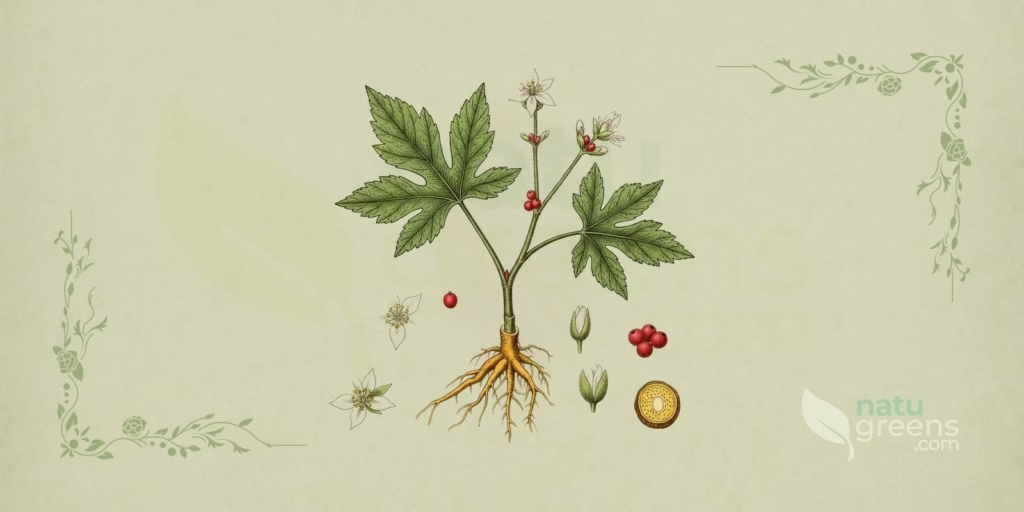
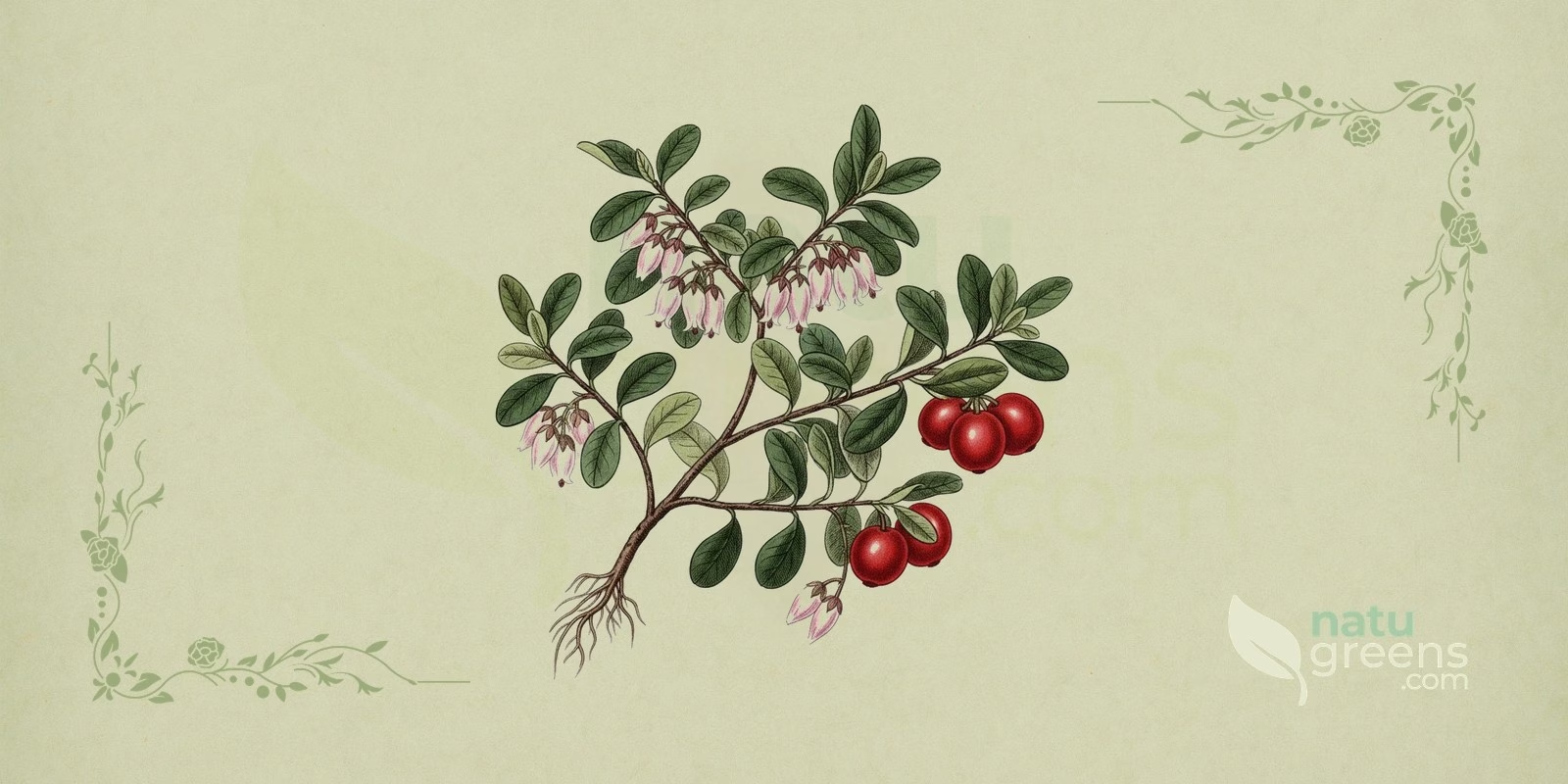
Arctostaphylos uva-ursi (L.) Spreng. / Bearberry, commonly known as bearberry, kinnikinnick, or hog-cranberry, is a small perennial woody shrub of the Ericaceae family, widely distributed across the circumboreal regions of the subarctic Northern Hemisphere. This plant, described by Carl Linnaeus and validated by Sprengel, has been valued for centuries for its medicinal properties, especially in the treatment of urinary tract infections. Its small, leathery leaves and bright red berries are distinctive features of this hardy species.
In traditional medicine, bearberry has long served as a fundamental natural remedy for various conditions, particularly for its antiseptic and diuretic action. Its phytochemical composition, rich in arbutin and tannins, gives it a robust therapeutic profile. Modern scientific research continues to validate many of its ethnobotanical uses, reinforcing its reputation as a medicinal plant of great importance. Its adaptability to different climates and soils has contributed to its wide distribution and use across many cultures.
Popular and International Names of Bearberry
- English: barren myrtle, bearberry, fox-plum, hog-cranberry, kinnikinnick, mealberry, mountain-box, pinemat manzanita, sandberry.
- Spanish: gayuba, manzanilla de pastor, uva de oso, uva ursi.
- Portuguese: baga-de-urso, baga-vermelha, bucho-de-boi, medronheiro-ursino, uva-de-urso, uva-ursi, uva-ursina.
- French: arbousier traînant, busserole, raisin d’ours.
- Italian: uva d’orso, uva ursina.
- German: bärentraube, echte bärentraube, harnkraut.
Botanical Synonyms of Arctostaphylos uva-ursi
The botanical nomenclature of Arctostaphylos uva-ursi has undergone some variation over time. While Arctostaphylos uva-ursi (L.) Spreng. is the currently accepted name, several synonyms have been used across different periods and regions. These include Arbutus uva-ursi L., Uva-ursi procumbens Moench, Arctostaphylos officinalis Wimm. & Grab., Arctostaphylos procumbens (Moench) P.W.Schmidt, Daphnidostaphylis uva-ursi (L.) Eckl. & Zeyh., Mairania uva-ursi (L.) Desv., Uva-ursi buxifolia (Stokes) Gray, and Uva-ursi uva-ursi (L.) Cockerell. Understanding these synonyms is essential for accurate research and identification of the plant in older literature.
Botanical Family: Ericaceae
Arctostaphylos uva-ursi belongs to the Ericaceae family, a diverse group of plants that includes shrubs and trees, many of them adapted to acidic, nutrient-poor soils. This family is known for thriving in challenging environments such as heathlands, peat bogs, and coniferous forests. Ericaceae species are typically characterized by urn- or bell-shaped flowers, and many produce edible fruits, such as blueberries and cranberries. The family is rich in secondary compounds, including tannins and phenolic glycosides, which give several of its species their medicinal properties.
Parts of Bearberry Used
- Leaves (dried)
Ethnobotanical and Traditional Uses
- Cystitis and urethritis relief
- Diuretic
- Dysuria (painful urination)
- Kidney and bladder stones
- Urinary antiseptic
- Urinary tract infections (UTIs)
Therapeutic Properties of Bearberry
- Anti-inflammatory (effect studied in reducing inflammation)
- Antibacterial (activity studied against bacteria, particularly in the urinary tract)
- Antioxidant (activity studied against free radicals)
- Antiseptic (studied for preventing the growth of microorganisms)
- Astringent (effect studied in reducing swelling, with a drying effect on tissues)
- Diuretic (effect studied on urine production)
Detailed Phytochemical Profile of Bearberry
Arctostaphylos uva-ursi is notable for its rich phytochemical composition, which underlies its therapeutic actions. The main bioactive compounds include:
- Arbutin (up to 17%)
- Essential oils
- Flavonoids
- Gallic acid
- Hydroquinones
- Phenolic glycosides
- Resin
- Sitosterol
- Tannic acid
- Tannins (up to 15%)
- Triterpenoids (amyrin, betulinic acid, lupeol, oleanolic acid, taraxenol)
- Ursolic acid
Arbutin is the most studied phytochemical and is primarily responsible for the plant’s urinary antiseptic activity. In the urinary tract, arbutin is hydrolyzed into hydroquinone, which exerts a bactericidal effect. Tannins contribute to the astringent properties, while flavonoids and ursolic acid provide antioxidant and anti-inflammatory activity.
Preparation and Administration Forms of Bearberry
- Infusion (dried leaf tea)
- Standardized extracts
Synergy with Other Medicinal Plants
For Urinary Health
Bearberry can be combined with other plants that support urinary tract health to enhance its effects. Plants such as Echinacea purpurea can offer additional immune support, while buchu (Agathosma betulina) may complement its diuretic and antiseptic action. Combining it with plants rich in vitamin C, such as dog rose (Rosa canina), may help acidify the urine, creating an environment less favorable to bacterial growth and optimizing the action of hydroquinone.
Recipes and Usage Protocols of Bearberry
Bearberry Leaf Infusion
Ingredients: dried bearberry leaves in a moderate amount, boiling water sufficient for the infusion.
Preparation: Place the leaves in a cup and add the boiling water. Cover and let steep for 10 to 15 minutes. Strain before drinking. This infusion is traditionally used to ease symptoms of urinary tract infections, but the amount and duration of use should always be determined by a healthcare professional, due to the potential toxicity of hydroquinone with prolonged use or high doses.
The preparations above follow traditional records and do not replace professional guidance. Before any internal use, review the contraindications and interactions described in this article.
The preparations above follow traditional records and do not replace professional guidance. Before any internal use, check the contraindications and interactions described in this article.
Associated Therapies
Clinical Phytotherapy
In clinical phytotherapy, bearberry is often prescribed as standardized extracts, ensuring a controlled dosage of arbutin. These extracts are used in the treatment of uncomplicated urinary infections, cystitis, and urethritis. The clinical approach emphasizes the importance of medical supervision due to the potential toxicity of hydroquinone, especially with prolonged treatment. Modern phytotherapy aims to maximize efficacy while minimizing risk, relying on high-quality preparations and close monitoring of the patient’s response.
Contraindications and Side Effects of Bearberry
General Contraindications
Bearberry is contraindicated for individuals with a known allergy to plants of the Ericaceae family. It should not be used by pregnant or breastfeeding women due to a lack of safety studies and the potential for toxicity. Young children should also avoid its use. People with preexisting liver or kidney conditions should refrain from using bearberry, as hydroquinone may be hepatotoxic and worsen these conditions. Prolonged use and high doses are not recommended due to the risk of adverse effects.
Common Side Effects
Side effects from bearberry are generally rare and mild when used correctly. They may include nausea, vomiting, and gastrointestinal irritation, especially when taken on an empty stomach or in high doses. Allergic skin reactions are possible in sensitive individuals. Urine may take on a greenish or brownish color from its components, which is harmless. In cases of overdose, more serious symptoms such as seizures may occur.
Drug Interactions
Bearberry may interact with medications that affect the liver or kidneys, increasing the risk of toxicity. It may also interfere with the absorption of iron and other minerals. Its diuretic action may enhance the effect of synthetic diuretics. It is essential to inform your doctor or pharmacist about bearberry use, especially if you are taking other medications, to avoid adverse interactions and ensure treatment safety.
Historical Notes and Interesting Facts
Bearberry has a rich history of medicinal use dating back to the second century, when it was already employed as a natural remedy for urinary tract infections. It was mentioned by the Welsh physicians of Myddfai in the 13th century, who used it to treat UTIs and as a diuretic. The popular name kinnikinnick, of Algonquian origin, means “mixture for smoking,” referring to the traditional use of the dried leaves in smoking blends by Indigenous peoples of North America. Beyond its medicinal use, Indigenous peoples also used the plant to produce a yellow dye. Its resilience and adaptability to harsh climates have contributed to its wide distribution and recognition across many cultures.
Frequently Asked Questions about Bearberry
Is Bearberry Safe for Prolonged Use?
No, prolonged use of bearberry is not recommended due to the potential toxicity of hydroquinone, one of its main active components. Treatment should be limited to short periods and carried out under the supervision of a healthcare professional to avoid adverse effects.
What Are the Main Uses of Bearberry?
The main uses of bearberry are in the treatment of urinary tract infections (UTIs), cystitis, urethritis, and as a diuretic. Its urinary antiseptic action is its most recognized and studied benefit.
Can I Use Bearberry During Pregnancy or Breastfeeding?
No, bearberry is contraindicated during pregnancy and breastfeeding. The lack of safety studies and the potential toxicity of hydroquinone pose risks to both mother and baby. Always consult a doctor before using any medicinal plant during these periods.
What Are the Side Effects of Bearberry?
Common side effects include nausea, vomiting, and gastrointestinal irritation. At high doses or with prolonged use, allergic reactions, seizures, and liver toxicity may occur. Urine may turn greenish or brownish, which is normal.
Notice: this content is for informational purposes and does not replace professional medical advice. Consult a physician or herbal practitioner before using medicinal plants, especially during pregnancy, breastfeeding, or alongside medication.
References and Scientific Studies
Institutional Sources (1)
- GOV2025 USDA NRCS: Plant fact sheet: Bearberry (Arctostaphylos uva-ursi). Acesso em 11 de outubro de 2025.
Supplementary Readings (3)
- 2025 Zen Maitri: Bearberry (Arctostaphylos uva-ursi). Acesso em 11 de outubro de 2025.
- 2025 Pith & Vigor: Arctostaphylos uva ursi -kinnikinnick: Medicinal Secrets of Bearberry. Acesso em 11 de outubro de 2025.
- 2025 EMA: Bearberry leaf herbal summary. Acesso em 11 de outubro de 2025.