Vaccinium macrocarpon is a creeping evergreen subshrub of the family Ericaceae, the same family that gave us azaleas, rhododendrons and blueberries. The species is native to eastern North America, where it occupies acid peat bogs, freshwater marshes and the waterlogged margins of ponds and lakes. Growers and botanists in English know it simply as cranberry, and as American cranberry or large cranberry whenever a distinction from its European relative is needed. William Aiton described it formally in 1789, in the second volume of Hortus Kewensis, from material cultivated in the gardens at Kew.
What makes the species botanically remarkable is not its size, since the plant rarely stands more than 25 centimetres tall, but the unusual combination of traits it brings together. The fruits enclose internal air chambers that make them float, a rarity among the berries of terrestrial plants; the flowers carry sharply reflexed petals above an arching pedicel, the arrangement that gave the plant its English name; and the root system, extremely shallow, depends on an obligate association with ericoid mycorrhizal fungi to survive in poor, permanently saturated substrates. Few crops of global agronomic importance remain so tightly bound to the environment in which they evolved.
This profile brings together the formal classification of the species, a detailed morphological description, the patterns of distribution and habitat, the peculiarities of cultivation in flooded systems, reproductive phenology, the criteria that separate the species from its close relatives, its characteristic phytochemical make-up and the historical record of its relationship with the peoples of northeastern North America.
The cranberry is a creeping evergreen subshrub of the family Ericaceae, native to the acid peat bogs and freshwater marshes of eastern North America.
Taxonomy
The name Vaccinium macrocarpon Aiton is registered in the International Plant Names Index under the bibliographic reference Hortus Kewensis [W. Aiton] 2: 13, of 1789, and stands as an accepted name in Plants of the World Online, maintained by the Royal Botanic Gardens, Kew. The full classification runs as follows:
- Kingdom: Plantae
- Division: Tracheophyta (angiosperms)
- Class: Magnoliopsida
- Order: Ericales
- Family: Ericaceae Juss.
- Subfamily: Vaccinioideae
- Tribe: Vaccinieae
- Genus: Vaccinium L.
- Section: Oxycoccus (Hill) W.D.J.Koch
- Species: Vaccinium macrocarpon Aiton, 1789
Synonyms and Infraspecific Taxa
The species accumulated a considerable list of synonyms because, through much of the nineteenth and twentieth centuries, cranberries were treated in a genus of their own, Oxycoccus, kept apart from Vaccinium. Later phylogenetic work showed that this separation left Vaccinium paraphyletic, and the group came to be handled as a section within the larger genus. Recorded synonyms include:
- Oxycoca berberidacea Raf.
- Oxycoca macrocarpa (Aiton) Raf.
- Schollera macrocarpon (Aiton) Britton
- Vaccinium hispidulum Wangenh.
- Vaccinium oblongifolium (Michx.) Dunal
- Vaccinium oxycoccos var. oblongifolium Michx.
- Vaccinium propinquum Salisb.
The IPNI also records three published infraspecific taxa: V. macrocarpon f. dahlei Findley & Core (Castanea 38: 408, 1973), V. macrocarpon f. eburnea MacKeever (Rhodora 64: 351, 1962), which covers whitish-fruited forms, and V. macrocarpon var. intermedium A.Gray (Bot. Gaz. 4: 225, 1879). None of them sees current use in the agronomic literature, which works with selected cultivars instead.
Etymology
The origin of the generic name Vaccinium remains open to debate. The most widely accepted hypothesis links the word to bacca, berry, through phonetic alteration; a second and less favoured line brings it closer to vacca, cow, in reference to plants grazed by cattle. The epithet macrocarpon combines the Greek elements makros, large, and karpos, fruit, and serves a plainly diagnostic purpose: it sets the species apart from its European relative Vaccinium oxycoccos, whose fruits are noticeably smaller. As for the common name, cranberry comes from craneberry, an allusion to the arched pedicel and reflexed petals, which together recall the head and neck of a crane.
Morphological Description
This is a perennial subshrub, woody at the base, prostrate in growth, forming dense and continuous mats over moist ground. The architecture of the plant is organised around two kinds of stem with distinct roles, a feature that shapes the entire morphology of the species and that growers exploit directly in the field. The canopy it forms rarely exceeds 15 to 25 centimetres in height, even though the horizontal stems reach far greater lengths.
Leaves
The leaves are persistent, staying on the plant through winter, and are arranged alternately along the stems. They measure 6 to 17 millimetres long by 2 to 5 millimetres wide, oblong to oblong-elliptic in outline, with a rounded or slightly obtuse tip. The margin is entire and faintly revolute, that is, curved towards the underside. Their texture is thick and leathery, the upper surface dark green and glossy, the lower surface distinctly paler with a glaucous cast given by epicuticular wax. The petiole is so short that the leaves look sessile. Where winters are severe, the blade turns bronze to purplish red through the cold months and returns to green the following spring.
Flowers
The flowers appear singly or in groups of two to four in the axils of the previous year’s upright stems, borne on slender pedicels of 1.5 to 4 centimetres that arch in a characteristic way. The corolla, 6 to 10 millimetres across, is deeply divided into four lobes that fold sharply backwards at anthesis, leaving the reproductive column exposed and thrust forward. Colour ranges from pinkish white to bright pink. There are eight stamens, with hairy filaments and anthers drawn out into tubules of 1 to 2 millimetres that open through terminal pores, an arrangement typical of the family and directly tied to the way the flowers are pollinated. The ovary is inferior, with four locules.
Fruits and Seeds
The fruit is a globose to ellipsoid berry, crowned by the persistent calyx lobes, ripening from green to bright or deep red according to the lineage. Wild populations bear berries 9 to 14 millimetres across, while selected cultivars reach 20 millimetres and weights of up to 4 grams. The flesh is firm and translucent, intensely tart and astringent. The most telling morphological detail lies inside the fruit: four air-filled chambers lower the density of the berry enough to make it float in water, a property without parallel among commercially grown fruits and the foundation of the entire flood-harvest method. Each fruit holds 4 to 30 small seeds, 1 to 2 millimetres long, light brown and elongate.
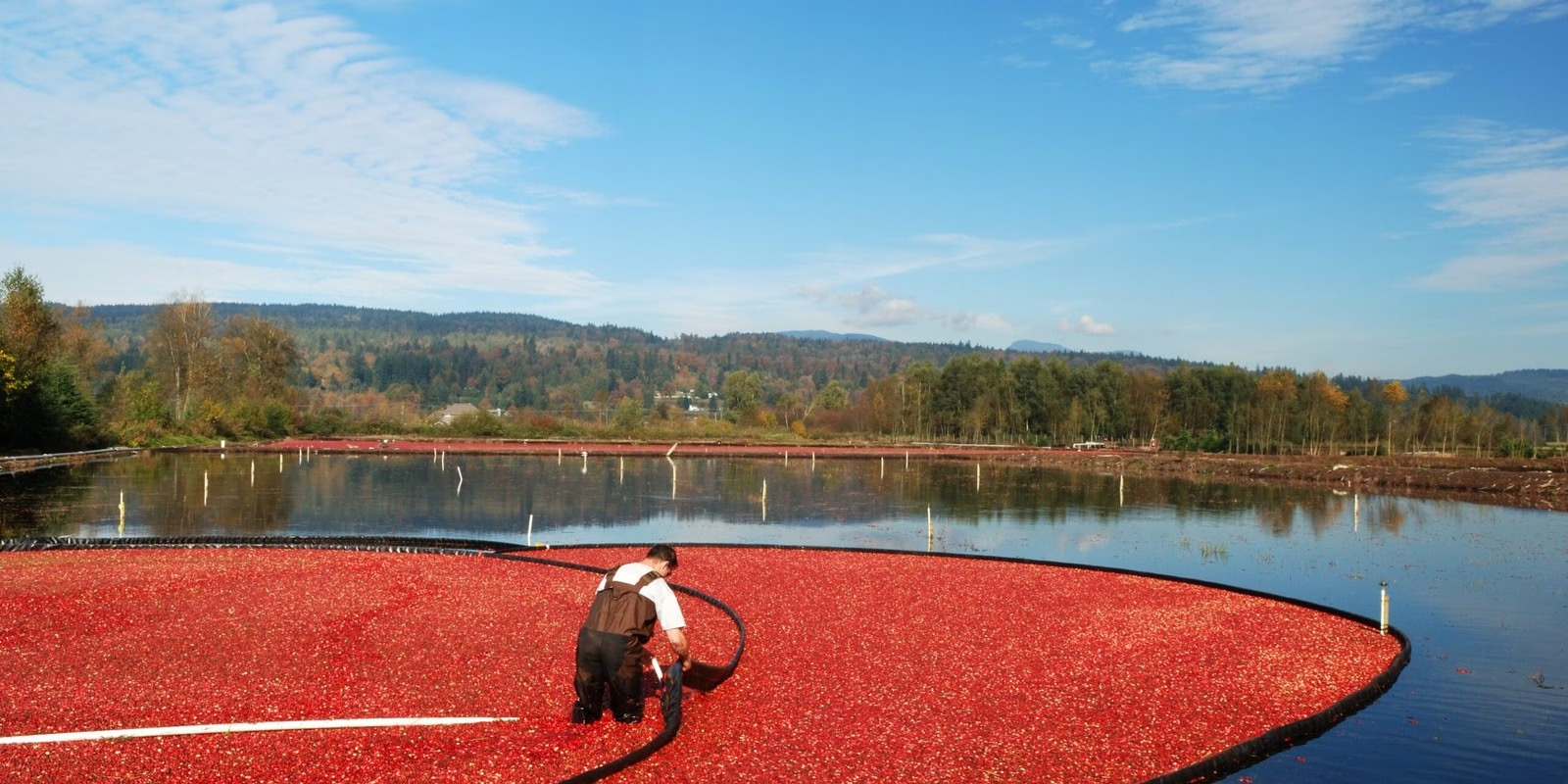
The four air chambers inside every berry explain the scene: once the bog is flooded, the loosened fruit rises to the surface and forms a continuous mat, held together by floating booms until it reaches the pump.
Root and Stem
The horizontal stems, called runners in the English-language agronomic literature, spread 1 to 2 metres across the surface of the substrate. They are thin, flexible and semi-woody, taking on a reddish brown colour as they mature. From them rise short upright stems, 5 to 15 centimetres tall, which carry the flowers and the fruit. The root system is fibrous and strikingly shallow, confined to the upper 10 to 15 centimetres of substrate, and lacks functional root hairs. Nutrient uptake depends on an obligate symbiosis with ericoid mycorrhizal fungi of the Rhizoscyphus ericae complex, an association that makes nitrogen and phosphorus available in peatlands of very low fertility. Without that fungal partnership the plant does not thrive in the habitats where it occurs naturally.
Distribution and Habitat
The natural range of the species covers eastern Canada and the north-central and eastern portions of the United States. It runs from Newfoundland and Labrador in the north, down the Atlantic coast and the Appalachian chain as far as North Carolina and Tennessee, and westwards through the Great Lakes region to Minnesota and northern Illinois. Genetic analysis has also confirmed a disjunct native population in the Okanogan-Wenatchee National Forest, in Washington State, well beyond the western limits once attributed to the species.
Its typical habitat consists of ombrotrophic peat bogs, freshwater marshes, swamps and flooded margins, always on saturated organic substrate, acid and nutrient-poor, with a pH between 4.0 and 5.5. The species grows from sea level to around 1,400 metres of altitude and requires full sun, being quickly suppressed once plant succession closes a canopy over the bog. The associated climate is cool temperate, with winters that ensure a dormant period and mild summers.
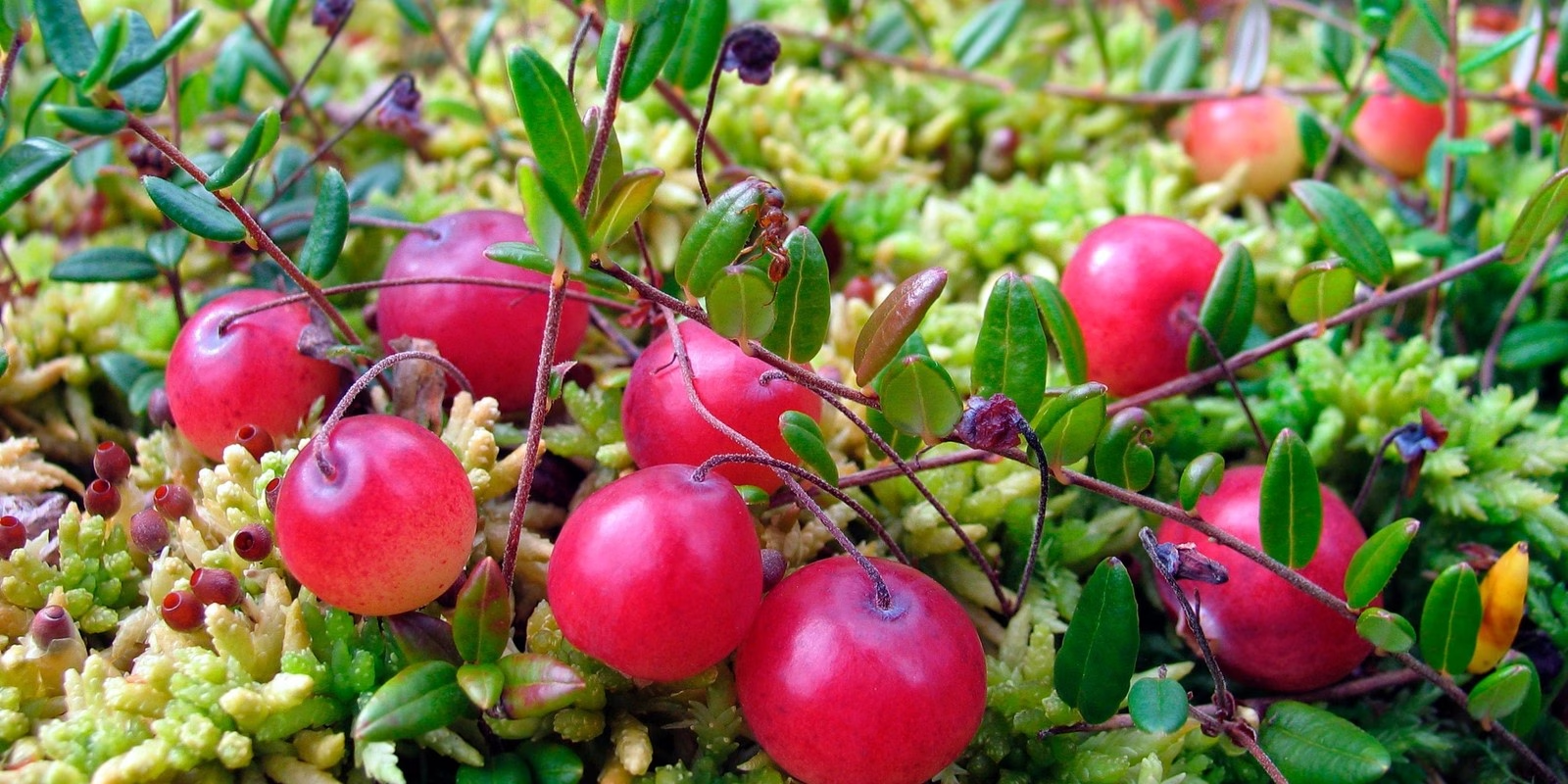
Ripe fruit on a carpet of sphagnum, in the setting the species occupies naturally: an acid peat bog, waterlogged and poor in nutrients, where the trailing stems and leathery evergreen leaves form a cover pressed close to the ground.
Beyond its native range, commercial cultivation has allowed the species to escape and naturalise at various points in Europe. There are records of introduction in Germany, Great Britain, Romania and Switzerland, and the plant is naturalised in the Netherlands, where it counts as invasive on the West Frisian Islands. In those places the dense mats it forms on coastal peatlands compete directly with native bog vegetation, including its own congener Vaccinium oxycoccos. In Brazil there are neither naturalised populations nor commercial plantings of any scale, and the few experimental attempts have centred on the highlands of Rio Grande do Sul, in municipalities such as Bom Jesus and Vacaria, without significant production.
Cranberry Cultivation
Cranberry growing stands apart among perennial crops because it calls for the artificial reconstruction of a peatland environment, the system known as a bog. The structure consists of a flat rectangular area bounded by dykes, excavated and filled with layers of sand over peat substrate, 30 to 90 centimetres deep in total, and served by a hydraulic system able to flood and drain the area quickly. Contrary to the popular image, the bog stays drained for most of the cycle and is flooded only at specific points in the calendar.
Commercial propagation is entirely vegetative. Runner segments 15 to 30 centimetres long, taken from mother plants of defined cultivars, are spread over the prepared surface and pressed into the substrate, where they root within a few weeks. The cuttings receive no regular spacing: they are scattered across the whole area and knit into a continuous mat over three to four years. Propagation from seed is confined to breeding programmes, since genetic segregation makes it impossible to hold the characteristics of a cultivar.
Among the management requirements, fertilisation calls for particular restraint. The crop evolved in settings of minimal fertility and responds poorly to an excess of nutrients, which drives vegetative growth at the expense of fruiting. One practice unique to this crop is sanding, the periodic application of a thin layer of sand every three to five years, which buries part of the older stems and prompts the growth of new roots. The scheduled floods serve several purposes across the year: frost protection, drawing on the latent heat released as water freezes, insect suppression, induction of winter dormancy and, at the close of the cycle, the harvest itself.
The main pests recorded in North American plantings include the cranberry fruitworm Acrobasis vaccinii, which bores into developing fruit, the cranberry tipworm Dasineura oxycoccana, which attacks young shoots, the cranberry weevil Anthonomus musculus, associated with flower buds, and the leaf-eating Sparganothis sulfureana. Among diseases, the prominent ones are cottonball, caused by Monilinia oxycocci, which turns the fruit into whitish cottony structures, false blossom disease, brought on by a phytoplasma carried by leafhoppers and responsible for devastating losses in American plantings in the early twentieth century, red leaf spot from Exobasidium rostrupii, and a complex of fruit rots involving fungi of the genera Coleophoma, Fusicoccum and Phyllosticta.
Harvest falls in autumn, once around 80% of the fruit has reached full colour, and follows one of two methods. In dry harvesting, mechanical combs gather the firm berries destined for the fresh market, a channel that accounts for a small share of total volume. In wet harvesting, the bog is flooded and water reels churn the water to knock the fruit loose, which rises to the surface thanks to the air chambers and is guided by floating booms to the pumping point. Plants begin to bear three to five years after planting and stay productive for decades, with bogs in Massachusetts still in continuous operation after more than a century.
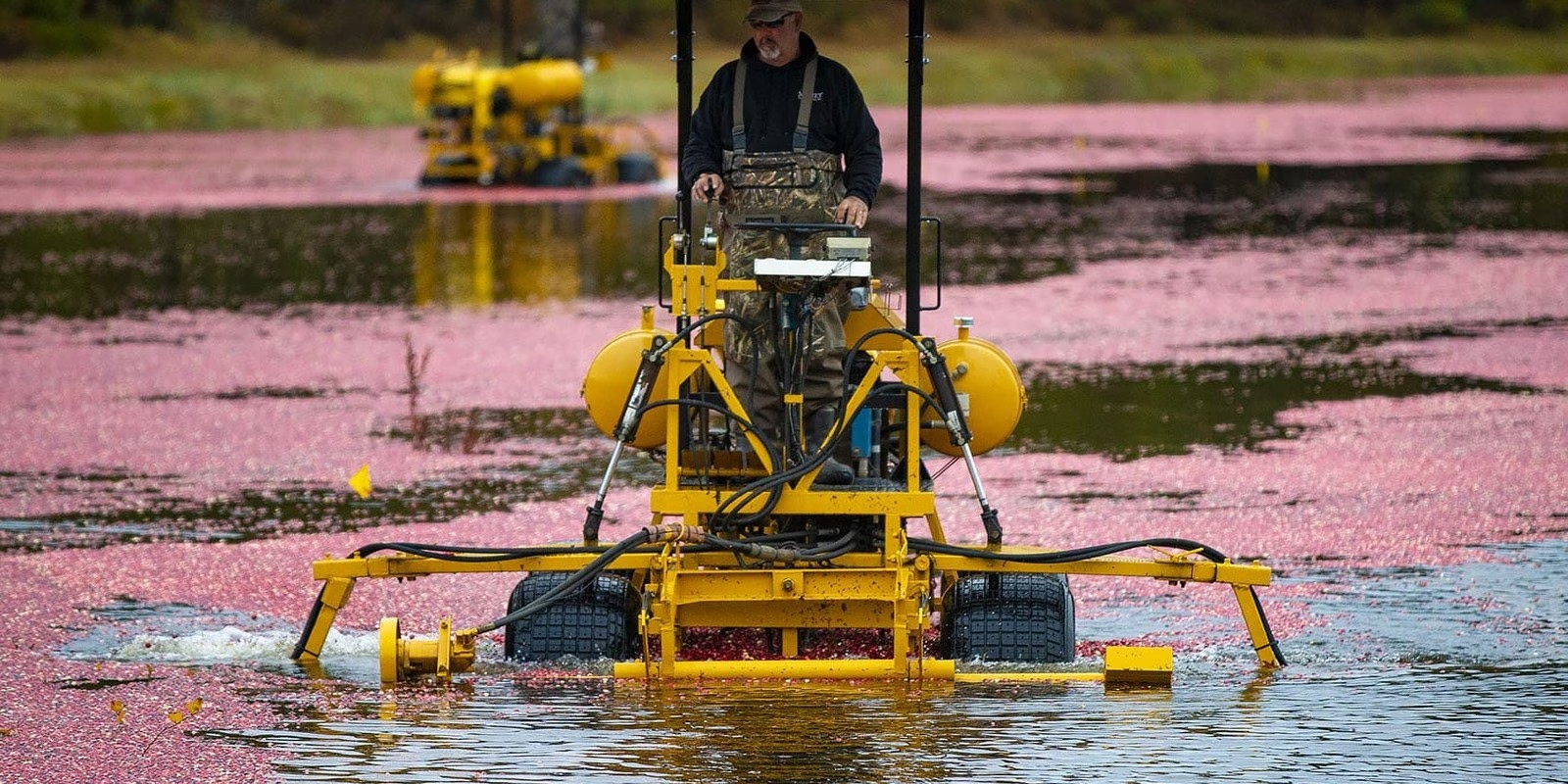
In wet harvesting, water reels work their way across the flooded bog and churn the water to strip the berries from the stems. This is the operation behind the best known images of the crop, even though it takes up only a few days of the yearly calendar.
Phenology
Flowering runs from late spring into early summer, concentrated between June and July in the northern hemisphere, and lasts three to four weeks in any one area. The buds form on the upright stems during the previous season, so that a given year’s crop depends directly on the vegetative conditions of the year before.
Pollination is carried out by insects and depends on visitors able to draw pollen from poricidal anthers. Bumblebees of the genus Bombus are particularly effective because they practise buzz pollination, contracting their thoracic muscles at a frequency that releases pollen through the apical pores of the anthers. Honeybees visit the flowers and contribute to fruit set, but they do not buzz and therefore remove pollen far less efficiently, which is why studies in commercial plantings credit a substantial share of fruiting to native pollinators. In plantations, colonies are brought in during anthesis to supplement the local fauna.
Fruit ripening takes 80 to 100 days after fertilisation and finishes between September and October in the northern hemisphere. Natural dispersal is chiefly hydrochorous: the buoyancy of the berries allows them to travel on the water that seasonally floods the bogs, a mechanism well matched to the habitat of the species. Birds and small mammals that eat the fruit complete the picture through endozoochory, dropping the seeds at greater distances from the parent plant.
Related Species and Confusions
The genus Vaccinium gathers several hundred species spread mainly across the temperate and montane regions of the northern hemisphere, with tropical representatives in the Andes. Within section Oxycoccus, to which the American cranberry belongs, the closest species are few and reasonably easy to tell apart:
- Vaccinium erythrocarpum Michx.: an Appalachian species, erect rather than creeping, with an equally reflexed corolla but a wholly different habit.
- Vaccinium microcarpum (Turcz. ex Rupr.) Schmalh.: boreal Eurasian in distribution, with leaves and fruit smaller still than those of V. oxycoccos and with glabrous pedicels.
- Vaccinium oxycoccos L.: the European or small cranberry, holarctic in distribution, differing in its more slender habit, smaller leaves with strongly revolute margins, fruit of 6 to 10 millimetres and pale red colouring, often speckled.
Telling V. macrocarpon from V. oxycoccos in the field rests on three combined criteria. Fruit size is the most immediate, since the berries of the American cranberry comfortably exceed 10 millimetres. The position of the bracteoles on the pedicel is diagnostic as well: in V. macrocarpon they are green, leaf-like and inserted above the middle of the pedicel, whereas in V. oxycoccos they are small, reddish and set below the middle. Finally, the leaf of V. macrocarpon has a rounded tip and only a faintly revolute margin, against the pointed tip and strongly inrolled margin of its relative.
Outside the genus, the risk of confusion in North American bogs involves other red-berried plants that share the habitat, and here the distinction matters for safety. Ilex verticillata, of the family Aquifoliaceae, is an erect wetland shrub with showy red fruit on leafless winter branches; its fruits contain saponins, and ingestion causes vomiting and diarrhoea in people and pets. Solanum dulcamara, a climber common on damp margins, produces ovoid red berries and contains steroidal glycoalkaloids; eating the fruit causes poisoning with gastrointestinal and neurological signs. Both separate from cranberry without difficulty by habit, since neither forms creeping mats, and by their leaves, much larger and not leathery in texture. Gaultheria procumbens, likewise a plant of acid understorey, bears red fruit on a creeping plant, but its leaves are far larger, 2 to 5 centimetres long, and the fruit is a capsule wrapped in a fleshy calyx rather than a true berry.
Phytochemistry
The chemical profile of Vaccinium macrocarpon is dominated by phenolic compounds, with one structural peculiarity that sets the species apart among edible fruits. The proanthocyanidins of the fruit show a high proportion of units joined by A-type linkage, a second ether bond between the flavan units, whereas most fruits accumulate mainly B-type proanthocyanidins. Proanthocyanidin A2 is the most abundant representative of this group, and the whole class accounts for something between 0.5% and 1.5% of the fresh weight of the fruit.
The anthocyanins concentrate in the skin and subepidermal layers of the berry, where they account for the red colour, and consist mainly of cyanidin and peonidin galactosides and arabinosides. The flavonols present comprise glycoside derivatives of quercetin, myricetin and kaempferol, distributed in both fruit and leaves. The fruits further accumulate triterpenes, notably ursolic acid in the cuticular wax.
Among the organic acids, the composition includes citric, malic and quinic acids at concentrations that account for the marked tartness of the flesh, along with benzoic acid at a level unusual for a fruit, between 0.02% and 0.1%. Rounding out the composition are pectins in the cell walls, simple sugars such as fructose and glucose at around 12% of fresh weight, dietary fibre near 4.6%, ascorbic acid in the range of 14 milligrams per 100 grams, and minerals such as copper, manganese and potassium. These compounds are not evenly distributed through the plant: the leaves show a phenolic profile distinct from that of the fruit, with a greater share of flavonols and a smaller share of anthocyanins, and the proanthocyanidin content of the berry varies with cultivar, ripening stage and growing conditions.
History and Ethnobotany
Before European colonisation, the Algonquian peoples of northeastern North America, among them the Wampanoag, the Lenape and the Cree, gathered the wild fruit from the bogs of their territories. Ethnographic records document three main uses: the fruit as food, fresh and dried, the extraction of a red pigment for dyeing cloth and hides, and applications to wounds described by observers of the colonial period. Seventeenth-century sources further relate that dried berries were worked into preparations of dried meat meant for storage and travel, a practice that took advantage of how well the fruit keeps.
The English settlers who established themselves in New England from 1620 onwards took to the fruit quickly. It entered the regional kitchen and later became a permanent fixture of the American Thanksgiving table. The name recorded by those early colonists, craneberry, pointed to the likeness between the nodding flower and the head of a crane, and was gradually shortened to its present form.
The formal botanical description came in 1789, when William Aiton published the binomial in Hortus Kewensis, the catalogue of plants grown in the royal gardens at Kew. The decisive agronomic milestone came in 1816, at Dennis, Massachusetts, where Henry Hall noticed that stretches of natural bog covered by wind-blown sand yielded more than the rest and began spreading sand over his plants on purpose. That single observation gave rise at once to the commercial cultivation of the species and to the practice of sanding, still in use two hundred years later. Through the twentieth century, breeding programmes run by the United States Department of Agriculture and by universities in Massachusetts, New Jersey and Wisconsin produced the cultivars that underpin production today, among them Ben Lear, Early Black, Howes, Mullica Queen, Pilgrim and Stevens.
Conservation
Vaccinium macrocarpon is assessed on the Red List of the International Union for Conservation of Nature as Least Concern (LC), a reflection of its wide range, its numerous wild populations and an extensive cultivated base that eases collecting pressure on natural stands. The species appears in none of the CITES appendices, and no international restrictions apply to its trade.
The documented threats are indirect and fall on the habitat rather than on the species itself. Peat bogs and freshwater marshes in northeastern North America have shrunk drastically since the nineteenth century through drainage for agriculture, urban expansion and peat extraction, and they remain among the most vulnerable ecosystems in the region. Changes in hydrology and water quality, including nutrient inflow from neighbouring farmland, favour competing species that shade out cranberry mats in natural bogs.
A separate concern touches the genetic base of the crop. Commercial production worldwide rests on a small number of cultivars, with Stevens alone accounting for a substantial share of the planted area in the United States, a situation that concentrates vulnerability to emerging pests and pathogens. Germplasm banks maintained by the United States Department of Agriculture hold wild accessions collected across the range precisely to preserve the variability the plantings do not retain. In the opposite direction, in the European peatlands where the species escaped from cultivation, it figures as a threat to native vegetation in its own right.
Interesting Facts
- The four air chambers inside the berry make it one of very few commercial fruits that float, a property that doubles as a kitchen test of quality: fruit with spoiled flesh sinks.
- The species belongs to the very small group of globally important fruits genuinely domesticated from the native flora of North America, alongside the blueberry and the Concord grape.
- A well-managed bog goes generations without replanting. Some productive areas in Massachusetts have stayed in continuous operation since the nineteenth century, with the original plants propagating vegetatively for more than 150 years.
- The images of workers wading through water covered in red fruit, the ones advertising has tied to the crop, capture a state that lasts only a few days a year: the bog runs drained through practically the whole cycle.
- The plant cannot take up nutrients on its own in its natural habitat. Its dependence on ericoid mycorrhizal fungi is so close that the root physiology of the species has dispensed with the absorbing hairs found in most vascular plants.
Notice: this content is for informational purposes and does not replace professional medical advice. Consult a physician or herbal practitioner before using medicinal plants, especially during pregnancy, breastfeeding, or alongside medication.
References and Scientific Studies
View All 12 Cited References
Peer-Reviewed Scientific Studies (4)
- DOI2002 Kron, K. A., Powell, E. A., Luteyn, J. L. Phylogenetic relationships within the blueberry tribe (Vaccinieae, Ericaceae) based on sequence data from MATK and nuclear ribosomal ITS regions. American Journal of Botany, 89(2), 327-336. 2002. ↗
- DOI2005 Vorsa, N., Polashock, J. J. Cranberry. In: Janick, J. (ed.), Plant Breeding Reviews, vol. 26. Wiley-Blackwell, Hoboken. 2005. ↗
- DOI2014 Fajardo, D., Schlautman, B., Steffan, S., Polashock, J., Vorsa, N., Zalapa, J. The American cranberry mitochondrial genome reveals the presence of selenocysteine tRNA. Gene, 536(2), 336-343. 2014. ↗
- DOI2018 Diaz-Garcia, L., Schlautman, B., Covarrubias-Pazaran, G., Maule, A., Johnson-Cicalese, J., Grygleski, E., Vorsa, N., Zalapa, J. Massive phenotyping of multiple cranberry populations reveals novel QTLs for fruit anthocyanin content and other important chemical traits. Molecular Genetics and Genomics, 293, 1379-1392. 2018. ↗
Supplementary Readings (8)
- Aiton, W. Hortus Kewensis; or, a Catalogue of the Plants Cultivated in the Royal Botanic Garden at Kew, vol. 2, p. 13. George Nicol, London. 1789. ↗
- International Plant Names Index (IPNI). Vaccinium macrocarpon Aiton. The Royal Botanic Gardens Kew, Harvard University Herbaria & Libraries and Australian National Botanic Gardens. ↗
- POWO. Plants of the World Online: Vaccinium macrocarpon Aiton. Royal Botanic Gardens, Kew. ↗
- 2009 Flora of North America Editorial Committee. Vaccinium macrocarpon Aiton. In: Flora of North America North of Mexico, vol. 8. Oxford University Press, New York and Oxford. 2009. ↗
- 2020 Cartabiano-Leite, C. E., Porcu, O. M., Casas, A. F. Comparative analysis of the botanical and agronomic characteristics of Vaccinium macrocarpon and Vaccinium oxycoccos. Journal of Agricultural Science, 12(7), 2020.
- Royal Botanic Gardens, Kew. Cranberry: Vaccinium macrocarpon. Plants of the World. ↗
- Verloove, F. Vaccinium macrocarpon. Manual of the Alien Plants of Belgium. Botanic Garden Meise. ↗
- Euro+Med PlantBase. Vaccinium macrocarpon Aiton. Botanic Garden and Botanical Museum Berlin. ↗