Scutellaria baicalensis Georgi / Huang Qin, also known in Western herbalism as Baikal Skullcap or Chinese Skullcap, is a perennial herbaceous plant of the Lamiaceae family, first described by Johann Gottlieb Georgi in 1775. Native to China, Korea, Mongolia, and parts of the Russian Far East and Siberia, this species has been widely used in traditional Asian medicine for thousands of years. Its dried root is the most valued part, used in the preparation of teas, tinctures, and extracts for its traditionally recognized properties.
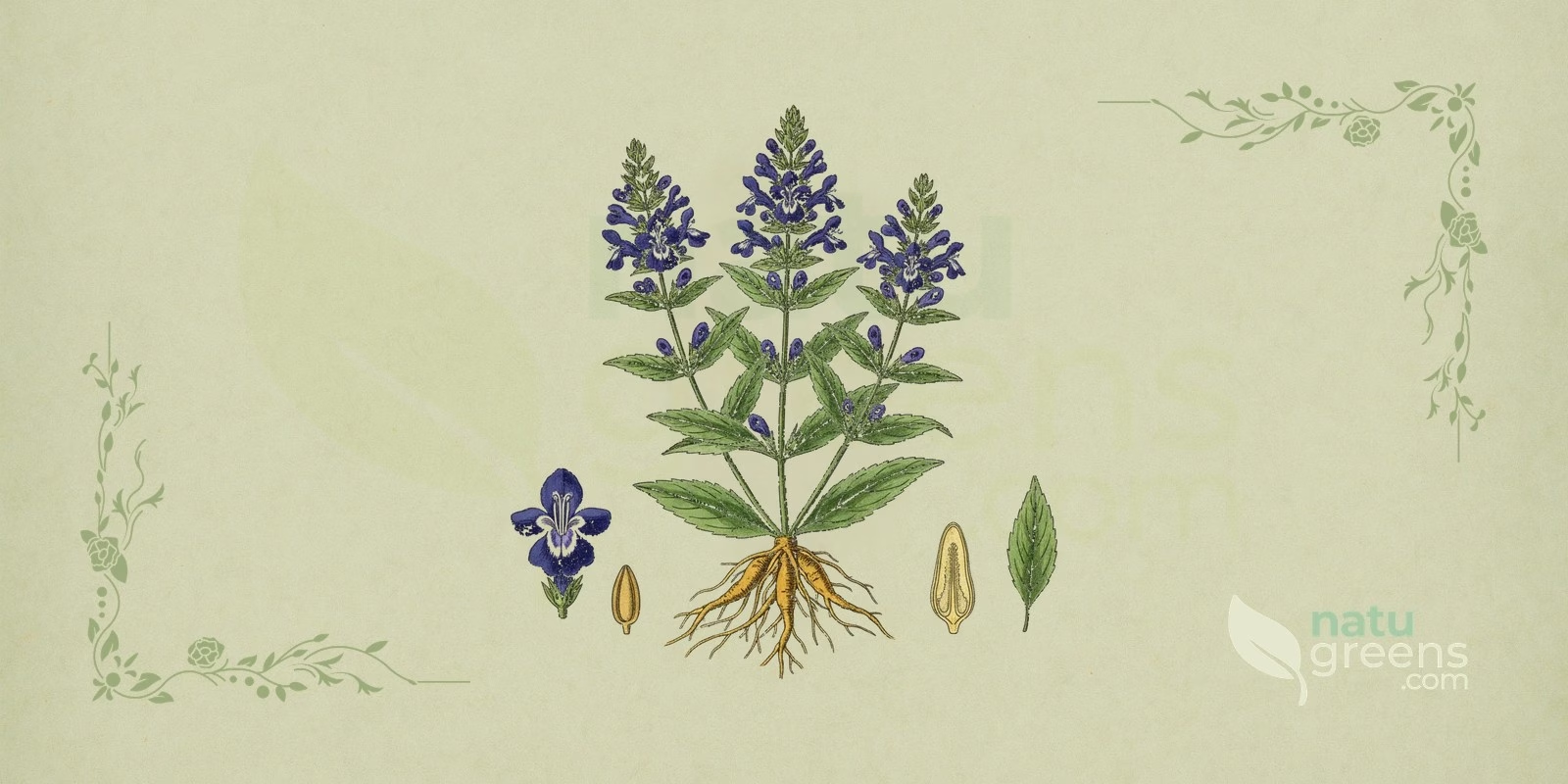
In phytotherapy, Huang Qin stands out for its rich phytochemical profile, especially in flavonoids such as baicalin and baicalein, compounds that give the plant anti-inflammatory, antioxidant, antiviral, and hepatoprotective activities already observed in preclinical studies. Modern scientific research is investigating many of the traditional uses of Scutellaria baicalensis, which reinforces interest in the plant as a subject of phytotherapeutic study, although most of the evidence still comes from laboratory models rather than clinical trials in humans. In Traditional Chinese Medicine, it is often used to “clear heat” from the body and to support the traditional treatment of various conditions, from infections to inflammatory disorders.
Important: Huang Qin (root, used in Chinese/TCM practice) is a species distinct from American skullcap, Scutellaria lateriflora (aerial part, used in Western herbalism as a calming agent). They are not synonyms or substitutes for one another: they have different traditional uses and should not be confused when purchasing or preparing them.
Popular and International Names of Huang Qin
- English: baikal skullcap, chinese skullcap, huang qin.
- Spanish: escutelaria china, escutelaria de baikal, huang qin.
- Portuguese: escutelária baicalense, huang qin.
- French: huang qin, scutellaire de chine, scutellaire du baïkal.
- Italian: huang qin, scutellaria baicalensis, scutellaria cinese.
- German: baikal-helmkraut, chinesischer helmkraut, huang qin.
Botanical Synonyms of Scutellaria Baicalensis
The accepted botanical name for the plant is Scutellaria baicalensis Georgi, although the scientific literature lists several synonyms, reflecting the taxonomic complexity and the different classifications used over time. Among the most common synonyms are Scutellaria macrantha Fisch., Scutellaria adamsii A.Ham., Scutellaria baicalensis f. albiflora H.W.Jen & Y.J.Chang, Scutellaria davurica Pall. ex Ledeb., Scutellaria lanceolaria Miq., Scutellaria macrantha Fisch. ex Rchb., and Scutellaria speciosa Fisch. ex Turcz. None of these synonyms should be confused with Scutellaria lateriflora, a botanically distinct North American species.
Botanical Family: Lamiaceae
Scutellaria baicalensis belongs to the Lamiaceae family, also known as the mint family, one of the largest and most important families of flowering plants, comprising about 236 genera and more than 7,000 species distributed worldwide. Lamiaceae plants are characterized by square stems, opposite leaves, and bilabiate flowers, often aromatic due to the presence of essential oils, and many of its members are widely used in cooking, perfumery, and medicine, including plants such as mint, rosemary, thyme, and lavender.
The presence of bioactive compounds, such as flavonoids and terpenoids, is a common trait among species in the Lamiaceae family, contributing to their medicinal properties recognized in phytotherapeutic tradition. Scutellaria baicalensis, with its rich phytochemical composition, is a prominent example of this botanical family’s research potential, valued for its anti-inflammatory and antioxidant actions observed in research.
Parts of Huang Qin Used
- Dried root
Ethnobotanical and Traditional Uses
- Cleansing of body “heat”
- Support for digestion
- Traditional use for hepatitis
- Traditional use for infections
- Traditional use for liver benefit
- Traditional use for psychiatric disorders
- Traditional use for reducing inflammation
- Traditional use for skin conditions
Therapeutic Properties of Huang Qin
- Anti-inflammatory (studied effect in reducing inflammation)
- Anticonvulsant (may have effects against seizures, in preclinical study)
- Antibacterial (activity against various bacteria); traditional use, without established clinical efficacy
- Antifungal (activity against fungi)
- Antioxidant (studied activity against oxidative stress and free radicals)
- Antiproliferative (activity observed in laboratory studies on tumor cells, without clinical proof)
- Antiviral (studied activity in the laboratory against various viruses, including HIV, influenza, DENV, HBV, and HTLV-I, without clinical proof in humans)
- Anxiolytic (studied effect on anxiety)
- Hepatoprotective (hepatoprotective effect observed in studies, with traditional use for liver complaints)
- Hypoglycemic (studied potential to help control blood sugar levels)
- Immunomodulatory (studied effect on immune response)
- Insecticidal (insect-repellent effects)
- Neuroprotective (studied protective effect on the nervous system)
Detailed Phytochemical Profile of Huang Qin
- Baicalein
- Baicalin
- Norwogonin
- Oroxylin A
- Wogonin
- β-sitosterol
Preparation and Administration Forms of Huang Qin
- Tea/Infusion (dried root can be used to make tea)
- Extract (available in extract form, often standardized)
- Tincture (alcoholic extracts of the root are common, e.g., 1:3 60% alcohol)
- Topical Use (ointments and creams with extracts are used for skin conditions)
Synergy with Other Medicinal Plants
Huang Qin is traditionally combined with other herbs in Traditional Chinese Medicine formulations, such as PC-SPES and sho-saiko-to, in an effort to enhance the therapeutic effects expected of each component. In addition, its bioactive compounds are being studied for possible interaction with drugs, which reinforces the importance of professional guidance before any combination, especially in people already using anticoagulants or about to undergo surgery. This capacity for interaction makes Scutellaria baicalensis a plant of interest in integrative approaches, always under qualified supervision.
Recipes and Usage Protocols of Huang Qin
Infusion for General Well-Being
Ingredients: 1 teaspoon (about 2-3 grams) of dried Huang Qin root, 200 ml of boiling water.
Preparation: Place the dried root in a cup and add the boiling water, cover and let steep for 10 to 15 minutes, strain, and drink. Can be taken 2 to 3 times a day. This infusion is traditionally used for its anti-inflammatory and antioxidant properties, contributing to overall well-being. Consult a healthcare professional before use, especially if pregnant, breastfeeding, taking anticoagulants, or scheduled for surgery.
Tincture for Immune Support
Ingredients: Huang Qin tincture (1:3, 60% alcohol).
Preparation: Follow the manufacturer’s dosage instructions, generally 20 to 30 drops diluted in a little water, 2 to 3 times a day. The tincture offers a concentrated way to consume the plant’s active compounds and is being studied for its potential immune support and for its antiviral and antibacterial properties. Use only products from a reliable, tested source, and consult a healthcare professional before starting use, especially if taking anticoagulants.
The preparations above follow traditional records and do not replace professional guidance. Before any internal use, check the contraindications and interactions described in this article.
Associated Therapies
Clinical Phytotherapy
In modern clinical phytotherapy, Scutellaria baicalensis is studied through standardized extracts, used experimentally in the management of various conditions. The extracts are usually titrated to ensure the concentration of flavonoids such as baicalin and baicalein, and the plant is considered a supportive agent in study protocols for anti-inflammatory, antioxidant, and hepatoprotective purposes, as well as immune support. Any use should be individualized, taking into account the patient’s specific needs and potential drug interactions, under professional guidance.
Traditional Chinese Medicine (TCM)
Scutellaria baicalensis, known as Huang Qin, is one of the 50 fundamental herbs of Traditional Chinese Medicine, in which it is used to “clear heat and dry dampness,” “purge fire and detoxify,” and “calm the fetus.” It is traditionally used for fevers, diarrhea, dysentery, jaundice, and cough with yellow phlegm, as well as inflammatory conditions, reflecting a holistic understanding of the body in which the plant is used to support energetic and functional balance according to this tradition.
Contraindications and Side Effects of Huang Qin
Distinction from Scutellaria Lateriflora and Risk of Adulteration
It is essential not to confuse Huang Qin (root, used in TCM) with American skullcap, Scutellaria lateriflora (aerial part, used in Western herbalism as a calming agent): these are different species, with distinct parts used and traditions of use, not synonyms. Commercial skullcap products, especially American skullcap ones, have had documented cases of hepatotoxicity linked to adulteration with germander (Teucrium spp.), not to skullcap itself. For this reason, it is essential to choose products from a reliable, tested source with a certificate of analysis confirming the absence of adulterants.
General Contraindications
Huang Qin should be avoided by individuals with a history of allergy to plants in the Lamiaceae family. Although rare, acute liver injury with jaundice has been reported in some cases, particularly associated with the use of adulterated supplements or those of doubtful origin. Pregnant or breastfeeding women should avoid use or consult a healthcare professional beforehand, due to a lack of adequate safety data. Concurrent use with anticoagulants or antiplatelet agents should be avoided without medical supervision, since baicalin has its own antiplatelet effect; for the same reason, use should be discontinued beforehand in those with scheduled surgery. No current evidence supports the use of the plant as a categorical treatment for cancer, hepatitis, or HIV: the available studies are preclinical, and any therapeutic decision should be made under medical supervision.
Drug Interactions
The plant may interact with various medications, altering or enhancing their effects. It is crucial that patients undergoing treatment with other drugs, especially anticoagulants or antiplatelet agents, sedatives, or diabetes medications, consult a physician or pharmacist before combining Huang Qin with their treatment, since this consultation is essential to avoid adverse interactions and ensure treatment safety, with careful monitoring recommended.
Historical Notes and Interesting Facts
Scutellaria baicalensis, known as Huang Qin, has a centuries-long history of use in Traditional Chinese Medicine, being one of the 50 fundamental herbs of that tradition, revered for its properties of “clearing heat” and “detoxifying” the body, concepts central to Eastern medical philosophy. Beyond its medicinal use, the root of Huang Qin produces an intense yellow coloring, historically used as a natural dye in textiles and artwork. The plant remains the subject of scientific research investigating the mechanisms behind its many effects observed in the laboratory.
Frequently Asked Questions about Huang Qin Tea
What Is Huang Qin?
Huang Qin (Scutellaria baicalensis), also known as Baikal Skullcap, is a medicinal plant that has been used for thousands of years in Traditional Chinese Medicine. Its root is valued for anti-inflammatory, antioxidant, antiviral, and hepatoprotective properties studied in the laboratory, and it should not be confused with American skullcap (Scutellaria lateriflora), a different plant with a distinct traditional use.
What Is Huang Qin Tea Used For?
Huang Qin tea is traditionally used to “clear heat” from the body and to support, according to tradition, the management of infections, inflammation, and digestive and liver disorders. Due to its anxiolytic and neuroprotective properties studied in the laboratory, it is also traditionally associated with promoting relaxation and general well-being, without this replacing medical supervision.
What Are the Main Active Compounds in Huang Qin?
The main active compounds are flavonoids, such as baicalin, baicalein, wogonin, norwogonin, and oroxylin A. These phytochemicals are responsible for most of its studied pharmacological actions, including the anti-inflammatory and antioxidant effects observed in preclinical research.
Are There Contraindications for Using Huang Qin?
Yes: Huang Qin is contraindicated for people with an allergy to plants in the Lamiaceae family, should be avoided by pregnant or breastfeeding women, and used with caution by those taking medications, especially anticoagulants or antiplatelet agents, sedatives, or diabetes medications, due to possible interactions. Use should also be discontinued before scheduled surgeries, and it is always recommended to consult a healthcare professional and choose products from a reliable, tested source.
How Do You Prepare Huang Qin Tea?
To prepare the tea, use 1 teaspoon (2-3 grams) of dried root per 200 ml of boiling water, let steep for 10 to 15 minutes, strain, and drink. Can be taken 2 to 3 times a day, always with attention to the contraindications and interactions mentioned.
Notice: this content is for informational purposes and does not replace professional medical advice. Consult a physician or herbal practitioner before using medicinal plants, especially during pregnancy, breastfeeding, or alongside medication.
References and Scientific Studies
View All 14 Cited References
Peer-Reviewed Scientific Studies (10)
- PMC2016 Zhao, Q., et al. (2016). Scutellaria baicalensis, the golden herb from the garden of Chinese medicinal plants.
- PEER2023 Chanchal, D. K., et al. (2023). An updated review of Chinese skullcap (Scutellaria baicalensis).
- PMC2021 Yin, B., et al. (2021). The Use of Chinese Skullcap (Scutellaria baicalensis) and its Bioactive Compounds in Animal Production.
- PMC2018 Wang, Z. L., et al. (2018). A comprehensive review on phytochemistry, pharmacology, and clinical applications of Scutellaria baicalensis Georgi.
- PEER2024 Liu, Y., et al. (2024). Exploring Bioactive Constituents and Pharmacological Activities of Scutellaria baicalensis Georgi.
- PMC2022 Hu, Z., et al. (2022). An overview of pharmacological activities of baicalin and baicalein.
- PEER2020 Song, J. W., et al. (2020). Applications, phytochemistry, pharmacological effects, and clinical uses of Scutellaria baicalensis Georgi.
- PEER2022 Tan, Y. Q., et al. (2022). Pharmacological properties of total flavonoids in Scutellaria baicalensis.
- PMC2022 Ahmadi, A., et al. (2022). Protective and therapeutic effects of Scutellaria baicalensis and its active compounds.
- PEER2021 Chen, M., et al. (2021). The advantages of using Scutellaria baicalensis and its active compounds in the treatment of liver diseases.
Supplementary Readings (4)
- 2022 Memorial Sloan Kettering Cancer Center. (2022). Scutellaria baicalensis.
- 2025 Gong, G., et al. (2025). Therapeutic and Pharmaceutical Potential of Scutellaria baicalensis Georgi.
- 2024 Zhao, K., et al. (2024). Scutellaria baicalensis and its flavonoids in the treatment of digestive system disorders.
- 2025 World Flora Online. (2025). Scutellaria baicalensis Georgi.