Quick summary
Juniperus communis L. / Juniper, known in English as juniper or common juniper and also called dwarf juniper or ground juniper, is an evergreen conifer of the Cupressaceae family described by Carl Linnaeus. Native to a vast circumpolar range across the Northern Hemisphere, the species has adapted to very different…
Main caution: The part of juniper used is the ripe pseudo-berry (galbulus), and its internal use should be limited in time, as traditional records and the Commission E indicate a maximum of 4 to 6 consecutive weeks. Juniper is…
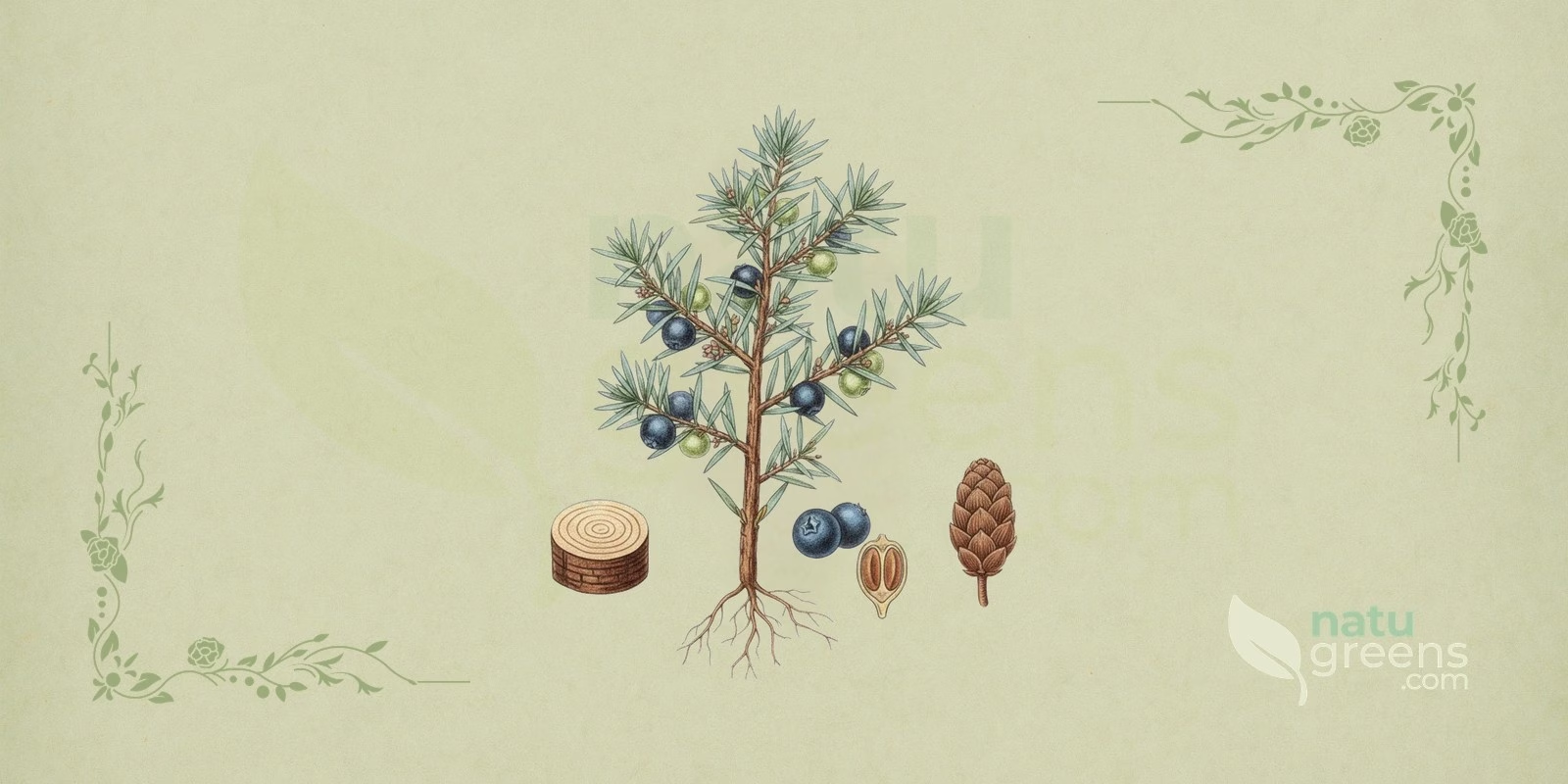
Juniperus communis L. / Juniper, known in English as juniper or common juniper and also called dwarf juniper or ground juniper, is an evergreen conifer of the Cupressaceae family described by Carl Linnaeus. Native to a vast circumpolar range across the Northern Hemisphere, the species has adapted to very different climates and altitudes and shows remarkable morphological variability, growing either as a low, creeping shrub or as a small tree. Juniper has been used for millennia in traditional medicine and in cooking, and the part most prized for its aroma and medicinal uses is the ripe pseudo-berry, the fleshy galbulus everyone knows as the juniper berry.
In the European herbal tradition, juniper holds a prominent place as a diuretic and antiseptic, with recorded uses ranging from gastrointestinal complaints to the relief of inflammation. Its phytochemical makeup is rich, above all in essential oil, and it is to this composition that the properties described by tradition are attributed. Modern scientific research has been investigating several of these uses, largely in laboratory and animal studies, which explains the worldwide interest in the plant but does not yet replace confirmation in clinical trials in people.
Popular and International Names of Juniper
- English: common juniper, dwarf juniper, ground juniper, juniper, mountain juniper, wild juniper.
- French: echinèbre, genévrier commun, genibre, genièvre, gnèbre, jébré, jimbou, jimbre, nébré, peteron, petrot, piket, yembro.
- German: Dürrenstaude, Feuerbaum, Gemeiner Wacholder, Gewöhnlicher Wacholder, Heidewacholder, Krammetsbeerbaum, Krammetsbeerstrauch, Kranawettstrauch, Kranawitt, Kraunbaum, Reckolder.
- Italian: ginepro comune, ginepro nano.
- Portuguese: fruto-de-genebra, genebra, genebreiro, junípero, junipo, xenebro comum, zimbrão, zimbro, zimbro-anão, zimbro-comum.
- Spanish: azotacristos, enebro, enebro común, enebro real, xinebro.
In Brazil, zimbro and junípero are used side by side, both for the plant and for the berries sold as a spice, but zimbro is by far the most widely used name and the one readers search for most.
Botanical Synonyms of Juniperus communis
Juniperus borealis Salisb., Juniperus canadensis Lodd. ex Burgsd., Juniperus communis subsp. alpina (Suter) Čelak., Juniperus communis subsp. nana (Willd.) Syme, Juniperus communis var. depressa Pursh, Juniperus communis var. montana Ait., Juniperus communis var. saxatilis Pallas, Juniperus depressa (Pursh) Raf., Juniperus nana Willd., Juniperus sibirica Burgsd.
Many of these names correspond to the dwarf, prostrate and mountain varieties and subspecies described over time within Juniperus communis. None of them, however, refers to savin (Juniperus sabina), a toxic, abortifacient species whose branches have been used in the past to adulterate juniper, nor to cade (Juniperus oxycedrus), the source of cade oil, which is for topical use, and for this reason purchases should be limited to correctly identified Juniperus communis berries.
Botanical Family: Cupressaceae
The Cupressaceae family, known as the cypress family, brings together evergreen conifers, both trees and shrubs, widely distributed around the world and adapted to very diverse ecosystems. Its plants are valued for their timber, their essential oils and, in many cases, their medicinal uses, and juniper, with its aromatic berries, is one of the best-known examples of the group’s economic and cultural importance.
The species Juniperus communis shares traits typical of the family, such as evergreen foliage, which in juniper is needle-shaped, and reproductive structures borne in cones, with one feature peculiar to the genus Juniperus: the female cone has fleshy, fused scales that look like a berry, hence the common name juniper berry. Chemical diversity within the Cupressaceae is broad, with many species producing bioactive compounds such as terpenes and flavonoids, which helps explain the traditional use of several plants in the family in folk medicine and phytotherapy.
Parts of Juniper Used
- Aerial parts (leaves and twigs)
- Bark
- Berries (ripe pseudo-berries or galbuli, the fleshy female cones)
- Essential oil
The part with an established medicinal use is the ripe pseudo-berry (galbulus), harvested once it has turned dark blue and then dried for use as a spice and in home preparations. Bark, leaves and twigs appear in ethnobotanical records and in laboratory research, but they lack the same tradition of internal use, while the essential oil, being highly concentrated, is restricted to external use and always diluted.
Ethnobotanical and Traditional Uses
The list below brings together historical and ethnobotanical records, that is, what different peoples and old texts have reported about the plant, not proven indications. Older sources even cited juniper for albuminuria, chronic pyelonephritis, renal suppression and nephritic dropsy in children, as well as childhood tuberculosis, applications that should not be repeated, since the plant itself can irritate the kidneys and there are no safety data for use in children.
- Abdominal disorders
- Amenorrhea
- Anti-inflammatory
- Arthritis
- Asthma
- Bladder ailments
- Bladder catarrh
- Carminative
- Cough
- Cystitis (acute and chronic)
- Diabetes
- Diaphoretic
- Digestive disorders
- Diuretic
- Emmenagogue
- Gastrointestinal problems
- Gout
- Hemorrhoids
- Inflammation
- Intestinal colic
- Leukorrhea
- Migraine
- Pulmonary blennorrhea
- Respiratory ailments
- Urinary antiseptic
Therapeutic Properties of Juniper
The properties below combine traditional records with activities observed in laboratory and animal studies, and few of them have been evaluated in clinical trials in people, so none of them replaces follow-up by a healthcare professional.
- Antibacterial (activity against bacteria observed in laboratory tests)
- Anti-inflammatory (reduction of inflammation observed in experimental models)
- Antimicrobial (action on various microorganisms in laboratory assays)
- Antioxidant (neutralizes free radicals in laboratory assays)
- Antiproliferative (activity observed in laboratory studies, without clinical proof)
- Antiseptic (traditional record of use against germs, especially in the urinary tract)
- Antiviral (activity observed in vitro, without confirmation in humans)
- Carminative (traditional record of relief from intestinal gas)
- Diaphoretic (traditional record of stimulating perspiration)
- Diuretic (increases urine volume, the central effect in traditional use)
- Emmenagogue (stimulates menstrual flow, the reason for the contraindication in pregnancy)
- Hepatoprotective (liver protection observed in animal studies)
- Hypoglycemic (reduction of blood glucose observed in preclinical studies)
- Hypolipidemic (reduction of blood fats observed in animal studies)
- Neuroprotective (protection of the nervous system investigated in experimental studies)
Detailed Phytochemical Profile of Juniper
- Alkaloids
- α-Cadinol
- Catechin
- Coumarins
- Essential oils
- Flavonoids
- Germacrene D
- Gums
- α-Humulene
- Invert sugars
- Leucoanthocyanidins
- Limonene
- β-Myrcene
- Organic acids
- α-Pinene
- β-Pinene
- Resins
- Sabinene
- Tannins
- Terpene acids
- Terpinen-4-ol
- α-Terpineol
The essential oil of the berries holds most of the monoterpenes, such as α-pinene, sabinene, β-myrcene and limonene, which are responsible for the resinous aroma, while tannins, flavonoids and catechin appear in the non-volatile fractions studied for their antioxidant activity.
Preparation and Administration Forms of Juniper
- Capsules/Tablets (standardized extracts)
- Essential oil (diluted topical use and aromatherapy only, never by mouth)
- Fluid extract
- Infusion (tea)
- Tincture
For any form of internal use, traditional records and the German Commission E limit use to periods of up to 4 to 6 weeks, and the dose should be set by a healthcare professional, who will take kidney function and current medications into account. Gin, although flavored with juniper berries, is an alcoholic beverage and not a medicinal form of the plant.
Synergy with Other Medicinal Plants
Traditional Combinations with Horsetail, Nettle, Turmeric and Ginger
Research specifically on juniper synergies is still limited, and the combinations described here come from traditional records, based on the diuretic and anti-inflammatory properties attributed to the plant. Tradition pairs juniper with horsetail (Equisetum arvense) and nettle (Urtica dioica) in blends used to stimulate diuresis, and with turmeric (Curcuma longa) or ginger (Zingiber officinale) when the traditional aim is relief of pain and inflammation. Because combining diuretic plants also adds up their effects, these combinations should respect the same time limit as juniper alone and always be guided by a healthcare professional.
Recipes and Usage Protocols of Juniper
Juniper Berry Infusion for Urinary and Digestive Health
Ingredients: a small amount of dried, lightly crushed juniper berries, in a proportion set with a healthcare professional, and one cup of boiling water.
Preparation: Place the berries in a cup, pour the boiling water over them, cover and let steep for 10 to 15 minutes before straining. This infusion is traditionally used to support digestion and diuresis and to ease mild gastrointestinal discomfort, and how often to drink it should be guided by a healthcare professional, without exceeding the traditional limit of 4 to 6 weeks and never in cases of kidney disease, pregnancy or breastfeeding. Consult a healthcare professional before use.
Diluted Juniper Massage Oil
Ingredients: 2 to 3 drops of juniper essential oil and 10 ml of a carrier vegetable oil, such as sweet almond or jojoba oil.
Preparation: Mix the essential oil with the vegetable oil in a dark glass bottle and apply to clean skin, gently massaging areas with muscle aches, tension or joint discomfort, a use traditionally recorded to ease localized discomfort. Do a patch test on a small area of skin first, avoid direct sun exposure after application and never use the oil undiluted or by mouth.
Juniper Tincture for Internal Use
Ingredients: standardized juniper tincture, available in health food stores or compounding pharmacies.
Preparation: Dose and frequency should follow the guidance of a qualified healthcare professional, and the tincture is usually diluted in water before taking. This more concentrated form is traditionally used for the diuretic and antiseptic properties attributed to juniper, especially in mild urinary tract complaints, and therefore calls for even closer attention to the 4 to 6 week limit and to the kidney contraindications. Consult a healthcare professional.
The preparations above follow traditional records and do not replace professional guidance. Before any internal use, check the contraindications and interactions described in this article.
Associated Therapies
Aromatherapy
In aromatherapy, juniper essential oil is valued for a profile considered purifying and invigorating, and inhaling it through diffusers or vaporizers is traditionally associated with a sense of mental clarity and with relief from stress and fatigue. Diluted in vegetable oils, it is used in massages for muscle and joint aches, a practice linked in tradition to the idea of cleansing the body, and its fresh, woody fragrance is also used to create spaces for meditation and focus, always bearing in mind that the essential oil must not be swallowed.
Clinical Phytotherapy
In clinical phytotherapy, juniper appears in standardized extracts and capsules, with recorded use as a diuretic in urinary tract complaints such as cystitis and as an anti-inflammatory in rheumatic pain. There are also records of use for kidney stones, but these conditions require a medical diagnosis, and any sign of kidney inflammation or disease contraindicates the plant. The dose, the form of administration and the duration, which according to tradition and the Commission E does not exceed 4 to 6 weeks, are adjusted by the professional according to the patient’s condition and possible drug interactions.
Contraindications and Side Effects of Juniper
General Contraindications
The part of juniper used is the ripe pseudo-berry (galbulus), and its internal use should be limited in time, as traditional records and the Commission E indicate a maximum of 4 to 6 consecutive weeks. Juniper is contraindicated in kidney disease or inflammation, since prolonged use or high doses can cause kidney irritation, and it is contraindicated in pregnancy, given records of uterine action, and during breastfeeding. It should also be avoided by people with a known allergy to plants of the Cupressaceae family, and since there are insufficient safety data for children, internal use in this age group is not recommended without medical guidance. People with clotting disorders or who are taking anticoagulants need to be cautious, as the coumarins present in the plant may enhance the effect of these medications.
Similar Species and Risk of Confusion
Juniper should not be confused with savin (Juniperus sabina), a toxic, abortifacient species whose branches have been used as an adulterant, which is why the recommendation is to buy only berries identified as Juniperus communis, from a known source. Nor should it be confused with cade (Juniperus oxycedrus), the source of cade oil, which is for topical use only.
Common Side Effects
When used under guidance and for a short time, juniper’s side effects tend to be rare and mild, although some people report nausea, vomiting or allergic skin reactions after drinking infusions. Undiluted essential oil, on the other hand, can cause skin irritation and sensitization, especially on sensitive skin, so the dilution and dosage guidance given by a professional should be followed to the letter.
Drug Interactions
Juniper can interact with several medications: with diuretics and antihypertensives, its diuretic effect adds to that of the drugs and increases the risk of electrolyte imbalances and an excessive drop in blood pressure, and with anticoagulants such as warfarin it may raise the risk of bleeding. Combining it with benzodiazepines or other sedatives may enhance central nervous system depression, with excessive drowsiness, and people taking antidiabetic drugs should be cautious and monitor their blood glucose closely, because preclinical studies have observed a hypoglycemic effect. Before starting to use juniper, always consult a healthcare professional, especially if you are taking other medications.
Historical Notes and Interesting Facts
Juniper has the widest geographic distribution of any conifer, extending across the entire cold-temperate Northern Hemisphere. The name of the drink gin comes from the Dutch jenever, related to the French genièvre and the Latin juniperus, and in Dutch the berry itself is called jeneverbes, but gin remains an alcoholic beverage, not a medicinal form of the plant.
In the Middle Ages, juniper berries were burned to ward off evil spirits and, according to the beliefs of the time, to protect against disease, and they were also part of purification rituals. Ethnobotanical records also attribute to Indigenous peoples of North America the use of the plant as a female contraceptive, a finding that reinforces caution about its uterine action. In the kitchen, the berries are a versatile ingredient for seasoning game meats, sauces and marinades, with a resinous, slightly peppery flavor, and the aromatic wood was traditionally used for smoking food and in crafts.
Frequently Asked Questions about Juniper
Is Juniper Tea Safe for Everyone?
No, juniper tea is not safe for everyone, as it is contraindicated in pregnancy, given records of uterine action, during breastfeeding and in any kidney disease or inflammation, since high doses or prolonged use can irritate the kidneys. People allergic to plants of the Cupressaceae family should also avoid it, and anyone taking diuretics, antihypertensives, antidiabetic drugs, anticoagulants or sedatives needs to be extra cautious. Before starting, see a doctor or herbalist, especially if you have a pre-existing health condition or are taking other medications.
What Is the Best Way to Prepare Juniper Tea?
The traditional method is infusion, in which the dried berries, lightly crushed to release the essential oil and aromatic compounds, are covered with boiling water and left to steep, covered, for 10 to 15 minutes before straining. Boiling the berries directly is not recommended, because prolonged heat makes the volatile oils evaporate. The amount of berries and how often to drink the tea should be set by a healthcare professional, respecting the traditional limit of 4 to 6 weeks.
Can Juniper Help with Weight Loss?
Juniper’s diuretic effect may reduce weight temporarily through fluid loss, but there is no robust scientific evidence that it helps with direct, lasting weight loss. Sustainable weight loss usually depends on a balanced diet, regular physical activity and healthy habits, and juniper should not be seen as a miracle solution. Any use for this purpose needs to be discussed with a healthcare professional, not least because prolonged use can irritate the kidneys.
Can I Apply Juniper Essential Oil Directly to the Skin?
No, juniper essential oil, like most essential oils, should not be applied undiluted, because it can cause irritation, skin sensitization or allergic reactions, especially on sensitive skin. Topical use requires dilution in a carrier vegetable oil such as sweet almond, jojoba or coconut, generally at a ratio of 2 to 3 drops of essential oil per 10 ml of oil, always after a patch test on a small area of skin. This oil should never be taken by mouth.
How Can You Tell Juniper Apart from Savin and Cade?
The juniper used in medicine and cooking is Juniperus communis, which should not be confused with savin (Juniperus sabina), a toxic, abortifacient species whose branches have been used as an adulterant. It is also different from cade (Juniperus oxycedrus), the source of cade oil, which is for topical use. The safest way to avoid confusion is to buy only berries labeled with the correct scientific name, from reliable suppliers.
How Long Can Juniper Be Used?
According to traditional records and the Commission E, internal use of juniper should be limited to periods of up to 4 to 6 weeks, because prolonged use or high doses can cause kidney irritation. After this period, the advice is to stop using it and talk to a healthcare professional before resuming.
Notice: this content is for informational purposes and does not replace professional medical advice. Consult a physician or herbal practitioner before using medicinal plants, especially during pregnancy, breastfeeding, or alongside medication.
How to cite this article
NATUGREENS. Juniper (Juniperus communis): Properties and Benefits. Natugreens, 3 Nov. 2026. Disponível em: https://natugreens.com/juniper-juniperus-communis/. Accessed: Nov. 4, 2026.
Natugreens. (2026). Juniper (Juniperus communis): Properties and Benefits. Natugreens. https://natugreens.com/juniper-juniperus-communis/
References and Scientific Studies
- PMC2014 Bais S, et al. A Phytopharmacological Review on a Medicinal Plant: Juniperus communis. Int Sch Res Notices. 2014.
- PMC2022 Gonçalves AC, et al. Zimbro (Juniperus communis L.) as a Promising Source of Bioactive Compounds and Biomedical Activities: A Review on Recent Trends. Int J Mol Sci. 2022.
- PMC2024 Jojić AA, et al. Beyond Essential Oils: Diterpenes, Lignans, and Biflavonoids from Juniperus communis L. as a Source of Multi-Target Lead Compounds. Plants (Basel). 2024.
- PMC2021 Lai WL, et al. Juniperus communis extract induces cell cycle arrest and apoptosis of colorectal adenocarcinoma in vitro and in vivo. Braz J Med Biol Res. 2021.
- PMC2019 Raina R, et al. Potential of Juniperus communis L as a nutraceutical in human and veterinary medicine. Heliyon. 2019.