Quick summary
Hemidesmus indicus (L.) R.Br. ex Schult. / Indian Sarsaparilla
Main caution: Indian sarsaparilla has a reasonably safe profile in traditional Ayurvedic use, as sariva, but it should be used with caution by people with pre-existing medical conditions. During pregnancy and breastfeeding, its use…
Hemidesmus indicus (L.) R.Br. ex Schult. / Indian Sarsaparilla
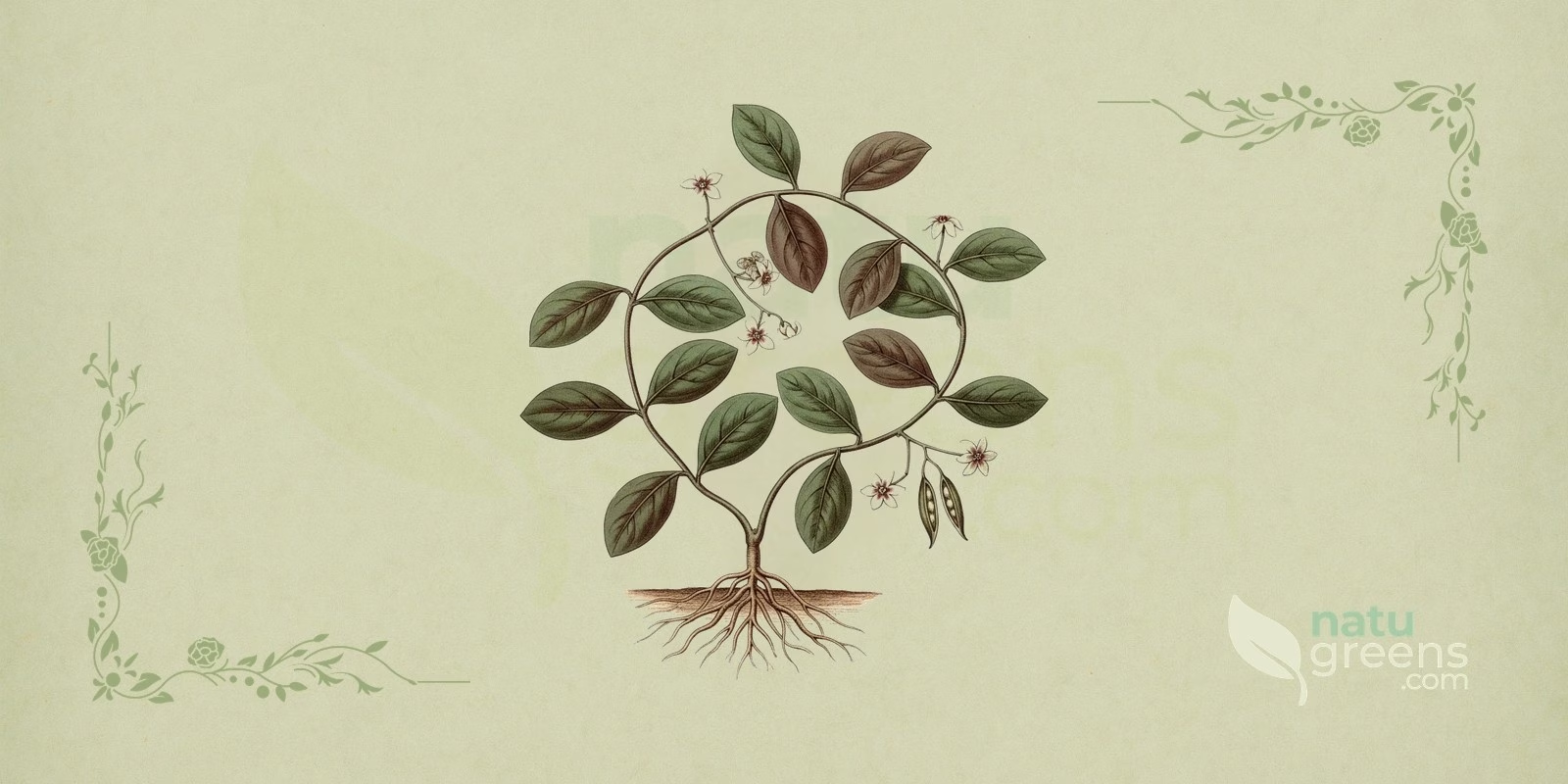
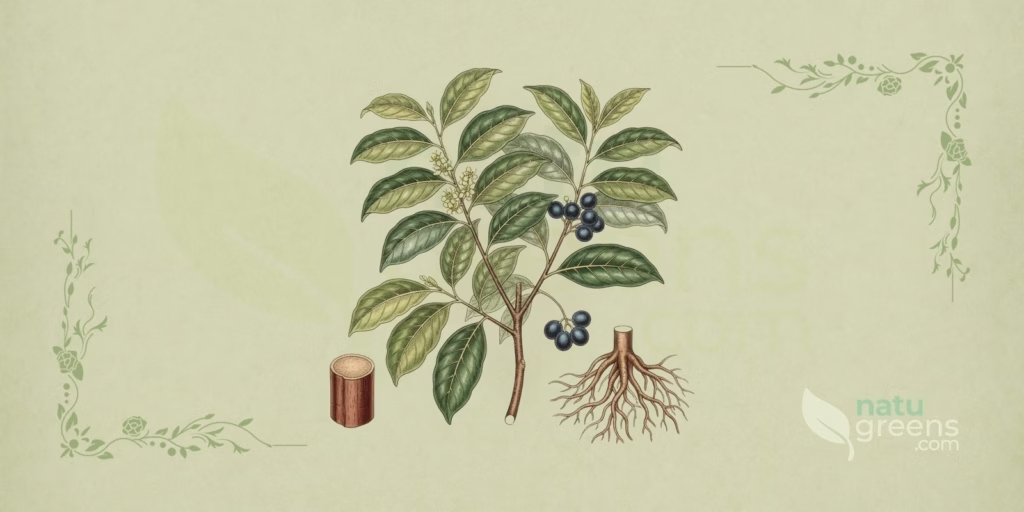
Hemidesmus indicus, commonly known as Indian sarsaparilla, anantamul or sariva, is a slender climber native to South Asia, found across much of India, from the upper Gangetic plain east to Assam, as well as in parts of the central, western and southern regions of the country. Valued for its woody, aromatic roots, the species has held a prominent place in Ayurvedic medicine for centuries and was also adopted into European herbal medicine. Its rich phytochemical makeup is being investigated for antioxidant, anti-inflammatory and antimicrobial activities observed mainly in laboratory and animal studies, and Ayurveda classifies it among the Rasayana plants, a group that Indian tradition associates with longevity and vitality.
Popular and International Names of Indian Sarsaparilla
- English: Anantamul, Country Sarsaparilla, False Sarsaparilla, Indian Sarsaparilla
- French: Anantamul, Salsepareille Indienne
- German: Anantmul, Indische Sarsaparilla
- Italian: Anantamul, Salsapariglia Indiana
- Portuguese: Anantamul, Nannari, Salsaparrilha-Indiana, Sariva
- Spanish: Anantamul, Zarzaparrilla India
Botanical Synonyms of Hemidesmus indicus
The accepted name is Hemidesmus indicus (L.) R.Br. ex Schult., which some databases record in the shortened form Hemidesmus indicus (L.) R.Br., and the most frequently cited synonym is Periploca indica L., the basionym described by Linnaeus. The plant was long placed in the former family Asclepiadaceae, but modern phylogenetic classifications have moved it to Apocynaceae, in the subfamily Periplocoideae, which more accurately reflects its evolutionary relationships.
Despite its common name, Indian sarsaparilla is neither true sarsaparilla (Smilax spp.) nor Brazilian sarsaparilla (Smilax spp. and Herreria salsaparrilha), which belong to other families and have a different chemistry. Caution is also needed in the Indian trade, where Hemidesmus root is often adulterated or replaced with the roots of Decalepis hamiltonii and Decalepis arayalpathra, which give off the same 2-hydroxy-4-methoxybenzaldehyde aroma and are threatened species, so the root should only be bought from an identified source.
Botanical Family: Apocynaceae
The Apocynaceae family brings together a diverse group of flowering plants that includes trees, shrubs, herbs and climbers, nearly always with latex, usually opposite leaves and five-petaled flowers fused into a tubular or funnel-shaped structure. Many of its species produce bioactive compounds, such as alkaloids and cardiac glycosides, that have been the subject of intense pharmacological research for decades, and the family is widely distributed across the tropical and subtropical regions of the world.
Parts of Indian Sarsaparilla Used
- Latex
- Leaves
- Roots
Ethnobotanical and Traditional Uses
- Anti-inflammatory
- Antipyretic (fever)
- Antiseptic
- Appetite stimulant
- Beverages (nannari sharbat)
- Blood detoxifier (traditional record, under study)
- Blood purifier (traditional record, under study)
- Body cooling agent
- Chronic cough
- Diabetes (traditional record; hypoglycemic effect observed only in animals)
- Diuretic
- Fever
- Flavoring agent (root syrup)
- Gastrointestinal disorders (dysentery, diarrhea, dyspepsia)
- Gonorrhea (historical record, not a substitute for medical treatment)
- Headache
- Hemorrhoids
- Impotence
- Infections (traditional record)
- Memory (traditional record)
- Menorrhagia
- Mouth ulcers
- Relief of intestinal cramps
- Relief of muscle and joint pain (root paste)
- Rheumatism
- Rice dishes (pickled roots)
- Skin diseases such as leucoderma and psoriasis (traditional record, under study)
- Snake and scorpion bites (traditional record, under study; a snakebite is an emergency that requires antivenom)
- Stomachache
- Syphilis (historical record, not a substitute for medical treatment)
- Tonic
- Vulnerary (wound healing)
- Wounds (topical use)
Therapeutic Properties of Indian Sarsaparilla
The properties attributed to Indian sarsaparilla combine the traditional record of Ayurveda and Western herbal medicine with the results of laboratory and animal research, so none of them has, to date, sufficient clinical evidence in humans.
- Anti-inflammatory (activity observed in laboratory and animal studies)
- Antimicrobial (root extracts and 2-hydroxy-4-methoxybenzaldehyde inhibited bacteria and biofilms in the laboratory)
- Antioxidant (effect observed in in vitro and animal assays)
- Antiproliferative (activity observed in laboratory studies, with no clinical evidence)
- Depurative and alterative (traditional record, under study)
- Diaphoretic (traditional record in Western herbal medicine)
- Hypoglycemic (effect observed in animal studies, with no evidence in humans)
- Mild diuretic (traditional record)
- Tonic and rejuvenating (traditional Ayurvedic record as a Rasayana plant)
Detailed Phytochemical Profile of Indian Sarsaparilla
- 2-Hydroxy-4-methoxybenzoic acid (HMBA)
- Alpha-amyrin
- Beta-amyrin
- Beta-amyrin palmitate
- Calogenin acetylcalogenin-3-O-β-D-digitoxopyranosyl-O-β-D-digitoxopyranosyl-O-β-D-digitoxopyranoside
- Coumarin
- Essential oil (rich in 2-hydroxy-4-methoxybenzaldehyde, responsible for the aroma of the root)
- Flavonoids
- Hemidesmine I
- Hemidesmine II
- Hemidesminine
- Hexadecanoic acid
- Hexatriacontane
- Hindicusine
- Hyperoside
- Isocoumarins
- Isovanillin (3-hydroxy-4-methoxybenzaldehyde)
- Lupanone
- Lupeol
- Lupeol acetate
- Pentacyclic triterpenes (oleanenes and ursenes)
- Resins
- Rutin
- Saponins
- Sitosterol
- Tannins
- Vanillin (4-hydroxy-3-methoxybenzaldehyde)
Preparation and Administration Forms of Indian Sarsaparilla
- Decoction (roots)
- Extracts (liquid and dry)
- Paste (roots for topical use)
- Poultice (ground roots)
- Powder (dried roots)
- Syrup (root)
- Tea or infusion (roots)
- Tincture (roots)
Synergy with Other Medicinal Plants
Guduchi (Tinospora cordifolia)
Ayurvedic medicine often pairs Indian sarsaparilla with guduchi (Tinospora cordifolia) in formulations traditionally used to support immunity and in chronic inflammatory conditions, a combination whose possible joint effect on the immune response and inflammation has not yet been confirmed by clinical studies.
Neem (Azadirachta indica)
The pairing with neem (Azadirachta indica) appears in the traditional record of depurative and antimicrobial formulations aimed at skin complaints, infections and inflammatory conditions, a use that rests on tradition and laboratory findings, with no clinical evidence for the combination.
Recipes and Usage Protocols of Indian Sarsaparilla
Traditional Root Infusion
Ingredients: 1 teaspoon of chopped dried Hemidesmus indicus root and 200 ml of boiling water.
Preparation: Add the chopped root to the boiling water, cover and let it steep for 10 to 15 minutes, then strain and drink it warm, sweetened with honey if desired. How often to use it should be decided with guidance, so consult a health professional before making the infusion part of your routine.
Topical Root Powder Paste
Ingredients: 1 tablespoon of Hemidesmus indicus root powder and enough water to form a paste.
Preparation: Mix the root powder with water until you get a smooth paste, and do a skin patch test first by applying a little to the inner forearm and waiting 24 hours to rule out reactions. In Indian tradition, the paste is applied to swellings or rheumatic joints, left on for 20 to 30 minutes and then rinsed off, usually once or twice a day.
The preparations above follow traditional records and do not replace professional guidance. Before any internal use, check the contraindications and interactions described in this article.
Associated Therapies
Ayurveda
In Ayurveda, where it is known as sariva, Indian sarsaparilla is a Rasayana plant valued for its rejuvenating and tonic qualities and traditionally used to balance the doshas, especially Pitta, thanks to its cooling nature. Tradition employs it in formulations intended for blood purification, skin diseases, fever and digestive disorders, indications that remain a traditional record still under study.
Western Herbal Medicine
In Western herbal medicine, Hemidesmus indicus is described as a plant with diuretic, diaphoretic and depurative action, and it often appears as an alterative in preparations traditionally used to support detoxification and general health, especially in conditions involving inflammation and infections.
Contraindications and Side Effects of Indian Sarsaparilla
Contraindications
Indian sarsaparilla has a reasonably safe profile in traditional Ayurvedic use, as sariva, but it should be used with caution by people with pre-existing medical conditions. During pregnancy and breastfeeding, its use should be avoided due to a lack of safety data, and the existence of traditional Indian use in pregnant women does not justify transferring that practice outside of its original context. Children should only use the plant under the guidance of a health professional, and people allergic to plants of the Apocynaceae family or to latex should avoid it.
Drug Interactions
Because it showed a hypoglycemic effect in animal studies, the plant calls for caution in people taking antidiabetic drugs, given the possibility of an additive effect that lowers blood glucose too much. Its mild diuretic effect also calls for caution with diuretics, and anyone on long-term medication should talk to their doctor before combining it with any root preparation.
Traditional Uses That Call for Caution
Indications such as “blood purifier”, “for the skin” and “snake venom antidote” are a traditional record and remain under study, with no clinical evidence. A snakebite is a medical emergency that requires immediate care and antivenom, and no Indian sarsaparilla preparation replaces that treatment.
Side Effects
In the amounts traditionally used, the side effects of Hemidesmus indicus are rare and generally mild, and may include gastrointestinal discomfort, such as nausea or diarrhea, in sensitive people. If any adverse reaction appears, use should be stopped and a health professional consulted, and although no serious effects have been reported in clinical or ethnobotanical studies, follow-up is still advisable.
Root Authenticity
In the Indian trade, Hemidesmus root may be adulterated or replaced with Decalepis hamiltonii and Decalepis arayalpathra, which share the same 2-hydroxy-4-methoxybenzaldehyde aroma and are threatened species, so it is best to buy only from an identified source.
Historical Notes and Interesting Facts
A Substitute for Sarsaparilla
Indian sarsaparilla is often called “false sarsaparilla” because, especially in India, it came to be used as a substitute for true sarsaparilla (Smilax spp.), with which it shares some traditional uses, even though the two belong to different botanical families and have different chemistry.
Popular Name and Meaning
In India, the plant goes by many names, including anantamul, which means “endless root” or “eternal root”, a reference to its long, creeping root and to its reputation in Ayurvedic medicine for promoting longevity and vitality. In the south of the country, the names naruneendi and nannari are also common, the latter found in nannari sharbat, a refreshing drink made with the root syrup.
Frequently Asked Questions about Indian Sarsaparilla
Can Indian Sarsaparilla Be Used by Children?
Use in children calls for caution and should always be guided by a health professional. Although the plant appears in some traditional preparations for children, dosage and safety in the pediatric population have not been widely studied, so it is advisable to seek medical advice before giving them any herbal remedy.
What Is the Difference between Indian Sarsaparilla and True Sarsaparilla?
The difference lies in the botanical species. Indian sarsaparilla is Hemidesmus indicus, of the Apocynaceae family, while true sarsaparilla corresponds to species of Smilax, of the Smilacaceae family, and Brazilian sarsaparilla includes Smilax spp. and Herreria salsaparrilha. They are plants from other families with a different chemistry, despite some shared traditional uses.
How Can You Tell If Indian Sarsaparilla Root Is Authentic?
In the Indian trade, Hemidesmus root is adulterated or replaced with Decalepis hamiltonii and Decalepis arayalpathra, which have the same 2-hydroxy-4-methoxybenzaldehyde aroma and are threatened species. Since the smell cannot tell them apart, the advice is to buy only from an identified source.
Does Indian Sarsaparilla Work against Snakebite?
Its use as a snake venom antidote is a traditional record that remains under study, with no clinical evidence. A snakebite is an emergency that requires immediate medical care and antivenom, and no plant replaces that treatment.
Can People Taking Diabetes Medication Use Indian Sarsaparilla?
Animal studies have observed a hypoglycemic effect, which calls for caution in people taking antidiabetic drugs. In that case, use should only be considered under medical supervision, since the combined effects may lower blood glucose too much.
Can Pregnant and Breastfeeding Women Use Indian Sarsaparilla?
During pregnancy and breastfeeding, use should be avoided due to a lack of safety data. There is traditional Indian use in pregnant women, but that practice should not be transferred to other contexts without evidence to support it.
Notice: this content is for informational purposes and does not replace professional medical advice. Consult a physician or herbal practitioner before using medicinal plants, especially during pregnancy, breastfeeding, or alongside medication.
How to cite this article
NATUGREENS. Indian Sarsaparilla (Hemidesmus indicus): Properties and Benefits. Natugreens, 4 Nov. 2026. Disponível em: https://natugreens.com/hemidesmus-indicus-indian-sarsaparilla/. Accessed: Nov. 4, 2026.
Natugreens. (2026). Indian Sarsaparilla (Hemidesmus indicus): Properties and Benefits. Natugreens. https://natugreens.com/hemidesmus-indicus-indian-sarsaparilla/
References and Scientific Studies
- PMC2013 Das S, et al. The bioactive and therapeutic potential of Hemidesmus indicus R. Br. (Indian Sarsaparilla) root. Phytotherapy Research. 2013.
- PMC2020 Kannappan A, et al. 2-Hydroxy-4-methoxybenzaldehyde from Hemidesmus indicus is antagonistic to Staphylococcus epidermidis biofilm formation. Biofouling. 2020.
- PMC2014 Nair SA, et al. Promising anti-diabetes mellitus activity in rats of β-amyrin palmitate isolated from Hemidesmus indicus roots. European Journal of Pharmacology. 2014.
- PMC2020 Nandy S, et al. Indian Sarsaparilla (Hemidesmus indicus): Recent progress in research on ethnobotany, phytochemistry and pharmacology. Journal of Ethnopharmacology. 2020.
- PMC2018 Turrini E, et al. In Vitro Study of the Cytotoxic, Cytostatic, and Antigenotoxic Profile of Hemidesmus indicus (L.) R.Br. (Apocynaceae) Crude Drug Extract on T Lymphoblastic Cells. Toxins (Basel). 2018.