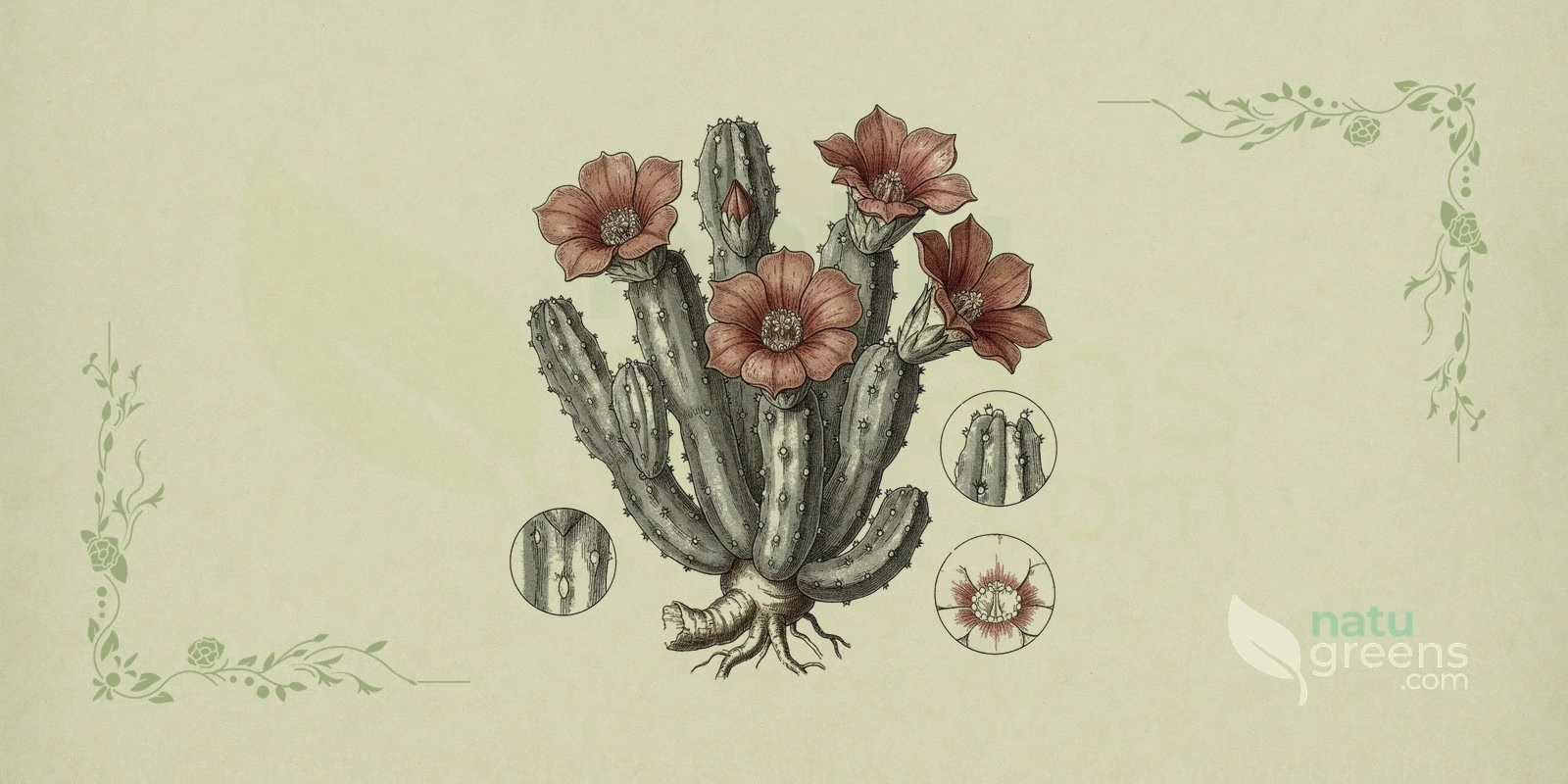
Hoodia gordonii (Masson) Sweet ex Decne. / Hoodia, popularly known as Bushman’s hat and Queen of the Namib, is a succulent plant of the Apocynaceae family first described by Francis Masson. Native to the arid regions of the Kalahari Desert in southern Africa, the species grows wild in South Africa, Namibia and Botswana. Hoodia became internationally famous for its alleged ability to suppress appetite, a piece of traditional knowledge held by the San people. According to this record, indigenous hunters have for centuries chewed the fleshy, spiny stems of the plant, which are the part used, to endure hunger and thirst during long journeys.
Despite this reputation, the efficacy and safety of Hoodia gordonii remain controversial, and its use as a weight-loss supplement lacks robust scientific validation in humans. Early research identified the steroidal glycoside P57 as the likely active compound, which sparked considerable commercial interest. Large companies, however, abandoned pharmaceutical development in the face of difficulties in synthesizing the compound and concerns about liver toxicity. To protect it from extinction through overharvesting, the species is listed in CITES Appendix II, and its trade is restricted in several countries. In Brazil, the health regulator ANVISA has banned the compounding and sale of products containing the plant.
Popular and International Names of Hoodia
- English: Bushman’s hat, hoodia, Kalahari cactus, Queen of the Namib, xhoba.
- Spanish: cacto del Kalahari, capucha de bosquimano, Hoodia.
- Portuguese: cacto-do-kalahari, chapéu-de-bosquímano, hoodia, rainha-do-namibe.
- French: cactus du Kalahari, chapeau de Bushman, Hoodia.
- Italian: cactus del Kalahari, cappello di boscimane, Hoodia.
- German: Buschmannshut, Hoodia, Kalahari-Kaktus.
Botanical Synonyms of Hoodia gordonii
The taxonomic classification of Hoodia gordonii has produced several synonyms over time, a reflection of the complex botanical history of the Apocynaceae family. Among the alternative scientific names, the most notable is Stapelia gordonii Masson, the original designation given by Francis Masson, while Ceropegia gordonii (Masson) Bruyns and Scytanthus gordonii (Masson) Hook. represent different views on the genus in which the species should be placed.
- Ceropegia gordonii (Masson) Bruyns
- Hoodia albispina N.E.Br.
- Hoodia bainii Dyer
- Hoodia barklyi Dyer
- Hoodia burkei N.E.Br.
- Hoodia husabensis Nel
- Hoodia langii Oberm. & Letty
- Hoodia pillansii N.E.Br.
- Hoodia rosea Oberm. & Letty
- Monothylaceum gordonii (Masson) G.Don
- Scytanthus gordonii (Masson) Hook.
- Stapelia gordonii Masson
Botanical Family: Apocynaceae
Hoodia gordonii belongs to the Apocynaceae family, a vast and diverse group of flowering plants that includes trees, shrubs, lianas and herbs. The family is known for the milky latex found in many of its species and for chemically complex compounds, such as alkaloids and glycosides, with significant pharmacological activity.
Within the family, hoodia is placed in the subfamily Asclepiadoideae, which stands out for its intricately structured flowers and for specialized pollination mechanisms that frequently involve flies.
Parts of Hoodia Used
The part used is the succulent, spiny stem, which the San chew fresh in their traditional practice and which commercial products turn into powder or dry extract.
- Stems (aerial parts)
Ethnobotanical and Traditional Uses
The uses below belong to the ethnobotanical record of the species and have not been confirmed by clinical studies in humans.
- Appetite and hunger suppression, a traditional use among San hunters.
- Indigestion, a traditional use without scientific confirmation.
- Minor infections, a traditional use without scientific confirmation.
- Thirst relief during long journeys, according to the traditional San record.
Therapeutic Properties of Hoodia
The properties listed here derive from traditional use and from preliminary studies, and none of them has been clinically proven in humans.
- Anorectic (appetite suppression described in traditional use and in preliminary studies, without clinical proof in humans)
- Antiseptic (traditional use for minor infections, with no studies to confirm it)
Detailed Phytochemical Profile of Hoodia
The chemical profile of hoodia is dominated by oxypregnane-type steroidal glycosides, among which P57 is the most studied and the one that attracted the attention of industry.
- Oxypregnane-type steroidal glycosides, such as P57, and aglycones such as calogenin and hoodigogenin A.
- Saponins.
Preparation and Administration Forms of Hoodia
The forms below appear in ethnobotanical sources and on the international supplement market, but none of them has established safety, and in Brazil ANVISA prohibits the compounding and sale of products containing the species.
- Cream.
- Dry extract (in capsules).
- Infusion.
- Poultice.
- Powder.
Synergy with Other Medicinal Plants
There are no consistent records in the scientific or ethnobotanical literature on the synergy of Hoodia gordonii with other medicinal plants, since its traditional use by the San people is predominantly isolated and centers on eating the plant on its own to endure hunger and thirst.
The complexity of its phytochemical profile and the concerns about liver toxicity weigh against combining it with other herbs without in-depth investigation and professional supervision, and the lack of studies on interactions between plants underlines the need for caution whenever it is used.
Recipes and Usage Protocols of Hoodia
Traditional Consumption of the Fresh Stem
Preparation: In the traditional record of the San people, the plant is used to ease the feeling of hunger and thirst over long periods: a piece of fresh Hoodia gordonii stem is cut, the spines are removed and the succulent pulp is chewed, always in small amounts.
Although it is an authentic and historically documented method, eating the fresh plant is impractical and illegal outside its natural habitat because of the protected status of the species, and it does not remove the need for medical guidance.
Capsule Supplements on the International Market
Administration: Commercial Hoodia gordonii supplements, sold as capsules filled with the powdered dry extract of the plant, are promoted as appetite suppressants on the basis of the traditional San record, but concentrations vary widely between manufacturers and there is no dose considered safe or effective.
The quality, purity and P57 content of these products are extremely variable, and in many cases the products are fraudulent. Since ANVISA prohibits their sale in Brazil and any use for weight control requires prior medical guidance, consult a healthcare professional before considering this type of product.
The preparations above follow traditional records and do not replace professional guidance. Before any internal use, check the contraindications and interactions described in this article.
Associated Therapies
Phytotherapy
In contemporary phytotherapy, Hoodia gordonii is associated with weight-loss products, and its inclusion in formulations rests on the hypothesis, raised in animal studies, that P57 might act on the brain by signaling satiety. The serious herbal medicine community does not recommend its use, nor do regulatory agencies such as ANVISA and the EMA endorse it, both because of the lack of conclusive evidence of efficacy and, above all, because of safety concerns, which include potential hepatotoxicity and a high rate of product adulteration.
Contraindications and Side Effects of Hoodia
General Contraindications
Hoodia (Hoodia gordonii) is sold as an appetite suppressant, but there is no robust clinical evidence of its efficacy or of its long-term safety, and many commercial products do not contain the declared species or are adulterated. For this reason, the safety recommendations are clear: do not use it during pregnancy or breastfeeding; use caution in cases of hypertension and heart disease, since some studies have reported increases in blood pressure and heart rate; consider the risk of interaction with antidepressants and stimulants; and seek medical advice before any use for weight control.
Its use is also contraindicated in children and in people with liver or kidney problems, and anyone with an eating disorder, such as anorexia or bulimia, should avoid it. People with diabetes or who take medication to control their blood sugar need to be doubly cautious, because appetite suppression can lead to hypoglycemia.
Common Side Effects
Documented adverse effects are limited, owing to the scarcity of rigorous clinical studies in humans, and include nausea, vomiting and changes in skin sensation. The most worrying effect is potential liver toxicity, identified in preliminary studies and cited among the reasons why pharmaceutical development of the plant was halted. All indications are that other components of the plant, rather than P57, may be responsible for this liver damage.
Drug Interactions
Information on drug interactions is scarce, but the potential impact of Hoodia gordonii on the liver suggests that it may interfere with the metabolism of various medications processed by this organ, so combining it with other hepatotoxic supplements or drugs should be avoided. There is also a risk of interaction with antidepressants and stimulants, and combining it with hypoglycemic or antihypertensive drugs is a theoretical concern that calls for careful medical monitoring.
Historical Notes and Interesting Facts
- The knowledge of the San people about hoodia gave rise to one of the most famous cases of biopiracy and of a subsequent benefit-sharing agreement. In 1997, South Africa’s Council for Scientific and Industrial Research (CSIR) patented the P57 compound without acknowledging the holders of the traditional knowledge, and only after international pressure, in 2003, was an agreement signed that secured for the San people a percentage of future profits.
- Despite its cactus-like appearance, Hoodia gordonii does not belong to the Cactaceae family, as it is a succulent of the Apocynaceae family, the same family as periwinkle and oleander.
- The flowers of Hoodia gordonii give off a fetid smell, similar to that of rotting meat, which attracts flies, their natural pollinators.
- Media interest exploded after a 2004 report on the American program 60 Minutes showed a journalist testing the plant in Namibia and reporting a complete loss of appetite, an episode that set off a global rush for hoodia and led to the overexploitation of the species and a proliferation of counterfeit products.
Frequently Asked Questions about Hoodia
Does Hoodia Help You Lose Weight?
The idea that Hoodia gordonii helps with weight loss comes from the traditional use of the plant as an appetite suppressant, but there are no high-quality clinical studies in humans proving its efficacy and safety for weight loss. Moreover, most supplements on the market do not contain the active compound, or contain it only in negligible amounts.
Is It Safe to Take Hoodia Supplements?
No. Regulatory agencies, such as ANVISA, and health experts advise against its use because of the lack of evidence of safety, the risk of liver toxicity and the very high prevalence of fraudulent and adulterated products, which may contain dangerous substances.
What Is the Active Ingredient in Hoodia?
The most studied compound is the oxypregnane steroidal glycoside P57, which is associated with the appetite-suppressing effect. The hypothesis is that it acts on the brain and signals a false sense of satiety, but its action and safety in humans have never been properly demonstrated.
Who Should Not Use Hoodia?
Pregnant and breastfeeding women, children and people with liver or kidney problems or eating disorders should not use the plant, and people with hypertension, heart disease or diabetes need to be cautious. There is also a risk of interaction with antidepressants and stimulants, which is why the recommendation is to seek medical advice before any use for weight control.
Can Hoodia Be Sold in Brazil?
No. ANVISA has banned the compounding and sale of products containing Hoodia gordonii in the country, and the species is also protected under CITES Appendix II, which restricts its international trade to keep it from being driven to extinction by overharvesting.
Does Hoodia Belong to the Cactus Family?
No. Despite its cactus-like appearance, with fleshy, spiny stems, Hoodia gordonii is a succulent of the Apocynaceae family, the same family as periwinkle and oleander, and not of the Cactaceae family.
Notice: this content is for informational purposes and does not replace professional medical advice. Consult a physician or herbal practitioner before using medicinal plants, especially during pregnancy, breastfeeding, or alongside medication.
References and Scientific Studies
- PMC2011 Vermaak I, et al. Hoodia gordonii: an up-to-date review of a commercially important anti-obesity plant. Planta Med. 2011.
- PMC2008 van Heerden FR. Hoodia gordonii: a natural appetite suppressant. J Ethnopharmacol. 2008.
- PMC2004 MacLean DB, Luo LG. Increased ATP content/production in the hypothalamus may be a signal for energy-sensing of satiety: studies of the anorectic mechanism of a plant steroidal glycoside. Brain Res. 2004.
- PMC2011 Blom WA, et al. Effects of 15-d repeated consumption of Hoodia gordonii purified extract on safety, ad libitum energy intake, and body weight in healthy, overweight women: a randomized controlled trial. Am J Clin Nutr. 2011.
- PMC2006 Avula B, et al. Determination of the appetite suppressant P57 in Hoodia gordonii plant extracts and dietary supplements by liquid chromatography/electrospray ionization mass spectrometry (LC-MSD-TOF) and LC-UV methods. J AOAC Int. 2006.