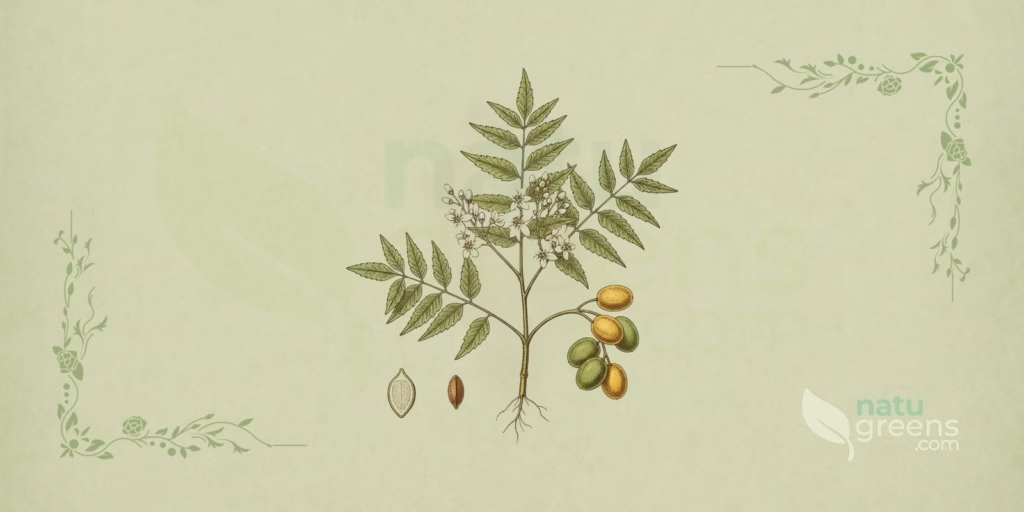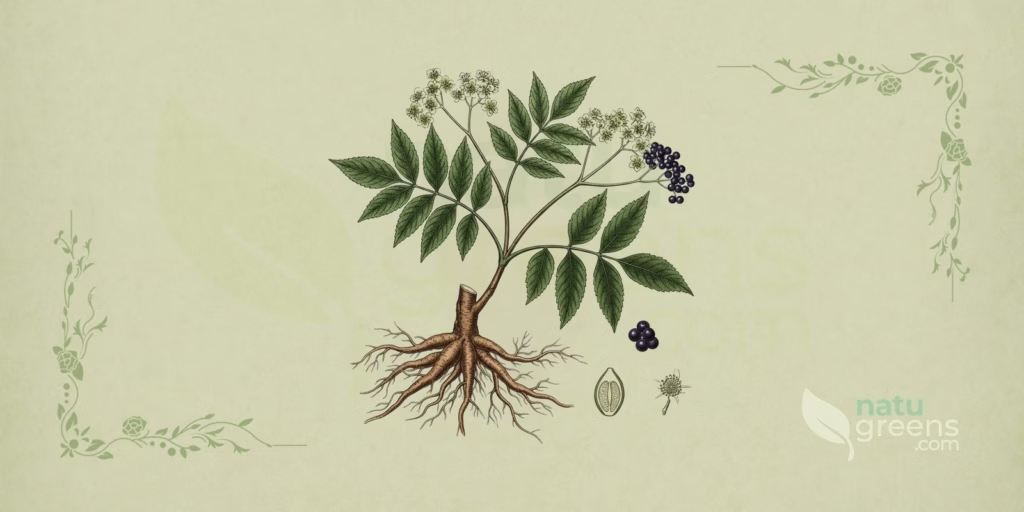
Trichilia catigua A.Juss. / Catuaba, commonly known as catuaba or catiguá, is a tree native to South America, found in Brazil, Paraguay, Bolivia, and Argentina, and widely used in traditional medicine for its reputation as a tonic and stimulant. In the Brazilian market, however, the name catuaba is applied in a confusing and inconsistent way to several species from different genera, among them Erythroxylum vacciniifolium, Anemopaegma arvense, and Anemopaegma mirandum, as well as Trichilia catigua itself, and products sold as catuaba do not always contain the correct botanical species. This article deals specifically with Trichilia catigua, one of the most studied species under that name, and anyone buying catuaba should check the scientific name on the label, since composition and effects vary among these distinct plants.
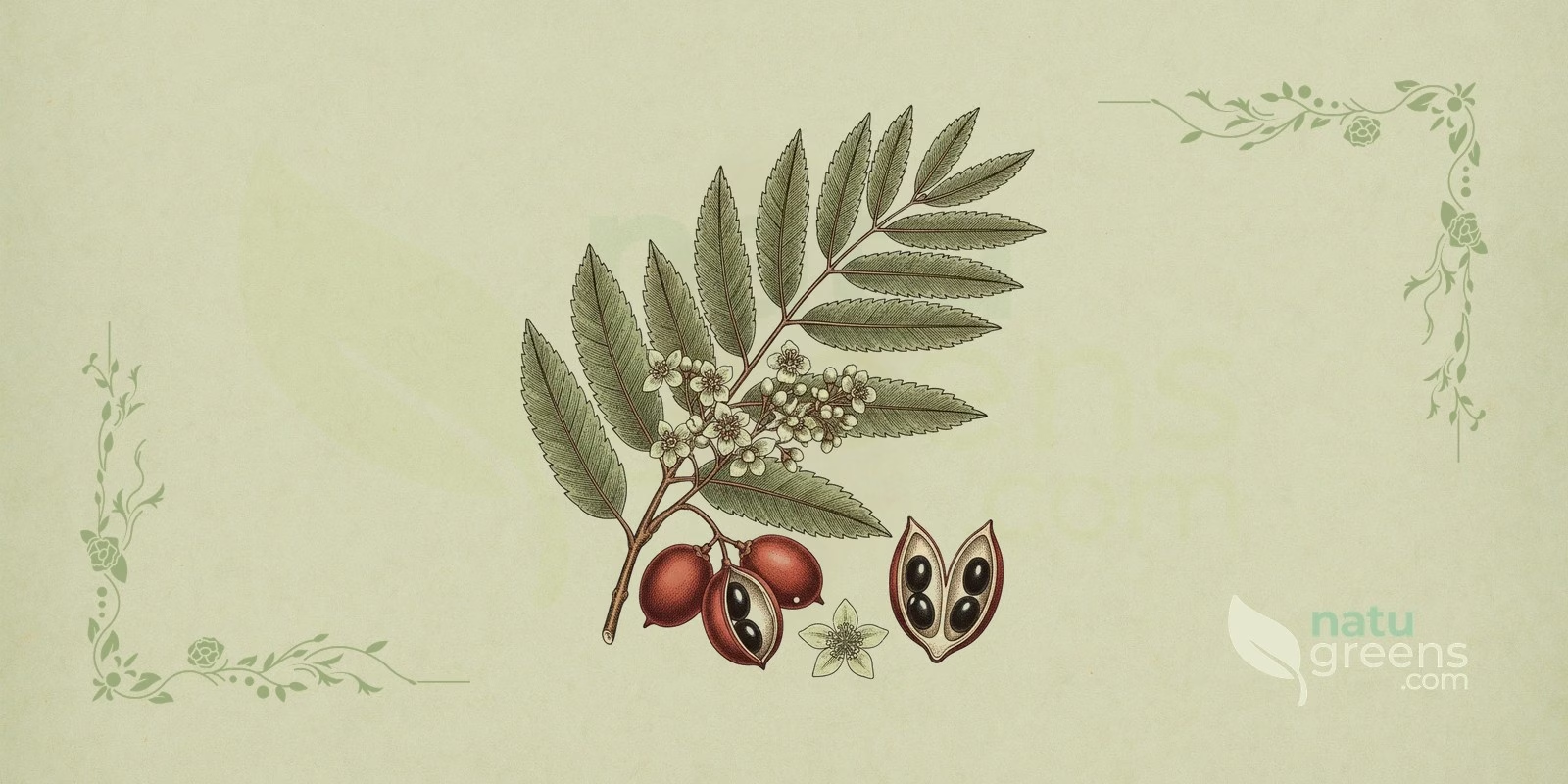
The bark of Trichilia catigua has been used for centuries in folk medicine and shamanic practices, mainly as an aphrodisiac and tonic. Preclinical studies, carried out in the laboratory and in animals, have been investigating several of these traditional uses and describe antidepressant-like, neuroprotective, and antioxidant activities, linked to the plant’s richness in flavonolignans and flavonoids, but these findings have not yet been confirmed in robust clinical trials in people.
Popular and International Names of Catuaba
Several of the names below are regional, and some, starting with “catuaba” itself, also refer to other species, which makes the scientific name the most reliable reference for identifying the plant.
- English: catuaba, catuaba bark.
- Spanish: catiguá, catuaba, corteza de catuaba.
- Portuguese: angelim-rosa, catiguá, catiguá-vermelho, catuaba, catuaba-do-norte, cedrinho, mangalô-catigá, passarinheira, pau-ervilha.
- French: catuaba.
- Italian: catuaba.
- German: Catuaba.
Botanical Synonyms of Trichilia catigua
Trichilia catigua A.Juss. is the accepted scientific name for the species, and the literature does not record an extensive list of heterotypic synonyms in current use, unlike what happens with many other medicinal plants. The abbreviation A.Juss. refers to the French botanist Adrien-Henri de Jussieu, who described the species in 1829, and should not be confused with Juss., which designates his father, Antoine Laurent de Jussieu.
In the case of catuaba, the most relevant confusion lies not in the scientific synonyms but in the common name, which is applied to plants from different families, such as Erythroxylum vacciniifolium, of the family Erythroxylaceae, and Anemopaegma arvense, of the family Bignoniaceae, which is why the binomial Trichilia catigua is the only reliable way to identify the species discussed here.
Botanical Family: Meliaceae
Trichilia catigua belongs to the Meliaceae family, which brings together trees and shrubs distributed mainly in tropical and subtropical regions and includes economically important species such as mahogany (Swietenia macrophylla) and neem (Azadirachta indica), valued for their timber, their oils, and their medicinal properties. Plants in this family are characterized by the presence of secondary compounds such as triterpenes and limonoids, which account for many of their biological activities.
The Meliaceae family comprises about 50 genera and roughly 600 species, many of them used in the traditional medicine of different cultures for the anti-inflammatory, antimicrobial, and insecticidal properties attributed to them. As a member of this group, Trichilia catigua shares some of these phytochemical traits and is a good illustration of the diversity and medicinal potential of the Meliaceae.
Parts of Catuaba Used
In Trichilia catigua, the part of medicinal interest is the trunk bark, sold dried, chopped, or powdered, and it is in this bark that the flavonolignans are found, such as cinchonain Ib, which is used as a marker in quality control methods for extracts and herbal medicines prepared with the species.
- Trunk bark
Ethnobotanical and Traditional Uses
The items below summarize how the bark is used in Brazilian folk medicine and are not equivalent to proven clinical indications.
- Aphrodisiac
- Fatigue
- General tonic
- Increased vitality
- Male sexual impotence
- Memory deficits
- Nervous system stimulant
- Relief of anxiety and symptoms of nervous exhaustion
- Stress
Therapeutic Properties of Catuaba
The activities listed below were observed in laboratory and animal studies with Trichilia catigua extracts, and they cannot be transferred to products made from other species sold as catuaba, nor taken as a proven effect in people.
- Anticholinesterase (inhibition of the enzyme acetylcholinesterase observed in laboratory tests)
- Antidepressant (antidepressant-like effect observed in rodents, without clinical confirmation)
- Anti-fatigue (reduction of fatigue observed in animal studies)
- Anti-inflammatory (activity described in preliminary studies)
- Antimicrobial (inhibition of microorganisms observed in vitro)
- Antioxidant (protection against oxidative damage in laboratory assays)
- Neuroprotective (effect observed in animal models and in rat hippocampal slices)
Detailed Phytochemical Profile of Catuaba
The most studied chemical marker of Trichilia catigua is cinchonain Ib, a flavonolignan present in the bark and in herbal medicines prepared with the species, alongside flavan-3-ols, tannins, and other flavonoids. The tropane alkaloids known as catuabines were described in Erythroxylum vacciniifolium, another plant sold as catuaba, and should not be automatically attributed to Trichilia catigua, a clear example of how the naming confusion also contaminates descriptions of composition.
- Aromatic oils
- Bitter substances
- Cinchonain Ib (flavonolignan)
- Flavan-3-ols
- Flavonoids
- Lipids
- Phytosterols
- Resin
- Tannins
Preparation and Administration Forms of Catuaba
Because it is a bark, catuaba is usually prepared as a decoction rather than a simple infusion, while tinctures and standardized extracts allow better control over the concentration of the compounds, provided the label states the scientific name Trichilia catigua.
- Bark decoction
- Standardized extracts
- Tinctures
Synergy with Other Medicinal Plants
Combinations for Vitality and Energy
In Brazilian folk herbal medicine, catuaba is traditionally combined with other stimulant and adaptogenic plants, such as ginseng (Panax ginseng) and guarana (Paullinia cupana), in formulas used for physical and mental energy and during periods of tiredness. This traditional record is no substitute for assessment by a professional, and stacking stimulant plants, especially caffeine-rich guarana, calls for extra caution in people with heart problems, hypertension, anxiety, or sleep disorders.
Combinations for Cognitive Support
For memory and concentration, catuaba appears in combinations with ginkgo (Ginkgo biloba) or bacopa (Bacopa monnieri), plants traditionally used for the same purpose. The rationale behind these formulas is to pair the neuroprotective activity observed in animal studies of Trichilia catigua with the other plants’ traditional uses related to cerebral circulation and cognition, although no clinical trials have evaluated these combinations, and anyone taking anticoagulants should consult a doctor before adding ginkgo.
Recipes and Usage Protocols of Catuaba
Catuaba Bark Decoction
Ingredients: 1 tablespoon of chopped catuaba bark (Trichilia catigua), 500 ml of water.
Preparation: Place the bark and the water in a saucepan, bring to the heat, and let it boil for about 10 to 15 minutes; then remove from the heat, cover, wait until it is lukewarm, and strain. This decoction is traditionally used as a general tonic during periods of tiredness, and the daily amount and length of use should be determined with a health professional, since safety data in humans are limited. Before preparing it, check the label to make sure the bark really comes from Trichilia catigua and not from another plant sold under the same name.
Catuaba Bark Tincture
Ingredients: 50 g of dried, chopped catuaba bark (Trichilia catigua), 250 ml of 70% grain alcohol.
Preparation: Place the bark in a dark glass jar, cover it with the alcohol, seal tightly, and leave it to macerate for 14 days in a dark place, shaking daily; then strain and store the tincture in a dropper bottle. In folk medicine, the tincture is traditionally taken diluted in water as a stimulant and aphrodisiac, and the number of drops and frequency of use should be guided by a health professional, bearing in mind that the preparation contains alcohol and is not indicated for pregnant or breastfeeding women, children, or people who cannot drink alcohol.
The preparations above follow traditional records and do not replace professional guidance. Before any internal use, check the contraindications and interactions described in this article.
Associated Therapies
Herbal Medicine
In herbal medicine, catuaba is valued for its reputation as a tonic, stimulant, and adaptogen, and it appears in formulations aimed at tiredness, sexual drive, and memory, based on traditional use and on preclinical studies investigating neuroprotective and anti-fatigue effects. The bark of Trichilia catigua is the most widely used part, in decoctions, tinctures, or standardized extracts, and modern herbal medicine seeks to standardize these extracts by their concentration of flavonolignans such as cinchonain Ib, which helps control product quality but is no substitute for clinical proof of efficacy and safety.
The existence of studies devoted to identifying, through morphological and chemical analysis, which plant is actually present in commercial catuaba preparations shows how much the authentication of raw material is a real concern in this market, both for the herbalist and for the consumer, who should prefer products identified by their scientific name.
Contraindications and Side Effects of Catuaba
General Contraindications
Although catuaba is widely used and is usually considered safe at traditional doses, some precautions are necessary, and pregnant and breastfeeding women should avoid it because of the lack of conclusive studies on its safety during these stages. A study in rats observed impaired fertility in adult females exposed to the crude extract of Trichilia catigua, a finding that reinforces caution for women planning to become pregnant, and since there are no safety data for children, use in children is not indicated either. People with heart problems, hypertension, or sleep disorders should use the plant with caution, as its stimulant effects may worsen these conditions.
Check the Scientific Name on the Label
“Catuaba” is a common name applied, in a confusing and inconsistent way in the Brazilian market, to several species from different genera, including Erythroxylum vacciniifolium, Anemopaegma arvense, Anemopaegma mirandum, and Trichilia catigua, and products sold as catuaba do not always contain the correct botanical species. The information in this article refers specifically to Trichilia catigua, and buyers should check the scientific name on the label, since composition, effects, and risks vary among these distinct species.
Common Side Effects
At high doses, catuaba may cause headache, dizziness, and dry mouth and, in rarer cases, insomnia or nervousness because of its stimulant effect. It is advisable to start with small amounts, observe how the body reacts, and consult a health professional before beginning any medicinal use, especially when there are preexisting conditions or other medications are being taken.
Drug Interactions
Data on interactions between Trichilia catigua and medications are scarce, but the antidepressant-like effect observed in animals, linked to dopaminergic mechanisms, calls for caution in people taking antidepressants or other drugs that act on the central nervous system. Combining it with stimulants such as caffeine and guarana may add up effects on the heart and on sleep, and combinations with ginkgo require medical guidance in people who take anticoagulants.
Historical Notes and Interesting Facts
Origin of the Name
The term “catuaba” comes from Tupi-Guarani and is usually translated as “what gives vigor” or “tree that gives strength.” That meaning reflects the plant’s traditional use as a tonic and aphrodisiac among Indigenous peoples of Brazil and goes some way toward explaining its cultural importance. Because the name describes an effect rather than a specific plant, it may also help us understand why it ended up designating different species with a similar reputation.
Indigenous Legend
Among Brazilian Indigenous peoples, catuaba is surrounded by legends, and one of the best known tells that the plant was a gift from the gods to men, meant to give them strength, virility, and longevity. According to these accounts, the bark of the tree was considered sacred and used in rituals and ceremonies devoted to the health and well-being of the community.
Popularity in Brazil
Catuaba is among the most popular medicinal plants in Brazil and is widely sold in health food stores and compounding pharmacies, and it even appears in industrially produced beverages that carry the name on the label. Its reputation as a natural aphrodisiac and stimulant sustains this popularity in Brazil and abroad, although these products do not always state which of the species called catuaba they use.
Frequently Asked Questions about Catuaba
Is Catuaba an Effective Aphrodisiac?
Catuaba is traditionally known as an aphrodisiac, and preclinical studies suggest that Trichilia catigua may influence neurotransmitters such as dopamine and serotonin, which are involved in regulating mood and sexual function. However, clinical research confirming this efficacy in humans is lacking, and the traditional effect should not be attributed to products made from other species sold under the same name.
Does Catuaba Help with Memory and Concentration?
There is no proof in humans yet, but studies in rats and in slices of the hippocampus, a brain region important for memory and learning, observed that Trichilia catigua extracts protect cells against oxidative stress and cell death. These findings point to a potential that still needs to be tested in clinical trials before any recommendation for memory or concentration can be made.
Are There Different Types of Catuaba?
Yes, the name “catuaba” is applied to several species from different genera, such as Erythroxylum vacciniifolium, Anemopaegma arvense, and Anemopaegma mirandum, and not only to Trichilia catigua, the subject of this article. Since composition and effects vary among them, it is worth checking the scientific name on the label to know which plant is being used.
How Is Catuaba Usually Consumed?
The most common form is the decoction, prepared by boiling the bark in water, but tinctures and standardized extracts are also available and allow better control over the concentration of the compounds. The choice depends on the purpose and on each person’s preference, and the amount and length of use should be determined with a health professional.
Does Catuaba Have Contraindications?
Yes, catuaba is contraindicated in pregnant and breastfeeding women, and there are no safety data for use in children. People with heart problems, hypertension, or sleep disorders should use it with caution because of its stimulant effect, and anyone who has preexisting conditions or takes antidepressants or other medications should consult a doctor or herbalist before use.
How Can I Confirm the Right Species When Buying Catuaba?
The way to do it is to read the label and look for the scientific name Trichilia catigua, since products sold simply as catuaba do not always contain this species and may contain other plants known by the same common name. When in doubt, choose suppliers that state the binomial and the part of the plant used, and talk to a pharmacist or herbalist before consuming it.
Notice: this content is for informational purposes and does not replace professional medical advice. Consult a physician or herbal practitioner before using medicinal plants, especially during pregnancy, breastfeeding, or alongside medication.
References and Scientific Studies
- PMC2006 Beltrame FL, et al. A validated higher-performance liquid chromatography method for quantification of cinchonain Ib in bark and phytopharmaceuticals of Trichilia catigua used as Catuaba. J Chromatogr A. 2006.
- PMC2005 Campos MM, et al. Antidepressant-like effects of Trichilia catigua (Catuaba) extract: evidence for dopaminergic-mediated mechanisms. Psychopharmacology (Berl). 2005.
- PMC2015 Dos Santos AH, et al. The exposure to Trichilia catigua (catuaba) crude extract impairs fertility of adult female rats but does not cause reproductive damage to male offspring. J Ethnopharmacol. 2015.
- PMC2018 Godinho J, et al. Ethyl-acetate fraction of Trichilia catigua restores long-term retrograde memory and reduces oxidative stress and inflammation after global cerebral ischemia in rats. Behav Brain Res. 2018.
- PMC2012 Kamdem JP, et al. Catuaba (Trichilia catigua) prevents against oxidative damage induced by in vitro ischemia-reperfusion in rat hippocampal slices. Neurochem Res. 2012.