



Quick summary
Casca-preciosa (Aniba canelilla) is an aromatic tree in the Lauraceae family, native to the Amazon and the Guianas, with recorded occurrences in Brazil, Venezuela, Colombia, Peru and Bolivia. Its bark gives off a scent reminiscent of cinnamon, which is why early European travelers mistook it for the spice of the…
Main caution: Casca-preciosa is an Amazonian aromatic plant whose oil has 1-nitro-2-phenylethane as its main component, a compound documented in the scientific literature and with marked effects on blood pressure, the heart and the…
Casca-preciosa (Aniba canelilla) is an aromatic tree in the Lauraceae family, native to the Amazon and the Guianas, with recorded occurrences in Brazil, Venezuela, Colombia, Peru and Bolivia. Its bark gives off a scent reminiscent of cinnamon, which is why early European travelers mistook it for the spice of the Orient. In Amazonian folk medicine, a tea made from the bark has been used for generations for digestive complaints, aches and nervous tension. Almost everything known about its effects, however, comes from laboratory and animal studies, and no clinical trials in people have been carried out so far.
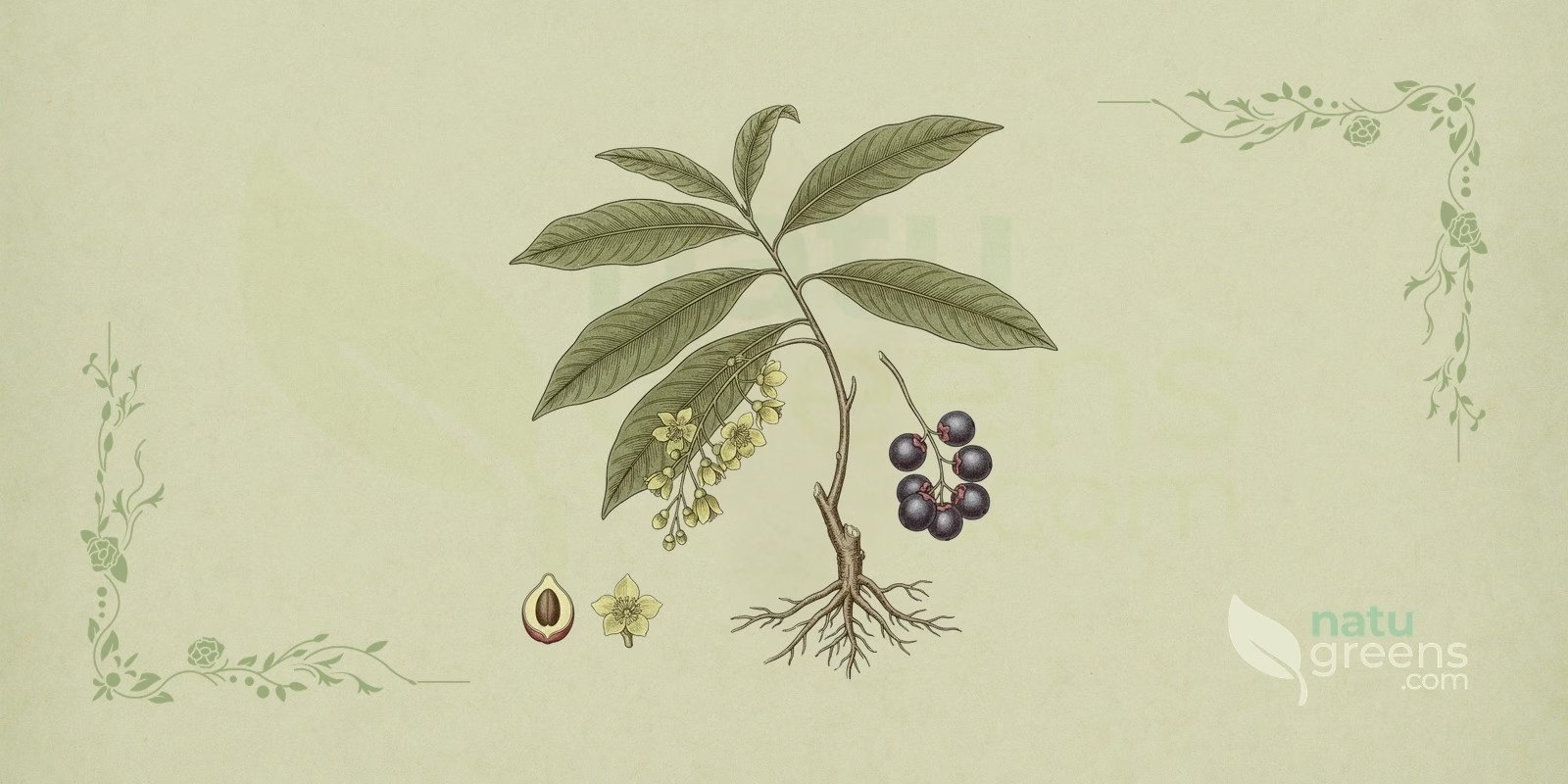
Popular and International Names of Casca-Preciosa
- English: false cinnamon, precious bark (translations used in the scientific literature)
- Portuguese (Brazil): canelão, casca-do-maranhão, casca-preciosa, falsa-canela, folha-preciosa, preciosa
- Spanish: canela, canelilla, canelón
Ethnobotanical surveys from the Amazon and Andean regions also record local names such as amapaima, chorecho, koto chojlla, pokaneragi and showoyaja, although the sources do not always state which language each name comes from. In Amazonian trade, the fragrant powder prepared from the bark became known as "cheiro-de-santarém", the scent of Santarém.
Not to Be Confused with True Cinnamon
Despite the similar smell and the name "false cinnamon", casca-preciosa is not the cinnamon found in the kitchen. The cinnamon sold as a spice comes from species of the genus Cinnamomum, which belongs to the same Lauraceae family but has a very different chemical makeup, dominated by cinnamaldehyde. The aromatic resemblance of Aniba canelilla comes from other compounds, above all 1-nitro-2-phenylethane and, in some samples, methyleugenol. Nor should it be confused with rosewood (Aniba rosaeodora), a relative in the same genus whose linalool-rich oil is used in perfumery.
Botanical Synonyms of Casca-Preciosa
The accepted name is Aniba canelilla (Kunth) Mez. Kunth originally described the species as Cryptocarya canelilla Kunth, the basionym of the current combination made by Carl Mez when he moved it into the genus Aniba. Another synonym recorded in the literature is Aniba elliptica A.C. Sm. In older works, the species is often cited alongside Ocotea pretiosa, now treated as Ocotea odorifera, because the two trees share the same unusual aromatic compound even though they belong to different genera.
Botanical Family: Lauraceae
The Lauraceae family brings together trees and shrubs from tropical and subtropical regions, known for the oil cells found in their leaves, bark and wood. It gives us bay laurel, cinnamon, avocado and camphor, as well as many fine aromatic timbers of the Amazon. Casca-preciosa can reach about 35 meters in height, with a trunk 40 to 60 centimeters across, smooth branches dotted with lenticels and alternate, leathery, elliptic leaves measuring 8 to 16 centimeters. The flowers are small and inconspicuous, and the oblong fruit sits in a cupule, as is typical of the genus.
Useful Parts of Casca-Preciosa
The most widely used part is the trunk bark, which gives the plant its name and serves both for teas and decoctions and for extracting the essential oil. Leaves and thin twigs also yield an aromatic oil, with yields of up to 1.7% in the leaves, and researchers have pointed to them as a more sustainable alternative to stripping the bark, a practice that injures or kills the tree. The wood is used in construction, and the bark oil goes into perfumes, cosmetics and flavorings.
Ethnobotanical and Traditional Uses of Casca-Preciosa
In the Amazon, the most common practice is to drink a tea or decoction of the bark, while extracts and the oil are applied to the skin. Among the Tiriyó people, there are records of smoke from burning bark being used against bouts of diarrhea. The ethnobotanical review by Souza-Junior and colleagues gathers the following folk indications:
- Colds, coughs, flu and sinusitis
- Digestive complaints, such as colic, diarrhea, dysentery, dyspepsia and nausea
- Fever and malaria
- Headache and general aches
- Nervousness and agitation, as a calming remedy
- Skin infections and wounds, used externally
- Stomach inflammation and ulcers
Interestingly, some folk sources also describe the bark as a stimulant and even as an antidepressant, which contrasts with its calming use and shows how much these records vary from one community to another. All of these uses belong to traditional knowledge and do not amount to proven effectiveness in humans.
Medicinal Properties of Casca-Preciosa
The properties below were observed in cell studies, in test tubes or in rodents, using the essential oil, extracts or isolated 1-nitro-2-phenylethane. None of them has been confirmed in people, and the doses tested in animals do not translate directly to human use.
- Anticholinesterase (1-nitro-2-phenylethane inhibited the enzyme acetylcholinesterase in laboratory assays, a finding still far from any clinical application)
- Antifungal (the oil showed activity against Candida albicans and plant fungi in in vitro tests)
- Anti-inflammatory (1-nitro-2-phenylethane reduced swelling in rodent models)
- Antinociceptive (weaker response to painful stimuli in mice given 1-nitro-2-phenylethane)
- Antioxidant (shown only in simple chemical assays such as DPPH, with no confirmation in cells or living organisms)
- Antiparasitic (activity against Trypanosoma evansi and Leishmania amazonensis in culture, with no studies in patients)
- Hypotensive and bradycardic (drop in blood pressure and heart rate in normotensive and hypertensive rats after intravenous administration, along with relaxation of the blood vessels)
- Sedative and anxiolytic (hypnotic and anxiolytic effects of 1-nitro-2-phenylethane in mice, some of them obtained with the compound extracted from another plant)
Detailed Phytochemical Profile of Casca-Preciosa
The essential oil of casca-preciosa is yellowish brown and denser than water, and its yield from the bark usually ranges from 0.2% to 1.3%. Its composition varies considerably with the plant part, the season and the individual tree sampled. In one tree from Carajás, in the state of Pará, 1-nitro-2-phenylethane exceeded 95% during the rainy season, while in the dry season it fell to 39% and methyleugenol rose to around 45%. In a specimen from Belém analyzed month by month over a full year, on the other hand, methyleugenol was not detected in any sample.
- Alpha-pinene and beta-pinene (monoterpenes present in small amounts in the oil)
- Beta-caryophyllene (a sesquiterpene common in aromatic oils, found here as a minor component)
- Eugenol (a clove-scented phenylpropanoid present at low levels)
- Flavonoids (detected in the ethanolic extract of the bark)
- Linalool (a floral-scented monoterpene, a secondary component)
- Methyleugenol (the second main component in many samples, classified by IARC in 2023 as probably carcinogenic to humans, the central reason for caution with the oil)
- Nitrophenylethane, or 1-nitro-2-phenylethane (a nitro compound rarely found in nature, the major constituent of the oil, responsible for much of its aroma and of the effects studied in animals)
- Safrole (a phenylpropanoid present in smaller amounts, also considered genotoxic and restricted as a food flavoring)
- Saponins (identified in the ethanolic extract)
- Spathulenol (an oxygenated sesquiterpene reported in some samples)
- Tannins (astringent phenolic compounds found in the bark)
Preparation and Administration of Casca-Preciosa
In Amazonian tradition, the dried bark is cut into chips and prepared as a decoction or infusion, and the tea is drunk in small amounts. There is no standardized dose and no safety study of this tea in people, so any use should be occasional and short-term. The essential oil circulates as a raw material for perfumery and, when used at home, should be limited to application on the skin, always well diluted in a neutral vegetable oil. As far as is known, no herbal medicine based on casca-preciosa is registered with Anvisa, Brazil's health regulatory agency, and the essential oil should never be swallowed.
Synergy with Other Medicinal Plants
Combination for Digestive Discomfort
In home preparations from northern Brazil, casca-preciosa appears alongside popular digestive plants such as ginger (Zingiber officinale) and Lippia alba, known in Brazil as erva-cidreira. These blends follow the taste and tradition of each family, and no study has assessed whether the mixture offers any real advantage or raises the risk of unwanted effects.
Combination for Moments of Tension
As a folk calming remedy, the bark tea is sometimes mixed with lemongrass (Cymbopogon citratus) or with Lippia alba itself, both known in Brazil for their relaxing use. The sedative effects seen in animals may add up, so this combination calls for moderation and should not be taken together with sleeping pills or anxiety medication.
Recipes and Usage Protocols for Casca-Preciosa
Traditional Bark Tea
According to folk records, a few small chips of dried bark are boiled in water for a few minutes, and the strained liquid is drunk warm, in a small amount, for one or two days. Because the bark itself contains 1-nitro-2-phenylethane and may contain methyleugenol, this preparation should not be used continuously, nor by children, pregnant women or anyone taking medication for blood pressure or for the nervous system. These uses follow traditional records and do not replace professional guidance.
Diluted Oil for Local Massage
For external use, the most prudent benchmark in aromatherapy is to dilute the essential oil to about 1%, roughly one drop in a teaspoon of vegetable oil, and apply it to a small area of skin. Before using it, test the blend on the forearm and wait 24 hours to check for redness or itching. The undiluted oil should not be applied to the skin, the mucous membranes or near the eyes, and it must never be swallowed.
The preparations above follow traditional records and do not replace professional guidance. Before any internal use, check the contraindications and interactions described in this article.
Therapies Associated with Casca-Preciosa
Clinical Herbal Medicine
Casca-preciosa is not covered by official monographs, such as those of the EMA or the Brazilian Pharmacopoeia, and it is not on the list of plants of interest to SUS, Brazil's public health system. For clinical herbal medicine, it remains a species under study, interesting for its unusual chemical profile but still lacking efficacy and safety data in humans that would justify prescribing it. A practitioner familiar with Amazonian plants can suggest alternatives backed by stronger evidence for each complaint.
Amazonian Folk Medicine
There is no documented homeopathic use of this species. Its place is in the folk medicine of the Amazon, passed down by root doctors, herb sellers and riverside and Indigenous communities, who sell the bark at markets such as Ver-o-Peso in Belém. In this setting, the plant serves at once as a home remedy, a perfume and an ingredient in aromatic baths, with no strict line drawn between caring for the body and ritual use.
Contraindications and Side Effects of Casca-Preciosa
Casca-preciosa is an Amazonian aromatic plant whose oil has 1-nitro-2-phenylethane as its main component, a compound documented in the scientific literature and with marked effects on blood pressure, the heart and the nervous system in animals. The essential oil may also contain methyleugenol, a substance classified in 2023 by the International Agency for Research on Cancer (IARC) as probably carcinogenic to humans and considered genotoxic. For this reason, internal use of the essential oil is not recommended under any circumstances, and topical use must always be done with diluted oil, never undiluted. Pregnant and breastfeeding women should avoid every form of the plant, including the tea, because there are no safety data for these stages. Use should also be avoided in children and in people with low blood pressure, arrhythmias or liver disease, and any preparation should be stopped at least two weeks before surgery. In a 30-day study in rats, the oil caused foci of necrosis in the liver, which reinforces the advice not to prolong use of the tea.
Drug Interactions
There are no interaction studies in people, but the effects observed in animals make it possible to anticipate some risks. Anyone taking antihypertensives, beta-blockers or other drugs that lower the heart rate should avoid the plant, because the drop in blood pressure and the bradycardia could add up. The same caution applies to sedatives, anxiolytics, antidepressants and anticonvulsants, since 1-nitro-2-phenylethane and methyleugenol have shown activity on the central nervous system. The inhibition of acetylcholinesterase seen in the laboratory also suggests caution for people on medicines that act on acetylcholine, such as those prescribed for Alzheimer's disease or myasthenia gravis. Anyone on long-term medication should talk to their doctor before trying the bark.
Curiosities and Historical Facts
The epithet canelilla means "little cinnamon" in Spanish and reflects the explorers' old confusion with true cinnamon. In 1959, the chemists Otto R. Gottlieb and M. T. Magalhães described the presence of 1-nitro-2-phenylethane in casca-preciosa and in canela-sassafrás, a nitro compound that is rare among plants. Since then, the tree has drawn the interest of research groups in the Brazilian states of Pará, Pernambuco and Ceará, which have studied in detail how the compound affects the heart and blood vessels of rats. The fragrant bark powder sold as "cheiro-de-santarém" still turns up at Amazonian markets as an ingredient in sachets and scented baths.
Frequently Asked Questions About Casca-Preciosa
Is Casca-Preciosa the Same as Cinnamon?
No. Its aroma resembles that of cinnamon, but casca-preciosa is Aniba canelilla, whereas kitchen cinnamon comes from the genus Cinnamomum. Both belong to the Lauraceae family, yet their chemical makeup differs, and casca-preciosa should not be used in place of cinnamon in cooking.
Can I Take Casca-Preciosa Essential Oil Internally?
No. The oil may contain methyleugenol, which IARC considers probably carcinogenic, and it is rich in 1-nitro-2-phenylethane, a compound that sharply lowered blood pressure and heart rate in rats. Internal use of the oil is not recommended, and on the skin it must always be diluted.
Does Casca-Preciosa Tea Help Digestion?
The bark is used traditionally in the Amazon for colic, indigestion and diarrhea, and animal studies show anti-inflammatory and pain-relieving effects of the oil's main compound. There are, however, no clinical trials confirming this benefit in people, and the tea should only be used occasionally.
Can Pregnant Women Use Casca-Preciosa?
It is not recommended. There are no safety data for pregnancy or breastfeeding, and the plant's compounds act on blood pressure and the nervous system. As a precaution, pregnant and breastfeeding women should avoid the tea, the oil and any other preparation.
Does Casca-Preciosa Lower Blood Pressure?
In rats, the oil and 1-nitro-2-phenylethane given intravenously caused a drop in blood pressure and heart rate. This effect has never been studied in people, and precisely for that reason the plant should not be used as a substitute for blood pressure medication or combined with it without medical guidance.
Notice: this content is for informational purposes and does not replace professional medical advice. Consult a physician or herbal practitioner before using medicinal plants, especially during pregnancy, breastfeeding, or alongside medication.
How to cite this article
NATUGREENS. Casca-Preciosa (Aniba canelilla): Uses, Oil and Precautions. Natugreens, 26 Nov. 2026. Disponível em: https://natugreens.com/casca-preciosa-aniba-canelilla/. Accessed: Nov. 26, 2026.
Natugreens. (2026). Casca-Preciosa (Aniba canelilla): Uses, Oil and Precautions. Natugreens. https://natugreens.com/casca-preciosa-aniba-canelilla/
References and Scientific Studies
View All 13 Cited References
Peer-Reviewed Scientific Studies (11)
- DOI2020 Souza-Junior, F. J. C., et al. (2020). Aniba canelilla (Kunth) Mez (Lauraceae): A Review of Ethnobotany, Phytochemical, Antioxidant, Anti-Inflammatory, Cardiovascular, and Neurological Properties. Frontiers in Pharmacology, 11, 699. ↗
- DOI2003 Taveira, F. S. N., De Lima, W. N., Andrade, E. H. A., Maia, J. G. S. (2003). Seasonal essential oil variation of Aniba canelilla. Biochemical Systematics and Ecology, 31, 69-75. ↗
- DOI2023 Cruz, E. N. S., et al. (2023). Seasonal Variation in Essential Oil Composition and Antioxidant Capacity of Aniba canelilla (Lauraceae): A Reliable Source of 1-Nitro-2-phenylethane. Molecules, 28(22), 7573. ↗
- DOI1959 Gottlieb, O. R., Magalhães, M. T. (1959). Occurrence of 1-nitro-2-phenylethane in Ocotea pretiosa and Aniba canelilla. Journal of Organic Chemistry, 24, 2070-2071. ↗
- DOI2005 Lahlou, S., et al. (2005). Cardiovascular effects of the essential oil of Aniba canelilla bark in normotensive rats. Journal of Cardiovascular Pharmacology, 46, 412-421. ↗
- DOI2010 de Siqueira, R. J. B., et al. (2010). 1-Nitro-2-phenylethane, the main constituent of the essential oil of Aniba canelilla, elicits a vago-vagal bradycardiac and depressor reflex in normotensive rats. European Journal of Pharmacology, 638, 90-98. ↗
- DOI2011 Interaminense, L. F. L., et al. (2011). Cardiovascular effects of 1-nitro-2-phenylethane, the main constituent of the essential oil of Aniba canelilla, in spontaneously hypertensive rats. Fundamental & Clinical Pharmacology, 25, 661-669. ↗
- DOI2013 Brito, T. S., et al. (2013). The vasorelaxant effects of 1-nitro-2-phenylethane involve stimulation of the soluble guanylate cyclase-cGMP pathway. Biochemical Pharmacology, 85, 780-788. ↗
- DOI2009 Lima, A. B., et al. (2009). Antinociceptive activity of 1-nitro-2-phenylethane, the main component of Aniba canelilla essential oil. Phytomedicine, 16, 555-559. ↗
- DOI2007 da Silva, J. K. R., et al. (2007). Antioxidant capacity and cytotoxicity of essential oil and methanol extract of Aniba canelilla (H.B.K.) Mez. Journal of Agricultural and Food Chemistry, 55, 9422-9426. ↗
- DOI2017 Giongo, J. L., et al. (2017). Trypanocidal activity of the compounds present in Aniba canelilla oil against Trypanosoma evansi and its effects on viability of lymphocytes. Microbial Pathogenesis, 103, 13-18. ↗
Institutional Sources (2)
- GOV2023 International Agency for Research on Cancer (2023). IARC Monographs evaluation of the carcinogenicity of aspartame, methyleugenol, and isoeugenol (Volume 134). IARC/WHO. ↗
- GOV2021 National Toxicology Program (2021). Report on Carcinogens, Fifteenth Edition: Methyleugenol. U.S. Department of Health and Human Services. ↗
You May Also Like



Take your time and tell us everything you think, details included. Every response is read by someone on our editorial team and goes into the article's revision. An honest critique helps us more than a polite compliment.
Take your time and tell us everything you think, details included. Every response is read by someone on our editorial team and goes into the article's revision. An honest critique helps us more than a polite compliment.