Serenoa repens (W. Bartram) Small / Saw Palmetto, popularly known as saw palmetto, serenoa, or sabal, is a small palm native to the southeastern United States. This species, belonging to the Arecaceae family, is recognized for its fruits, which have been used for centuries in traditional medicine. The plant grows in dense clusters in sandy coastal areas and as undergrowth in pine forests or hardwood stands. Saw palmetto is one of the most studied herbal remedies in men’s health, and for that very reason one of those that best exposes the gap between well-established traditional use and the results of controlled clinical trials, which have been inconsistent. The plant offers a natural approach to several health conditions.
Historically, the fruits of Serenoa repens were an important food source for wildlife and humans alike. The Indigenous peoples of North America used this plant to treat genitourinary disorders and mucous membrane irritation and as a general tonic. Modern scientific research has explored its properties, especially in the treatment of lower urinary tract symptoms associated with benign prostatic hyperplasia (BPH) and in the prevention of hair loss.
Popular and International Names of Saw Palmetto
- English: saw palmetto, silver saw palmetto, scrub palmetto, dwarf palm.
- Spanish: serenoa, palma enana, palma sierra.
- Portuguese: saw palmetto, serenoa, sabal, palmeira-anã.
- French: sabal, palmier de Floride.
- Italian: serenoa, palma nana americana, palma della Florida, sabal.
- German: Sägepalme.
Botanical Synonyms of Saw Palmetto
Sabal serrulata (Michx.) Schult.f. is a widely recognized botanical synonym in the literature. Other denominations include Brahea serrulata (Michx.) H.Wendl., Chamaerops serrulata Michx., Corypha obliqua W.Bartram, Corypha repens W.Bartram, and Serenoa serrulata (Michx.) G.Nicholson. These variations reflect the complexity of botanical taxonomy over time, but all refer to the same medicinal palm species.
- Brahea serrulata (Michx.) H.Wendl.
- Chamaerops serrulata Michx.
- Corypha obliqua W.Bartram
- Corypha repens W.Bartram
- Sabal serrulata (Michx.) Schult.f.
- Serenoa serrulata (Michx.) G.Nicholson
Botanical Family: Arecaceae
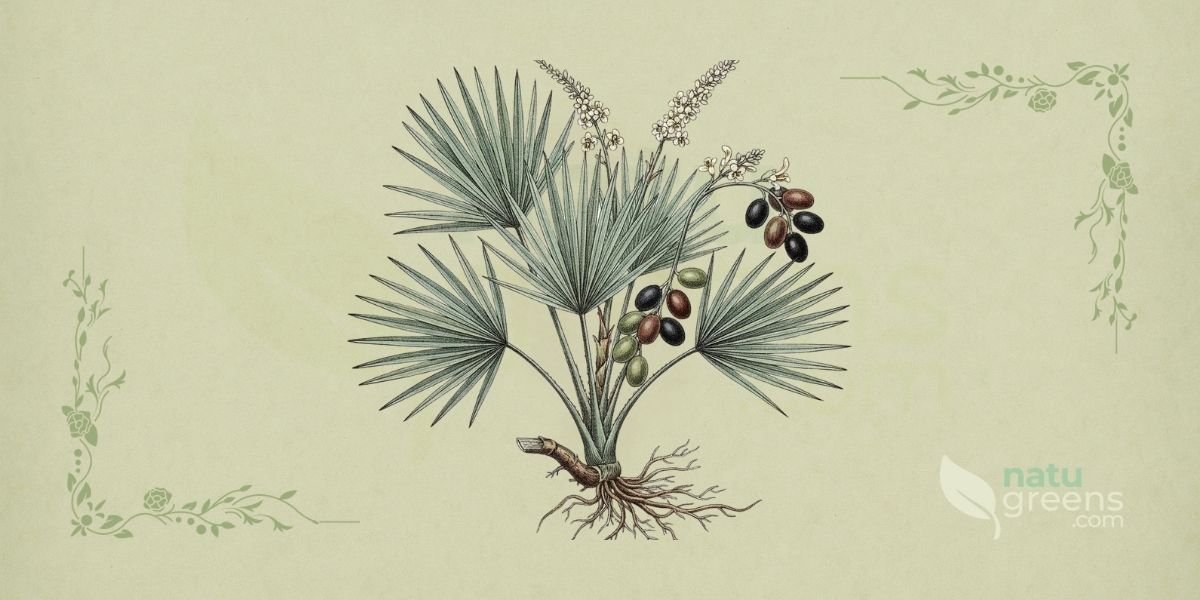
Botanical illustration of Serenoa repens (W. Bartram) Small (saw palmetto, serenoa), a small palm of the Arecaceae family described by William Bartram and validated by John Kunkel Small, native to the southeastern United States, showing the complete plant with fan-shaped leaves, serrated at the margins, and clusters of dark oval fruits, in 19th-century botanical encyclopedia style on an aged herbarium paper background.
The Arecaceae family, commonly known as the palm family, is one of the largest and most diverse families of flowering plants, encompassing about 180 genera and more than 2,500 species. It is characterized by woody plants, usually with a single unbranched trunk and a crown of large leaves, often fan-shaped or pinnate. Palms are of great economic, cultural, and ecological importance in many tropical and subtropical regions of the world.
Serenoa repens shares the morphological features typical of the family, including its fan-shaped leaves and drupe-like fruits. The Arecaceae family is known for producing a wide range of bioactive compounds, including fatty acids, phytosterols, and flavonoids, which give many of its species medicinal properties. The chemical diversity of this family has been the subject of intense pharmacological research, contributing to the development of phytomedicines and dietary supplements.
Parts of Saw Palmetto Used
- Fruits (ripe, dried berries)
- Liposterolic extract of the fruits
Ethnobotanical and Traditional Uses of Saw Palmetto
- Aphrodisiac
- Diuretic
- Female infertility
- General tonic
- Genitourinary system health support
- Herbal remedy for various conditions
- Increased lactation (19th-century historical record, contraindicated today: see contraindications); traditional record, without established clinical efficacy
- Increased urine production
- Mucous membrane irritation
- Relief of genitourinary disorders
- Relief of menstrual pain
- Sedative
- Treatment of prostate complaints
Therapeutic Properties of Saw Palmetto
- 5-alpha-reductase inhibitor (blocks the conversion of testosterone into DHT); traditional record, without established clinical efficacy
- Antiandrogenic (inhibits the action of male hormones)
- Antiedematous (reduces swelling)
- Anti-inflammatory (reduces inflammation)
- Antioxidant (fights free radicals)
- Antiproliferative in laboratory models (effect observed on prostate cells in culture, with no established link to the prevention or treatment of cancer)
- Antiseborrheic (reduces sebum production)
- Diuretic (increases urine production)
Detailed Phytochemical Profile of Saw Palmetto
- Capric acid
- Caproic acid
- Caprylic acid
- Carotenes
- Cycloartenol
- Flavonoids
- Lauric acid
- Lupenone
- Myristic acid
- Oleic acid
- Palmitic acid
- Phytosterols (beta-sitosterol, campesterol, stigmasterol)
- Polysaccharides (arabinose, galactose)
- Resins
- Steroidal saponins
- Tannins
- Triterpenes (lupeol)
Preparation and Administration Forms of Saw Palmetto
- Capsules
- Dry extract
- Fluid extract
- Liposterolic extract
- Tincture
Synergy with Other Medicinal Plants
Prostate Health
Serenoa repens can act synergistically with other plants to optimize prostate health. The combination with Pygeum africanum and nettle (Urtica dioica) is frequently used to enhance the relief of symptoms of benign prostatic hyperplasia (BPH). Pygeum extract contributes phytosterols and triterpenes that reduce inflammation and support urination, while nettle acts by inhibiting the binding of androgens to plasma proteins, complementing the antiandrogenic action of Serenoa repens.
Saw palmetto is also frequently combined with nettle extracts and pumpkin seeds (Cucurbita pepo) to optimize prostate health support. Pumpkin seeds, rich in phytosterols and fatty acids, reinforce the beneficial effects on urinary function, while nettle complements serenoa’s action by modulating inflammation and cell growth.
Androgenetic Hair Loss
For male-pattern hair loss, Serenoa repens can be combined with pumpkin seed extracts (Cucurbita pepo) and green tea (Camellia sinensis). Pumpkin seed oil contains phytosterols that can inhibit 5-alpha-reductase, similarly to saw palmetto, while green tea, rich in catechins, has antioxidant and antiandrogenic properties that can strengthen hair follicles and reduce scalp inflammation, promoting a healthier environment for hair growth.
Recipes and Usage Protocols of Saw Palmetto
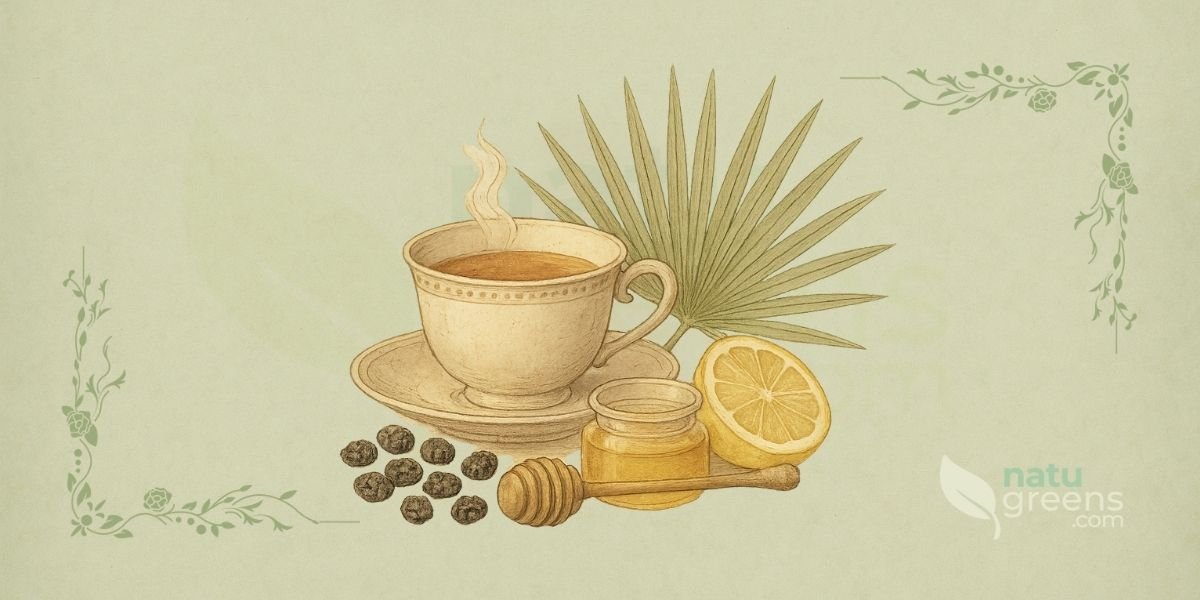
Botanical illustration in 19th-century encyclopedia style detailing the prepared tea and the fruits of Serenoa repens (saw palmetto), showing dark oval berries with a smooth, shiny texture, which are the most medicinally important part of the plant.
Liposterolic Extract for BPH
The liposterolic extract of Serenoa repens is the most studied and most recommended form for the treatment of benign prostatic hyperplasia (BPH). The usual dose ranges from 160 mg to 320 mg per day, divided into one or two doses, preferably with meals to improve absorption and reduce the potential for gastrointestinal discomfort. It is important to follow the manufacturer’s instructions or the guidance of a health professional, since the concentration of active principles varies between products. The therapeutic effects can take a few weeks to months to manifest fully.
Dried Fruit Infusion
Ingredients: 1 teaspoon of crushed dried saw palmetto fruits, 200 ml of boiling water.
Preparation: Add the crushed fruits to the boiling water. Steep for 10-15 minutes, strain, and drink. This infusion can be taken 1-2 times a day. It is worth noting that the active liposterolic compounds are poorly soluble in water, making standardized extracts more effective for therapeutic purposes. The infusion, however, can offer benefits as a general tonic.
Saw Palmetto Oil for Hair
For topical use in hair loss prevention, Serenoa repens oil can be applied directly to the scalp. Mix 5-10 drops of saw palmetto oil (when available and safe for topical use) with 30 ml of a carrier oil, such as jojoba or coconut oil. Massage gently into the scalp 2-3 times a week, leaving it on for at least 30 minutes before washing. This protocol belongs to traditional and cosmetic use. The 5-alpha-reductase inhibition demonstrated in the laboratory has not been confirmed for topical application on the scalp, and androgenetic alopecia calls for dermatological assessment.
Saw Palmetto Tincture
Ingredients: 200 g of dried saw palmetto fruits, 1 liter of 90% grain alcohol.
Preparation: Place the fruits in a glass jar and cover with the alcohol. Let macerate for 2-4 weeks in a dark place, shaking daily. Strain and store in a dark glass bottle. The typical dosage is 2-4 ml, 2-3 times a day, diluted in water. The tincture is a concentrated form that extracts only part of the liposterolic fraction, which is the one studied in clinical trials and is obtained industrially only by extraction with non-polar solvents.
Associated Therapies
Herbal Medicine
Serenoa repens is one of the pillars of herbal medicine for men’s health, especially regarding the prostate and hair loss. It is frequently used in complex herbal formulations that address multiple aspects of urogenital and hormonal health. Its efficacy is attributed to its rich composition of fatty acids and phytosterols, which modulate the action of enzymes and hormones involved in these processes. Modern phytotherapy uses standardized extracts to guarantee the consistency and potency of treatments.
Clinical Phytotherapy
In clinical phytotherapy, saw palmetto is widely used in standardized extracts, capsules, and tablets. These extracts are frequently titrated to guarantee a consistent concentration of fatty acids and phytosterols, the main active compounds. It is prescribed for the treatment of benign prostatic hyperplasia (BPH), relieving urinary symptoms such as frequent urination and difficulty urinating. Clinical phytotherapy emphasizes precise dosing and patient monitoring to optimize therapeutic results and minimize potential drug interactions.
Nutraceuticals
Thanks to its rich composition of bioactive compounds, Serenoa repens is a popular ingredient in nutraceutical supplements. These products are formulated to provide health benefits beyond basic nutrition, targeting prevention and support in specific conditions. Nutraceuticals containing saw palmetto are frequently marketed for prostate health, urinary function, and hair support, often combined with vitamins, minerals, and other botanical extracts for a synergistic effect.
Contraindications and Side Effects of Saw Palmetto
General Contraindications
Serenoa repens is contraindicated for pregnant or breastfeeding women because of its potential hormonal effects. Individuals with pre-existing medical conditions, especially prostate-related, should consult a health professional before use. It is not recommended for children. Self-medicating for prostate symptoms can mask the early diagnosis of prostate cancer, making medical follow-up essential. Use in advanced cases of BPH requires professional evaluation to rule out other serious pathologies.
- Bleeding Disorders and Anticoagulant Use: It can increase the risk of bleeding. Individuals with bleeding disorders or taking anticoagulants (such as warfarin, heparin) or antiplatelet drugs (such as aspirin, clopidogrel) should avoid use.
- Children: Not recommended for children because of its hormonal effects.
- Hormone Therapy: It can interfere with hormone therapies, including oral contraceptives and hormone replacement therapy, because of its antiandrogenic effects.
- Pregnancy and Breastfeeding: Saw palmetto is contraindicated during pregnancy and breastfeeding because of its hormonal effects and the lack of safety data.
- Surgery: It is recommended to stop using Serenoa repens at least two weeks before any surgical procedure because of the potential increased risk of bleeding.
Common Side Effects
Side effects of saw palmetto are usually mild and transient. They can include gastrointestinal complaints such as nausea, diarrhea, or abdominal pain. In rare cases, dizziness or headaches can occur. The incidence of adverse effects is low, with studies indicating that the frequency of adverse effects was similar to that observed in the placebo group, which supports the plant’s good tolerability. Good tolerability is one of saw palmetto’s advantages compared with some conventional pharmacological treatments for BPH.
- Allergic Reactions: Although rare, allergic reactions such as rashes, hives, or swelling can occur in sensitive individuals.
- Dizziness: Rarely, dizziness can occur.
- Gastrointestinal Complaints: Nausea, vomiting, diarrhea, or constipation are the most common side effects, usually mild and transient. They can be minimized by taking the supplement with food.
- Headache: Some people can experience headaches.
- Hormonal Changes: Because of its hormonal action, it can, in rare cases, cause breast tenderness or gynecomastia in men.
Drug Interactions
Saw palmetto can interact with anticoagulants such as warfarin and with hormone therapies. Always tell your doctor or pharmacist that you are taking it.
Interesting Facts about Saw Palmetto
History and Indigenous Use
Serenoa repens has a long history of use among the Indigenous peoples of the southeastern United States, such as the Seminole and Miccosukee. The fruits were an important part of their diet and were used to treat a variety of conditions, including urinary and reproductive complaints. The leaves were used to make baskets and to thatch cabin roofs, demonstrating the plant’s versatility in Indigenous culture.
19th-Century Use as a Reproductive Tonic
In the 19th century, the plant gained popularity in Western medicine as a tonic for the male and female reproductive systems, a use recognized today only as a historical record, with no basis in modern clinical trials.
Longevity and Resilience
This palm is notable for its longevity and resilience. Some Serenoa repens plants in Florida are estimated to be 500 to 700 years old, which makes it one of the longest-lived plants in the flora of the southeastern United States. Its resilience in adverse environments, such as sandy soils and coastal conditions, is another remarkable trait of this palm. Its ability to survive frequent forest fires and adverse environmental conditions, such as droughts and floods, underscores its ecological robustness. Its slow-growing nature and resistance to pests and disease contribute to its remarkable durability.
Frequently Asked Questions about Saw Palmetto
Is Saw Palmetto Effective for Hair Loss?
Saw palmetto is widely promoted as a remedy for androgenetic alopecia, acting similarly to finasteride by inhibiting 5-alpha-reductase. However, the scientific evidence for this application is less robust than for BPH. Although some studies suggest benefits, its efficacy for hair loss is still debated and requires further research. It is important to consult a dermatologist before starting any hair loss treatment.
What Are the Main Benefits of Saw Palmetto for the Prostate?
Saw palmetto is best known for its use in relieving lower urinary tract symptoms associated with benign prostatic hyperplasia (BPH), such as frequent urination, difficulty starting urination, and weak urinary flow. It is believed to act by reducing inflammation and modulating hormone levels in the prostate. However, the scientific evidence on its efficacy for BPH is mixed, with some studies showing benefits and others finding no significant differences compared with placebo.
Can Saw Palmetto Increase Libido?
There is controversy about saw palmetto’s ability to increase libido. Although some traditional uses associate it with aphrodisiac properties, its mechanism of action, which involves 5-alpha-reductase inhibition, is similar to that of finasteride, which can decrease libido in some men. Current research does not provide conclusive evidence that saw palmetto increases libido; effects can vary individually.
What Is the Recommended Dosage of Saw Palmetto?
The dosage of saw palmetto varies depending on the formulation and the condition being treated. For benign prostatic hyperplasia, standardized extracts containing 80-95% fatty acids and sterols are typically used at doses of 160 mg twice a day, or 320 mg once a day. It is essential to follow the manufacturer’s instructions or the recommendation of a health professional. Self-prescription can lead to inadequate dosing and potential health risks.
How Long Does Saw Palmetto Take to Work?
The effects of saw palmetto in the treatment of benign prostatic hyperplasia can take anywhere from a few weeks to a few months to appear. The most recent Cochrane review found no consistent difference between saw palmetto and placebo in relieving BPH urinary symptoms, and the plant does not replace prescribed treatment or the need for urological follow-up. Individual response varies, however. Consistency of use and consulting a health professional to evaluate progress are important. Patience and adherence to the protocol are crucial to observe the benefits.
Are There Side Effects to Using Saw Palmetto?
Side effects of saw palmetto are generally mild and can include gastrointestinal complaints (nausea, diarrhea, constipation), headaches, and dizziness. Allergic reactions are rare. Note that saw palmetto can interact with anticoagulant medications and hormone therapies, and it is contraindicated for pregnant or breastfeeding women and children. Always consult a health professional before starting any supplement.
Notice: this content is for informational purposes and does not replace professional medical advice. Consult a physician or herbal practitioner before using medicinal plants, especially during pregnancy, breastfeeding, or alongside medication.
References and Scientific Studies
View All 10 Cited References
Peer-Reviewed Scientific Studies (5)
- PMC2004 Buck, A. C. (2004). Is there a scientific basis for the therapeutic effects of Serenoa repens in benign prostatic hyperplasia? Mechanisms of action. The Journal of Urology, 172(5 Pt 1), 1792-1799.
- PMC2019 Marti, G., et al. (2019). Comparison of the Phytochemical Composition of Serenoa repens Extracts and Finished Products. Molecules, 24(12), 2269.
- PEER2015 Bernichtein, S., et al. (2015). Anti-inflammatory properties of Lipidosterolic extract of Serenoa repens (Permixon®) in a mouse model of prostate hyperplasia. The Prostate, 75(10), 1082-1093.
- PMC2002 Debruyne, F., et al. (2002). Comparison of a phytotherapeutic agent (Permixon) with an alpha-blocker (tamsulosin) in the treatment of benign prostatic hyperplasia: a 1-year randomized international study. European Urology, 41(5), 497-506.
- PMC2011 Geavlete, P., Ene, D., Nita, G., & Geavlete, B. (2011). Serenoa repens extract in the treatment of benign prostatic hyperplasia. Therapeutics and Clinical Risk Management, 7, 349-355.
Institutional Sources (2)
- GOV2009 Murugusundram, S. (2009). Serenoa repens: Does it have any role in the management of androgenetic alopecia? Journal of Cutaneous and Aesthetic Surgery, 2(1), 31-32.
- GOV2020 National Center for Complementary and Integrative Health (NCCIH). (2020). Saw Palmetto: Usefulness and Safety.
Supplementary Readings (3)
- 2023 Franco, J. V., et al. (2023). Serenoa repens for the treatment of lower urinary tract symptoms due to benign prostatic enlargement. Cochrane Database of Systematic Reviews, 6(6), CD001423.
- 2006 Bent, S., et al. (2006). Saw Palmetto for Benign Prostatic Hyperplasia. New England Journal of Medicine, 354(6), 557-566.
- 2012 Tacklind, J., Macdonald, R., & Wilt, T. J. (2012). Serenoa repens for benign prostatic hyperplasia. Cochrane Database of Systematic Reviews, (12).