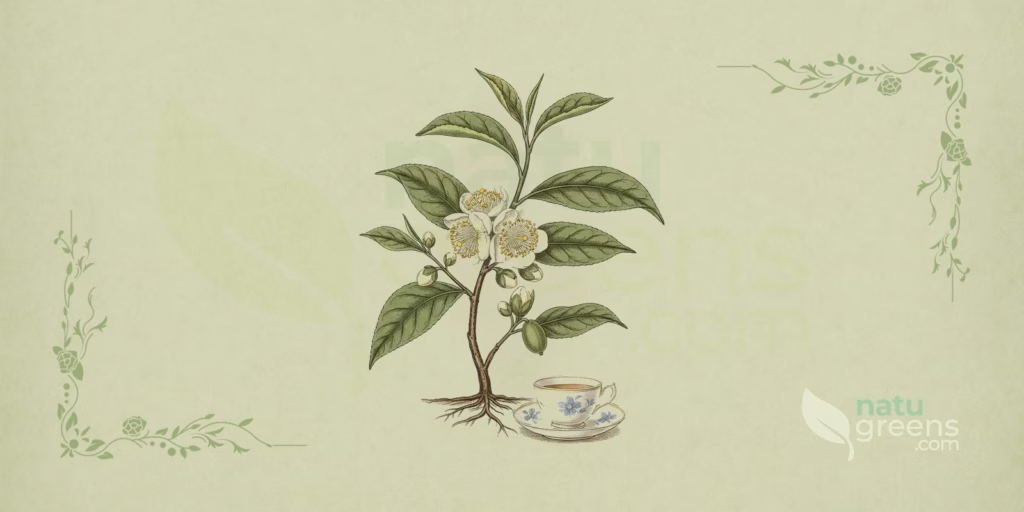
Camellia sinensis (L.) Kuntze / Tea Plant, popularly known as green tea, black tea, and white tea, among others, is a species of evergreen shrub or small tree of the Theaceae family. Native to Southeast Asia, this plant has been cultivated for millennia for its leaves, which are processed to produce one of the most widely consumed beverages in the world: tea.
For the taxonomy, morphology and cultivation of this plant, see the Botanical Profile of Camellia sinensis.
The history of tea goes back about 5,000 years in China, where legend attributes its discovery to Emperor Shen Nung. Since then, tea has become a cultural and economic pillar in many civilizations, valued for its stimulant and medicinal properties. Camellia sinensis is the only species whose leaves are used to produce every type of true tea, differing only in processing. Its leaves contain bioactive compounds such as catechins, caffeine, and L-theanine, which give tea its well-known health benefits. Modern research continues to explore the vast therapeutic potential of this ancient plant.
The history of Camellia sinensis is rooted in Asian cultures. Tea transcended its role as a beverage, becoming central to rituals and traditional medicine systems. Its global popularity is due to its flavor, stimulating effect, and health benefits, which are the subject of extensive scientific research. The plant remains a pillar of modern herbal medicine and of tea culture worldwide.
Popular and International Names of the Tea Plant
- English: tea plant, tea shrub, green tea, black tea, white tea.
- Spanish: té verde, té negro, té blanco, planta del té, arbusto del té.
- Portuguese: chá-verde, chá-preto, chá-branco, chá-da-índia.
- French: théier, camélia à thé, thé vert, thé noir.
- Italian: tè verde, tè nero, pianta del tè.
- German: Teepflanze, Teestrauch, Grüntee, Schwarztee.
Botanical Synonyms of Camellia sinensis
The botanical nomenclature of Camellia sinensis has varied throughout history. Camellia sinensis (L.) Kuntze is the most widely accepted scientific name, while other denominations were used to describe this species or its varieties. These synonyms reflect the taxonomic complexity and the evolution of botanical knowledge about the tea plant.
- Camellia oleosa (Lour.) Rehder
- Camellia thea Link
- Camellia theifera Griff.
- Thea bohea L.
- Thea sinensis L.
- Thea viridis L.
Botanical Family: Theaceae

Botanical illustration of Camellia sinensis (tea plant), evergreen shrub of the Theaceae family, showing glossy green leaves, young buds, and delicate white flowers, with details of a leaf with prominent veins and a freshly picked bud, in 19th-century botanical encyclopedia style on an aged herbarium paper background.
The Theaceae family consists of shrubs and trees found predominantly in tropical and subtropical regions of Asia and the Americas. It is characterized by alternate, simple, usually leathery leaves and showy flowers with five sepals and five petals. Many species in this family are valued ornamentally, but Camellia sinensis stands out for its global economic importance as the source of all types of true tea. Other notable genera include Stewartia, Schima, and Franklinia, while the genus Camellia itself also includes ornamentals such as Camellia japonica and the oil-bearing Camellia oleifera.
Plants of the Theaceae family are known for producing a wealth of secondary compounds, such as polyphenols, tannins, and alkaloids, which play important roles in plant defense and confer bioactive properties. The phytochemical diversity of this family contributes to its value in horticulture as well as in traditional and modern medicine.
Parts of Camellia sinensis Used
- Flowers
- Leaf buds
- Leaves
- Stems
- Young leaves
Ethnobotanical and Traditional Uses
- Adjuvant for bladder complaints (traditional use)
- Digestive aid (against diarrhea and gastrointestinal complaints)
- Headache treatment
- Promotion of longevity
- Reduction of fatigue
- Reduction of localized fat deposits (topical use of extracts)
- Relief of physical and mental exhaustion
- Respiratory support (traditional record in bronchitis; asthma requires prescribed inhaled medication, and an asthma attack is a medical emergency that no tea can replace)
- Stimulant and invigorating agent
- Traditional use against tumors and abscesses (in some cultures)
- Treatment of hyperlipidemia and arteriosclerosis (cardiovascular health support)
- Weight management support (adjuvant in weight-loss programs)
Therapeutic Properties of Camellia sinensis
- Anticancer (inhibits the proliferation of cancer cells and tumor formation)
- Anti-inflammatory (reduces inflammatory processes in the body)
- Antimicrobial (activity against bacteria and viruses); traditional use, without established clinical efficacy
- Antimutagenic (protects against DNA damage and mutations)
- Antioxidant (fights free radicals and prevents oxidative stress)
- Cardioprotective (protects cardiovascular health); traditional use, without established clinical efficacy
- Hepatoprotective (protects the liver and improves its function); traditional use, without established clinical efficacy
- Hypocholesterolemic (helps lower LDL cholesterol levels); traditional use, without established clinical efficacy
- Hypoglycemic (contributes to blood sugar regulation); traditional use, without established clinical efficacy
- Immunomodulatory (modulates the immune system response); traditional use, without established clinical efficacy
- Neuroprotective (protects the nervous system and improves brain function); traditional use, without established clinical efficacy
- Oral health support (prevents cavities and inhibits bacterial biofilm formation)
- Reproductive health support (may help manage infertility related to oxidative stress); traditional record, without established clinical efficacy
- Skin protection (offers photoprotection against UV radiation and supports healing)
- Thermogenic (increases energy expenditure and supports weight loss)
- Weight management (supports body weight control)
Detailed Phytochemical Profile of Camellia sinensis
- Alkaloids (caffeine, theophylline, and theobromine)
- Amino acids (L-theanine)
- Caffeine
- Carotenoids (contribute to flavor composition and volatile degradation products)
- Catechins (epigallocatechin gallate – EGCG, epicatechin, epigallocatechin, epicatechin gallate)
- Flavonoids
- L-Theanine
- Minerals (manganese, potassium, aluminum, and fluoride; tea is one of the largest dietary sources of fluoride, and very high, prolonged intakes have been linked to fluorosis)
- Policosanols (present in the leaves)
- Polyphenols (flavanols such as EGCG, EGC, EC, ECG, (+)-gallocatechin; proanthocyanidins and flavonoids)
- Proteins (part of the complex composition)
- Saponins (acylated oleanane-type triterpene saponins)
- Tannins
- Vitamins (C, K, B complex)
- Volatile terpenoids (enantiomeric compounds quantified in different tea types)
Preparation and Administration Forms of Camellia sinensis
Camellia sinensis can be prepared in several ways, each optimizing the extraction of its bioactive compounds and offering a different consumption experience. The most common preparations include teas (infusions), tinctures, and extracts, each with its own characteristics and applications.
- Capsules
- Dry extract
- Infusion (tea)
- Poultice (topical use)
- Tincture
Teas (Infusions)
The most traditional way to consume Camellia sinensis is as an infusion of its leaves and buds. Depending on how the leaves are processed, different types of tea are obtained, such as green, black, white, oolong, and pu-erh. A basic infusion involves steeping the leaves in hot, but not boiling, water to preserve heat-sensitive compounds and avoid excessive bitterness.
Extracts
Camellia sinensis extracts are concentrated preparations obtained using solvents such as water, alcohol, or hydroalcoholic mixtures to extract the plant’s phytochemicals. These extracts are often standardized to contain a specific concentration of active compounds, such as polyphenols or catechins, and are used in dietary supplements, cosmetics, and pharmaceutical products. Extraction can be optimized with techniques such as ultrasound or microwaves to maximize the yield of polyphenols and antioxidants.
Tinctures
Tinctures are concentrated liquid extracts, usually made by macerating plant material in high-proof alcohol. This method extracts a wide range of compounds, including those that are less soluble in water. Green tea tinctures are valued for their potency, convenience, and long shelf life, being an effective way to obtain the plant’s benefits in concentrated doses.
How to Make a Green Tea Tincture
To prepare a tea tincture, follow these steps:
- Choose the Tea: Select the loose-leaf tea you prefer, such as green tea, aligned with your wellness goals.
- Fill the Jar: Place about one cup of loose-leaf tea in a clean glass jar.
- Add Alcohol: Pour in enough high-proof alcohol (such as vodka or brandy) to completely cover the tea, making sure all plant material is submerged.
- Let It Macerate: Close the jar tightly and shake it. Store in a cool, dark place for 4 to 6 weeks, shaking every few days to aid extraction.
- Strain the Tincture: After maceration, use cheesecloth or a fine-mesh strainer to filter the tea leaves out of the liquid. Transfer the tincture to small dropper bottles for easy use.
Concentrated green tea extracts require control of the daily EGCG dose, and the safety limit set by EFSA is 800 mg per day, a figure that cannot be calculated in homemade tinctures. For regular consumption, choose the infusion.
Synergy with Other Medicinal Plants
Camellia sinensis, especially as green tea, can act in synergy with several other plants and herbs, enhancing its therapeutic effects. This synergy can be explored to optimize compound absorption, boost antioxidant and anti-inflammatory efficacy, or create beverages with more complex flavor and benefit profiles.
Focus and Energy
Combining Camellia sinensis with ginseng (Panax ginseng) can enhance stimulant and adaptogenic effects. Green tea, rich in L-theanine and caffeine, promotes a state of calm alertness, while ginseng improves stress resistance and cognitive function. This synergy is ideal for sustained concentration and energy, without the peaks and crashes associated with excessive isolated caffeine intake. L-theanine modulates the action of caffeine, providing a more balanced and prolonged effect.
Digestive Health
The association of Camellia sinensis with ginger (Zingiber officinale) and peppermint (Mentha × piperita) benefits digestive health. Green tea contributes tannins that can relieve mild diarrhea, while ginger and peppermint have carminative and antispasmodic properties. This combination can relieve nausea, indigestion, and flatulence, promoting a healthy digestive system. The bioactive compounds of each plant work together to optimize gastrointestinal function.
Immune Support
When combined with echinacea (Echinacea purpurea) and elderberry (Sambucus nigra), Camellia sinensis can offer robust immune system support. Green tea catechins have antiviral and antibacterial effects, while echinacea and elderberry are known for their immunostimulant properties. This synergy is particularly useful during the winter months or periods of higher susceptibility to infections, helping the body fight pathogens and maintain overall health.
Recipes and Usage Protocols of Camellia sinensis
Basic Green Tea Infusion
The basic infusion is the simplest and most direct way to consume green tea, allowing you to appreciate its pure flavor and benefit from its antioxidant and stimulant properties.
Ingredients:
- 1 teaspoon of green tea leaves (Camellia sinensis)
- 200 ml of filtered water (ideally at 70-80°C / 158-176°F)
Preparation:
- Heat the water to the indicated temperature (avoid boiling water so as not to scorch the leaves and make the tea bitter).
- Place the tea leaves in a cup or teapot.
- Pour the hot water over the leaves.
- Steep for 2-3 minutes. For a milder flavor, steep for less time; for a stronger flavor, increase the time, taking care not to turn it bitter.
- Strain and serve. It can be enjoyed hot or iced, with honey or lemon to taste. For an energizing effect, drink 1 to 2 cups a day, preferably in the morning or before activities that require concentration.
Green Tea with Ginger and Lemon (for Digestion and Immunity)
This combination is ideal for stimulating digestion and strengthening the immune system, uniting the antioxidant properties of green tea with the anti-inflammatory benefits of ginger and the vitamin C of lemon.
Ingredients:
- 1 teaspoon of green tea leaves (Camellia sinensis)
- 1 thin slice of fresh ginger
- Juice of 1/4 lemon
- 200 ml of filtered water (70-80°C / 158-176°F)
- Honey to taste (optional)
Preparation:
- Prepare the basic green tea infusion.
- Add the ginger slice during steeping or right after straining.
- Add the lemon juice and honey, if desired.
- Serve hot.
Compress for Puffiness and Dark Circles
Ingredients: 2 used green tea bags (or 2 teaspoons of used green tea leaves), cold water.
Preparation: After preparing your green tea infusion, set aside the used tea bags or leaves. Let them cool completely in the refrigerator for at least 30 minutes. Apply the cold bags or leaves over closed eyes for 10-15 minutes. The catechins and tannins in green tea help reduce puffiness and inflammation, diminishing the appearance of dark circles and revitalizing the eye area. Repeat as needed for a refreshing, toning effect.
Antioxidant Green Tea Face Mask
Ingredients: 1 tablespoon of green tea powder (matcha or ground leaves), 1 tablespoon of honey, 1 teaspoon of water (or plain yogurt).
Preparation: In a small bowl, mix the green tea powder with the honey and water (or yogurt) until you obtain a smooth paste. Wash your face and apply the mask evenly, avoiding the eye area. Leave on for 15-20 minutes. Rinse with warm water and pat dry gently. This mask harnesses the antioxidant and anti-inflammatory properties of green tea to purify the skin, reduce redness, and fight free radical damage, leaving the skin brighter and healthier.
Matcha Latte (Energizing, Antioxidant Drink)
The matcha latte is a popular beverage that delivers a concentrated dose of antioxidants and a sustained energy boost, thanks to the L-theanine in matcha, which moderates the effects of caffeine.
Ingredients:
- 1 teaspoon of matcha (powdered green tea from Camellia sinensis)
- 60 ml of hot water (70-80°C / 158-176°F)
- 180 ml of warmed milk (plant-based or dairy)
- Sweetener to taste (optional)
Preparation:
- Sift the matcha into a bowl to avoid lumps.
- Add the hot water and whisk vigorously with a bamboo whisk (chasen) or a mini mixer until a light, lump-free foam forms.
- Heat the milk and, if desired, froth it.
- Pour the milk over the whisked matcha.
- Add sweetener to taste and serve immediately.
Associated Therapies
Acupuncture
In Traditional Chinese Medicine, Camellia sinensis is often integrated into health regimens that complement acupuncture. Green tea is valued for its ability to promote energy balance (Qi) and mental clarity. Together with acupuncture sessions, regular green tea consumption can optimize therapeutic results, especially in the treatment of digestive disorders, stress, and chronic fatigue. The synergy between acupuncture and green tea aims to restore harmony of body and mind, supporting hydration and the intake of antioxidant compounds throughout the treatment. Acupuncture works on the energy meridians, while green tea provides nutritional and antioxidant support.
Aromatherapy
Although Camellia sinensis is not traditionally used in aromatherapy as an essential oil, its extracts and hydrosols can be incorporated into aromatic practices. The fresh, herbaceous scent of green tea is known for its calming, revitalizing effect, promoting concentration and reducing stress. In diffusers or room sprays, green tea hydrosol can create an atmosphere of tranquility and well-being. Green tea extracts in aromatic skincare products also take advantage of its antioxidant and anti-inflammatory properties, combining therapeutic benefits with the sensory experience of the aroma.
Western Herbal Medicine
In modern Western herbal medicine, Camellia sinensis is widely studied and used for its bioactive compounds, especially catechins. Standardized green tea extracts are employed as supplements to support cardiovascular, metabolic, and antioxidant health. They are also studied as adjuvants for dyslipidemia, weight management, and insulin resistance, with modest and inconsistent results that do not replace treatment for these conditions. Systematic reviews on cancer prevention remain inconclusive. Dosage and administration are carefully adjusted based on the concentration of active compounds, such as EGCG. Ongoing scientific research validates traditional uses and expands the therapeutic applications of Camellia sinensis in integrative medicine.
Homeopathy
In homeopathy, Thea sinensis, a synonym of Camellia sinensis, is cited for complaints such as headache, insomnia, nervousness and palpitations. No clinical studies show that the preparation works better than placebo for these uses. Within that tradition the remedy is associated above all with people who are sensitive to caffeine or prone to nervous agitation, and the choice of dilution rests with a qualified practitioner.
Traditional Chinese Medicine (TCM)
In TCM, green tea is often used to promote general health, fight fatigue, and improve digestion. It is considered a tonic for the nervous system and an important herb for the prevention of various diseases, reflecting its long history of therapeutic use in Chinese culture.
Contraindications and Side Effects of Camellia sinensis
General Contraindications
Camellia sinensis, especially as concentrated green tea or supplements, is contraindicated in individuals with high sensitivity to caffeine, as it can cause nervousness, insomnia, palpitations, and irritability. People with gastric ulcers or gastroesophageal reflux should consume it in moderation, as tea can increase stomach acidity.
Pregnant and breastfeeding women should keep total caffeine below 200 mg a day, roughly 2 to 3 cups of the infusion, avoid concentrated extracts, capsules, and tinctures, and raise the matter at their prenatal appointments; the tannins in tea also reduce iron absorption. Individuals with iron-deficiency anemia should avoid green tea with meals, drinking it between meals instead to minimize the inhibition of iron absorption. Young children should also have restricted intake. Medical advice is recommended before regular use in cases of pre-existing health conditions.
- Anemia: Green tea can reduce iron absorption and is contraindicated for people with iron-deficiency anemia.
- Anxiety Disorders: The caffeine content can worsen anxiety and nervousness in predisposed individuals.
- Caffeine Sensitivity: Sensitive individuals should avoid it or consume it in moderation.
- Gastric Problems: It can irritate the gastric mucosa, especially on an empty stomach, causing heartburn and stomach pain.
- Heart Problems: Individuals with heart conditions such as tachycardia and arrhythmias should use caution.
- Liver Problems: In rare cases, excessive intake or concentrated extracts have been associated with hepatotoxicity.
- Pregnancy and Breastfeeding: Limit total caffeine to 200 mg per day, about 2 to 3 cups of green tea infusion, and avoid concentrated extracts, capsules, and tinctures. Raise the matter at your prenatal appointments.
Common Side Effects
The most common side effects associated with Camellia sinensis are usually mild and mainly related to its caffeine content. These include insomnia, nervousness, irritability, headaches, and digestive complaints such as nausea or diarrhea, especially when consumed in large amounts or on an empty stomach. In some cases, excessive intake can cause dizziness or tremors. The tannins can cause constipation in sensitive individuals. Moderation is essential to avoid these unwanted effects, and observing your body’s individual response to tea is important. Most people tolerate moderate green tea consumption well.
- Headaches: May occur in people sensitive to caffeine.
- Increased Blood Pressure: May occur in sensitive individuals.
- Insomnia: Due to the stimulating effect of caffeine, especially when consumed in the evening.
- Nausea and Stomach Pain: Gastrointestinal irritation, mainly on an empty stomach.
- Nervousness and Irritability: Caused by caffeine at high doses.
- Palpitations and Tachycardia: Increased heart rate in sensitive individuals.
Drug Interactions
Camellia sinensis can interact with several medications, altering their efficacy or increasing the risk of adverse effects. Because of its vitamin K content, it can antagonize the effects of anticoagulants such as warfarin, reducing their efficacy. The caffeine in green tea can potentiate the effects of stimulants and reduce the efficacy of sedatives. It can also interfere with the absorption of certain medications, such as antibiotics and thyroid drugs.
Individuals taking diabetes medication should monitor their glucose levels, as green tea can have a mild hypoglycemic effect. Patients on chronic medication should consult a health professional before starting regular consumption of green tea or Camellia sinensis supplements to avoid dangerous interactions.
- Anticoagulants: Can interfere with the action of blood-thinning medications.
- Cancer treatment: EGCG chemically inactivates bortezomib and may interfere with other proteasome inhibitors. Patients undergoing chemotherapy should avoid green tea extracts and supplements and inform their medical team about any consumption, including the infusion.
- Stimulants: Combined use can potentiate stimulant and adverse effects.
Historical Notes and Interesting Facts
The history of Camellia sinensis is rich and ancient, intertwined with the culture of many civilizations. Tea, derived from this plant, is the second most popular beverage in the world, surpassed only by water, which shows its global importance and deep cultural and social impact.
The Discovery of Tea
The discovery of tea is attributed to the Chinese Emperor Shen Nung, around 2737 BC, when a few leaves accidentally fell into his boiling water. The tea ceremony, especially in Japan (Chanoyu) and China (Gongfu Cha), is an ancient art that reflects the deep cultural connection with this plant. Historically, tea was so valuable that it was even used as currency and was one of the main drivers of trade routes such as the Tea Horse Road, between Yunnan and Tibet, and later of the European sea routes.
Origin and Varieties
Camellia sinensis is native to a vast region spanning southwestern China, northern Myanmar, and northeastern India. The species has two main varieties: var. sinensis (Chinese tea) and var. assamica (Assam tea), each with distinct flavor and growth characteristics. Both are the source of every type of true tea, including white, green, yellow, pu-erh, oolong, and black, and the distinction lies in the processing that follows the harvest.
Cultivation and Longevity
The tea plant is cultivated in more than 60 countries, adapting to a wide range of climate conditions. Plants at high altitudes grow more slowly but develop a more complex, prized flavor. The longevity of Camellia sinensis is remarkable: the leaves should not be harvested during the first 3 years, but after that a plant can produce tea for up to 50 years, and some live for hundreds or even thousands of years.
Harvesting and Processing
The final type of tea is determined by how the leaves are treated after harvest, with the level of oxidation being crucial. The leaves are picked young, usually in spring, focusing on the tip or bud and the first two or three leaves, which are the most tender and richest in compounds.
L-Theanine
L-theanine, an amino acid characteristic of Camellia sinensis, is responsible for the umami flavor and for the relaxing, mental-clarity effects of tea, balancing the stimulant action of caffeine.
Composition and Other Curiosities
Dried tea leaves contain 2 to 5 percent caffeine by dry weight, one of the main alkaloids responsible for the stimulant effect. Notably, tea tree oil, known for its antiseptic properties, does not come from Camellia sinensis: it comes from Melaleuca alternifolia, a different Australian plant.
The Smuggling of Robert Fortune
A remarkable historical event took place in 1848, when the Scottish botanist Robert Fortune, working for the British East India Company, smuggled tea plants and experienced Chinese growers to India. This act was decisive for the British Empire: it consolidated control over the tea trade and established vast plantations in India, shifting the centre of world tea production to the British Empire and reshaping the global dynamics of tea production and consumption.
Frequently Asked Questions about Camellia sinensis Tea
What Is the Difference Between Green, Black, and White Tea?
They all come from the same plant, Camellia sinensis. The difference lies in processing. White tea is minimally processed, green tea undergoes a heating step to prevent oxidation, and black tea is fully oxidized, resulting in distinct flavors and colors. Oolong tea is partially oxidized, sitting between green and black.
Does Green Tea Help with Weight Loss?
Yes, Camellia sinensis tea, especially green tea, can support weight loss. The catechins, such as EGCG, and the caffeine in tea can increase metabolism and fat oxidation. However, it should be part of a balanced diet and healthy lifestyle, not a magic solution for weight loss. Effects are most noticeable when combined with regular exercise.
Is It Safe to Drink Camellia Sinensis Tea During Pregnancy?
Consumption of Camellia sinensis tea during pregnancy should stay within the 200 mg per day caffeine limit, about 2 to 3 cups, avoiding concentrated extracts and capsules; high doses may carry risks. Consulting a doctor or nutritionist for personalized guidance is essential, especially given individual sensitivity to caffeine and tannins. Excessive caffeine intake can affect fetal development.
Can Camellia Sinensis Tea Cause Insomnia?
Yes. Because of its caffeine content, Camellia sinensis tea can cause insomnia in sensitive people, especially when consumed in the evening. The amount of caffeine varies with the tea type and preparation method. To avoid sleep problems, drink caffeinated teas early in the day and choose caffeine-free infusions at night. L-theanine can modulate the action of caffeine, but individual sensitivity is an important factor.
How Should I Store Camellia Sinensis Tea?
To preserve flavor and properties, Camellia sinensis tea should be stored in airtight, opaque containers away from light, heat, and moisture. Avoid places with strong odors, as tea absorbs them easily. Proper storage keeps the bioactive compounds fresh and potent for longer, since exposure to air and light quickly degrades tea quality.
What Is the Best Way to Prepare Green Tea?
Green tea is best prepared with water heated to between 70°C and 80°C (158-176°F), not boiling. Water that is too hot can scorch the leaves, producing a bitter taste and degrading some beneficial compounds. The ideal steeping time is 2 to 3 minutes. Straining the leaves after steeping is essential to keep the tea from becoming too strong or bitter.
How Many Cups of Green Tea Can I Drink per Day?
The ideal amount of green tea varies from person to person, depending on caffeine sensitivity and individual health conditions. In general, 2 to 3 cups a day are considered safe and sufficient to obtain the benefits. Excessive intake can lead to side effects such as insomnia, nervousness, and gastric complaints because of the caffeine content.
Does Green Tea Contain Caffeine?
Yes, green tea contains caffeine, although less than coffee. Caffeine is a natural stimulant that can improve alertness and concentration. In addition to caffeine, green tea also contains L-theanine, an amino acid that promotes a state of relaxed focus, moderating the stimulant effects of caffeine and preventing jitteriness.
Who Should Not Drink Green Tea?
Green tea calls for caution in people with iron-deficiency anemia, anxiety disorders, heart conditions such as tachycardia and arrhythmias, and high caffeine sensitivity. Pregnant and breastfeeding women do not have to give up the infusion, but they should keep total caffeine at or below 200 mg a day, about 2 to 3 cups, avoid concentrated extracts and capsules, and discuss it at their prenatal appointments. Anyone with gastric problems should avoid drinking it on an empty stomach and take it with a light snack, leaving roughly an hour between the tea and main meals when iron-deficiency anemia is also a concern.
Notice: this content is for informational purposes and does not replace professional medical advice. Consult a physician or herbal practitioner before using medicinal plants, especially during pregnancy, breastfeeding, or alongside medication.
References and Scientific Studies
View All 9 Cited References
Peer-Reviewed Scientific Studies (4)
- PMC2005 Cooper, R., Morré, D. J., & Morré, D. M. (2005). Medicinal benefits of green tea: Part I. Review of noncancerous disorders. Journal of Alternative and Complementary Medicine, 11(3), 521-528.
- PMC1992 Graham, H. N. (1992). Green tea composition, consumption, and polyphenol chemistry. Preventive Medicine, 21(3), 334-350.
- PMC2008 Mandel, S., Weinreb, O., Amit, T., & Youdim, M. B. H. (2008). Cellular mechanisms and signaling pathways of green tea polyphenols in neuroprotection. Neuropharmacology, 55(6), 923-932.
- PMC2006 Zaveri, N. T. (2006). Green tea and its polyphenolic catechins: Medicinal values in cancer prevention and treatment. Life Sciences, 78(18), 2073-2080.
Institutional Sources (4)
- GOV2010 Chacko, S. M., Thambi, P. T., Kuttan, R., & Kuttan, G. (2010). Beneficial effects of green tea: A literature review. Chinese Medicine, 5(1), 13.
- GOV2013 Khan, N., & Mukhtar, H. (2013). Tea polyphenols for health promotion. Nutrients, 5(12), 4935-4951.
- GOV2016 Ohishi, T., Goto, S., Monira, P., Isemura, M., & Nakamura, Y. (2016). Anti-inflammatory Action of Green Tea. Anti-Inflammatory & Anti-Allergy Agents in Medicinal Chemistry, 15(2), 74-90.
- GOV2019 Aboulwafa, M. M., Youssef, F. S., Gad, H. A., Altyar, A. E., Al-Azizi, M. M., & Ashour, M. L. (2019). A Comprehensive Insight on the Health Benefits and Phytoconstituents of Camellia sinensis and Recent Approaches for Its Quality Control. Antioxidants, 8(10), 455.
Supplementary Readings (1)
- 2020 Filippini, T., Malavolti, M., Borrelli, F., Izzo, A. A., Fairweather-Tait, S. J., Horneber, M., & Vinceti, M. (2020). Green tea (Camellia sinensis) for the prevention of cancer. Cochrane Database of Systematic Reviews, 3, CD005004.