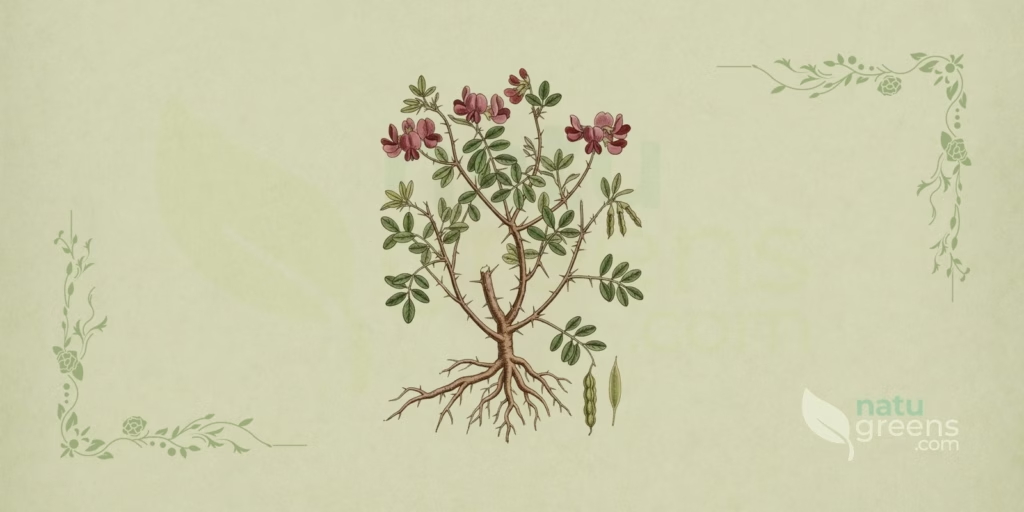
Alhagi maurorum Medik. / Camelthorn, also known as Caspian manna and Persian mannaplant, is a perennial spiny subshrub, woody at the base, of the Fabaceae family. This species, native to Eurasia and the Middle East, has adapted to arid conditions, developing an extensive root system that already exceeds two meters in its first year and can reach several meters deep in mature plants. The plant is densely branched, grayish-green in color, characterized by long spines and small flowers ranging from bright pink to reddish-brown. Its pods contain mottled seeds, and the plant has been valued in traditional medicine for its diverse therapeutic properties.
Historically, camelthorn has been employed in various cultures to treat a range of ailments, from gastrointestinal disorders to kidney problems. Its rich phytochemical composition, which includes flavonoids, alkaloids, and terpenoids, supports many of its traditional uses. Modern scientific studies have begun to validate these applications, highlighting the potential of Alhagi maurorum as a promising medicinal plant. Its ability to thrive in challenging environments and its long history of ethnobotanical use make it an object of continuing interest in phytotherapeutic research.
Popular and International Names of Camelthorn
- English: camelthorn, Caspian manna, Persian mannaplant.
- Spanish: espina de camello, maná del Caspio.
- Portuguese: espinheiro-de-camelo, maná-do-cáspio, planta-do-maná-persa.
- French: manne de Perse.
- Italian: manna di Persia.
- German: Manna-Alhagi, Persische Manna (the name Kameldorn refers mainly to the African acacia Vachellia erioloba).
- Persian (Unani): khar-e-shotor, tarangabin (the manna).
Botanical Synonyms of Camelthorn
Alhagi pseudalhagi (M.Bieb.) Desv. ex B.Keller & Shap. is a frequently encountered synonym. Other synonyms include Hedysarum alhagi L. and Alhagi camelorum Fisch.
Botanical Family: Fabaceae
The Fabaceae family, also known as Leguminosae, is one of the largest families of flowering plants, encompassing a vast diversity of species distributed globally. It is characterized by the presence of pod-shaped fruits and by the ability of many of its species to fix atmospheric nitrogen through symbiosis with bacteria. This family includes plants of great economic, food, and medicinal importance, such as beans, soybeans, lentils, and carob.
Alhagi maurorum, as a member of the Fabaceae, shares morphological and phytochemical characteristics common to the family. Many Fabaceae species are recognized for their richness in bioactive compounds, including flavonoids, alkaloids, and tannins, which confer medicinal properties. The chemical diversity within this family has been the subject of intense investigation, contributing to the development of phytotherapeutics and nutritional supplements.
Parts of Camelthorn Used
- Flowers
- Leaves
- Pods
- Rhizomes
- Roots
Ethnobotanical and Traditional Uses of Camelthorn
- Antidiarrheal (fights diarrhea)
- Antiseptic (prevents infections); traditional use, without established clinical efficacy
- Bile duct disorders (traditional use; anyone with gallstones should avoid the plant, see contraindications)
- Diaphoretic (promotes perspiration)
- Diuretic (increases urine production)
- Expectorant (helps expel mucus)
- Gastroprotective (protects the stomach)
- Glandular tumors (historical ethnobotanical record, with no evidence of efficacy; no preparation of the plant replaces oncological investigation and treatment)
- Hemorrhoids (relieves hemorrhoid symptoms)
- Intestinal colic relief (helps reduce abdominal pain)
- Jaundice (traditional use in Iranian folk medicine; yellowing of the skin or eyes calls for immediate medical assessment)
- Laxative (promotes bowel movements)
- Nasal polyps (traditional treatment of polyps)
- Natural sweetener (used as a natural sweetener)
- Purgative (cleanses the intestine)
- Rheumatism (relieves rheumatic pain)
- Sweet manna (associated by Islamic exegetical tradition with the manna of the Quran, which names no species)
- Urolithiasis (assists in the elimination of urinary stones)
- Warts (traditional treatment of warts)
Therapeutic Properties of Camelthorn
- Analgesic (relieves pain)
- Antibacterial (fights bacteria); traditional use, without established clinical efficacy
- Antidiarrheal (fights diarrhea)
- Anti-inflammatory (reduces inflammation)
- Antioxidant (fights free radicals)
- Antipyretic (reduces fever)
- Antiseptic (prevents infections); traditional use, without established clinical efficacy
- Antispasmodic (relieves spasms)
- Diaphoretic (induces perspiration)
- Diuretic (increases urine production)
- Expectorant (helps expel mucus)
- Gastroprotective (protects the gastric mucosa)
- Laxative (promotes intestinal transit)
Detailed Phytochemical Profile of Camelthorn
- Alkaloids
- Beta-sitosterol
- Cardiac glycosides (detected only in qualitative screening, with no identification of the molecule; even so, anyone taking digoxin or another digitalis drug should avoid the plant, because the potassium loss caused by its diuretic and laxative effect increases the toxicity of these medicines)
- Cinnamic acid
- Coumaric acid
- Coumarins
- Epigallocatechin (EGC)
- Flavonoids (kaempferol, luteolin, quercetin)
- Hydroxybenzoic acid
- Oxalic acid
- Saponins
- Tannins
- Terpenoids
Preparation and Administration Forms of Camelthorn
- Decoction: historically described in Iranian folk medicine for jaundice, but this is a historical record and not a substitute for medical evaluation; yellowing of the skin or eyes requires immediate consultation, since the cause may be hepatitis, hemolysis, or gallstone obstruction, a condition in which this plant is contraindicated.
- Extracts: obtained by methods such as reflux with ethanol or dichloromethane.
- Hydrosol: used in clinical studies for urinary stones.
- Tea/Infusion: prepared from the leaves in boiling water.
Synergy with Other Medicinal Plants
Caution with Laxative Herbs
Due to its mild laxative effects, caution should be exercised when combining Alhagi maurorum with other intestinal stimulant herbs. Excessive combination can lead to unwanted effects such as dehydration or electrolyte imbalance. It is essential to seek professional guidance before starting any combination of phytotherapeutics to ensure the safety and effectiveness of the treatment.
Combinations for Urinary Stones
Alhagi maurorum can be combined with other plants used for urinary stones in water-based syrups. The expected effect of such a combination is diuretic and helps small stones pass; there is no evidence that the plant dissolves calcium oxalate stones, which are insoluble under the conditions found in the body. In the laboratory, extracts of the plant have also been tested alongside bacteriophages against Proteus mirabilis biofilms, but that result is experimental, corresponds to no available treatment, and involves no other medicinal plants.
Recipes and Usage Protocols of Camelthorn
Decoction for Jaundice
Ingredients: 10 to 15 grams of aerial parts of Alhagi maurorum, 500 ml of water.
Preparation: Boil the aerial parts of the plant in water for 15 to 20 minutes. Strain and let cool. In Iranian folk medicine, this decoction is described for jaundice, but the record is historical and does not replace medical evaluation: yellowing of the skin or eyes calls for immediate consultation, because the cause may be hepatitis, hemolysis, or obstruction by a gallstone, a condition in which this plant is contraindicated.
Infusion for Respiratory Problems
Ingredients: 1 teaspoon of dried Alhagi maurorum leaves, 200 ml of boiling water.
Preparation: Steep the leaves in boiling water for 5 to 7 minutes. Strain and drink slowly. This infusion is traditionally used to relieve respiratory problems, acting as an expectorant and diaphoretic. Consumption 2 to 3 times a day is recommended, as needed.
Associated Therapies
Phytotherapy
Alhagi maurorum is widely used in phytotherapy due to its diuretic, anti-inflammatory, and analgesic properties. Modern phytotherapy employs the plant for kidney and ureteral stones, and small clinical trials suggest a reduction in the size and number of stones, still preliminary evidence. The plant is also valued for its gastroprotective and expectorant effects, being incorporated into formulations for various conditions. Modern phytotherapy seeks to standardize extracts to ensure therapeutic consistency and effectiveness.
Traditional Medicine
In several cultures, Alhagi maurorum plays a significant role in traditional medicine. In the Middle East, it is used as a laxative, diaphoretic, and diuretic to treat hemorrhoids, migraines, and rheumatism. Islamic exegetical tradition also links it to the manna mentioned in the Quran, although the Quranic text names no species. Its application in Iranian folk medicine for jaundice and as a general tonic, anthelmintic, and for arthritis demonstrates the breadth of its traditional uses.
Contraindications and Side Effects of Camelthorn
General Contraindications
Alhagi maurorum is contraindicated in cases of individual intolerance, allergic reactions, or hypersensitivity to its components. Pregnant and breastfeeding women should avoid its use due to the lack of conclusive studies on its safety in these groups. Individuals with impaired sweating or cholelithiasis (gallstones) should also refrain from use. It is crucial to consult a healthcare professional before starting any treatment with this plant, especially if there are pre-existing medical conditions.
Side Effects
Excessive use of Alhagi maurorum can lead to dehydration, nausea, or electrolyte loss, due to its diuretic and laxative effects. In some cases, it can cause fatigue or loose stools. Historically, although not scientifically proven, the plant was considered harmful to the kidneys and prohibited in conditions such as acute fever, smallpox, typhoid fever, bloody diarrhea, and hemorrhage. The observation of any adverse effect should lead to discontinuation of use and seeking medical advice.
Historical Notes and Interesting Facts
Resilience in the Desert
Alhagi maurorum is a remarkable example of adaptation to arid environments. Its extensive root system, which can go several meters deep, allows it to access underground water sources, making it drought-resistant. This characteristic, together with its ability to grow in saline, sandy, and rocky soils, demonstrates its robustness. Although it is considered a weed in some regions outside its native habitat due to its rapid proliferation, its resilience makes it an interesting plant for the study of desert ecosystem biology and ecology.
The Desert Manna
Alhagi maurorum is one of the plants associated with the production of manna, a sweet, sticky substance that exudes from its stems and leaves. This manna, known as tarangabin, is traditionally collected and used as a sweetener and in medicinal preparations in regions such as Iran and Afghanistan. The plant’s association with the manna named in the Quran comes from Islamic exegetical tradition rather than from the Quranic text, which names no species; even so, that reading gave the shrub a prominent place in the culture of the region. The plant’s ability to produce this substance in desert environments is a testament to its remarkable adaptation and resilience.
Frequently Asked Questions about Camelthorn
What Is Camelthorn Tea?
Camelthorn tea is an infusion prepared from the leaves and other aerial parts of the Alhagi maurorum plant. It is traditionally used in folk medicine for its diuretic, expectorant, and laxative properties, among others. The beverage is valued for its potential health benefits, especially in the treatment of respiratory and digestive problems.
What Are the Main Benefits of Camelthorn Tea?
The main benefits of camelthorn tea include relief from respiratory problems, such as coughs and congestion, due to its expectorant properties. It also acts as a diuretic, assisting in fluid elimination and the treatment of urinary stones. In addition, it can promote digestive health, acting as a mild laxative and gastroprotector.
Are There Contraindications for the Consumption of Camelthorn Tea?
Yes, there are contraindications. Camelthorn tea should be avoided by pregnant and breastfeeding women, individuals with a known allergy to the plant, and people with impaired sweating or cholelithiasis. Excessive use can cause dehydration, nausea, or electrolyte loss. It is always advisable to consult a healthcare professional before consuming any medicinal tea.
How Do I Prepare Camelthorn Tea?
To prepare the tea, steep one teaspoon of dried Alhagi maurorum leaves in 200 ml of boiling water for 5 to 7 minutes. Strain and drink slowly. The dosage and frequency may vary depending on the purpose and the guidance of a healthcare professional.
Can Camelthorn Be Used for Kidney Stones?
Yes, clinical studies indicate that Alhagi maurorum extracts can be effective in reducing the number and size of kidney and ureteral stones, as well as promoting their excretion. The effect described is diuretic and helps small stones pass; there is no evidence that the plant dissolves calcium oxalate stones, which are insoluble under the conditions found in the body. However, the treatment of kidney stones should always be supervised by a physician.
Notice: this content is for informational purposes and does not replace professional medical advice. Consult a physician or herbal practitioner before using medicinal plants, especially during pregnancy, breastfeeding, or alongside medication.
References and Scientific Studies
View All 10 Cited References
Peer-Reviewed Scientific Studies (9)
- DOI2025 Mahboubi, Mohaddese, et al. “Alhagi maurorum for urolithiasis: Its bioactive substances, pharmacological actions and clinical trials.” Clinical Traditional Medicine and Pharmacology. 2025. ↗.
- DOI2015 Ahmad, Nabeela, et al. “Traditional uses and pharmacological properties of Alhagi maurorum: A review.” Asian Pacific Journal of Tropical Disease. 2015. ↗.
- PMC2019 Khalifa, Hesham Ahmed, et al. “Alhagi maurorum aqueous extract protects against norfloxacin-induced hepato-nephrotoxicity in rats.” Chinese Herbal Medicines. 2019. ↗.
- PMC2016 Sheweita, S. A., et al. “Changes in Oxidative Stress and Antioxidant Enzyme Activities in Streptozotocin-Induced Diabetes Mellitus in Rats: Role of Alhagi maurorum Extracts.” Oxidative Medicine and Cellular Longevity. 2016. ↗.
- DOI2020 Tavassoli, Amir Parviz, et al. “Phytochemistry and therapeutic effects of Alhagi spp. and tarangabin in traditional and modern medicine: a review.” Journal of Herbmed Pharmacology. 2020. ↗.
- PMC2020 Saleem, Hammad, et al. “UHPLC-MS phytochemical profiling, biological propensities and in-silico studies of Alhagi maurorum roots: a medicinal herb with multifunctional properties.” Drug Development and Industrial Pharmacy. 2020. ↗.
- PMC2012 Laghari, Abdul Hafeez, et al. “Determination of free phenolic acids and antioxidant capacity of methanolic extracts obtained from leaves and flowers of camel thorn (Alhagi maurorum).” Natural Product Research. 2012. ↗.
- PMC2022 Ghavipanje, Navid, et al. “The Inclusion of Alhagi maurorum in Growing Camel Diet: Effect on Performance, Liver-Related Blood Metabolites, and Antioxidant Status.” Frontiers in Veterinary Science. 2022. ↗.
- DOI2019 Al-Saleem, Muneera S. M., et al. “Antioxidant flavonoids from Alhagi maurorum with hepatoprotective effect.” Pharmacognosy Magazine. 2019. ↗.
Supplementary Readings (1)
- Royal Botanic Gardens, Kew. “Alhagi maurorum Medik.” Plants of the World Online. ↗.