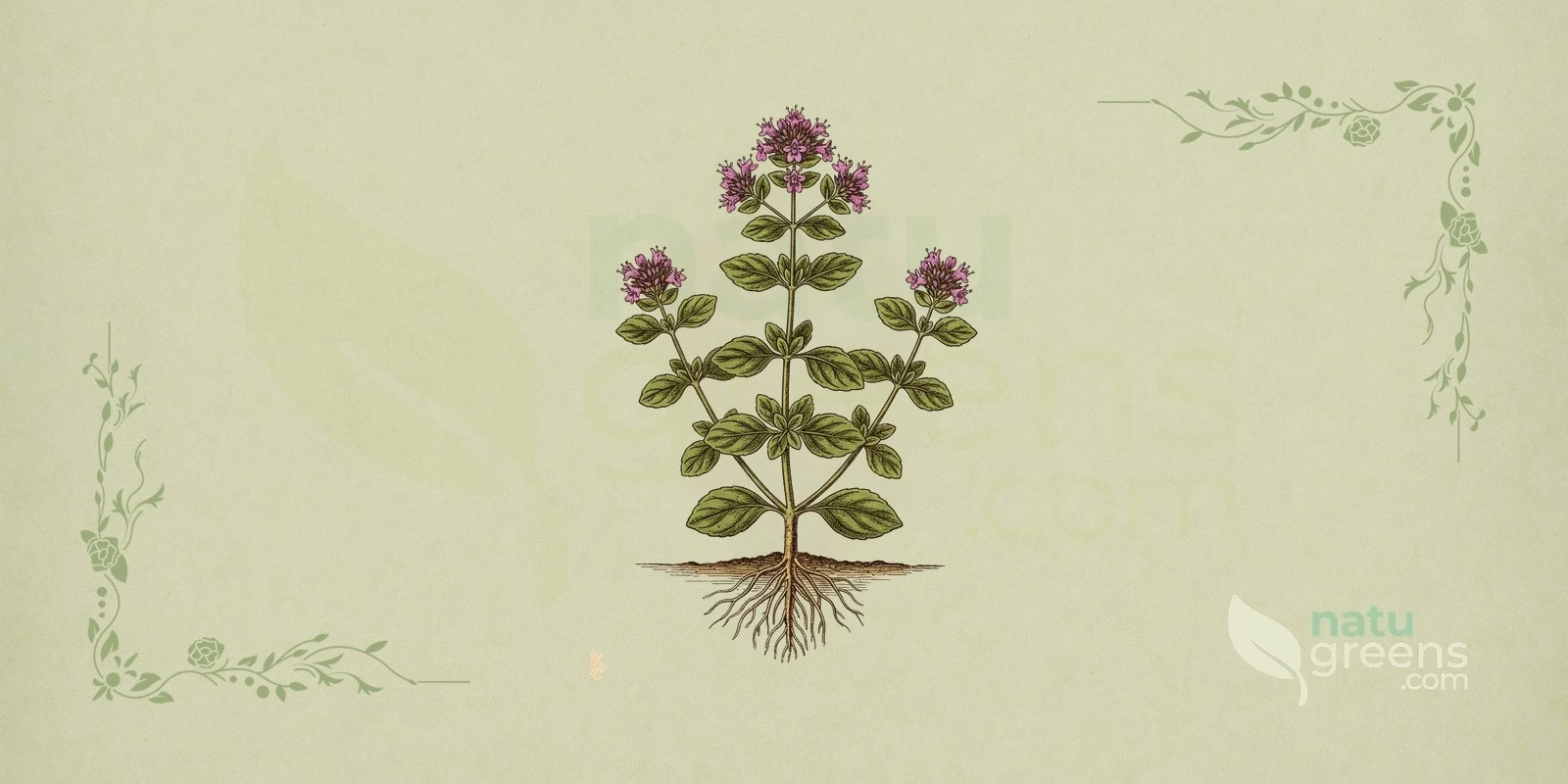
Origanum vulgare L. / Oregano, commonly known as oregano, is a perennial herbaceous plant of the family Lamiaceae, described by Carl Linnaeus in 1753. Native to the Mediterranean region and Western Asia, this species has spread across several continents thanks to its well-known therapeutic and culinary properties. Oregano has been used for millennia in traditional medicine and as a seasoning, valued for its characteristic aroma and flavor. Its leaves and flowers are the parts most commonly used, both fresh and dried, in preparations such as infusions and everyday cooking.
Popular and International Names of Oregano
- English: european oregano, oregano, pot marjoram, spanish thyme, wild marjoram.
- Spanish: orégano, orégano chiquito (for Hedeoma patens), orégano cimarrón (for Lippia graveolens).
- Portuguese: manjerona-brava, orégano, orégão.
- French: marjolaine sauvage, origan.
- Italian: maggiorana selvatica, origano.
- German: Echter Dost, Wilder Majoran.
Botanical Synonyms of Origanum vulgare
Besides Origanum vulgare L., the plant has several botanical synonyms that have been used throughout the history of its taxonomy. Knowing these synonyms is important for accurately identifying the species in different botanical and pharmacological contexts. Among the most notable synonyms are:
- Mentha formosana (C.Marquand) S.S.
- Micromeria formosana C. Marquand
- Origanum albiflorum K.Koch
- Origanum creticum Lour.
- Origanum dilatatum Klok.
- Origanum floridum Salisb.
- Origanum gracile C. Koch
- Thymus origanum Kuntze
Botanical Family: Lamiaceae
Oregano belongs to the family Lamiaceae, formerly known as Labiatae. This is a vast family of flowering plants characterized by square stems, opposite leaves, and bilabiate flowers. Lamiaceae is renowned worldwide for including many aromatic and medicinal herbs, such as mint, basil, sage, and thyme. The presence of essential oils rich in volatile compounds is a distinguishing feature of the family, giving many of its species valuable therapeutic and culinary properties. The chemical diversity within Lamiaceae has been the subject of extensive research, contributing to the development of phytopharmaceuticals and natural supplements.
Parts of Oregano Used
The parts of oregano most frequently used for medicinal and culinary purposes are the leaves and flowers. These can be used either fresh or dried, depending on the preparation and the desired intensity of flavor or effect. Drying the plant can influence the concentration and distribution of its volatile compounds, slightly altering its aromatic and therapeutic profile.
- Flowers (floral tips, inflorescence bracts)
- Leaves
Ethnobotanical and Traditional Uses
Oregano has a rich history of use across various cultures, dating back to antiquity. The ancient Greeks and Romans already used it as an antiseptic and to treat skin wounds, muscle aches, stomachaches, coughs, and other respiratory ailments. In traditional medicine, oregano has been widely used to relieve respiratory conditions such as asthma, bronchitis, and coughs, as well as gastrointestinal issues, including diarrhea, stomachaches, menstrual cramps, and gas. Topical use of the diluted oil and compresses is also documented. In addition, oregano is a staple seasoning in many cuisines, especially Mediterranean and Latin American.
Therapeutic Properties of Oregano
Oregano is valued for a range of medicinal properties attributed to its rich phytochemical compounds. These properties contribute to its many therapeutic uses in traditional and modern medicine.
- Anti-inflammatory (effect studied for reducing inflammation in the body)
- Antimicrobial (activity studied against bacteria, viruses, and fungi)
- Antioxidant (protective effect studied on cells against free-radical damage)
- Antiproliferative (activity observed in laboratory studies, without clinical confirmation)
- Digestive (effect studied on digestion, relieves gas and cramps)
- Immunostimulant (effect studied on the immune system)
- Menstrual Regulator (effect studied on the menstrual cycle)
- Respiratory (helps protect against and relieve respiratory ailments)
Detailed Phytochemical Profile of Oregano
The phytochemical profile of oregano is complex and diverse, and accounts for most of its therapeutic properties. Its main constituents include polyphenols, essential oils, and sesquiterpenes, along with other compounds and trace elements.
- Essential Oils (Monoterpenoids and Monoterpenes): 3-epimoretenol, beta-terpineol, caryophyllene, carvacrol, δ-terpineol, spathulenol, γ-terpinene, germacrene D, limonene, ocimene, p-cymene, pinene, sabinene, terpinen-4-ol, thymol, trans- and cis-sabinene hydrate.
- Others: tannins, triterpenes.
- Polyphenols: rosmarinic acid, dihydroflavonols, flavanones, flavones, flavonols.
- Sesquiterpenes: β-caryophyllene, β-bisabolene, E-E-α-farnesene, germacrene D, germacrene D-4-ol, caryophyllene oxide.
- Trace Elements: cadmium, cobalt, copper, lead, manganese, nickel, zinc.
Preparation and Administration Forms of Oregano
Oregano can be prepared in several ways to make the most of its medicinal and culinary benefits. Preparations range from simple infusions to infused oils and direct culinary use.
- Culinary use (fresh or dried)
- Infused oil
- Infusion (tea)
Synergy with Other Medicinal Plants
Oregano shows potential synergy when combined with other medicinal plants, which can amplify its therapeutic effects and allow lower concentrations to be used, reducing potential adverse effects. These combinations are studied to optimize health benefits.
Chamomile (Matricaria chamomilla)
Chamomile and oregano extracts show synergistic anti-hyperglycemic, anti-hyperlipidemic, and renal-protective effects, as demonstrated in studies with diabetic rats.
Cumin (Cuminum cyminum) and Sage (Salvia officinalis)
Studies indicate that combining oregano essential oil with cumin and sage may increase antioxidant and antibacterial activity.
St. John’s Wort (Hypericum perforatum)
Hydroalcoholic extracts of Origanum vulgare and Hypericum perforatum showed a notable synergistic effect against Staphylococcus aureus. The combination of carvacrol (from oregano) and hypericin (from St. John’s wort) also showed synergy, allowing lower concentrations to be used and reducing potential toxic effects.
Honey
Combining oregano and honey creates a synergy that enhances their individual properties, offering a blend with several health benefits.
Thyme (Thymus vulgaris)
Essential oils of Origanum vulgare and Thymus vulgaris showed antibacterial synergy, suggesting potential for combined applications.
Recipes and Usage Protocols of Oregano
Oregano can be incorporated into a daily routine in several ways, for both culinary and therapeutic purposes. Below are some common recipes and usage protocols.
Infusion (Oregano Tea)
Ingredients: 1 tablespoon of dried oregano or 2 tablespoons of fresh oregano, 1 cup of boiling water. Optional: honey or lemon to taste.
Preparation: Add the oregano to the boiling water, cover, and let it steep for 5 to 10 minutes. Strain and, if desired, sweeten with honey or add a few drops of lemon. It can be drunk after meals to aid digestion or before bed to promote relaxation. This infusion is traditionally associated with relieving menstrual and intestinal cramps, flu, colds, bronchitis, headaches, and sore throats, and preliminary studies suggest a possible contribution to balancing LDL cholesterol, without replacing medical guidance.
Oregano Infused Oil (Traditional Method)
Ingredients: Dried oregano, vegetable oil (such as olive oil or almond oil).
Preparation: Fill a glass jar halfway with dried oregano. Cover the herbs with the vegetable oil, making sure they are submerged by at least 2.5 cm (1 inch). Seal the jar tightly and let it steep in a cool, dark place for several weeks, shaking occasionally. After the steeping period, strain the oil and store it in a dark glass bottle. This oil can be used for massaging sore muscles or, after dilution and a sensitivity test, for topical application on skin issues.
Culinary Use
Oregano is a versatile seasoning that can be added to a wide range of dishes. Use fresh or dried oregano in sauces (especially tomato sauce), pizzas, pastas, salads, meats, fish, and roasted or grilled vegetables to enhance flavor and aroma. It is an essential ingredient in Italian, Greek, and Mexican cuisine.
The preparations above follow traditional records and do not replace professional guidance. Before any internal use, review the contraindications and interactions described in this article.
The preparations above follow traditional records and do not replace professional guidance. Before any internal use, check the contraindications and interactions described in this article.
Associated Therapies
Beyond its traditional and culinary use, oregano is employed in various complementary therapies, drawing on its natural properties.
Aromatherapy
Oregano essential oil is valued in aromatherapy for its spicy, earthy aroma. It is used in diffusers to purify the air and promote a sense of calm. When diluted in a carrier oil, it can be added to baths or applied topically for antimicrobial, anti-inflammatory, and neuroprotective benefits. It is also used to relieve headaches and respiratory issues through steam inhalation.
Homeopathy
In homeopathy, Origanum vulgare is used in specific dilutions to address various conditions, according to the assessment and prescription of a homeopathic practitioner. The choice of dilution and treatment protocol is based on homeopathy’s individualized principles.
Contraindications and Side Effects of Oregano
Although oregano is generally safe when consumed in food amounts, it is important to be aware of its contraindications and potential side effects, especially at high doses or in concentrated forms such as the essential oil.
Specific Contraindications
- Pregnancy and Breastfeeding: Not recommended for women who are pregnant or breastfeeding due to a lack of conclusive studies on its safety during these periods.
- Allergy: People with sensitivity or allergy to plants in the Lamiaceae family (such as mint, basil, sage, thyme) may experience allergic reactions to oregano.
Common Side Effects and Effects of Overconsumption
- Gastrointestinal Disturbances: Excessive consumption of oregano, especially the essential oil, can cause nausea, vomiting, stomach discomfort, diarrhea, gastric irritation, and heartburn.
- Topical Irritation: Oregano essential oil, if applied directly to the skin without proper dilution, can cause irritation or a skin rash.
- Drowsiness: At high doses, the essential oil can induce drowsiness in some people.
Drug Interactions
Oregano may interact with certain medications, so it is crucial to consult a healthcare professional before using it as a supplement, especially if you are on medication.
- Anticoagulants: May increase the risk of bleeding when used together with anticoagulant medications.
- Diabetes Medications: May enhance the hypoglycemic effect of diabetes medications, requiring dose adjustment.
- Lithium: Due to its potential diuretic effect, oregano may increase lithium levels in the blood, which can be dangerous.
Historical Notes and Interesting Facts
Oregano, with its rich history and presence across many cultures, is surrounded by curiosities and interesting facts that highlight its importance over time.
- Origin of the Name: The name “oregano” derives from the ancient Greek “oros” (mountain) and “ganos” (joy), meaning “joy of the mountain,” a reference to its preference for growing on sunny hillsides.
- Antiquity: It is one of the oldest known herbs, with a history of use stretching back thousands of years, valued by ancient civilizations for its medicinal and aromatic properties.
- Ancient Greece: The ancient Greeks believed that the goddess Aphrodite created oregano, and it was common to crown newlyweds with garlands of the herb, symbolizing joy and protection. Hippocrates, the father of medicine, used oregano to treat various conditions, including respiratory diseases and stomach ailments.
- Roman Empire: The Romans also used oregano for medicinal purposes, such as an antiseptic, to treat skin wounds, muscle aches, stomachaches, coughs, and colds.
- Popularity in America: Although popular in Europe for centuries, oregano was relatively unknown in America until World War II. American soldiers returning from Italy brought back a taste for the “pizza herb,” popularizing it in the United States.
- Natural Repellent: Oregano is known to attract beneficial insects while repelling unwanted pests, such as mosquitoes, cabbage moths, and cucumber beetles, thanks to its strong aroma and essential oils.
Frequently Asked Questions about Oregano Tea
To clarify common questions about oregano and its use, we have compiled some frequently asked questions.
What Is Origanum vulgare?
It is a perennial herbaceous plant of the family Lamiaceae, commonly known as oregano. It is widely used as a seasoning in cooking and in traditional medicine for its therapeutic properties, especially in the form of tea.
What Are the Main Benefits of Oregano?
Oregano has antioxidant, antimicrobial (antibacterial, antiviral, antifungal), and anti-inflammatory properties. It may aid digestion, strengthen the immune system, and relieve respiratory issues, such as coughs and colds.
How Can I Use Oregano?
It can be used fresh or dried in cooking to season various dishes. In infusions (teas), it is used for medicinal purposes. The essential oil, always diluted, is used in aromatherapy or topical application for various benefits.
Does Oregano Tea Help with Weight Loss?
Although oregano has digestive and antioxidant benefits, there is no robust scientific evidence proving that oregano tea alone causes significant weight loss. It can be a complement to a balanced diet and healthy lifestyle.
Are There Contraindications for Consuming Oregano?
Yes, it is not recommended for women who are pregnant or breastfeeding. People with an allergy to plants in the Lamiaceae family should avoid it. Excessive consumption or use of the pure essential oil can cause gastrointestinal irritation and interact with certain medications, such as anticoagulants and diabetes medications.
What Is the Difference between Oregano and Marjoram?
Oregano (Origanum vulgare) and marjoram (Origanum majorana) are related plants from the same family, but marjoram is generally milder and sweeter, while oregano has a sharper, more pungent flavor. Wild oregano is sometimes called wild marjoram.
Is Oregano Bad for the Liver?
There is no robust scientific evidence indicating that oregano is harmful to the liver. On the contrary, it is studied for its protective and antioxidant properties, which may benefit liver health when consumed appropriately.
Notice: this content is for informational purposes and does not replace professional medical advice. Consult a physician or herbal practitioner before using medicinal plants, especially during pregnancy, breastfeeding, or alongside medication.
References and Scientific Studies
Peer-Reviewed Scientific Studies (1)
- PEER2025 Gheisary, B. et al. (2025). Enhancing antioxidant and antibacterial activities of Cuminum cyminum, Origanum vulgare, and Salvia officinalis essential oils through a synergistic perspective. Scientific Reports, 15, 10814.
Institutional Sources (1)
- GOV2019 Bahmani, M. et al. (2019). The synergistic effect of hydroalcoholic extracts of Origanum vulgare, Hypericum perforatum and their active components carvacrol and hypericin against Staphylococcus aureus. Future Science OA, 5(3), FSO371.
Supplementary Readings (3)
- The Spruce Eats. Oregano Tea Recipe With Fresh Herbs.
- AHPA. Herbs in History: Oregano.
- 2013 Stanković, M. S. et al. (2013). Investigation on antibacterial synergism of Origanum vulgare and Thymus vulgaris essential oils. Archives of Biological Sciences, 65(2), 639-646.