Rubus fruticosus L. / Blackberry, commonly known simply as the blackberry, is a species complex of shrubs in the Rosaceae family. Native to Europe and Asia, this thorny, perennial plant is widely recognized for its dark, juicy fruit. Blackberry has a long history of use in traditional European medicine, valued both for its nutritious fruit and for the therapeutic properties of its leaves and roots.
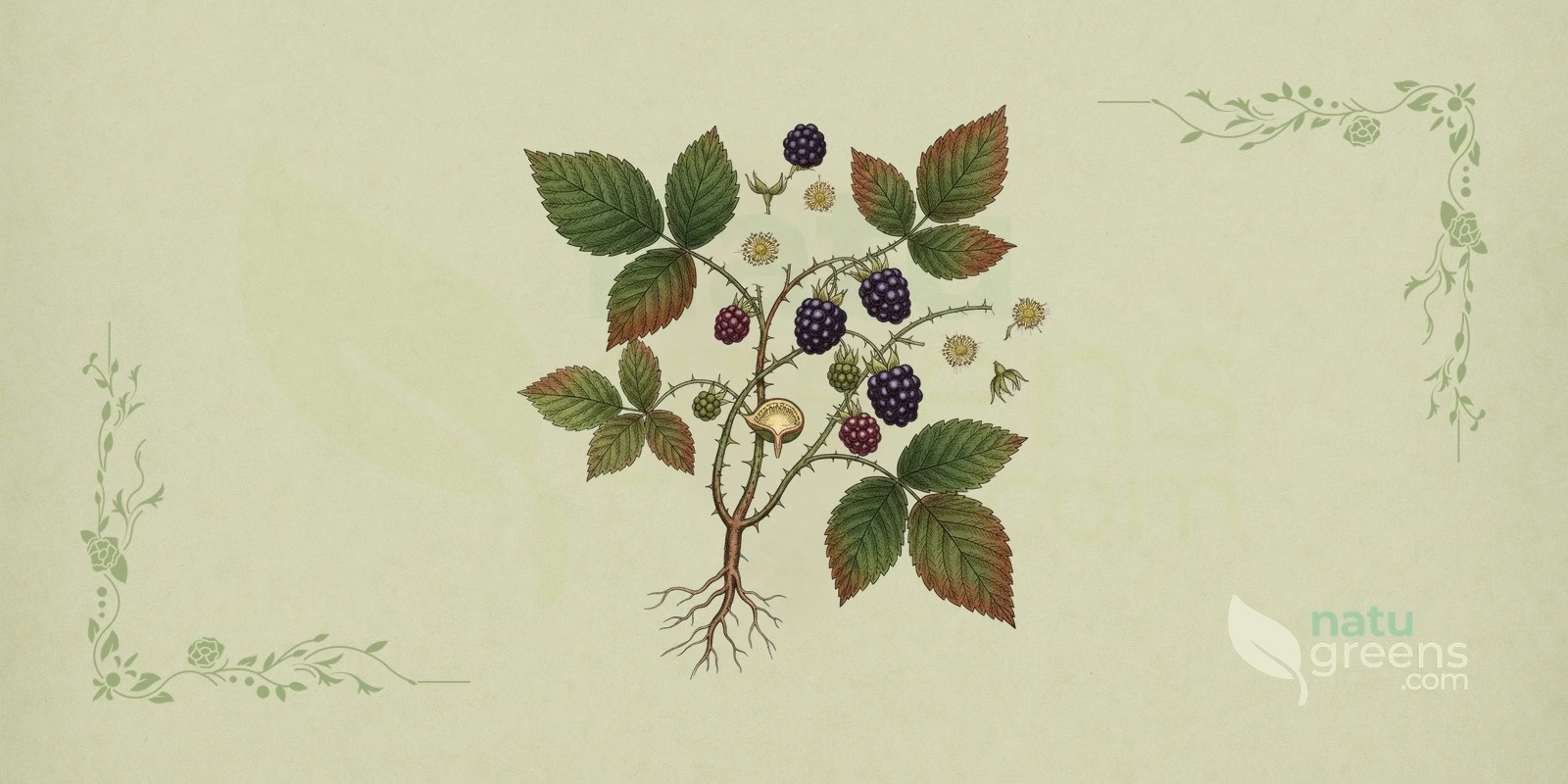
In herbal tradition, blackberry is celebrated for its astringent action, serving as a classic remedy for diarrhea and dysentery. Its tannin-rich leaves are prepared as infusions to treat inflammation of the mouth and throat. Modern scientific research has been validating many of these uses, highlighting its high content of antioxidant compounds, such as anthocyanins and ellagic acid, which contribute to its growing popularity as a functional food.
Popular and International Names of Blackberry
- English: blackberry.
- Spanish: mora, zarzamora.
- Portuguese: amora-brava (PT); amora, amora-do-mato (BR), amora-preta, amora-silvestre.
- French: mûre, ronce.
- Italian: mora di rovo.
- German: Brombeere.
Botanical Synonyms of Rubus fruticosus
The name Rubus fruticosus L. is, in fact, an aggregate name representing a complex of hundreds of microspecies and hybrids. Among the names most commonly found in the literature, sometimes used as synonyms or as representative species of the aggregate, are Rubus plicatus Weihe & Nees and Rubus ulmifolius Schott. This taxonomic complexity reflects the plant’s great morphological variability, as it hybridizes readily.
Botanical Family: Rosaceae
The Rosaceae family is one of the most important plant families, comprising more than 100 genera and 3,000 species, including many of great economic value such as the apple, pear, peach, strawberry, and rose. Plants in this family are characterized by generally showy flowers, with five petals and numerous stamens. Blackberry shares these characteristics, standing as a classic example of the diversity within the genus Rubus.
Parts of Blackberry Used
- Fruit
- Leaves
- Roots
- Young shoots
Ethnobotanical and Traditional Uses
- Canker sores and mouth ulcers
- Cystitis
- Diarrhea and dysentery
- Gum inflammation
- Hemorrhoids
- Menstrual pain
- Sore throat
Therapeutic Properties of Blackberry
- Anti-inflammatory (effect studied in reducing inflammation)
- Antidiabetic (effect studied on blood sugar)
- Antidiarrheal (activity studied against diarrhea)
- Antimicrobial (activity studied against bacteria and viruses)
- Antioxidant (activity studied against free radicals)
- Astringent (contracts tissues)
- Cardioprotective (protective effect studied on the heart)
- Depurative (purifies the blood)
- Diuretic (effect studied on urine production)
- Hypocholesterolemic (effect studied in lowering cholesterol)
- Immunomodulatory (effect studied on the immune system)
- Tonic (effect studied on the body)
- Vulnerary (effect studied on wound healing)
Detailed Phytochemical Profile of Blackberry
- Anthocyanins (cyanidin-3-glucoside)
- Caffeic acid
- Carotenoids (lutein, zeaxanthin)
- Ellagic acid
- Ferulic acid
- Fiber
- Flavonoids (quercetin, kaempferol)
- Gallic acid
- Glycosides
- Minerals (calcium, iron, magnesium, potassium)
- Oleanolic acid
- p-Coumaric acid
- Saponins
- Tannins (ellagitannins)
- Ursolic acid
- Vitamins (B, C, K)
Preparation and Administration Forms of Blackberry
- Compresses
- Decoction
- Dry extract
- Fluid extract
- Infusion
- Juice
- Poultice
- Tincture
Synergy with Other Medicinal Plants
Diarrhea and Digestive Disorders
To help manage diarrhea, blackberry leaves, thanks to their strong astringency, can be combined with other plants of similar properties, such as raspberry leaf (Rubus idaeus) or tormentil (Potentilla erecta), since this combination reinforces the antidiarrheal action, helping tone the intestinal mucosa and reduce fluid loss.
Oral and Throat Inflammation
An infusion of blackberry leaves is traditionally used as a gargle for sore throat, gingivitis, or canker sores, and its action can be reinforced by adding sage (Salvia officinalis), known for its antiseptic properties, or calendula (Calendula officinalis), which has anti-inflammatory and healing effects, forming a combination valued in tradition for oral health.
Recipes and Usage Protocols of Blackberry
Poultice for Wounds
Ingredients: 6 fresh blackberry leaves, 2 tablespoons of water.
Preparation: Heat the leaves with the water over low heat until the water evaporates. Mash the warmed leaves, let them cool slightly, and apply to the wound with the help of gauze. This poultice is traditionally associated with skin healing and protection against infection, owing to the plant’s vulnerary and astringent properties.
Infusion for Diarrhea and Oral Health
Ingredients: 1-2 teaspoons of dried blackberry leaves, 250 ml of boiling water.
Preparation: Pour the boiling water over the leaves and steep for 10-15 minutes. Strain and drink 1 cup between meals, 3-4 times a day, as a traditional aid in managing diarrhea. For oral health, use the same infusion, once cooled, as a rinse or gargle several times a day.
Antioxidant Blackberry Juice
Ingredients: 1 cup fresh blackberries, 200 ml water, honey or another sweetener to taste (optional).
Preparation: Blend the blackberries with the water. Strain if a finer consistency is desired, and drink right away to make the most of its vitamin and antioxidant content. This juice is traditionally valued as a support for immunity and the body’s antioxidant action.
The preparations above follow traditional records and do not replace professional guidance. Before any internal use, check the contraindications and interactions described in this article.
Associated Therapies
Herbal Medicine
In herbal medicine, blackberry is widely used in the form of dry extracts, fluid extracts, and tinctures, in addition to traditional infusions, with preparations indicated for relieving gastrointestinal conditions, such as acute diarrhea, and inflammation of the oral and pharyngeal mucosa, since its richness in tannins gives it a potent astringent action, fundamental to these applications.
Functional Nutrition
Blackberry fruit is considered a superfood in functional nutrition, being rich in fiber, vitamins, and, above all, antioxidant compounds such as anthocyanins, whose regular consumption is associated, according to observational studies, with the prevention of cardiovascular disease, improved cognitive health, and a possible reduction in the risk of certain cancers. It can be eaten fresh, frozen, or in juices and jams.
Contraindications and Side Effects of Blackberry
General Contraindications
Tea made from blackberry leaves, roots, or stems should be avoided by children, pregnant women, and nursing mothers, due to a lack of studies confirming its safety in these groups. People with hypoglycemia or who take medication for diabetes or hypertension should consult a healthcare professional before drinking the tea, due to its potential blood-sugar-lowering effect.
Common Side Effects
Excessive consumption of the fruit can cause diarrhea in some people, due to its high fiber content. Allergic reactions to the plant are rare but possible, especially in individuals sensitive to other plants in the Rosaceae family.
Recommended Dosages of Blackberry
Leaf infusion: 1-2 teaspoons of dried leaves per cup of water, 3-4 times a day.
Daily leaf dose: 4 to 6 grams of the dried herb.
Dosages of extracts and tinctures may vary according to product concentration and should follow the manufacturer’s recommendations or the guidance of a qualified healthcare professional.
Historical Notes and Interesting Facts
Blackberry is a plant with a long tradition in European folklore. In some cultures, its thorny arches were believed to form portals to the world of the fae. Its ability to grow quickly and form dense thickets made it a symbol of protection and boundary marking for rural properties. Its fruit has been harvested for millennia, serving as an important food source since the Iron Age.
Frequently Asked Questions about Blackberry
What Is Blackberry Leaf Tea Used For?
Blackberry leaf tea is traditionally used to help manage diarrhea, thanks to its strong astringent action. It is also used as a gargle to relieve sore throat, gingivitis, and canker sores.
Who Should Not Drink Blackberry Tea?
Pregnant women, nursing mothers, and children should avoid drinking the tea. People with hypoglycemia or who take medication for diabetes or hypertension should seek medical advice before using it.
Does Eating Blackberries Help with Weight Loss?
Blackberry is rich in fiber and low in calories, which promotes satiety and can support weight-management diets. However, it is not a miracle product for weight loss and should be part of a balanced diet.
Which Parts of Blackberry Are Used in Traditional Medicine?
Herbal tradition makes use of the young shoots, leaves, fruit, and roots of blackberry. The leaves concentrate the tannins responsible for the astringent action, while the fruit stands out for its anthocyanin content and other antioxidants.
Which Plants Enhance the Effects of Blackberry?
In herbal tradition, blackberry is often combined with raspberry leaf and tormentil to reinforce its antidiarrheal action, or with sage and calendula to enhance its use in gargles and oral health care.
What Are the Main Active Compounds in Blackberry?
Among the most studied compounds in blackberry are anthocyanins, ellagic acid, and ellagitannins, along with flavonoids such as quercetin and kaempferol. These compounds account for the antioxidant activity and astringent action attributed to the plant.
Notice: this content is for informational purposes and does not replace professional medical advice. Consult a physician or herbal practitioner before using medicinal plants, especially during pregnancy, breastfeeding, or alongside medication.
References and Scientific Studies
View All 10 Cited References
Peer-Reviewed Scientific Studies (4)
- PMC2014 Zia-Ul-Haq, M., Riaz, M., De Feo, V., Jaafar, H. Z. E., & Moga, M. (2014). Rubus Fruticosus L.: Constituents, Biological Activities and Health Related Uses. Molecules, 19(8), 10998-11029. Recuperado de PMC6271759
- PMC2014 Verma, R. (2014). Rubus fruticosus (blackberry) use as an herbal medicine. Recuperado de PMC4127818
- PEER2021 Cadi, H. E., Bouzidi, H. E., Selama, G., Ramdan, B., & Elamrani, A. (2021). Characterization of Rubus fruticosus L. berries growing wild in Morocco: phytochemical screening, antioxidant activity and chromatography analysis. European Food Research and Technology, 250, 2049-2060. Recuperado de Characterization of Rubus fruticosus L. berries growing wild in Morocco
- PEER2025 Martins, M. S., Barros, L., Calhelha, R. C., & Ferreira, I. C. F. R. (2025). Assessment of chemical composition of blackberries and raspberries grown in Portugal. Food Chemistry, 460, 139989. Recuperado de Assessment of chemical composition of blackberries and raspberries grown in Portugal
Institutional Sources (2)
- GOV2010 Hummer, K. E. (2010). Rubus Pharmacology: Antiquity to the Present. Recuperado de Rubus Pharmacology: Antiquity to the Present
- GOV DailyMed. (n.d.). G-34- rubus fruticosus leaf solution. Recuperado de G-34- rubus fruticosus leaf solution
Supplementary Readings (4)
- Arzneipflanzenlexikon. (n.d.). Blackberry – medicinal use of the drug. Recuperado de Arzneipflanzenlexikon
- 2024 Martins, M. S., Barros, L., Calhelha, R. C., & Ferreira, I. C. F. R. (2024). The Effect of Phenolic-Rich Extracts of Rubus fruticosus, R. ulmifolius, and R. idaeus on Adipogenesis and Inflammation in 3T3-L1 Adipocytes. Nutrients, 16(9), 1361. Recuperado de The Effect of Phenolic-Rich Extracts of Rubus fruticosus, R. ulmifolius, and R. idaeus on Adipogenesis and Inflammation in 3T3-L1 Adipocytes
- 2024 Gevrenova, R. (2024). The genus Rubus L.: An insight into phytochemicals and pharmacological activities. Pharmacia, 71(1), 1-15. Recuperado de The genus Rubus L.: An insight into phytochemicals and pharmacological activities
- 2016 Lamari, V. (2016). Berry Leaves: An Alternative Source of Bioactive Natural Products. Recuperado de Berry Leaves: An Alternative Source of Bioactive Natural Products