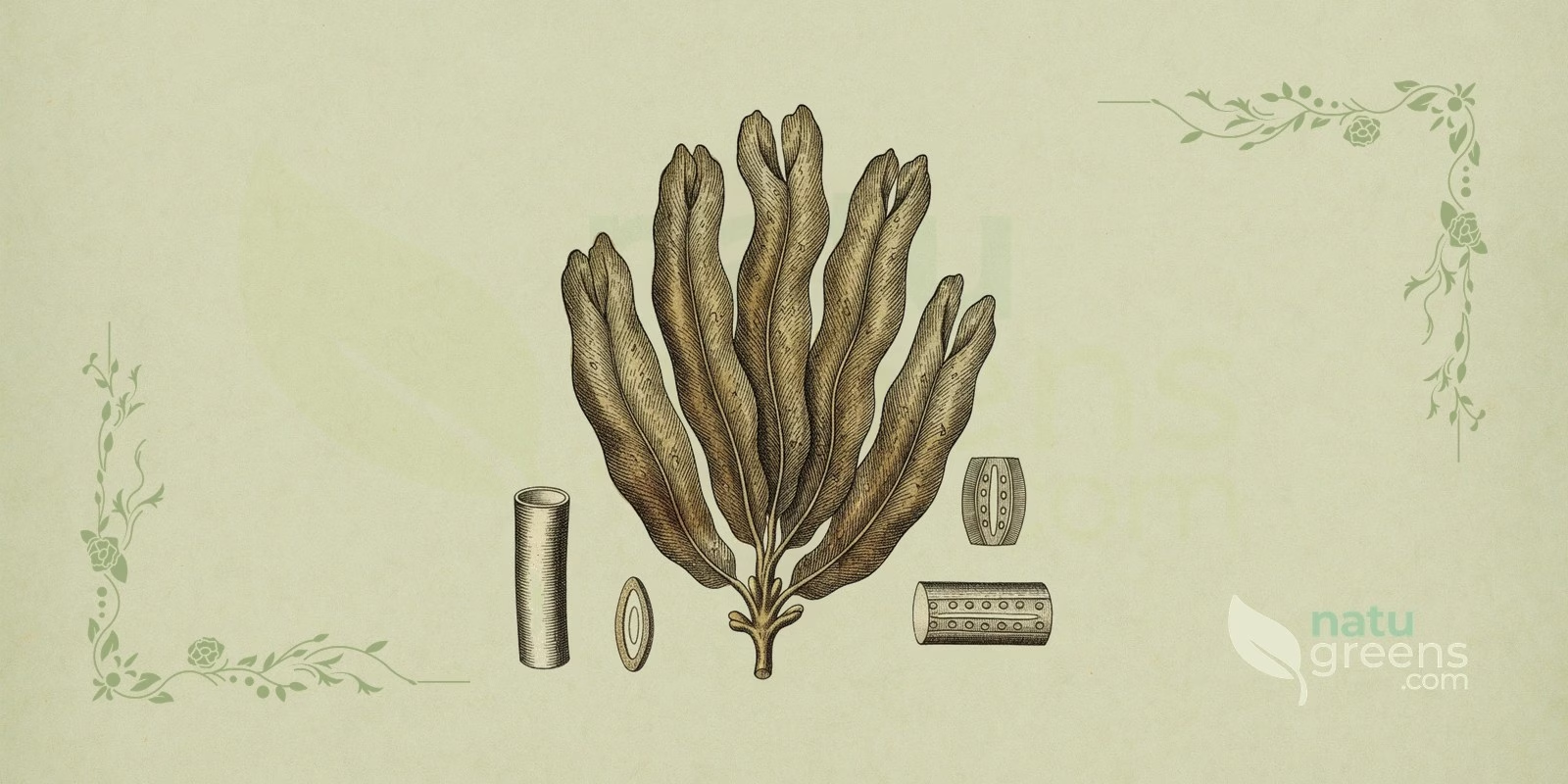
Laminaria digitata (Hudson) J.V. Lamouroux / Oarweed, known in English-speaking countries as oarweed and in Portuguese as laminária (also alga-dedilhada in Portugal), is a large brown seaweed of the Laminariaceae family. This robust species thrives in the cold, turbulent waters of the North Atlantic, where it attaches to rocky bottoms in the sublittoral zone, and its range extends from the icy coasts of Greenland to Cape Cod in North America, and from northern Russia and Iceland to the coast of France in Europe. For centuries, Laminaria digitata has served coastal communities as food, as an agricultural fertilizer and as a resource of traditional medicine, a role largely explained by the mineral richness of its thallus.
In the European herbal tradition, oarweed is prized above all for its nutritional value and for uses ranging from thyroid support, linked to its high iodine content, to the relief of constipation, attributed to its fiber. Its composition includes iodine, potassium, magnesium, calcium, iron, vitamins (A, D, E, K) and polysaccharides such as alginates, laminarin and fucoidan, compounds that laboratory studies associate with antioxidant, anti-inflammatory, anticoagulant and immunomodulatory activities. Modern scientific research has examined many of these traditional uses and has made the species one of the most studied seaweeds in phytotherapy and marine biotechnology, although most of the evidence still comes from in vitro assays, animal studies and reviews rather than from clinical trials in people. The same iodine that explains its prestige is also the main reason for caution, since oarweed is among the seaweeds that accumulate the most of this mineral.
Popular and International Names of Oarweed
- English: finger kelp, horsetail kelp, kelp, oarweed, sea tangle.
- French: laminaire digitée, tali, varech.
- German: Fingertang, Meeresalge, Riementang.
- Italian: alga marina, laminaria.
- Portuguese: alga-dedilhada (Portugal), alga-marinha, kelp, laminária.
- Spanish: alga de remo, cinta de mar, laminaria.
In Brazil, where the species does not occur naturally, the seaweed is usually imported and sold as laminária or simply as kelp, an English term that also covers other large brown seaweeds.
Botanical Synonyms of Laminaria digitata
- Fucus digitatus Hudson (basionym)
- Gigantea digitata (Hudson) Stackhouse, 1816
The epithet digitata, from the Latin digitatus, refers to the blade cut into finger-like strips, and the transfer of the species to the genus Laminaria is due to J.V. Lamouroux, whose name appears in the author citation accepted today.
Botanical Family: Laminariaceae
The Laminariaceae family belongs to the order Laminariales, one of the most important among the brown algae, and includes some of the largest and most complex marine organisms, known collectively as kelps. Its species have a life cycle with alternation of generations, in which a macroscopic sporophyte, the seaweed seen attached to rocks, alternates with a microscopic gametophyte.
Oarweed shares the typical morphology of the family, with a holdfast that anchors it to the substrate, a flexible stipe and a broad blade. The Laminariaceae are known for producing bioactive compounds, especially polysaccharides such as laminarin and fucoidan, to which medicinal properties are attributed in several species of the group, and this chemical diversity has been the subject of intense pharmacological research aimed at developing phytopharmaceuticals and dietary supplements.
Parts of Oarweed Used
- Stipe (dried stalk, the raw material for cervical dilators intended strictly for medical use)
- Thallus (frond) (the part eaten as food and used in supplements)
Ethnobotanical and Traditional Uses
- Blood pressure control (traditional use associated with its potassium content, never a substitute for medical treatment)
- Cervical dilation in obstetrics (dried stalks used as hygroscopic dilators, a strictly medical and hospital application)
- Constipation relief (traditional use attributed to its fiber and alginates)
- Thyroid support (traditional source of iodine in diets lacking this mineral)
- Weight-loss diet aid (traditional use linked to the satiating effect of fiber, without clinical proof)
Of these uses, the obstetric use of the stalks is a medical technique performed only in a clinical setting and has nothing to do with eating the seaweed, while the others rest on tradition and preliminary studies. Oncology research interest in fucoidan and laminarin, for its part, is so far limited to laboratory studies and does not justify using oarweed to prevent or treat cancer.
Therapeutic Properties of Oarweed
- Anticoagulant (activity observed in laboratory studies with its sulfated polysaccharides)
- Anti-inflammatory (effect observed in experimental studies with phlorotannins and fucoidan)
- Antioxidant (action against free radicals and oxidative stress demonstrated in the laboratory and in animals)
- Antiproliferative (activity observed in laboratory studies, without clinical proof)
- Antiviral (activity against certain viruses described in in vitro studies)
- Cardioprotective (preliminary studies suggest a cardiovascular benefit, not confirmed in humans)
- Hypocholesterolemic (reduction in blood lipids observed in experimental studies with fucoidan)
- Hypoglycemic (reduction in blood glucose observed in preliminary studies)
- Immunomodulatory (modulation of the immune system observed in experimental studies)
- Neuroprotective (protection of nerve cells suggested by laboratory and computer simulation studies)
Detailed Phytochemical Profile of Oarweed
- Alginates (gelling polysaccharides able to bind minerals and metals in the digestive tract)
- Calcium (essential mineral for bones and teeth)
- Dietary fiber (associated with digestive health and satiety)
- Essential amino acids (the building blocks of proteins, indispensable to the body)
- Fucoidan (sulfated polysaccharide investigated in laboratory studies for immunomodulatory and antiproliferative effects)
- Iodine (essential for thyroid function and present in very high concentration)
- Iron (important for oxygen transport in the blood)
- Laminarin (storage polysaccharide studied in the laboratory for anticoagulant, antiviral and antiproliferative activity)
- Magnesium (mineral involved in numerous enzymatic reactions)
- Phlorotannins (phenolic compounds with antioxidant and anti-inflammatory action observed in the laboratory)
- Potassium (important for blood pressure regulation and electrolyte balance)
- Proteins (macronutrients for building and repairing tissues, whose hydrolysates contain peptides studied in vitro as angiotensin-converting enzyme inhibitors)
- Vitamins (A, D, E, K) (needed for various metabolic and antioxidant functions)
Beyond these constituents, analyses of samples collected in Ireland found a high proportion of inorganic arsenic in the species, a contaminant that is no part of the seaweed’s nutritional value but must be taken into account when choosing where the product comes from.
Preparation and Administration Forms of Oarweed
- Capsules
- Dried seaweed (culinary use in small portions)
- Liquid extract
- Powder
- Tablets
In any of these forms, the iodine content varies widely depending on the harvest season, location and processing, which makes it hard to estimate how much of the mineral is actually consumed. For this reason, the choice of form and amount should be made with guidance from a health professional, especially in the case of capsules, tablets and concentrated extracts.
Synergy with Other Medicinal Plants
Cardiovascular Health
Combining Laminaria digitata with antioxidant-rich plants, such as green tea (Camellia sinensis) or garlic (Allium sativum), is a traditional practice in support of cardiovascular health. Preliminary studies are investigating whether the alginates and fucoidan in oarweed, together with the polyphenols in green tea or the sulfur compounds in garlic, could contribute to balanced cholesterol and circulation, but there are no clinical trials of the combination. Since both garlic and oarweed have described anticoagulant activity, people taking anticoagulants or antiplatelet drugs should avoid this pairing without medical advice.
Digestive Health
For digestion, Laminaria digitata can be combined with peppermint (Mentha × piperita) or ginger (Zingiber officinale), in a traditional practice that joins the alginates in oarweed, which form a gel in the gastrointestinal tract, with two plants used for generations to ease nausea and aid digestion. The traditional expectation is a calming action on the digestive system and support for bowel regularity, which does not replace a medical evaluation when symptoms persist.
Traditional Thyroid Support
In Western herbal medicine, Laminaria digitata appears in traditional formulas alongside other iodine-rich brown seaweeds, such as bladderwrack (Fucus vesiculosus), with the traditional aim of supporting the thyroid when this mineral is lacking. The reasoning behind the pairing is that the iodine in oarweed would add to the bioactive compounds in bladderwrack, such as fucoidan; however, combining two concentrated sources of iodine raises the risk of excess, and hypothyroidism, even when linked to iodine deficiency, requires medical diagnosis and follow-up, so this combination should not be used on one’s own initiative or replace the prescribed treatment.
Recipes and Usage Protocols of Oarweed
The following recipes are traditional culinary preparations from coastal cuisines, in which oarweed works more as a seasoning and source of umami flavor than as a main ingredient. Because the species is among the most iodine-rich seaweeds, quantities are described qualitatively: always use small portions, avoid frequent consumption in large amounts and, if you have thyroid disease, are pregnant or breastfeeding, or take any medication, consult a health professional before adding the seaweed to your diet.
Oarweed Seasoning Powder
A blend traditionally used to give everyday dishes a salty, umami flavor. Grind dried, toasted oarweed into a fine powder and mix it with sea salt, black pepper and red pepper flakes. Use it in small pinches to sprinkle over salads, soups and eggs, bearing in mind that the powder concentrates the seaweed’s iodine; if in doubt, consult a health professional.
Oarweed Soup with Vegetables
A soup traditionally eaten in coastal regions as a light, warming meal. In a pot, sauté onion and garlic in olive oil, add a small piece of dried oarweed and 1 liter of vegetable broth, and simmer over low heat for 20 minutes. Add mushrooms, tofu and spinach, season with salt, pepper and a little freshly grated ginger, and serve hot. Anyone with thyroid disease should consult a health professional before adding this soup to their menu.
Rehydrated Oarweed Salad
A recipe traditionally served as a fresh starter in cuisines that eat seaweed. Soak a small portion of dried oarweed in cold water for about 10 minutes, drain well and cut it into thin strips. Toss with cucumber, grated carrot and a dressing of rice vinegar, sesame oil, soy sauce and a touch of honey, then garnish with toasted sesame seeds. The seaweed should play a supporting role in the dish rather than form the base of the salad; if in doubt about the amount, consult a health professional.
Rice with Oarweed
A preparation traditionally used to give rice an umami flavor and a mineral touch. Add a small strip of dried oarweed, finely chopped, to the cooking water and cook the rice as usual. The dish can be served as a side or as a base for other preparations, and anyone who must limit iodine should consult a health professional before making it.
The preparations above follow traditional records and do not replace professional guidance. Before any internal use, check the contraindications and interactions described in this article.
Associated Therapies
Naturopathy
In naturopathy, Laminaria digitata is used mainly as a nutritional supplement, valued for its richness in iodine and other minerals linked to metabolic balance, and its high fiber content underpins its traditional use in support of digestive health. Some naturopaths also include it in so-called heavy metal detox protocols, based on the ability of alginates to bind metals in the gut; this use, however, has no clinical proof and runs into a concrete problem, because seaweed of uncontrolled origin may itself contain arsenic and cadmium.
Traditional Chinese Medicine (TCM)
In Traditional Chinese Medicine (TCM), the name Kun Bu designates the kelp of the Chinese pharmacopoeia, which corresponds mainly to the Asian species Saccharina japonica (formerly Laminaria japonica) and to Ecklonia kurome, and not strictly to the North Atlantic Laminaria digitata, so the indications described below belong to the Chinese tradition associated with the Asian species. In this system, Kun Bu is classified as cold in nature and salty in taste, with an affinity for the Liver, Stomach and Kidney meridians, and is traditionally used for thyroid disorders such as goiter, for edema and for constipation. Tradition credits it with the ability to dissolve masses, soften hardness and promote diuresis, within the pursuit of energetic harmony that guides TCM.
Cosmetology and Skin Care
Laminaria digitata has gained ground in cosmetology, where its extracts, rich in minerals, vitamins and polysaccharides, go into moisturizing and antioxidant formulations. The cosmetics industry uses it in products that aim to improve skin elasticity, soften the appearance of fine lines and wrinkles and protect the skin from free radical damage, relying on antioxidant and anti-aging activities observed in animal studies; the remineralizing properties and the supposed stimulation of hyaluronic acid production, for their part, are manufacturer claims that remain poorly documented. On sensitive skin or in people with a history of seaweed allergy, it is advisable to test the product on a small area before use.
Contraindications and Side Effects of Oarweed
Contraindications and Interactions
- Children: A child’s thyroid is especially sensitive to excess iodine, so oarweed supplements should not be given to children without pediatric guidance.
- Drug Interactions: Caution in people taking thyroid medication, whose effectiveness may be altered by the seaweed’s iodine. Oarweed may also interact with anticoagulants and antiplatelet drugs, because of the anticoagulant activity described for its polysaccharides, with glucose-lowering drugs, whose effect may add to that of the seaweed, and with medications that raise potassium, such as some antihypertensives and potassium-sparing diuretics; in all these cases, consult a doctor before use.
- Kidney Disease: People with kidney disease or impaired kidney function should consume oarweed in moderation and under medical supervision, because the seaweed’s considerable potassium content may be harmful in cases of kidney failure.
- Pregnancy and Breastfeeding: Do not use during pregnancy and breastfeeding without medical guidance, because of the effect of excess iodine on the thyroid of the fetus or baby. The obstetric use of oarweed stalks as cervical dilators is a strictly medical procedure and must never be reproduced on one’s own.
- Prolonged Use at High Doses: Avoid prolonged use at high doses, because of the risk of iodine accumulation and possible contamination by heavy metals (arsenic, cadmium) typical of seaweeds of uncontrolled origin.
- Thyroid Disease: Oarweed is contraindicated in hyperthyroidism and in autoimmune thyroid diseases (Graves’, Hashimoto’s), because its high iodine content can unbalance thyroid function.
Side Effects
- Allergic Reactions: Although rare, allergic reactions to seaweed can occur and show up as skin rashes, itching or, in more severe cases, anaphylaxis.
- Digestive Problems: In some people, eating oarweed, especially in large amounts, can cause gastrointestinal discomfort such as gas, bloating, abdominal cramps and diarrhea, because of its high fiber and polysaccharide content.
- Excess Iodine: Excessive, prolonged consumption of Laminaria digitata can lead to an excess of iodine in the body and result in thyroid dysfunction, including iodine-induced hyperthyroidism or, paradoxically, hypothyroidism in susceptible people.
Historical Notes and Interesting Facts
History and Economic Uses
Laminaria digitata has a long shared history with humankind, especially in the North Atlantic regions, where it is abundant and for centuries served as food for coastal cultures. Beyond its nutritional value, oarweed was widely used in agriculture as a natural fertilizer, able to enrich the soil with minerals and trace elements important for crop growth. In the 18th century, its economic importance grew as its ashes were used to obtain alkalis such as potash, an essential raw material in glass and soap making, and in the 19th century the seaweed became one of the main sources for iodine extraction, an element vital to medicine and the chemical industry. These historical uses show the versatility and value of this seaweed over time.
Modern Applications and Sustainability
Today Laminaria digitata continues to attract interest, both for its traditional uses and for new and innovative applications. In the food industry, it is valued as a superfood and functional ingredient, even making its way into savory cracker recipes tested with consumers, while in cosmetics its extracts go into skin care products for their moisturizing and antioxidant properties. Current research is also exploring its potential for producing biofuels, such as bioethanol and butanol, and as an agricultural biostimulant, and aquaculture of the species is growing as a sustainable alternative for producing marine biomass, contributing to the so-called blue economy.
Frequently Asked Questions about Oarweed
Is Oarweed Safe for Everyone?
In small culinary amounts, Laminaria digitata is usually well tolerated by most healthy adults, but it is not safe for everyone. People with hyperthyroidism or autoimmune thyroid diseases, people with kidney disease, pregnant and breastfeeding women, and anyone taking anticoagulants or thyroid medication should consult a health professional before consuming it, because its high iodine and potassium content can be problematic in these conditions.
What Is the Recommended Daily Dose of Oarweed?
There is no standardized daily dose for Laminaria digitata, since the amount of iodine varies with the form of consumption (dried seaweed, extract, capsules), the origin and the batch. For this reason, the safest course is to see a qualified health professional, who can assess individual needs and thyroid function, and to follow the manufacturer’s instructions only when they are consistent with that guidance, always avoiding prolonged use at high doses.
How Should Oarweed Be Stored?
Dried oarweed should be kept in a cool, dry, dark place in an airtight container to preserve its nutrients and keep it from absorbing moisture. If fresh, it should be refrigerated and eaten quickly, or else dried or frozen for longer storage.
Can Oarweed Be Used in Cooking?
Yes, Laminaria digitata is a versatile culinary ingredient and can be added in small amounts to soups, salads, stews and smoothies, or used as a powdered seasoning. Its umami flavor and mineral richness enrich dishes, but its high iodine content calls for treating it as an occasional seasoning rather than a daily staple.
Can People with Thyroid Disease Eat Oarweed?
Oarweed is contraindicated in hyperthyroidism and in autoimmune thyroid diseases (Graves’, Hashimoto’s), because its high iodine content can unbalance thyroid function. People taking thyroid medication should also be cautious and consume the seaweed only with guidance from the doctor overseeing their care, since iodine can interfere with disease control.
Can Oarweed Contain Heavy Metals?
It can, and this is one of the reasons to avoid prolonged use at high doses. Seaweeds of uncontrolled origin can accumulate heavy metals such as arsenic and cadmium, and analyses of Laminaria digitata samples collected in Ireland found a high proportion of inorganic arsenic. Choosing products of known origin with quality control reduces this risk, although it does not eliminate it completely.
Notice: this content is for informational purposes and does not replace professional medical advice. Consult a physician or herbal practitioner before using medicinal plants, especially during pregnancy, breastfeeding, or alongside medication.
References and Scientific Studies
View All 9 Cited References
- PMC2022 Karuppusamy S, et al. Biological Properties and Health-Promoting Functions of Laminarin: A Comprehensive Review of Preclinical and Clinical Studies. Marine Drugs. 2022.
- PMC2022 Reshma BS, et al. Antioxidant and Antiaging Properties of Agar Obtained from Brown Seaweed Laminaria digitata (Hudson) in D-Galactose-Induced Swiss Albino Mice. Evidence-Based Complementary and Alternative Medicine. 2022.
- PMC2022 El-Beltagi HS, et al. Phytochemical and Potential Properties of Seaweeds and Their Recent Applications: A Review. Marine Drugs. 2022.
- PMC2024 Adella Putri AD, et al. Phytochemical constituents analysis in Laminaria digitata for Alzheimer’s disease: molecular docking and in-silico toxicity approach. Communicative & Integrative Biology. 2024.
- PMC2018 Nitschke U, et al. Variability in iodine in temperate seaweeds and iodine accumulation kinetics of Fucus vesiculosus and Laminaria digitata (Phaeophyceae, Ochrophyta). Journal of Phycology. 2018.
- PMC2017 Ronan JM, et al. High proportions of inorganic arsenic in Laminaria digitata but not in Ascophyllum nodosum samples from Ireland. Chemosphere. 2017.
- PMC2024 Li S, et al. Extraction, purification, structural characterization and anti-hyperlipidemia activity of fucoidan from Laminaria digitata. International Journal of Biological Macromolecules. 2024.
- PMC2022 Purcell D, et al. Angiotensin-I-Converting Enzyme Inhibitory Activity of Protein Hydrolysates Generated from the Macroalga Laminaria digitata (Hudson) JV Lamouroux 1813. Foods. 2022.
- PMC2015 Zhurishkina EV, et al. Effect of fucoidans isolated from seaweeds Laminaria digitata and Fucus vesiculosus on cell lines HeLa G-63, ECV 304 and PC 12. Tsitologiia. 2015.