Perilla frutescens (L.) Britton / Perilla, commonly known as perilla, shiso or beefsteak plant, is an annual herbaceous plant of the Lamiaceae family. Native to the mountainous regions of the Himalayas and Southeast Asia, it has been cultivated for millennia in China, India, Japan and Korea, where it is valued in both cooking and traditional medicine. Perilla stands out for its leaves, which range from green to purple, and for its distinctive aroma, reminiscent of a blend of mint and anise. Its seeds, in turn, are a rich source of omega-3 fatty acids.
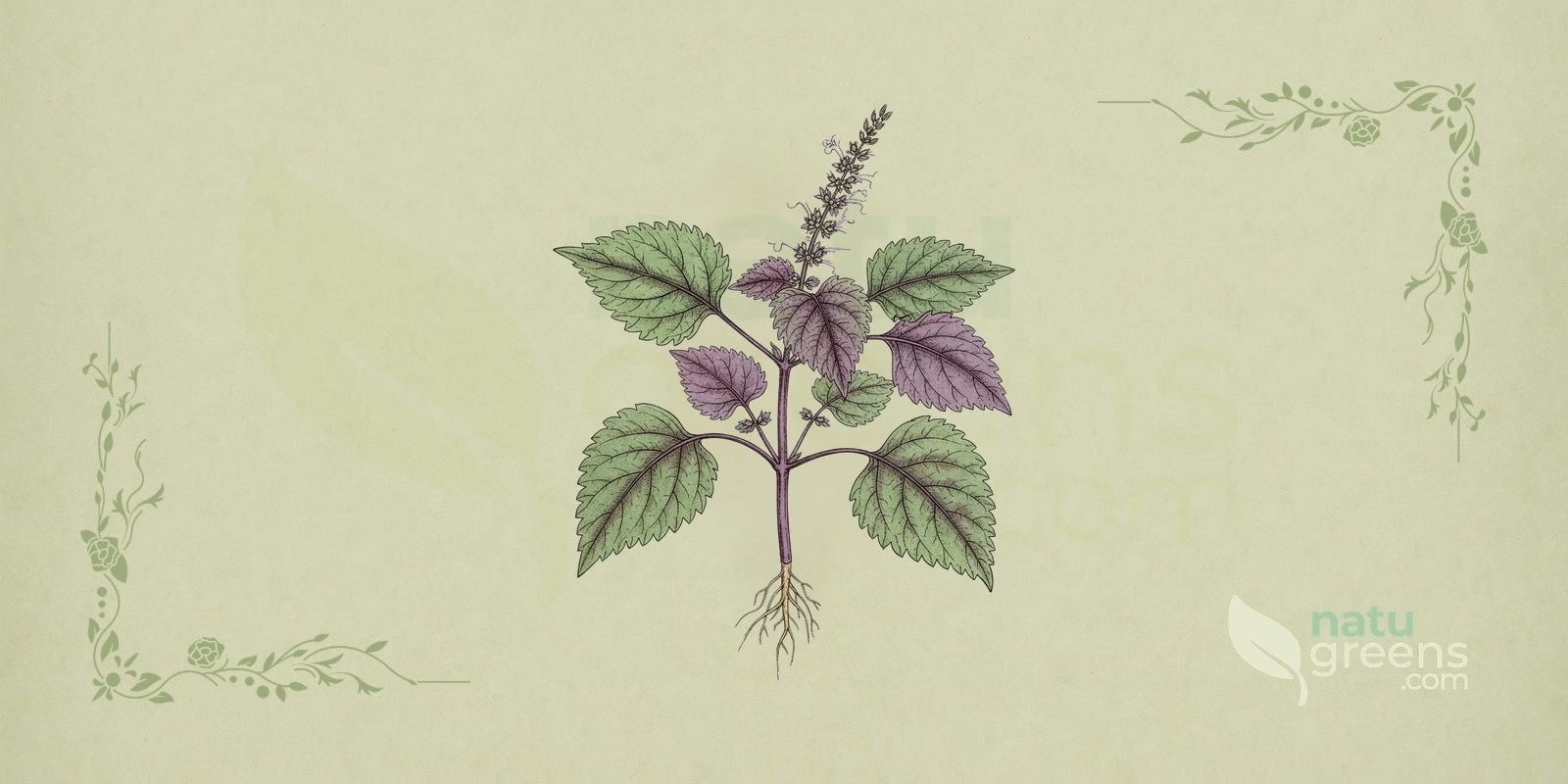
In traditional Asian medicine, perilla has a record of use for a wide range of complaints, from respiratory problems to digestive disorders. The plant contains bioactive compounds such as terpenes, flavonoids and phenolic acids, to which anti-inflammatory, antioxidant and antimicrobial effects are attributed. Modern scientific research has been investigating many of these ethnobotanical uses of Perilla frutescens, mostly still in laboratory and animal studies. This supports global interest in the species as a food and medicinal plant, without amounting to a clinical indication. Cultivated varieties such as var. crispa, known in Japan as shiso, belong to the same species and are covered in this same article.
Popular and International Names of Perilla
The names of perilla vary according to the region and the culinary tradition of each country. Several of them refer to relatives in the same family, such as basil and mint, even though the plant belongs to a different genus.
- English: beefsteak plant, Korean perilla, perilla, perilla mint, shiso, wild sesame.
- French: basilic japonais, pérille, shiso.
- German: Grünnessel, Perilla, Schwarznessel, Shiso.
- Italian: basilico giapponese, perilla, shiso.
- Portuguese: manjericão-chinês, manjericão-japonês, perila, shisô.
- Spanish: albahaca japonesa, menta de res, perilla, shiso.
Botanical Synonyms of Perilla frutescens
Over the course of its taxonomic history, Perilla frutescens (L.) Britton has received several scientific names. The author citation itself shows that Linnaeus originally described the plant in the genus Ocimum, the same genus as basil, before Britton transferred it to Perilla. The synonym most often found in older literature is Perilla ocymoides L., and the nomenclature may still vary depending on the region and the botanical classification adopted.
- Dentidia nankinensis Lour.
- Mentha perilloides Lam.
- Ocimum frutescens L. (basionym)
- Perilla nankinensis (Lour.) Decne.
- Perilla ocymoides L.
One of the most widely cultivated varieties is Perilla frutescens var. crispa, recognized by its curly, colorful leaves. Since it still belongs to the same species, it does not receive separate coverage in this article.
Botanical Family: Lamiaceae
Perilla frutescens belongs to the Lamiaceae family, also known as Labiatae, a large group of flowering plants comprising about 236 genera and more than 7,000 species. The family is distributed worldwide and is especially abundant in temperate and tropical regions. Lamiaceae are characterized by square stems, opposite leaves and two-lipped flowers, often grouped in whorled inflorescences. Many of the species are aromatic and have economic importance as culinary, medicinal or ornamental herbs.
Among the best-known members of the family are lavender, mint, oregano, rosemary, sage and thyme. In these plants, essential oils and phenolic compounds are common, which helps explain the anti-inflammatory, antimicrobial and antioxidant activities described for several of them. Perilla shares these traits and is a striking example of the phytochemical richness of this family, which also includes species capable of triggering allergic reactions in sensitive people.
Parts of Perilla Used
Each part of the plant has its own use in tradition, as the leaves go into cooking and tea while the seeds are pressed to obtain an edible oil. The stems also appear in traditional preparations, completing the list of parts of perilla that are put to use.
- Leaves (fresh or dried)
- Seed oil
- Seeds
- Stems
Ethnobotanical and Traditional Uses
The uses below bring together records from traditional Asian medicine and folk wisdom, which do not amount to a clinical indication. Nor do they replace medical follow-up, especially in conditions such as asthma, persistent fever or food poisoning.
- Allergies and asthma (complementary traditional use)
- Colds and flu, for relief of cough and congestion
- Digestive discomfort, such as nausea, vomiting and indigestion
- Fever, in preparations with an antipyretic effect according to tradition
- Fish and seafood poisoning (a record from Chinese medicine that does not replace emergency care)
- Inflammation and pain
- Mild sedative
- Respiratory problems, such as bronchitis
Therapeutic Properties of Perilla
The properties listed below derive mainly from laboratory studies, animal experiments and traditional records, and few of them have been confirmed in clinical trials in humans.
- Anti-allergic (reduction of allergic reactions observed in preliminary studies)
- Antibacterial (activity against bacteria observed in the laboratory)
- Anti-inflammatory (reduction of inflammatory processes in preliminary studies)
- Antioxidant (neutralization of free radicals in laboratory assays)
- Antiproliferative (activity observed in laboratory studies, with no clinical evidence)
- Antiseptic (traditional record, with no clinical evidence)
- Antispasmodic (relief of muscle spasms according to tradition)
- Antiviral (activity against viruses observed in laboratory studies)
- Immunomodulatory (modulation of the immune response in preliminary studies)
- Mood modulator (antidepressant-like effect investigated in preliminary studies, with no clinical evidence)
- Neuroprotective (protection of nerve cells observed in laboratory studies)
Detailed Phytochemical Profile of Perilla
The chemical composition of Perilla frutescens is broad, and the groups of greatest interest are terpenes, flavonoids and phenolic acids. Much of the activity described for the plant is attributed to these compounds. Rosmarinic acid is one of the most abundant and most studied phenolic compounds in the leaves, known for the antioxidant and anti-inflammatory activity observed in the laboratory. It sits alongside other phenolic acids, such as caffeic acid and ferulic acid, which also contribute to the antioxidant profile of the species.
Among the flavonoids present in perilla, apigenin, luteolin and quercetin are being investigated for their anti-allergic and anti-inflammatory effects. The seeds, in turn, stand out for their richness in polyunsaturated fatty acids, especially alpha-linolenic acid (ALA), an essential omega-3. The plant also contains anthocyanins, responsible for the purple color of some varieties, as well as glycosides and an essential oil whose composition changes according to the chemotype. Perillaldehyde, limonene and pinene are among the frequent components of this oil. The leaves and seeds may also contain perilla ketone and other furan ketones, at levels that vary with the variety. These substances are toxic to ruminants and explain why the safety of perilla depends so much on the form of consumption.
The following list summarizes the main compounds mentioned in this article and the plant part or product in which they are usually found.
- Alpha-linolenic acid (seeds and seed oil)
- Anthocyanins (purple varieties)
- Apigenin, luteolin and quercetin (flavonoids)
- Caffeic acid and ferulic acid (phenolic acids)
- Limonene and pinene (essential oil)
- Perilla ketone and other furan ketones (leaves and seeds, toxic to ruminants)
- Perillaldehyde (essential oil)
- Rosmarinic acid (leaves)
Preparation and Administration Forms of Perilla
The safest ways to use perilla are those closest to food consumption. The leaf has a long tradition in Asian cuisine, and the seed oil is, first and foremost, a food.
- Cold-pressed seed oil, for raw culinary use
- Fresh leaves in culinary preparations
- Seed oil capsules, as an omega-3 food supplement
- Tea or infusion of dried leaves
For an infusion, the traditional proportion is about one tablespoon of dried leaves per cup of boiling water, in moderate amounts close to those of food use. The seed oil should be used raw, kept refrigerated and never heated, because it oxidizes quickly. Tinctures, fluid extracts and concentrated extract capsules can be found on the market, but they are not recommended for internal use, since concentrated extracts and perilla essential oil should not be ingested. Any regular medicinal use, including deciding on amounts, should be guided by a health professional.
Synergy with Other Medicinal Plants
The combinations below follow the logic of traditional herbal medicine, which pairs plants with complementary actions, and they rest more on tradition than on clinical trials. For this reason, anyone taking long-term medication should talk to a health professional before combining herbs.
Allergies and Inflammation
In folk herbal medicine, perilla is paired with stinging nettle (Urtica dioica), another plant traditionally used for allergic and inflammatory conditions, and with a diet rich in quercetin, a flavonoid abundant in onions and apples. The rationale for this combination is that the rosmarinic acid in perilla, the flavonoids in nettle and quercetin would act on different biochemical pathways, modulating the immune response and histamine release. This mechanism has only been described in preliminary studies and does not yet translate into any promise of relief.
Digestive Health
For digestive discomfort, tradition pairs perilla with plants regarded as carminative and antispasmodic, such as ginger (Zingiber officinale) and peppermint (Mentha × piperita), in infusions traditionally used for nausea, bloating and cramps. The aromatic compounds in perilla leaves, the gingerols in ginger and the menthol in peppermint would together help relax the smooth muscle of the gastrointestinal tract. This is the explanation proposed for the combination, based mainly on studies with experimental models.
Colds and Flu
In home preparations for cold and flu season, perilla can be combined with echinacea (Echinacea purpurea) and elderberry (Sambucus nigra), two plants with a long record of use in this context. The idea is that the flavonoids in perilla, studied for their immunomodulatory action, complement the antiviral and immunostimulant activity attributed to echinacea and elderberry. Even so, this pairing rests more on tradition than on clinical studies.
Recipes and Usage Protocols of Perilla
Perilla Leaf Infusion for Allergy Season
Ingredients: 1 tablespoon of dried perilla leaves and 250 ml of boiling water.
Preparation: Place the leaves in a cup, pour the boiling water over them, cover and let steep for 10 to 15 minutes. Then strain and drink warm, sweetened with honey if desired. This infusion is traditionally used during allergy season for symptoms such as sneezing, itching and nasal congestion, always in moderate amounts close to those of food consumption. For regular use, consult a health professional.
Perilla Seed Oil in the Diet
Ingredients: Cold-pressed perilla seed oil.
How to use: Use the oil raw, in small amounts, drizzled over salads or mixed into yogurt and smoothies, as part of the diet. Traditional records value this oil as a source of omega-3, since it is rich in alpha-linolenic acid (ALA). Because it oxidizes quickly, it should be kept refrigerated in a closed bottle and never heated. Anyone planning to use it as a supplement should consult a health professional to determine the appropriate amount.
Fresh Perilla Leaves in Korean and Japanese Cuisine
Ingredients: Fresh perilla or shiso leaves, cooked rice and vegetables, grilled meat or fish to taste.
Preparation: Wash and dry the leaves well and use each one as a wrap for small portions of rice, vegetables or meat, Korean style. Another option is to serve shiso alongside sushi and sashimi, wrapping them as in Japanese cuisine. This is the traditional form of consumption with the strongest safety record, because food use of the leaf is traditional and safe. People with sensitive skin may wear gloves when handling large quantities, since perillaldehyde can cause contact dermatitis. Tinctures and concentrated extracts, sometimes suggested for bronchitis and asthma, are left out of this guide, because concentrated extracts and the essential oil should not be ingested.
The preparations above follow traditional records and do not replace professional guidance. Before any internal use, check the contraindications and interactions described in this article.
Associated Therapies
Acupuncture
In Traditional Chinese Medicine (TCM), perilla leaf, known as Zi Su Ye, is often prescribed within the same care plan as acupuncture for conditions such as colds, flu, asthma and allergies. According to TCM concepts, acupuncture seeks to balance the flow of energy (Qi) in the body, while perilla is said to disperse wind-cold, promote sweating and regulate Qi. The idea that the two approaches enhance each other belongs to the reasoning of the tradition and has not been confirmed in clinical studies. Nor does it replace medical care, especially in the case of asthma.
Chinese Herbal Medicine
Perilla is a frequent component of formulas in Chinese herbal medicine, valued for properties described as diaphoretic, expectorant and anti-inflammatory. It appears in traditional blends for the common cold, cough, nasal congestion and digestive problems. The tradition distinguishes the parts of the plant with considerable precision, using the leaves (Zi Su Ye) to disperse cold and release the exterior, and indicating the seeds (Zi Su Zi) for cough and asthma. It is an approach that assigns a specific function to each plant part.
Functional Nutrition
In functional nutrition, Perilla frutescens is recognized mainly for its seed oil, one of the richest plant sources of alpha-linolenic acid (ALA), the essential plant-based omega-3. This nutrient is studied for its possible contribution to cardiovascular health, to the control of inflammatory processes and to brain function. The leaves, in turn, are included in diets for their antioxidant and anti-inflammatory compounds, with the aim of modulating the immune response and reducing oxidative stress. Perilla thus works both as a functional food and, in the case of the oil, as a food supplement, always consumed raw and kept refrigerated.
Contraindications and Side Effects of Perilla
Perilla frutescens is considered safe when consumed in food amounts, but there are contraindications and side effects that deserve attention before any medicinal use. People with a known allergy to plants of the Lamiaceae family, such as basil, mint and oregano, may also react to perilla. Symptoms include skin rashes, itching and, in rare cases, more serious reactions, so it is prudent to start with small amounts to check individual tolerance.
Perilla Ketone, Essential Oil and Concentrated Extracts
Perilla ketone and other furan ketones in the leaves and seeds cause pulmonary edema in ruminants, such as cattle that graze on the plant. In humans, food consumption of the leaf is traditional and safe, but concentrated extracts and the essential oil should not be ingested. This rules out tinctures, fluid extracts and extract capsules for internal use, even when they are sold as natural products.
Contact Dermatitis
Perillaldehyde, one of the main components of the essential oil, causes allergic contact dermatitis in people who handle the plant, including farmers, cooks and people who grow perilla at home. Anyone who has had this kind of reaction should wear gloves when picking or preparing the leaves.
Common Side Effects
In some people, consuming large amounts of perilla can cause mild gastrointestinal discomfort, such as nausea or diarrhea. Because of its high omega-3 content, the seed oil may have a mild anticoagulant effect. For this reason, people with clotting disorders or who take anticoagulants should consume perilla with caution and under medical supervision.
Storing the Seed Oil
The seed oil, rich in alpha-linolenic acid, is a food and oxidizes quickly, so it should be kept refrigerated and should not be heated. Once oxidized, it loses nutritional quality and takes on a rancid taste, a sign that it should be discarded.
Pregnancy, Breastfeeding and Children
There are no safety data on pregnancy and lactation at medicinal doses. For this reason, pregnant and breastfeeding women should favor food consumption and consult a health professional before any medicinal use of perilla. In children, safety and appropriate amounts are not well established either, and any use beyond culinary use should be guided by a pediatrician or another health professional.
Drug Interactions
Because of its potential anticoagulant effect, perilla may increase the risk of bleeding when used together with drugs such as warfarin, aspirin or other nonsteroidal anti-inflammatory drugs (NSAIDs). The plant may also have a hypotensive effect, that is, it may lower blood pressure, and thus enhance the action of antihypertensive medications. Because tradition uses it as a mild sedative and preliminary studies are investigating an antidepressant-like effect, anyone taking antidepressants, anxiolytics or sedatives should seek medical advice before medicinal use. People with chronic conditions or who take regular medication should always talk to their doctor before adding perilla to their care routine.
Historical Notes and Interesting Facts
Perilla frutescens has been grown and used for thousands of years in various Asian cultures. In Korea, perilla leaves are an essential ingredient in the cuisine, featured in dishes such as kimchi and banchan, and the seeds are pressed to produce an aromatic oil. In Japan, the variety Perilla frutescens var. crispa, known as shiso, accompanies and wraps sushi and sashimi and is used to color and flavor pickles such as umeboshi, the pickled plum.
In China, perilla is on the official list of species recognized as both food and medicine, under the concept of food and medicine homology adopted by the country’s health authorities. This inclusion shows the weight of the plant in traditional Chinese medicine. Beyond its culinary and medicinal uses, perilla is also grown as an ornamental for the beauty of its leaves, which can be green, purple or a combination of both colors. This versatility has kept it present in different spheres of human life over the centuries.
Although it is sometimes called Japanese basil, perilla is not a basil, a plant of the genus Ocimum. Interestingly, Linnaeus originally described the species as Ocimum frutescens, a name that survives in the abbreviation (L.) of the current binomial. Another little-known fact comes from veterinary medicine, which records the plant as a cause of pulmonary edema in cattle that eat it in pasture. This effect is linked to perilla ketone and contrasts with the long tradition of human consumption of the leaves.
Frequently Asked Questions about Perilla
Does Perilla Help Relieve Allergies?
Perilla tea is traditionally used during allergy season. Compounds such as rosmarinic acid and the plant’s flavonoids are studied for their ability to modulate the immune response and reduce histamine release. These results come mostly from laboratory and animal studies, so perilla does not replace the treatment prescribed by a doctor for rhinitis, asthma or other allergies.
What Is the Traditional Way to Prepare Perilla Tea?
The most common method is infusion, with one tablespoon of dried leaves for every 250 ml of boiling water. The container should be kept covered for 10 to 15 minutes before straining. The tea can be sweetened with a little honey or given a few drops of lemon, and it should be consumed in moderate amounts, close to those of food use.
Are There Side Effects from Drinking Perilla Tea Daily?
In moderate amounts, the tea is usually well tolerated, although in rare cases it may cause mild gastrointestinal discomfort. People allergic to plants of the Lamiaceae family should avoid it, and anyone taking anticoagulants should consult a health professional before regular use. Pregnant and breastfeeding women also need this guidance, since there are no safety data on pregnancy and lactation at medicinal doses.
Can Perilla Be Used by Children?
Use in children calls for caution and guidance from a health professional, despite the traditional record for colds and digestive problems. Safety and appropriate amounts for the pediatric age group are not as well established as in adults. Before any use beyond culinary use, it is necessary to confirm that the child is not allergic to plants of the Lamiaceae family.
Can Perilla Essential Oil and Extracts Be Ingested?
Concentrated extracts and perilla essential oil should not be ingested, because perilla ketone and other furan ketones in the leaves and seeds cause pulmonary edema in ruminants. Food consumption of the leaf, on the other hand, is traditional and safe in humans. Cold-pressed seed oil is a different product, a food rich in omega-3 that should be kept refrigerated and used without heating.
Where Can I Find Perilla?
Dried perilla leaves and tea bags can be found in health food stores, herb shops, Asian markets and online stores. Ideally, choose reliable suppliers and, if possible, organic products, to reduce exposure to pesticides and other contaminants. The plant can also be grown at home from seed, and anyone buying the seed oil should keep it in the refrigerator, because it oxidizes quickly.
Notice: this content is for informational purposes and does not replace professional medical advice. Consult a physician or herbal practitioner before using medicinal plants, especially during pregnancy, breastfeeding, or alongside medication.
References and Scientific Studies
- PMC2012 Asif M. Phytochemical study of polyphenols in Perilla Frutescens as an antioxidant. Avicenna J Phytomed. 2012.
- PMC2022 Hou T, et al. Perilla frutescens: A Rich Source of Pharmacological Active Compounds. Molecules. 2022.
- PMC2010 Müller-Waldeck F, et al. Determination of toxic perilla ketone, secondary plant metabolites and antioxidative capacity in five Perilla frutescens L. varieties. Food Chem Toxicol. 2010.
- PMC2023 Wu X, et al. Perilla frutescens: A traditional medicine and food homologous plant. Chin Herb Med. 2023.
- PMC2025 Yi D, et al. Comprehensive Review of Perilla frutescens: Chemical Composition, Pharmacological Mechanisms, and Industrial Applications in Food and Health Products. Foods. 2025.