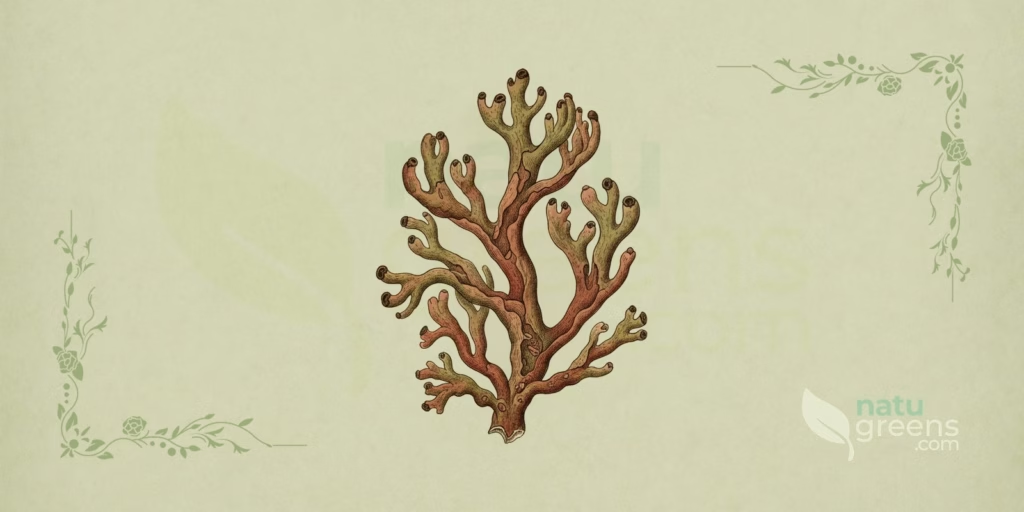
Fucus vesiculosus L. / Bladderwrack, commonly known as bladderwrack, rockweed or sea oak, is a brown seaweed of the Fucaceae family, described by Carl Linnaeus in 1753 and widely distributed along the rocky shores of the North Atlantic and the Baltic Sea. Its history intersects with that of chemistry, since iodine was discovered in 1811 from the ashes of brown seaweeds, the group to which bladderwrack belongs. From then on, the seaweed gained a historical record of use in goiter caused by a lack of this mineral. Its fronds, marked by clearly visible air bladders, are used in cooking, cosmetics and the manufacture of supplements. For health purposes, the recommendation is to rely only on products of known origin backed by a quality certificate of analysis.
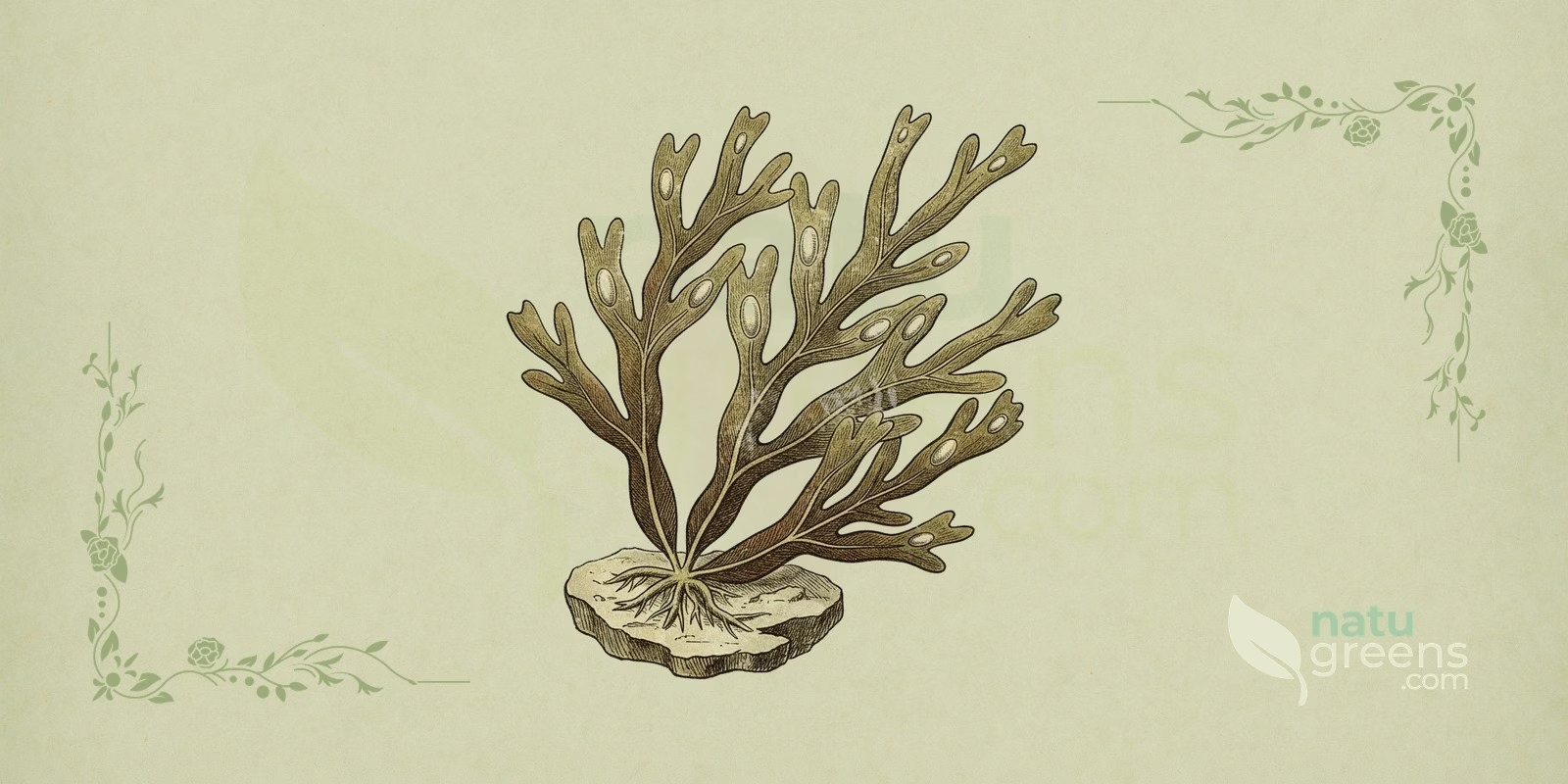
In traditional European medicine, bladderwrack was valued mainly as a source of iodine and as a digestive aid. Modern research, carried out mostly in the laboratory and in animals, investigates the composition of the seaweed, which is rich in polysaccharides such as fucoidans, in phlorotannins and in the pigment fucoxanthin. Antioxidant and anti-inflammatory activities are attributed to these compounds, though they still lack consistent clinical confirmation. This scientific interest coexists with a safety warning that runs through this entire article: the seaweed’s iodine content is high and variable, which makes using it on your own risky for the thyroid.
Popular and International Names of Bladderwrack
- English: black tang, bladder fucus, bladderwrack, cut weed, dyers fucus, red fucus, rock wrack, rockweed, sea grapes, sea oak.
- French: chêne marin, fucus vésiculeux, varech vésiculeux.
- German: Blasentang, Fucus, Seetang.
- Italian: alga bruna, fucus vescicoloso, quercia marina.
- Portuguese: alga-marinha-castanha, bodelha, fucus, sargaço-bolhoso.
- Spanish: encina de mar, fuco vesiculoso, sargazo vejigoso.
In Brazil, where the species does not occur naturally, the name most often seen in the supplement trade is fucus, while bodelha is the form inherited from European Portuguese and appears in much of the Portuguese-language herbal literature.
Botanical Synonyms of Fucus vesiculosus
The accepted scientific name for this species is Fucus vesiculosus L., published by Linnaeus in 1753 and kept as the seaweed’s main designation to this day. In popular literature, Fucus spiralis and Fucus serratus are sometimes cited as synonyms, but both are distinct, accepted species of the same genus. The first can form hybrids with bladderwrack in the bands of the shore where the two grow side by side. The second resembles it in size and habit, although it has serrated margins and lacks air bladders.
The great morphological plasticity of bladderwrack, which on shores heavily battered by waves can grow with few air bladders or none at all, led to the description of numerous varieties and forms over the history of phycology. Today these names are generally regarded as synonyms of the species. To check the current synonymy, the source most widely used by algae specialists is the AlgaeBase database.
Botanical Family: Fucaceae
The Fucaceae family belongs to the order Fucales and the class Phaeophyceae, the brown algae, and brings together marine seaweeds that inhabit rocky coastal zones, especially in temperate and cold regions. Its species play a major ecological role in these environments, because they create habitats for small animals and account for a large share of the marine biomass along the coast. Many of them are also known for their richness in bioactive compounds and nutrients.
As a member of the Fucaceae, bladderwrack shares morphological and biochemical traits typical of the family, including the presence of phlorotannins and fucoidans. The family produces a wide range of secondary metabolites with diverse biological activities, which makes it a subject of interest for pharmacological and biotechnological research. Its ability to accumulate iodine and other minerals from the sea, in turn, explains both the nutritional and medicinal uses of these seaweeds and the safety precautions they require.
Parts of Bladderwrack Used
Seaweeds have no true roots, stems or leaves. The body of bladderwrack is a flattened thallus, attached to the rock by a holdfast, which branches into fronds with a central midrib and air bladders. This thallus, whole or fragmented, is the source of the commercial raw material.
- Dried fronds
- Whole thallus (entire seaweed)
Once dried, the thallus is turned into powder or extracts, the forms described in the preparation section. The quality of the final product depends directly on the water where the seaweed grew, since it retains minerals and contaminants from the marine environment.
Ethnobotanical and Traditional Uses
- Constipation (traditional record as a mild laxative)
- Diuretic use (traditional record)
- Goiter due to iodine deficiency (historical record)
- Thyroid disorders (traditional record; use is now contraindicated in thyroid disease)
- Topical use on the skin for cellulite, skin aging and minor burns (traditional record)
The list above brings together records from the European tradition and does not amount to a recommendation for use. In the case of the thyroid in particular, current guidance is the opposite of the old one, because excess iodine can disrupt the gland in either direction.
Therapeutic Properties of Bladderwrack
- Antibacterial (inhibition of bacteria by seaweed extracts in in vitro tests)
- Anticoagulant (effect of fucoidans on blood clotting observed in the laboratory, the reason for caution with warfarin and surgery)
- Anti-inflammatory (reduction of inflammatory markers observed in laboratory and animal studies)
- Antimicrobial (activity of fucoidans against other microorganisms, such as viruses, observed in the laboratory)
- Antioxidant (neutralization of free radicals and oxidative stress measured in the laboratory)
- Antiproliferative (activity observed in laboratory studies, without clinical proof)
- Blood glucose modulator (effect on carbohydrate-digesting enzymes and on blood glucose investigated in preliminary studies)
- Hyaluronidase inhibitor (in vitro inhibition of the enzyme that breaks down hyaluronic acid, of cosmetic interest)
- Immunomodulatory (effect of fucoidans on immune system cells observed in experimental studies)
- Lipid-lowering (reduction of blood lipids observed in animal studies)
- Skin anti-aging (antioxidant activity and inhibition of skin-degrading enzymes observed in vitro with cosmetic-grade extracts)
- Tyrosinase inhibitor (in vitro inhibition of the enzyme involved in melanin production)
Most of the activities listed come from laboratory and animal trials carried out with extracts or isolated compounds, such as fucoidans and phlorotannins. These results do not support conclusions about the effect of consuming the seaweed in people.
Detailed Phytochemical Profile of Bladderwrack
- Alginic acid
- Beta-carotene
- Bromine
- Fucitol
- Fucoidans (sulfated polysaccharides)
- Fucoxanthin
- Iodine
- Mannitol
- Minerals (calcium, copper, iron, magnesium, potassium, selenium, sodium, zinc)
- Mucilage
- Phenolic compounds
- Phlorotannins
- Volatile oils
- Zeaxanthin
Among these components, iodine weighs most heavily on safety, because its concentration varies with the location, harvest season and processing of the seaweed. Fucoidans, on the other hand, are the most studied compounds in laboratory trials. Bladderwrack can also accumulate arsenic and cadmium from the marine environment, which are not compounds of its own but contaminants whose control depends on the supplier’s certificate of analysis.
Preparation and Administration Forms of Bladderwrack
- Capsules
- Dry extract
- Fluid extract
- Poultice (external use)
- Powder
- Tea (infusion)
- Tincture
In any of these forms, the safest choice is a product from a supplier with quality control and a certificate of analysis that states the iodine content and reports testing for metals such as arsenic and cadmium. Seaweed freely gathered on the beach is not suitable for this purpose, because its origin and contamination cannot be assessed. The dose of capsules, tinctures and extracts varies widely between manufacturers and should be set by a health professional.
Synergy with Other Medicinal Plants
Traditional Combination with Kelp and Guggul
Traditional herbal medicine paired bladderwrack with other iodine-rich seaweeds, such as kelp (Laminaria digitata), and with guggul (Commiphora mukul, now accepted as Commiphora wightii). This resin from Ayurvedic medicine is traditionally used to support thyroid function. The combination adds up sources of iodine and, given the contraindications described below, should not be put together on your own. Anyone with thyroid disease or taking levothyroxine, amiodarone or lithium needs to avoid it, and any combination of this kind depends on a medical assessment with follow-up of the gland’s laboratory tests.
Traditional Combination for Digestion
Tradition combines bladderwrack with carminative and digestive plants such as ginger (Zingiber officinale) and peppermint (Mentha × piperita), in a pairing traditionally used for mild gastrointestinal discomfort. In this record, the seaweed’s mucilage is seen as an emollient for the mucosa and a regulator of intestinal transit, while the other plants contribute the antispasmodic and anti-inflammatory action attributed to them. The mixture is no substitute for a medical assessment when symptoms persist, and the restrictions on bladderwrack’s iodine still apply in this combination.
Recipes and Usage Protocols of Bladderwrack
Traditional Bladderwrack Infusion
This infusion is traditionally used as a gentle way of consuming the seaweed, within the historical record linked to iodine intake and digestion. Place a small portion of dried bladderwrack of controlled origin, with its iodine content stated on the label, in a cup of boiling water, cover and let it steep for about 10 minutes, then strain it and drink it warm. The amount and frequency should not be decided on your own, because the seaweed’s iodine content varies from batch to batch, so consult a health professional before using it. Take breaks rather than consuming it continuously for long periods, and do not use it if you have thyroid disease or are pregnant or breastfeeding.
Fluid Extract by Prescription
Bladderwrack fluid extract appears in the herbal tradition as a concentrated form of the seaweed, traditionally used for the same reasons as the infusion. Because the concentration changes with the manufacturer and the iodine content of each batch, this article gives no number of drops or frequency of use. The dose must be adjusted individually by a health professional, who should also monitor thyroid function with laboratory tests throughout the period of use and set the necessary breaks.
Traditional Poultice for the Skin
A bladderwrack poultice is traditionally applied to areas with cellulite or mild skin irritation. Grind dried bladderwrack from a reliable supplier into a fine powder, mix it with a little warm water until it forms a paste and spread it over the chosen area, covering it with a clean cloth. Leave it on for 20 to 30 minutes, rinse it off with water and repeat no more than once or twice a day. Before the first use, test the paste on a small patch of skin, since the seaweed can cause contact dermatitis, and do not apply it to open wounds, burns or damaged skin. People with thyroid disease should also consult their doctor before external use.
The preparations above follow traditional records and do not replace professional guidance. Before any internal use, check the contraindications and interactions described in this article.
Associated Therapies
Herbal Medicine
Bladderwrack is one of the seaweeds most often cited in European marine herbalism, with a traditional record linked to the thyroid and digestion and a frequent presence in supplement formulations, teas and extracts. Its richness in iodine and other bioactive compounds explains the historical interest and led the European Medicines Agency to devote an assessment report to the seaweed’s thallus. That document is a useful reference for anyone who wants to know the available data on efficacy and safety. In current practice, responsible herbal use involves a standardized product, an individualized dose and professional follow-up.
Nutrition and Supplementation
Thanks to its nutritional profile, with minerals, vitamins and fiber, bladderwrack appears as a food supplement in several markets, and including seaweed in the diet is common practice in many coastal cultures. Iodine deficiency, however, should not be corrected with the seaweed on your own, because the content varies greatly between products. In Brazil, the public health policy for ensuring iodine in the diet is iodized salt, and any additional supplementation should go through a medical assessment.
Contraindications and Side Effects of Bladderwrack
Bladderwrack has a high and variable iodine content, with a risk of unbalancing the thyroid toward either hyperthyroidism or hypothyroidism. For this reason, the seaweed is contraindicated for people with thyroid disease and for those taking levothyroxine, amiodarone, lithium or other thyroid medications. It is also contraindicated during pregnancy and breastfeeding. Children should not use bladderwrack without pediatric guidance, and people allergic to iodine or seaweed should avoid it completely.
Bladderwrack can accumulate arsenic and cadmium from the marine environment, so the recommendation is to use only products from suppliers with quality control and a certificate of analysis, never freely harvested seaweed. Compounds in the seaweed (fucoidans) have the potential to interact with anticoagulants such as warfarin, which calls for caution and professional guidance before surgery. As a rule, use is stopped before the procedure, following the medical team’s instructions. Because preliminary studies are investigating an effect of the seaweed on blood glucose, people taking glucose-lowering medication should talk to their doctor before any consumption.
Prolonged continuous use without breaks is not recommended. At high doses, the seaweed can cause nausea, vomiting and diarrhea and, in rare cases, contact dermatitis with external use. This article also neither makes nor endorses any slimming or weight-loss claim associated with bladderwrack, because using it for that purpose has no safe basis and exposes the thyroid to iodine loads that are hard to control.
Historical Notes and Interesting Facts
The Discovery of Iodine
In 1811, the French chemist Bernard Courtois discovered iodine while working with the ashes of brown seaweeds, which were used at the time to obtain compounds for making saltpeter. Bladderwrack belongs precisely to this group of seaweeds from the European Atlantic coast. The discovery paved the way for the use of iodine in goiter, a disease that was common back then and caused by a lack of this mineral in the diet. The seaweed came to appear as a remedy for this condition in herbal texts, a historical place that helps explain the reputation it still holds today.
Traditional Use and Popularity
Known by names such as bladderwrack, rockweed and sea oak, this seaweed has been used for centuries by coastal populations as food, agricultural fertilizer and medicine. Its popularity stems from its abundance on rocky shores and from the properties that tradition attributes to it, passed down from generation to generation. The seaweed remains valued in many natural medicine traditions, now accompanied by warnings about iodine and contaminants.
The Air Bladders and the Species Name
The epithet vesiculosus refers to the air bladders the seaweed forms, usually in pairs, on either side of the central midrib of the fronds. These small gas-filled pockets help the thallus float at high tide, keeping the fronds closer to the light. On shores highly exposed to waves, the same species can grow with few bladders or none at all.
Frequently Asked Questions about Bladderwrack
What Is Bladderwrack and What Is It Used For?
Bladderwrack (Fucus vesiculosus) is a brown seaweed from the North Atlantic and the Baltic Sea, rich in iodine, fucoidans, phlorotannins and minerals. Tradition uses it as a source of iodine, to support digestion and in skin preparations, and preliminary studies are investigating its antioxidant and anti-inflammatory action. None of these uses does away with professional guidance, because of its high and variable iodine content.
How Do You Prepare Bladderwrack Tea Safely?
The tea is made with a small portion of dried seaweed of controlled origin in boiling water, covered and left to steep for about 10 minutes, then strained before drinking. The amount and frequency should be set by a health professional, because the iodine content changes from batch to batch, and consumption should not be continuous and prolonged without breaks.
Who Should Not Use Bladderwrack?
Bladderwrack is contraindicated for people with thyroid disease, for those taking levothyroxine, amiodarone or lithium, and for pregnant and breastfeeding women. People allergic to iodine or seaweed should also avoid it, and children should use it only under pediatric guidance. Anyone taking anticoagulants such as warfarin, or about to undergo surgery, needs professional guidance before any use.
Can People with Thyroid Problems Use Bladderwrack?
No, because the seaweed’s iodine content is high and variable and can unbalance the thyroid toward either hyperthyroidism or hypothyroidism. For this reason, its use is contraindicated for people with thyroid disease. The same restriction applies to those taking levothyroxine, amiodarone or lithium, and any questions should be taken to an endocrinologist.
Can Bladderwrack Accumulate Contaminants from the Sea?
Yes, the seaweed can accumulate arsenic and cadmium from the marine environment, and the amount depends on where it grew and how it was processed. For this reason, the recommendation is to buy only from suppliers with quality control and a certificate of analysis, and never to use seaweed freely gathered on the beach.
Which Part of Bladderwrack Is Used in Herbal Medicine?
The thallus of the seaweed, made up of the fronds, is used whole or fragmented after drying. This is where the iodine, fucoidans, phlorotannins and other studied compounds are concentrated, and it is the starting material for powder, extracts, capsules and infusions.
Notice: this content is for informational purposes and does not replace professional medical advice. Consult a physician or herbal practitioner before using medicinal plants, especially during pregnancy, breastfeeding, or alongside medication.
References and Scientific Studies
Peer-Reviewed Scientific Studies (2)
- PMC2024 Muñoz-Quintana M, et al. Revealing the Potential of Fucus vesiculosus Linnaeus for Cosmetic Purposes: Chemical Profile and Biological Activities of Commercial and Wild Samples. Mar Drugs. 2024.
- PMC2022 Obluchinskaya ED, et al. The Biochemical Composition and Antioxidant Properties of Fucus vesiculosus from the Arctic Region. Mar Drugs. 2022.
Supplementary Readings (1)
- European Medicines Agency. Assessment Report on Fucus vesiculosus L., Thallus. Committee on Herbal Medicinal Products (HMPC).